Ooh. Ahh. Ohh. (400 Followers Contest Swag.)

Fear not, contest winners, your goodies are on the way! Thank you for your bountiful patience, and of course for your loyal readership.

If you’re new to the site, I have been celebrating each successive century mark of email followers with a giveaway. To win, you have to be signed up as an email subscriber — so there’s your incentive. And we’re now under 75 away from 500…woo-hoo!

Here’s a little something to whet the winner’s appetites.

Gary gets the striper flies. Clockwise from top: Orange Ruthless, Big Eelie, Soft-Hackled Flatwing, September Night, Rhody Flatwing, Herr Blue, Ray’s Fly.

OLYMPUS DIGITAL CAMERA

~

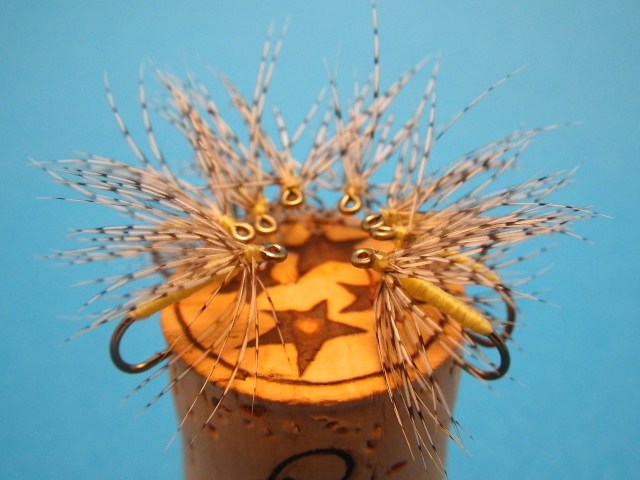
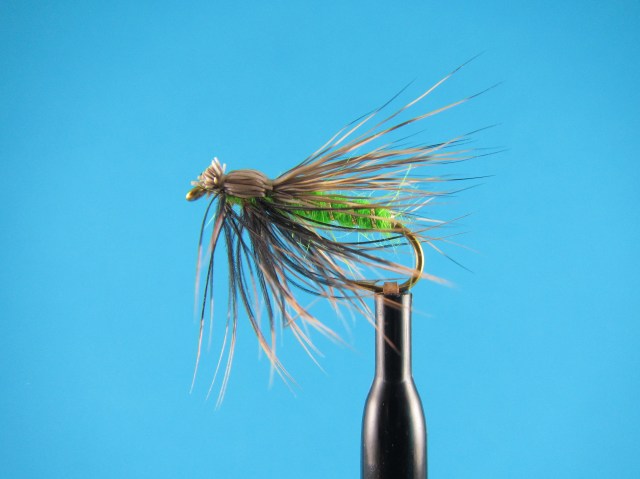
Kris and Bill went for trout flies. Here are a dozen classic wets and fuzzy nymphs, clockwise from upper right: Soft-hackled bead head Pheasant Tail, Pale Watery wingless, Ginger caddis larva, Brown Hackle, Black Gnat, Hackled March Brown, Drowned Ant, Squirrel and Ginger, Hare’s Ear, Dark Hendrickson, Grizzly and Gray, Partridge and Light Cahill.

OLYMPUS DIGITAL CAMERA


NYCTU awarded the Order of the Black Shack Burger with IPA Clusters

Yesterday evening found me in the Big Apple presenting Wet Flies 101 to the NYCTU Chapter. Many thanks to the group for having me, and for recognizing that a fed presenter is a happy presenter. The Black Shack Holy Mole burger was delicious, as was the Smuttynose Finest Kind IPA. Thanks also to the midtown Orvis store for providing the venue. A great group and an outstanding post-presentation Q&A session.

That closes out the 2015-16 appearance schedule. We’ll kick off 2016-17 in September at TU225 in Rhode Island. Details later this summer.

Apparently, there’s a shortage of Guinness.

Beer Sign

That’s AM. Very AM.

Getting home from a fishing trip when the birds are just starting to sing is significant.

It can mean the fishing was so good you lost track of time. It can also mean you were stupid enough to leave your home before midnight and stay out long past where good sense should have compelled you to stop.

And sometimes it’s a little of both.

A bleary camera eye stares blankly at the microwave oven clock. 

VeryAM

We’ve been working the striper night shift here at currentseams for the past three weeks. While it’s been a mixed bag, it has been better than last year (pretty much a blank repeated ad nauseum), with only one skunking in the mix and my first keeper of the year. Most of the fishing has been wonderfully meditative greased line presentations with large flatwings. And I’ve had the chance to reconnect with my beloved five-weight.

The best striper of the spring so far, a 30-incher who found my Rock Island flatwing to her liking. I was lucky to catch this fish — she came at the end of the drift on my last cast of the evening, and saved me from the dreaded polecat. Loads of fun, and quickly landed on the five-weight.

OLYMPUS DIGITAL CAMERA


The four wet fly food groups

A half dozen each of soft hackles, wingless wets, winged wets, and fuzzy nymphs for an upcoming article. Counter-clockwise from upper left: Partridge and Light Cahill, Grizzly and Gray, Dark Hendrickson, Gold Ribbed Hare’s Ear. 

OLYMPUS DIGITAL CAMERA


Steve Culton featured speaker at Fly Fishers Club of Harrisburg 69th Annual Dinner

Indeed I was this past Friday night. (You must forgive me, dear reader, for the unabashed title. I’m just engaging in a little SEO gamesmanship.)

The Fly Fishers Club of Harrisburg is unlike any other organization I’ve presented to. They don’t have any dues. There is no formal membership. They meet only once a year at their banquet. The Club is regarded as the second oldest fly fishing club in the US, and was founded by people with names like Charlie Fox and Vince Marinaro.  The nearly 200 attendees — the largest group I’ve ever presented to — ranged in age from 11 to what I’m guessing were octogenarians. So I was quite honored that they deemed me worthy of being their featured speaker.

I got to sit at the cool table. Red dot means beef is what’s for dinner.

Harrisburg1

~

No black tie this year, but as you can see the banquet has always been a rather civilized affair.  Seems I’ve heard of that guest speaker somewhere…

OLYMPUS DIGITAL CAMERA

~

The Club has some cool traditions, such as the Traveling Rod. Every year a name is drawn, and the winner gets to take the rod wherever and report back on its adventures. Part of the deal is a fishing log book; the winner writes a one-page year-in-review. Recognize that first recipient?

OLYMPUS DIGITAL CAMERA

~

What would a fly fishing club meeting be without a raffle? This young man was the winner of the dozen wet flies I tied, James Leisenring’s “favorite twelve.” It’s a decent enough mounting job, but I hope these soft hackles spend some time in the water — and tucked into the corner of a trout’s mouth.

OLYMPUS DIGITAL CAMERA

~

How fitting that they put a winged wet on my name badge. In the interest of full disclosure, I failed to return the plastic holder as instructed. My bad. If they want it back, I guess they’ll just have to invite me to speak again.

OLYMPUS DIGITAL CAMERA

~

My presentation was “The Little Things.”  It’s a thought-proving 45 minutes that usually generates plenty of good questions. The audience did not let me down.

little-things

~

Last but not least, I’d like to offer up two of the most important words in our language: thank you. Thank you Fly Fishers Club of Harrisburg. For being so kind and welcoming. For the delicious dinner and libations (a fed presenter is a happy presenter). And for giving me the opportunity to present to you.

Let’s do this again, shall we?


James Leisenring’s favorite wet flies

I’m embarrassed to say that it took me 55 years to buy a copy of the American fly fishing classic The Art of Tying the Wet Fly.

But now, I have it. This week I tied up James Leisenring’s favorite dozen wet fly dressings for a client. Here are three of them, lovingly rendered against the yellowed pages of an old book many anglers have never read — but should.

Like so many effective patterns, these flies wouldn’t get a second look in a fly shop’s bins. There are no hot spots, bead heads, or new-fangled UV resins. But Leisenring — and his contemporaries — knew the power of natural materials and simplicity. I’m thinking the Old Blue Dun is going to get into my three-fly team Hendrickson rotation this spring.

Leisenring Wets


Match Game (matching the hatch with wet flies)

“Match Game” first appeared in the May/June 2014 issue of American Angler. I’ve included several of the original wet fly portraits; you can find most of the recipes by doing a search on this site.

Match Game by Steve Culton

Next time your attempts to match a hatch with dry flies fail, try matching it with one of these time-tested wet fly patterns.

The words “match the hatch” conjure up images of dry fly aficionados patiently sifting through their boxes, searching for the perfect fly, achieving Nirvana when they make the correct selection. Indeed, there’s nothing I like more than fooling a trout on a dry – unless it’s fooling a trout on a wet fly.

The more I fish them, the more I recognize that wet flies are often the best match for a hatch. That’s because wet flies allow you to fish under the hatch – where the trout are feeding – as insects emerge or lay eggs. You’re fishing, as James Leisenring said, “at the point where the trout is most likely to take his food.”

Matching the hatch with wets isn’t rocket science. Most days, all you need to do is duplicate the size and color of the natural, then drift or swing the fly over the trout’s position. The takes on wets are among the most aggressive hits you’ll experience. What’s more, the fish also tend to be larger (big trout get that way, in part, by being shy about showing themselves).

Here are eight popular, widespread hatches, matched with a proven wet fly pattern, so you can look like a trout savant the next time you’re on the water.

Dark Hendrickson

Dark Hendrickson

Woody Allen said that 80% of success is showing up. It’s kind of like that with the Dark Hendrickson. In the initial stages of this hatch, trout wantonly gorge on the emerging mayflies. The surface erupts with their frenzied slashes and frantic boils. The dry fly will often be ignored, and those casting them can be identified by their grim countenance. This classic American wet will turn those puzzled frowns into mile-wide grins. Target a feeding fish, time his rise pattern (if he has one – I find that trout get reckless during a strong Hendrickson emergence), and drift your fly over his position. Trout will hammer this fly on the dead drift, the swing, and on the dangle (the fly holding in the current below you). Sometimes a slow, hand-twist retrieve on the dangle will draw a strike.

Don’t wait for the mayflies to be visible to fish the Dark Hendrickson. I like to start working it through runs and transition water a good two hours before the duns are scheduled to appear. If there’s going to be an impressive hatch, you’ll know long before anyone else. I like a 12, but go up or down a size if you need to match the profile of what’s hatching. If necessary, a bead head will help sink the fly; fish it as the point fly in your team of wets.

There will come a time late in the emergence where the wet fly is no longer effective. You’ll notice fewer splashy rises, and the trout will stop throwing themselves at your fly. That’s the time to switch over to a dry, like a Hendrickson Comparadun.

Tiny Blue-Winged Olive

Tiny BWOSH

Wet flies are incredibly versatile creations. For proof, look no further than the Tiny BWO. Pat Torrey describes the logic behind his design. “Almost every afternoon from mid-October until the first week of December, the Farmington River has a very consistent hatch of small Baetis mayflies. The extended time frame of the hatch allows the fish to get pretty familiar with this food source. Most anglers fish this hatch with standard dry fly and emerger patterns, which become less effective as time goes on.”

Pat’s use of a soft-hackle on a small fly is traditional and proven. (Sylvester Nemes devoted eleven new chapters to tiny soft-hackles when he revised his masterwork The Soft-Hackled Fly.) While Pat prefers to fish his diminutive wet just under the film, I like to present it as a dry-wet hybrid. Start by giving the hackle a gentle dusting of silica powder. This creates an emerging wings and legs profile on the surface, with a body and shuck just beneath it. As the dusted hackle loses its hydrophobic properties, the fly beings to sink a little deeper into the film. That’s usually when the fun begins.

Flies this small can be a difficult sell in fast-moving, broken water, so try presenting it to rising trout in a glassy pool. The pattern template also works for midges; try black thread and white hackle.

Squirrel and Ginger

Squirrel & Ginger

Dave Hughes said, “Trout aren’t interested in neatness.” I’ll add that ugly, buggy flies catch fish. This fly started out as a fuzzy nymph called the Caddis Larva. I played around with adding a traditional feather hackle, but it wasn’t until I gave the fly a sparse collar of fox squirrel that the fly took on a dramatic new energy. The first time I fished the Squirrel and Ginger was a steaming hot July afternoon. The sun was high, and there was precious little hatch activity. Yet I took trout after trout as I walked the length of a swift two-foot deep run.

Besides being a reliable searching pattern, the Squirrel and Ginger excels at matching the caddis hatch. I like it on a 2x short scud hook; my default is a size 12, but you should alter its size and body color to match the naturals. A few notes about tying this fly: The hero is the fur hackle, so keep the body thin. Less is more with the squirrel. Use a quarter of what you think you need to start, and pull out the longer guard hairs. I like to spin the fur on a dubbing loop, then stroke the fibers back as I wind the hackle. Don’t fret if you end up with a messy head – remember the wise words of Mr. Hughes.

Light Cahill

IMGP2434

They have a seemingly endless parade of names. I just call creamy mayflies Light Cahills, after the old-school American pattern. Like the Dark Hendrickson, the Light Cahill uses a seductive wood duck wing. Its banding pattern whispers to trout, “I’m alive,” and offers an enticing contrast to the pale fur body and hackle.

Selectivity in feeding trout has always fascinated me. I don’t think trout are picky eaters (in the sense that you can’t get your kids to finish their broccoli); they are simply eating what’s hatching. It’s up to us to find out what that is, then properly present it. That’s where droppers become an indispensible tool. One evening I was fishing a hatch of Light Cahills with three flies: Light Cahill winged wets on the top dropper and point, and a soft-hackled bead head Pheasant Tail in the middle. Of the dozen fish I caught, none chose the Pheasant Tail. They were keyed on the lighter colored flies.

Follow Ray Bergman’s advice: “If it were necessary to confine my assortment of flies to only two or three, this would be one of them.” Tie the Light Cahill in sizes 10-20, and you’ll be ready for any virtually scenario.

Pale Watery Wingless Wet

Magic Flies

I don’t believe in magic flies; that is, if you fish with Fly X you’ll become an instant expert. But this fly makes me want to believe. Based on an old English pattern, I dispense with the original’s gold rib, tie it on a 1x fine hook, dust it with silica powder, and fish it like a dry.

Sulfurs are another in a long list of hatches that leave anglers muttering, pondering the error of their ways on the long drive home. But once you examine the science of the hatch, the magic behind this fly is revealed. Sulfurs take a long time to emerge from their nymphal shucks. This is significant for two reasons: it results in a high percentage of stillborns and cripples; and the emerger is sub-surface for an extended period. Absent duns on the water, those rise rings are from fish feeding just below the surface. Like the Usual, the Pale Watery Wingless Wet has a spikey body, and its soft hackle absorbs water, causing the fly to ride in the film, rather than on it.

If you’re getting refusals, try fishing this fly one size down from what’s hatching. Alakazam! Magic ensues.

Hackled March Brown

Hackled March Brown

There are so many wet flies – both caddis and mayfly patterns – called “March Brown” that the name reads like a generic label. This particular March Brown comes from an English book published in the 1930s, Trout Fishing From All Angles. It lists a winged and a wingless dressing; this is the wingless. The recipe calls for a “red ant colour” hare’s ear body; I have been tying this with rusty fur.

While we do get some March Browns on the Farmington, it isn’t a major hatch. There is, however, an impressive late summer Isonychia showing. Since it is likely to be the largest on my three-fly team of wets, I tie the Hackled March Brown on point. Because of its size, this fly shines in swift water: deeper riffles, pocketed slots, and boulder-strewn runs. If there’s no hatch, it also makes a fine searching pattern. I’ve taken some substantial trout on this fly while fishing it on the dangle. The hits are the rip-the-line-from-your-fingers type, the kind that make you wish it was August right now.

Drowned Ant

Drowned Ant

The Starling and Herl has been fooling trout for centuries. It possesses the alchemy created by the natural iridescence of starling and peacock. The fly represents any number of insects, from beetles to dark caddis to little black stones – and maybe ants? Let’s make sure. To create an ant-like profile, I’ve simply added a segment of working thread to the middle of the body.

Each summer, I catch a hefty percentage of my trout on this fly. To increase its durability, I reinforce the herl with a strand of thread, twisting the herl around the thread to form a chenille-like rope. If one of the herls happens to break, the entire fly will not be compromised.

I especially like to fish this fly along shaded wooded banks – prime territory for ants to take an accidental tumble. The dangle seems to produce an inordinate number of strikes. Curious, considering I’ve never seen ants tread water in a three-knot current. Sylvester Nemes said, “Any sunk artificial fly, to be good, must transform itself in the water into something alive, something suggestive and moving, something that looks good to eat.” That is clearly the case with the Drowned Ant.

The Hopper Hammerdown

Culton_Hopper_Hammerdown

A consistent theme of wet flies through the centuries has been impressionism. Wets do not attempt to carbon copy an insect; they simply match its general size, color, and profile. With so many hopper patterns available, why the need for another? In three words: Simple. Impressionistic. Effective.

The Hopper Hammerdown is based on a steelhead fly called the Golden Stone Hammerdown. The fly does not give the fish, as Bill McMillan said, credit for being “more complicated than the rather primitive animal it is.” And it promises a calorie-dense meal to the trout, well worth the fish’s effort. This is another fly I’ll fish near the surface, usually as the top dropper. Sometimes I’ll treat it with floatant and fish it on a dead drift like a dry. It plays well along grassy and wooded banks on warm summer days when the trout instinctively know that something large and yummy might come struggling along at any minute.

No hatch? No worries.

What do you do if you get to the river and there are no signs of a hatch? You fish. With confidence. Wet flies make excellent searching patterns, and with a team of three, you can cover a lot of water quickly. Remember the first rule of droppers: they are the quickest way to find out what the fish want. Give the trout a choice: different sizes, colors, species, or life stages. Hedge your bets by choosing flies that are most likely to be hatching when you’re fishing. For example, on a late summer afternoon, you might fish a Squirrel and Ginger (caddis) as the top dropper, a Drowned Ant as the second dropper, and a Hackled March Brown (Isonychia) on point.

A new Facebook page for Currentseams

My original Facebook page was called “Steve Culton’s Currentseams.” It was supposed to be my fly fishing-only Facebook presence. What happened is that friends and family and former co-workers glommed onto it — not that I minded so much — but I never wanted there to be discussions about the next family party or links to cat videos on my fishing site.

That old Facebook page is now simply “Steve Culton.” If you friended me there for fly fishing purposes, you’ll want to not go there anymore, since I won’t be posting any fly fishing stuff there.

Instead, there’s a new “Steve Culton’s Currentseams.” You can find it here. Do me a favor and like it. (We like likes at currentseams.)

Please note: not everything that gets posted on currentseams gets posted on Facebook. This site is still the only place for all things currentseams.

Sorry for any confusion, and thanks for your continued readership and support.

Now that we got that straightened out, everyone’s happy.

Have a nice day


Ken Abrames returns online

Many of you have been wondering, “What happened to Ken Abrames’ Stripermoon website?” Well, the old forum is no more.

Ken has moved on to two Facebook pages. The first is called JK Abrames Stripermoon, and you can find it here.

The second is called Stripermoon Blog. That is located here.

Please join me in welcoming Ken’s return to the web.

Hello, old friend.

Ken Abrames Portrait


Writing, fishing, tying, guiding, presenting

The currentseams.com headquarters is humming today. Here’s what’s going on.

To start, I’ve made a few small changes to the site’s format. I’ve added a “Book a guided trip/contact me” link along the masthead. You’ll find my email and my phone number within. These are the best ways to start a conversation with me. Please don’t try to book a trip or request an order of flies in the comments section of a random thread. I really appreciate your cooperation on this. I’ve also added a link to the Compleat Angler to the right sidebar. Scott and his team have always been good to me, and I’ll bet they’ll be good to you, too.

Speaking of guided trips, my spring calendar is beginning to fill up. Weekends generally aren’t good for me in the spring; so if you want to get out with me, try to have a few weekday options in mind. Half-days are four hours, and a good way to spend some quality time on the water.

The word machine continues to roll. Look for articles in American Angler, Field & Stream, Mid Atlantic Fly Fishing Guide,the  J. Stockard blog, and more in the near future.

A new currentseams Facebook page is coming. My original page was intended solely as a fishing-related endeavor. However, family and friends have glommed onto it, so I need to create a fishing business only page. If you’re a current fishing friend on Facebook, be on the lookout for the new page (I’ll announce it here) as the old one will no longer have any angling content.

Dagnabbit, I owe you all some videos, both tying and Q&A. I beg your patience. All good things to those…etc.

‘Tis the season for winding down on presentations. That can only mean good fishing weather approacheth! I’m looking forward to the Fly Fishers’ Club of Harrisburg’s annual banquet on April 8th.

Finally, we’re getting close to the magic number of 400 official currentseams.com followers. As usual, we’ll be doing a fly goodie bag giveaway. Thank you again for your readership and support.

As they say on M*A*S*H, “That is all.”

I’ve been on a saltwater tying kick. It’s been a long time since I tackled some bigger flawings, so tying those Rock Islands (foreground) felt like reuniting with an old flame. Here’s to a  stronger herring run this year!

OLYMPUS DIGITAL CAMERA