Yessir, it’s that time of year. I have a few trips planned before Christmas, and as any experienced steelheader knows, you can never have enough of your favorite, proven patterns. Tip of the week: consistently check your hook points. They dull quickly bouncing along the bottom, and a dull hook is a crappy way to lose a steelhead, especially when touches are few and far between. Catch ’em up!
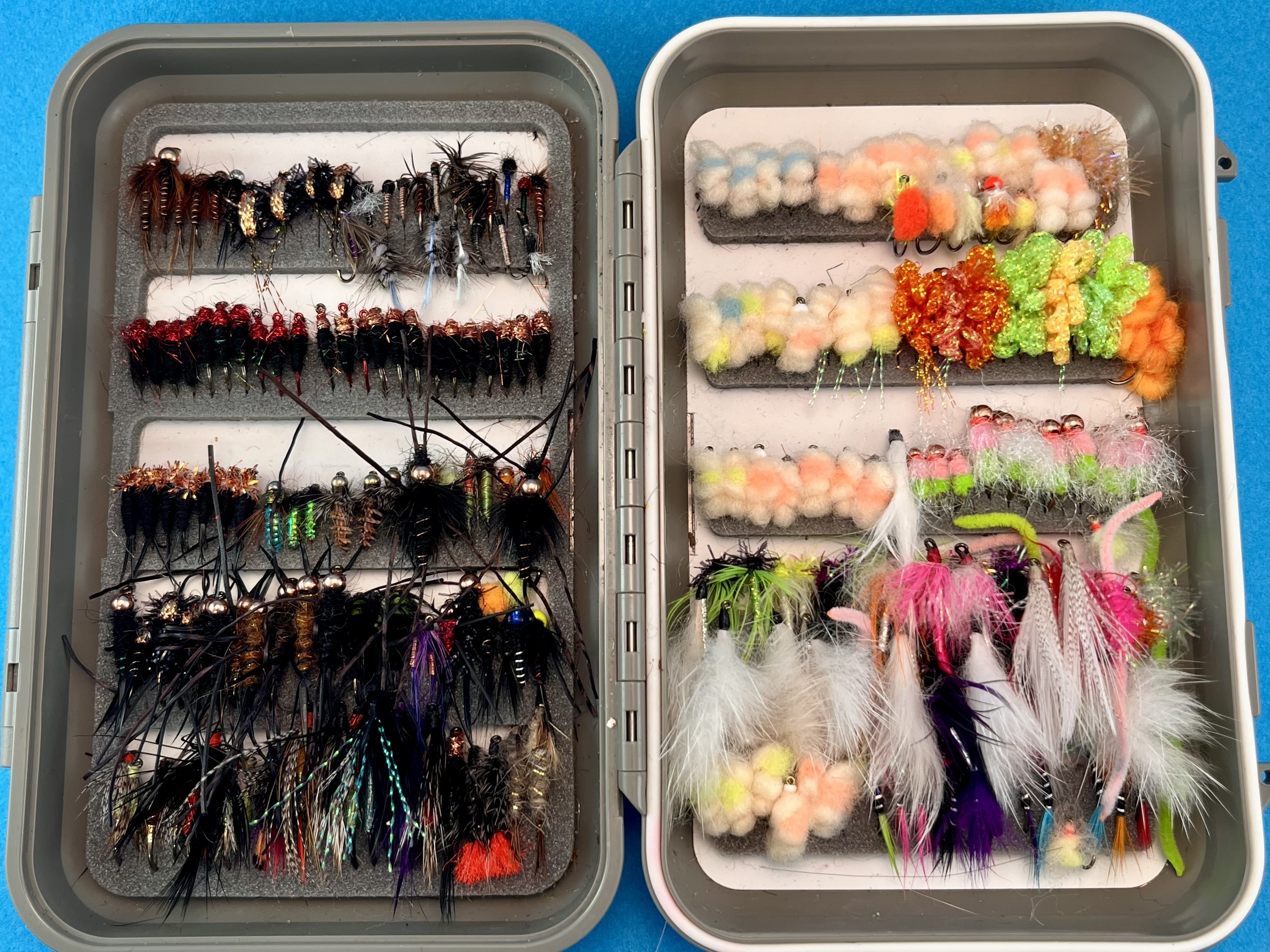
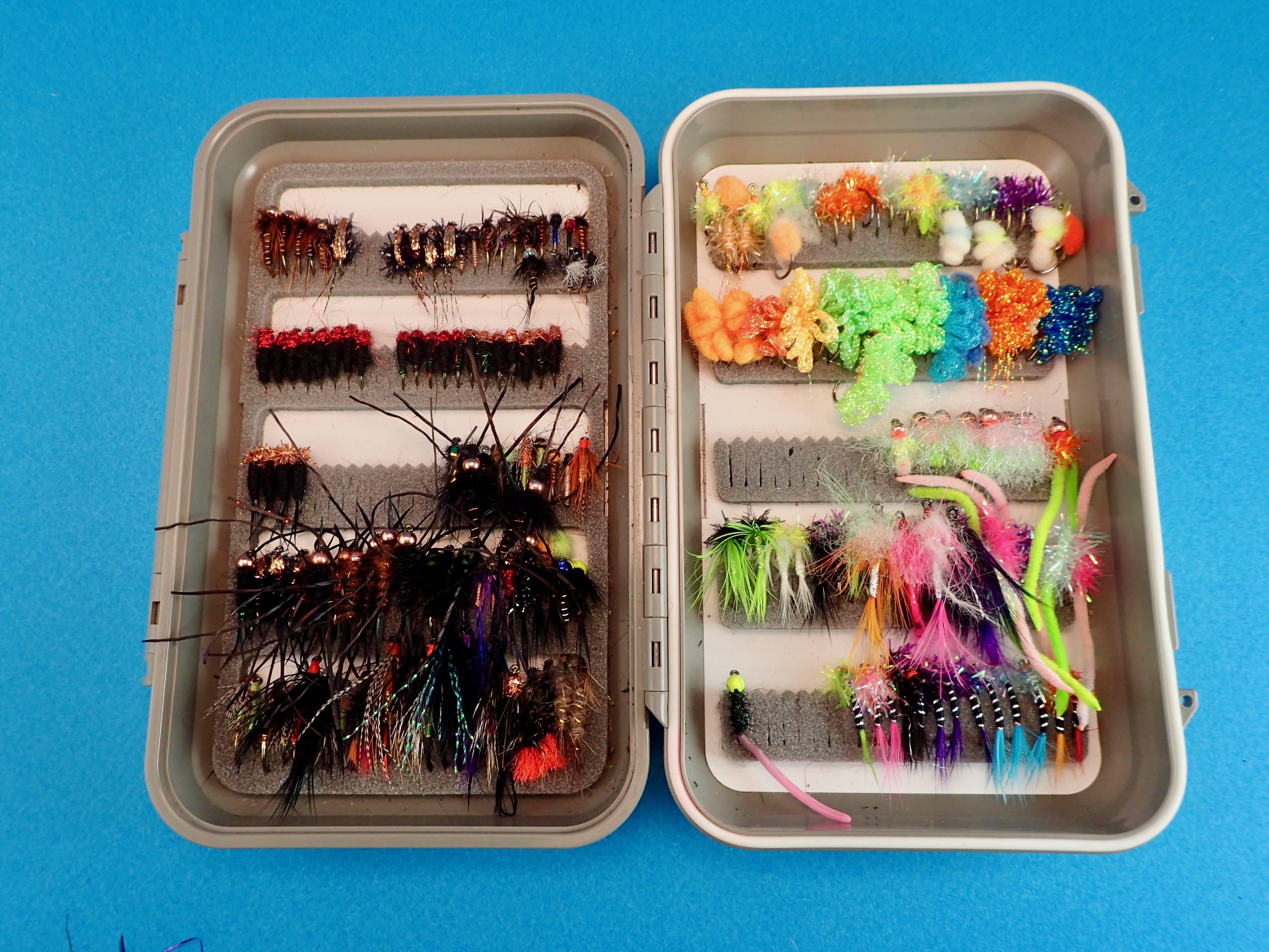
I’m not sure what the model number is, but I need another one of these C&F Design boxes. My intent is to have a dedicated eggs and attractors box, and then a more natural bugs/muted colors box.
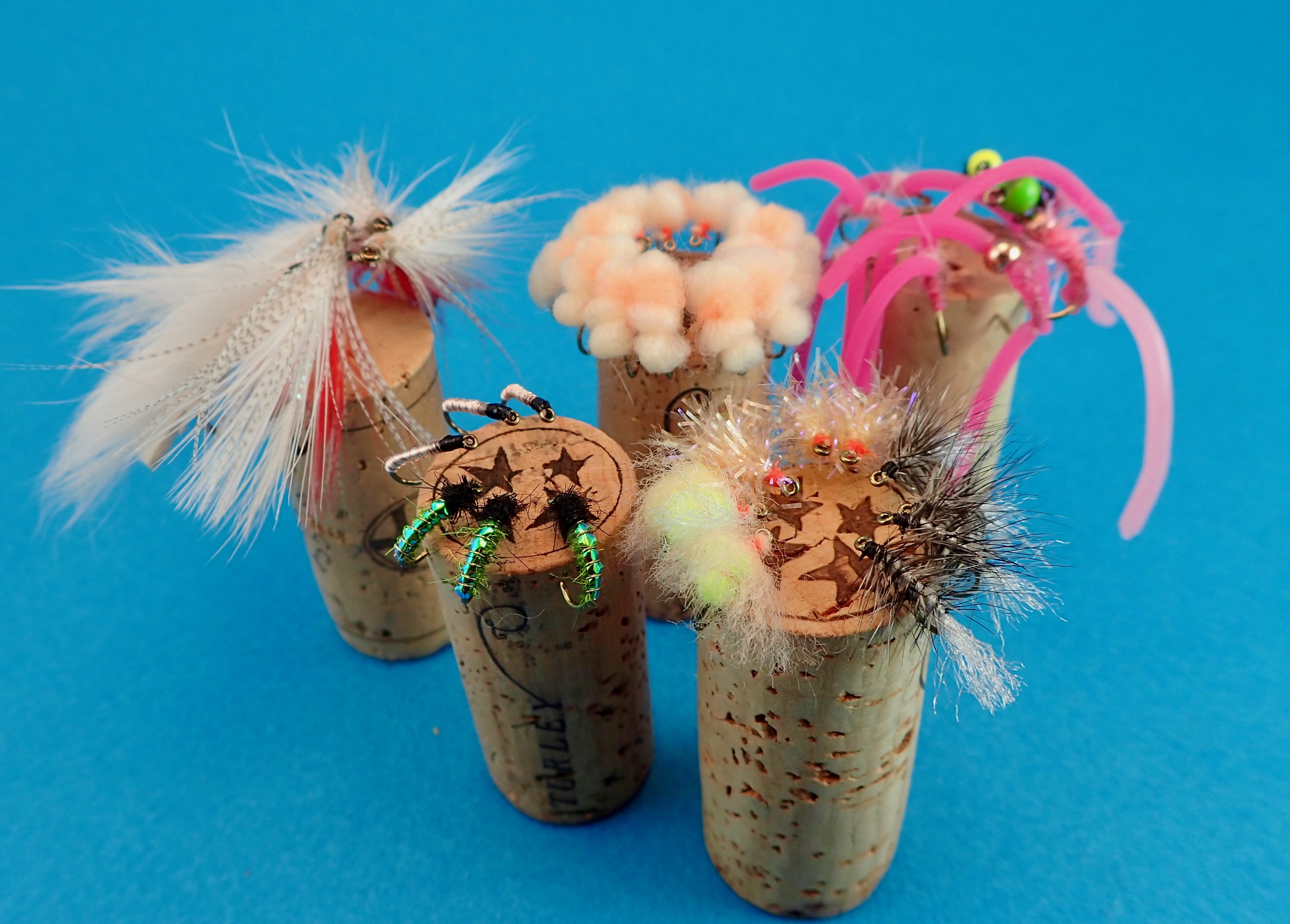
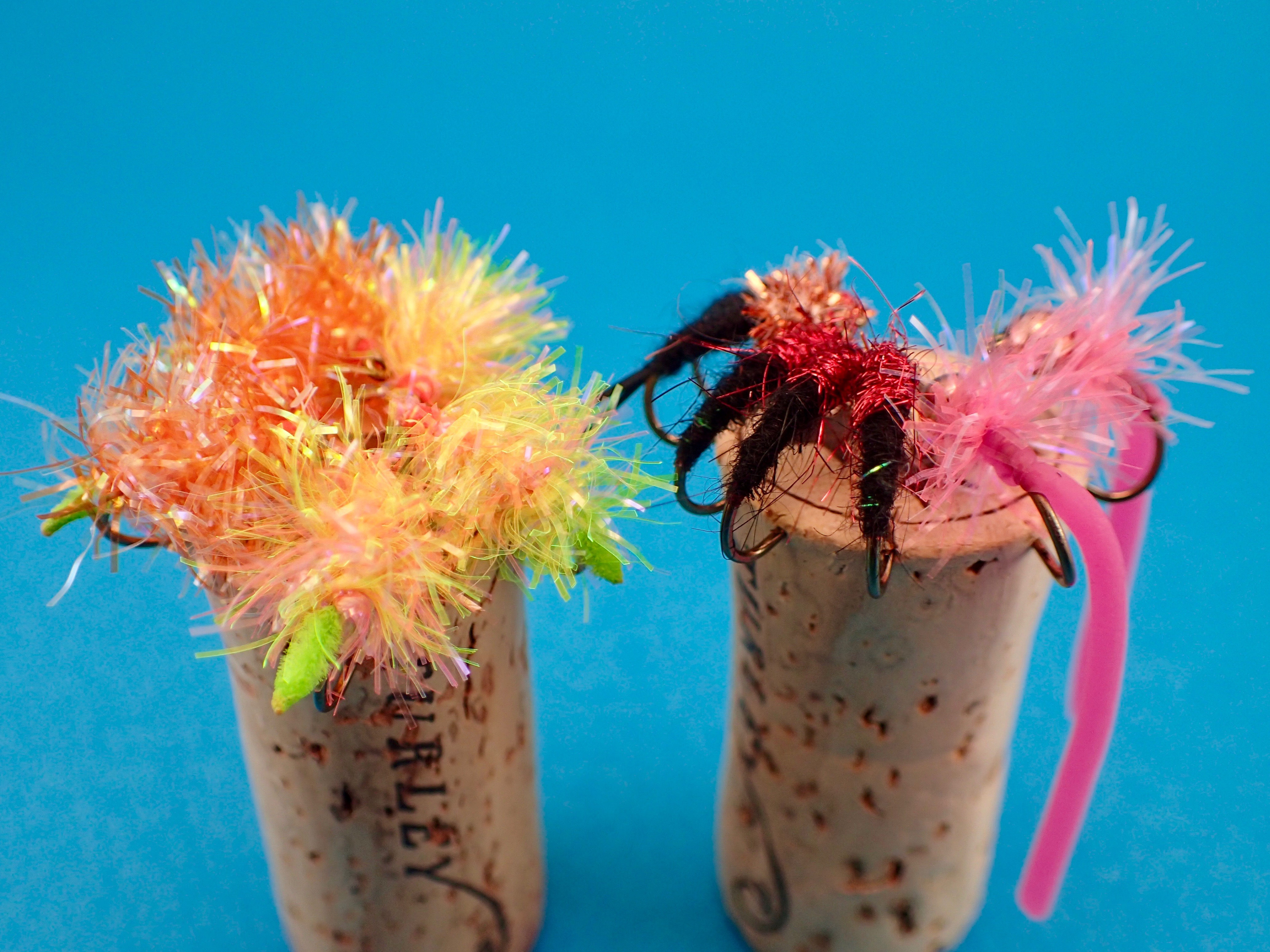
There are a few holes on the bug side that I’d normally fill with small, simple black stones for the Ontario tribs. The egg side is a little too large and loud, especially for the current low water.Time to fill some corks! Clockwise from lower left: sz 14 Electric Caddis and Yerger Miracle nymphs; Winger’s Mallard Minnow and Jeff Blood’s White Death, sz 10; egg/apricot supreme Blood Dots sz 14; various implements of Squirmy Wormy destruction; Kopczyk’s Super Fruit, and Murray’s Go-To and Mini-Bug, all sz 14. I got most of these patterns from John Nagy’s Steelhead Guide, the definitive work on Erie tribs steelhead. Let’s see where they fit in…Ready to go! I replaced the top egg row, which was mostly Estaz eggs, with more muted fare. The Blood Dots are a proven favorite. I love that you can fish a tandem rig in OH and PA, and I’m looking forward to giving the steelhead a choice. Steak? Or eggs? Both?…
About this time every year, my thoughts turn to steelhead, and of course, steelhead fly tying. I pull out my steelhead chest pack and the two fly boxes within its zippered pouches. The “big box,” as I call it (both boxes are, in reality, the same size) doesn’t change much from season to season — it’s mostly streamers and experiments and one-offs and flesh flies. The nymph and egg box, however, gets a serious going over and then a restocking.
But, things are a little different this year. I’ve got plans for two sorties to Steelhead Alley. These rivers and creeks are a universe away from a big, brawling river like the Salmon in upstate New York. They’re smaller, with different bugs and different water color and clarity and flow (very low right now) and different bottom structure. So I should be thinking differently with my flies.
What I’m currently tying up is generally smaller and more muted. I’ll give you a closer look next week. But right now, I’ve got corks to fill.
I first heard about Jeff Blood’s Blood Dot egg pattern years ago, but I’d never tied nor fished it until recently. Steelhead Alley guide extraordinaire Bob Packey of Solitude Steelhead Guide Service turned me on to it during last December’s smackdown on the OH and PA Erie tribs. I figure I caught about 90% of my fish on the pattern. Now, to be fair, it was also point fly on my leader the vast majority of time. But in some painfully low, clear flows, the Blood Dot proved itself over and over.
Then I took the Blood Dot to the Salmon River last month and again, it produced bites. When properly tied — and dunked in water — the fly does a wonderful job of transforming into a translucent, eggy mass with a suggestion of a yolk sac. It all stems from a very sparse tie using Egg colored GloBug Yarn with a contrast color dot. Here’s a tying video from the pattern’s creator, Jeff Blood.
Two dozen eggs, Blood Dot style. These all have a base color of Egg, with contrasting dots of Apricot Supreme (Bob Packey’s personal favorite), chartreuse, or blue. You can and should experiment with other color combinations. A classic steelhead guide fly. These are size 12.
This is the “Bead Head Stone, Rubber Legs” pattern from the first edition of Matt Supinski’s Steelhead Dreams. My spies in Pulaski tell me that this time of year, big stones with wiggly jiggly legs are all the rage, so I tied up a few (along with some long-legged Kaufmann Stone variants) to have in my box.
Here’s how I tied the Bead Head Stone, Rubber Legs: Hook: Orvis 1524 #8; Thread: black UNI 6/0; Legs/Antennae/Tail: black Life Flex; Abdomen/Rib: black SLF, copper wire; Thorax: black hen hackle; Bead: copper 5/32″; Head: black SLF.
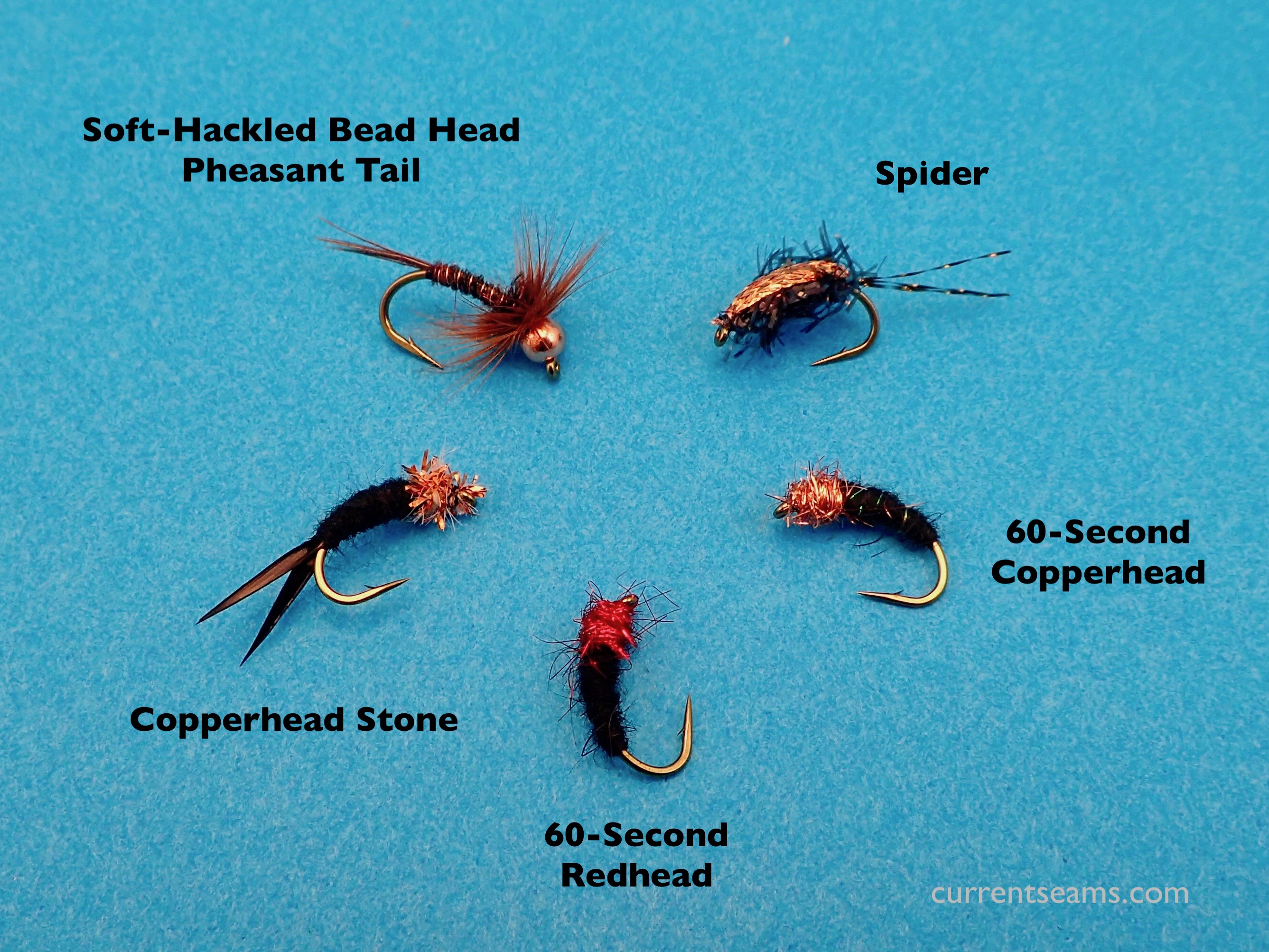
The best steelhead nymphs are the ones in which you have the most confidence. After all, “best” isn’t measurable. But if you buy into the old saw that the proof of the pudding is in the eating of it, I’d like to offer up five steelhead nymphs that have proven their worthiness on New York’s Salmon River.
So, what qualifies a steelhead fly as a nymph? For the purposes of this list, I’ve kept it to flies that are size 8 or smaller; flies that feature predominantly muted colors (hot spots, contrast points, and bead heads are allowed); and flies whose basic construct is at least 50% actual invertebrate driven. So, no bigger stoneflies here. No Steelhead Hammer types. And no black-light poster colors. Here we go, in no particular order. As a bonus, some of the patterns have links to my tying video.
Soft-Hackled Bead Head Pheasant Tail. I was pleased no end to discover that Salmon River steelhead would eat this rather muted pattern. I’ve done really well with this fly in winter.
60-Second Redhead. The beauty of this fly isn’t that if you lose one to the bottom gods, you’re not depressed because they’re so fast and easy to tie. It’s that this fly, which would never catch your eye in a retail bin, is like candy to steelhead when they’re eating bugs.
60-Second Copperhead. After pounding up so many steelhead on the redhead, I wondered if they’d like a version with a copper Ice Dub head. A wise old Salmon River veteran once told me, “It’s hard to go wrong on this river with black and copper.” He was mighty right.
Copperhead Stone. I landed my first steelhead on this fly, and years later, it still works. I remember one morning in the Lower Fly Zone when I was handing them out to everyone who wanted to know, “What fly are you using?”
Spider. Another ridiculously simple tie (notice a pattern here?): size 12 hook, black Krystal Flash tail, black Estaz body, copper (the original calls for olive or pearl) braid flashback. Designed by Clyde Murray for Erie fish, the Salmon River steelhead like it just fine.
My top five steelhead nymphs for the Salmon River in Pulaski, NY, are all very simple ties. Note that they all have some kind of contrast, flash, or hot spot. These are all high-confidence patterns for me, all proven producers, and it’s hard to go wrong with any of them when you suspect the steelhead are eating nymphs.
The Breaking Skein Glitter Fly is a Crystal Meth variant created by Joe Montello. I first learned of the fly in John Nagy’s book Steelhead Guide. If you haven’t read it, Steelhead Guide is loaded with productive steelhead fly patterns. Although its focus is on Erie tribs, I can tell you that the Ontario steelhead like the Erie flies just fine.
I’ve changed a few things from the original recipe; you can see what I use in the video. Here are Joe’s original specs:
Hook: Mustad 3366 size 12
Thread: UNI peach 6/0.
Tail: 3 strands pearl Krystal Flash
Body: Fluorescent orange or pearl sparkle braid ribbed with regular white Estaz between each loop of sparkle braid
The best colors for the Crystal Meth fly are the ones the steelhead want to eat…or the ones in which you have the most confidence.
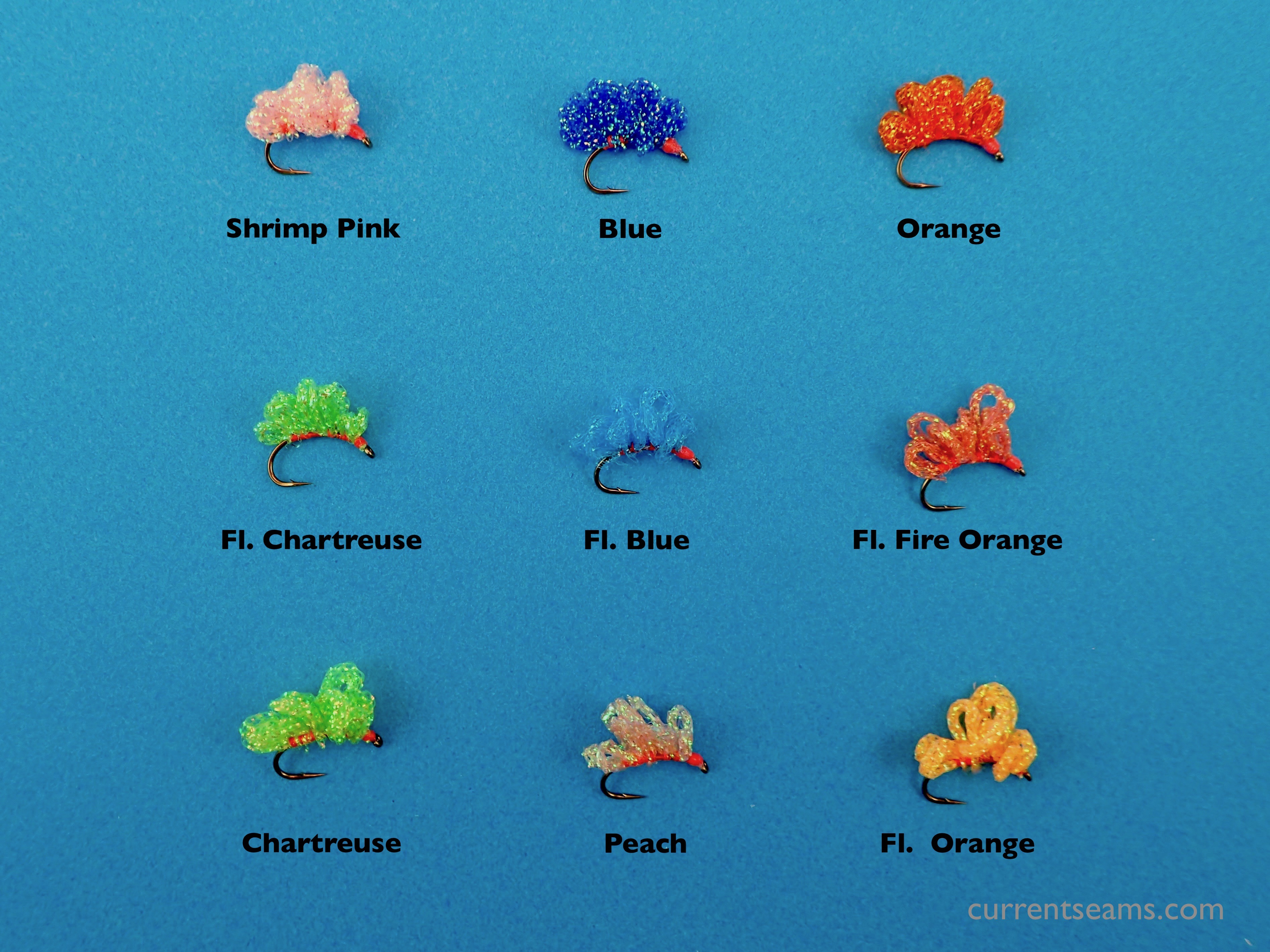
Debates on the best color for Crystal Meths, egg patterns, and beads for steelhead and trout are never-ending. Everyone has their theories. Everyone has their favorite colors. Everyone can prove you wrong. So I stand by my opening statement. In case you don’t know what a Crystal Meth is (besides one of the best fly names ever, right?) it’s a sparkled-up version of a Sucker Spawn. You can tie them with or without a bead and a Krystal Flash tail. When the steelhead are feeding below salmon redds — and even when they’re not — the Crystal Meth can be a very productive fly. And since they’re firmly in the junk/guide fly category, you don’t fret when you lose one to the bottom gods.
Our Lady of Blessed Crystal Meth — chartreuse — accounted for my only fish on this painfully slow day.
So, what are my favorite colors for the Crystal Meth? Here’s a handy-dandy photo reference chart. I use them all, but if I had to choose a top three, I’d go chartreuse, fluorescent blue, and fluorescent fire orange. YMMV.
Amidst some usual suspects (Clyde Murray’s Spider, left, and simple flashback stones, right/rear) a few midge/buzzer experiments. We’ll see how the steelhead respond.
Regrettably, I’ve spent far too little time this fall at the steelhead bench. To be fair, part of that’s due to a well-stocked box. Here are a few old reliables, and some eggy/junky stuff the steelhead might like.