Tip of the Week: Beware (or at least be aware of) the shadow hatch

Who knows why the trout aren’t eating your Hendrickson fly? The Shadow Hatch knows. Shadow hatches are so named because they are concurrent with — and less glamorous than — the hatch you think the trout are eating. In the case of the Hendricksons, the shadow hatches are likely to be tan caddis and BWOs, although in early afternoon, the tan caddis are the likely culprits. This phenomenon manifested last week during my lone outing. I was fishing a team of three flies: Hare’s Lug and Plover (caddis) top dropper, with two Hendricksons below. Hendricksons were in the air and there were rising trout. Yet all of my fish came on the Hare’s Lug and Plover. This is the strongest argument for fishing a team of three: droppers are always the fastest way to find out what the fish want.

This magnificent brown might not have eaten had I not given it the choice of a caddis. You can get a better view of the fish’s weight and size on my Instagram @stevecultonflyfishing — and while you’re at it, please follow me there.

Last week’s underwhelming Hendrickson outing

I managed about 3 hours of fishing last Tuesday, and it was a disappointing. True, I got my first few trout of the year on a swung wet fly. True, the weather was pretty darn nice. True, I rather enjoyed my Ashton VSG torpedo. But the bite and the Hendrickson hatch were disappointing. I’d give the hatch a 4/10 and the bite a 2/10. There just weren’t than many fish rising, and when they did, it was for an all too brief 30-minute window.

Some of the details: I fished with guide extraordinaire Steve Hogan for about an hour. He fished nymphs, I fished wets. He stuck several fish. I didn’t get a touch. We fished in the lower STMA. Water temp was low 50s, good medium-low flow. After Steve left, my action picked up, but again, only for a brief window. I then went to a mark a quarter-mile upstream and fished a 150-yard section with a team of wets, again without a touch. Normally, I would have expected at least a half-dozen fish. I heard from others who fished in the Canton area that it was similarly underwhelming.

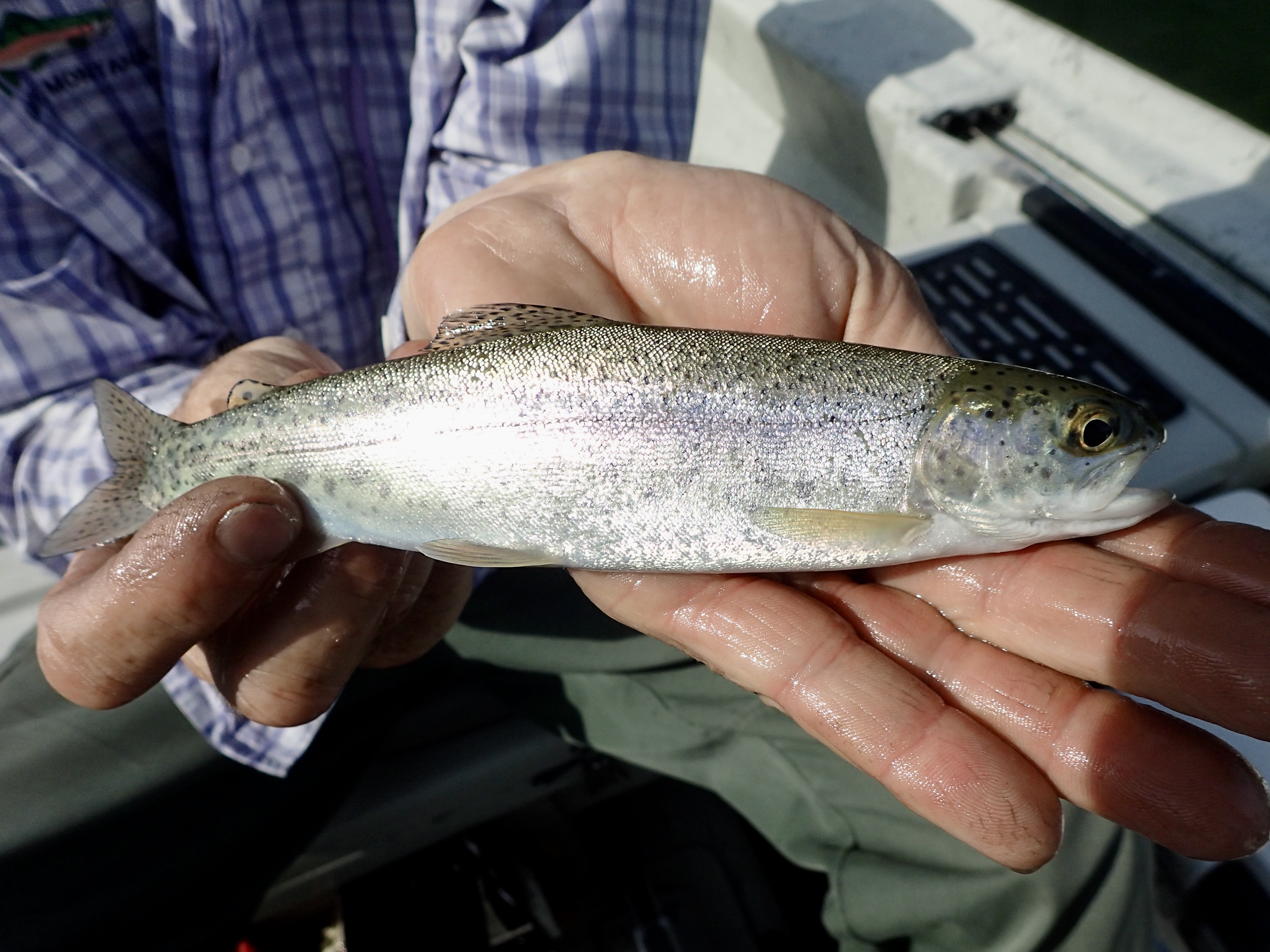
I just wrote the section in the book about ID-ing an Atlantic salmon smolt. They’re often confused with small wild browns, but once you learn the specific markers, you won’t ever again mistake a salar for a trutta.

I’m going to try to get out again this week, then continue pounding away on my keyboard. The book is nearing the completed draft home stretch, but not quite there. Still gotta round that clubhouse turn.

Farmington River Report: Fishing with Torrey, congratulations to Antoine!

In case you haven’t heard, veteran Farmington River guide Antoine Bissieux was just named the 2025 Orvis-Endorsed Fly Fishing Guide of the Year! In addition to being an exceptional guide, Antoine is also a friend and a contributor to the Farmington River book. You’ll get to see a few of his favorite fly patterns, and his wisdom will be sprinkled throughout the text. Congratulations, Antoine. We’re all tremendously excited for you.

From a photo shoot for the book this past August, Antoine patiently scans the water looking for a rise or the signs of a lurking trout. I’m grateful to have the opportunity to draw from Antoine’s knowledge and experience. When we’re out doing these shoots, I’m not only working — I’m also engaging in professional development: watching, learning, and just enjoying being on the river talented anglers like Antoine.

Speaking of anglers who know what they’re doing, I spent Wednesday afternoon on the river shooting Torrey Collins from UpCountry Sportfishing. We had a slow day; a cold front came through the night before, which was strike one. Bug activity was light (strike two) but we did see midges, early stones, and some olives. Torrey was Euronymphing, and we hit the lower end of the PTMA, and then two marks below it. It was a few stocker rainbows until Torrey connected with an archetype wild Farmington brown, a handsome buck in the upper teens. What was eye-opening to me was where Torrey caught him. I’d never fished there before, but I’ve driven past it hundreds of time without giving it a second thought. The more I write this book, the more I learn about the river — and the more you’re going to learn when you read it.

Torrey working the water, expertly covering every seam and hole in the pool. While I’ve fished in far colder temperatures, this was the coldest I’ve been on the river in a very long time. While the bite never really got going, we did our best and I got some excellent shots. Thank you, Torrey!

Swinging with Dave, 2H rods, fishing starting to pick up

I spent last Wednesday afternoon with Dave, who wanted to explore the river and learn how to swing streamers and wets, and give his trout spey rod some action. We hit several marks within the PTMA, both to fish and investigate. While the weather was gorgeous (mid 60s and sunny), the water was still very cold (below 40 degrees in New Hartford). That’s a little chilly to expect significant action on the swung fly. Still, we managed a couple touches, and Dave did a fantastic job casting and managing his drifts. In another time and situation, he’s going to be a dangerous trout-catching machine.

I don’t usually talk about specific pools, but when we hiked into the Boneyard — the gate is still closed — the advantages of the two-handed rod became glaringly evident. Especially if you’re swinging a streamer. Dave was making effortless 60-75 foot casts — well, semi-effortless — and reaching spots most single hand casters would struggle with. Food for thought if you’re considering the 2H rod.

Ed releasing a lovely wild brown his buddy nymphed up. The size of the fins and the fish’s skinny I-made-it-through-winter body told me that it has been in the river for a very long time.

After our session, I went to do some scouting for the book, and I ran into Ed and Drew from the Avon Orvis store. They were nymphing with a couple friends below the PTMA, and having some success. To illustrate how a cold front can squash the bite, I went back the next day to do more recon, and hit the marks where they were getting into fish. Not. A. Touch. The overnight cold front and gale-force winds clearly had the trout in a dour mood.

Still, the fishing is starting to pick up. And it will only be getting better as we get into April. Fish ’em if ya got ’em!

The Last Steelhead Blast from 2024

For the last three years, I’ve driven out to Ohio in December to pick up Number Two Son Cam from school for winter break. Oh! That’s right. There are steelhead creeks out that way. So let’s fish a couple days before we make the trek home to Connecticut.

It was somewhat miraculous that we even got to fish this year. After months of relentless drought, Steelhead Alley got bombed by lake effect snow in mid November. Then, it rained and the snow melted. Creeks were impossibly up and the color of chocolate milk. By the second weekend in December, there was a short window that we lucked into.

The price of admission was bitter cold and slush-filled, shelf ice-choked creeks. These are the times that try men’s souls (or at least those men who steelhead). Still, I’ll take time on the water in adverse conditions over not going at all — especially since Cam’s a senior.

Saturday morning was the third coldest temperature I’ve ever fished in. We slept in and went to a diner for a proper, civilized breakfast and coffee. We hiked through snow down to the river at 10am. Fishing was difficult due to slush conditions; you can’t catch steelhead if your fly isn’t getting down to them. Even though there had been some recent higher flows, the numbers weren’t up to the level we’re used to. What was there was in very cold temperature mode; getting them to eat was a matter of persistence, precision, and plain old fine fortune.
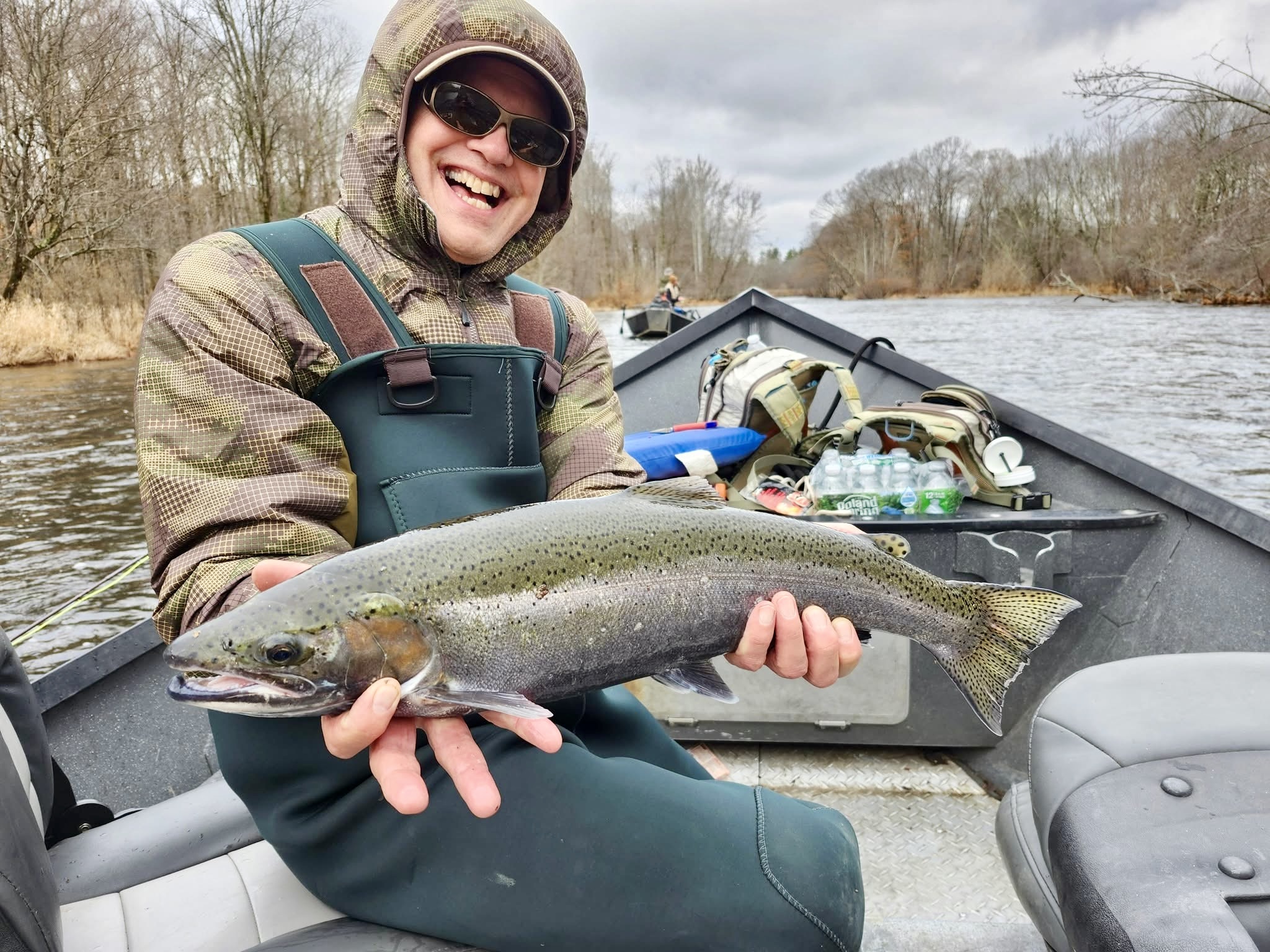
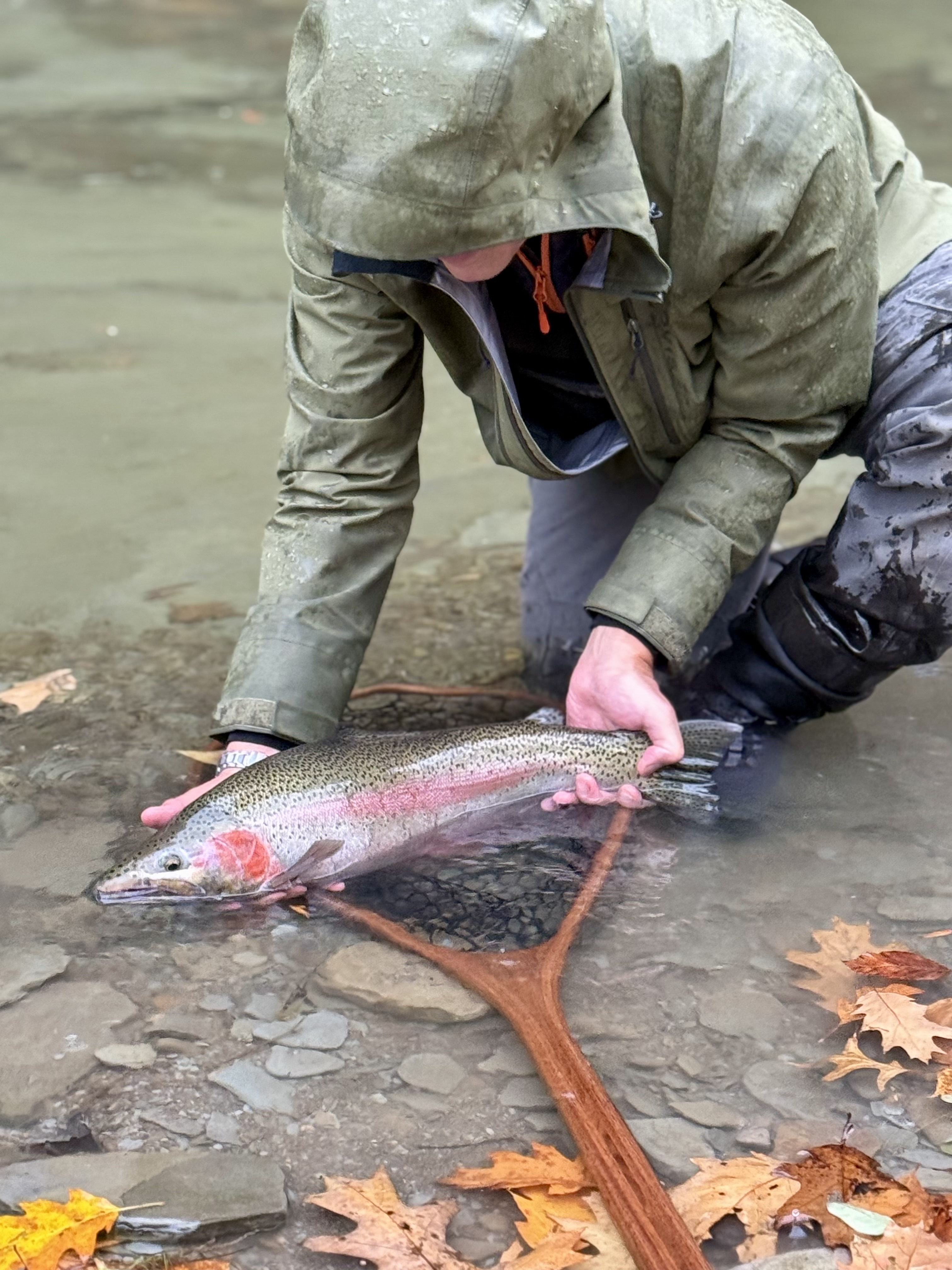
A chunky, pre-spawn hen, just beginning to color up. At the first mark, it took me hundreds of casts to get two fish to eat. I was targeting a pod made up of several fresher hens and a fish we dubbed “Old Blackie,” a very dark horse buck who was not the slightest bit interested in eating while he guarded his harem. At a second spot downstream, I fouled six fish; they simply would not eat. Finally, after pecking away, we found a hole that held a good number of steelhead that did not have lockjaw. The fish pictured here came from that group. Despite the non-optimal conditions, I had myself a day: sixteen steelhead fair hooked and in the hoop. I was so excited, I almost had a third cigar.
Cam had a tough go on the first day, mostly because he doesn’t really fly fish, and the conditions demanded flawless presentations. By the second day, he was nailing it, and tripled the number of fish he put in the hoop. This is from day one. Pro tip: apples are a great way to get some quality calories and a wee bit of hydration. I carry several in my pack on every steelhead trip.
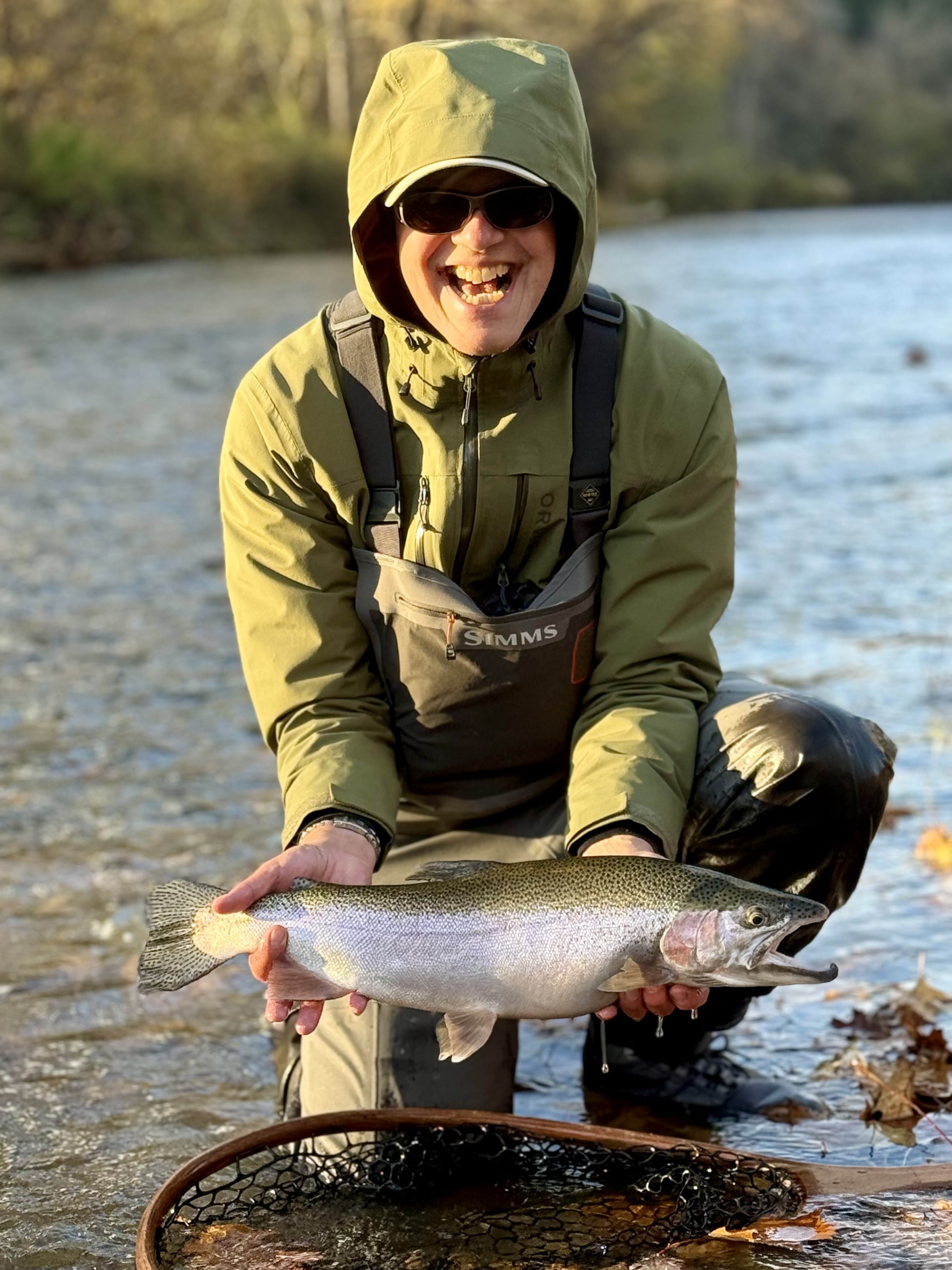
Sunday presented an entirely different form of winter fishing misery: temperatures just above freezing and rain. We thought the fishing would be better. It wasn’t. The steelhead had lockjaw like I’ve never seen. The creeks remained slushy and ice shelf challenged, and that certainly didn’t help. This guy would not eat, would not eat, would not eat, and then on one drift he did. No backing sighted, but he took me for a good hike along the creek bank, out of the pool, down a long, shallow shelf, down a riffle, then into another pool. Fantastic color, impressive shoulders, and a worthy opponent. And yes, it’s as cold as it looks.
We could see the fish, but when they’re not eating that can prove to be highly frustrating. Late morning, the bite suddenly turned on. After hours of lethargy, we actually witnessed a fish move to take my fly. Instead of repeated rejection, we had the jollity of our only double of the trip. But what we thought was the start of better fishing was merely a short bite window that snapped shut with cruel finality. The rest of the day was grind for every fish. My last steelhead of 2024 was a good one, though. We returned to the scene of our first stop on Saturday. Old Blackie’s harem was now one. Expecting only to maybe, possibly, hopefully getting the hen to eat, my first cast was, instead, stomped on by none other than Old Blackie. Poor guy was worse for the wear during his extensive time in the system: missing one eye, and he had foul hook scars all over his back. We removed a couple hooks from his flank and fins, then sent him back to make the next generation of Erie steelhead this spring. A shout out to our guide extraordinaire, Bob Packey of Solitude Steelhead Guide Service. Well done!

November Erie and Pulaski Steel Reports

I realize I’m squarely in the better-late-than- space. So rather than blather, let’s get to it.

We start with a brief PA Erie tribs sortie in mid-November. The water was painfully low, and that made fishing extremely challenging, especially in the public water sections of Elk Creek. I did one day on private water (with a dabble in public), and then a half day on public water.

Harsh conditions. They’ve gotten ridiculous rain and snow since then, so where I’m standing is probably up to my chest! The fish were on high alert — we saw raptors everywhere and several fish with bird attack wounds. If the water had a flat surface and you were in the fish’s vision cone, they generally wanted nothing to do with your offerings. Even in the bigger, deeper pools that held a hundred steelhead, virtually every drift went ignored. With little-to-no current it was difficult to even get a drift. You had to make ultra-precise casts to get them to eat.
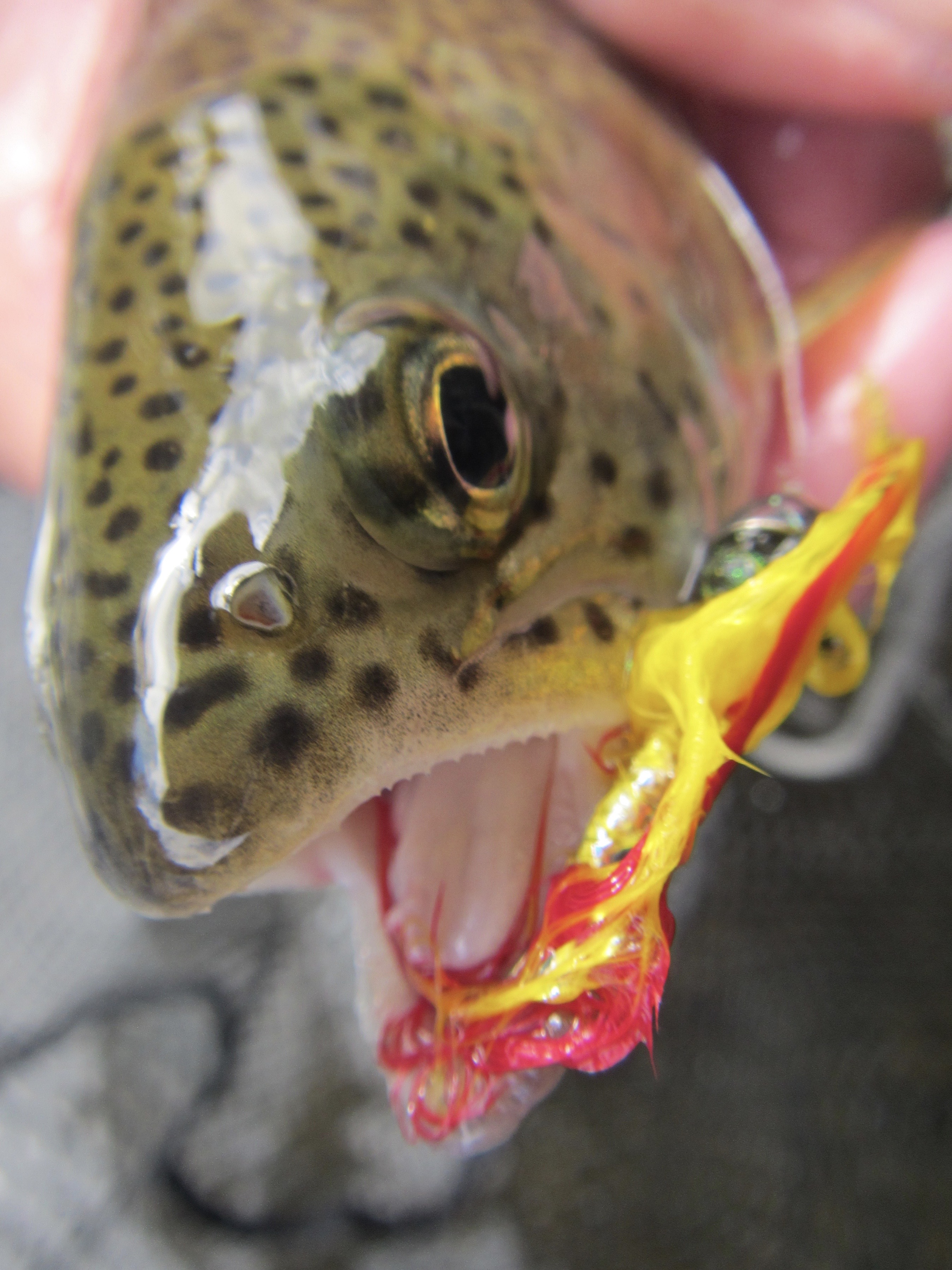
I had my greatest success targeting fish that held in the shallow broken water of dump-ins and pockets. One such spot produced two steelhead. Here’s one of them. We fished Blood Dot eggs, White Death Zonkers, and pink Squirmy Worms, and the Blood Dot was the overwhelming favorite. Since you can fish two flies in PA, all of the flies were dropped off an another Blood Dot. This was the first time I’ve ever fished for steelhead without any weight. I also tried a new tactic to get my flies into the lane: as soon as the flies hit the water, I dragged them as needed to move them into position. Success!
I finished the first day in public water. Holy hyper-spooky steelhead, Batman! It was extremely difficult to get into casting position, let alone present, without triggering the flight reflex. I managed one fish before a squall front moved in and blasted the area with gusty winds and torrential downpours. The next day, the creek was way up and running the color of tea with a dash of milk. Great color, but leaves were an issue. That influx of water moved all the steelhead out of the section I fished, and unfortunately no replacements came in overnight. I fought the good fight, but I didn’t get a single touch, and saw only one other fish hooked all morning. Time to head home and get ready for…

…Ontario tribs, and my long-awaited trip with Number One Son Bill. Bill had been steelheading before, but had never hooked and landed a fish. Under the watchful eye and excellent guidance of Row Jimmy, our mission was to change that. Like western PA, upstate NY had suffered from low rainfall. While the flows weren’t as dire, a float trip was ruled out. So crik stomping we went.

We arrived early and locked down a couple spots. I chose wrong, fruitlessly flogging the water for a three hours without so much as a courtesy touch. We had excellent conditions, and the clients of one of Jim’s guide friends had hooked 15 the day before. But something changed overnight in between dropping water levels (color was still good) and a dreaded cold front (I had ice in my guides until 9:30am. Nonetheless, Bill hooked and dropped one above me, so that gave us hope that creatures might be stirring. About 15 minutes later, yes! With pictures retaining their constant rate of worth, I’ll let Bill’s smile do the talking. Congratulations!

The rest of the day was peck away persistence fishing. I’ve never seen this creek so crowded, but people largely came and went because the action was virtually non-existent. It seemed like everyone had the same idea about the potential of the fishing, and then, once they realized they were wrong, left. We stuck it out, and I eventually landed three. With one more day to fish, we decided that rather than jockey for position and start well before dawn in the Altmar area, we would try some private water on the Salmon River.

We got a quarter inch of rain overnight, and that small amount was enough to move the fish out of our target run. Picture us standing in the rain at first light, wondering where all the fish went because no one is getting even a courtesy tap. Silver linings took the literal form of a few dime-bright steelhead fresh from the lake. Bill dropped a couple before hooking and landing a beautiful chrome hen, which he brandished with almost child-like delight. Though 1pm, all I had to show for my efforts was a silvery skipper.

I decided to attack a different section of the run, and it payed off. As my fly glided along the bottom of an uneven run, the indicator dipped as if it had somewhere else to be in a hurry. By the time I set the hook, the steelhead was running diagonally across and upstream, peeling off line at an astonishing rate. By the time he stopped, I could see the expanse of white that was my backing. I began furiously cranking the handle. As I regained precious line, the fish tuned and the line went slack. My heart sunk as I feared the worst. I even announced, “Fish off!” After I landed it, I remembered other such battles where the hook remained seated due to the tremendous drag of the line in the current. Next came the aerials, two of them, and I could see that I had a fresh fish the size of Bill’s. Bill grabbed the net and did a pro job netting the fish. Well, done, Bill! We decided to end on a high note, and victory was declared. Let’s go get a cheeseburger. I’m buying.

HCTU Awarded Legion of Meat Lovers Pizza with IPA Clusters and a quick striper report

Many thanks to the men and women of the Hammonasset Chapter TU for being such gracious hosts. They’re a passionate group of fly fishers, and we had fun before, during, and after the presentation. This group understands that a fed presenter is a happy presenter, and a very hoppy IPA was an added bonus. We talked about Fly Fishing CT’s Small Streams, and right about now is prime time for thin blue lines. We could use some rain, though.

On Tuesday night I fished a top secret location in LIS with surfcaster extraordinaire Toby Lapinski. We thought we might be in for a treat when Toby connected on one of his first casts with a metal lip plug — decent fish, 15 pounds — but sadly, ’twas not to be. Toby had three more hits, converting one, and I had a nice swipe from a decent fish, but no tug or pull. It was a gorgeous night for fishing, with a favorable wind, but there was precious little bait and no schools of fish.

So it goes…

I’d eat this…this is Ken’s Sure Thing, a three-feather flatwing about 8-9″, a fine choice to swing over a reef in the fading moonlight on a crisp fall night.

Shocking developments on the Farmington this week

The DEEP electroshocking crews will be on the Farmington River Weds through Friday. The river has already come down into the double digits cfs. Not to worry! This isn’t the MDC playing games with our fishery. Crews will be sampling within the PTMA. If you see them, please give them a wide berth, as they are collecting broodstock for trout you will catch in the future. I’ll be on the river Thursday taking photos for the book. Now back to our regular programming.

Farmington and Housy last week: Slow, Slower, Slowest

This can be a tough time of year to fish. A lot of what is hatching is small. Usually flows are low (not the case in either river) and warmer (ditto). Over three days, I saw very little bug activity, and the feed bag was never on. Still, there were some bright spots in all the dreariness.

Monday, August 26: Housy (Slower). I fished with fly tier extraordinaire and fellow smallmouth bum Lou Di Gena from 3pm to 8pm. It was not good. I managed to hook four smallies in five hours of fishing. I should be hooking four smallies on consecutive casts. Bug activity was minimal (small caddis) and there were no fish in some incredibly sexy new water we fished. We ended up in a pool where I once landed 50 smallmouth in an evening. Painfully slow that night. Of course, it’s hard to be bitter when you land your biggest bass of the summer…even if it was in the first 10 minutes of fishing.

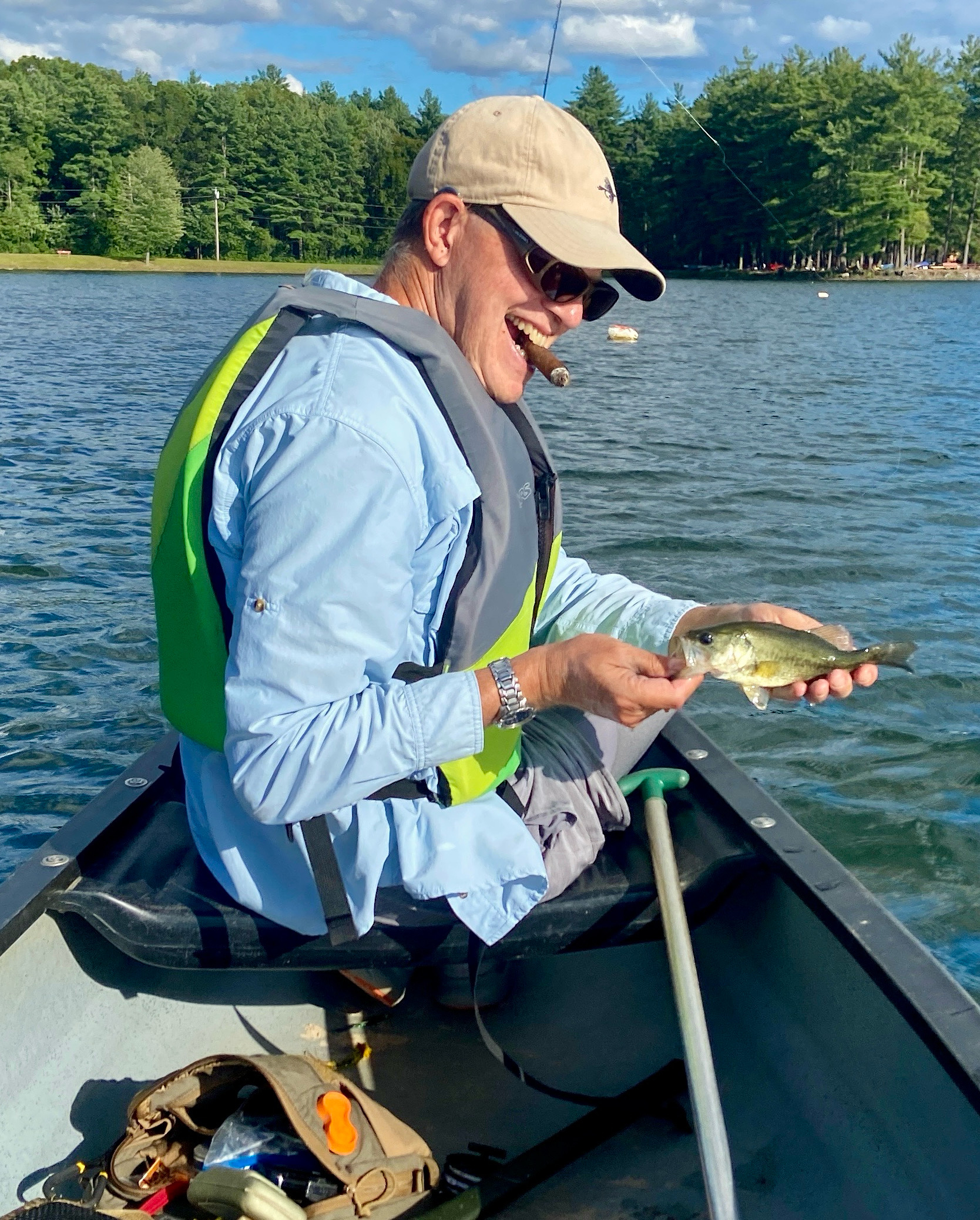
This slob went 17″ and somewhere between 2 1/2-3 pounds. Taken under an indicator with Lou DiGena’s CE Crayfish, a small (2″) weighted pattern. A real forearm burner! (Photo by Lou DiGena)

Wednesday, August 28: Farmington (Slowest). This was a photo shoot day with fellow Farmington River guide Antoine Bissieux. He fished from 3pm-7pm with dry flies — I joined in for the last hour with wets — and it was disaster slow. We fished a mark below Riverton, and hatch activity was slim to none. I don’t think I counted even a half dozen rises in three hours. Antoine blanked (to give you an idea of how pathetic the action was, it was his first skunk of the year) and I managed only four bumps and one fish to net. The bumps were half-hearted, and the one I did land was arguably the worst hit I’ve had all year on a wet fly. (Insert heavy sigh here.)

Take your time, Antoine. You’re not missing anything.

Thursday, August 29: Farmington (Slow). I gave a wet fly lesson to Corey and his son Matt from 3pm-7pm. We started off in the bottom end of the PTMA, but that was not a happening place, so we headed north. Another mark, although quite fishy, was disappointing. Both Matt and Corey had some bumps, but no real hookups. Farther north was the call, and I’ve never seen the area below the dam so crowded. My best guess on the crowds is that anglers thought there might be pre-Labor Day stocking? (There wasn’t.) But we found a very nice section to call our own, and had at it. Ding-ding-ding! It was the winner bell and the dinner bell. Both Matt and Corey brought fish to net, and it was gratifying to see their hard work pay off. Well done, gentlemen!

They’re not big, but wild brookies on the Farmington are always a treat.

(Late) Farmington River Report: Trout (mostly) open for business!

My apologies or not getting this out last week. I’ll try to be a little more timely. The good news is that the terrible weekend rains mostly missed the Farmington, and the river has been fishing very well. Last week I guided Dan for a late afternoon-into evening session. The focus was on dry flies, and we started off with a hopper/dropper system. (‘Tis the season! And I promise, no more parenthetical statements.) We discovered a pod of trout taking emergers in a shallow run in bright sunshine. When Dan dialed in his cast and drift, his hopper got crushed by a very respectable mid-teens brown. We found another run formed by the confluence of two sections of river, but we couldn’t buy a hit. Even when we switched to wets, it was no dice. My best guess is that they were feeding on something far smaller than what we were throwing.

We ended the session at a classic dry fly pool within the PTMA. Hatch activity (22-24 BWOs, 18-20 Summer Stenos, and later, 12-14 Light Cahills and an absurd number of midges…and I guess I fibbed about the parenthetical statements) was light until 8:30pm, but Dan managed to stick a nice fish on a 22 BWO dry. We used a 14-foot leader-tippet system terminating in 6x to get better drifts in the languid, glassy pool. At 7:30 I was able to join in the fun. As predicted, that wild brown feeding just off the rock in the frog water got stupid as it got dark, and I took him — with great delight — on a size 16 Catskills Light Cahill dry. Both Dan and I had good action until we could no longer see our flies.

The next day, I shot some drone photos for the book with filmmaker extraordinaire Matthew Vinick. I fished for about 45 minutes below and within the PTMA until he arrived.

I was fishing some water in the PTMA I really haven’t spent any time in for at least five years when I connected with this gorgeous creature. She was part of a pod of trout taking emergers, and she chose my Squirrel and Ginger top dropper. Matt and I went to a couple other pools in the PTMA to shoot, and then we had places to be.

~

I had 30 minutes to fish before I had to pick up my son at Bradley. So I ventured into some snotty, treacherous water that’s rarely fished. This rainbow hit the Squirrel and Ginger so hard that she peeled off 20 feet of line before I could adjust my drag. The photo really doesn’t do her justice — she was fat and powerful and wonderful, and she just wouldn’t sit still for a picture.

~

There’s a happy guy! My last customer of the day was the best. She was feeding in a slot near the shore, and it took some maneuvering to get into a good position to present my team of three. This is where it helps to be physically fit (and carry a wading staff). There’s no way I could have reached her without being willing to wade into some dicey currents. Measured against my net, this is a high teens fish (I refuse to thrust a fish at arm’s length into the camera) that took an Isonychia soft hackle I’ve been prototyping for a year. I’ll publish that pattern soon, but in the meantime, I can tell you this: big fish like that fly. You can see a fly-in-mouth shot on Instagram, probably Tuesday.