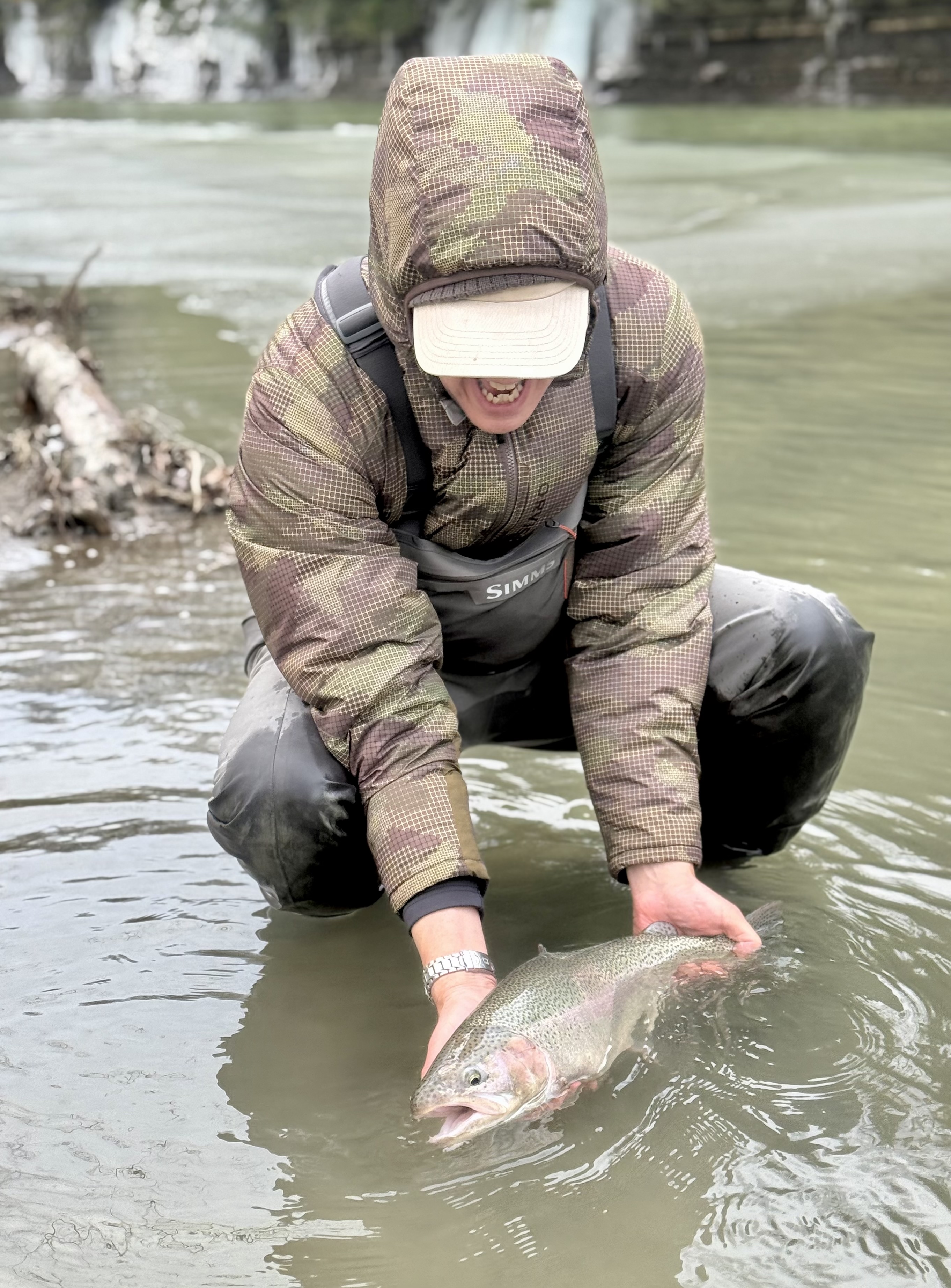
Fly Fishing the Everglades, Day 2: The thrill of defeat and the agony of… well, nothing

I’d come to the Everglades with a single purpose: land my first tarpon. Oh, sure, I’d take all the snook I could get — I love snook — but tarpon was the prize.

There were only two problems. First, the weather. It had been been a colder than normal spring and the water temp wasn’t quite where the tarpon like it. But, nothing can be done about that. The second problem was of my own doing. I’d already had one shot at a tarpon on day one, but completely blew the hookset. I’d have to do better on this day.

We arrived at the scene of yesterday’s rolling tarpon to find only 1/3 the number of visible fish. That was discouraging, but we nonetheless had at it. I was really feeling like I was going to get my first tarpon, so much that I said it aloud. And that’s where problem two reared its ugly head. For some reason, even though I knew otherwise, my brain was telling me to wait to feel the weight of the fish before setting the hook. Eventually, a tarpon roared out of the shaded mangroves, struck the fly, and once again, I missed it. The lesson was driven home by an inspection of the leader; the first six inches above the fly bore the marks of the edges of the tarpon’s mouth. It was proof that fly was inhaled deep enough to get a hook set. As Charlie Brown would say: “Rats.”

I tried not to let it bother me. Really, I did. But I was mad at myself for missing yet another opportunity, especially since the winds tomorrow were likely going to be strong enough to make the Everglades a non-starter. Plus, who knew if we’d even seen another tarpon? I decided to not let it wreck my day. After all, I was fishing in the Everglades with my oldest son, and smoking cigars. That’s a win.

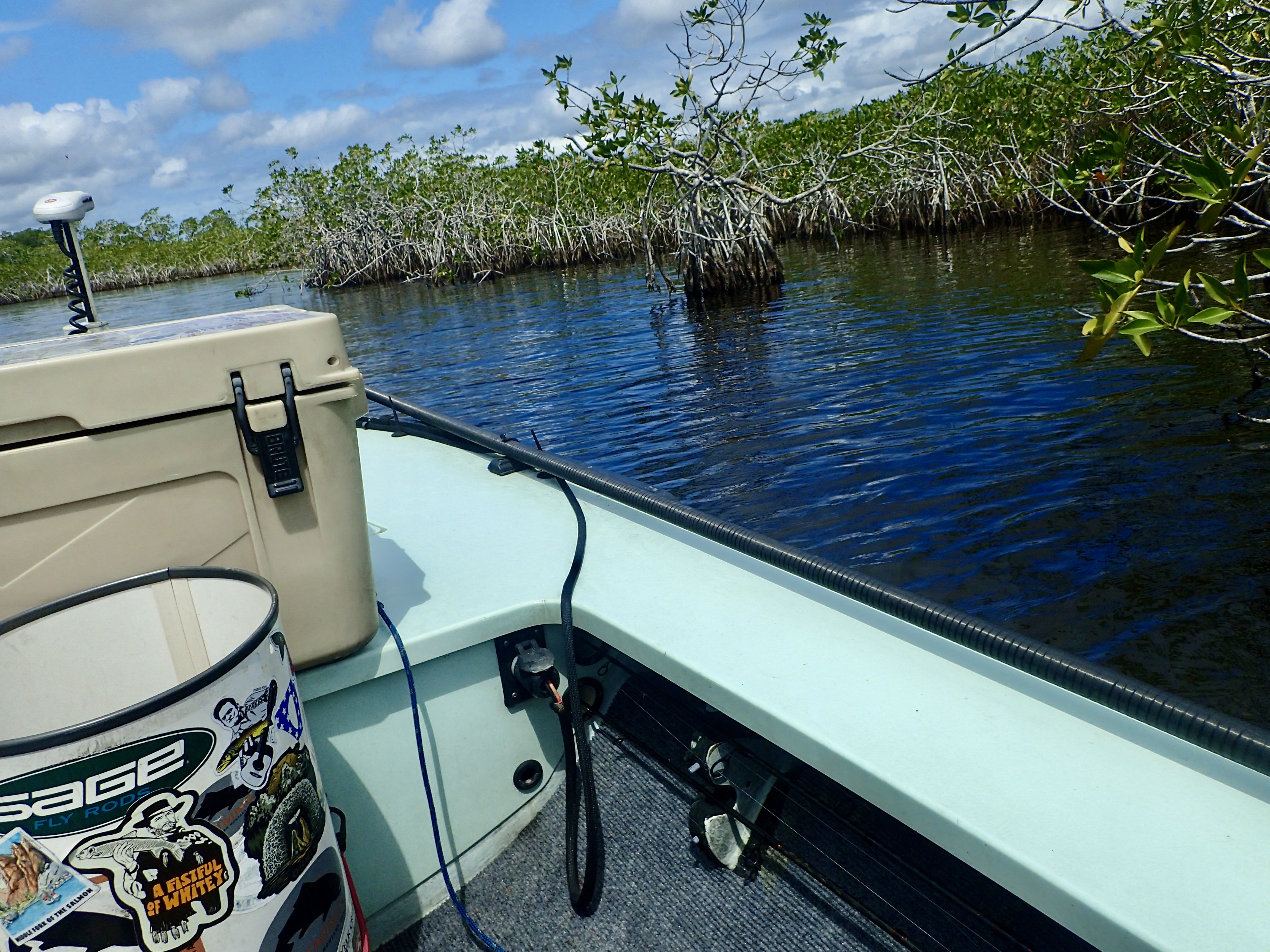
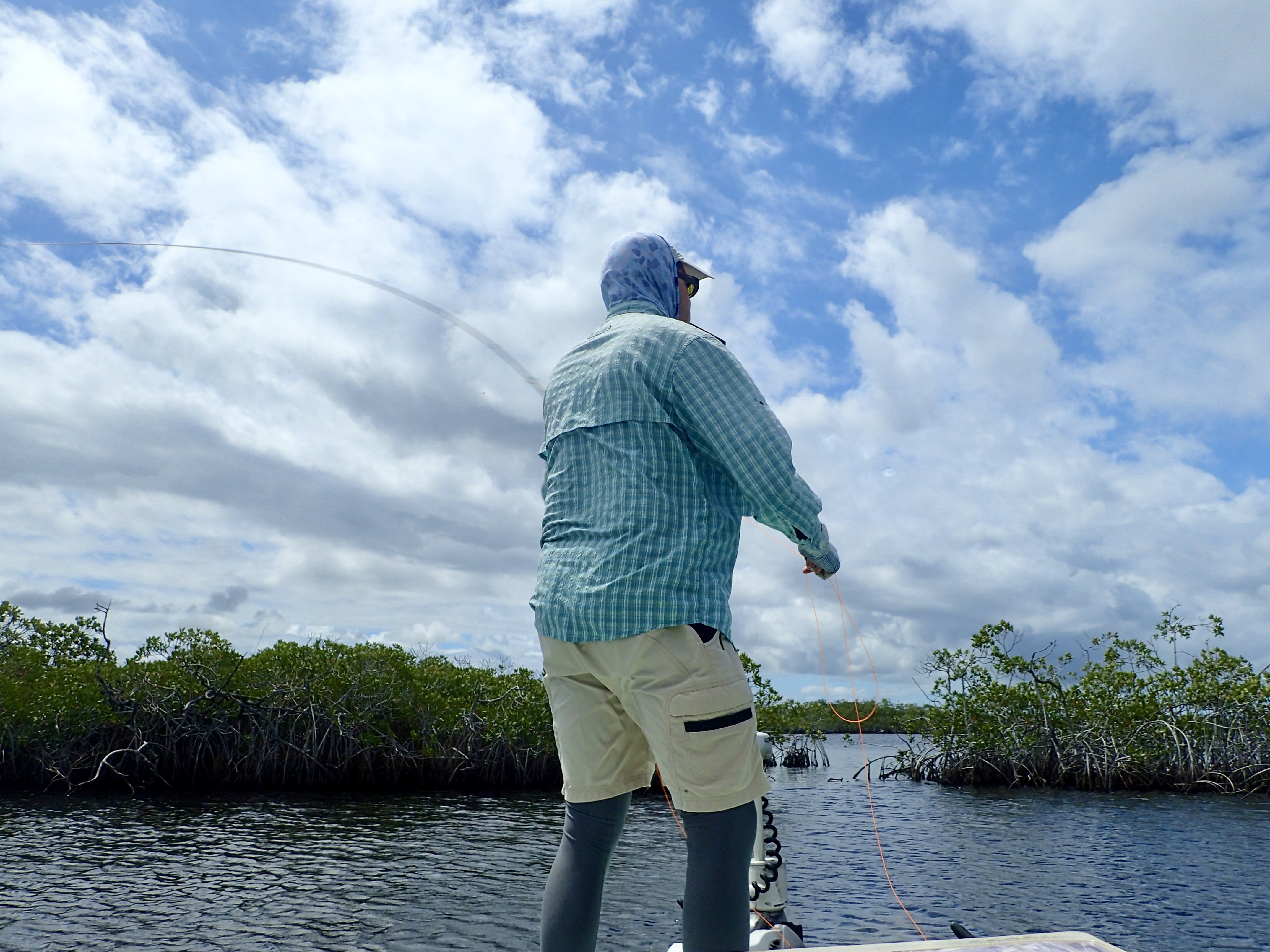
Since the snook bite generally stunk, we decided to lightning raid as many creeks and lagoons as we could in hopes of finding our target. Finally, after silent electric motoring up a mangrove-covered creek entrance not much wider than the boat, we found a roller. As I set up to cast, I reconned the surroundings and reinforced the procedure: on a hit, I’m not waiting on my strike. I’m setting low and hard to my left. I was repeating it like a mantra while imagining the movement.

First cast. No love.

Second cast, same result.

Third cast. Here he comes! It all happens so quickly that your conscious mind really can’t separate the greenish flash of the sun off flank, the water bulge and then boil around your fly, the sudden tension on the line, and the sound of violent water displacement. It’s almost simultaneous. This time, I was ready. “Down hard and to the left.” It all went down in one exhilarating moment, and I made the move and stuck the set.

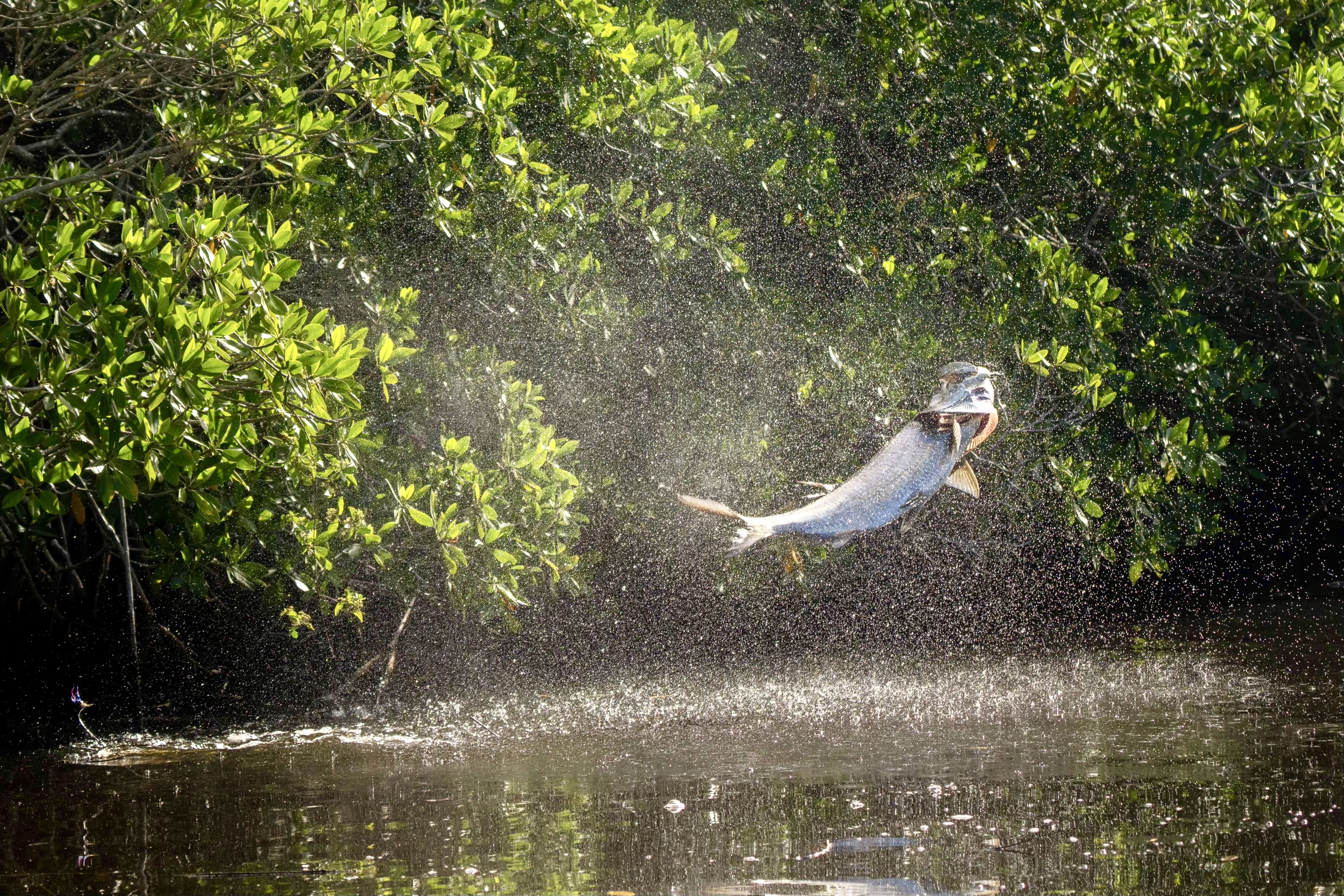
The tarpon thrashed on the surface, then sped away from the boat like a perp in a getaway vehicle. “Let him run!” shouted Capt. Mark, but I needed no coaxing as this fish immediately put itself on the reel. The first jump was a spectacle of power and fury, the spray shimmering in the morning sun like a thousand tiny LEDs. The tarpon made a sudden 180 and swam back to the boat. “Keep that line tight!” Reel fast!” were the captain’s instructions, but I was already doing it. I cranked furiously, still tight to the fish. It was at this moment that I knew I was going to land this fish. But I didn’t plan for the mangrove wild card.

The fish moved to the left, just ahead of the boat, toward a treacherous-looking mangrove root system. (There are also multiple dead roots/branches/tree remnants in any given space along the shoreline). I thought I steered the fish out of harm’s way, but when he made his second leap, the leader hung up on a submerged root and the fly popped off. I was left with the temporary illusion that the fish was still on — the hook was stuck below the waterline — but I knew in my heart the tarpon was gone.

The last blast, the moment the tarpon escaped the bond of the hook and line. You can see the fly, stuck on the tiny branch peeking out of the water on the lower left. The fish landed with a thunderous splash. Then it was gone. Photo by Mark Giacobba.

Now, you might think at this moment that I would be in a state of shock and despair. But no. Just the opposite. I was giddy, almost chortling. Amazed and full of wonder. That was terrific! I wasn’t about to let a little bit of bad luck ruin my day. For I had quietly, patiently stalked my quarry, waited for that moment — and then, finally, fully prepared, was ready. I’d done my best. And that’s all anyone can ever do.

You know, I’m thinking that I’m going to land the next one.

Fly Fishing the Everglades, Day 1: The Snook Files

I love living and fishing in Connecticut. But if I had to choose one other part of the country in which to live and fly fish, it wouldn’t be an easy decision. Western PA and NE Ohio (steelhead and smallmouth) would get some consideration. Colorado would be a worthy choice, as would Montana — all that blue ribbon trout water! Then, there’s the Everglades. So vast, so mysterious, so alien, so loaded with fish and fly fishable water that you couldn’t possibly cover it in a lifetime. I really don’t know where I’d choose, but the Everglades might currently be at the top of the leaderboard.

I’ve now fished the Everglades three times, the last in November of 2021. I was ready last year, but too busy with the book. I wanted to go in the March through May window, prime time for tarpon, because I’d never hooked one, and you’ve got to hook one to land one. Color me eager on tarpon. Then, there are snook.

While tarpon are one of my bucket list fish, I’ve caught snook before. I’m a big fan. They’re ambush predators that lurk in the submerged mangrove roots, and their attack speed is breathtaking; they go from zero to meteor-reentering-the-atmosphere-fast when they see a meal. They fight like the dickens, even the smaller ones. Think of a sleeker, faster, more agile striped bass, and you’ve got the general dope on battling a snook.

Snook country. While the Everglades can look like one expansive lake, you’re looking for structure along the shoreline, whether near open water or in one of the hundreds of labyrinthine passages that lead to a lagoon, and sometimes to nowhere. Downed tree in the water? Make a cast. Dining room table-sized cove in the mangroves? Make a cast. If a snook is nearby, and you don’t spook it — they’re in a constant state of red alert — it’s going to move with a sense of urgency to your fly.

Once again, I was fishing with Capt. Mark Giacobba. Tarpon were first on the agenda, and we spent the better part of an hour getting to the mark. Right on cue, we found rolling fish. (Tarpon will come up to the surface to gulp air, and these “rolls” give away their position.) To make a long story short, I had two follows and one take upon which I completely blew the hookset. A little later, we found some 40+ pound fish in a shallow lagoon, but they were immediately on to us, and skedaddled for points elsewhere, leaving opaque clouds of silt in their wake. With the sun continuing to climb (we’d launched at 6:30am), the target turned to snook. Hell, yeah. Let’s go.

This would be a good time to say that the fishing has been a little off in the Everglades this spring. The nights and mornings (and, consequently, the water) have been cooler than normal. The snook bite was funky; it was either action on the first few casts or nothing. We bounced around from mark to mark, staying when there were fish, bailing when there weren’t. I held off taking any pictures since I was hopeful to lock into a bigger one, but ’twas not to be. You can see one of the smaller fish I landed on Instagram @stevecultonflyfishing.

Pounding the structure. It took me a while to get up to speed, as this kind of fishing is truly different from what I normally do back home. We took a few subsurface, then switched over to topwater, which produced some explosive takes. You cast, give the bug two short pops (“Knock-knock” as Mark described it), then let the fly sit there, and wait. Maybe a couple more knocks, then it’s recast and send it to an adjacent area. You don’t strip in the fly, and it never gets even halfway to the boat before you recast. On this day, the snook weren’t shy about making their presence known. If they weren’t there, we motored.

Th final tally was six snook and one sea trout. Not great. Not terrible. Definitely fun. Up next: Day 2. It’s a story of disappointment and redemption (of sorts). You’ll see.

Farmington River Report 3/9/26: “These two guys walk into a river….and nothing happens.”

It seems ridiculous to say — especially since I wrote the book — but yesterday was my first day in 2026 fishing the Farmington River. I was going to go last Friday, but I deemed it too cold, and decided to wait for more clement conditions. Turns out, the giddy sun and warmth had zero impact on the catching.

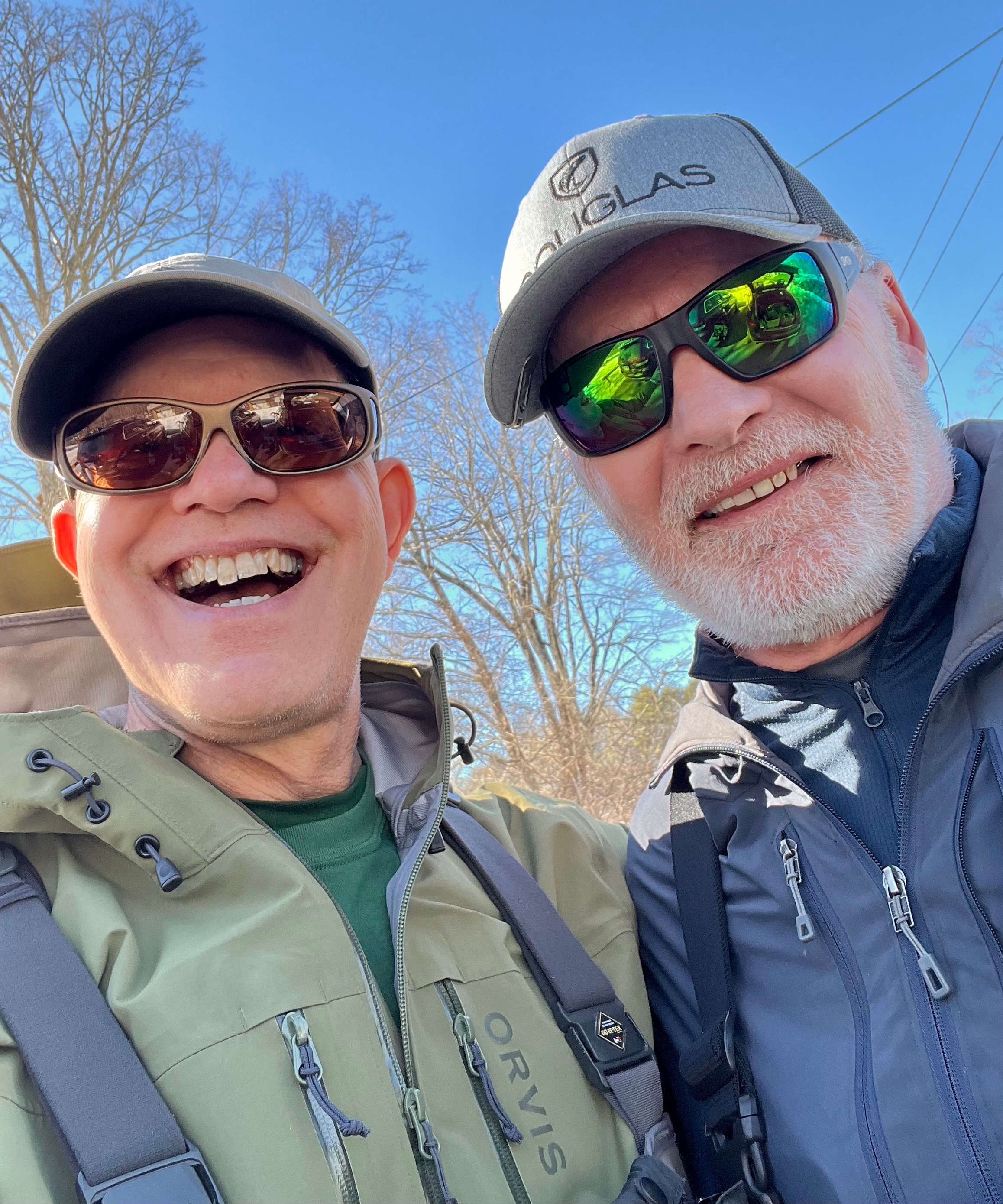
We (Farmington River guide Steve Hogan and I) decided to fish above Riverton based on two factors: the water would be warmest there (we took two readings and got 38.5 and 44(!) degrees), and it would be lowest and clearest due to it being above the Still River. As you can imagine, the false late spring weather drew crowds of anglers; I can’t remember the last time the Riverton town lot next to the bridge was jammed so full of vehicles. Nymphing was the game, and we hit multiple pockets and runs between the dam and the town. Parking wasn’t easy as there was still a substantial amount of snow lining Hogback Road.

I told Hogan that I grade myself when I’m fishing and not catching, and I gave me a B+/A-. I do this because If I’m not catching, I want to make sure that it’s not because I’m committing some fundamental error or missing strikes. Folks, I was on the bottom all day and I no longer have the flies to prove it. I dredged up several nice sticks. We saw midges and olives and couple other un-IDed bugs. What we didn’t see was a fish caught. Not us. Not anyone. But, better fishing is coming. A lot happens this month. We’re just three weeks away from April!

Early March is one of the toughest windows to fish on the Farmington. We gave it about 3 hours, then called it a day, which, given the sunshine and warmth and cigars, was not bad at all despite not having even a courtesy tap.

Erie Tribs Steelhead report 2/25: “Please sir, I want some more…”

I don’t mean to sound greedy. But after potting 23 steelhead and breaking 300 on Tuesday, all I could think about was landing more.

Fair enough, but things don’t always work out the way you hope they would. How many times have you planned a fishing trip, only to see Mother Nature and the elements conspire to crush your dreams with cruel indifference? We were supposed to get 3-5 inched of snow overnight, which would mean slush-filled creeks for most of the morning. And with temperatures predicted in the upper 30s/low 40s, melting would follow, then runoff. I didn’t have a good feeling.

But forecasts change, weather people are notoriously often not right, and we got only an inch of snow, if that. We were so optimistic, we started the day an hour earlier than yesterday. There was a little slush in the system, but far less than the day before, and it was all gone within an hour. Best of all: no one was out fishing. We saw three other anglers all day, and then only for a couple hours. That meant I could bounce around the creek and fish wherever my little heart desired. (My phone later told me that I’d walked and waded nearly 3 miles).

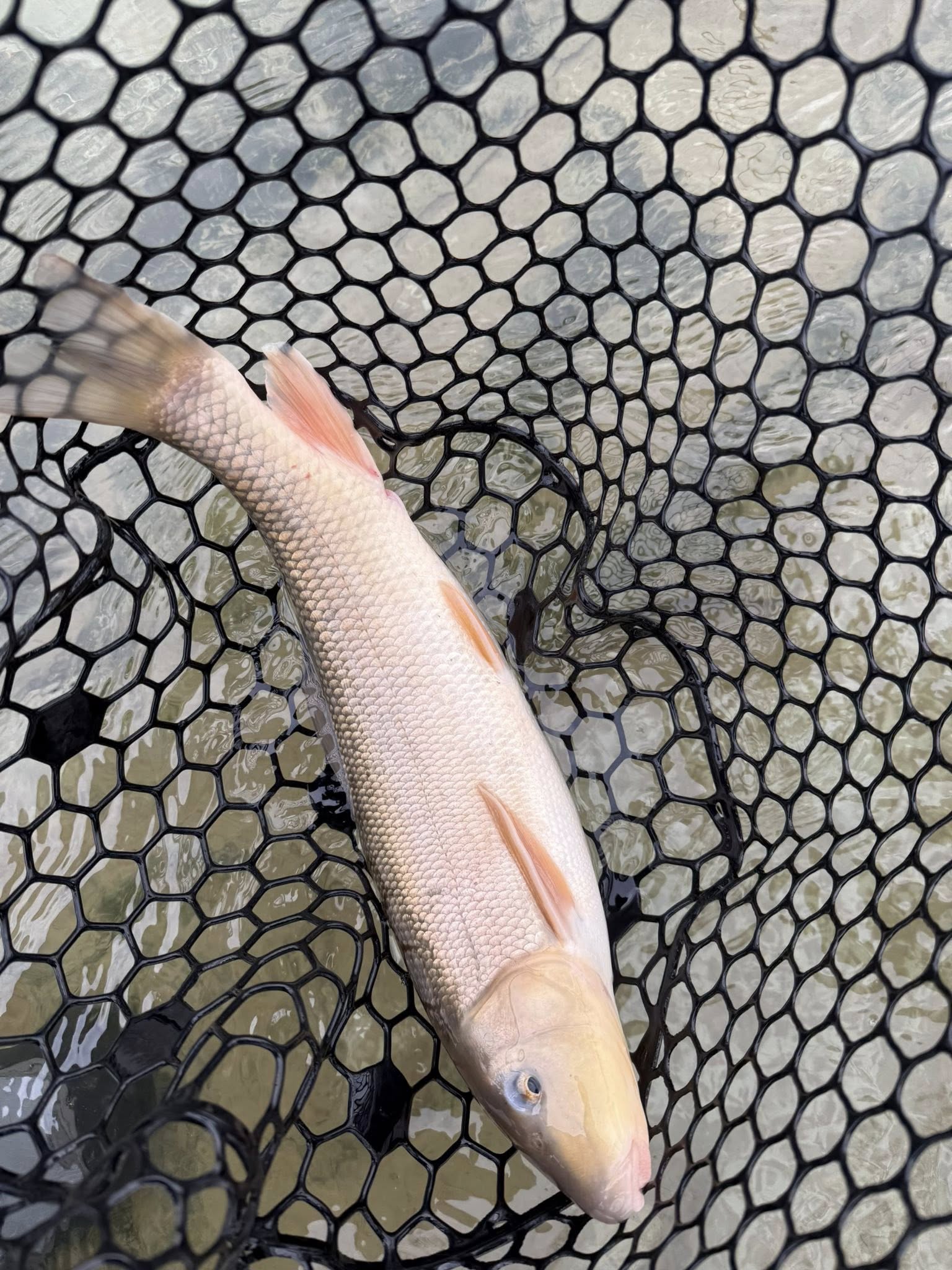
The suckers are in! Or singular, if you like, as this was the only one I found over two days. It was a little early to be matching the hatch with sucker spawn or Crystal Meths, although the patterns absolutely work any time during the season.
Despite the lamprey scar, a breathtakingly beautiful fish. The water was still barely above freezing, but on this day the steelhead had a lot more fight in them. We worked upstream, targeting likely holding areas, concentrating on the ones that held fish and presenting flies until the bite stopped. I went from one landed to a half dozen, and then a dozen by about 1pm. It was already a fantastic day.
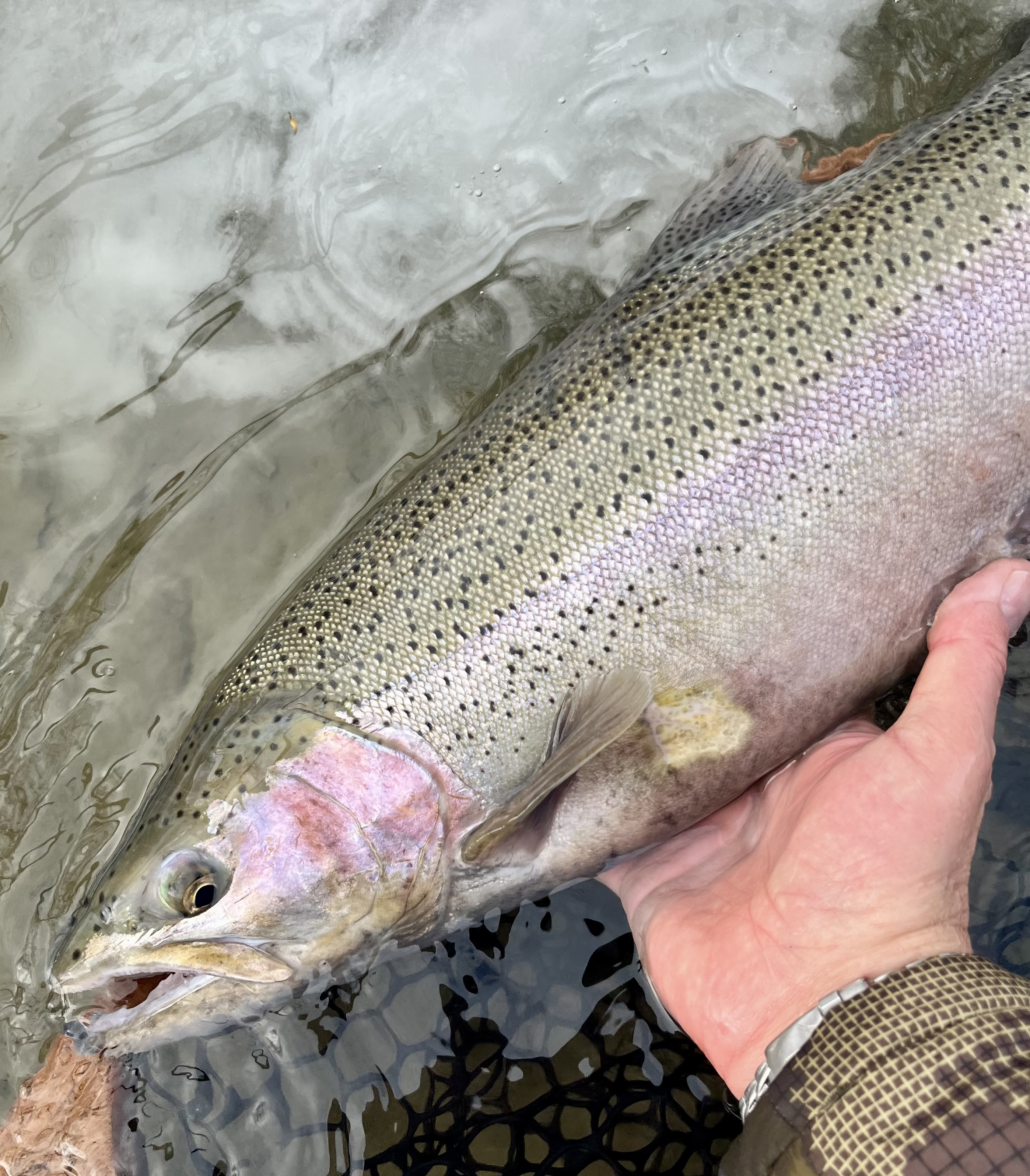
One tank of a hen steelhead. While there were several good battles, I had three over the course of the day that truly tested my landing skills. I really wanted to land this fish, as she kept bulldogging me and running and refusing to come civilly. By early afternoon, a front began moving through; it got gusty and noticeably colder, and while it didn’t shut down the bite, it definitely tapped the brakes. The water began to take on color. And then, there were no more eats. It was time for lunch and another section of river.
As you can see, the final section of river had a tea-with-a-few-drops-of-milk opacity. My batting average was not the best in this last mark, as I went 2-for-5. But I have no right to kvetch. The hump day total was 17 steelhead in the hoop, giving me 40 for the two-day trip. Did this really happen? Wasn’t I trapped by hundreds of feet of deep, wet snow a few days before? Weren’t conditions supposed to be entirely unfavorable? This is the argument for, “You don’t know if you don’t go” — and this is steelhead number 322.

Onward to 400.

Erie Tribs Steelhead Report 2/24: The Quest for 300

When I blocked out February 24-25 for steelheading in western PA, I was certain that it was a plan that would never see action. The creeks were an impenetrable wall of water in its solid state. Not happening. Then the thaws came. The ice released its lock on the creeks. And suddenly, by golly, we had optimism. This could happen. The trip is on.

Then came the blizzard. I can get pretty motivated when there’s something in the way of something that I want to do, and I figured that if the snow stopped early enough on Monday the 23rd, I could still make the drive and be fishing on Tuesday. However, I didn’t expect over 18″ of heavy, wet snow. But I was snowblowing the driveway at 11am, the snowflakes still flying. My neighbor, who has a plow, usually clears the shared driveway. But as time moved farther past noon, and it still wasn’t cleared, my worst fears became reality. My neighbor was away. If I wanted to fish, I would have to clear about 300 feet of that snow — the last horrible 6 feet, a pudding of heavy-as-wet cement glop, by shovel. Ugh. No way. The trip is off.

But no, dammit, it isn’t. I’m going steelheading tomorrow. So I fired up the blower, steeled my back, and had at it. And that’s how, at 4pm, I found myself heading north on I-91. I had wet roads until Albany, then lake effect snow on and off from Rochester into PA. Safely in bed, I was out like a light at 1:30am.

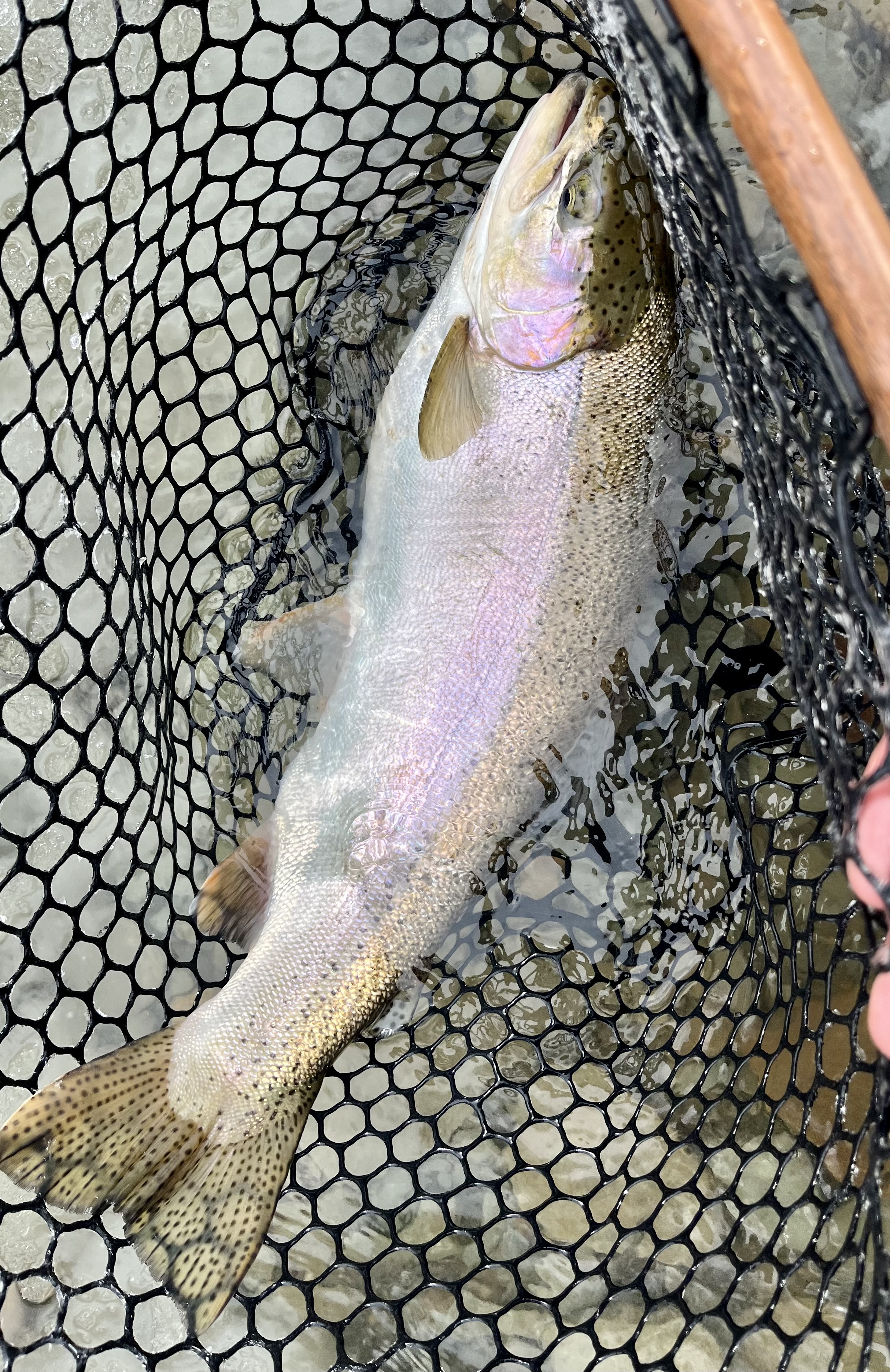
The silver lining to this tired angler cloud is that you don’t need to start early on a winter’s day, especially if there’s likely to be slush in the water. I was fishing by 10:30am — perfectly civilized — and while slush was a problem, it wasn’t a deal breaker. I got maybe one good drift out of 6 casts. I missed the first bite because he ate where I didn’t expect it. The second miss was a foul. Finally, I was on the board. This fish was the third of the day; I’m particularly captivated by the see-through tail. Already, yesterday’s shoveling horrors seemed worthwhile.
By 11:30am, the slush was almost gone, and I was hooking fish in earnest. When I’d left CT, I was at 282 steelhead landed. I was hoping to drive home somewhere in the 290s. But the fish kept coming, and there came a point in the time-space continuum when I dared to think: I could break 300 today. Yes, I think I can. What happened next was a phenomenon that I only recognized several days later: I got into the zone. Nothing else registered — not the cold, not the ice, not my hunger, not the time. I was, as the colloquial expression goes, unconscious. Find fish, cast, mend, drift, adjust and mend, set, fight, land. Geez, the last time I looked at my watch it was 11am. Now, it was after 1pm. 299, baby!
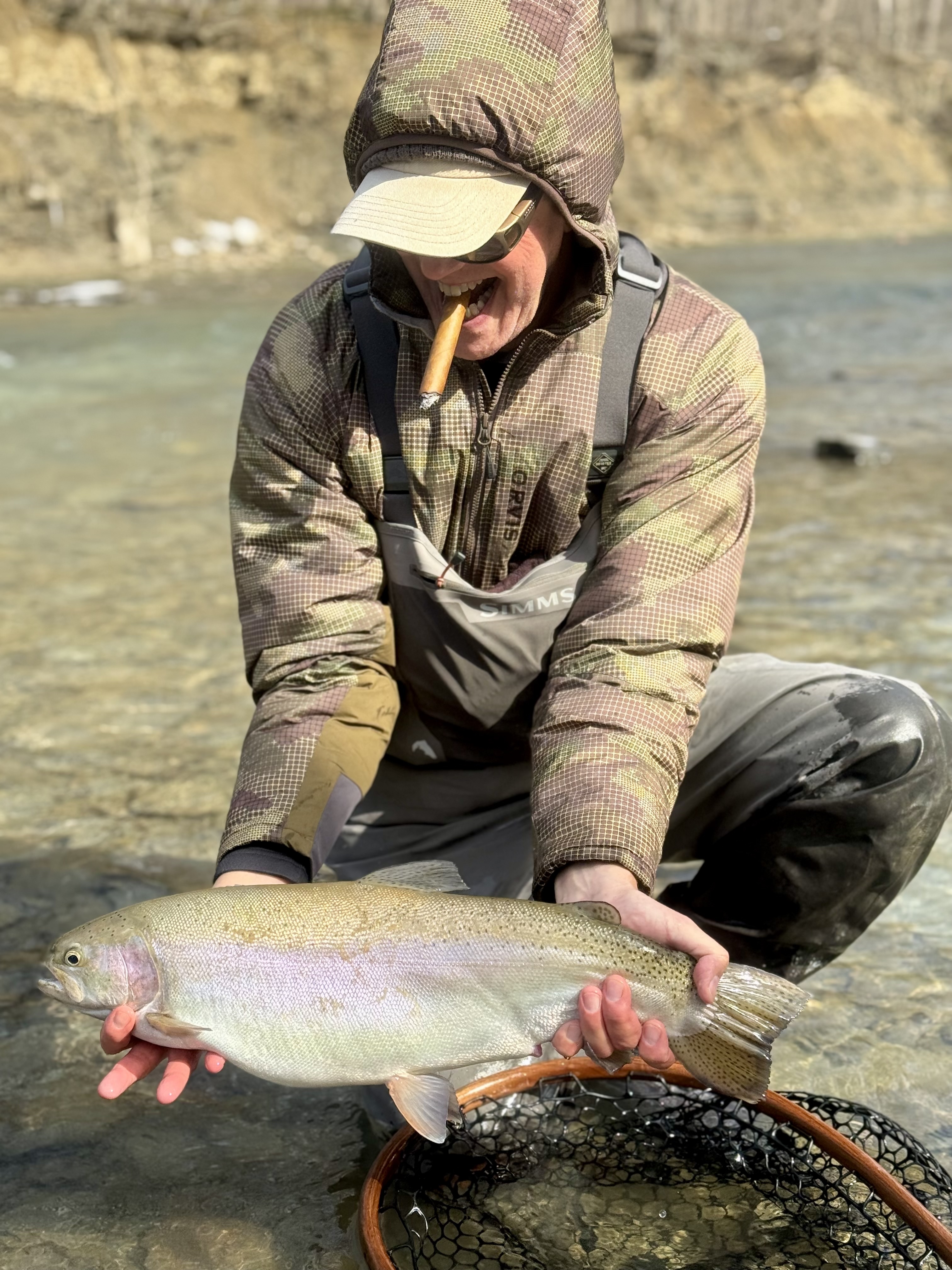
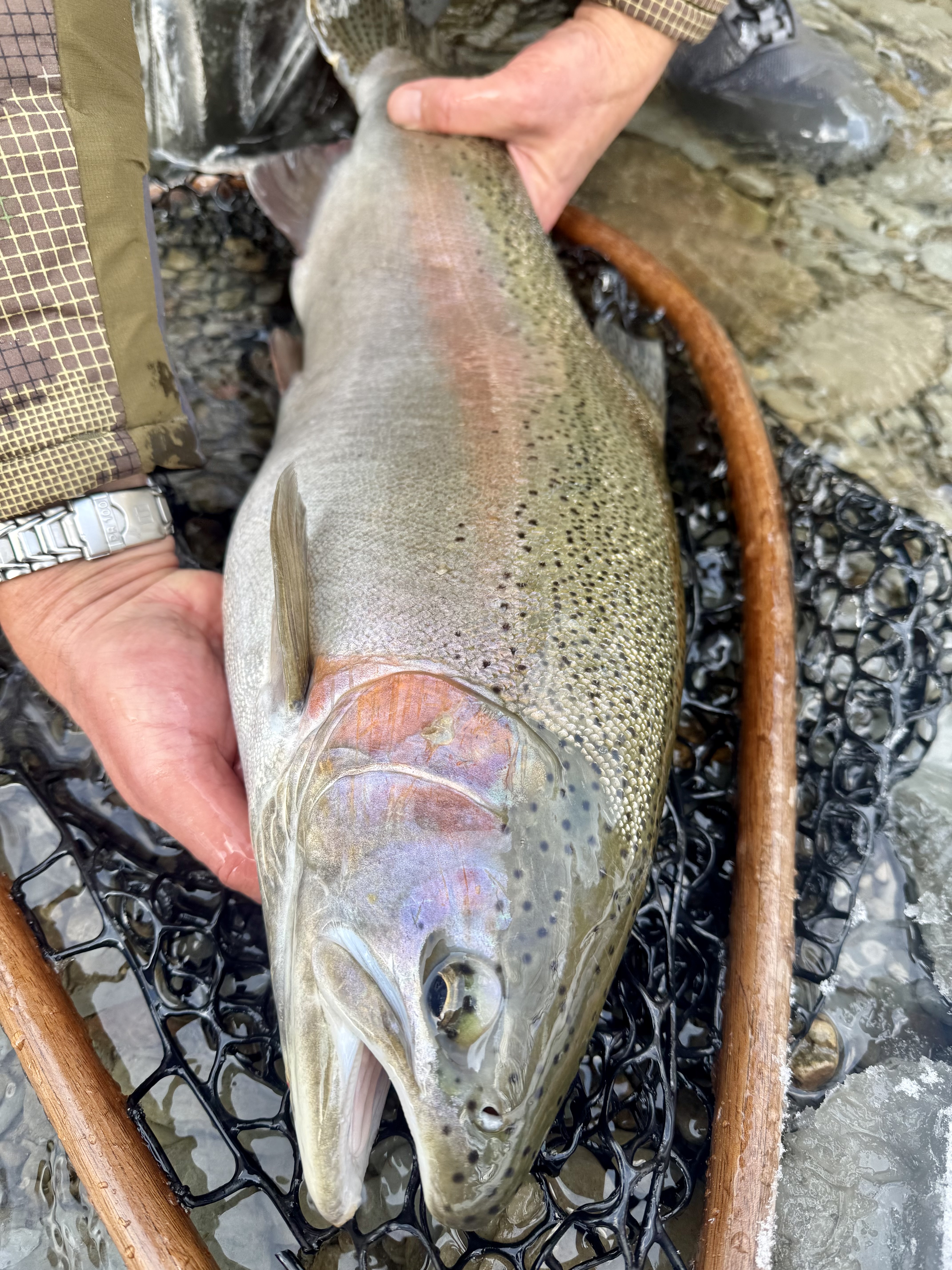
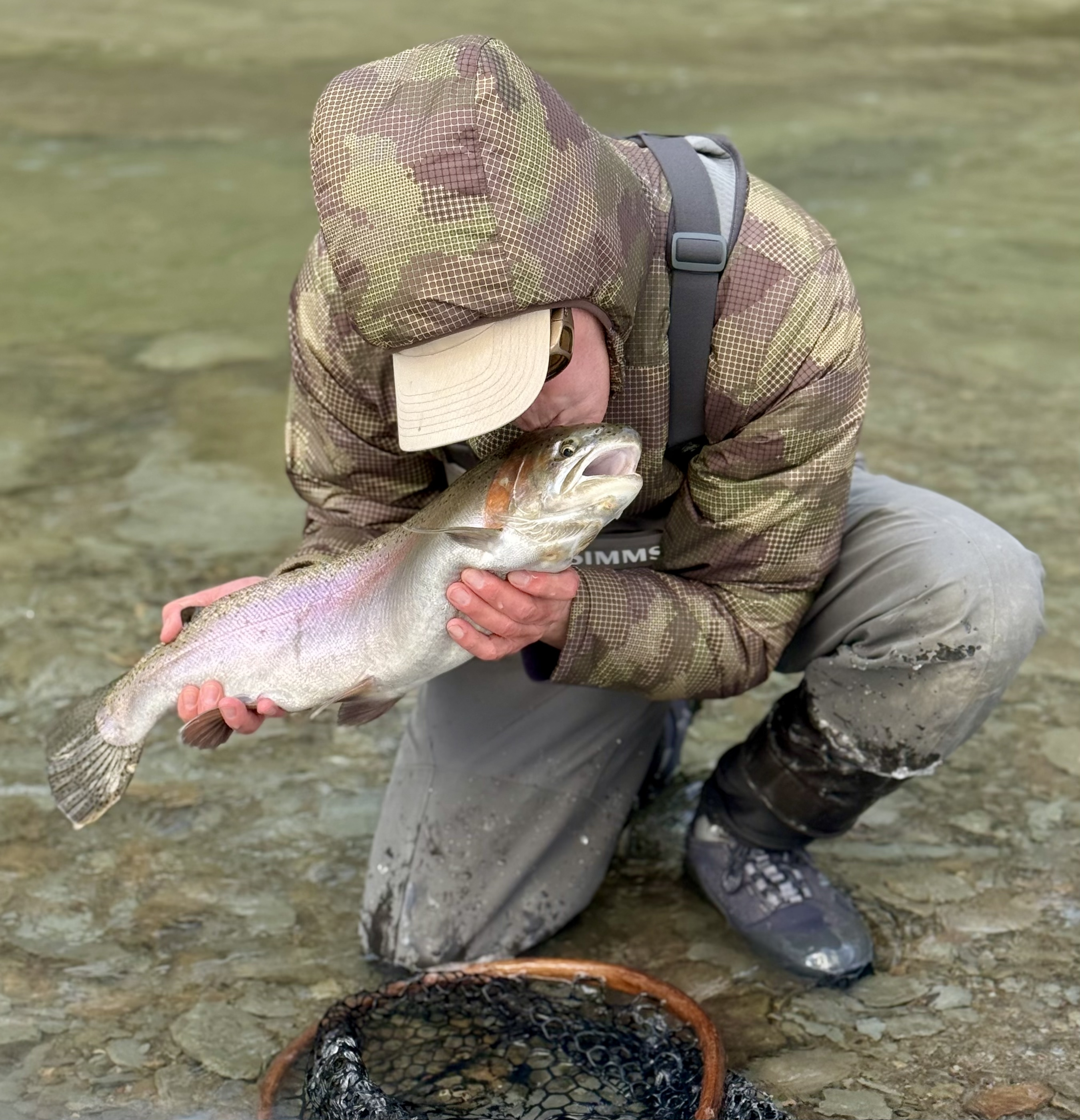
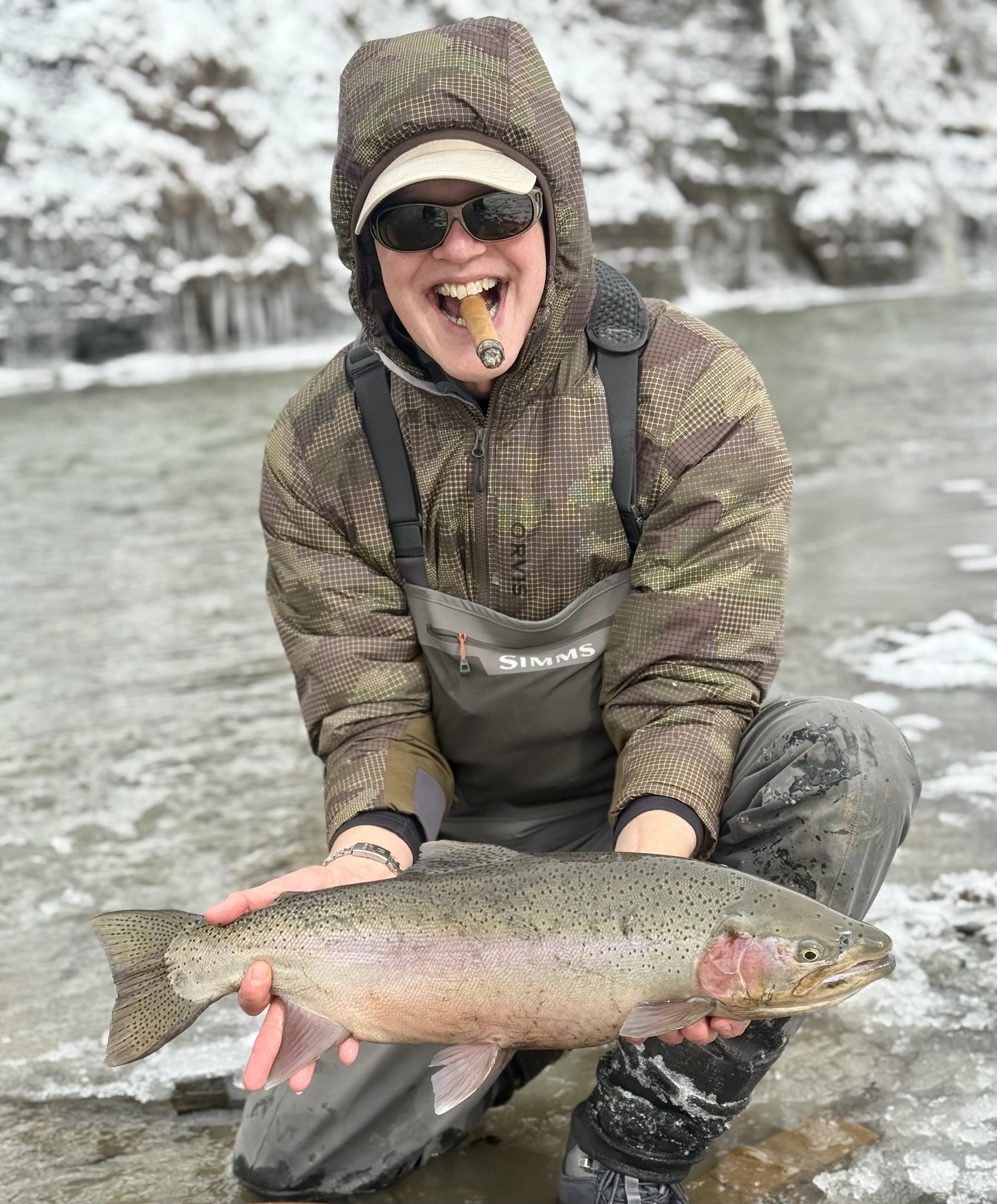
Ringo Starr sang, “It don’t come easy,” and he ain’t lying. We found a pod of steelhead in a whitewater plunge and run, including a couple huge dark horse bucks. But they were most uncooperative. So we moved down the run to another short stack of fish, their location belied by dark backs against the light green substrate. First cast. Big upstream mend. Dead drift. Indicator goes under. Sweeping set downstream. Fish on. It was a fine steelhead for number 300, a chunky hen in the 8-10 lb. class. Despite the barely-above-freezing water, she put up a fight worthy of her size. With pink and rose on her flanks and secondary and tertiary rainbow colors on her cheeks, she was an absolutely gorgeous creature. So, yeah. I kissed her. It was a little after 1:30pm.
Over my steelheading career, I’ve noticed that the sudden arrival of a cold front has an immediate, negative effect on the bite. Around 2pm, the wind picked up, the water began to stain, and bites became a scarce commodity. We took a lunch break, and headed to a different mark, where the water was the color of tea with a drop or two of milk. We picked several pockets and runs and pools, but found diners in only one of them. I missed the first, landed the second, and called it a day at 305. Not in my wildest dreams did I think this would happen on this trip. Had I been in a different mindset, I would have brought a truly special cigar to celebrate the occasion. Tell you what: what I smoked tasted just damn fine.
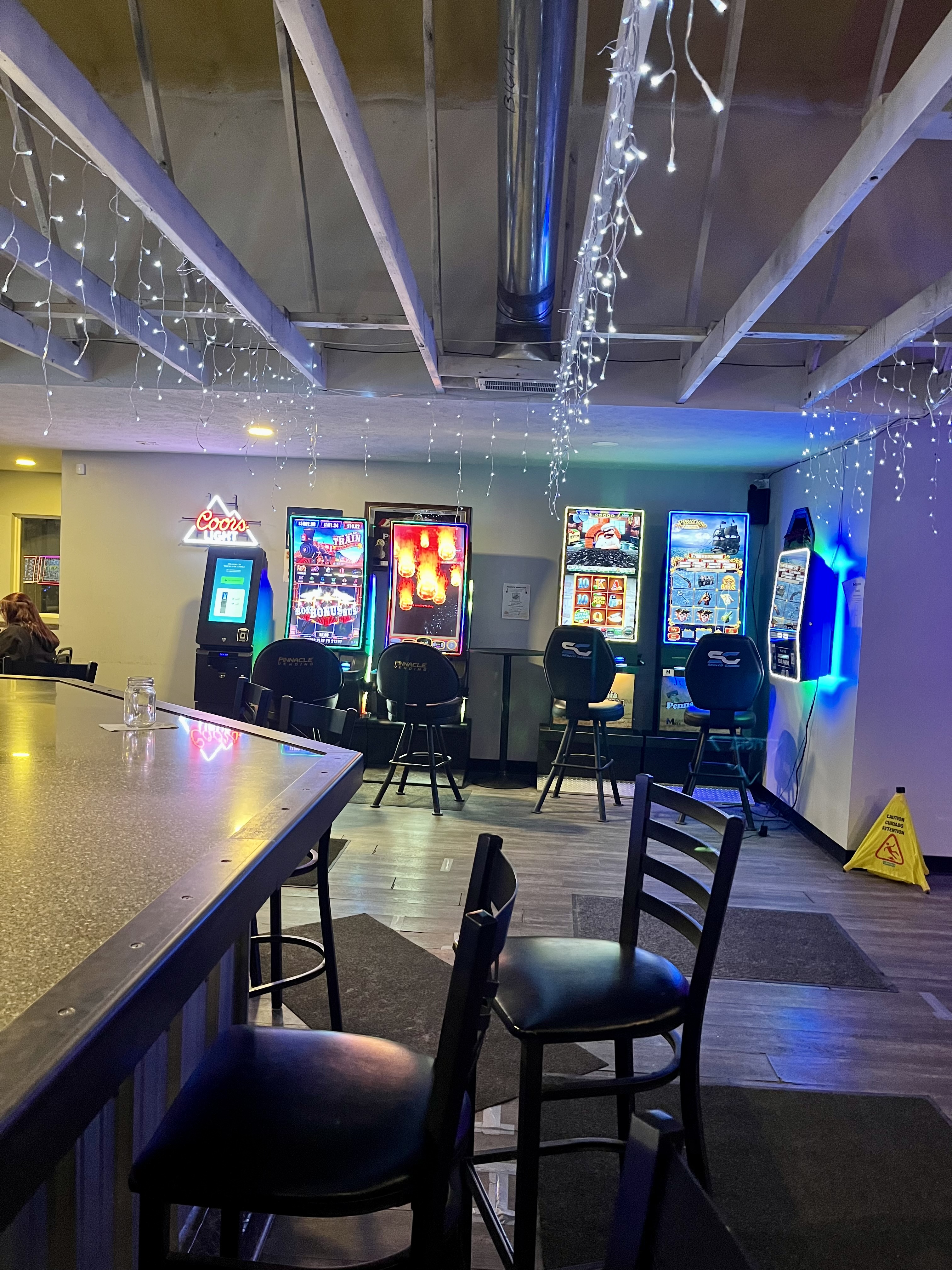
Madelaine’s is my go-to eatery, and I was ready for a celebratory dinner of their meatloaf and an IPA. What?!? Closed on Tuesdays?!? I ended up at The Barracks, which as you can see looks a little like a disco-casino-local bar mashup. The cheeseburger was excellent. The Yeungling draft most quenching. Yep. I was going to sleep well tonight.

Next up: day two.

Steelhead #300 landed…and then some!

I hightailed it out of CT Monday at 4pm, just as the blizzard was winding down, and drove to western PA, arriving a little past 1am. My goal was to fish a couple days, and hopefully inch a little closer to the magic number of 300 steelhead landed (I was on 282 for those of you keeping score at home). Folks, the trip exceeded my most wildly optimistic hopes and dreams. I not only made 300, I obliterated it. Details to come in a post next week, and you’ll also want to check out my Instagram for more!

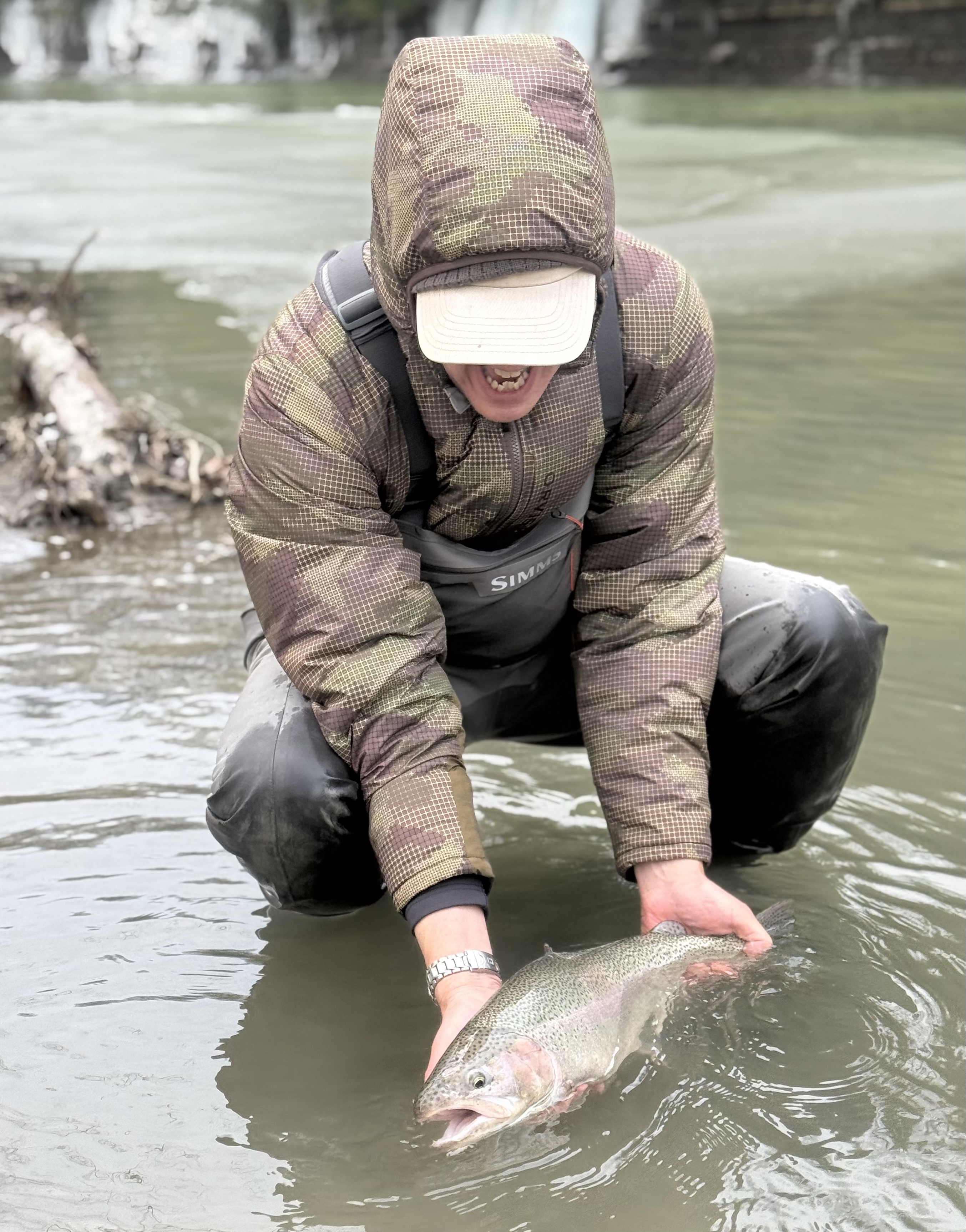
This is the last steelhead of the two-day trip, which put me at 322. I’ll let you do the math.

Erie Tribs Steelhead Mini Report 12/18/25: Gordo’s first on the fly, and here comes da flood!

It’s been unusually cold this December in western PA. So much so that many of the steelhead tribs have been locked with ice. But mid-last week, there was a warming trend that offered both remedy and disaster. We (Number 3 Son Gordo) were scheduled to fish both Thursday and Friday. When we arrived on Elk Creek Thursday morning, conditions were as good as they’d been in a while: some ice, some color in the water, but very fishable lanes. As the temperature soared into the 50s, conditions deteriorated rapidly. First came the ice chunks — hundreds of them, in a seemingly endless string — floating down the cafeteria line, destroying any chance to make a drift. Next was the color: a light stain that morphed into a heavier stain, and finally an opaque mess the color of tea and milk. And of course, all this runoff was cold, making the water temp a feeding-unfriendly 32.5 degrees. Oh. I forgot the wind. 10-20mph, with 30+mph gusts. Sound like fun? This was about as challenging as winter steelheading gets.

Gordo’s first steelhead on the fly! Gordo’s been steelheading for ten years, but it’s all been float fishing with a spinning rod on Ontario tribs. The wind made casting a challenge — even I struggled mightily at times — but Gordo was able to get his fly where the fish were feeding. This buck came in some faster water at the head of a dump-in. As the water colored up, the fish began to move into softer water farther down in the pool.
While I was amusing myself with a pod of fish downstream, Gordo was getting the hang of fly fishing Erie tribs in sub-optimal conditions. He ended up with five on the day, which is excellent given the wind and water, and a pretty good day, period. You can see the infernal ice chunks we were dealing with. They would suddenly materialize, and you had to wait for them to pass before you could resume fishing.
Can’t let Gordo have all the fun, can we? By noon, conditions were bad enough to make the bite non-existent. So we made the command decision to head way upstream in search of cleaner water. We found it, but it only lasted an hour. Before it turned, I managed a spirited buck in a swift, undulating slot hard against a shale wall. I dropped one more, then fouled one, which I don’t count as a landed fish. If you’re keeping score at home, six in the hoop brings my grand total to 288 steelhead landed. So close! Continued warming and heavy overnight rains turned the creeks into raging torrents of chocolate milk, so we had to cancel Friday. It was frustrating to miss a day’s fishing, but I’m grateful that we got a day in.

Salmon River Steelhead Report, 11/24-25: Working on that conversion rate

I’ve gotten to the point in my steelheading journey where I’m confident that if I get a good hookset, I have a better than 50-50 chance of landing the fish. Of course, steelhead behavior and flows being dynamic X-factors, it doesn’t alway work out that way. But you do your best and take what the river gives you.

In recent years, I’ve felt a sense of something between dread and lingering malaise with my trips up to Pulaski. Maybe it’s because the river isn’t particularly beautiful. (Wait until you’ve seen what they’ve done to the river from Altmar to Pineville. I can’t say that it’s an improvement.) Maybe it’s because the town itself can be a wee bit depressing. Maybe it’s the constant crowds and the resulting pressure. I can’t quite put my finger on it, but whatever. This year felt different. I was very much looking forward to fishing with old guide friend Row Jimmy and tussling with some Lake Ontario brawlers. Let’s do it!

Conditions were just about perfect: dam release of 750cfs, 39 degree water, air temps above freezing with no precipitation. We fished the upper river on the first day, not far from the Altmar launch. There were steelhead in the immediate vicinity, but most of them were in front of other boats. We pecked away with egg patterns, but I dropped the first four I hooked. That had me flummoxed and moderately concerned.

Ta-dah! Fifth time was the charm. I’m continuously mystified by fish that get off vs. fish that get into the hoop, as I’m doing nothing differently between the two. Stick that fish, let them run when they want, keep the rod cork pointed upstream, don’t let ’em breathe…why do some fish become unbuttoned and others not? Mysteries to contemplate over a cigar and single malt.

We finally got to slug it out with a pile of fish after a couple boats left. By this time, I was throwing the old favorite 60-Second Redhead, and the hits just kept on coming. However, the conversion ratio still stunk. I ended up going 2-for-11 on the day with one foul (I don’t count fouled fish as landed). Most of the fish came off well into the fight, and I suspect it was a combination of pressure from me and current…and maybe hook size? To be discussed further at another time…after I get over my terrible .181 batting average.

One that didn’t get away.

Day two was a bit of a curveball. Jim had to cancel due to an appointment that couldn’t be missed, so I did something I’ve never done before: floated the river with a different guide. Jason Julien proved to be most excellent. We returned to the scene of yesterday’s bonanza, but the action across the length of the pool was a shade of what it was a day before. The good news was that I stuck and landed the first two fish I touched. We hooked one more and lost it right as it was about to be netted, so It was hard to get upset about that. (If you’ve never fished from a drift boat, steelhead are far more difficult to land because you can’t get them out of the current and into softer water.) And 2/3 reads a lot better in a box score.

I’ll take two of those. After a couple hours of not-a-touch, I informed Jay that sometimes the key to hooking up is a cigar. Out Lady of Blessed Gispert Churchill came through. For those of you keeping score at home, we’re now at 282 steelhead landed.

Erie Tribs Steelhead Report, Nov. 6: 2 States, 3 Marks, 8 fish

We had a quarter inch of rain overnight, so we decided to roll the dice on some fresh fish entering the system. Sometimes, it doesn’t take much to trigger a migration in steelhead alley. So we headed to a spot in PA about a mile away from the lake. We had to move well upstream to distance ourselves from the crowds, but we were in position at 6:45am, normally a little late but just right for today. We strategically carpet bombed a deeper hole, but that turned up blank. (We saw only one other fish landed the entire time we fished this general section, and it came from this hole.) Undaunted, we moved downstream to a swift run, more of a slot, that bordered a bleached tree trunk which created an enticing current break.

I had just made the comment that, with the climbing sun in my face, it was a wee bit difficult to see the indicator — but not to worry, because with the current moving so fast, the fish would set themselves. On cue, indicator down and fish on! I lost this steelhead to a snapped tippet, another when it ran between a pinch point of two submerged boulders, and two more to the whims of the steelhead gods. But I brought three to net, and, bad luck aside, considered myself ahead in the bargain.

Silver in the gold of the morning light. Clearly, this first pod of fish came in from the lake overnight — newly-minted coin bright, aggressive takes, and spirited runs. Their freshness, the speed of the water, and the rocky bottom made for some challenging landing conditions. They weren’t bashful about leaping out of the water, or peeling off line in a hurry. Each one brought to net was a hard fought victory; each release a moment to savor, coupled with the thought that we might cross paths again this winter.

As the action tapered off, we declared victory, and headed to Ohio. The rains had missed there, and the water was low but fishable. Unfortunately, the low flows meant far fewer fish in the system; Holes, pools, slots, and runs that normally would have at least a few occupants were barren.

This steelhead was part of a pod of a half dozen fish that we rousted from beneath a ledge. We let them resettle, and came back a hour later to fish for them. She was the only one we could get to eat. The Ohio fish were far more dour than the morning group in PA; I had as many fouls as fair eats. We managed four properly hooked fish, and three cigars. That’s a win.

My intention was to get up early and fish a few hours before driving back to Connecticut. But I was dragging. What’s more, I was dreading having to battle crowds and jockey for position. So I made the command decision to head back to PA and fish until dark. At first, it seemed like I’d sent myself on a futile excursion. I couldn’t find fish in any of the usual places. The water is a highly popular mark, but I only encountered three anglers over a 750 yard stretch; as it grew darker, I had the whole place to myself. Being the stubborn sort, I went back a favorite slot hard against a submerged ledge beneath a fly-eating tree. Second cast, the indicator disappeared, and I buried the hook in the steelhead’s jaw. A fine, fresh camera-shy hen who bolted the moment I removed the hook.

I’m not sure what I liked more: catching that fish, or sleeping in the next morning.

Erie Tribs Steelhead Report, Nov 5: Of technical fishing, lockjaw, and persistence

In the UK, they celebrate November 5th — Guy Fawkes Day — with fireworks. In western PA, the day wasn’t nearly as explosive. Low, clear water; the approaching cold front lockjaw syndrome; wind and leaves; and the need for highly technical presentations were all formidable obstacles. But I can be the kind of angler who likes a challenge, even more so when I know the fish are there.

We fished Elk Creek, and the good news/bad news was significantly more water than this time last year, but far fewer fish. Places last year where the steelhead were wedged in like sardines were this year distressingly empty. Low, clear flows on these creeks require a certain level of stealth, and technical casts and drifts. To get dour, on-high-alert steelhead to eat, you’ve got to nail a perfect cast, then make all kinds of technical mends to keep the fly on target. Weight and indicator adjustments are a constant dance you perform until the judges tell you that you’ve got it right.

The first fish in the hoop is always a relief. I’ve been known to say that all I need is one steelhead to make me happy, and on most days that’s true. I had seven eats in the first three hours, and sealed the deal on three. Not a great batting average, but I did have some bad luck in the form of a snapped tippet, and another that mysteriously wriggled off after I slammed it with a powerful hookset. Blood Dot eggs, size 14, were the menu item of choice. By late morning, we decided to take a break and seek our pleasures elsewhere.

We did a bit of walking to try to get away from other anglers, but the story on new ground was the same: low, clear flows, leaves, and precious few fish that we could see. We finally located a pod of about a dozen fish, but in addition to the previously mentioned lockjaw, these steelhead seemed more interested in canoodling than eating. Two darker alpha males set the tone in the pool, chasing fish away from their lies, with the pod constantly shifting position after their antics.

Then, the rains came. This was a boon to the bite; the fouler the weather, the more takes. When bite windows open, you’ve got to jump on them, and so we did. I had one epic eat from a fish that was part of pod hiding under a ledge. The presentation was tricky. I had to cast into the main current, then drag the flies toward the ledge in front of me, resume dead drift, and hope the team of two would pass through the strike zone unimpeded by the edge of the shale barrier. As the flies moved into position, I had to switch to a quasi tight-line presentation. Of the dozens of attempts I made throughout the afternoon, one worked. That was my favorite fish of the day.

One of the alpha males that — finally! — made a mistake. Guy’s got some shoulders, and clearly, he’s been in the system for a few weeks. I lost a substantial chrome hen to a hysterical display of leaps and rolls. When I stuck the hookset, she bolted upstream like a dragster coming off the line. One, two, then three spectacular leaps worthy of a tarpon had us cackling with delight. She made a beeline for a shale ledge and rolled, then did it again, and on the second one she spit the hook. What tremendous sport! I finished the day with nine to hand, which I considered a major victory given the conditions. Yup. I love steelheading.