A small stream outing, a Farmington lesson, and all this rain.

Last week I snuck out for a few hours on a local small stream. The water was medium-low, crystal clear, and the fact that the sun was out meant the locals were on high alert. Holy sandbars! The bottom structure of this stream had shifted quite a bit over the summer. In some sections, it felt like I was in brand new water. I fished a bushy dry (AFR Humpulator) and a BHPT dropper, and pricked four on the dry and two on the nymph. At the end, I switched to the Jiggy Squirmy Thingy and had a few small guys bull-rush the fly, but no char were brought to hand.

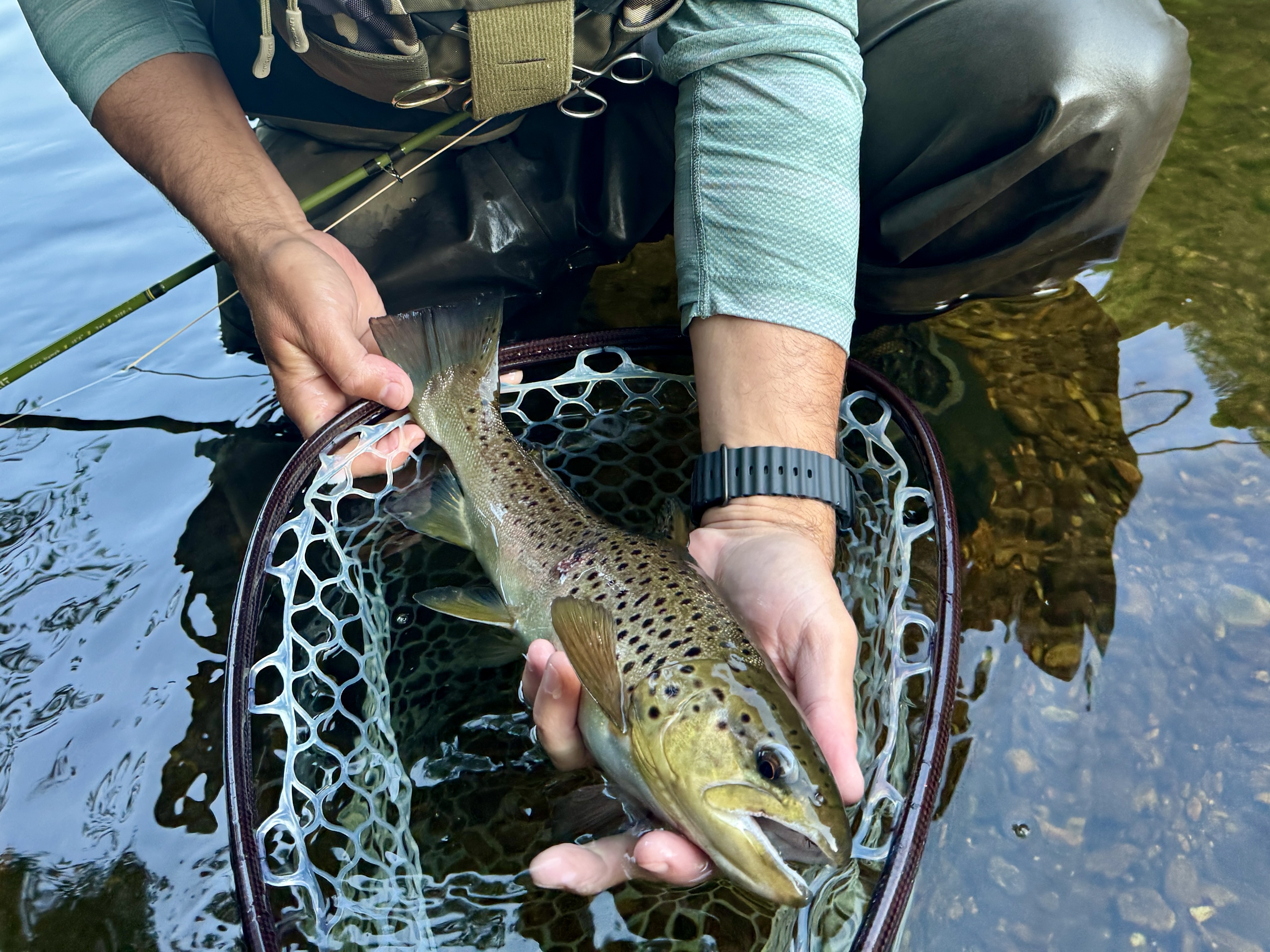
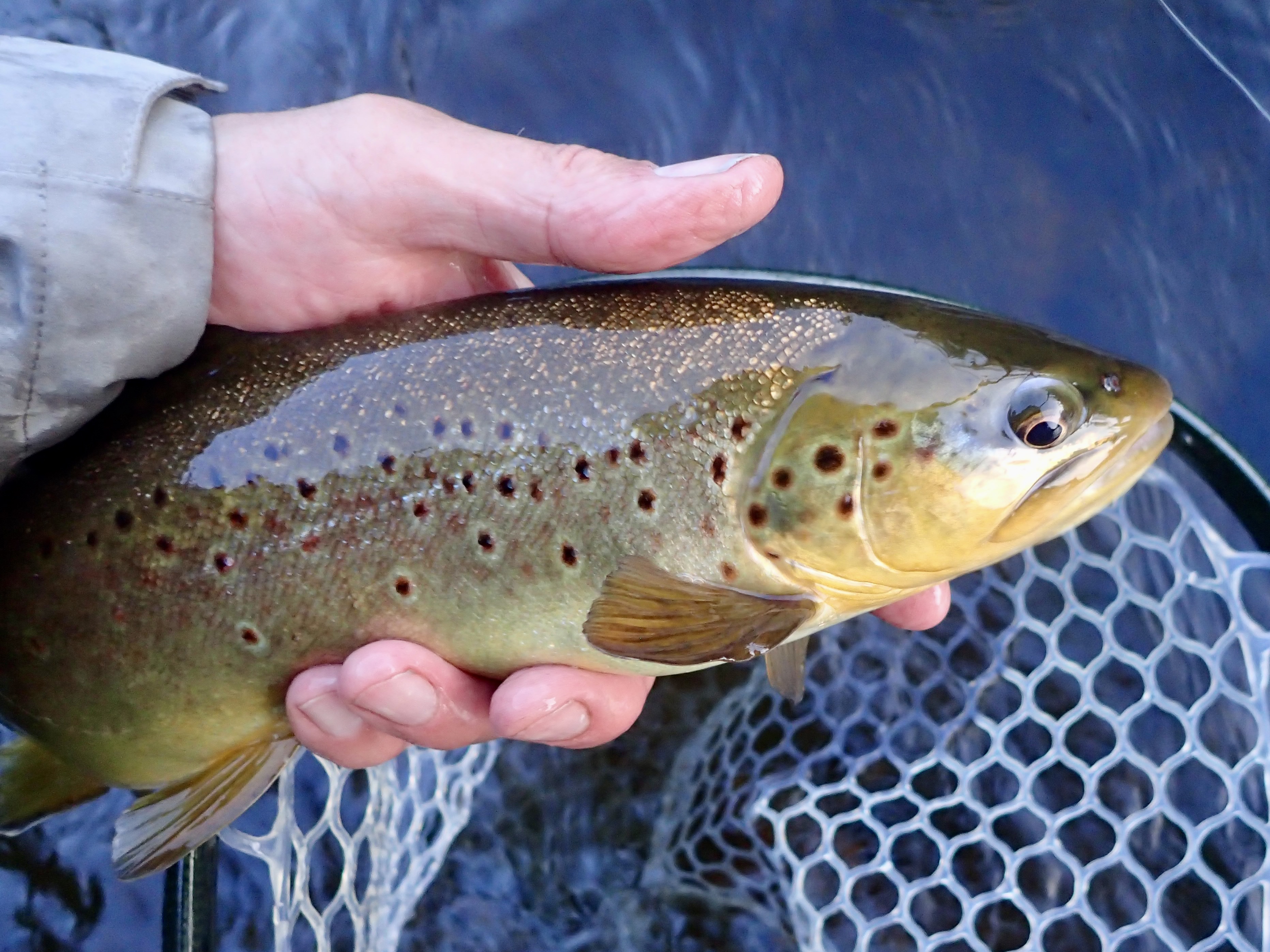
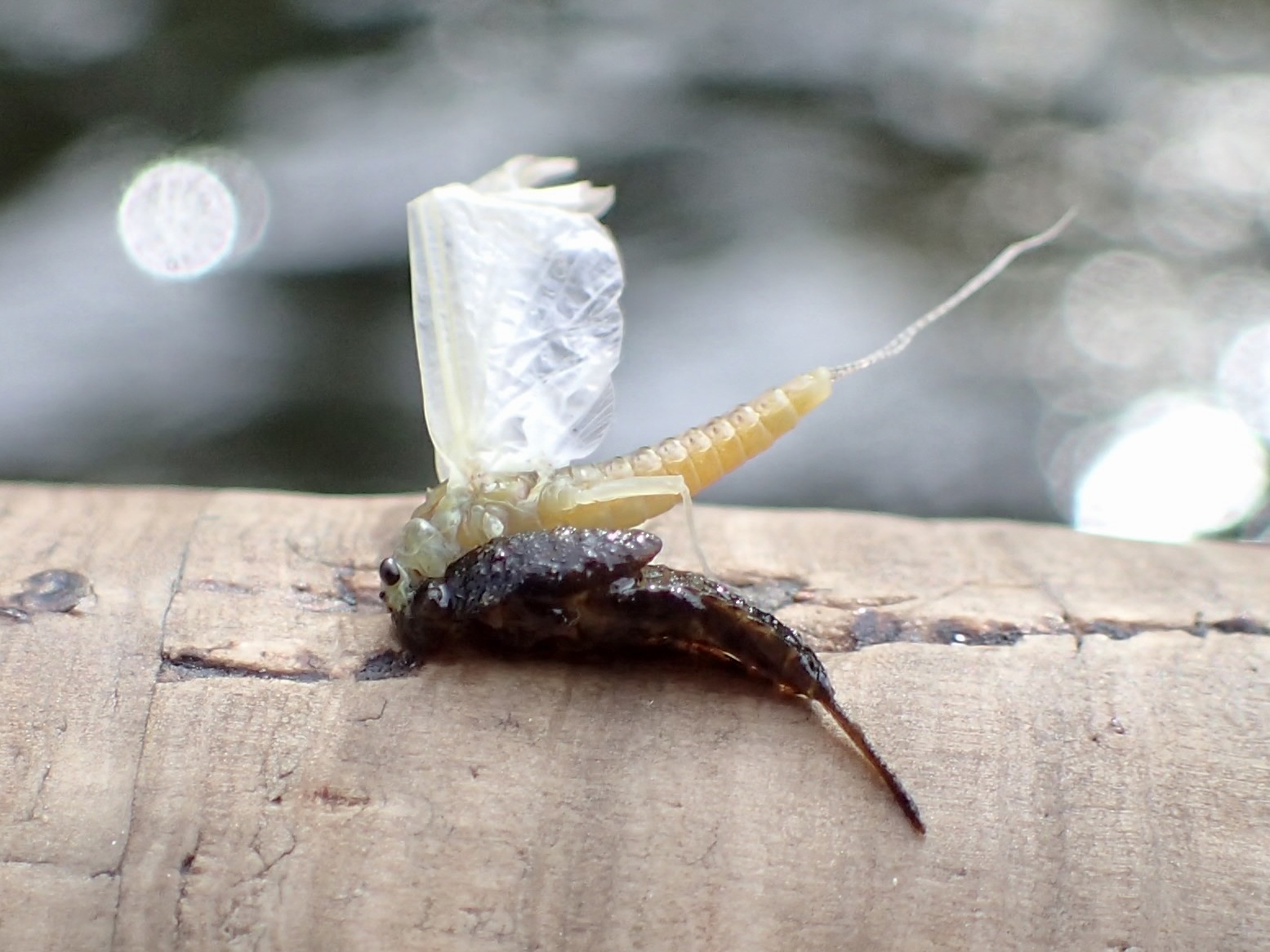
On Thursday, I guided Tim for a subsurface lesson. Like the small stream, the Farmington was low and clear, but plenty cold. We fished the mid and lower river sections. Mid-river was nymphing, and I was astonished that we didn’t even get a touch. What?!? We headed downstream to try our hand at wet flies, and we managed to stick three fish, although all of them became unbuttoned. Like many new to wet fly fishing, Tim needed to wait on the hookset after the hit. You feel the hit, and you want to set, but if you do, you’ll pull the hook right out of the fish’s mouth. You feel the strike, pause, asking, “Are you still there?” And if you do, the fish will always answer yes, having hooked himself neatly in the corner of his mouth. We will absolutely get them next time, Tim. A pleasure fishing with you, sir. Oh — we had hatches. Caddisflies and tiny BWOs and especially Isonychia. I love Isos.

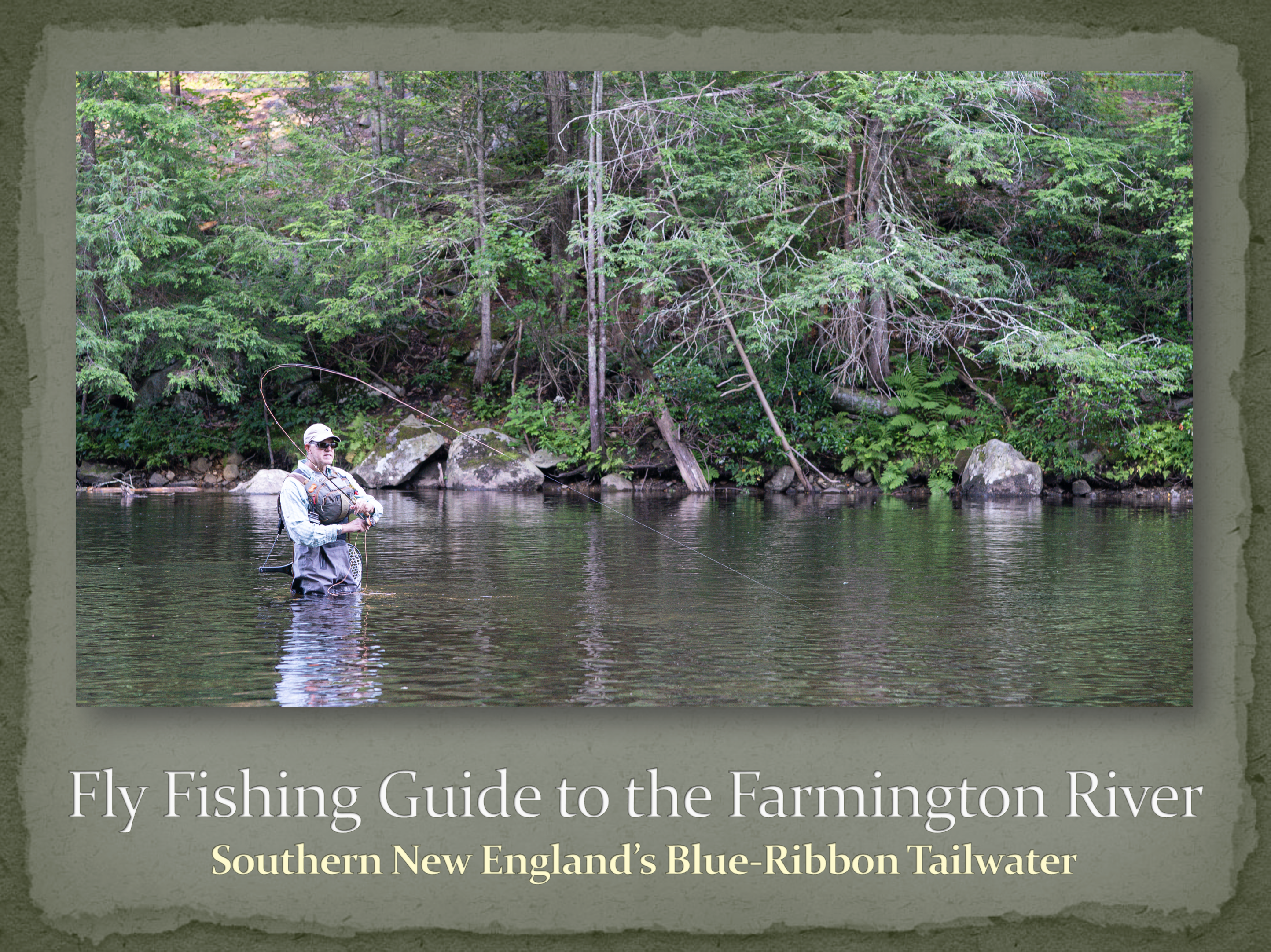
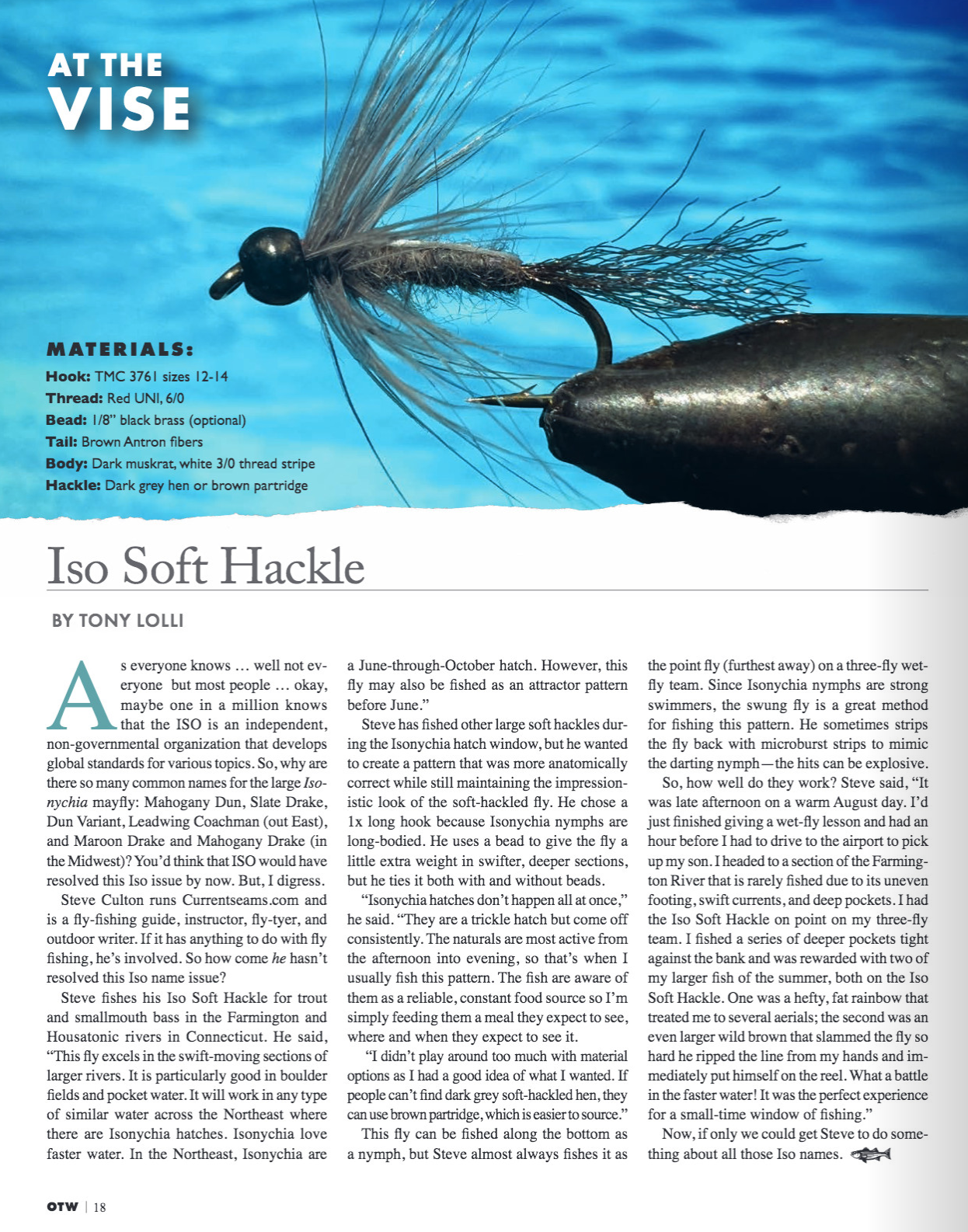
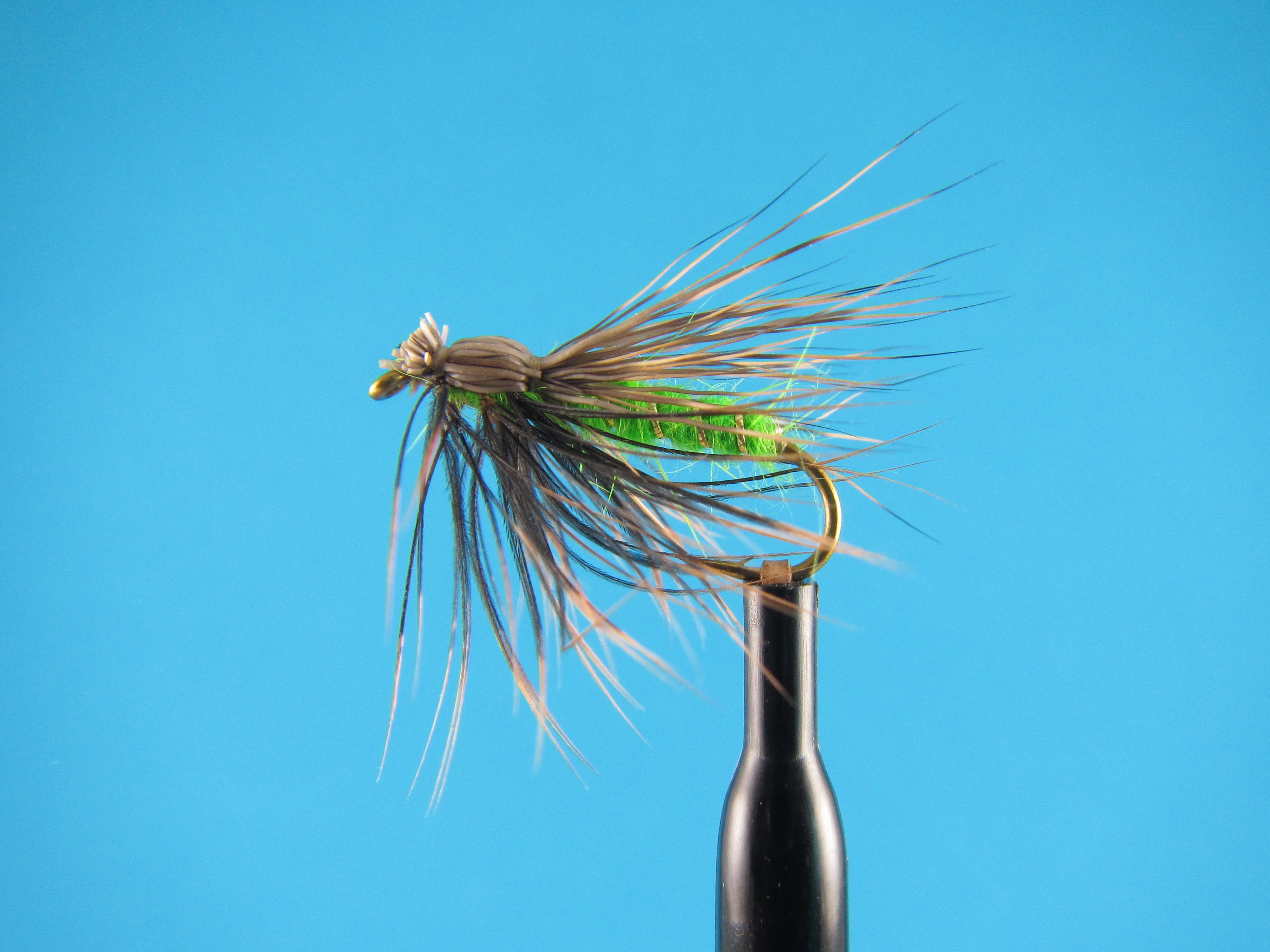
If you own my book, Fly Fishing Guide to the Farmington River, then you’ve seen this photo. I love swinging wets for Isos, and I’ve done very well with my Iso Soft Hackle pattern.

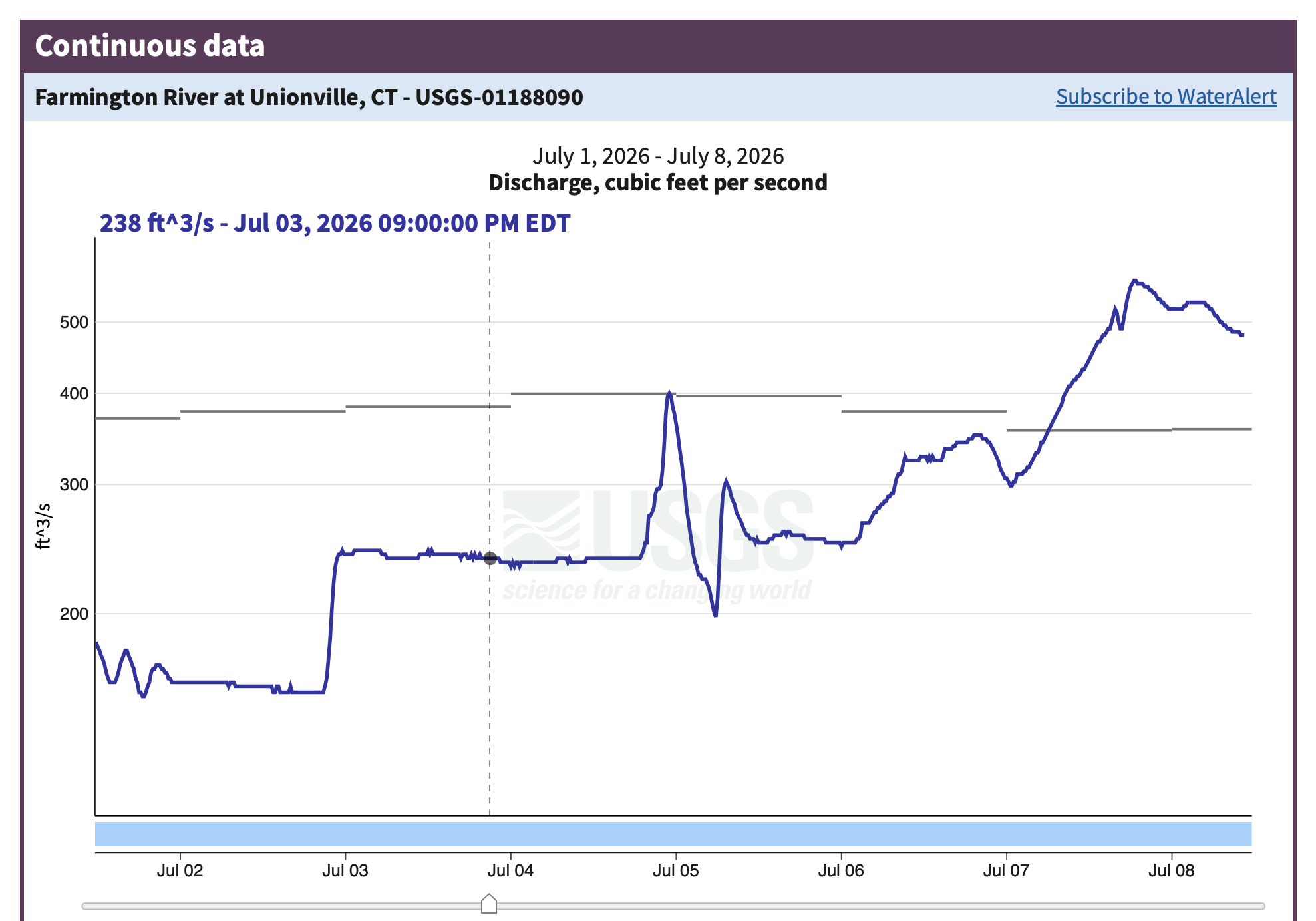
Finally, all this rain. It really depends on where you live — we got pounded in Durham on Saturday, while the rain barely made a dent in the Farmington flows. Today, the storm is finally manifesting — the Unionville gauge has jumped from 230cfs to 540 — but I expect the river will clear up quickly.

It was a “Fly Fishing Guide to the Farmington River” week as Thames Valley TU & Main Line Fly-Tyers are awarded the Legion of the Cheeseburger with IPA Clusters — and the Ask About Fly Fishing Podcast link

I’m in a bit of a reflective mood this morning. Without an audience, a speaker is just talking to himself. Of course, I do this frequently throughout the day, or when I’m fishing, and naturally, when I’m rehearsing, which I’m proud to say I still do before every speaking engagement. So I don’t take these thank-you messages lightly. Last week was a busy one, three gigs in three nights. On Tuesday, I presented Fly Fishing Guide to the Farmington River, my all-new, upgraded talk based on the book, to Thames Valley TU. While I was unable to take advantage of their generous offer for a pre-game dinner, I made up for it with a stop at Five Guys on the way home. TVTU is a dedicated group, and it was a treat to see so many old friends.

Thursday, I ventured down to Philadelphia where I visited the Main Line Fly-Tyers. I’d spoken to them once before, via Zoom during Covid, so this was my first in-person talk. I was thrilled to have over 50 attendees! This time, I was able to take advantage of their pre-talk hospitality at Phil’s Tavern. Excellent cheeseburger (the patty melt if you must know). Really, really enjoyable. Thank you so much to both groups for being so welcoming, for your interest in the book, and for asking so many good questions.

Coming soon to a fly fishing club near you. My next gig is October 15 with the Croton Watershed TU.

Speaking of questions, in between it all was the Ask About Fly Fishing podcast. It’s recorded live, but you can listen to it any time you like with this link. I’m so grateful to Roger, the host, for giving me the opportunity to talk about the river and promote the book.

I’m going to try like hell to get some more fishing-specific posts up this week. (I know you’re rooting for me.) But to do that, I gotta attend to a lot of other things on my list. Which is what I’m going to do right now.

Appearances near and far, Ask About Fly Fishing podcast — and perhaps some fishing?

I now, I know, I’ve got a little broken-record syndrome with these posts, but I don’t want you to miss out. (It seems like every week, I get an email that says something like, “I wish I knew you were going to be there…”) So let’s get to it.

Tuesday night. 9/15, I’m at Thames Valley TU. Doors open at 6pm. I go on around 7:15pm. All are welcome. The subject will be the Fly Fishing Guide to the Farmington River, and I will have books for purchase and signing. Of course, you want to know where it is: the North Franklin Fire Dept., 5 Tyler Drive, North Franklin CT. This is an all-new Farmington River presentation, so unless you were at the SEMass TU meeting last week, you haven’t seen it!

Wednesday night is the much anticipated Ask About Fly Fishing Podcast. It goes live at 9pm ET. Here’s their promo description: “On our upcoming broadcast “Fly Fishing the Farmington River: Trout, Hatches & Tactics” with Steve Culton we will give away a one-year membership to Fly Fishers International, a one-year membership to Trout Unlimited, and a copy of his latest book Fly Fishing Guide to the Farmington River (you have to be listening to the live show to win this). To qualify for the drawings, you need to register. Use this link to visit our registration page, complete the form, then send us your information, and you’ll be included in the drawing.” I hope you get a chance to listen in, and please ask lots of questions!

Last but not least, I’m road tripping to Philadelphia to speak to the Main Line Fly Tyers on Thursday night, 9/17. It will be held at the Greater Plymouth Community Center in Plymouth Meeting, PA. Doors open at 6:30pm. As with the TVTU gig, the subject will be the Fly Fishing Guide to the Farmington River, and I will have books for purchase and signing.

And maybe…just maybe…I’ll get out to do some fishing at some point. Stripers beckon. Wild brook trout beckon. The Farmington River beckons…

Farmington River Mini-Report 8/6/26: Wet flies rule!

This can be a challenging time of year to fish the Farmington, but I arrived on the river with a plan: swing wets in snotty, treacherous pocket water, then find a dry fly spot for the evening rise. The water bump from the dam, which put the flow in the PTMA at around 290cfs, was a welcome enhancement. (I got 54 degrees just above the PTMA at 6pm, which is wheelhouse water for trout.)

I was wading and swinging a team of three (Drowned Ant on top, LaFontaine’s Diving Caddis in the middle, my Iso Soft Hackle on point) by around 5pm. After a slow start, I connected with what would be the first of 6 trout on the wets — 5 of those fish were wild browns. And 5 of the 6 fish took the Iso soft hackle. While I didn’t see a single Isonychia flitting about — I’d rate the overall hatch activity on this evening a 2/10 — this underscores the importance of that bug as a food source for trout. Every year, some of the biggest fish I hook on a wet fly come in August on the Iso.

I’d already locked into a mid-teens wild brown when a big old buck ate the fly. Prior to this hookup, every take had come on the dangle. This one was on the dead drift, close enough to the surface for me to see the take. Three times the fish bulldogged its way upstream, twice, he seemed ready for the net, only to bolt. Between the speed of the current and the size of the fish, my forearm was on fire. I carefully walked downstream to a more favorable LZ. Finally, to the net.

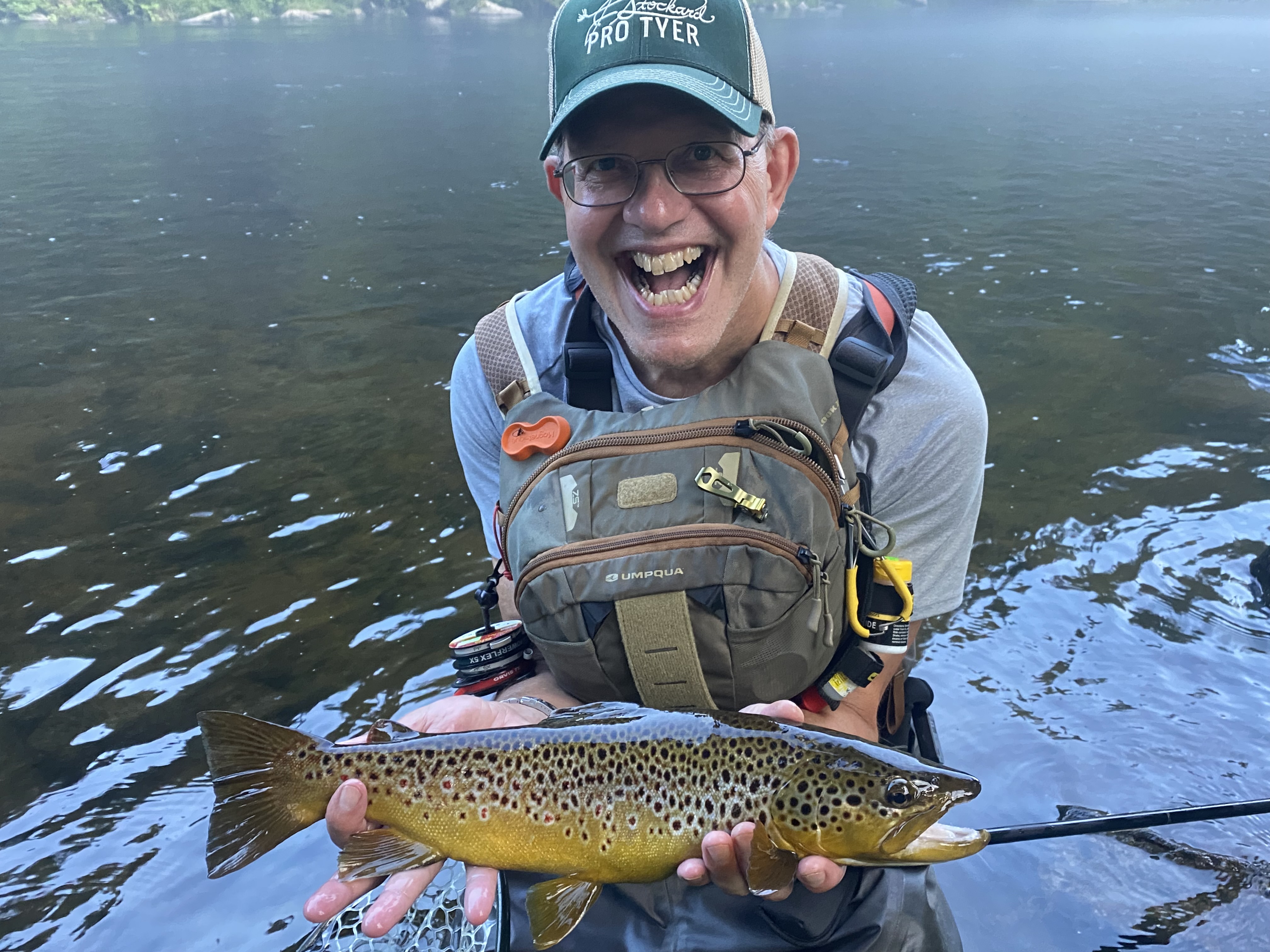
Best trout of the year. No wonder this guy looks so excited!

The dry fly action from 7:30pm to 9pm was rather disappointing, having nothing to do with already landing such a fantastic fish. I found one fish working a foam line, but he was small, and though I rose him 4 times on three different patterns, there was no hookset. Finally, on the walk out in the fog, I spied a sipper that ended up clobbering my size 12 Catskills-style Light Cahill.

My victory cigar was one that I truly relished.

This is fly, minus the bead. This time of year, in lower light situations and moderate flows, there’s a good chance the fish will be looking up.

Rain is good — in more ways than one

Let’s clarify: too much rain is harmful, even dangerous. But that’s not what we’re talking about today. We’re talking about a parched state that was experiencing some form of drought for several weeks. Then the rains came. From the July 4th weather brawl through yesterday, the skies were open for a much-needed watering.

At first, even though the rainfall could be measured in inches, there was no visible impact to our two major fly fishing rivers, the Farmington and the Housatonic. Two factors were in play: the ground was a dry sponge, and the trees and vegetation were in full leaf, meaning you had millions of thirsty plants. But eventually, the rivers got their share. The Hous has yet to spike, rising more than double its 350cfs pre-rain mark. The Farmington experience was more of an exercise in moderation. The Unionville gauge merely doubled from 250. The Still River, which meets the Farmington below Riverton, experienced a huge percentile flow boost. However, it was only coming in at a paltry 15cfs, and its spike didn’t even reach 200cfs.

We desperately needed this rain, and I’m thankful for it. But not just from a systemic ecological point-of-view.

Not that dramatic. Nonetheless, much needed and appreciated.

You see, I’m a total weather and stream flow nerd. I watch the River Data app like a hawk. (If you don’t have this app, get it. River Data provides on-demand access to cfs in select rivers throughout the US, and you can bookmark your favorite watersheds for fast reference.) Throughout the season, I eagerly anticipate rain events that will spike rivers — not too high, not too low. I’m looking for elevated river flows that introduce some amount of color to the water — not chocolate milk, but more like tea. This is when you can experience some of the best nymphing, and especially streamer action of the season. What’s more, water spikes shuffle the deck, move fish around, and provide a respite from warmer water temperatures.

You don’t need to wade very far from the shore. (In extreme cases, that may not be possible. Rules of thumb: never wade in water where you can’t see the bottom; never wade in water that you’re not very familiar with; never wade without a staff and spiked boots; never wade alone.) The fish, like you, aren’t interested in battling swift or raging currents. They’re close to shore, in pockets, behind structure, seeking the most moderate flows that will provide cover and food. In particular, I like to fish streamers in these conditions because the news gets even better: cfs and color spikes are when the big boys come out to play. These are often your best periods to up your chances of catching big fish, and sometimes multiple big fish. I like bigger flies, flies that create a commotion, and I will use both bright and dark colors, usually with equal success.

Use common sense. And enjoy!

My bizarro Farmington season continues

This is a late report from last week, but it’s a report that I think is worthy of your attention. I fished the evening (virtually non-existent) rise with surfcaster extraordinaire Toby Lapinski at popular dry fly mark within the PTMA. We fished from 4:30pm-9pm. When we arrived, I was delighted to see that there were no other cars in the small dirt parting area; in hindsight, I wonder if it was because everyone else knew something I didn’t.

Here’s the bottom line: the sulphur hatch stunk like a salt marsh at low tide. I’d give it a 1 out of 10. So, that was disappointing. What was even more disappointing was the lack of fish over 8″ long. What was rising was, by and large, small wild fish, mostly brookies, with a few browns in the mix. Now, this could also be considered good news. In fact, I’ve never run into such a substantial pod of wild brook trout on the Farmington. Between us, we easily landed a dozen of them. Once, at dusk, I hooked one, and as it sped into the shallows in a desperate attempt to get free, a larger brown charged out of its hole in hot pursuit. I could see the bulge in the water as the predator neared its target; unfortunately at the last moment, the hunt was aborted. But that was cool to witness, and I wish you could have been there to see it, too!

We only put one decent fish in the hoop, this some-teen wild brown by Toby. It had three bird wounds; you can see one of them on the midway point of the fish’s flank.

I’ve been so busy in the yard this spring that I haven’t been able to get out to the Farmington as much as I’d like. But the rest of the summer is still ahead, in all its lazy, hazy, crazy glory.

Tuesday tidbits: Farmington River, Hatches, Articles, Book

I had a really weird session on the Farmington last Thursday. Despite a robust sulphur emergence — 8.5/10 — the wet fly bite stunk. Turns out it was due to a lack of fish. By my best estimate, this long time favorite pool was holding about 1/4 of the normal trout biomass. I had duns in the air, on the water, cripples galore, then mats of spinners. Instead of a boiling surface, I had….a rise here….and there… and then nothing…and then a lonely rise. It was incredibly discouraging. The feeding was over by 8:45pm, unheard of in these parts. I’m usually picking my way out of the river well after 9pm, crouched over, casting to trout sipping spinners. Not on this night.

On the plus side, I met some very nice anglers, and we shared the water with a most civil energy. Joe was trying to fool this wild brown, but just wasn’t able to connect. When he left, he offered me his spot. Second cast, bang! About 16″. Taken on a size 14 classic Catskills Light Cahill dry.

We are in prime sulphur time, which means you should have some soft hackles in your box. Here’s why:

Sulfurs take a good, long time to emerge from their shucks — and then sometimes, not at all. The trout get a good, long look at the food source as it drifts near the film. I fished this invaria cripple out of the water, and it was one of hundreds that never made it out of its nymphal case. Wet flies and soft hackles are a perfect match and method for this situation, as are dry fly cripple patterns.

I’m going to be writing an article for an upcoming issue of Surfcasters’ Journal. The subject will be the importance (or unimportance) of color in fly patterns. To the keyboard I go!

Finally, I hope to get on my horse and get some info out to everyone who requested a signed copy of the book. I’d like to do that by the end of the month. So stay tuned!

Farmington River Mini-Report 5/7/26: Wet Fly Woes Continue

Usually, by this time of year, I’ve given you at least one report headlined with words like “spectacular wet fly action.” But not in 2026. It continues to be cooler than normal and windy and blech. When hatch activity has been strong, the fish seem content to feed on the bottom. This, of course, will change. I feel like we’ll go instantly from early spring to mid-summer weather, the surface bite will pick up, and you’ll get your enthusiastic, superlative-laden wet fly report. But for now, it’s keep on-keeping on.

I gave Jason a wet fly lesson from 11am-3pm on Thursday, and he deserved way, way better than what he got, which was two hits in four hours. To be fair, one of them was a very good fish, although it was camera shy. Jason did an excellent job of casting and getting his team of three where it needed to be, then mending and presenting. Some time later this month or in June, he’s going to hit it right, and people are going to be following him off the water, asking him, “What fly were you fishing?!?”

It’s way too early for me to be thinking about grasshoppers, but I did see one on my driveway yesterday. This is my Hopper Hammerdown.

We had 310cfs in the PTMA and points south. Water temp was in the high 50s. When it’s windy, the seed pods that blow into the water (which look very much like soft-hackled flies) do us no good, and that was yet another factor. Oh, did I mention the cold front that came through the night before? We got into our fish because we moved aggressively through pools, looking for biters. Do likewise when the fishing is slow, and you’ll up your odds significantly.

And a reminder: May is caddis month on the Farmington.

Farmington River Report 4/23/26: One-half of Bob and Andy, Hendricksons galore, but where were the trout?

I fished the lower end of PTMA yesterday from noon to 3:30pm. Once got to the river, I ran into a group of wonderfully chill gentlemanly anglers, and we had a short gab-fest before I decided to head into the river for some pre-hatch prospecting. Bob, of Bob-and-Andy fame, was also there. I’d met Bob-and-Andy at this mark many years ago, and since then, it’s really not April unless we cross paths on the river.

The wind made it an unfavorable day for casting a team of three wets, but I managed to go almost the entire session without a fouled-up leader. After an hour that produced one lonely bump, I declared to the group that one or more of three things was true: there are not a lot of fish here; the hatch is going to be underwhelming; the trout are content to feed on the bottom. It turns out that options A and C were likely in play. When the hatch finally got going, around 2:15pm, there were bugs everywhere: in the air, on the surface — and precious few trout rising to them. I’d give this hatch volume an 8 out of 10; when you can count the rises per minute on a few fingers (instead of dozens) that’s not going to make for epic fishing. Normally, with this Hendrickson hatch volume, I’d bang up a good dozen fish or more fishing wets pre-hatch and during the emergence. Not today.

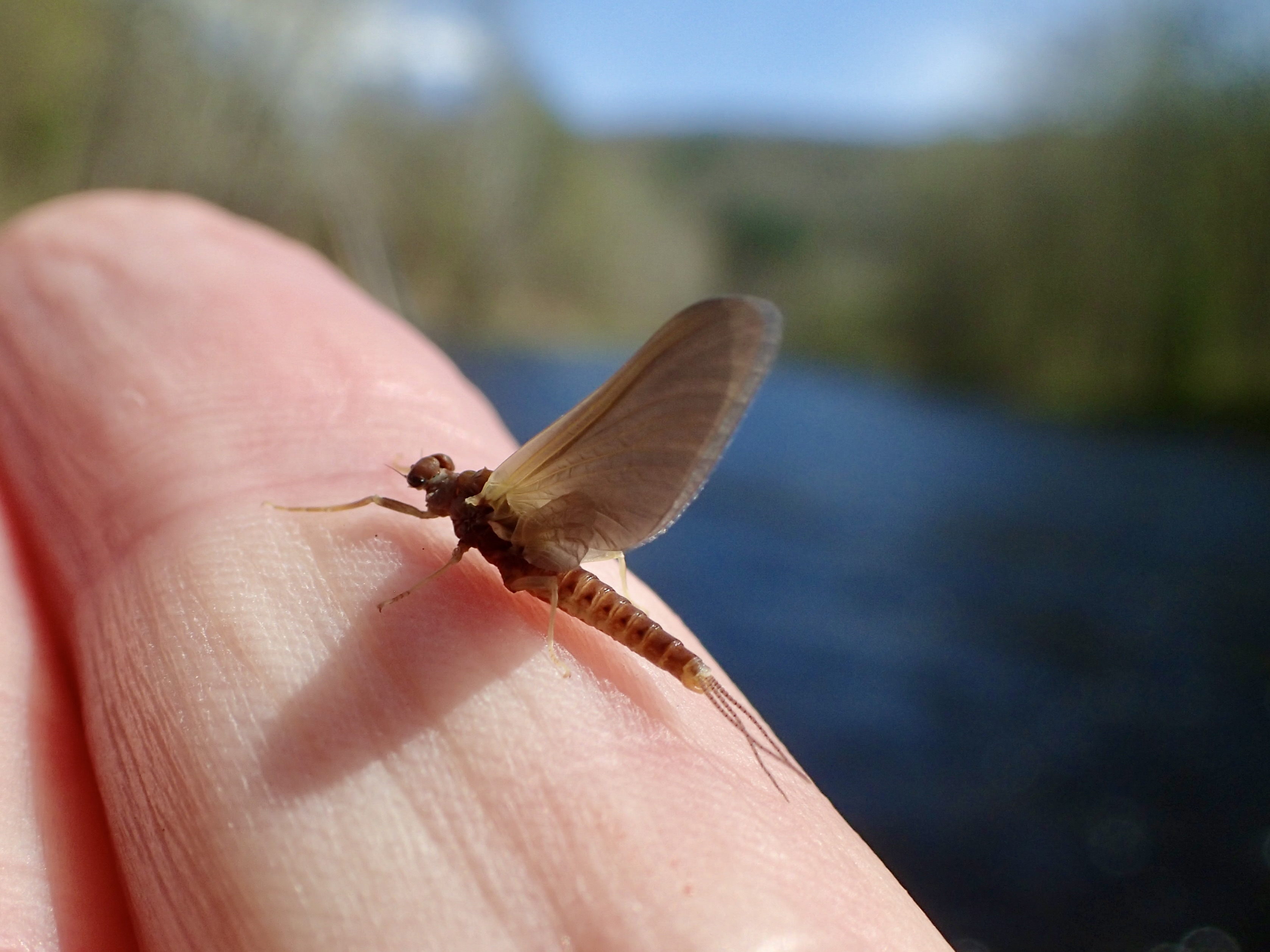
Hello, old friend. This would be a male Hendrickson; three tails, darker cast, large eyes.

What did follow script was the place in the water column where the fish were feeding. Pre- and during emergence, they took the wet, until the point where they didn’t, and then it was dry flies on the surface. This is a good time to talk about shadow hatches, which I do in the Farmington River book. In addition to Hendricksons, there were also caddis and BWOs in the mix. The savvy wet fly angler will want to have at least one of those other food groups represented. What do you know? Of the three trout I took on wet flies, two came on the caddis middle dropper (Hare’s Lug and Plover).

I managed two more on the surface, bringing my total to five. At the risk of sounding ungrateful, I was not impressed. Of course, I could have gone elsewhere. But with three anglers below me and five above me, real estate was scarce. So I stayed.

Today, writing about it, I have to scold myself for being so dour. It was a sunny, April day. The Hendricksons were out. There were some rising fish who wanted to eat. I got to reconnect with old friends and make some new ones. I didn’t put two dozen in the hoop or land a 20″ wild brown. But, yeah. That’s still a really good day of fishing.

Seven early season fly fishing strategies

Happy Tuesday. I’m sure we’re all chuffed that it’s April, with winter (despite subfreezing temps tonight) in the rearview mirror. The glorious promise of a new season is spread before us like an all-you-can-eat buffet. Since I haven’t written anything instructional in a while, here are some considerations for April fly fishing in the northeast, submitted for your approval.

A handsome April rainbow, taken on a mini-jig streamer. Run silent, run deep. Photo by Toby Lapinski
  1. Be prepared to go deep. The water is still plenty cold, and will be even on the warmest, sunniest April day. It may also be high. Which means that unless the trout have a reason to be active surface feeders, dries will be challenging. Your highest percentage plays are going to be dead-drifted nymphs and jig or traditional streamers, dead drifted, swung, or stripped.
  2. The fish aren’t spread out. Generally speaking, the fish aren’t everywhere; rather, they will pod up. So where you catch one, you’ll likely catch another. An exception would be large, alpha wild browns. Look for them in the prime lies at the heads of pools, dump-ins, and even some whitewater.
  3. Pick and choose your dry fly days. Just because it’s warm and sunny doesn’t mean the fish will be feeding on the surface. Rather, look for specific hatches and hatch windows. Hendricksons, caddis, and BWOs will all be hatching and, in the case of the mayflies, spinning and falling. If you must prospect with a dry, a nymph or wet fly dropper is almost never a bad idea this time of year. Of course, if there is hatch and feeding activity, rock on.
  4. Don’t poo-poo junk flies. High water, off-color water, stupid stockers — these are all compelling reasons to fish Squirmy Works, Mops, and other ghastly creations.
  5. Be (ware/aware) of shadow hatches. I write about this in greater detail in the book. Just because the Hendrickson are hatching doesn’t mean that the trout are eating Hendricksons. Know everything that is likely to be a food source and you’ll catch more fish.
  6. Be courteous to other anglers. It can get crowded out there. Try to share the water when possible. Ask if you can fish near someone. Good fishing karma comes to those who are polite. And in a matter of weeks, the crowds will begin to thin out.
  7. May comes next. Another topic that’s covered in the book. You think it’s going to be high 70s and sunny, and all too often it’s 50s and cloudy and windy. May is caddis month. So get those boxes filled on your April off days.

Is this a great time of year to be a fly fisher, or what?