Seven early season fly fishing strategies

Happy Tuesday. I’m sure we’re all chuffed that it’s April, with winter (despite subfreezing temps tonight) in the rearview mirror. The glorious promise of a new season is spread before us like an all-you-can-eat buffet. Since I haven’t written anything instructional in a while, here are some considerations for April fly fishing in the northeast, submitted for your approval.

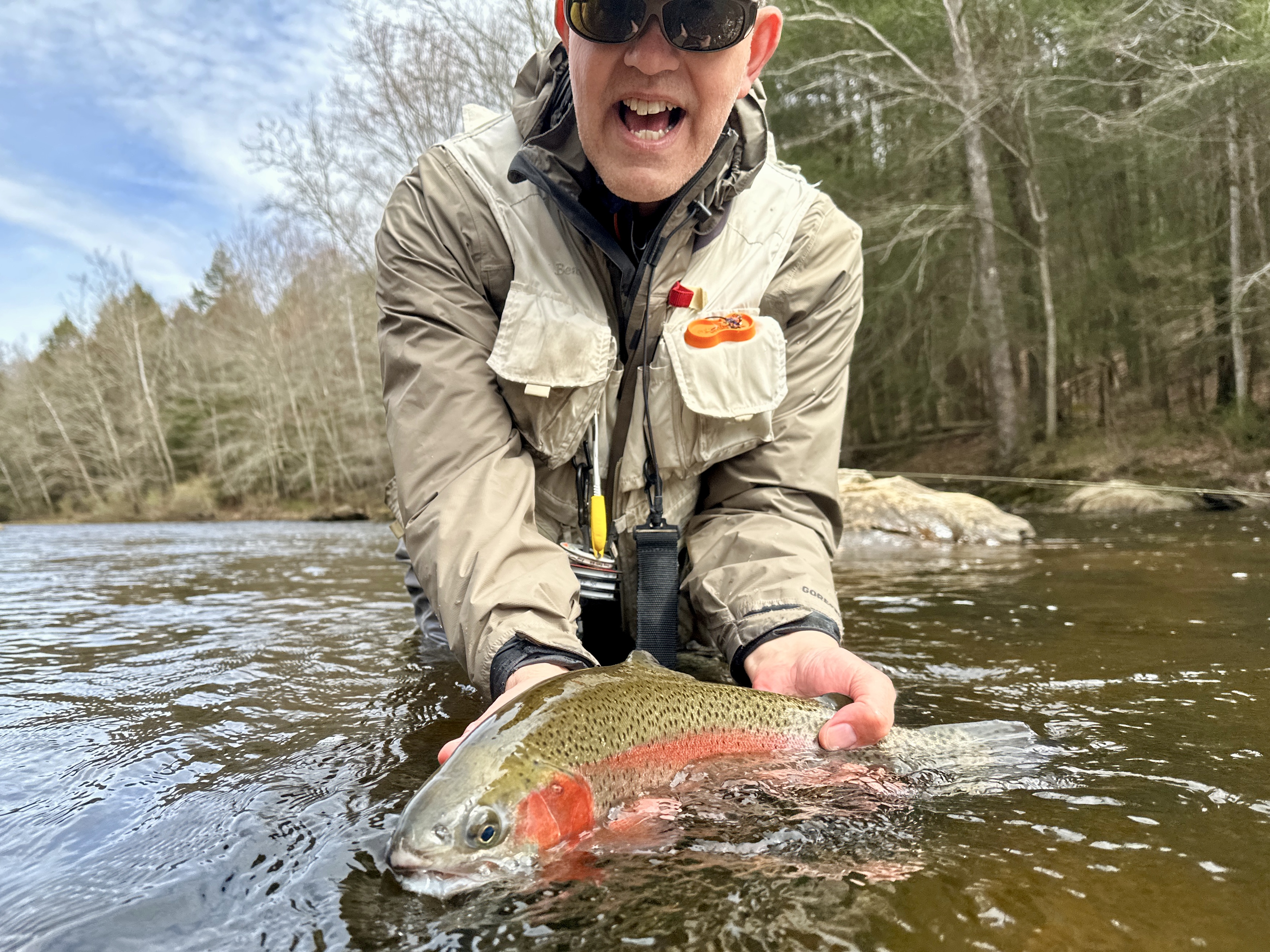
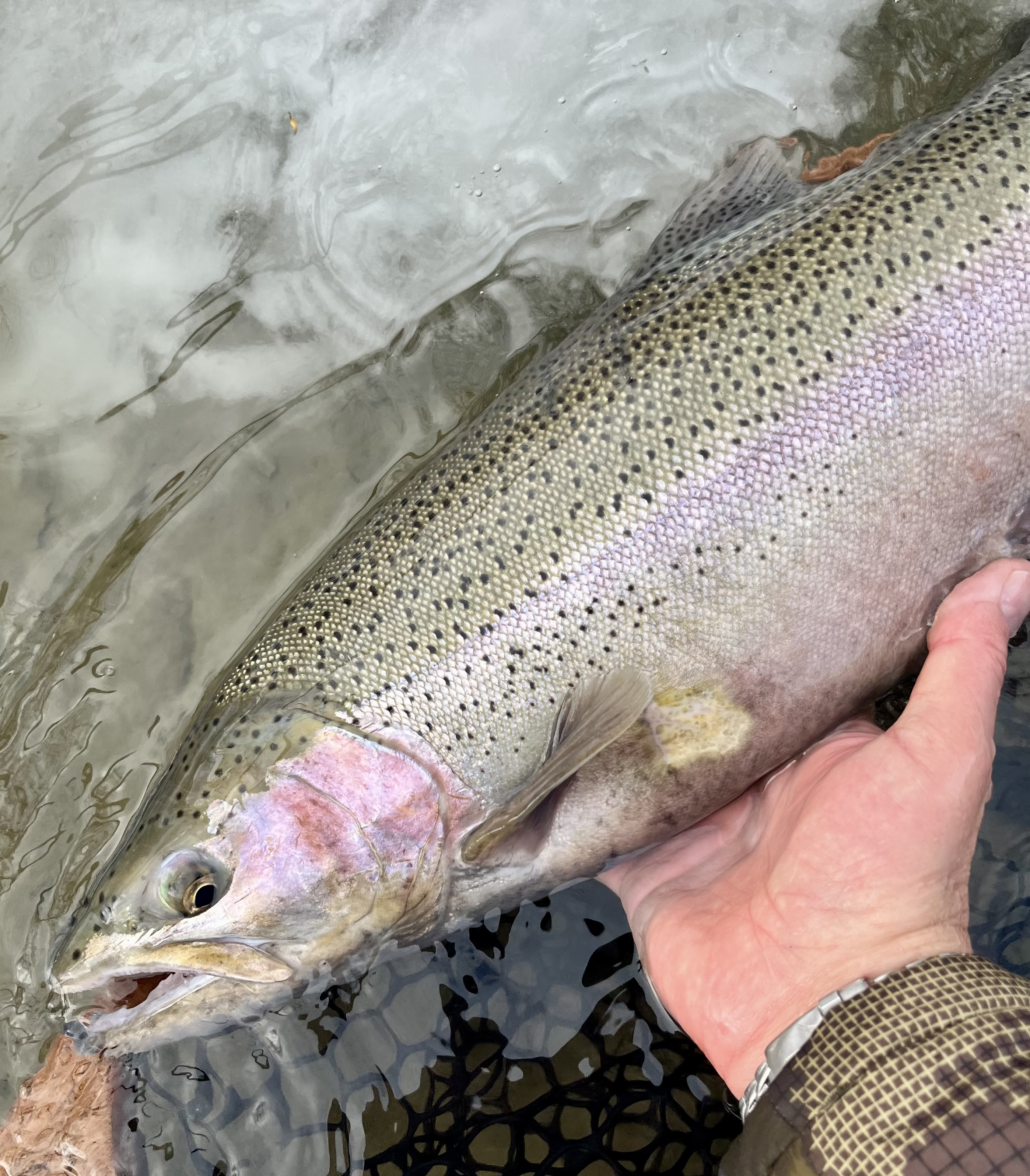
A handsome April rainbow, taken on a mini-jig streamer. Run silent, run deep. Photo by Toby Lapinski
  1. Be prepared to go deep. The water is still plenty cold, and will be even on the warmest, sunniest April day. It may also be high. Which means that unless the trout have a reason to be active surface feeders, dries will be challenging. Your highest percentage plays are going to be dead-drifted nymphs and jig or traditional streamers, dead drifted, swung, or stripped.
  2. The fish aren’t spread out. Generally speaking, the fish aren’t everywhere; rather, they will pod up. So where you catch one, you’ll likely catch another. An exception would be large, alpha wild browns. Look for them in the prime lies at the heads of pools, dump-ins, and even some whitewater.
  3. Pick and choose your dry fly days. Just because it’s warm and sunny doesn’t mean the fish will be feeding on the surface. Rather, look for specific hatches and hatch windows. Hendricksons, caddis, and BWOs will all be hatching and, in the case of the mayflies, spinning and falling. If you must prospect with a dry, a nymph or wet fly dropper is almost never a bad idea this time of year. Of course, if there is hatch and feeding activity, rock on.
  4. Don’t poo-poo junk flies. High water, off-color water, stupid stockers — these are all compelling reasons to fish Squirmy Works, Mops, and other ghastly creations.
  5. Be (ware/aware) of shadow hatches. I write about this in greater detail in the book. Just because the Hendrickson are hatching doesn’t mean that the trout are eating Hendricksons. Know everything that is likely to be a food source and you’ll catch more fish.
  6. Be courteous to other anglers. It can get crowded out there. Try to share the water when possible. Ask if you can fish near someone. Good fishing karma comes to those who are polite. And in a matter of weeks, the crowds will begin to thin out.
  7. May comes next. Another topic that’s covered in the book. You think it’s going to be high 70s and sunny, and all too often it’s 50s and cloudy and windy. May is caddis month. So get those boxes filled on your April off days.

Is this a great time of year to be a fly fisher, or what?

Erie Tribs Steelhead report 2/25: “Please sir, I want some more…”

I don’t mean to sound greedy. But after potting 23 steelhead and breaking 300 on Tuesday, all I could think about was landing more.

Fair enough, but things don’t always work out the way you hope they would. How many times have you planned a fishing trip, only to see Mother Nature and the elements conspire to crush your dreams with cruel indifference? We were supposed to get 3-5 inched of snow overnight, which would mean slush-filled creeks for most of the morning. And with temperatures predicted in the upper 30s/low 40s, melting would follow, then runoff. I didn’t have a good feeling.

But forecasts change, weather people are notoriously often not right, and we got only an inch of snow, if that. We were so optimistic, we started the day an hour earlier than yesterday. There was a little slush in the system, but far less than the day before, and it was all gone within an hour. Best of all: no one was out fishing. We saw three other anglers all day, and then only for a couple hours. That meant I could bounce around the creek and fish wherever my little heart desired. (My phone later told me that I’d walked and waded nearly 3 miles).

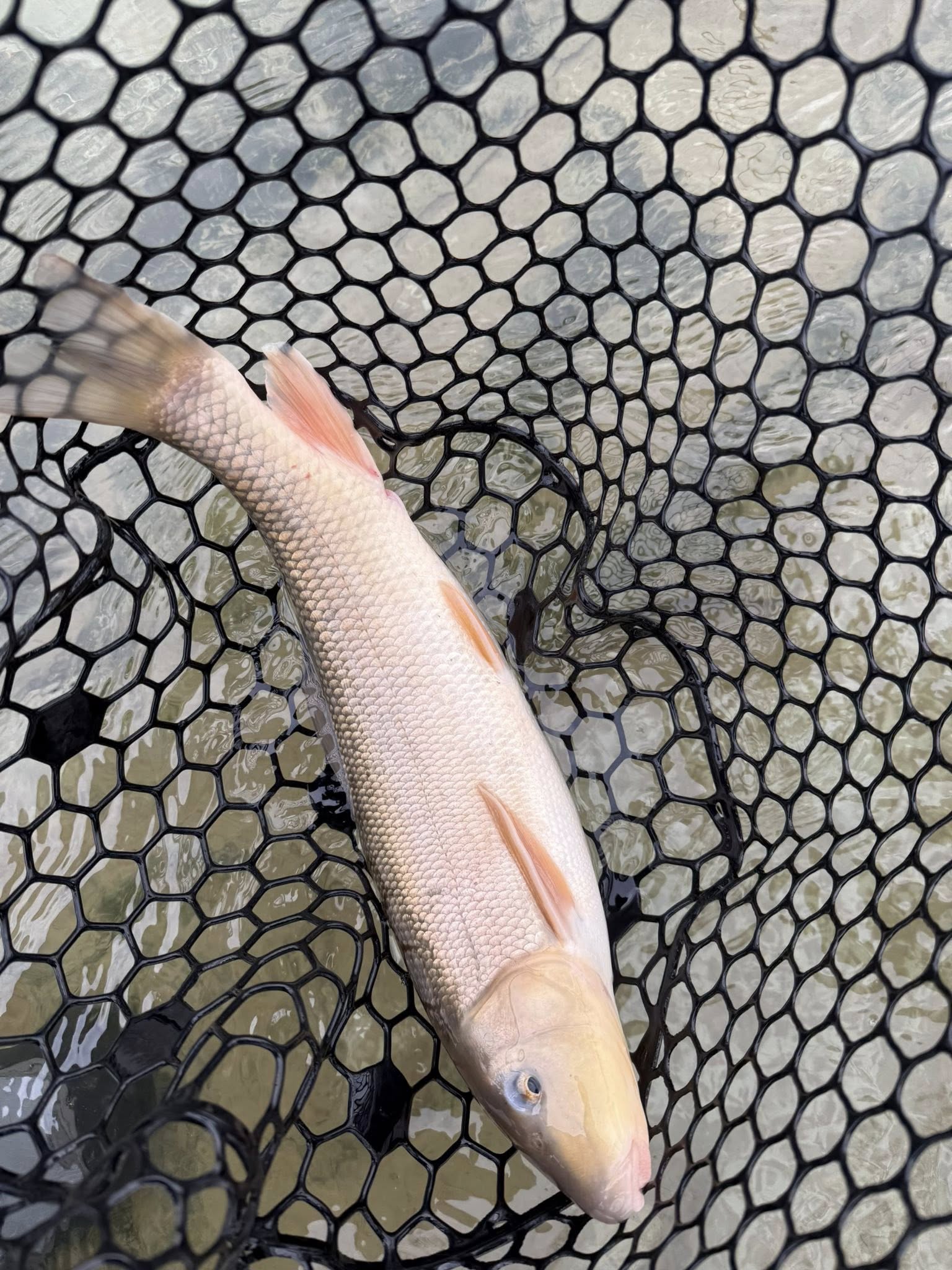
The suckers are in! Or singular, if you like, as this was the only one I found over two days. It was a little early to be matching the hatch with sucker spawn or Crystal Meths, although the patterns absolutely work any time during the season.
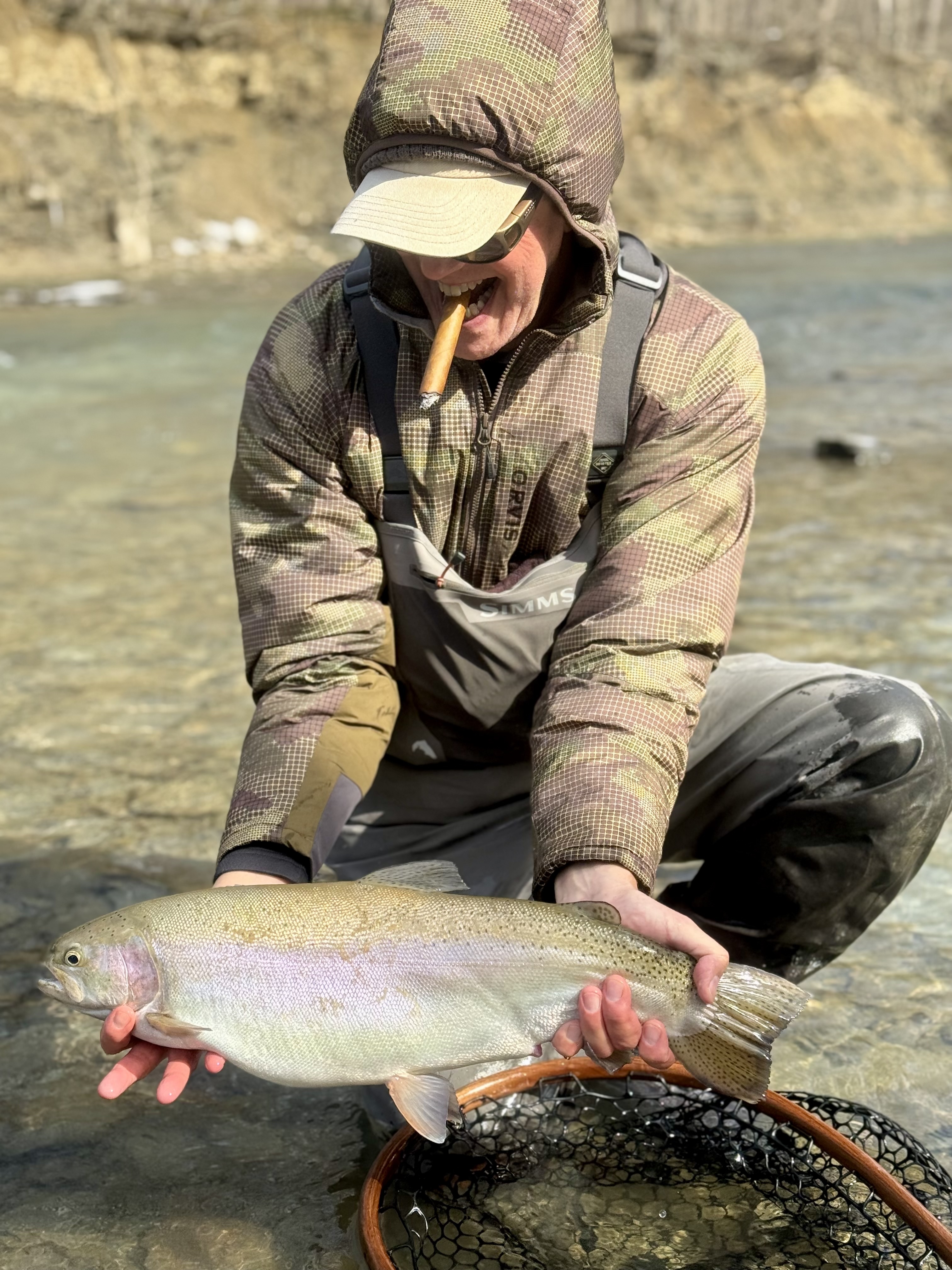
Despite the lamprey scar, a breathtakingly beautiful fish. The water was still barely above freezing, but on this day the steelhead had a lot more fight in them. We worked upstream, targeting likely holding areas, concentrating on the ones that held fish and presenting flies until the bite stopped. I went from one landed to a half dozen, and then a dozen by about 1pm. It was already a fantastic day.
One tank of a hen steelhead. While there were several good battles, I had three over the course of the day that truly tested my landing skills. I really wanted to land this fish, as she kept bulldogging me and running and refusing to come civilly. By early afternoon, a front began moving through; it got gusty and noticeably colder, and while it didn’t shut down the bite, it definitely tapped the brakes. The water began to take on color. And then, there were no more eats. It was time for lunch and another section of river.
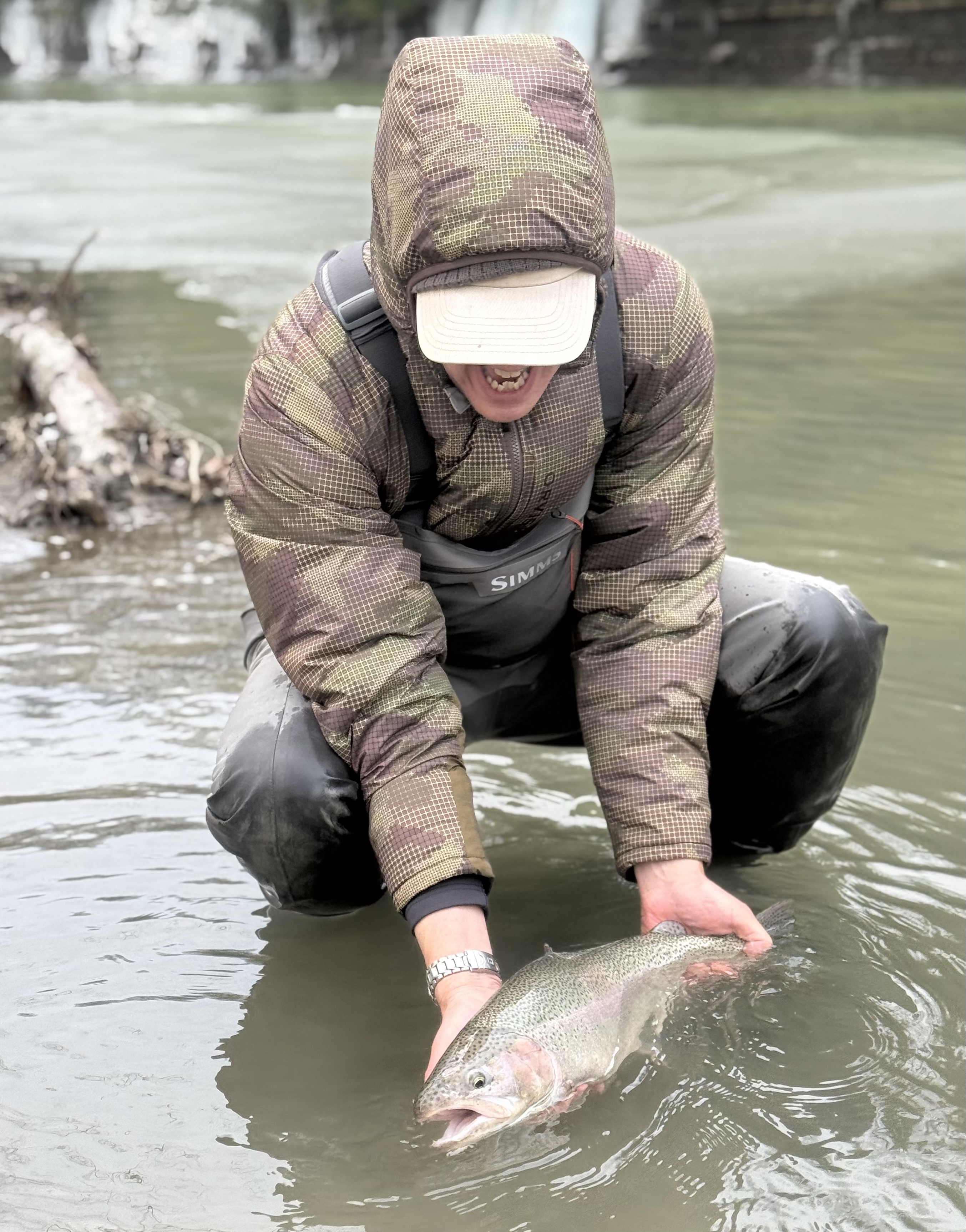
As you can see, the final section of river had a tea-with-a-few-drops-of-milk opacity. My batting average was not the best in this last mark, as I went 2-for-5. But I have no right to kvetch. The hump day total was 17 steelhead in the hoop, giving me 40 for the two-day trip. Did this really happen? Wasn’t I trapped by hundreds of feet of deep, wet snow a few days before? Weren’t conditions supposed to be entirely unfavorable? This is the argument for, “You don’t know if you don’t go” — and this is steelhead number 322.

Onward to 400.