Farmington River Report 4/23/26: One-half of Bob and Andy, Hendricksons galore, but where were the trout?

I fished the lower end of PTMA yesterday from noon to 3:30pm. Once got to the river, I ran into a group of wonderfully chill gentlemanly anglers, and we had a short gab-fest before I decided to head into the river for some pre-hatch prospecting. Bob, of Bob-and-Andy fame, was also there. I’d met Bob-and-Andy at this mark many years ago, and since then, it’s really not April unless we cross paths on the river.

The wind made it an unfavorable day for casting a team of three wets, but I managed to go almost the entire session without a fouled-up leader. After an hour that produced one lonely bump, I declared to the group that one or more of three things was true: there are not a lot of fish here; the hatch is going to be underwhelming; the trout are content to feed on the bottom. It turns out that options A and C were likely in play. When the hatch finally got going, around 2:15pm, there were bugs everywhere: in the air, on the surface — and precious few trout rising to them. I’d give this hatch volume an 8 out of 10; when you can count the rises per minute on a few fingers (instead of dozens) that’s not going to make for epic fishing. Normally, with this Hendrickson hatch volume, I’d bang up a good dozen fish or more fishing wets pre-hatch and during the emergence. Not today.
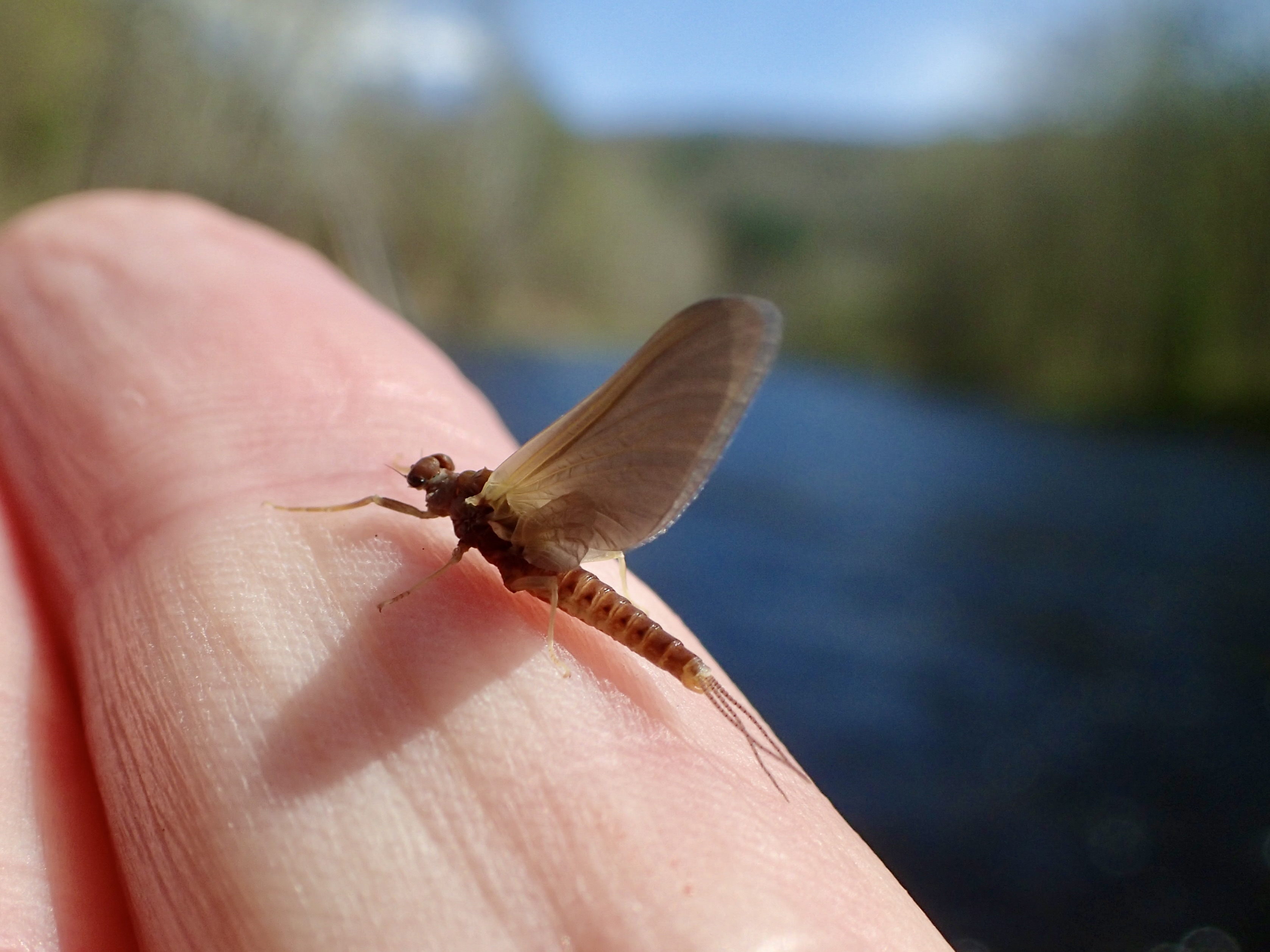
Hello, old friend. This would be a male Hendrickson; three tails, darker cast, large eyes.

What did follow script was the place in the water column where the fish were feeding. Pre- and during emergence, they took the wet, until the point where they didn’t, and then it was dry flies on the surface. This is a good time to talk about shadow hatches, which I do in the Farmington River book. In addition to Hendricksons, there were also caddis and BWOs in the mix. The savvy wet fly angler will want to have at least one of those other food groups represented. What do you know? Of the three trout I took on wet flies, two came on the caddis middle dropper (Hare’s Lug and Plover).

I managed two more on the surface, bringing my total to five. At the risk of sounding ungrateful, I was not impressed. Of course, I could have gone elsewhere. But with three anglers below me and five above me, real estate was scarce. So I stayed.

Today, writing about it, I have to scold myself for being so dour. It was a sunny, April day. The Hendricksons were out. There were some rising fish who wanted to eat. I got to reconnect with old friends and make some new ones. I didn’t put two dozen in the hoop or land a 20″ wild brown. But, yeah. That’s still a really good day of fishing.
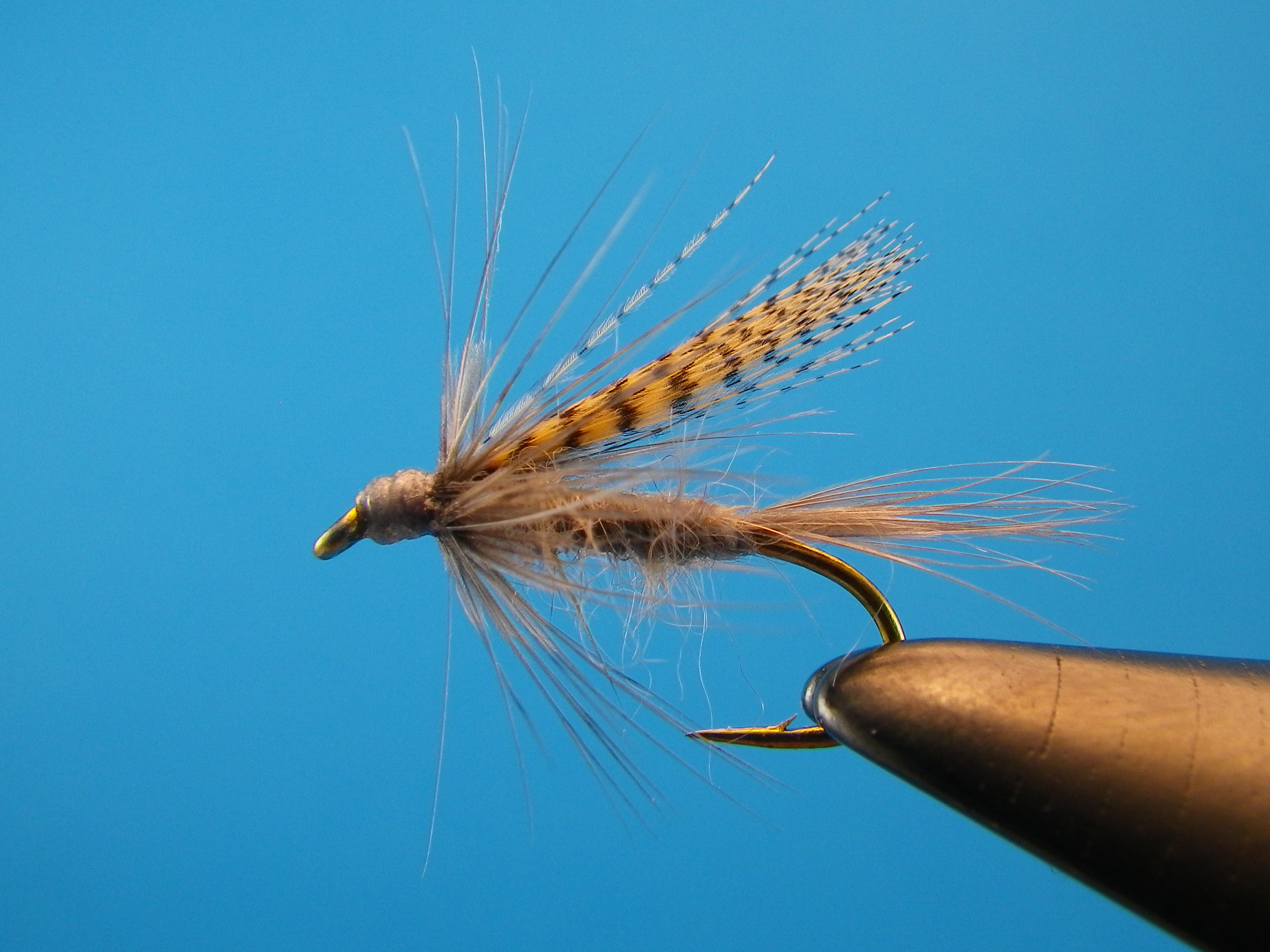
The Dark Hendrickson Winged Wet

We had spent the morning nymphing, but as the hour hand worked its way toward eleven, the bite slowed. One o’clock would be the visible start of the Hendrickson hatch — you can set your watch by it on the Farmington — but I figured right now was about time for creatures to be stirring a foot below the surface.

I rigged up a team of three wets, with a Dark Hendrickson on point, and began walking down a long, three-foot deep run. When I got to the tailout, I encountered an angler reclining on rock, enjoying the warmth of the late April sun. I hailed him and asked how his fishing had been. He told me he hadn’t yet wet his line. “Waiting for the Hendrickson hatch to start,” he explained.

Oh, it’s already started, I told him. “I don’t see anything coming off,” he said. I shook my head. You can’t see it yet. It’s going on below, and it’s going to be a good one. See my friends up there? I’ve been catching them all the way down the run, just swinging wets. They’ve been keyed on this fly here.

The Dark Hendrickson Winged Wet is a legacy American pattern that has been fooling trout for over a century. I’ve been fishing it only a fraction of that time, yet I couldn’t possibly tell you how many trout I’ve taken on it. This fly would easily make my Top Ten Wets list. Match the size of the naturals (about a 12 on the Farmington), then drift, swing, or dangle it over rising fish, and hold on.

The Dark Hendrickson Winged Wet

Image

Hook: 2x strong wet fly
Thread: Grey
Tail: Dark blue dun hackle fibers
Body: Muskrat fur
Hackle: Dark blue dun hen
Wing: Lemon wood duck

~

Tying notes: I like to use darker muskrat fur, particularly the soft grey underfur. Pick out and discard the black, stiffer guard hairs when you snip off a patch. A little fur goes a long way, and if you happen to have an entire skin, you’ve got enough fur to keep your great-great grandchildren in Hendricksons. Keep the body thin; the hero of this fly is wing. Be sure to leave plenty of room for the head and the wing; you can see on this fly that I just about made it. (Although the trout won’t care a lick.) To form the wing, I usually fold a small section of wood duck over itself with the dull side facing in, but I don’t get too crazy about trying to make every fly perfect. Make the wing about as long as the bend. If you don’t tie this fly, please start. You’re going to be happy you did.

Looks like the Hendrickson hatch has started.

Image

~

The Dark Hendrickson Rogues’ Gallery

Image