Farmington River Mini-Report 5/7/26: Wet Fly Woes Continue

Usually, by this time of year, I’ve given you at least one report headlined with words like “spectacular wet fly action.” But not in 2026. It continues to be cooler than normal and windy and blech. When hatch activity has been strong, the fish seem content to feed on the bottom. This, of course, will change. I feel like we’ll go instantly from early spring to mid-summer weather, the surface bite will pick up, and you’ll get your enthusiastic, superlative-laden wet fly report. But for now, it’s keep on-keeping on.

I gave Jason a wet fly lesson from 11am-3pm on Thursday, and he deserved way, way better than what he got, which was two hits in four hours. To be fair, one of them was a very good fish, although it was camera shy. Jason did an excellent job of casting and getting his team of three where it needed to be, then mending and presenting. Some time later this month or in June, he’s going to hit it right, and people are going to be following him off the water, asking him, “What fly were you fishing?!?”

It’s way too early for me to be thinking about grasshoppers, but I did see one on my driveway yesterday. This is my Hopper Hammerdown.

We had 310cfs in the PTMA and points south. Water temp was in the high 50s. When it’s windy, the seed pods that blow into the water (which look very much like soft-hackled flies) do us no good, and that was yet another factor. Oh, did I mention the cold front that came through the night before? We got into our fish because we moved aggressively through pools, looking for biters. Do likewise when the fishing is slow, and you’ll up your odds significantly.

And a reminder: May is caddis month on the Farmington.

Farmington River Report: A slow wet fly start to spring, but beginning to come around.

This has been a cool spring with lower than average temperatures and not a lot of rain. While the hatches have been strong — this year’s Hendrickson showing has been far better than last year’s — I have yet to have a seems-like-a-fish-on-every-cast wet fly outing. (The river is usually good for at least one by month’s end.)

I gave James a wet fly lesson in mid-April, and we managed only one to net. We pounded several sections of river north of the PTMA, and managed only one bump. (Our lone fish came from within the PTMA.) I managed a day to myself during the Hendrickson hatch in the PTMA, and the number of rising trout fell far short of the bug volume. That certainly could be a function of me fishing where there weren’t many fish. Historically, though, the mark I fished holds a multitude of trout in April. On Tuesday, I did some advance scouting for Wednesday’s wet fly lesson. It was a fish here, a bump there, and none of it very impressive. I ranged from the lower river in Burlington up to the PTMA. I did manage to foul a beast mid-river; when the fish swam the leader over a rock, we parted ways.

Which brings us to yesterday’s lesson with Michael. We fished two marks, the lower end of the PTMA, and then mid-river. While the action wasn’t spectacular, we did find fish that wanted to eat in both locations. Our session began at 11am and we wound up at 3:30pm, a little over, but for a very good reason.

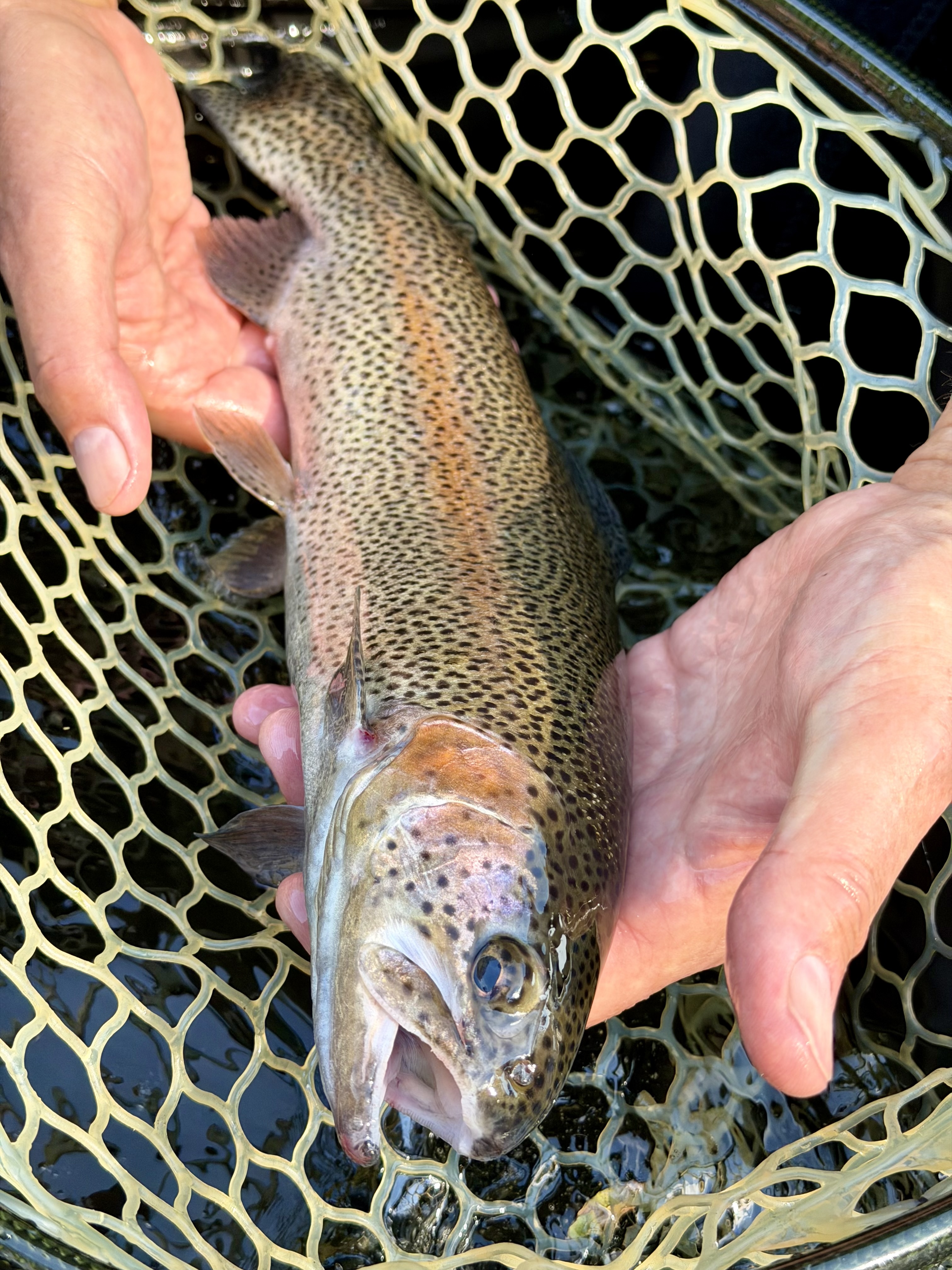
We had a decent caddis hatch at the first spot, but little was rising to it, and none of it on a regular rhythm. Lesson one: move around, cover water, find the fish. While I think everyone loves catching wild Farmington browns the most, the stocked rainbows more than make up for any lack of situational romance with power, urgency, and acrobatics. Because of the breeze, I had Michael fishing two flies instead of three. This beauty ate our point fly, a SHBHPT.

The second mark featured faster water, and it was a little deeper in spots. Even though it was a mid-river location, there were a surprising number of Hendricksons coming off. Nothing too wow, but there were a few trout rising in the frog water edges, and farther down from us in longer pool where the current slowed. We’d switched to a Dark Hendrickson BH soft hackle on point, and our next fish, a stocked brown, ate that fly. Even though it was close of business, I wanted to make a few casts at the fish feeding downstream.

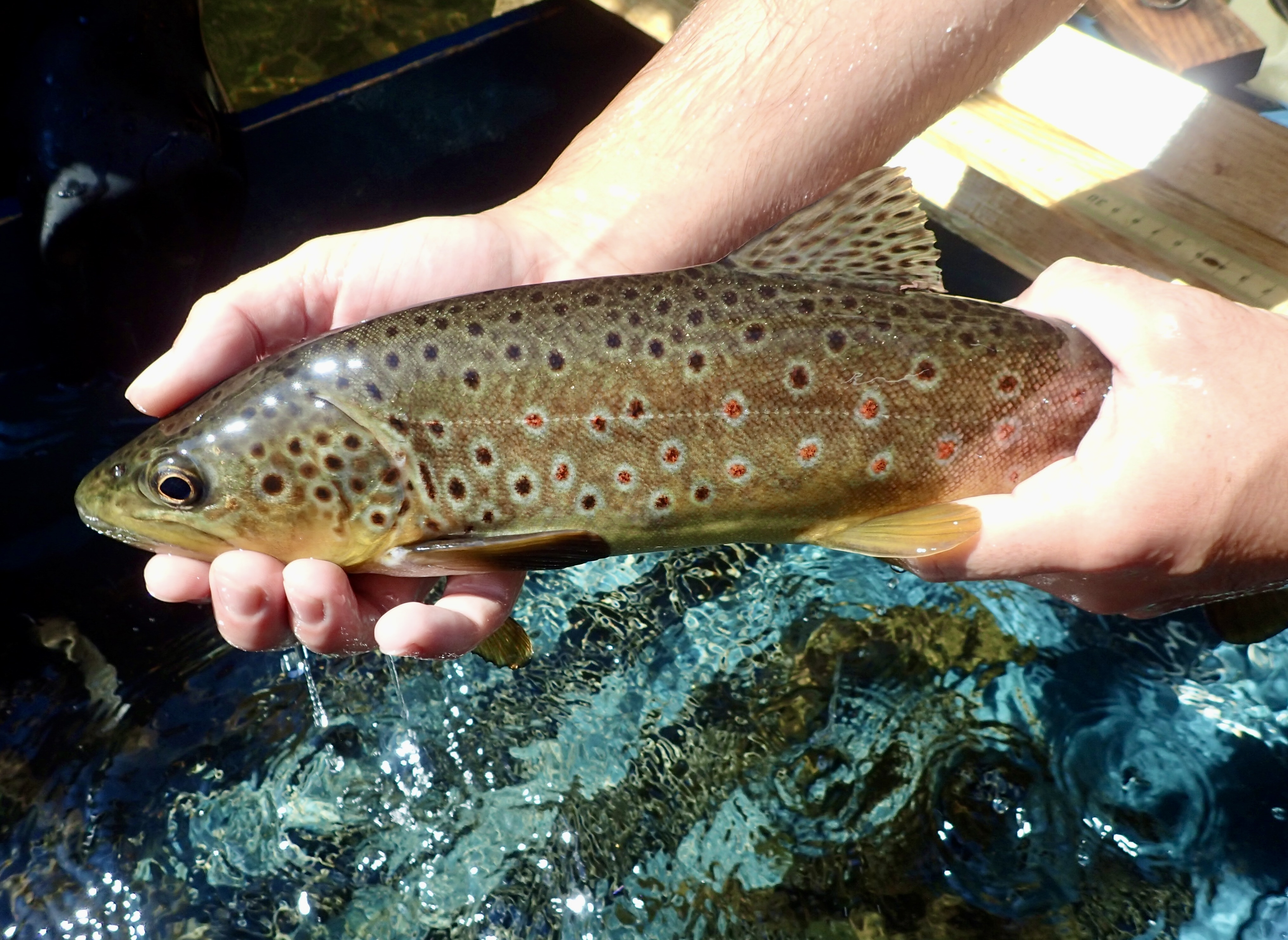
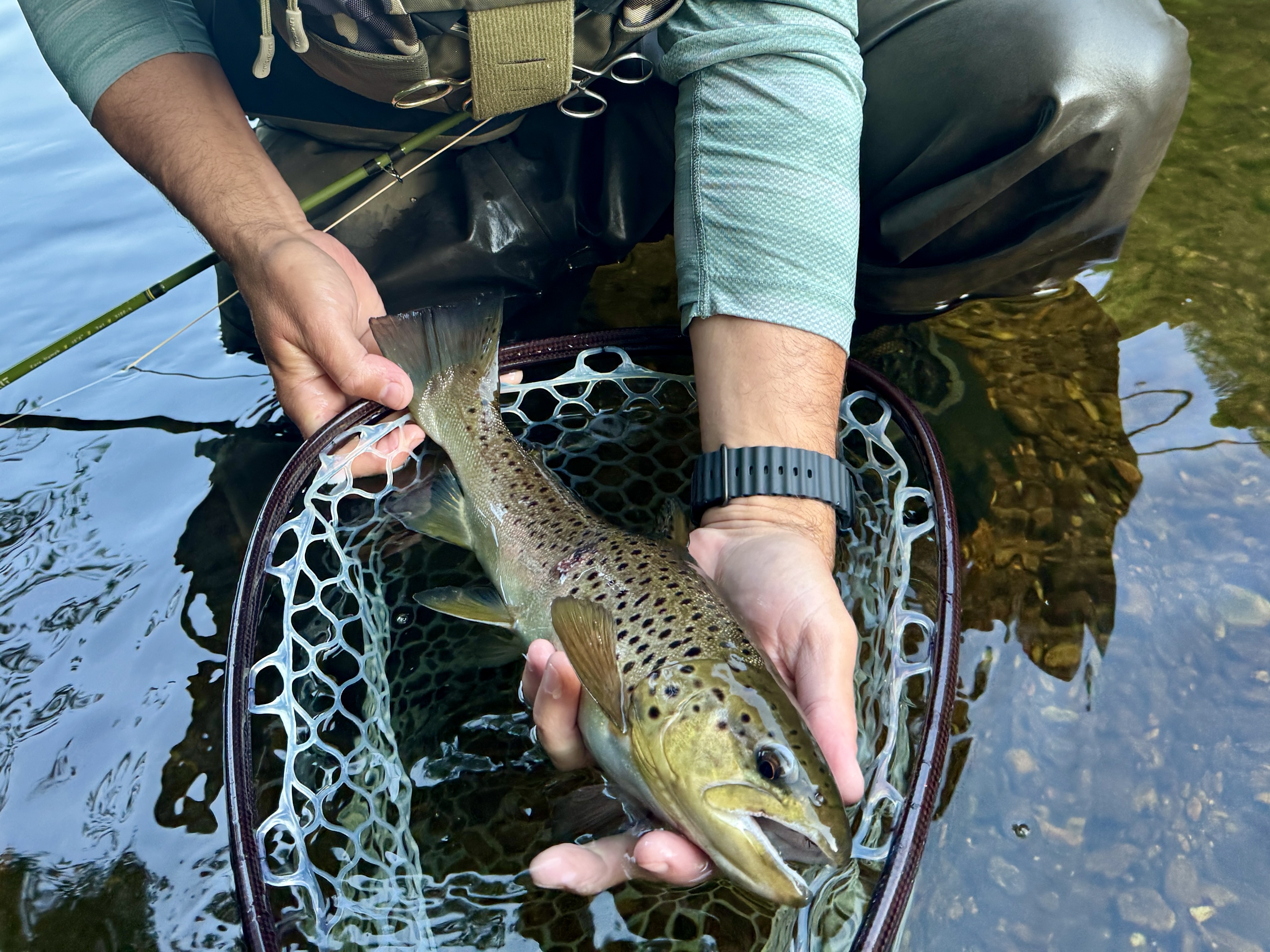
We waded down and out as far as we comfortably could. Because the fish were rolling on mergers, I removed the BH point fly and replaced it with a Dark Hendrickson winged wet. Good call, because that’s what a gorgeous high teens wild brown hen decided to eat. Great job, Michael, fighting and landing that fish! If you head over to Instagram some time today, you can see a photo.

Hopefully, this is the beginning of better wet fly action. May is a strong caddis month, and caddis are a dish best served to trout subsurface.

Farmington River Report 4/23/26: One-half of Bob and Andy, Hendricksons galore, but where were the trout?

I fished the lower end of PTMA yesterday from noon to 3:30pm. Once got to the river, I ran into a group of wonderfully chill gentlemanly anglers, and we had a short gab-fest before I decided to head into the river for some pre-hatch prospecting. Bob, of Bob-and-Andy fame, was also there. I’d met Bob-and-Andy at this mark many years ago, and since then, it’s really not April unless we cross paths on the river.

The wind made it an unfavorable day for casting a team of three wets, but I managed to go almost the entire session without a fouled-up leader. After an hour that produced one lonely bump, I declared to the group that one or more of three things was true: there are not a lot of fish here; the hatch is going to be underwhelming; the trout are content to feed on the bottom. It turns out that options A and C were likely in play. When the hatch finally got going, around 2:15pm, there were bugs everywhere: in the air, on the surface — and precious few trout rising to them. I’d give this hatch volume an 8 out of 10; when you can count the rises per minute on a few fingers (instead of dozens) that’s not going to make for epic fishing. Normally, with this Hendrickson hatch volume, I’d bang up a good dozen fish or more fishing wets pre-hatch and during the emergence. Not today.

Hello, old friend. This would be a male Hendrickson; three tails, darker cast, large eyes.

What did follow script was the place in the water column where the fish were feeding. Pre- and during emergence, they took the wet, until the point where they didn’t, and then it was dry flies on the surface. This is a good time to talk about shadow hatches, which I do in the Farmington River book. In addition to Hendricksons, there were also caddis and BWOs in the mix. The savvy wet fly angler will want to have at least one of those other food groups represented. What do you know? Of the three trout I took on wet flies, two came on the caddis middle dropper (Hare’s Lug and Plover).

I managed two more on the surface, bringing my total to five. At the risk of sounding ungrateful, I was not impressed. Of course, I could have gone elsewhere. But with three anglers below me and five above me, real estate was scarce. So I stayed.

Today, writing about it, I have to scold myself for being so dour. It was a sunny, April day. The Hendricksons were out. There were some rising fish who wanted to eat. I got to reconnect with old friends and make some new ones. I didn’t put two dozen in the hoop or land a 20″ wild brown. But, yeah. That’s still a really good day of fishing.

Here I am: book stuff, fishing stuff, schedule stuff…

A little random potpourri day on currentseams. I had written a post similar to this one, which was supposed to go live on Tuesday, but somehow WordPress ate my draft (don’t you just love when technology fails?). So here we are.

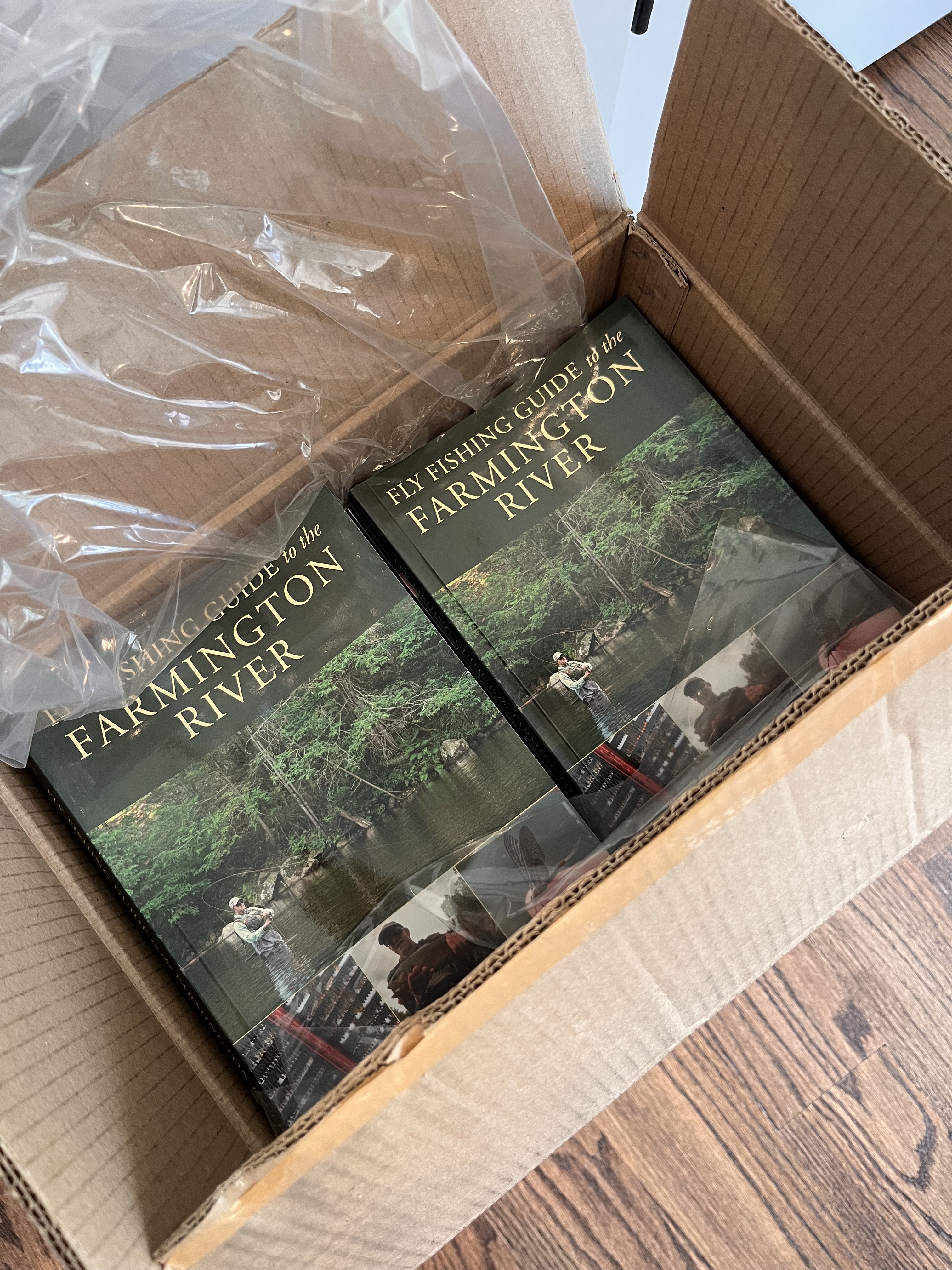
I received about two dozen requests for personalized copies of the book through me, and that’s enough for me to proceed. My next steps are to figure out how much all this will cost me (mailers, postage — probably media mail) so I can then pass the cost along to you. (How’s that for transparent business practice?) I’m hoping to have that information out by the end of the month, and if you want a signed copy from me, you still have plenty of time to let me know. I won’t ask for money until I get all those ducks in a row, and hopefully I can get books out to you before the official release day of August 4.

Fishing time has been scarce for me this spring, especially on the striper front. I didn’t go once from January through March. Normally, I’d go at least once a month in January and February. But every time I had a time and tide window, it was either sub-freezing cold front misery or a disgustingly high water. I’m really looking forward to being able to swing some flatwings in April. If the elements allow!

March can be a productive big-bass-on-the-fly-from-shore window. Not this year. At least, not for me.

On our local trout waters, it’s a tricky time of year. You basically have two options: targeting stocked trout or targeting wild and holdover trout. I must confess that playing the stocker game is fun for a while; however, I have a limited interest for that. Wild or stocked, the trout will tend to remain stacked up this time of year, even though it’s beginning to warm up and we’re seeing more bug activity. They’ll begin to spread out sometime in April. Bug-wise, think little dark stone flies and midges and caddis, which are plentiful food supplies. Of course, the Hendricksons will be the first big glamour hatch of the year, starting on the lower Farmington in about two weeks. But after last year‘s disappointing showing, that hatch remains a big question mark. We shall see.

Mrs. H, missing the middle fork of her tail.

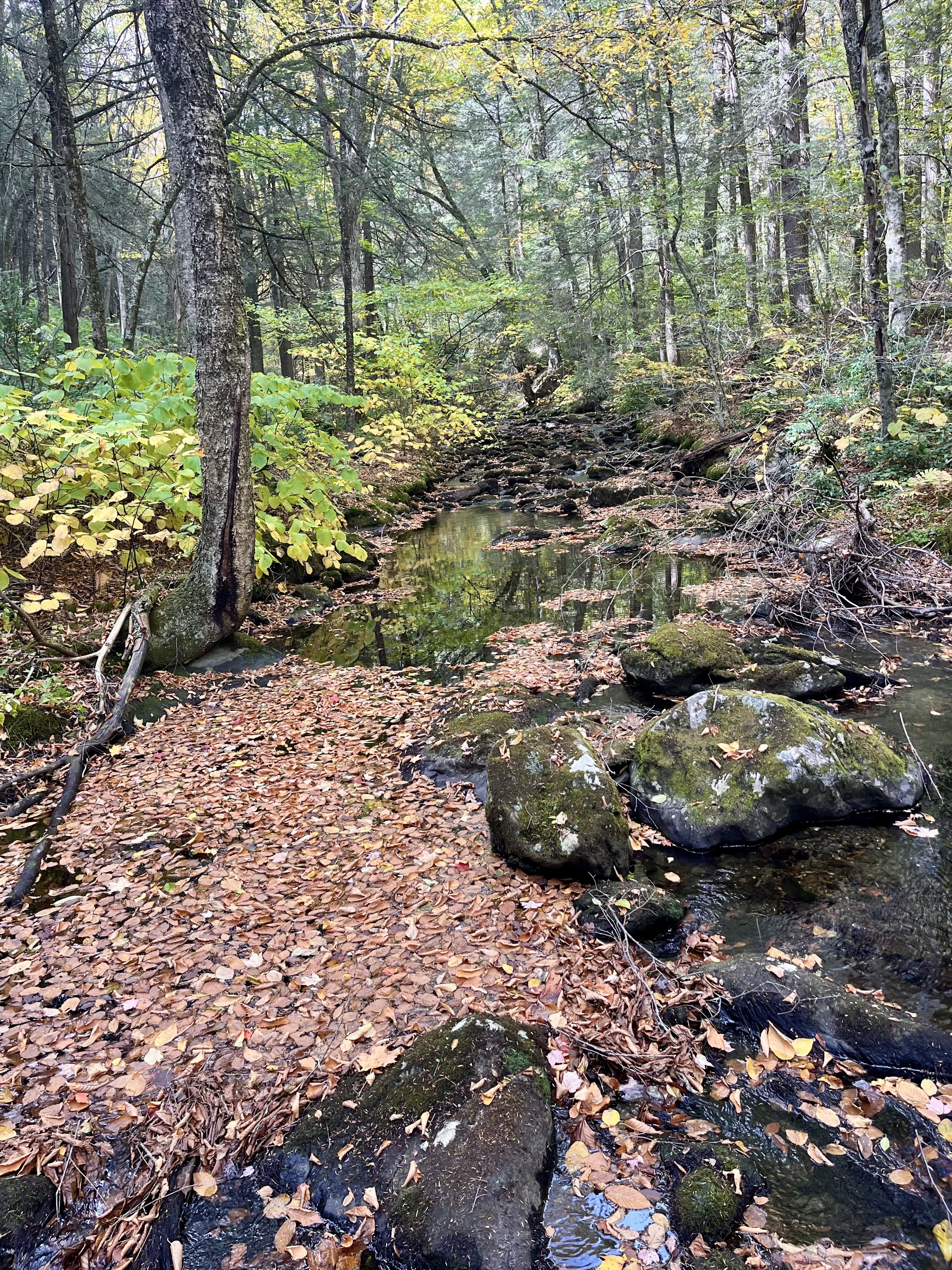
I did get out to a small stream last week after the rains, but the water was high and cold. There were no bugs and the air temp in the 30s didn’t help. I went out this week in much warmer temperatures and a little bit lower water, and what a difference a week made. But I’ll give you more on that in a post next week.

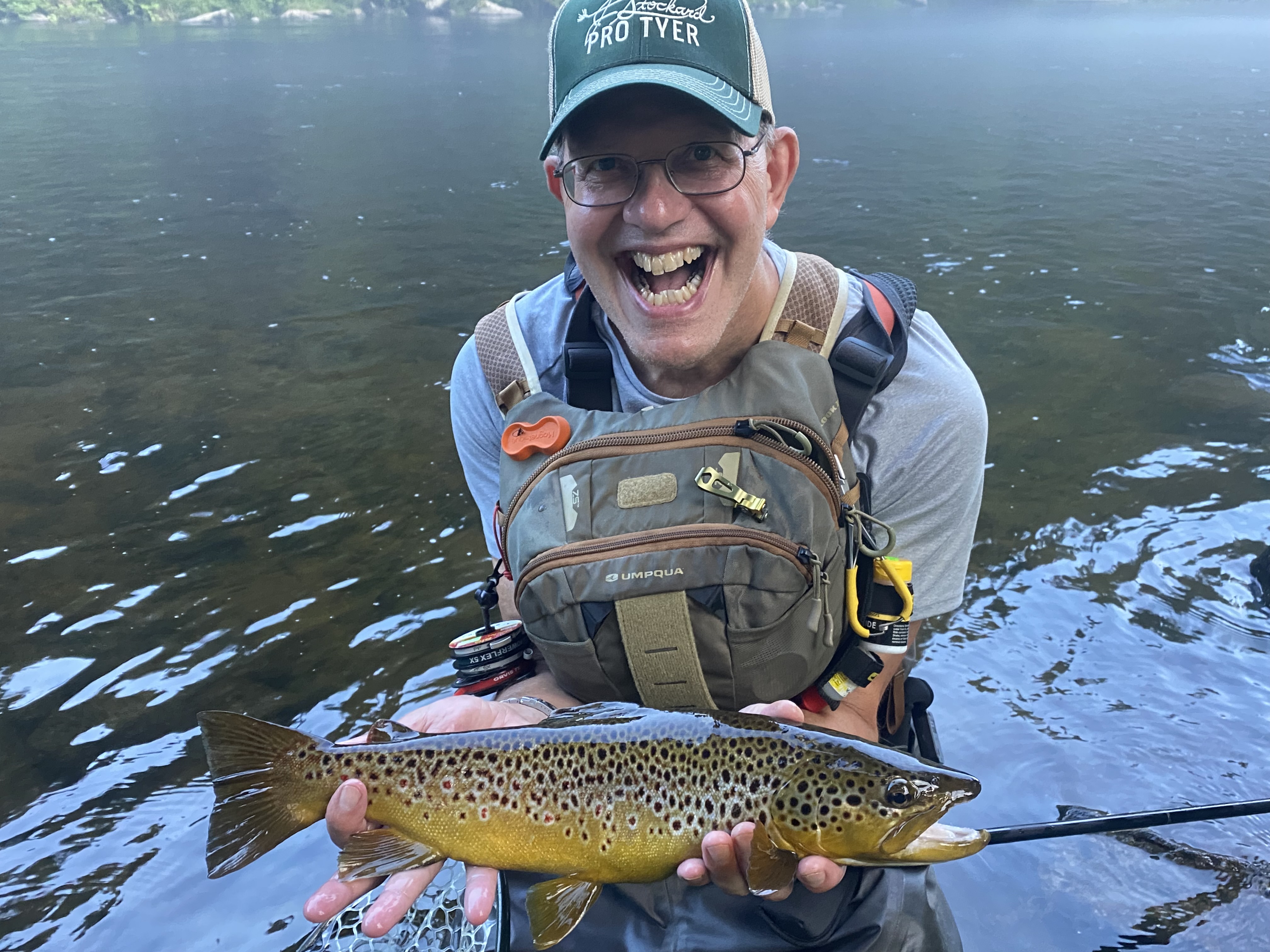
As a newly minted member of the Regal Vise Pro-Staff, I’m working on a wet fly piece for their website (which is currently under reconstruction). I have no idea when it will post but I’ll let you know. Also look for a future blog post for me on the J. Stockard website, where I’m also a Pro Tyer.

Finally, many thanks to the Yale Fishing Club for hosting me on Tuesday night. It’s always a good time, and I’m a sucker for New Haven style pizza — well done, group! They’re going to fish the Salmon River in New York in a couple weeks, so we tied up some Blood Dot eggs which will serve them well.

Farmington River Report 3/9/26: “These two guys walk into a river….and nothing happens.”

It seems ridiculous to say — especially since I wrote the book — but yesterday was my first day in 2026 fishing the Farmington River. I was going to go last Friday, but I deemed it too cold, and decided to wait for more clement conditions. Turns out, the giddy sun and warmth had zero impact on the catching.

We (Farmington River guide Steve Hogan and I) decided to fish above Riverton based on two factors: the water would be warmest there (we took two readings and got 38.5 and 44(!) degrees), and it would be lowest and clearest due to it being above the Still River. As you can imagine, the false late spring weather drew crowds of anglers; I can’t remember the last time the Riverton town lot next to the bridge was jammed so full of vehicles. Nymphing was the game, and we hit multiple pockets and runs between the dam and the town. Parking wasn’t easy as there was still a substantial amount of snow lining Hogback Road.

I told Hogan that I grade myself when I’m fishing and not catching, and I gave me a B+/A-. I do this because If I’m not catching, I want to make sure that it’s not because I’m committing some fundamental error or missing strikes. Folks, I was on the bottom all day and I no longer have the flies to prove it. I dredged up several nice sticks. We saw midges and olives and couple other un-IDed bugs. What we didn’t see was a fish caught. Not us. Not anyone. But, better fishing is coming. A lot happens this month. We’re just three weeks away from April!

Early March is one of the toughest windows to fish on the Farmington. We gave it about 3 hours, then called it a day, which, given the sunshine and warmth and cigars, was not bad at all despite not having even a courtesy tap.

Menhaden action alert, Farmington River book, IFTS, and other fishy goings on

The first thing I’d like you to do after reading this opening paragraph is head over the ASGA website and sign their official letter calling for major reductions to the menhaden harvest. It will take you less than five minutes, and it’s an excellent use of your time. Long story short: Atlantic menhaden are a critical bait and ecosystem fish; they’ve been grossly over harvested; that needs to stop now. Please do this, even if you don’t fish for striped bass. We need all the voices we can get.

Galley copy for the Fly Fishing Guide to the Farmington River has been reviewed by yours truly and sent back to the editors. This was simply my review and comments on their edits. I was pleased to discover that the edits weren’t substantial, and book flowed from one subject to another like…a river? There. I’ve made my unfunny joke of the day. Maps were also reviewed, and I really like the artwork. If you don’t know the river, you’ll find them highly useful. Next steps: the whole shebang gets put into page layout, then reviewed. That should happen in November. We’re getting closer!

A successful spawn means more of these. This fish was sampled by DEEP last September during broodstock collection for the Survivor Strain program. If you see a redd and canoodling trout, be like The Beatles and let it be.

Speaking of the Farmington river, the spawn has begun. If you’re fishing, please be on the lookout for redds! They are generally lighter, oval-shaped patches surrounded by dark substrate. Keep a safe distance. And of course, never target spawning fish. That’s just bad form.

A reminder that the International Fly Tying Symposium is November 15-16, now just over two weeks away. I’m doing a wet fly seminar on Saturday and a Farmington River tying demo on Sunday. More on those coming soon.

Farmington last week and now, back to the book

I did two lessons last week on the Farmington. On Tuesday, I took Joe on a wet fly excursion. We stuck to the lower river; at 140cfs, it had the most water, and the weather was cool enough that the water temp never got higher than 66 (3pm). The fishing was predictably slow; we found success by moving around (we fished three different marks) and targeting the deepest, fastest-moving water we could get into. Joe was a strong wader, and sometimes that’s the difference between fishing and catching. Trout love to hang out in places that are difficult for land animals like humans to navigate. Joe stuck four and we put three in the hoop. In difficult low-water conditions, that was pretty darned good.

Joe having at it. As you can see, the clarity of the water was excellent, and when the flows are low, that usually works in favor of the fish. But Joe kept at it, was enthusiastic, and figured out where he needed to put his flies to catch fish. Great job, Joe!

Friday was a different story. We had rain Thursday night, which had me all fired up because it would mean higher flows and a little color in the water. While those conditions manifested, the fishing stunk out loud, which depressed me no end. I guided Dan and Sean, and we spent the bulk of our time nymphing. We stuck to water just below the PTMA; our reward was not another angler in sight. Although we bounced around — we fished four different marks — we could only manage two touches. Bah-phooey on those trout. The good news was that both Dan and Sean showed tremendous improvement over the course of four hours. When you actually see clients getting it, and making better casts, presentations, and mends, it’s very gratifying. Both deserved better than what the river gave them, but they’ll hit right in the future and reap the rewards of their lesson.

~

I’m back on the book, so this will be my only currentseams post this week. The publisher has sent me the galley copy, which is all of their edits in a document, paged format. My job is to read and review and comment. That’s over 300 pages of reading, so I need to hop to it. I’ve only made it through 20 pages, but it’s a happy feeling when you still like what you’ve written so many months ago, and the edits are generally light. AFAIK, The Fly Fishing Guide to the Farmington River is still on track for a June 1 2026 release. Natch’ , I’ll keep you updated with any news as it comes in.

Meanwhile, please do your best rain dance…

Farmington River Report early September: a wet fly lesson, broodstock sampling, challenging conditions

I guided — we’ll call him “Bob” because he’s in incognito mode — last Thursday. We did a little dry fly and a lot of wet fly. The Farmington can be a highly technical dry fly arena, and sometimes it comes down a perfect drift and a little luck. But a good starting place is a long leader. I was happy to see that Bob was using a 13-foot minimum line-to-fly leader/tippet length. We added a couple more feet of 6x and had at it. Unfortunately, we missed the Trico spinner fall, but we did manage some practice, and by the time we made the decision to go to wets, Bobs drifts were noticeably better.

We spent the next six hours on classroom, then banging around the PTMA, as well as above and below it. Like many people who take a wet fly lesson with me, Bob had to learn to wait a few beats — “Are you still there?” — after the hit to let the trout hook itself. We missed a handful of strikes, but stuck four and landed three, which was pretty darned good under some tough conditions. Low water/seasonal hint: all of our hookup came in fast, bubbling water.

A lovely wild brown from the PTMA, taken by Bob on my Drowned Ant soft hackle. And on the first cast! At first, Bob thought he was hung up on a boulder. But boulders don’t shake their heads…

Which brings us to the conditions. We’re out of meteorological summer, and the water is running clear and low. Because of the drought, the trees are behaving like it’s fall, turning color and especially shedding leaves. On windy days from now until the trees are bare, expect organic matter to be blowing into the river. Leaves were a constant challenge for us on this gusty day. The trout and bugs are also in a transition. Most of what’s hatching is very small (there are exceptions, like Isonychia). The trout are getting into pre-spawn mode. This adds up to more frequent windows where fish are much harder to catch. Bob was the only angler I saw land a fish on Thursday, and we encountered multiple anglers who were astonished by our success. Well done, Bob!

But wait, there’s more. Normally, the slug of rain we received over the weekend would mix things up a bit. However, Tuesday through Thursday this week, the CT DEEP will be drawing down the dam release to do their annual broodstock sampling. You can still fish the river, but vast stretches will be rendered as rock gardens. If you do fish, please give the sampling crews a wide berth. Things should be back to normal by Friday.

However, that normal will still mean challenging fishing — which makes every trout you land even sweeter. Catch ’em up!

First week of September Potpourri: Speaking, Guiding, Book, Flows….

Just when you think you’re going to have more time to do writing…you don’t. I have to confess that I didn’t take into account that I would be this busy with non-fishing pursuits, but here we are. It’s mostly yard-home-garden-kitchen — ’tis the season for drying hot peppers, and making tomato and hot sauces — like the tides, ripe fruits wait for no one — and that’s the current situation. Still, I have much to talk about.

If you’re the person in charge of booking speakers for your fly fishing club, I have openings this fall and winter. You can find my presentation menu here. Be advised that when the Fly Fishing Guide to the Farmington River is published next year, I will want to come out and speak to your group about the book and the river. Something to look forward to!

I’m booked for the rest of the month with guide trips. Thanks to everyone who reached out! We are in rainfall deficit, so they’ve dropped the flow out of the Hogback gate to 165cfs. Note the release temperatures, and how they increase during the day (these readings are in Riverton, not at the gate). Be aware of water temps downstream. You should be OK through the PTMA, but carry and use your thermometer.

I’m supposed to get copy galleys for the book — this will be what the publisher has edited, in document form — mid-month. After I make comments, it goes back to them. It’s all very exciting. I’ll be locked away in my lonely writer’s garret that week, but if you see me on the river the other weeks, please say hello.

Next up will be the Montana trip, Part 2.

And, we’re back! (Plus some odds and ends.)

Hopefully, you noticed I didn’t post last week. Maybe you even missed me a little. I was way out west — Montana, Idaho, Wyoming — on a family vacation. Oh, you betcha there was fishing. I’ll get to that in greater detail later this week, but for now, I fished the Kootenay in NW Montana, Hebgen Lake in southern Montana, and the Madison and Henry’s Fork rivers in Montana and Idaho. We drove around Yellowstone and Grand Teton for a couple days, but (sadly) no fishing in either location for me.

I’ve never been to this part of the country, let alone fished it, so it was all new and wondrous. The water I fished was unlike anything we have back here.

You’re kidding, right? We stayed in a private cabin on the banks — really, as this is the view just a few feet from the back porch — of the Kootenay River in northwestern Montana, a ‘way up near Canada. That far north, and at the western edge of the Mountain Time Zone, it gets dark late. This photo was taken at 9:24PM!

~

Before I left, I finished a piece for Surfcaster’s Journal on fishing small flies for striped bass. This will be essential reading for anyone who’s interested in fishing a three-fly team in marshes with small bait-imitating flies, or sight fishing with smaller patterns on beach fronts or flats. I’ll let you know when it comes out.

~

I just received the first pass on rendered maps for the Farmington River book, and I think they look great! My goal was to have a graphically simple, eye-to-brain-friendly design for you, dear reader, and the artist hit it out of the park. There’s a large overview map, and then five detail maps that focus on the 22-mile stretch from Hogback to Farmington.

~

On the home front, the Farmington is running at a fantastic, cool, trout-friendly summer level, reminiscent of yesteryear when the MDC wasn’t toying with the flows. Tricos are the big little hatch right now, which horrifies night owls like me. Get on it, early birds, while you can.

~

Finally, I have some availability the rest of this month and through September for guide trips/lessons. If you’ve been hemming and hawing about getting out with me, this is best time to do it for the rest of the year. I used guides on my trip out west, and even I learned a ton — I’m a better angler than before I left. You know where to find me.