I have neglected the Farmington this month most cruelly. I understand the fishing has been excellent in spite of the low water, but I have been pulled in some other directions.
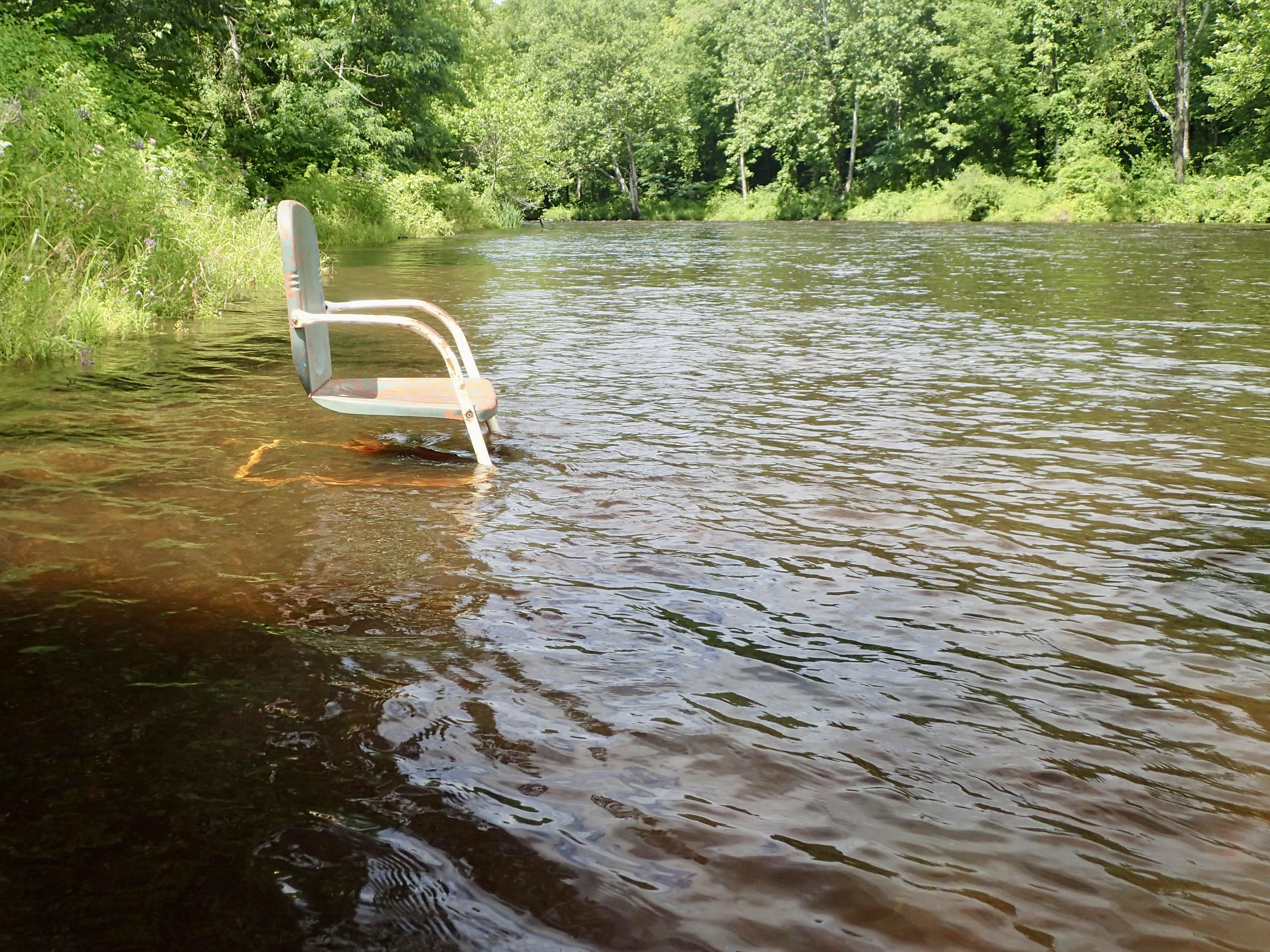
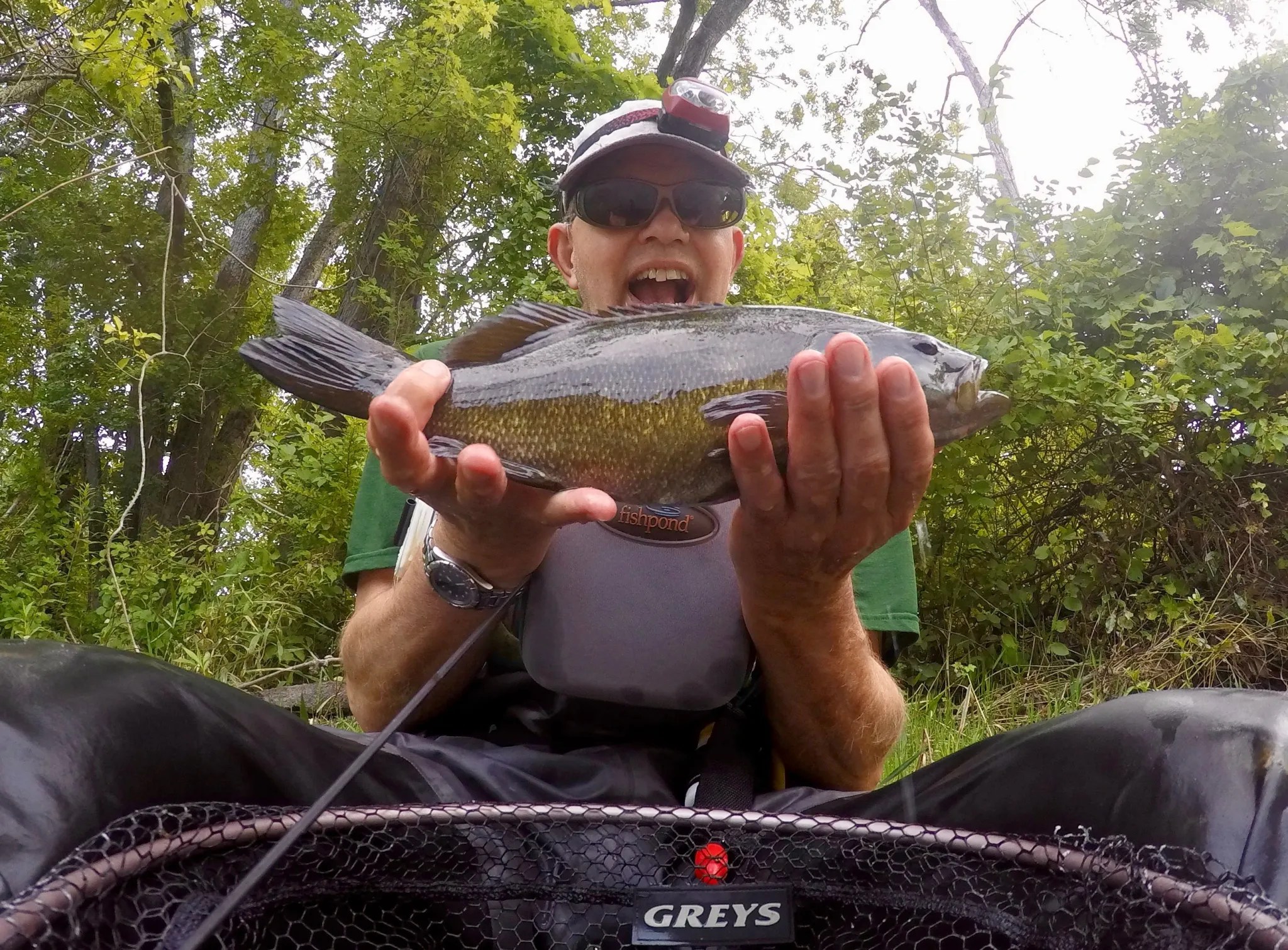
But not yesterday. Yesterday was one of those summer flow spikes I look for, the kind that puts some color in the water and chases most of the anglers away. The plan on those days is to throw streamers and look for a big ol’ brown that’s been hiding under a logjam for the past few weeks and is now in the hunt for a protein payoff. Yesterday I fished a full-sink tip line with an assortment of weighted and non-weighted streamers — trying to present at several levels in the water column — in both muted and bright colors. I walked about 500 yards of water, pounding the banks, waiting for that roll at the surface or that dull thud below.
It never came. The plan was go big or go home, and since I didn’t do the former — not a touch in two hours — I did the latter. But oh, man, it felt wondrous to be back.
Bring your waders if you want to sit. The water was moderately stained, 650cfs, and 64 degrees in the PTMA. As you read this, the flow has dropped dramatically and has cleared up, making for excellent conditions this weekend.
First, thank you to everyone who requested a personalized, signed copy. I received over 50 requests, which was fantastic!
But less than half of you have mailed a check or made an e-transfer. The situation is that I’m not going to the P.O. every day. I’m waiting to get at least 12 orders processed before I make a trip, and I’d like to be done with this ASAP. I don’t want to be doing this in September. The first dozen books went out last Friday. The next dozen are going out tomorrow. Then, it’s wait for 12 more orders to be finalized. So please don’t delay. Besides, you really, really need this book now. Dontcha?
In case you missed it, here’s what you need to do: 1) Pay me. Between the my cost of the book, packaging materials, and postage, it’s a nice, even $50. You can do one of three things: mail a check to me at Steve Culton, P.O. Box 657, Durham, CT 06422; pay me via Venmo (@Steven-Culton) which I prefer, or second choice PayPal (Steven Culton). Easy-squeezy.
2) Send me your address. Email your shipping address to swculton@yahoo.com. Please do not post your address on this website. Please remember I cannot ship outside the U.S. Ditto easy-squeezy.
3) Wait. Hopefully, just a little. I’m not going to schlepp down to the P.O. every day; rather, I’ll try to send them out in batches of 10 or 15 or whatever, as orders trickle in. I’ll send you an email back when your book is shipped.
If you’ve already squared up, this could be your book…
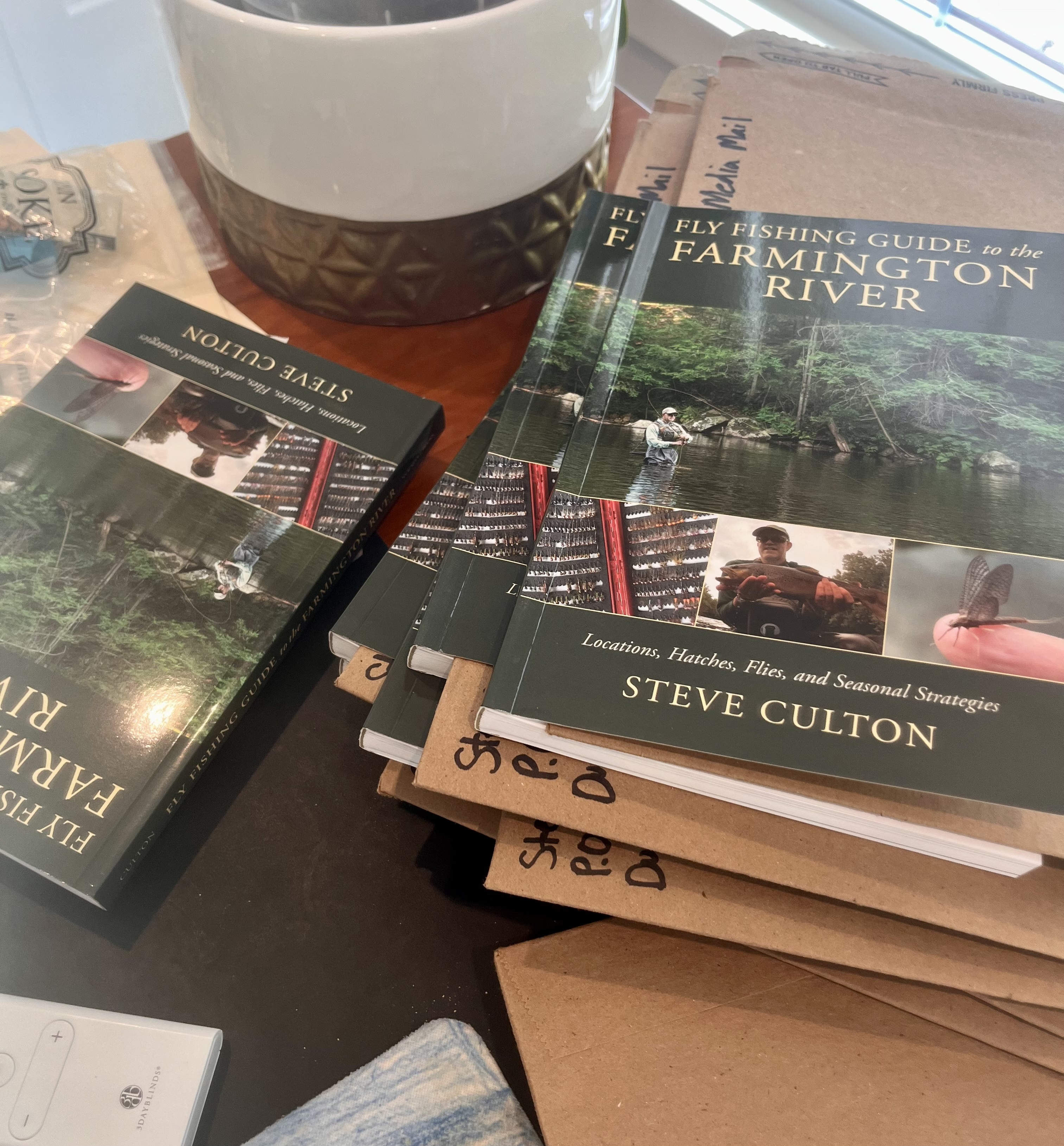
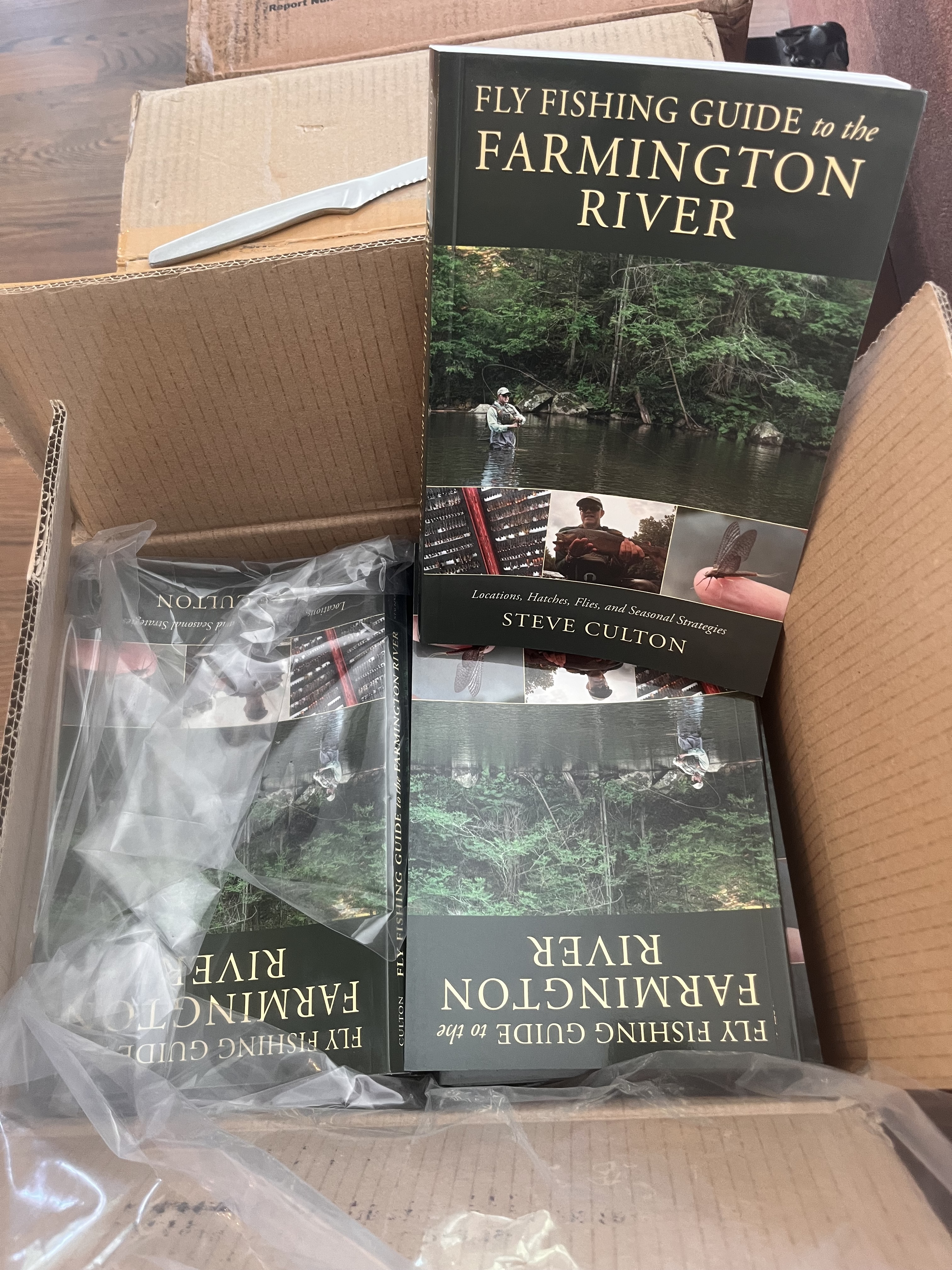
Finally, the day you’ve been waiting for! I got a visit from the UPS guy, who dropped off three cartons of shiny new books for me to sign and send off to you.
If you’re one of the 50 or so people who signed up for a personalized, signed copy, here’s what you need to do:
1) Pay me. Between the my cost of the book, packaging materials, and postage, it’s a nice, even $50. You can do one of three things: mail a check to me at Steve Culton, P.O. Box 657, Durham, CT 06422; pay me via PayPal (Steven Culton); or pay me via Venmo (@Steven-Culton). Easy-squeezy.
2) Send me your address. Email your shipping address to swculton@yahoo.com. Please do not post your address on this website. Please remember I cannot ship outside the U.S. Ditto easy-squeezy.
3) Wait. Hopefully, just a little. I’m not going to schlepp down to the P.O. every day; rather, I’ll try to send them out in batches of 10 or 15 or whatever, as orders trickle in. I’ll send you an email back when your book is shipped.
I thank you for your excitement, your enthusiasm, and your patience. I can’t wait for you to read this book!
Let’s get the bad mojo out of the way: the Block Island stripers-from-the-shore fishery has officially cratered. Five nights, not a touch. (What?!?!?!) More details on the misery to come.
On the exciting news side, my author’s copies of the Fly Fishing Guide to the Farmington River have arrived. These are not the ones I have earmarked for sale to you (those people who have said they want a signed copy, and if you haven’t, it’s still not too late to reserve one). The book looks and feels great, and I’m beyond pleased with how it came out.
For those who have reserved a signed copy: my order with the publisher has been placed. My guess is that the books will arrive sometime in the next two weeks, hopefully on the shorter side of that. The mailers have been ordered. I just need to calculate the cost to you, and set up payment, which will be check, Venmo, or PayPal. I’m hoping to have that information to you this week. I thank you for your patience. Really. Hang tight, and you’ll be reading before you know it.
Back when I was a junior high schooler in hard-hittin’ New Britain, someone in my crew handed out whuppin’ sticks. This whuppin’ stick was a baton about a foot-and-a-half long and about 3/4″ per side. It felt like it was constructed of hardened rubber. Flexible, but solid. I never hit anyone with it, but no doubt this could raise welts, bloody noses, and even knock someone silly. Of course, being the non-violent type, I never used it. But I still have it. I keep it under the driver’s seat in my Jeep.
The problem with a whuppin’ stick is that you’ve got to get in close to use it. I fish in some sketchy areas, and while I never feel like my life is in danger, some of these places compel me to be on full alert. Wherever you are, though, you never know when a random that-element person may show up. What do do if you truly feel threatened?
Well, pepper spray works, and it’s non lethal. But, as the REPULS literature states, “pepper spray has shortcomings. Because of how it spreads through the air, when pepper spray is used it can accidentally impact the person spraying it and bystanders in addition to the person posing the threat. This not only has made it impossible to use pepper spray in certain settings, but it has also made people hesitant to spray it when they feel threatened.”
The unique selling proposition of REPULS is that there is virtually no collateral damage to the user or bystanders. According to the company, “REPULS is a non-lethal self-defense spray that is just as effective at immobilizing an attacker by causing involuntary closure of the eyes. REPULS only impacts the individual it is sprayed on eliminating the risk of blowback or accidental impacts. It can even be sprayed in enclosed spaces like an RV without worrying about contamination and extensive cleanup.”
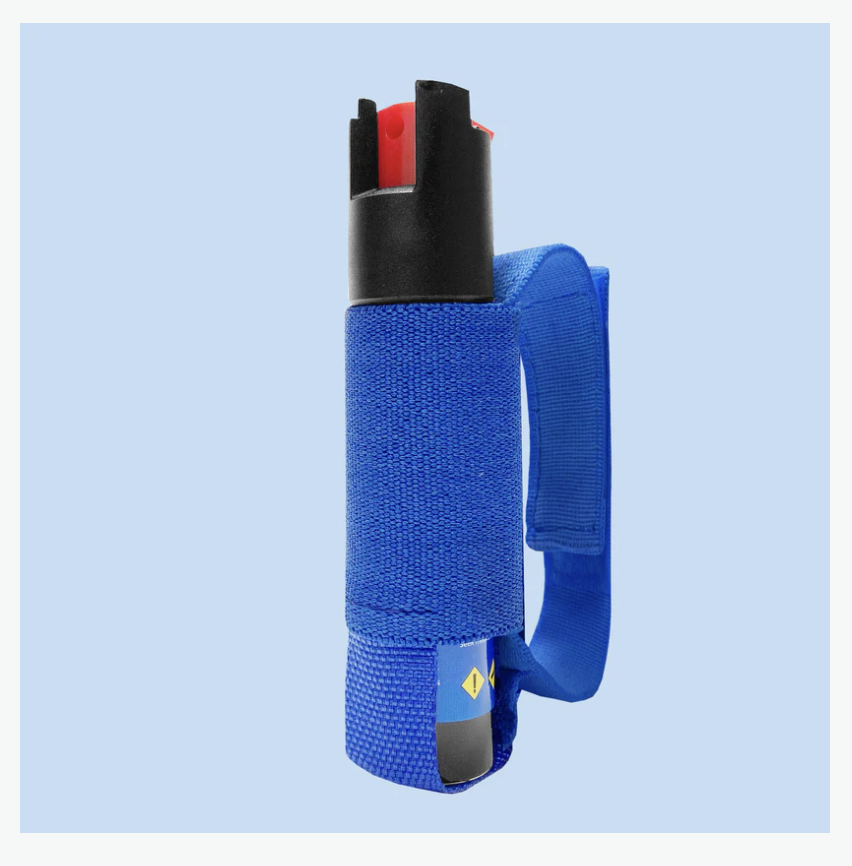
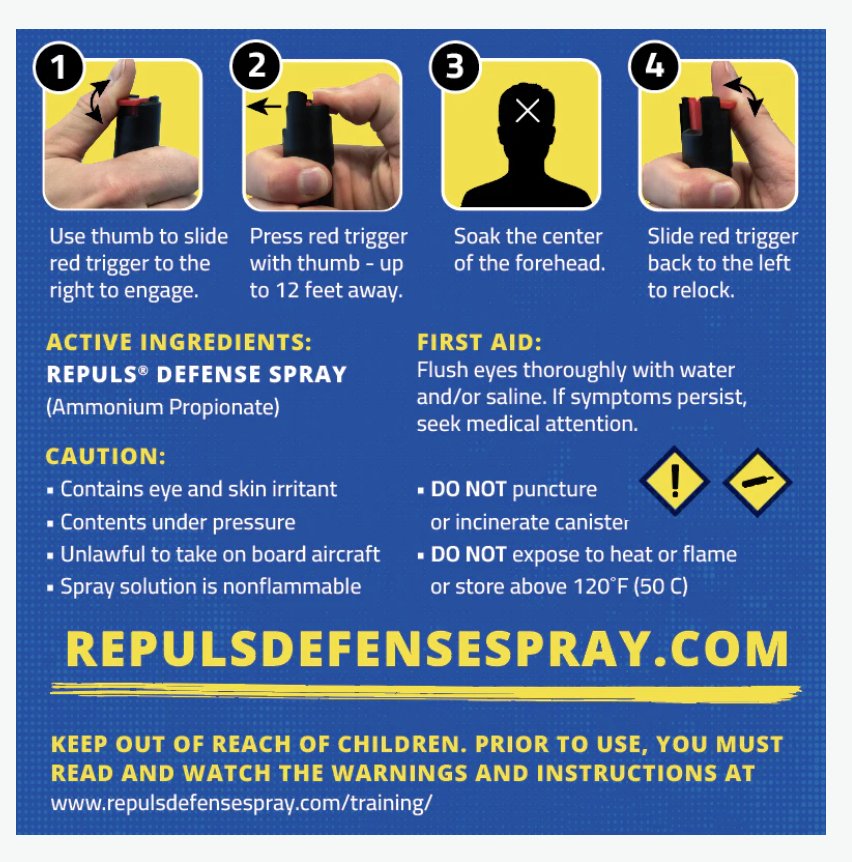
So, I’m now carrying in a non-lethal sense. I have the 1.6oz can, which I keep in the truck, and the jogger/hiker size, pictured here, which fits into my fishing pack. The jogger/hiker has a hand strap, which I don’t use. There’s a larger home/office size, and a keychain size as well.
The keychain and jogger/hiker models retail for $17.95, which is a small price to pay for a sense of security. The 1.6 oz is $21.50. The home/office can, which is 12.9oz, will set you back $64.65. You can find out more, or make a purchase, on the REPULS website.
Using the REPULS jogger/hiker size is straightforward. I like that there’s a locking mechanism to prevent accidental discharge.
In the interest of full disclosure, REPULS sent me some free samples in exchange for this review.
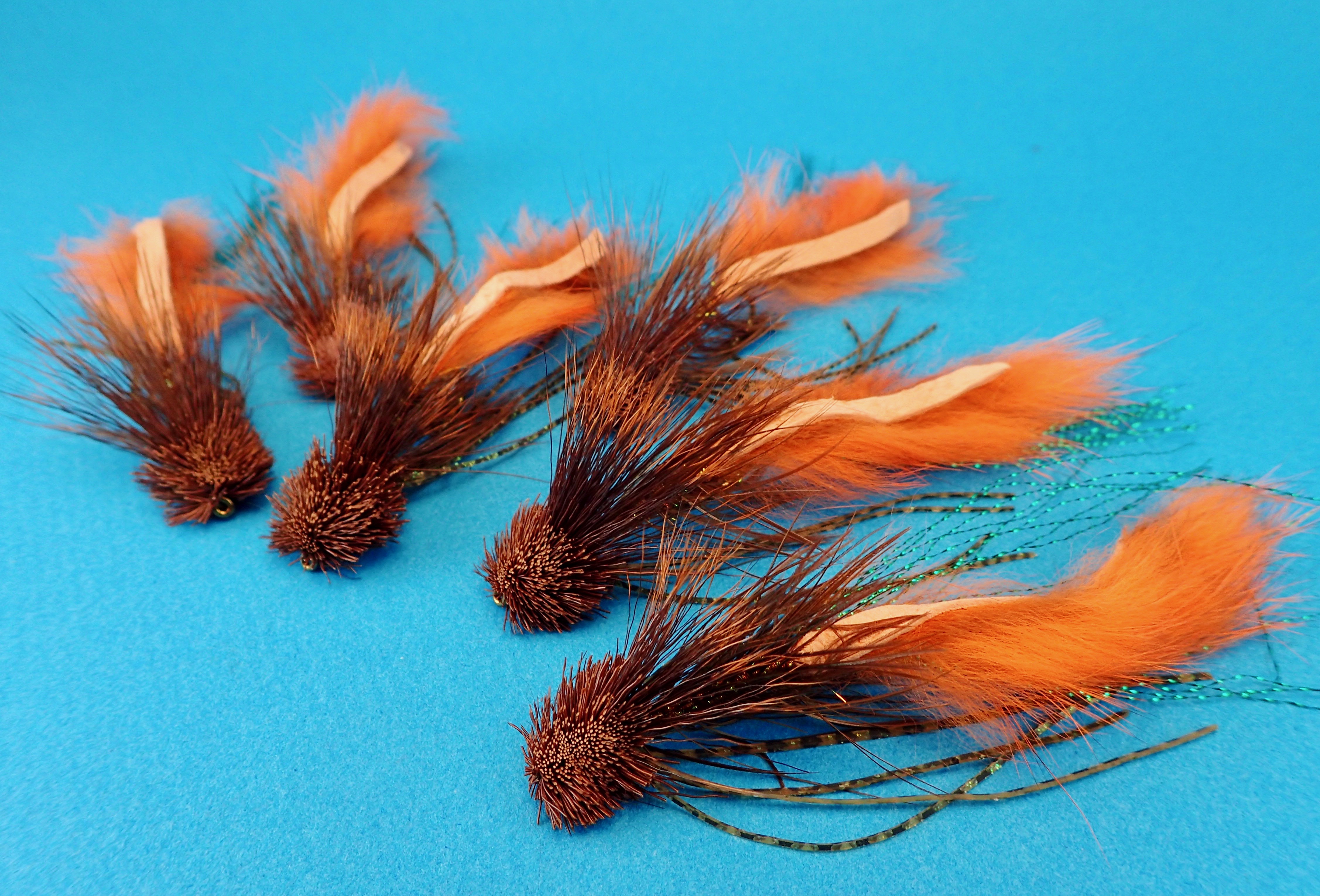
By now, most of you know me as an impressionist fly tier. That is, I’m not trying to carbon copy the bait. I’m trying to capture size, color, and profile. Most of all, I’m trying to create something that looks like it’s alive and like something good to eat. And that’s the Crayfish Jig Streamer in a nutshell. So many crayfish patterns go to great lengths to reach for the prize of realism. It’s all so unnecessary (see: Woolly Bugger makes a great crayfish fly). Our local waters are populated with the invasive species rusty crayfish. I colored this pattern likewise. The smallmouth approve. And oh, by the way, there are crayfish in the Farmington, too. Downsize the bead, and you’re good to go jigging for tailwater trout!
We just watched “The Hunt For Red October” for the umpteenth time — my guess is that I’ve seen it at least 2 dozen times — so the Countermeasure streamer is currently top of mind. (If you haven’t seen the movie, you really should. It’s damn good.) If you’ve seen it, you may not completely understand why I named this pattern the Countermeasure. But if you have seen it, and you’ve fished the Countermeasure, then you get it with crystal clarity.
Countermeasures are released from a submarine to confuse homing torpedoes. The Countermeasure streamer is designed to fool predator fish that are looking for a target to kill. It’s an exceptionally versatile streamer. You can swing it. You can strip it. You can dangle it. But my favorite way to fish it is to cast it near where I think a fish may be holding, ready to ambush. Land it on the water with a loud splat, and then do nothing. If there’s a hungry fish within 15 feet that’s looking up, it will attack the Countermeasure with urgent, reckless fury. Bang! Torpedo in acquisition!
They don’t look like this perfect after they’ve done battle with a few angry fish.
Let’s clarify: too much rain is harmful, even dangerous. But that’s not what we’re talking about today. We’re talking about a parched state that was experiencing some form of drought for several weeks. Then the rains came. From the July 4th weather brawl through yesterday, the skies were open for a much-needed watering.
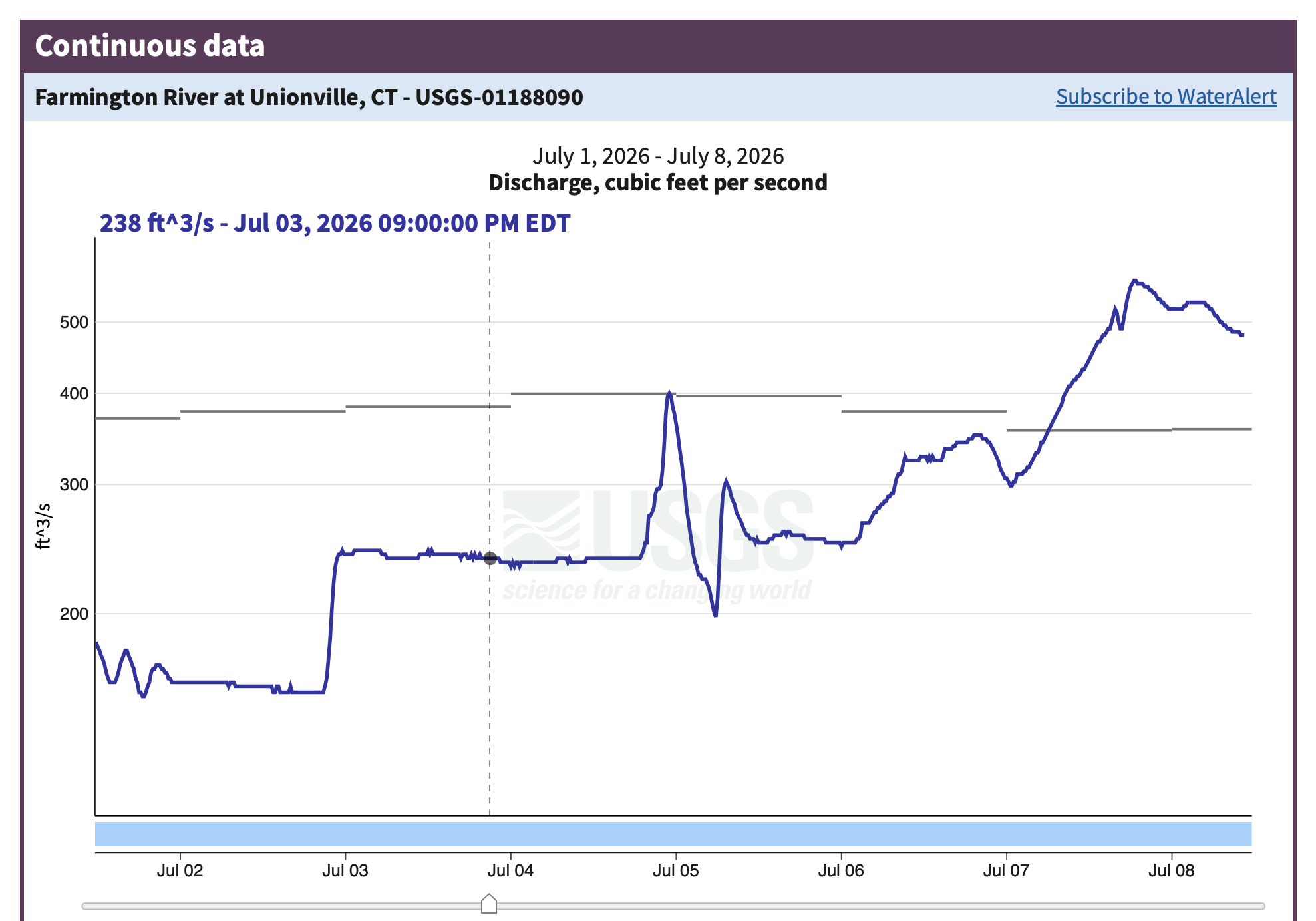
At first, even though the rainfall could be measured in inches, there was no visible impact to our two major fly fishing rivers, the Farmington and the Housatonic. Two factors were in play: the ground was a dry sponge, and the trees and vegetation were in full leaf, meaning you had millions of thirsty plants. But eventually, the rivers got their share. The Hous has yet to spike, rising more than double its 350cfs pre-rain mark. The Farmington experience was more of an exercise in moderation. The Unionville gauge merely doubled from 250. The Still River, which meets the Farmington below Riverton, experienced a huge percentile flow boost. However, it was only coming in at a paltry 15cfs, and its spike didn’t even reach 200cfs.
We desperately needed this rain, and I’m thankful for it. But not just from a systemic ecological point-of-view.
Not that dramatic. Nonetheless, much needed and appreciated.
You see, I’m a total weather and stream flow nerd. I watch the River Data app like a hawk. (If you don’t have this app, get it. River Data provides on-demand access to cfs in select rivers throughout the US, and you can bookmark your favorite watersheds for fast reference.) Throughout the season, I eagerly anticipate rain events that will spike rivers — not too high, not too low. I’m looking for elevated river flows that introduce some amount of color to the water — not chocolate milk, but more like tea. This is when you can experience some of the best nymphing, and especially streamer action of the season. What’s more, water spikes shuffle the deck, move fish around, and provide a respite from warmer water temperatures.
You don’t need to wade very far from the shore. (In extreme cases, that may not be possible. Rules of thumb: never wade in water where you can’t see the bottom; never wade in water that you’re not very familiar with; never wade without a staff and spiked boots; never wade alone.) The fish, like you, aren’t interested in battling swift or raging currents. They’re close to shore, in pockets, behind structure, seeking the most moderate flows that will provide cover and food. In particular, I like to fish streamers in these conditions because the news gets even better: cfs and color spikes are when the big boys come out to play. These are often your best periods to up your chances of catching big fish, and sometimes multiple big fish. I like bigger flies, flies that create a commotion, and I will use both bright and dark colors, usually with equal success.
I think we can all agree that poaching is a problem on our precious state waters. Likewise, that the lack of action we so often encounter when we call the TIP (Turn-In-Poachers) line is frustrating as hell.
I know. I’ve encountered poachers many times, and called the TIP line every time. I’ve never had an experience where EnCon roars up and nabs the perps. Still, I keep calling incidents in.
Like Wednesday night. I witnessed two people spin fishing in a Fly Fishing Only area, one of them dragging a loaded garbage bag behind them in the water. My blood was boiling. You’re not supposed to confront poachers, but I did. They looked extremely guilty and hightailed it out of there. I managed to take good descriptions of them and their vehicle make/model/license plate. It’s really too bad I zero cell reception. Still, I called the incident in the next day. Even if nothing happens immediately, calls are recorded, and EnCon has a record of poaching activity to add to their database. Squeaky wheels get the grease. While nothing could be done after the fact, they now have a perp and vehicle description.
All this got me to thinking: this system is broken if you actually can’t turn-in-poachers in real time. So I called EnCon to discuss. They gave me what I think is the best possible solution: head to the nearest state facility with a land line and make your call from there. In the upper Housatonic, this would be Housatonic Meadows campground in Cornwall and Kent Falls park in Kent. On the Farmington, it would be Austin Hawes campground in Pleasant Valley. If the staff won’t let you use the phone, explain the situation and inform them that EnCon has asked you to call the TIP line. Or have them make the call. But make the call. It’s worth it.
Oh. yes: the TIP line number. It’s 800-842-4357. Save it in your phone. And use it.