Rivers of Recovery Fundraiser

As the proud father of a Marine (Bill is also a veteran of Iraq), I wanted to share this with my readers. These are the words of veteran and fly fisher Dan Laffin:

“Hi All, A few of us are throwing together a fundraiser for Rivers Of Recovery at 6:30 on March 9th at the Delamar Hotel in Southport. Rivers of Recovery is a non profit organization that brings veterans of the wars in Iraq and Afghanistan fly fishing throughout the country. I think a lot of you know the healing properties of fly fishing and the program has certainly helped me a ton.

We’re going to try and raise funds so we can start a chapter here in CT. We have a great location with so many VA hospitals within a close proximity and we will host vets from our communities on our rivers. There is no charge to attend the fundraiser, but know that anything you donate will directly support local veterans. We’ll have some raffle prizes and a silent auction but being our first year, it will be pretty small.”
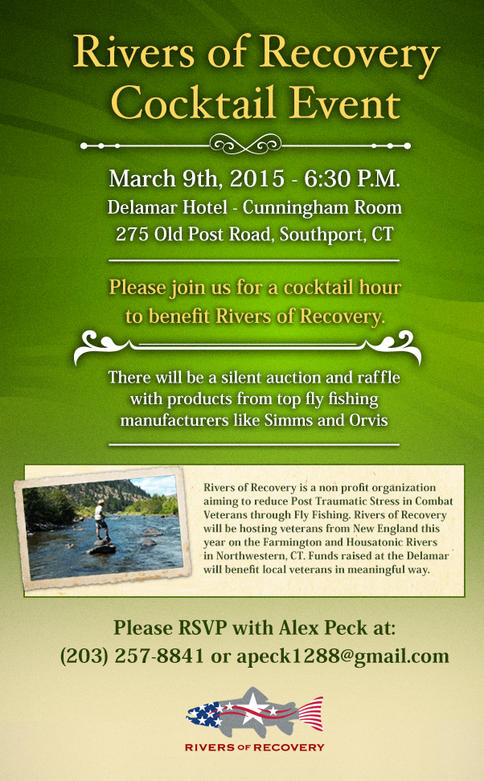
Rivers of Recovery E-Flyer

You can read more about Dan’s story in the winter issue of Anglers Journal.

Presenting “Wet Flies 101” Wednesday March 4 at FVTU

First and foremost: the venue has changed. The meeting will be in the large banquet room of the Whinstone Tavern at Stanley Golf Course, 245 Hartford Rd., New Britain, CT. I think doors open at 6:30 and the meeting starts at 7:00. I assume there will be an update on the FVTU website, fvtu.org.

The Program: Wet Flies 101 – The ancient and traditional art of subsurface fly fishing. Wet flies have been taking trout for centuries — and the fish aren’t getting any smarter. More and more anglers are discovering that a wet fly is often the best way to match a hatch. Explore the wonders of the wet fly as we cover basics like wet fly types, leader construction, where to fish wet flies, and how to fish them.

If you want to see the other nineteen slides, you gotta come to the presentation.

Wet Flies 101

Soft-Hackles and Fuzzy Nymphs for Steelhead tying demo at the Compleat Angler February 28

Hope to see you at the Compleat Angler, 541 Post Road in Darien, Saturday, February 28 from 10am-2pm. Like the title says, steelhead soft-hackles and fuzzy nymphs will be the bill of fare. Many of these patterns cross over neatly into trout fishing, so don’t let the steelhead designation scare you off. This is a tying demo, not a class, so all you need to bring is yourself and some questions if you are so inclined to ask. I will certainly be tying some of the flies that were featured in my “Soft-Hackles for Winter Steelhead” piece in the last issue of American Angler. Till then, stay warm!

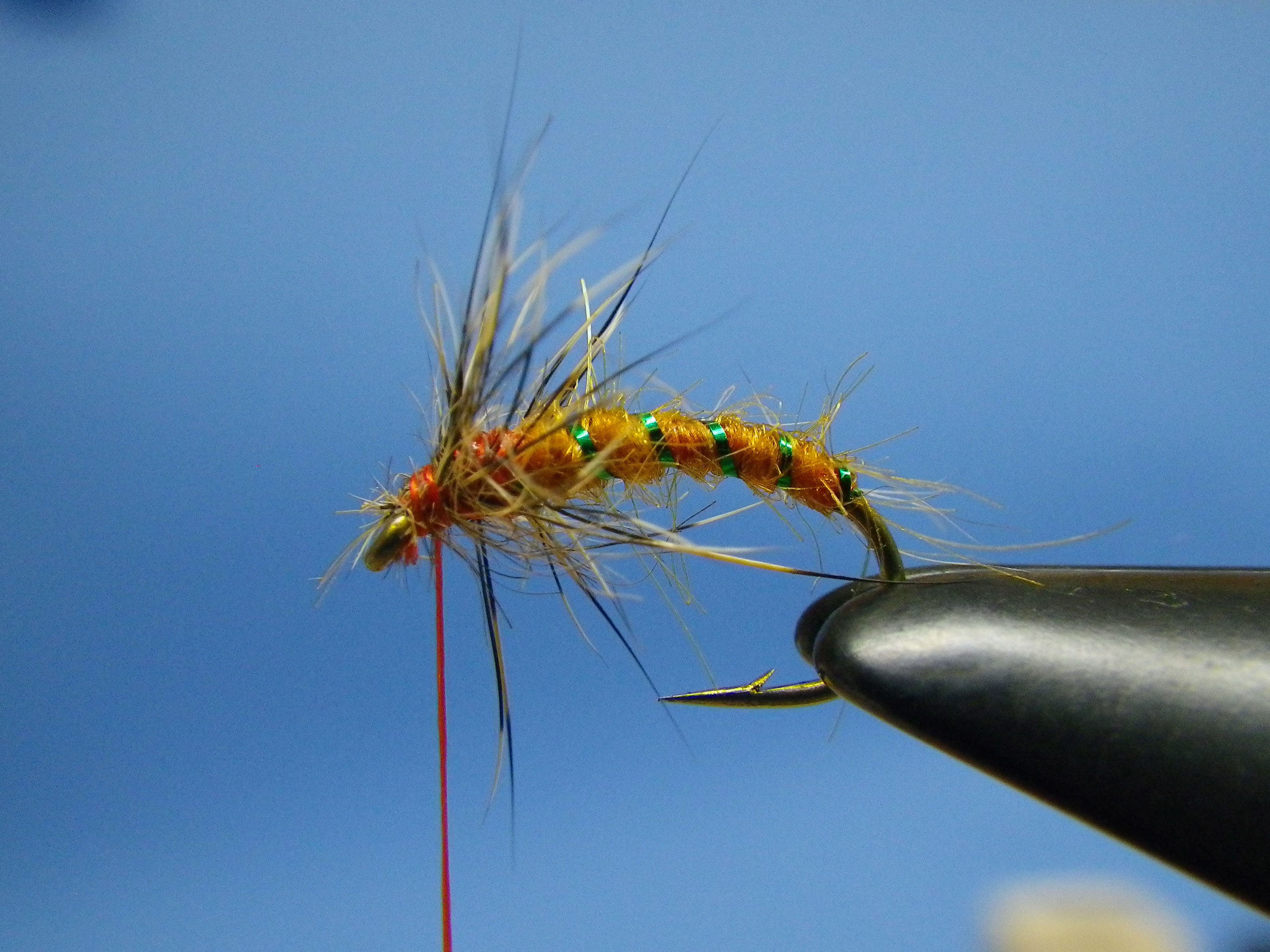
The Ginger Spider. Yup. It would be safe to say that I have a thing for the magical material humbly known as ginger Angora goat. Teal flank, too.

Ginger Spider

What happens in a fly tying class

Arrival, ten minutes before class. One of my students pulls into the space next to me and greets me with, “It’s the professor.” The first thing that goes through my head is, red tail, yellow floss body, gold tinsel rib, brown hackle, mallard wing. Yes. I am a  fly pattern nerd.

Introductions are made, and name tags are filled out. I have a pathological flaw when it comes to remembering names. I don’t know who who thought of the concept of “Hello, my name is,” but whoever you are, I don’t think the word “genius” is an excessive blandishment.

IMG_2742

I have seven students. They ask many questions. Some of my answers are too long, and stray down labyrinthine anecdotal paths. But everyone seems interested. Thank God for captive audiences.

All fly tiers are not created equal, and in any given class you have a broad range of skill levels. I look at some of the finished flies, and they will never grace the pages of a fly tying magazine. But, so what? To a trout, they will be beautiful. And that is all that matters. I also notice that some of the tiers are making significant improvements over the course of a couple hours. I would like to take credit for this, but I really can’t. I comes from within the tier. Still, it is gratifying to witness.

And then, we’re done. Seven flies (Partridge and Cahill, Drowned Ant, BWO Spider, Dark Hendrickson, Squirrel and Ginger, Ginger Caddis Larva, Pale Water Wingless) in a little over four-and-a-half hours. Thank you, gentlemen, for letting me be your instructor (and well done, all of you!). Thank you, UpCountry, for letting me teach. And thank you, Mother Nature, for saving the snow until Monday.

Showtime on Tyers’ Row

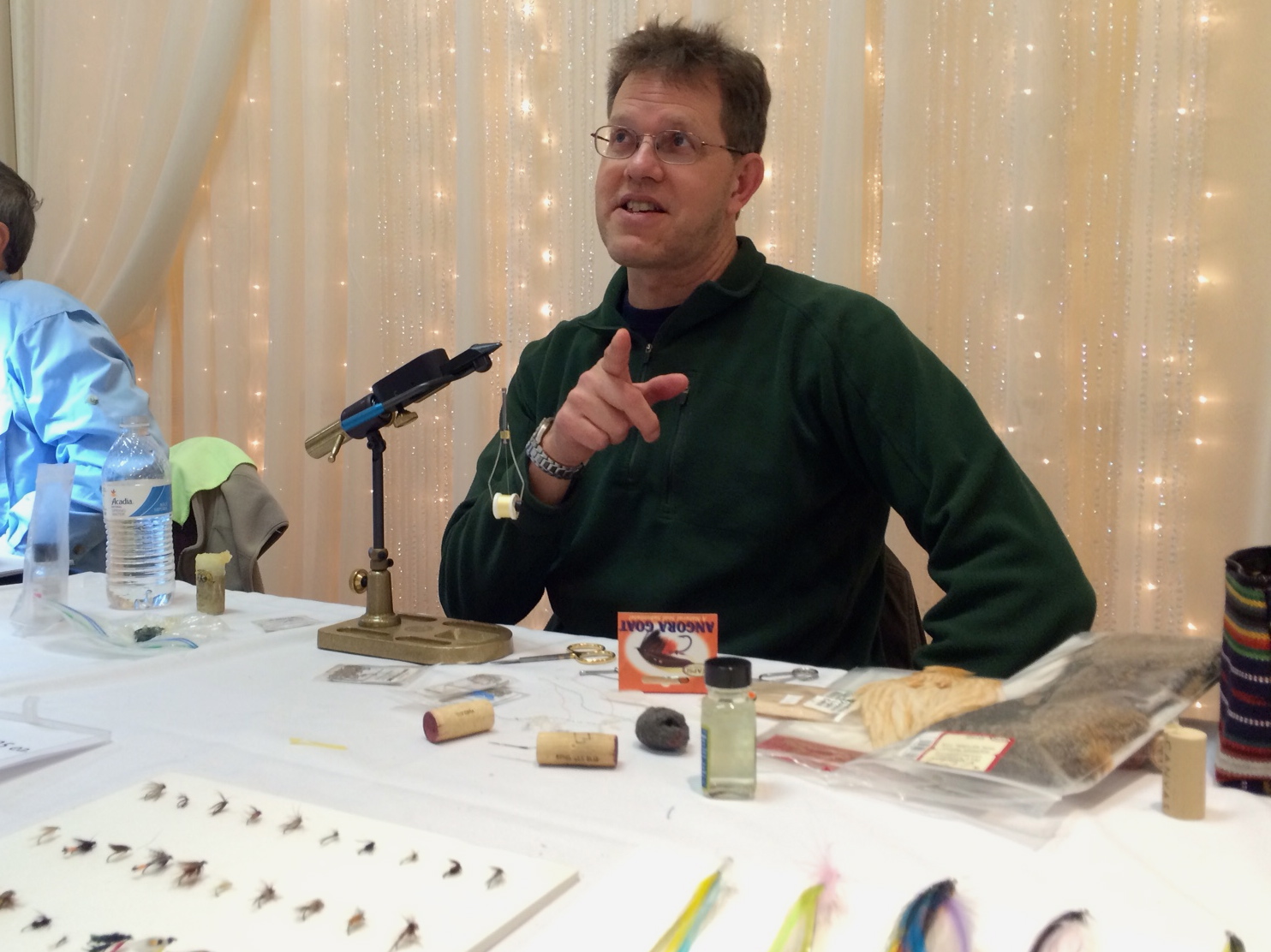
The CFFA Expo just might be the best little fly fishing show going. This is the second consecutive year I attended as a tier. Fellow tier Tommy Baranowski remarked that the crowd seemed steadier and more substantial this year. I’d be inclined to agree.

So, what goes on at these events when you’re part of the show?

Not much tying. At least not for me. I think I tied eight wet flies and one streamer in six hours. I’m a slow tier, but that’s pushing ridiculous. What was left wanting in productivity was made up for in talking, though. Most of it about fishing and tying. So much that my throat is a little sore right now. But, I don’t mind. These shows are a tremendous way to connect with friends, followers, and fellow aficionados (including those of single malts and cigars). Thanks to everyone who stopped by to say hi, ask questions, our watch a demo. It was a labor of love for me.

Thanks also to the vendor (who shall remain anonymous so as to make his altruism shine even brighter) who only charged me $20 for $22 of stuff, then threw in a bunch more stuff for free. Endless tight lines to you, sir.

Thanks to the Baranowski boys for being such swell neighbors, and thanks for the fly, Matt.

Thanks to Capt. Ray for the archival flatwing article.

Thanks to Dr. Kuhrt for lending his photography skills.

And thanks to the CFFA for letting me be a part of it all. I’ll tell you, this is one job that does not suck.

“But, you’ve really got to watch out for this guy here.” I’m not sure what I was saying, but I think I must have made my point. And nothing says outdoors and fishing like that groovy Fantasy Suite disco light veil.

CFFA 2015

Getting Wet at UpCountry

It’s officially fly tying season, and we kicked off the festivities with a wet flies and fuzzy nymphs class at UpCountry on Sunday. A good group who came armed with many questions and even more enthusiasm. We managed to get through eight patterns covering soft-hackles, wingless wets, winged wets, and fuzzy nymphs. We’ll have an encore performance on Sunday the 8th, weather permitting. Thanks so much to everyone — you truly made the class an easy one to lead.

If you’ve signed up for the February 8th class, dress warmly. The tying room is a wee bit chilly.

All in a half-day’s work. Clockwise from far left: Beadhead SHPT, Dark Hendrickson, Partridge and Cahill, Drowned Ant, PWW wet (Magic Fly), Squirrel and Ginger, Ginger Caddis Larva, GRHE Fuzzy Nymph

IMGP0181

Hope to see you this Saturday, February 7, at the CFFA show at Maneeley’s in South Windsor, CT.

“Winter Fly Fishing on the Farmington River” in the current issue of MAFFG

The latest article from yours truly, this is a basic primer on winter fishing on the Farmington River. You can read it in the February 2015 issue of the Mid Atlantic Fly Fishing Guide, available free in many fly shops from Connecticut to North Carolina.

Free to you. Such a deal.

MAFFG 2:15

Currentseams Q&A video debut: Adding weight (or not) to striper flies

Welcome to the inaugural edition of Currentseams Q&A videos.

I really like the idea of answering questions in a video/podcast format. It allows me to provide more comprehensive answers, and include visual elements in my explanations. Everyone learns differently, and I hope this covers more bases for more people.

What’s more, while the internet is a terrific way to connect with people many miles away, sometimes the written word can’t compete with a little face time. (Although you may see now why I have a great face for radio.) Victor Borge said, “The shortest distance between two people is a laugh.” I hope these will be fun as well as instructive.

If there’s a question you’d like answered, send me an email or leave a comment. In the meantime, I hope this helps.

Partridge and Light Cahill soft-hackle

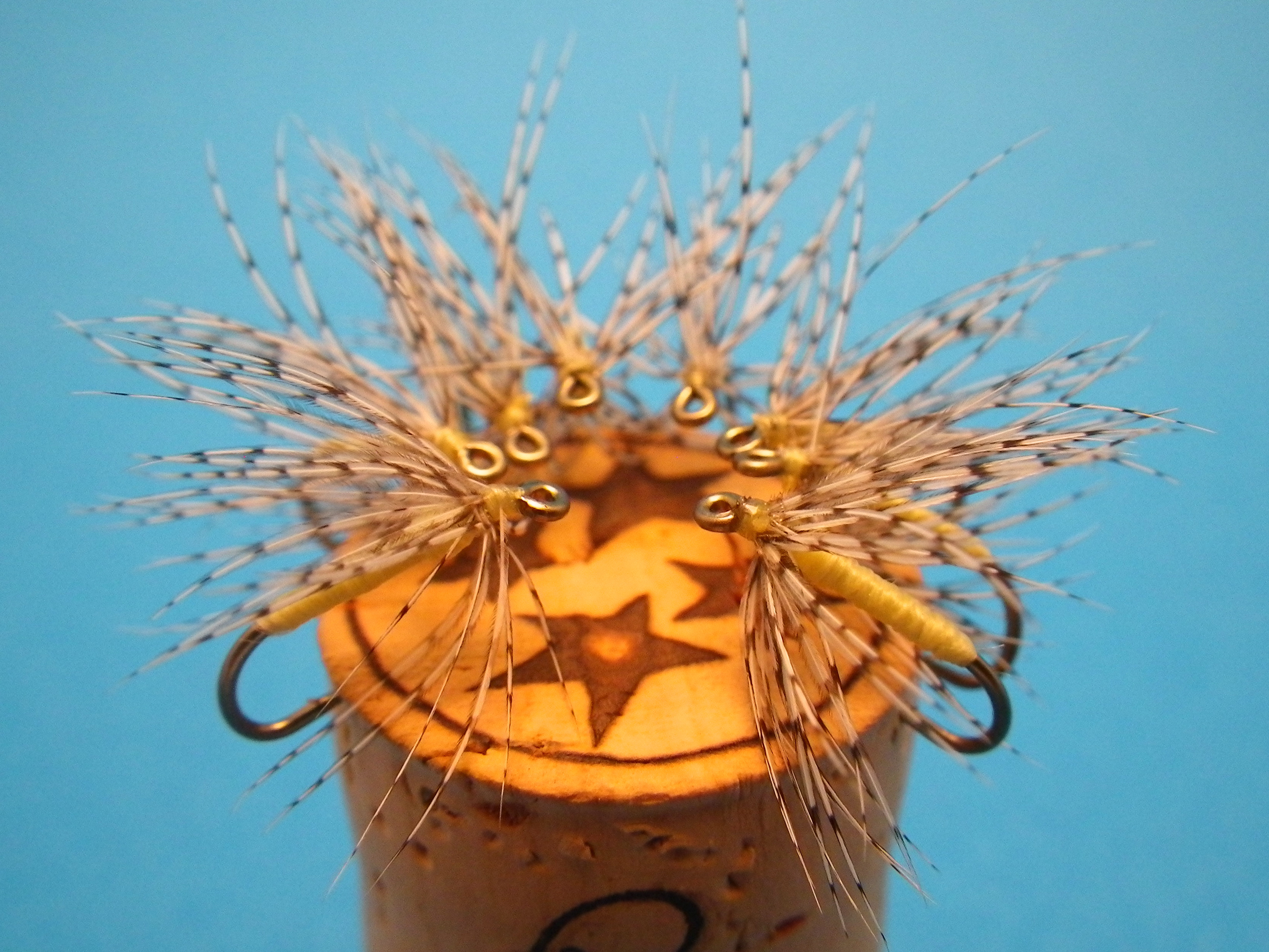
Some more production tying last night at currentseams HQ. Partridge and Light Cahill soft-hackles. So simple. And so effective during an emergence of the creamy mayflies we get on late spring evenings on the Farmington. A size 12 or 14 will do nicely. Hold on, now. Trout get reckless during this hatch.

When I started tying wet flies, I made two full rows of Partridge and (insert Pearsall’s Gossamer Silk color here) in my box. Later, on a whim, I bought some Uni Light Cahill thread and tied up a few of these soft-hackles. They sat unused for at least one season. I don’t remember the exact circumstance, but I do know that the first time I fished this fly, I cleaned up. I still have one of those original Partridge and Light Cahills; I fished it last spring, caught a trout on it, then retired it. It barely had any hackle left, but it still worked.

Such is the power of the impressionistic soft-hackle.

Filling corks with Partridge and Light Cahill soft-hackles. These are tied on a 1x strong, 1x long size 14 hook.

Partridge and Light Cahills

Filling some corks with soft-hackled flies

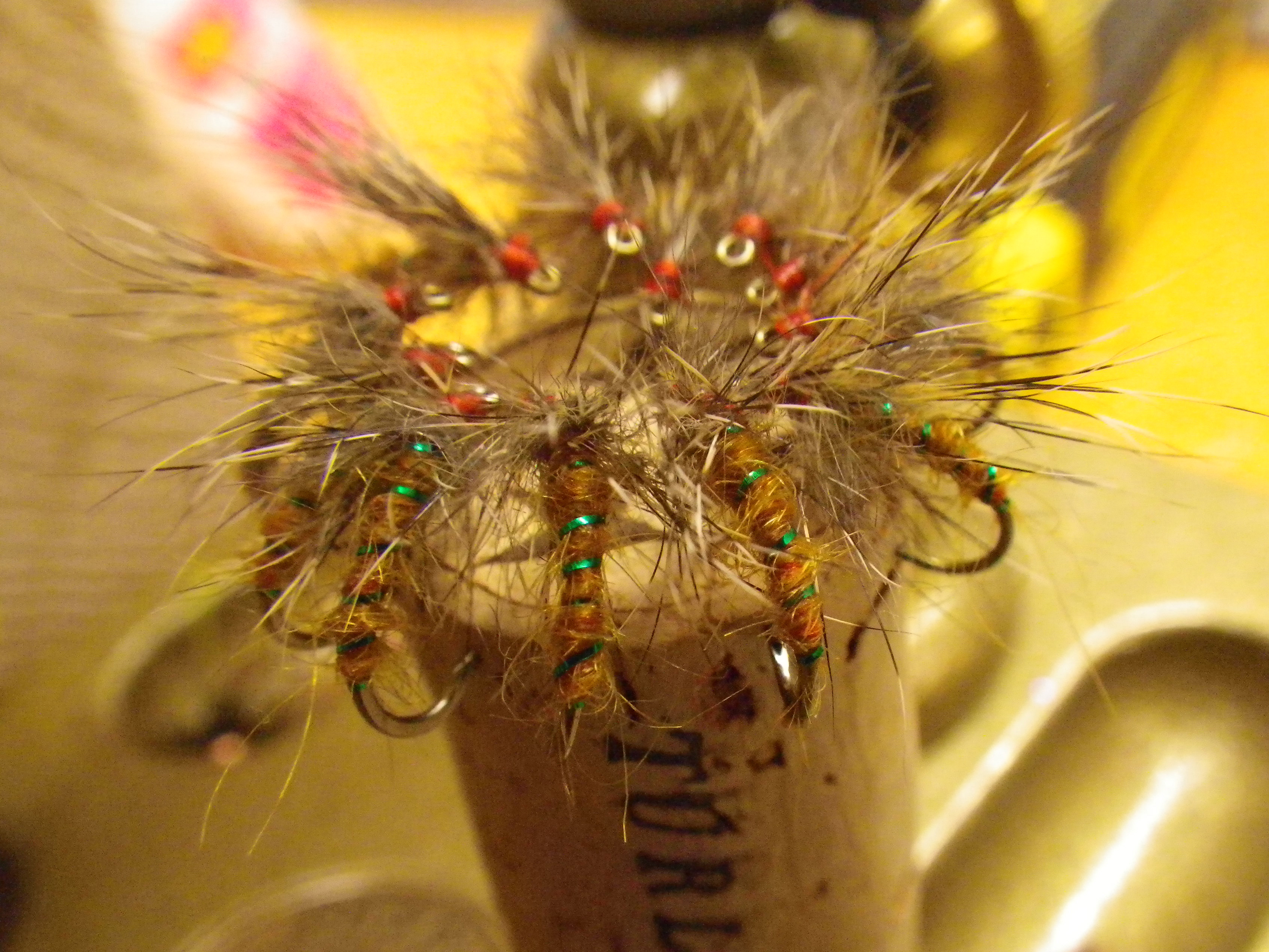
A little production tying here at currentseams HQ — as much as I can be said to be a production tyer, which is very little. But stocks need replenishing for personal use, guide trips, and maybe a few to sell here and there. First up was the Squirrel and Ginger, my favorite caddis emerger from April through mid-summer.

You drink the wine. You save the cork. You stick a dozen wet flies into it. You win twice.

Squirrel and Ginger cork

~

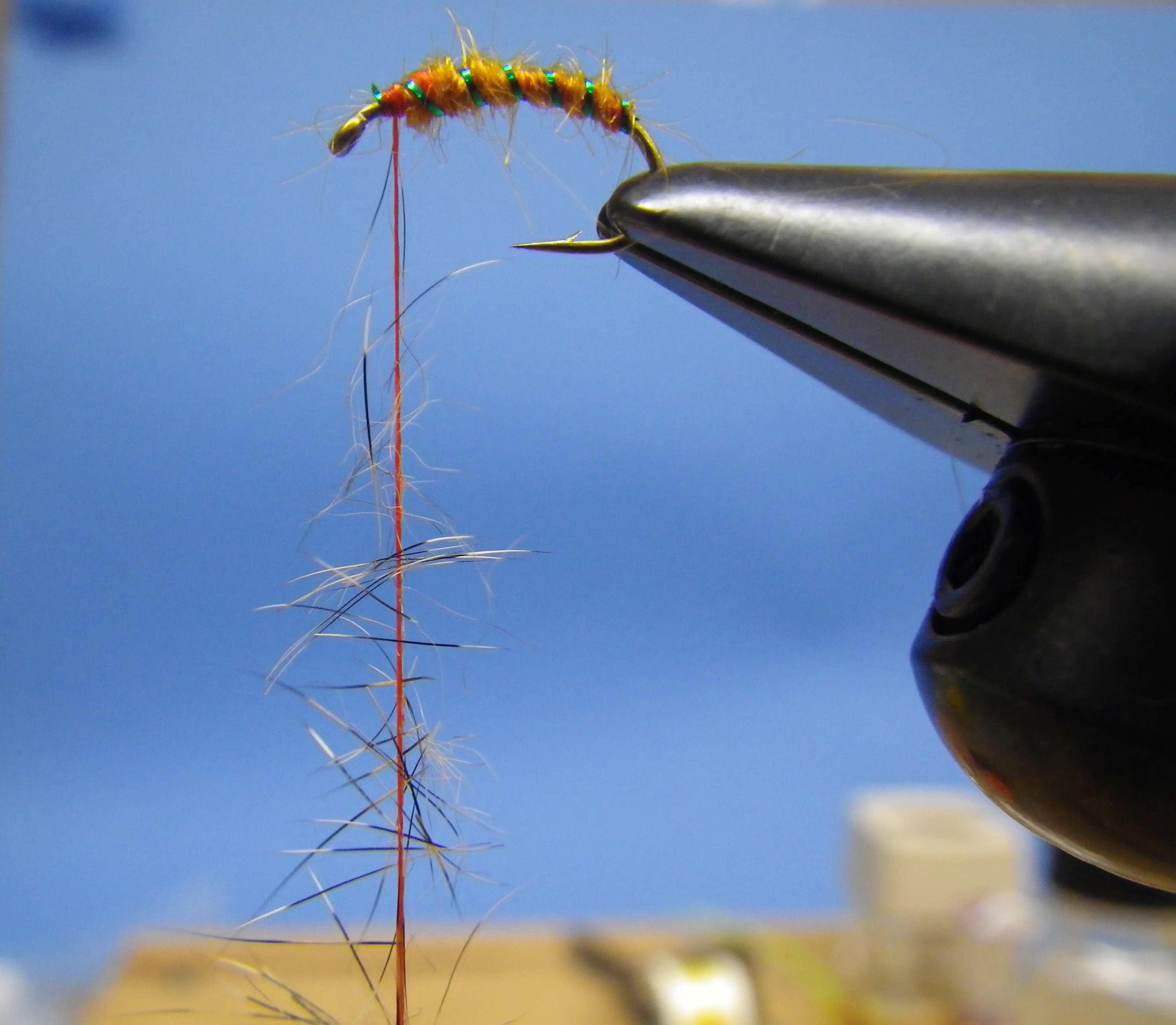
People tend to use far too much fur to hackle the Squirrel and Ginger. Think sparse. Think less is more. Like this. Dust the thread with fur. Your next step is to form a dubbing loop, then wind the hackle, stroking the fibers toward the bend of the hook.

Fur hackle dubbing loop prep

~

The same fly, ready to whip finish. Note (again) the imperfect head. Guess what? Trout don’t care about neatness. In fact, I think they like messy wet flies. Yeah, I’ll clip away that schmutz under the eye, but this fly is basically good to go.

S&G ready to finish