Steelhead streamer: The Grapefruithead Leech

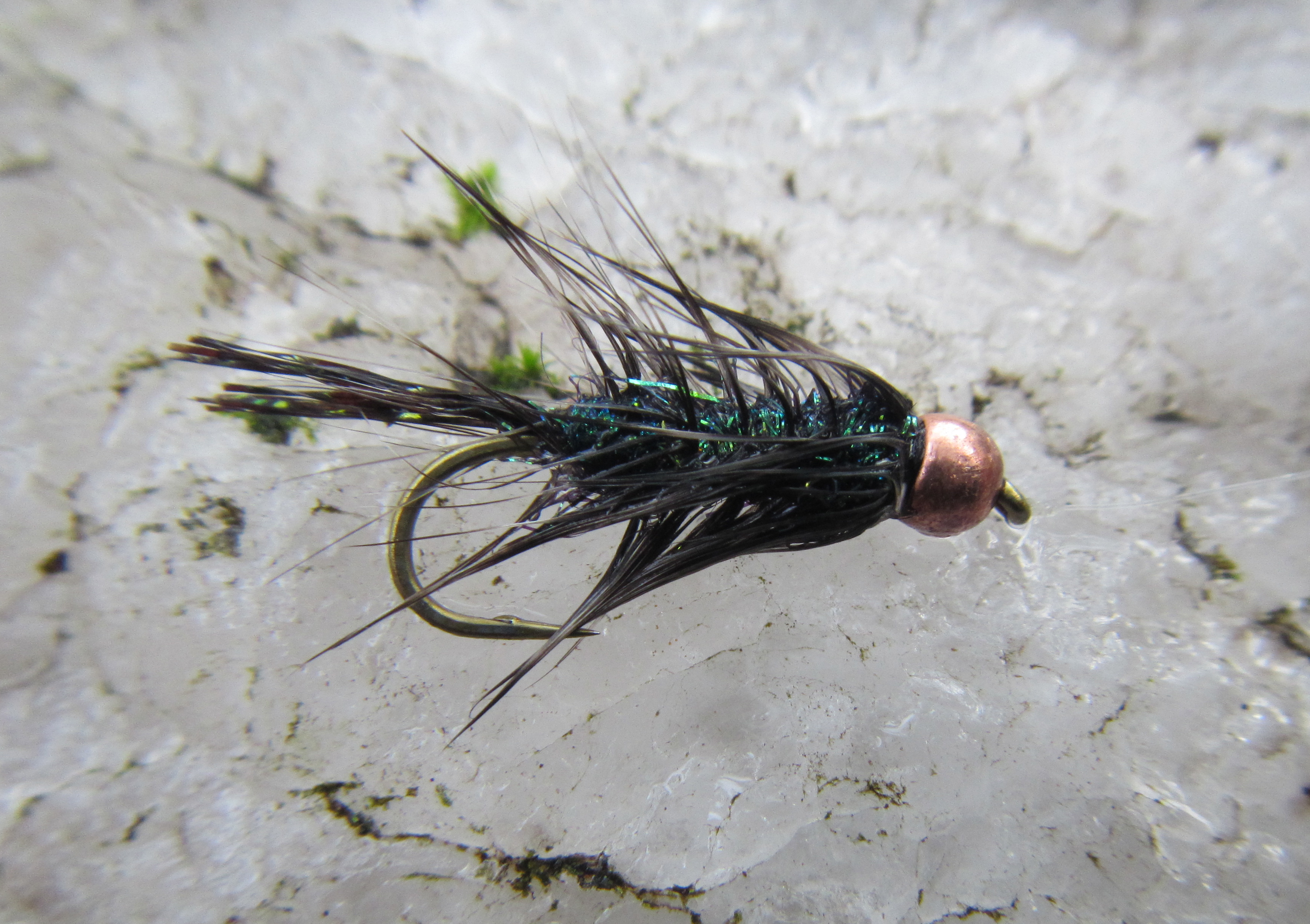
The Grapefruithead Leech is the creation of steelhead guide Kevin Feenstra out of Michigan. I first saw this pattern a couple years ago in John Nagy’s Steelhead Guide. I remember thinking it was a horrible fly. You know, over-the-top, unapologetic, in-your-face, clearly inspired by the egg-sucking leech. I was thumbing through the book this past fall, looking for some ideas, and there it was again. Over the next few weeks, I kept coming back to it. It was kind of like drinking a new bottle of wine that you’re not sure you like; as you’re trying to decide, you realize the bottle’s nearly empty. So I tied some up for my November 2013 trip. Wouldn’t you know, I caught my first steelhead on the swing on this horrible, beautiful, wonderful fly. Feenstra says he likes this pattern whenever there’s snow on the ground. I can tell you that steelhead also like it near dusk on a snowless day, dangling in the current near the tailout of a shallow run.

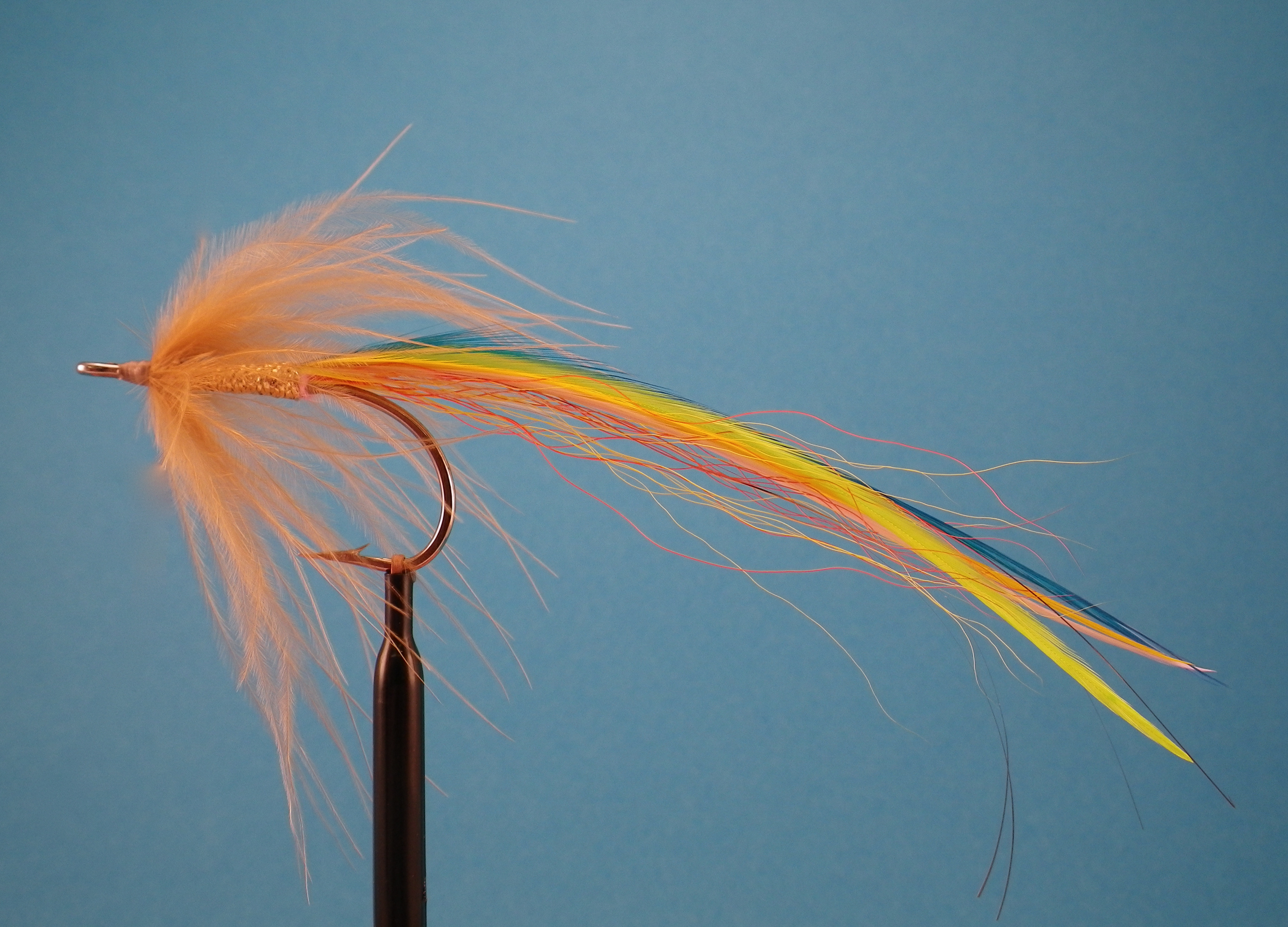
The Grapefruithead Leech

Image

Hook: Daiichi 2461 or 3XL streamer hook, size 4-2/0
Tail: Black Marabou with sparse red flash
Body: Black marabou, palmered
Overbody:  Black or purple schlappen, palmered
Collar: Mallard flank, one turn
Flash: Green, silver, and blue flashabou
Head: Large fuchsia cactus chenille with a veil of chartreuse ice dub
~
Tying Notes: This fly looks huge out of the water; however, the lion’s share of the bulk comes from soft-hackled feathers, so it will slim down dramatically when wet. Before you tie the body, remember to leave enough space for the head. I left a good 1/3 of the shank. To make the body, first tie in a large blood marabou quill by the tip, and a schlappen feather by the tip. Palmer the marabou up the shank; leave enough space between wraps so that a single feather covers the shank. Be sure all the marabou fibers are floating freely. Wrapping the schlappen is the hardest part of tying the fly; take care to mat down as few of the marabou fibers as possible. I used a swaying, back-and-forth motion with the feather as I wrapped, and a bodkin to pick out the marabou when necessary. This fly has way more flash than I typically use in my ties, but subtlety not being its strong point, what the heck. I used 3-4 stands of each color, cut them in half, then tied them in one color at a time. Three turns of cactus chenille, then cover the head with a sparse veil of chartreuse ice dub. (Get it? It looks like a slice of grapefruit.)

New Tying Class: Wet Flies and Fuzzy Nymphs for the Farmington River

This is one of my more popular tying classes. We explore buggy, impressionistic wets and nymphs geared toward fishing the Farmington, but the patterns and skills you’ll learn will serve you well on almost any trout stream. The class places an emphasis on using natural materials to create flies for specific hatches, as well as attractor patterns. Participants will need a vise, thread and tools. All other materials will be provided from my magical, mystical stash. The cost is $50.

Learn to tie the Squirrel and Ginger, and many other patterns that trout won’t be able to resist.

Image

When: Sunday, February 9, 2014, 9am-2pm

Where: UpCountry Sportfishing, New Hartford, CT

Sign Up:  I can’t enroll you; you can sign up by calling UpCountry at 860-379-1952.

“Wet Flies 101” Presentations in February 2014

If you’re interested in wet flies and are within driving distance of Danbury, CT, or Coventry, RI, mark your calendars for February 2014. I’ll be making my presentation of “Wet Flies 101” to the Candlewood Valley TU chapter (cvtu.org) on Tuesday, February 11, and to the Narragansett, TU chapter (tu225.org) on Wednesday, February 26. You don’t need to be a member to attend, and you can get directions and times from their respective websites.

Wet flies have been fooling trout for centuries — and the fish aren’t getting any smarter. While the wet fly fell out of favor in America decades ago, more and more trout anglers are discovering that the best match for a hatch is often a wet fly. “Wet Flies 101” is a basic overview of the method. I cover history, fly styles, leader construction, where to fish wets, and presentation. Hope to see you there!

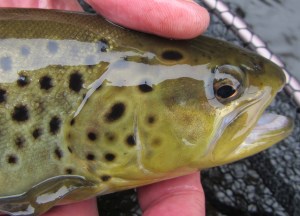
This big summertime brown took a Drowned Ant soft-hackle on the Farmington River.

Image

The Drowned Ant is a simple soft-hackle, based on the centuries-old pattern Starling and Herl. Trout can’t resist this fly.

Drowned Ant

Tying Demo: “Small Stream Flies for Wild Trout,” March 1, 2014 at The Compleat Angler

I’m pleased to announce my first event for 2014: I will be returning to the Compleat Angler in Darien, CT for another tying demo. This year’s subject will be flies for small streams. Fishing small streams presents a unique set of challenges to the fly angler – and sometimes, fly selection (and size) is the difference maker. “Small Stream Flies for Wild Trout” will cover dries, wets, nymphs, and streamers that will help you build a basic kit for all kinds of waters, from shallow riffles on woodland brooks to deep plunge pools on high-gradient mountain streams. I’ll also discuss tactics and presentation. My demos are highly interactive, whether we’re doing Q&A or just talking fishing. Hope to see you there!

Where: The Compleat Angler, 541 Post Road, Darien, CT, 203-501-1713, compleat-angleronline.com

When: Saturday, March 1, 2014, 10am-2pm

This breathtaking beauty liked the look of a tan caddis skittering across the surface of a remote mountain stream. One of the things we’ll talk about is fly selection — dry or subsurface — and whether to fish up or downstream.

Image

What am I gonna do with all those corks?

1) Drink wine

2) Save the cork

3) Tie flies for the next steelhead trip

4) Stick flies in cork as they roll off the production line

5) Catch steelhead

All kinds of eggs, egg masses, stoneflies, soft-hackles, leeches and a few odds and ends that defy description. Dinner, anyone?

Image

God, I hope #5 happens.

Steve Culton

The 60 Second Redhead

It’s easy to tie. It’s a fast tie. It catches steelhead. ‘Nuff said.

I found this fly a while back on Randy Jones’ Yankee Angler site and was intrigued by its simplicity. The fly got its name (Randy calls it “Tom’s 60 Second Red Head,” Tom being Tom Wilson) because you can supposedly crank them out at the rate of 60 per hour. I’m no speed tyer, but I can get pretty close to a minute on this one if I hustle. Part stone fly/nymph/larva buggy bug, part egg, the pattern certainly lends itself to all kinds of color variations.

The 60 Second Redhead

Image

Hook: 2x strong scud/shrimp, sz 10-12
Thread: Red
Body: Black Krystal Dub
Head: Red Ice Dub

I tied up a bunch of these, and they sat in my box until one fine Saturday afternoon. On my very first cast with the 60 Second Redhead, I hooked a steelhead. That was years ago, and this fly is now a core pattern in my steelhead box.

Tying notes: The original recipe calls for medium red copper wire as the tying “thread.” This adds a tad more weight to the fly. I find the medium diameter difficult to work with, so I use small red copper wire when I’m not using thread. High-tack wax like Loon’s Swax ensures the dubbing sticks to the wire. The original also calls for a complex mixture of furs and flash: for the body, a mix of beaver, angora goat, and black flash. Since speed is in its name, I figured why not just be done with it and use black Krystal dub? Ditto the head, where the original calls for beaver, angora goat, and red flash. Buy a pack of red Ice Dub and you’re cooking with gas. Last year, I met Randy on the Salmon River at the Pineville Boat launch. We had a detailed conversation about the Red Head. I thanked him for introducing me to this fly, and told him it was now an old standby. Randy said to make sure not to tie it with a thick profile, but added if you’re catching fish on it, you’re doing something right. Wise words. What you see here is my standard issue tie.

Also, play around with other colors and materials. Here is the 60 Second Copperhead:

Image

Hook: 2x strong scud/shrimp, sz 10-12
Thread: Red
Body: Black angora goat
Head: Metallic copper Ice Dub

~

60-Second Copperhead Rogues’ Gallery:

Chrome hen, Salmon River, 11/9/14

Big Steel 11:14

Big Steelhead Spiders

I’ll admit it: I’m a fly nerd. I love poring through books, looking for new patterns, old patterns, and flashes of inspiration. Trey Combs’ Steelhead Fly Fishing is a terrific resource for the steelhead aficionado, with a significant number of pages devoted to flies. That’s where I found these first two spiders. A more elegant offering than the average steelhead fare, and doubtlessly just as yummy. Flies that can be drifted along the bottom, then left to swing up and hang in the current, tantalizing any nearby fish. Combs attributes the Gold Spider and the Purple Spider to Karl Hauffler. I like his use of multiple birds for the hackles. These flies are tied on Tiemco 7999 size 6 hooks with 6/0 Hot Orange thread, save for the Purple Spider which uses red. Of course, you could tie these as large as you like.
~
Gold Spider
Image
Butt: Peacock herl
Body: Rear half flat silver tinsel (I used Lagartun mini braid), front half golden yellow angora goat
Hackle: One wrap golden pheasant flank behind two wraps brown pheasant (I used Coq de Leon). Finish with one wrap lemon wood duck.
~
Purple Spider
 Image
Tail: Fuzzy purple hackle barbules
Body:
Rear half flat silver tinsel (I used Lagartun mini braid), front half purple angora goat
Hackle:
Two turns deep purple hackle followed by several turns black pheasant rump

Thus familiarized with the template, here’s my own creation:
~
Ginger Spider
Image
Tail: Hot Orange golden pheasant crest
Body: Rear half gold braid, front half ginger angora goat
Hackle: One turn golden pheasant flank behind two turns grouse behind two turns teal flank

Yorkshire, Meet Pulaski: Small Steelhead Soft-Hackles

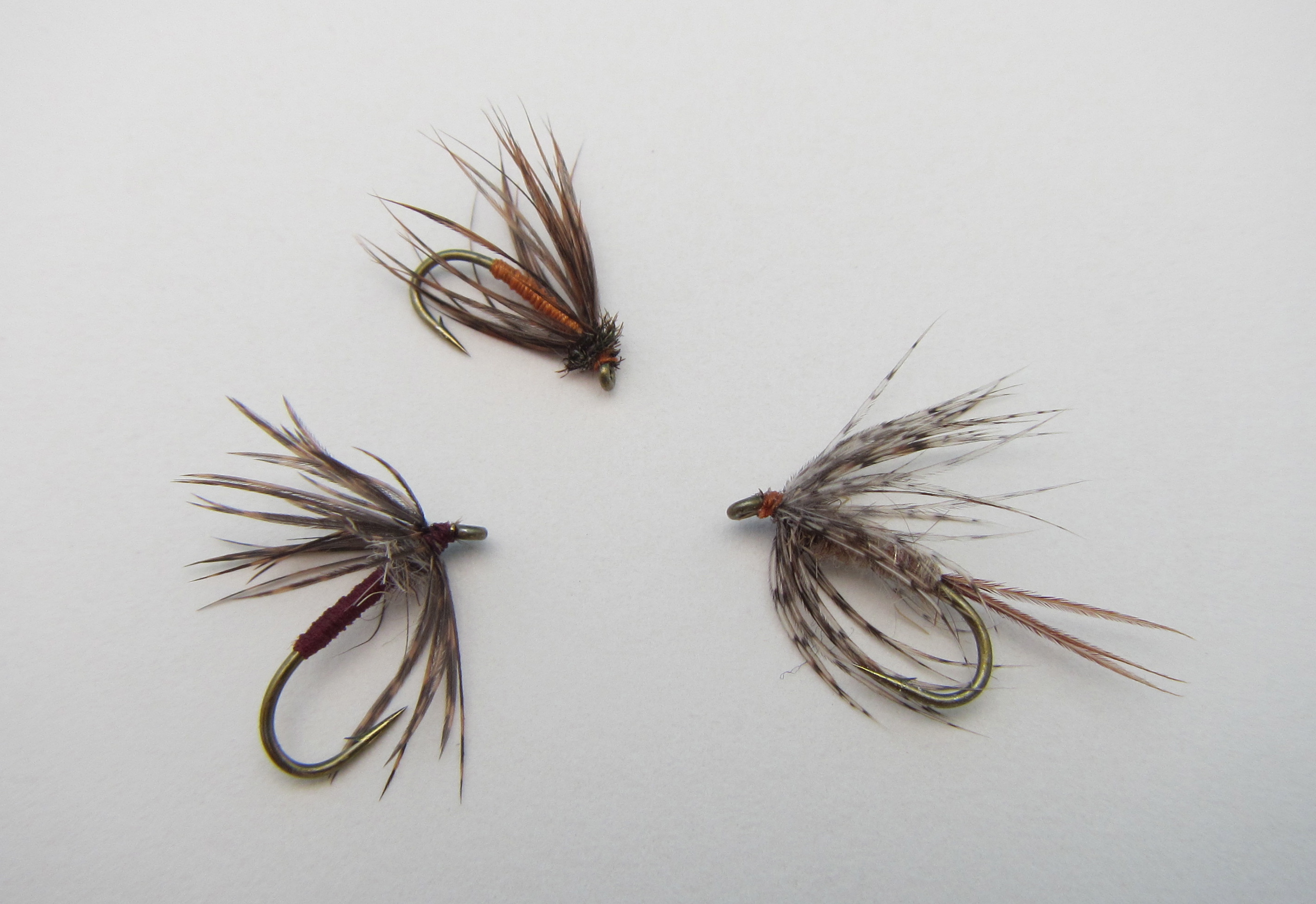
In The Soft-Hackled Fly, Sylvester Nemes writes about fishing for — and catching — steelhead on traditional soft-hackles like the Partridge and Orange. Here’s my steelhead take on four classic patterns, clockwise from upper right: Tups Indispensable, Snipe and Purple, Partridge and Green and Orange, and Grouse and Orange.

Small Steelhead Soft-Hackles

Image

These are all tied on 2x stout, 1x short hooks. They’re a size 10, so effectively they’ll fish like a size 12. Construction should be fairly intuitive from looking at the photo. But, here are the complete recipes.

~

Tups
Thread: Yellow
Tail: Dun hen hackle fibers
Body: Fluorescent yellow floss
Thorax: Hot pink yarn
Hackle: Dun hen
~
Snipe and Purple
Thread: Pearsall’s Gossamer silk, purple
Rib: Gold oval tinsel
Hackle: Snipe
~
Partridge and Green and Orange
Thread: Fire Orange
Body: 1/2 fluorescent chartreuse yarn, 1/2 fluorescent orange yarn
Rib: Gold oval tinsel
Hackle: Grey partridge
~
Grouse and Orange
Thread: Fire Orange
Body: Fluorescent orange yarn
Rib: Gold oval tinsel
Hackle: Grouse

Two years ago, I hooked (and ultimately lost) what was easily the largest steelhead I’ve ever done battle with. He took in the deeper end of a swift run that becomes a shallow whitewater nightmare at its head. I saw him clearly during his cartwheeling histrionics, and he was massive. We finally parted ways when he found a submerged logjam my leader didn’t get along with.

The fly he took was the one at lower left.

~

Steelhead soft hackles Rogues’ Gallery:

Snipe and Purple, November 2016

sr11_10_16

New article in American Angler: Wet Fly 101

Check out the current (Nov/Dec) issue of American Angler for my latest article, “Wet Fly 101.” Wet flies have been fooling trout for centuries, and the fish aren’t getting any smarter. This piece serves as a broad introduction to wet flies. It covers basics like fly types; building a traditional three-fly team; what kind of water to target; and presentation. For those looking to take the ancient and traditional path to subsurface success, it’s a fine place to start.

Image

The Black Caddis steelhead hair wing

If you’re the sort who likes things neatly categorized, you can divvy deer hair winged steelhead flies into two groups. The first would be the waking dries, shrimp flies like the Grease Liner and all manner of skating caddis. The second would be the subsurface streamers/wets like the Muddler Minnow or the Muddler Daddy. I took a decided path toward the latter with the Black Caddis.

The Black Caddis

Image

Hook: 1x short, 2x strong wet (this is the Orvis 1641) size 8-12
Thread: Black 6/0
Body: Lagartun chartreuse mini braid with grizzly hen hackle, palmered
Hackle: 2-3 wraps of the grizzly hen, continued from the body
Head/Wing: Black deer body hair

Tying notes: Lagartun mini braid is easy to work with and comes in a range of spiffy colors. Like a Muddler Minnow, the Black Caddis has a head of clipped deer hair; the wing is an extension of those fibers. Because the fly is intended to be fished below the surface, I’ve kept the wing and head sparse. To form the head and wing, make a few taut wraps of thread to secure the wing, then, while wrapping the thread forward, bind down tightly on the hair (give it 3-4 good wraps). The wing should behave itself, while the hair for the head will flare outward. On your next thread wrap, carefully move the flared hairs up and toward the rear of the fly with your thumb and forefinger, while moving the thread under it and forward to the eye. Whip finish. Trim the hair to your liking.