I’d known about the South Platte for years, but never got the itch to go fish it, until I did — and now I am faced with a matter of difficult settlement: my favorite trout water is almost 2,000 miles away.
It’s so easy to fall in love with the South Platte. Since it’s a tailwater, it’s a viable fishery year-round. It’s got so much productive water that you could very likely stumble into fish (and if you know how to read water, you could quickly become a dangerous machine). In addition to being cold — I didn’t take a temperature, but it had to be high 40s-low 50s — the water is clear enough that the eagle-eyed among us can sight fish for trout. And the trout — ah, the trout — are fat and feisty and fantastic. Plus, there are lots of them. Subsurface invertebrates are everywhere and provide the trout with a daily smorgasbord. It’s almost like someone imagined, then created a trout theme park fantasyland. Really, it’s that good.
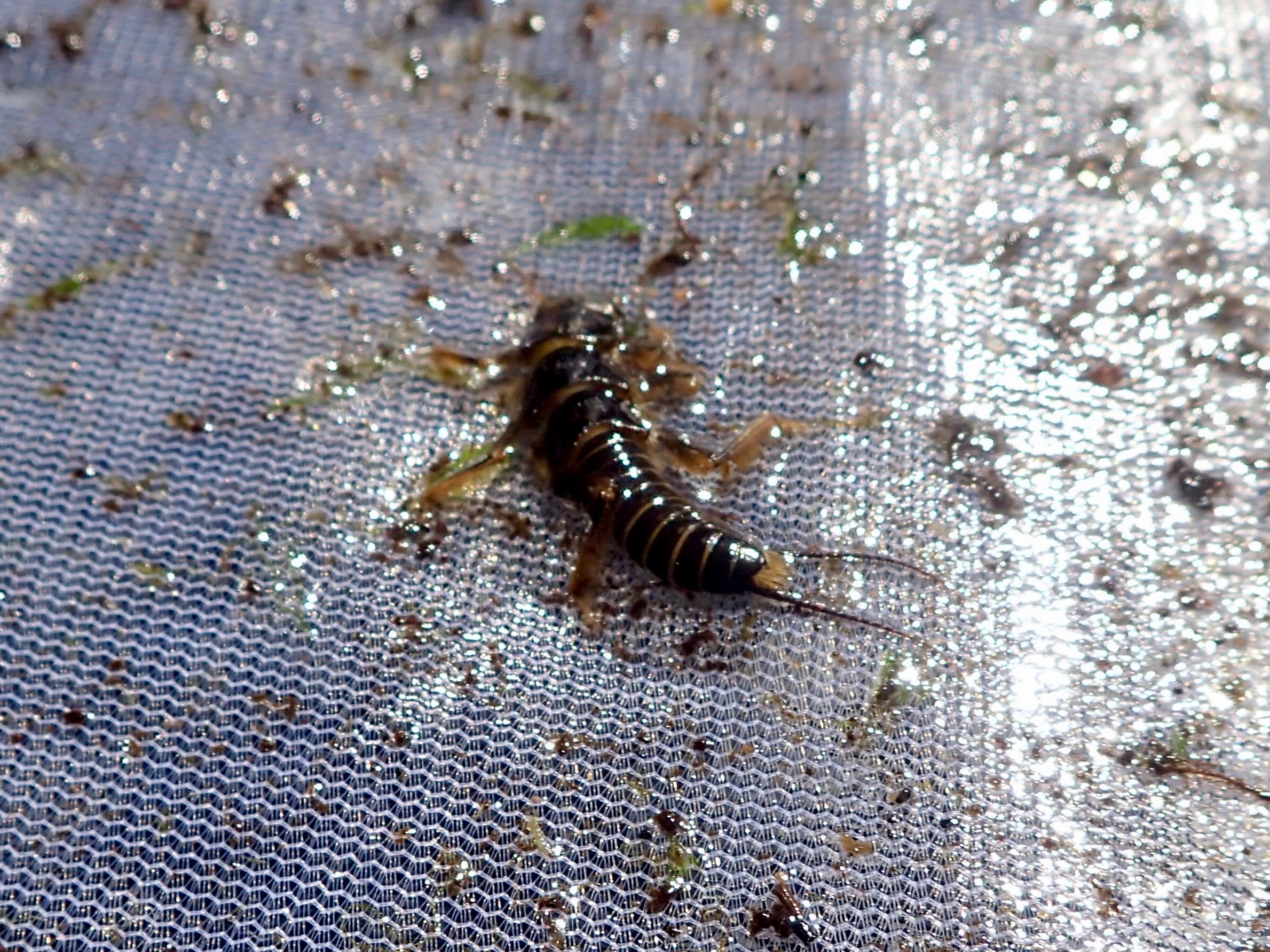
Early morning on the first day. Cam might be contemplating the fish at his feet, or the sheer beauty of his surroundings. These streamside boulders are typical of the South Platte in Cheesman Canyon, and sometimes these behemoths are in the river proper. Along with the smaller boulders, it makes for the kind of structure trout love. On both days, my experience was: find one fish, and there are a bunch more close by. I think we saw a half dozen other anglers on Wednesday. Friday, the “crowded” day, maybe twice that many. I fear that western anglers would be mortified by the hordes on eastern streams.Afternoon on the first day. The water is at 250cfs and running with breathtaking clarity. It was easy to pick out fish, especially if you knew where to look (on day one they were holding in riffly moving water 1-2 feet deep). This slot extended far down the glide past where I was standing when I took this photo. Both Cam and I hooked fish along the entire length of this wrinkled water center stream.Day two. The water is up to 300cfs. Our guide, Chris Steinbeck of the Blue Quill Angler, said that Thursday morning the water had some color, but cleared up after noon. I think I liked this height better; having no experience to compare to, I’d call this flow medium. Here’s what’s so wonderful about the South Platte: there are fish everywhere. Compare to the Farmington, where there are vast stretches (especially now) of unproductive water. I caught more brag-book trout in an hour on the South Platte than I might in a month on the Farmington. If you can read water, and make adjustments like weight and indicator position, and perform quality drifts, there’s no reason why you can’t do likewise. Cam doesn’t fly fish, and he stuck over a dozen trout on day one.I believe the river is so productive because of the high percentage of viable water. The analogy I came up with was the South Platte is like a high-gradient northeast wild brookie stream, times 10 in size. See what I mean?A so-ugly-it’s-beautiful golden stonefly from Chris’ Friday sampling. We also came up with midges and baetis and PMD nymphs. There were a couple stray salmon flies flitting about over the course of both outings. Not shown: scuds, an important food source for South Platte trout. I creamed ’em the first day with Pat Dorsey’s UV Scud.Compared to the Farmington and the Housatonic, wading the South Platte is a walk in the park. Absent the fast-moving, deeper sections, this was about as tricky as the footing got. (I still don’t see why the possibility of falling in should prevent me from getting into the best position to catch that fish — although I’m pleased to report that I did not go swimming on the South Platte.) Much of the river is granite sheets and smaller gravel bottom. Bottom snags were few and far between; I didn’t lose a single rig the entire trip. As you can see, the rocks are covered with this mossy vegetation, hence the substantial scud population. Clearing weeds off of flies and rigs was a constant task, although it served as a good reminder that my presentations were where they should be. Coming next: Part 3 — The Fishing.
Just a couple of photos from the recent White Fly action to entertain you on a Friday. Enjoy the weekend and please do a rain dance!
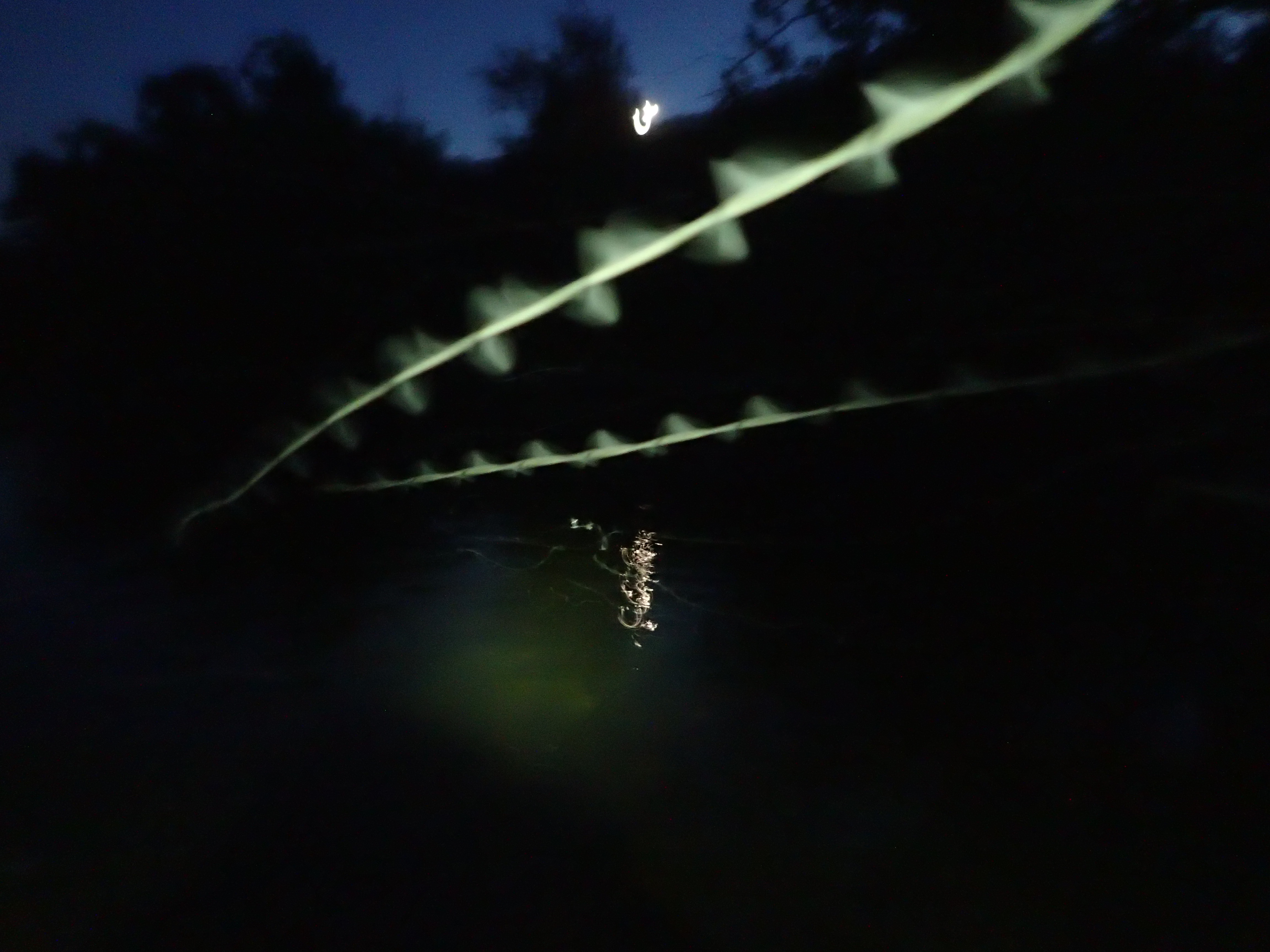
Ugh! Why do I smell so bad? Turns out it’s not me, but rather the hundreds of dead White Fly spinner carcasses stuck in my net from the previous night’s expedition. White fly spinners have a knack for finding their way into/onto your clothing, gear, glasses, and, very regrettably, into your nose, mouth and ears. This bears repeating: White flies taste really, really bad.Not the shot I was hoping for, but it’s interesting enough to share. This stacked image has some nice scribbly abstracts of the moon over the trees and its reflection on the water, and the white fly tracks are reminiscent of jet contrails.
I had my doubts about yesterday’s Housatonic smallmouth trip. The water was still a little higher than I like it (410cfs in the TMA) and definitely cooler (upper 60s). Unfortunately, I was right. It hasn’t turned on yet.
I started off in the upper end of the TMA. That was dead as Julius Caesar. All I could manage were two pipsqueaks and a busted wading staff. (Argh!) Off to the bottom end of the TMA where I witnessed spin anglers in the FFO area (called the TIP line, 800-842-4357 in case you don’t already have it programmed into your phone) and managed just one fish, a rainbow trout. He was in and out of the net so fast he didn’t have time to feel stressed. Absent my trusty staff, I fell in and soaked an arm and experienced the dread down-the-leg trickle. Sure, there are worse times of the year to fall into the Hous, but it’s almost always an unpleasant sensation. With a crappy bite and volumes of anglers still around (damn this cool weather), I made the command decision to head south.
7pm arrival, and finally, sweet solitude! Besides smallmouth, I managed a decent bluegill and a rock bass to complete the slam. I took them topwater (Gurgler), film (Countermeasure), and deeper (Soft Daddy). Observations: every one of the fish I caught at this second mark — covering about 250 yards of water — came in frog water about 2-3 feet deep. Every fish I took on the Gurgler hit when the bug was sitting stock still. Rather than ramping up, the bit tailed off at dusk. Swarms of white/grey mottled caddis everywhere, but virtually nothing rising. July is coming…
Why it’s called frog water. There were far more tadpoles than rusty crayfish, although I did well hopping the Soft Daddy along the bottom.
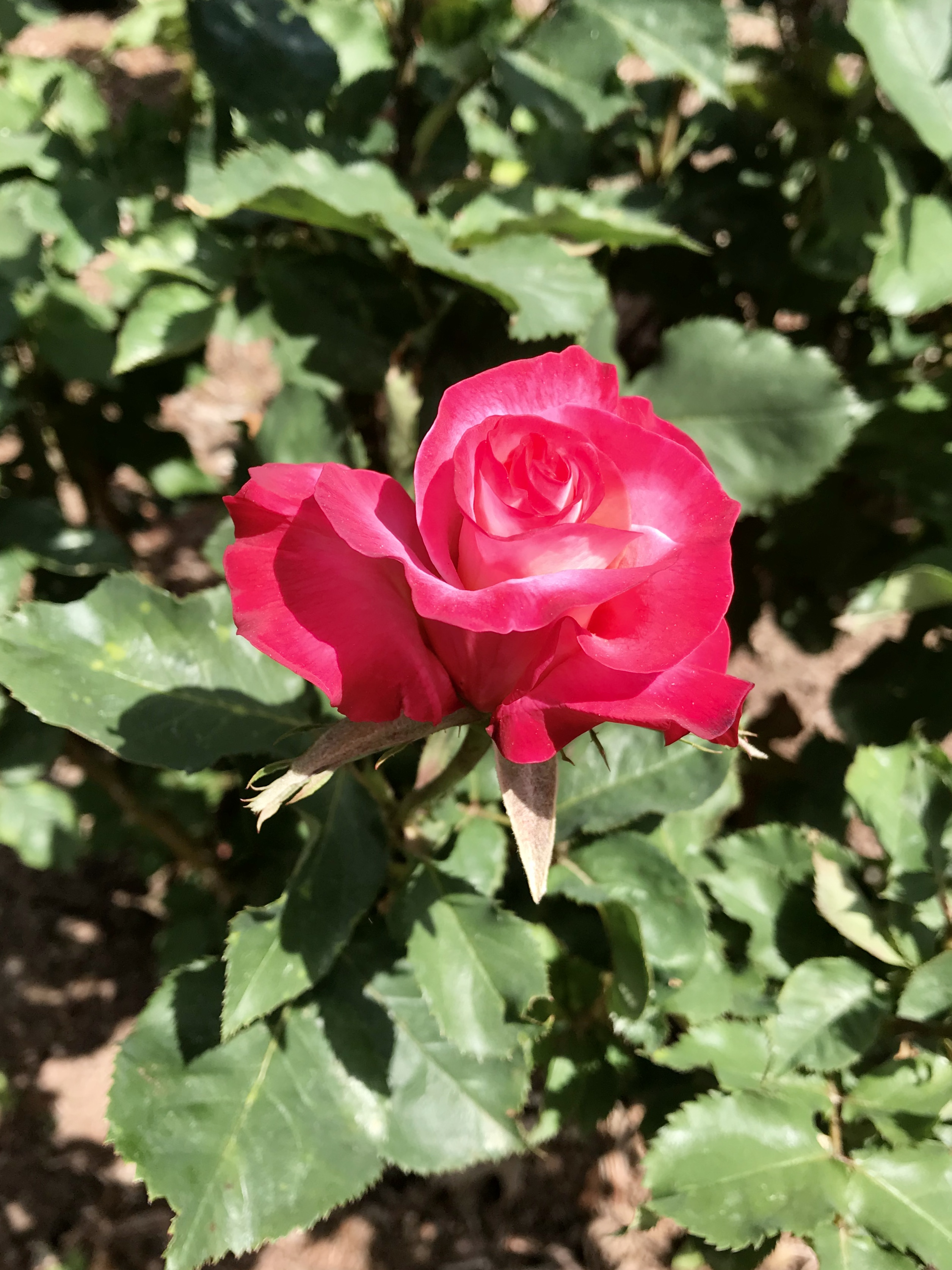
This happened Monday, so I’m a little late with the post, but my first rose blooms always mean there are Light Cahills on the lower end of the Farmington. The hatch is already progressing upstream. Call them what you want (Vitreus, sulphurs, etc.) — I see these first signs of summer as simple creamy mayflies, and I go with the generic term of Light Cahill, which suits me just fine.
Remember, you are matching size, color, and profile. These first invaders are usually a size 14-16 — sometimes you get a big 12. For dry flies I like the classic Catskills Light Cahill, the Pale Watery Wingless AKA The Magic Fly, and the Usual. For wets, the Light Cahill winged, the Pale Watery Wingless, and the Partridge and Light Cahill. Any of the creamy Leisenring or North Country patterns will also serve you well.
Old reliable “Grenada,” a hybrid tea rose, is always the first to pop. If I weren’t so busy with yard work, I’d be all over this hatch. Catch a few for me, will ya?
First, I’d like to apologize for the lack of recents posts. Busy, busy, busy is the word. I’m hoping to clear my plate by early June so I can get on the water and tell you about it. But I did manage to venture forth last night with #2 son Cameron for a grass shrimping expedition. We fished a secluded tidal marsh. Conditions weren’t ideal — I’d like it a little warmer — and I was concerned at the start by the lack of visual and audible feeding tells. I needn’t have worried. Once the feeding began, it grew exponentially, and we were surrounded by the cacophony of pops, splashes, swirls, and sharp reports.
Nonetheless, the fishing was tough. We dropped a few, landed a few, but the number of hits was not commensurate with the number of stripers present. So it goes when you have thousands of bait targets in the water. We fished a three-fly team consisting of a deer-hair head shrimp on top, a Black GP in the middle, and a micro gurgler on point. Droppers are the fastest way to find out what the fish want, and last night they wanted the deer hair head fly. We spent as much time sitting and watching and listening as we did fishing, and that seemed right. When I think of all the places in southern New England where the same thing will be happening tonight, I can’t help but smile and relish the sensory treat we experienced.
I don’t usually double-dip between here and Instagram, but this is the best shot from last night (credit to Cam) and I think it is worthy of inclusion. What looks like an impressionistic oil painting is actually a time-lapse photo taken in the black of midnight. Being surrounded by feeding fish is something every striper angler should experience. There were grass shrimp, mumies, and even a few random worms. Good stuff.
Some of you may know that I am avid gardener. Right now, I am planting by the moon. What’s that, you say? The basic idea is that just as the moon’s gravitational cycle causes tides to rise and fall, it also affects soil moisture. So you want to plant seeds and transplant during periods when more moisture is being drawn to the surface.
Okay, Steve. But what the heck has this got to do with fishing?
I’m a firm believer in paying attention to natural rhythms.Using stripers as an example, I also believe that the angler who wants to catch more bass, and especially bigger bass, will not be one who places a premium on leader construction or casting distance — but rather one who focuses on things like tides, moon phase, wind direction, bait patterns, water type, structure, location, water temperature, frontal systems, and barometric pressure. What’s more, that angler should pay attention to common natural markers, like hearing the first spring peepers or when flowering trees bloom.
It’s all part of one magnificent puzzle. Every year is different, but nature is always right on time. It doesn’t hurt to be able to cast a plug or a fly line very far. But if you really want to crack the big bass code, pay attention to Mother Earth’s natural rhythms.
Yesterday was herb day. Today it’s peppers. I have it on good authority that this weekend is a great time to plant cukes and squash.
I hadn’t yet gone fishing this year, and Tuesday was going to be the day. I’d already made the decision to make it a small stream. But as I was checking emails and other social media that morning, I was shocked to learn that Alan Petrucci had passed away.
You may have known Alan from his license plate, BRK TRT. Or perhaps you’ve enjoyed his blog, Small Stream Reflections, or have seen him elsewhere online (he was a currentseams follower and made frequent comments on my small stream posts). Perhaps you were lucky enough to have fished with him. For me, there was a certain sort of symmetry in fishing a small stream; it would be the perfect way to honor Alan and work through the sorrow. Especially since I’d planned to fish a stream that we’d discussed dozens of times over the years. Yes. Today, I would go fishing with BRK TRT.
It was always easy to determine if Alan was fishing nearby. I took this photo along the Farmington River one fall many years ago.
I should make it clear that Alan and I weren’t fishing buddies. We didn’t hang out. Our common ground was a passion for small streams and wild brook trout. I first met him — albeit digitally — when he was a member of the now defunct Flyaddict Forums. We quickly established a rapport, and corresponded via email and the phone over the years to discuss all things thin blue lines. We even traded flies at one point. I still have some of his in my small stream box.
The trip started poorly. I forgot my yellow polaroid glasses, and on my walk back to my Jeep to get my spare pair, I tripped in the woods and bashed my knee against a rock. (When stuff like this happens, I’m always tempted to ask, “What else can go wrong?” But I usually don’t, mostly because I don’t want to know the answer.) There was still snow on the ground in this neck of the woods, not to mention a decent amount of ice clinging to rocks and other obstructions. The sky was overcast, about 44 degrees, and I was happy I brought my fingerless gloves.
Despite the lengthening daylight and warmer temps, winter still has a firm grasp on the brook.
I’d already decided that the outing wouldn’t be about catching fish, and not just because February is a tough month on a small stream. I figured I’d selectively use the dry/dropper (in this case the dropper was a size 18 Frenchie variant), then try jigging and bottom bouncing a small ICU Sculpin in the deeper runs and plunges. I wasn’t happy about the depth I was getting, so I added a BB shot to the leader about 10 inches from the fly. That seemed to work; as soon as I made the adjustment, I felt a sharp tug as I was drifting through a boiling plunge. Given the demonstrative hit, I was surprised there was no hook set.
I also spent some time paying attention to the the little changes the stream had gone through over the winter. Brooks like this one are constantly evolving; channels shift, trees fall in, obstructions washed into the system create natural dams, and so on. I also took the time to remove deadfall that served no purpose other than to mess up my drifts. My general rule of thumb is: If it’s alive, it doesn’t get touched. If it’s dead and is small and provides no cover/creates no significant current break/is not being used by a living creature, it can go.
And of course, I was there to fish with Alan. I’m not embarrassed to tell you I had more than one discussion with him, aloud. It felt good to be out in the woods and fishing and talking to him.
I blanked the entire length of the stream until the last pool. I’d gone back to the dry/dropper, and while it was chugging through a spirited run, the dry disappeared. The char wasn’t big, nor was it noteworthy for its colors, but I felt like this was a gift from Alan. I accepted it fully and eagerly, a proper ending to this solemn day.
But it’s funny, sometimes, how these things turn out. Because I suddenly decided to fish a stretch of the brook that I hadn’t fished in at least a decade. It was less than a five minute drive, so I kept my waders on. Since I was running out of time, I made another decision to double-time it to a section with easier access. I’m really unfamiliar with this stretch, but I thought I’d give the dry/dropper a sail through some of the deeper runs. I chose a pool with a very sexy cut bank beneath a leaning tree. It’s the kind of mark that just screams “fish here,” and yet how many times do you find no one home? The first drift was a blank. Ditto the second. On the third, the dry disappeared.
Right away I could tell it was a good fish. If it were the Farmington River I’d consider it a smaller trout, but on this stream it was a giant. I desperately wanted to land it, because I felt like this was the fish I was supposed to get, and somehow Alan was involved, and I didn’t want to let him down. Just as I’m lifting the fish toward the net, my rod tip and line got tangled in some branches. Really? The fishing gods can be so cruel. But in the end, the char was netted. Funny thing! It was the biggest brookie, by far, that I’ve ever caught on this stream.
Thank you, Alan. And so long, old friend. Tight lines on thin blue lines forever.
I didn’t measure it, but this was easily double-digit inches, a monster for a brook you can leap across. I was struck — as I often am — by the blue halos and the vibrant contrast of the spotting. What do you think, BRK TRT?
With single digit temperatures again in the forecast, this seems like a good time to talk about cold weather catch-and-release best practices. When the temperature is so low that you’ve got ice forming on your waders, or your line and leader sports frozen droplets the moment they hit the air, you should be thinking about what could happen to a fish’s gills or eyes if exposed to that same frigid air.
When it’s Everest summit cold out there, try to keep fish in the water as much as possible. Absolute best practice would be to never remove the fish from the water. If you must take a picture, keep the fish in the water (in your fish-friendly landing net) until you’re ready to shoot. Then it’s 1-2-3, lift, shoot, and get that fish back in the water ASAP. Limit your number of shots. Please remember that damage time is measured in seconds.
It was in the teens when this picture was taken. We probably shouldn’t have done it. On the plus side you can see water still dripping from my hands, which indicates the shot came moments after the steelhead was lifted from the net.Photo by Peter Jenkins.Option B is much safer for the fish. I know, it’s not the same, but Arctic air can be cruel on your favorite gamefish’s gills. How cold is it? You can see droplets and sections of ice already forming on my waders. Photo by Peter Jenkins.
This is where making such lists gets hard. Is #3 really better than #4? And what about #1? Is it clearly the summit? What if you have two really great moments? Such are the things that we detail-oriented writers obsess about. But I’m happy with my choices. I hope you’ll be, too.
#4 The High Water Smallmouth Slob Bonanza. You know, I waited all year for July to come so I could go smallmouth fishing. Heck, I couldn’t even wait that long. So I went in June. That outing produced far more trout than bronze, so I waited for a few weeks. And then the rains came. And came. And seemingly never left. The Hous would spike and fall and then spike higher and kindof fall and then it would rain some more and….yeesh! What a disaster. Finally, I made the command decision to go fish. Yes, the water was disgustingly high. Yes, it was the color of chocolate milk. Yes, it rained again while I was fishing. (No, really. A line of severe thunderstorms came through, and I had to find shelter for an hour. It poured buckets. And…what a shock. The water came up even higher and dirtier. You can’t make this stuff up.) The good news was that I now had a chance to work on my high/off-color water summer smallmouth game. That first night was an eye opener. I caught more, bigger fish than any outing in a couple of years. The rest of the smallmouth summer was an exercise in patience, timing, and mostly frustration, but I had money memories of that July evening already in the bank.
You could measure this slob in pounds, not inches. Best of all, it was taken at the surface. Hot diggity!
#3 You Oughta Be In Pictures. Director Mathew Vinick’s love song to the Farmington River, Summer On The Farmington, will premier January 12, 7pm, at Brewery Legitimus in New Hartford. I’m excited to have been a part of this film, and I’m really looking forward viewing the finished product. Hope to see you there!
#2 My First Snook on the Fly. There are two things I’ll get up at 4 o’clock in the morning for, and one of them is fishing. It’s a 90-minute drive from Miami to Flamingo, and you go through some of the most barren country in the U.S. But the Everglades are a beautiful, wondrous place, and you can catch snook there. Well, sometimes. No snook for me on my first trip a few years ago. But this year… yeah baby! What a great fish upon which to break the snook seal. (Kudos again to my guide, Capt. Mark Giacobba.) Now, I gotta go back and get a tarpon…
I can still see the dark bulge of water materializing from within the mangroves, racing on an intercept course to the fly, and feel the sharp pull of the take and turn. Even the smaller ones are fun to catch.
Last month, the Fisheries Division of the CT DEEP announced a new draft action plan for wild trout conservation. They recently held two online presentations with the opportunity for public comment, but you can still review the draft plan and tell them what you think. (For the record, I said that while I was all in favor of wild trout conservation and management, DEEP must be cautious about over-publicizing wild fish and revealing specific locations, especially those that aren’t currently “on the books.” It only takes one motivated poacher — or excess angling pressure — to irreparably damage or wipe out a stream.)
It’s no secret that wild, native char populations are under stress not only in Connecticut, but throughout the northeast. Climate change, pollution, angling pressure — the usual suspects are omnipresent. Wild trout and char need all the help they can get. Here’s to hoping that the CT DEEP does everything right.
As The Traveling Wilburys so eloquently sang, “handle me with care.”










 currentseams.com