Fly Fishing the Everglades, Day 2: The thrill of defeat and the agony of… well, nothing

I’d come to the Everglades with a single purpose: land my first tarpon. Oh, sure, I’d take all the snook I could get — I love snook — but tarpon was the prize.

There were only two problems. First, the weather. It had been been a colder than normal spring and the water temp wasn’t quite where the tarpon like it. But, nothing can be done about that. The second problem was of my own doing. I’d already had one shot at a tarpon on day one, but completely blew the hookset. I’d have to do better on this day.

We arrived at the scene of yesterday’s rolling tarpon to find only 1/3 the number of visible fish. That was discouraging, but we nonetheless had at it. I was really feeling like I was going to get my first tarpon, so much that I said it aloud. And that’s where problem two reared its ugly head. For some reason, even though I knew otherwise, my brain was telling me to wait to feel the weight of the fish before setting the hook. Eventually, a tarpon roared out of the shaded mangroves, struck the fly, and once again, I missed it. The lesson was driven home by an inspection of the leader; the first six inches above the fly bore the marks of the edges of the tarpon’s mouth. It was proof that fly was inhaled deep enough to get a hook set. As Charlie Brown would say: “Rats.”

I tried not to let it bother me. Really, I did. But I was mad at myself for missing yet another opportunity, especially since the winds tomorrow were likely going to be strong enough to make the Everglades a non-starter. Plus, who knew if we’d even seen another tarpon? I decided to not let it wreck my day. After all, I was fishing in the Everglades with my oldest son, and smoking cigars. That’s a win.

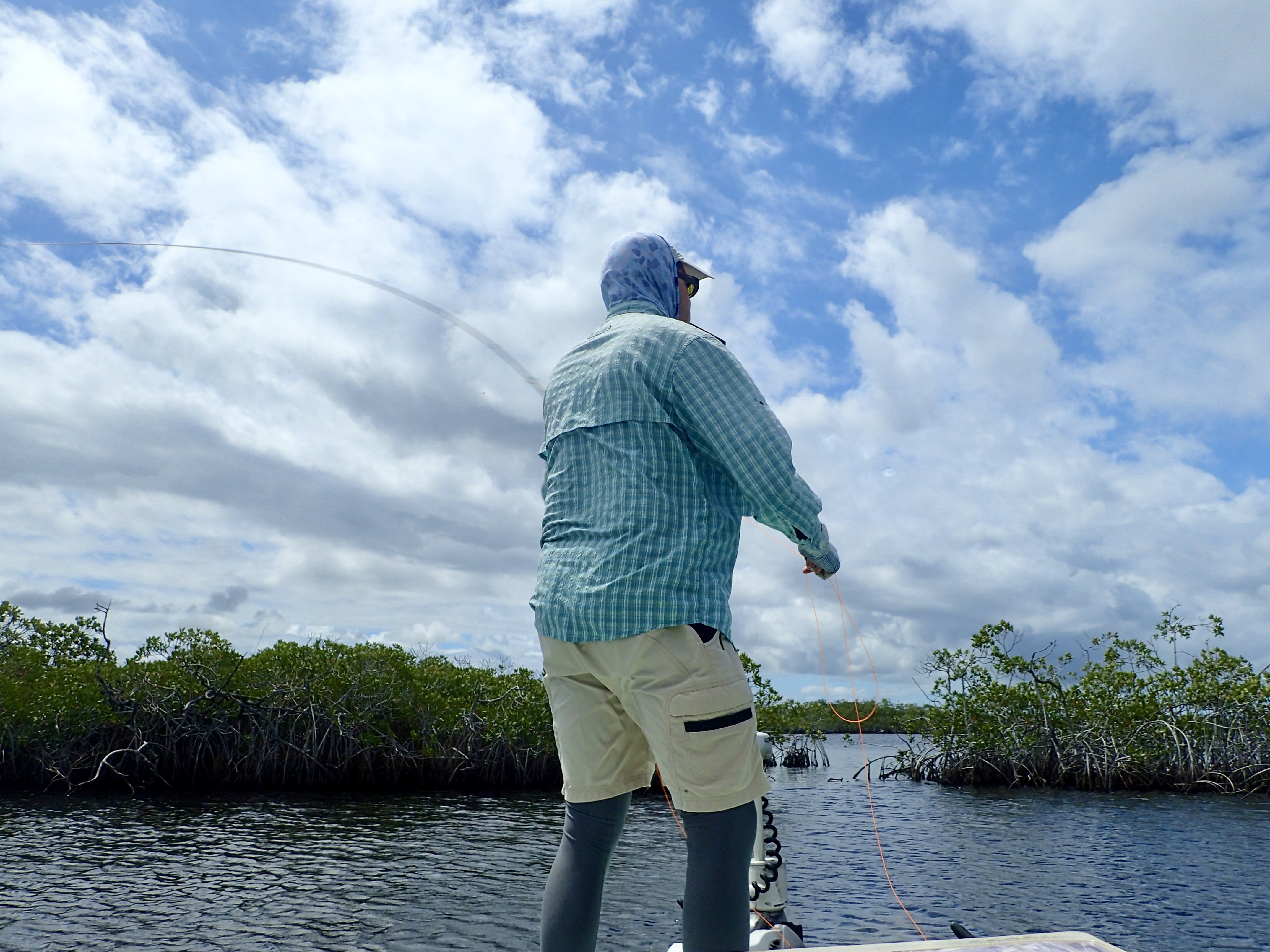
Since the snook bite generally stunk, we decided to lightning raid as many creeks and lagoons as we could in hopes of finding our target. Finally, after silent electric motoring up a mangrove-covered creek entrance not much wider than the boat, we found a roller. As I set up to cast, I reconned the surroundings and reinforced the procedure: on a hit, I’m not waiting on my strike. I’m setting low and hard to my left. I was repeating it like a mantra while imagining the movement.

First cast. No love.

Second cast, same result.

Third cast. Here he comes! It all happens so quickly that your conscious mind really can’t separate the greenish flash of the sun off flank, the water bulge and then boil around your fly, the sudden tension on the line, and the sound of violent water displacement. It’s almost simultaneous. This time, I was ready. “Down hard and to the left.” It all went down in one exhilarating moment, and I made the move and stuck the set.

The tarpon thrashed on the surface, then sped away from the boat like a perp in a getaway vehicle. “Let him run!” shouted Capt. Mark, but I needed no coaxing as this fish immediately put itself on the reel. The first jump was a spectacle of power and fury, the spray shimmering in the morning sun like a thousand tiny LEDs. The tarpon made a sudden 180 and swam back to the boat. “Keep that line tight!” Reel fast!” were the captain’s instructions, but I was already doing it. I cranked furiously, still tight to the fish. It was at this moment that I knew I was going to land this fish. But I didn’t plan for the mangrove wild card.

The fish moved to the left, just ahead of the boat, toward a treacherous-looking mangrove root system. (There are also multiple dead roots/branches/tree remnants in any given space along the shoreline). I thought I steered the fish out of harm’s way, but when he made his second leap, the leader hung up on a submerged root and the fly popped off. I was left with the temporary illusion that the fish was still on — the hook was stuck below the waterline — but I knew in my heart the tarpon was gone.
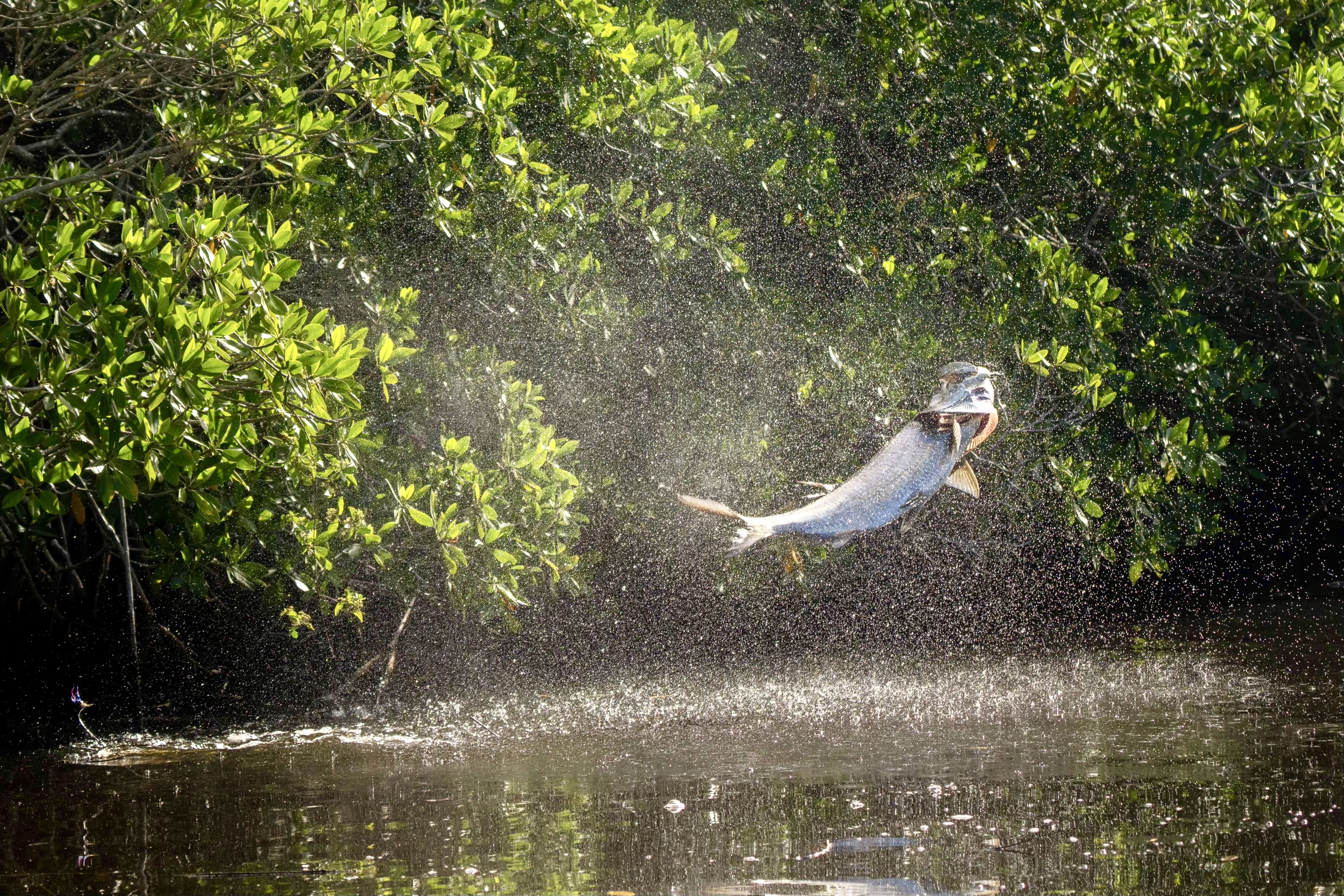
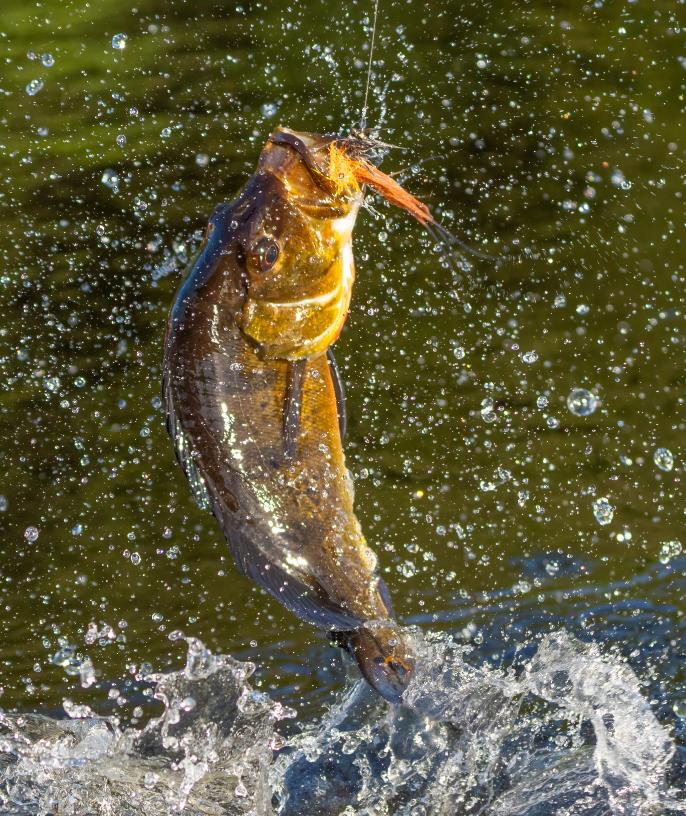
The last blast, the moment the tarpon escaped the bond of the hook and line. You can see the fly, stuck on the tiny branch peeking out of the water on the lower left. The fish landed with a thunderous splash. Then it was gone. Photo by Mark Giacobba.

Now, you might think at this moment that I would be in a state of shock and despair. But no. Just the opposite. I was giddy, almost chortling. Amazed and full of wonder. That was terrific! I wasn’t about to let a little bit of bad luck ruin my day. For I had quietly, patiently stalked my quarry, waited for that moment — and then, finally, fully prepared, was ready. I’d done my best. And that’s all anyone can ever do.

You know, I’m thinking that I’m going to land the next one.
Fly Fishing the Everglades, Day 1: The Snook Files

I love living and fishing in Connecticut. But if I had to choose one other part of the country in which to live and fly fish, it wouldn’t be an easy decision. Western PA and NE Ohio (steelhead and smallmouth) would get some consideration. Colorado would be a worthy choice, as would Montana — all that blue ribbon trout water! Then, there’s the Everglades. So vast, so mysterious, so alien, so loaded with fish and fly fishable water that you couldn’t possibly cover it in a lifetime. I really don’t know where I’d choose, but the Everglades might currently be at the top of the leaderboard.

I’ve now fished the Everglades three times, the last in November of 2021. I was ready last year, but too busy with the book. I wanted to go in the March through May window, prime time for tarpon, because I’d never hooked one, and you’ve got to hook one to land one. Color me eager on tarpon. Then, there are snook.

While tarpon are one of my bucket list fish, I’ve caught snook before. I’m a big fan. They’re ambush predators that lurk in the submerged mangrove roots, and their attack speed is breathtaking; they go from zero to meteor-reentering-the-atmosphere-fast when they see a meal. They fight like the dickens, even the smaller ones. Think of a sleeker, faster, more agile striped bass, and you’ve got the general dope on battling a snook.

Snook country. While the Everglades can look like one expansive lake, you’re looking for structure along the shoreline, whether near open water or in one of the hundreds of labyrinthine passages that lead to a lagoon, and sometimes to nowhere. Downed tree in the water? Make a cast. Dining room table-sized cove in the mangroves? Make a cast. If a snook is nearby, and you don’t spook it — they’re in a constant state of red alert — it’s going to move with a sense of urgency to your fly.

Once again, I was fishing with Capt. Mark Giacobba. Tarpon were first on the agenda, and we spent the better part of an hour getting to the mark. Right on cue, we found rolling fish. (Tarpon will come up to the surface to gulp air, and these “rolls” give away their position.) To make a long story short, I had two follows and one take upon which I completely blew the hookset. A little later, we found some 40+ pound fish in a shallow lagoon, but they were immediately on to us, and skedaddled for points elsewhere, leaving opaque clouds of silt in their wake. With the sun continuing to climb (we’d launched at 6:30am), the target turned to snook. Hell, yeah. Let’s go.

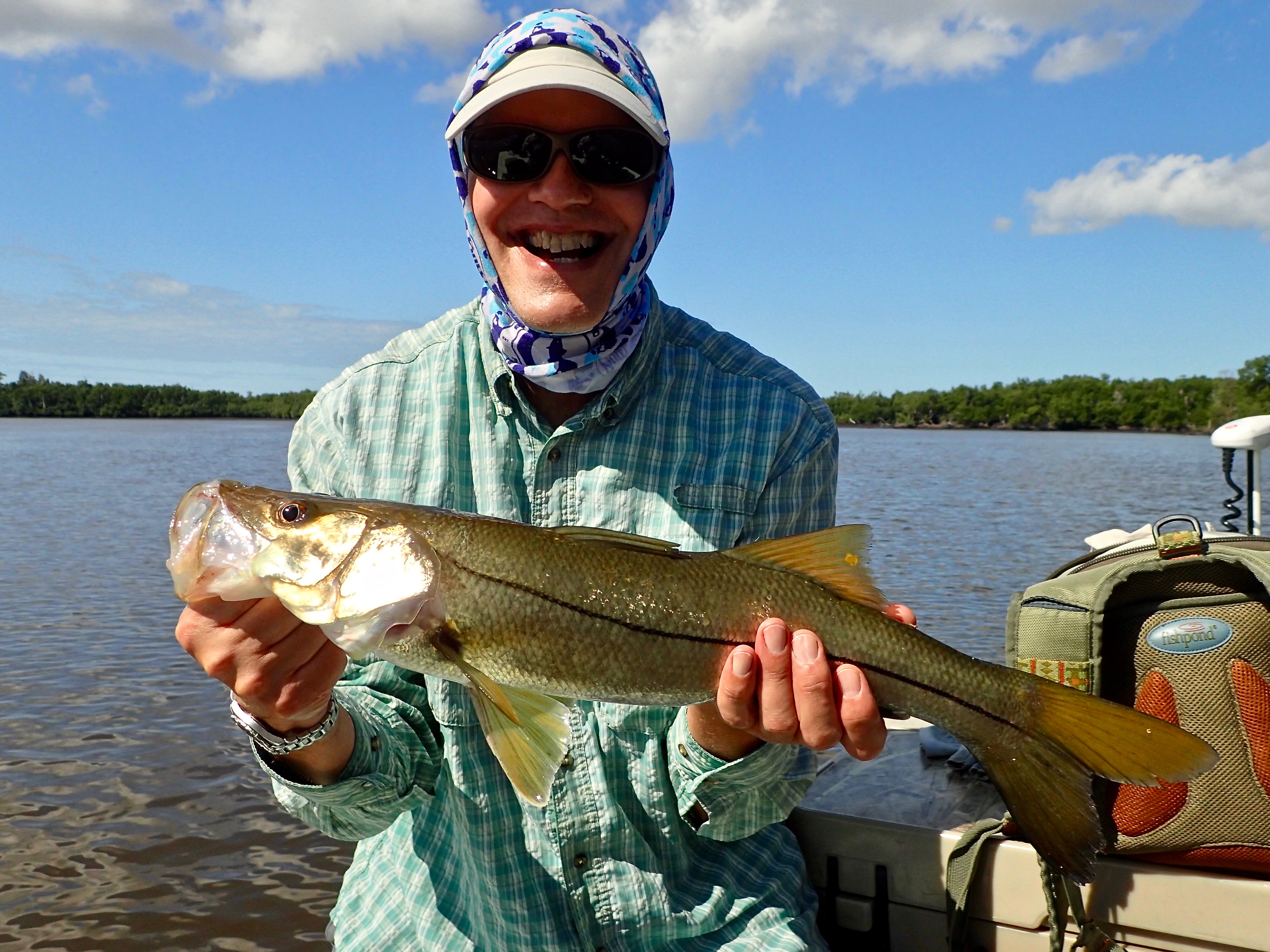
This would be a good time to say that the fishing has been a little off in the Everglades this spring. The nights and mornings (and, consequently, the water) have been cooler than normal. The snook bite was funky; it was either action on the first few casts or nothing. We bounced around from mark to mark, staying when there were fish, bailing when there weren’t. I held off taking any pictures since I was hopeful to lock into a bigger one, but ’twas not to be. You can see one of the smaller fish I landed on Instagram @stevecultonflyfishing.

Pounding the structure. It took me a while to get up to speed, as this kind of fishing is truly different from what I normally do back home. We took a few subsurface, then switched over to topwater, which produced some explosive takes. You cast, give the bug two short pops (“Knock-knock” as Mark described it), then let the fly sit there, and wait. Maybe a couple more knocks, then it’s recast and send it to an adjacent area. You don’t strip in the fly, and it never gets even halfway to the boat before you recast. On this day, the snook weren’t shy about making their presence known. If they weren’t there, we motored.

Th final tally was six snook and one sea trout. Not great. Not terrible. Definitely fun. Up next: Day 2. It’s a story of disappointment and redemption (of sorts). You’ll see.

The Question of the Week: Greased Line Swinging with Sink Tips

Today’s question comes from Jim B., who asks. “How about a greased line swing with a 4 foot Airflo fast sink leader?  Would there be any advantage to this? “

The shortest answer is, “Sure.”

The more complete answer is, “Yes… No… Maybe.”

And my best answer comes in the form of a follow-up question, which is: “What do you want the fly to do?”

When it comes to solving some of fly fishing’s thorniest problems, “What do you want the fly to do?” is about as close as it gets to a universal solution. It’s especially applicable in this case. If you want to fish a shorter tippet and give the fly some depth — you’ll achieve depth on the mends because the sinking leader will act as split shot — then have the fly rise toward the surface as tension is introduced — then yes, you have an advantageous situation.

You could fish a neutrally buoyant fly on a longer leader, and have the fly present somewhere between the film and a greater depth. (If that’s what you want the fly to do.)

If you want the fly to sink just below the film and fish it at a depth of 1 foot, then no, it’s probably not advantageous.

You can see where this is going. There are multiple answers because there are multiple possible situations. Which line? Which leader? Which leader material? Which leader length? Which presentation? You can answer them all by determining what you want the fly to do. Hope that helps!

We were fishing in a canal with current. I told the guide that I wanted the fly to sink a bit, then rise as it moved past a likely ambush point. I used a floating line and about a nine-foot leader. A cast upstream, 2-3 big mends, then come tight so the current grabs the line, introduces tension, makes the fly rise up, and WHACK! What do you want the fly to do? Photo by Capt. Mark Giacobba.

The Currentseams Best of 2021: #7-#5

(to be read in Casey Kasem’s voice) We’re counting down the 10 most memorable moments of 2021 on currentseams-dot-com. (to be read in singing chorus voices) Number Seven!

#7 Teaching Wet Fly Fishing. I didn’t have as many guide trips this year as usual, mostly because of high water — and then I cancelled most of the summer due to elevated water temps on the Farmington. But in the spring, I did get the chance to do what I enjoy most about being a teaching guide: introducing people to the ancient and traditional art of wet fly fishing. The bite gods generally smiled upon us, and we had multiple memorable outings. You’ll be able to learn more about tying and fishing wet flies from me next month at the Fly Fishing Shows in Marlborough and Edison. Of course, there’s nothing like an on-water lesson. April and May are coming!

Eric was just one of several clients this year who locked up on bunches of fat Farmy trout with wet flies. (I was smiling, too.) Well done, everyone!

#6 Peacock Bass Fishing in south Florida. When you’ve never caught a tarpon or snook, and you’ve been fantasizing about doing so for months, and then your guide tells you that conditions in the Everglades aren’t good so you won’t be realizing your dream today…well, that just kinda sucks. But wait, he says. I’ve got a plan B: peacock bass. If you love smallmouth, you’ll love peacocks. They’re aggressive and feisty and leapers and beautiful fish to boot. Plus, I know a spot. Okay, you say. You’re still disappointed, maybe a even little reluctant. But you go because it is what it is…and then you discover that what it is is fan-freaking-tastic. But wait, there’s more: find the right water and it’s bass after bass after bass. What a delightful way to wreck your forearm.

Hooking a peacock bass is like reenacting a fight scene from the old Batman TV show. Pow! Biff! Smash! Crunch! They blast the fly, and if you apply upward pressure they leap and cavort and tail-dance (and sometimes do that regardless). Tremendous sport, especially in the 2-5 pound range. I love living in a seasonal climate, but there’s something about Florida fly fishing that really appeals to me. Photo by Mark Giacobba.

#5 Being a Contributing Author to the Followup to Surfcasting Around The Block. When surfcasting legend Dennis Zambrotta asked me to contribute a chapter to his new book, I was thrilled. I pretty much knew what I wanted to write about, and after much drafting and polishing I sent it off to Dennis. My piece is called “The All-Nighter and the Nor’Easter.” The book’s working title is Surfcasting For Striped Bass: Fifty Years of Legend and Lore from the Islands of Block and Aquidneck. Target publish date: fall 2022.

Sacred fly fishing grounds. Dagnibbit, you can see all my secret spots!

The Everglades, Part 4: Bill and Dad Ride Again!

Before this trip, I’d had only one Everglades fishing experience. That was four years ago, and it was a single day excursion with my oldest son, Bill, who was graduating from law school. Our target on that May day was snook and tarpon, but I never even got a taste of a tug. Sure, the jacks and ladyfish and sea trout were fun, but I was disappointed. The highlight of the day was a fine snook Bill grabbed out of a shallow tidal flat.

And so it came to pass that Bill and I were heading out again. I’d already gotten my snook, and then some, and had an all-too-brief encounter with a tarpon, so in a sense this was a gravy day for me. Bill was getting married in three days, and at the very least we’d soak up some sunshine and enjoy some cigars.

Wednesday turned out to be the warmest of the three days, but there was still an early morning chill that was amplified by the boat slicing through the pre-dawn canals. I wore fleece pants all three days — I’m generally always inclined to be cold — but later on this day I almost broke the shorts seal. I knew what was coming in a couple weeks, and I kept reminding myself that regardless of the action, this wasn’t steelheading — and I should enjoy the blessing of actually being able to feel my toes and fingers.
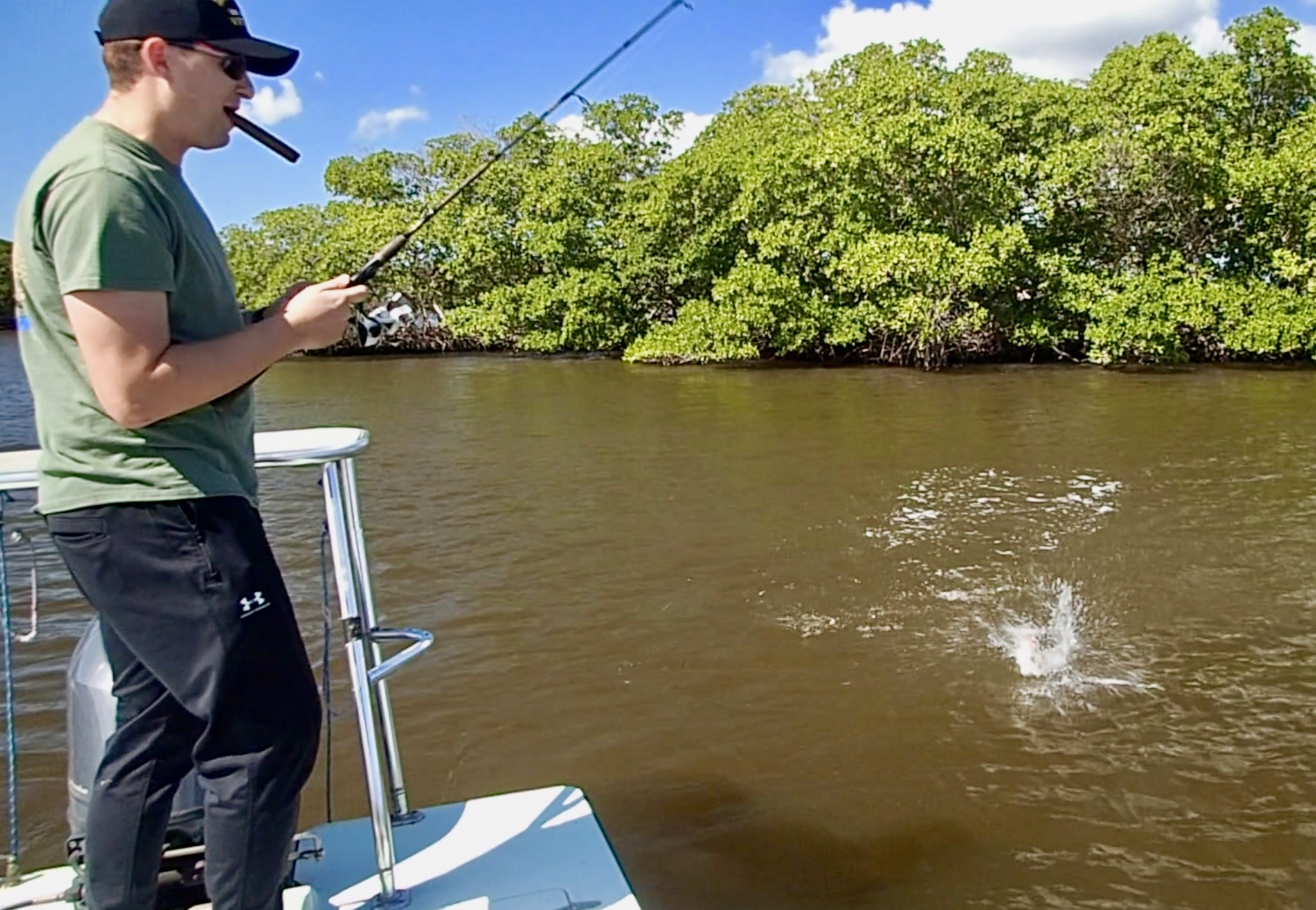
A left-handed fly caster on the bow and a right-handed spin guy on the stern makes it easy to do double duty. However, as we drifted past this island, I wanted to get some footage of my Marine doing battle. Bill found a pod of sea trout and had at them. These are beautiful fish, and they can be highly aggressive with their follows and takes. We liked this spot so much that we asked Mark to do another pass around. we never saw another boat until the very end of the day.
We made a run to where the Everglades dumps into the Gulf, and I loved this mark: current, loads of structure, and all kinds of birds and mammals and reptiles to eyeball. We actually fished hundreds of yards of shoreline. By now, I felt like my presentations and hook sets had come light years from my first trip. As we drifted past a downed tree within a pocket channel, I thought I saw a shadow. One cast, a couple strips, snook on! A decent fish for sure, but sight casting him in lightly stained water made me feel on top of my game. Bill and I each took multiple smaller snook at this mark. Of course, just when you think you’re all that, a baby tarpon in a cove near a creek mouth will remind you that you aren’t. And so, having touched two tarpon on the trip, I am resolved to get one on my next. Like Boss Rojack said in My Favorite Year, “The fighting is rounds…this is round one”

The Everglades, Part 3: Win some, lose some.

The first time I fished the Everglades with Mark I was green. This is a specialized type of fly fishing, and by the time I felt like I was getting the hang of it, the day was over. What’s more, it was one of those days where the shots at fish weren’t plentiful. I’d gone down with the intention of catching snook and tarpon, but we had no opportunities at the latter and only a couple with the former.

So you can imagine that on this trip, I was raring to go. But, there’s always something conspiring against you, isn’t there? Wind, rain, cold fronts, pandemics…the list of potential villains is endless. Add to that that I have an uncanny talent for picking lousy fishing days months in advance. And so it was that Mark informed me that the Everglades bite had been slow. Very, very slow. But you go and you fish and you do your best, and that’s all any of us can ask.

A few hours in I’d landed ladyfish and sea trout and jacks, but no precious snook, let alone even a sighting of tarpon. Mark, being the guide extraordinaire that he is, thought we might have better luck in some of the more intimate creeks and ponds. Getting to some of these spots is an experience. You use the electric motor or the Evinrude on its lowest setting, and start down these labyrinthine waterways, some of which are not much wider than the boat. Mangrove branches and leaves try to smack you in face, and they’ll swat away anything on deck that isn’t lashed down.

Once inside the pond or cove, you assume a ready position on the bow. There’s no chatter, only hushed tones that are essentially a loud whisper. If we don’t see any cruisers, we systematically attack the mangrove-choked shoreline. In particular, you look for structure, like downed trees and especially little notches in the shoreline or micro-creek mouths. It’s a precision cast — the closer to the mangrove roots the better, and watch out for those overhanging branches that want to eat your fly — then short, fast strips the moment the fly touches water. I didn’t know it yet, but if there are snook or tarpon lying in wait, they will race to the fly with breathtaking speed.

I was working one of those little notches in a shaded corner when it happened. The water bulged, I felt a bump, and I saw a large shadow turn and melt away into the tobacco-stained water.

Snook. A good one.

There was no hook set, no point-finding-purchase, no sense that the fish was spooked. So I made the same cast.

The bulge re-appeared, moving at attack speed, and the snook slammed into the fly. I’ve screwed up plenty of hook sets in my life, but not this one. Rod tip down and dirty, hard strip back and to the right, and the Everglades exploded.

Right from the start, I felt like I had this fish. (A strong set and 20-pound test is good for confidence.) Still, when you’ve never caught a species before, you don’t know how it’s going to behave. This fish did everything in its power to screw me up, like repeatedly trying to find refuge in the submerged roots and sounding under the boat. I never put it on the reel; it was all hand stripping. “Don’t let him breathe!” was constantly running through my head, and Mark did a great job of kibitzing during the battle. Then, the inevitable. Snook landed.

Time for a victory cigar. My first striper on the fly went 30″. My first snook was in the same ballpark. What a magnificent beast! Snook will color to match their surroundings, and this one is perfectly camouflaged for the dark bottom of its home. Taken on Mark’s Blue Claw streamer. Photo by Mark Giacobba.

Most of the rest of the day was anti-climatic. We found another stretch of shoreline, this time in the sun, that was infested with smaller snook, 12″-16″. It was a great opportunity to observe how snook ambush feed. The speed with which they move to their target is impressive. We didn’t count, but it had to be at least a dozen more snook to hand.

While fun, these smaller fish can lull you into a false sense that you are infallible. I remember losing a pig of a striper on the Cape a few years ago. Dink after dink after dink — then when a really good bass hit, I was unprepared and dropped the fish. You can see where this is going. All of a sudden, I rolled a tarpon. I was so surprised that I was late on the set. I still thought I had him, but after a moment of wild spray and boiling water, it was gone. I stood alone on the front deck, the heat of regret and embarrassment crawling up the back of my neck. You gotta set the hook, Steven. You gotta set the hook.

Still, it was hard to let that moment trump the victory of the morning. I had my snook, and then some. And I also had tomorrow.

The Everglades, Part 1: Nature on steroids

The Everglades is big and wild and intimidating. It’s also intimate and beautiful and serene. I know, this sounds like the beginning of a middle schooler’s essay. But it’s truly a challenge to describe the place. One thing’s for sure: we don’t have anything like it at home.

In case you’ve never been, the Everglades is an enormous subtropical wetlands that ranges from Lake Okeechobee to the southernmost Florida mainland. You see things like palm trees and sawgrass and mangroves, and it’s evident that you’re in a warm, wet climate. But when you’re out in a boat in the middle of one of the expansive watery areas, a glance at the distant verdant shores could make you believe you’re on a lake in Minnesota. The only clue that you’re not is that there are no houses dotting the landscape. The lack of ego in the form of architecture definitely adds an allure of mystery. 

But you’ll see birds and fish and reptiles…and mosquitos. Fortunately, my experience this time was mosquito light. (Not so four years ago in May, when those bloodsucking flesh drillers were so aggressive and relentless that I literally had to sprint from my car to the visitor center in Everglades National Park to find sanctuary.) 

Parts of the Everglades have an extensive canal system, and on the first day we fished one of them for peacock bass. I managed to hook ten different species over the course of three days. Some of them were old friends from Connecticut like largemouth bass and bluegill. Others were recent acquaintances from a few years ago, namely jack and ladyfish. But six of them were brand new to me: gar, oscar, peacock bass, speckled trout, snook, and tarpon. 
To get to the Flamingo boat launch in the southern end of the Everglades, you need to travel a two-lane road that cuts a straight edge for most of its 50 miles. Once you launch, you head along a canal much like the one in the first picture, then out into what I call “the lake.” There are all manner of rivers and creeks and islands and coves to explore off the lake, and this is where the massive Everglades can reach that wonderful state of intimacy. Here’s a still from a video I shot. We’re water bushwhacking — those are mangrove trees — though a creek that’s not much wider than the boat. You had to parry the branches away from your head and body. It leads, as many of them do, to a small cove that resembles a New England salt pond flat. You go into stealth mode — whispering and hand signals only — and you look for cruising fish or travel lanes or little pockets against the mangroves to cast into. We blanked in most of these, but a few of them produced, and in a week where the bite was considered to be slow, you take those moments and don’t ask questions.
Air plants are epiphytes, meaning they grow on other plants, in this case a mangrove. These look like the dried tops of pineapples. They draw their water from the humid air and from rainfall. One of the best parts of fishing in the Everglades is that you get to see and hear and sometimes even touch plants and animals that aren’t ever found where you’re from. Speaking of humidity, it wasn’t very warm or humid the first two days on the boat, but by the third the layers were getting peeled off as sunrise transitioned to mid-late-morning.
Bon appetit! Monday’s quarry was peacock bass. This gator beat me to this particular fish, but I’ll tell you all about my first experience with peacocks next. Spoiler alert: there were lots of them, they provide great sport, and I want to catch more. Photo by Mark Giacobba.

And we’re back!

Whew. It’s been a hectic — albeit very pleasurable — couple of weeks. (Spending a chunk of time in Florida in November will always introduce an element of pleasure. Not to mention, skin that isn’t horrifically New-England-in-late-fall dry. And, with my eldest son now married, we can all shout out a hearty woo-hoo!) So, time to get back to one of the things I enjoy the most: providing original, meaningful content on currentseams. It will come as no surprise to you that I arranged to spend several days fishing. I managed to hook ten different species, including my first snook and peacock bass, and my first tussles with tarpon. I think the best way to tell you about it all is to divvy it up by days. So tomorrow I’ll be writing about day one. Stay tuned…

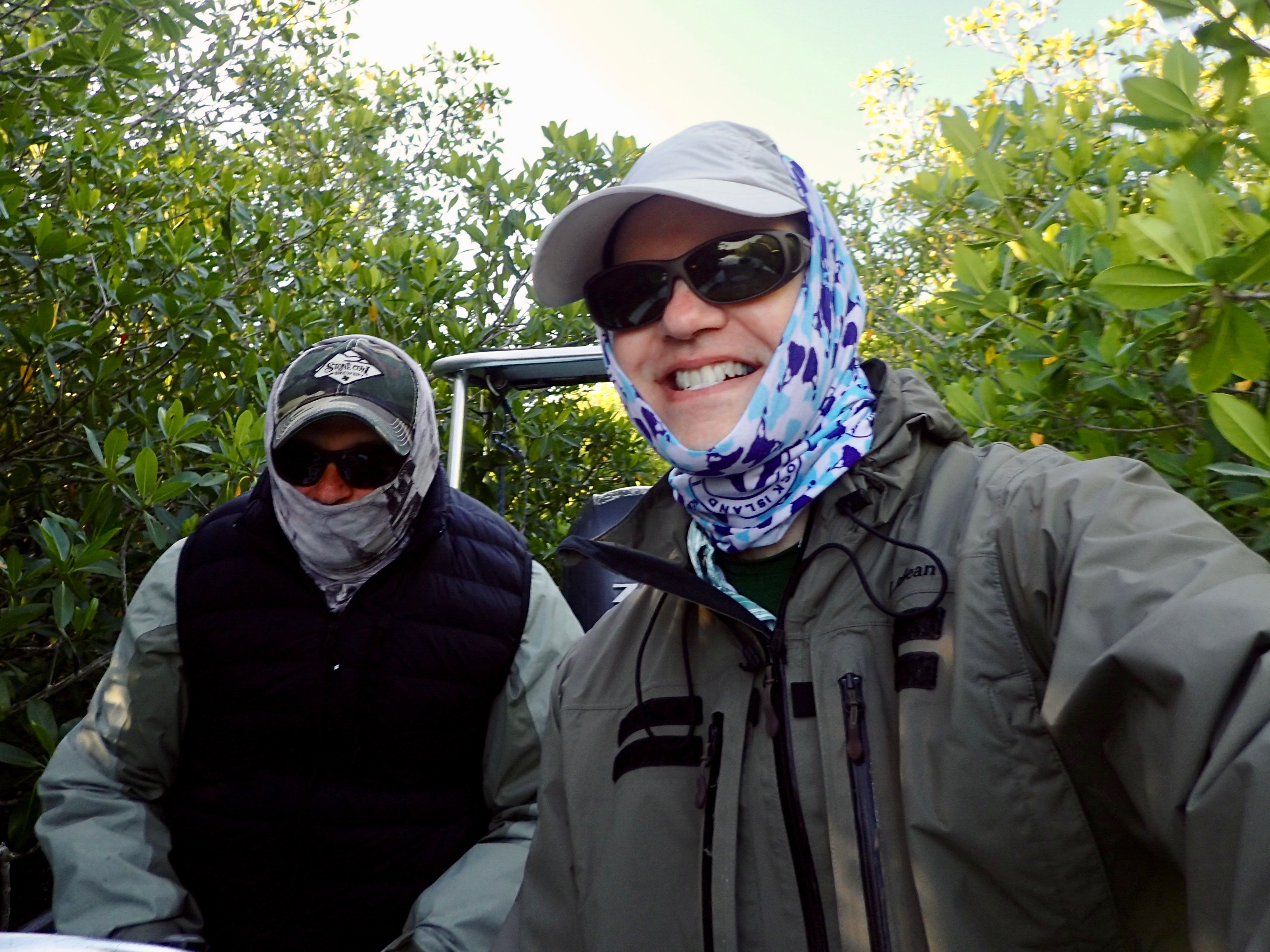
My guide, Capt. Mark Giacobba, and me burrowing our way through a mangrove-choked creek deep within the Everglades. Mark is an exceptional guide, and I’ll be writing more about him in detail. If it looks like we’re dressed for steelhead, not quite — but we did have chilly starts to our days.

Everglades Report: Absolutely, positively, definitely not in Kansas anymore

I fished in Everglades National Park on Wednesday and it was — well, like nothing I’ve experienced before with a fly rod. I’m not sure what I expected, but like any fishing trip, the day had its highs and lows. I can tell you this: it was never boring.

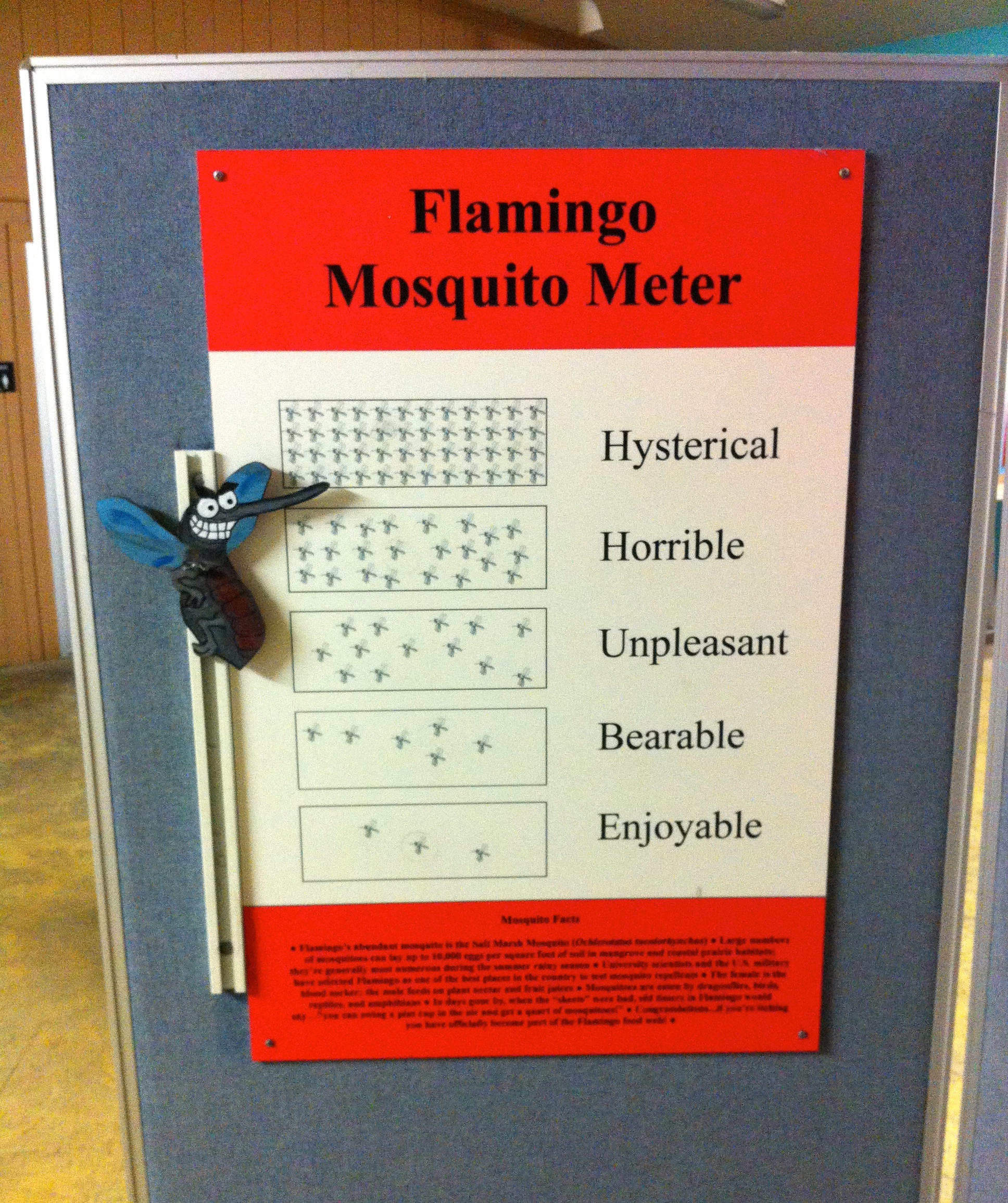
Let’s start with the mosquitos. There were more per cubic foot of space than I’ve ever seen. Ravenous little suckers, too. The most remarkable thing about them was how quickly they descended upon you the moment you opened the car door — or stopped the boat in a cove. Unlike some of the noseeums I’ve encountered, these could be kept at bay with standard-issue bug spray. Still…wow.

SkeeterMeter

~

This outing was part of Number One Son Bill’s UMiami Law School graduation present. He was spinning, I was fly rodding. We murdered them at our first stop (technically accessory-to-murdered them). To wit: one of the ladyfish Bill caught got whacked by a shark after he released it. The fish floated away about 30 feet when the shark came back and rolled over on it. It gave me a new appreciation for watching trout take spinners. Bill had an Everglades hat trick of ladyfish, sea trout, and reef snapper within 30 minutes. He outcaught me about three-to-one.

OLYMPUS DIGITAL CAMERA

~

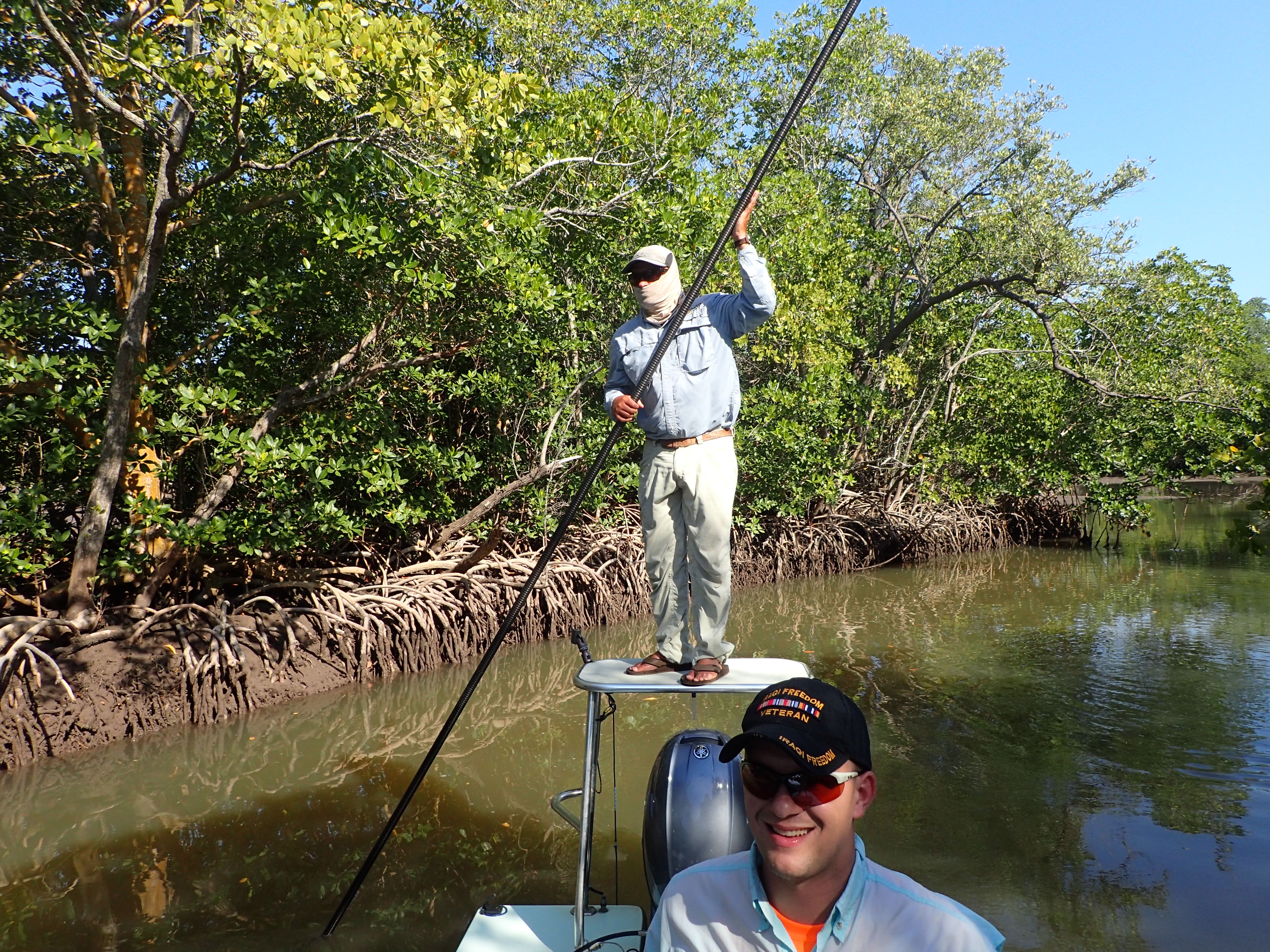
The Everglades is an intimidating place. The wildlife ranges from the innocuous (butterflies) to the annoying (mosquitoes, snook, tarpon — we’ll get to those last two in a bit) to the potentially deadly (sharks, crocs.) I was amazed that they let people canoe in a canal where we spotted three crocs in the space of 50 yards. The heat and sun can get to you, too, especially if your last outing was in neoprene waders. Then, there’s the structure of the place. From the point-of-view of a boat in a watery expanse, it looks like any big lake. But its creeks and diversions and coves are labyrinthine, mysterious, and untamed. Our guide, Capt. Mark Giacobba, did a great job getting us in and out of some very fishy looking water. As you can see, he knows how to dress for his job.

OLYMPUS DIGITAL CAMERA

~

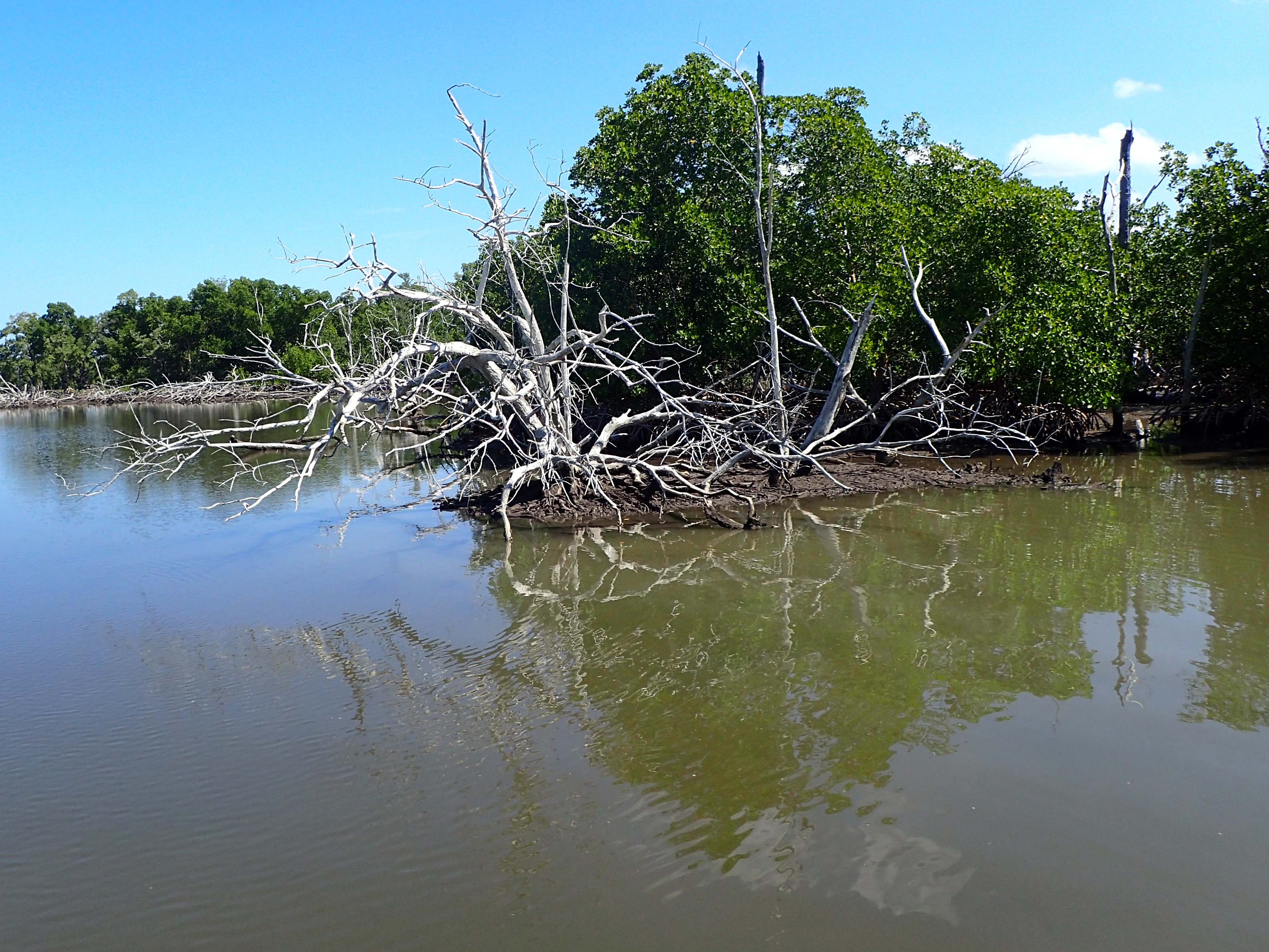
We spent most of the day working the mangrove-layered shorelines, but my favorite spot was the tidal pond — I dubbed it “Dead Mangrove Cove” — we poled into. You can’t see from the photo, but in many places the water is only 1-2 foot deep. The snook were not in thick, but there were enough over the course of 90 minutes to keep us on high alert. Now, if you’ve never sight-fished for snook in shallow water under bright sun, you don’t know from spooky fish. I was wholly unprepared for this. We spooked one by pointing at it — and it was 50 feet away. I spooked several starting my first false cast. Hell, I think we spooked a few by just thinking about them. They say that wild brown trout are wary. My new perspective is that that’s just about laughable.  

OLYMPUS DIGITAL CAMERA

~

It took me a good hour to remember not to step on my line — using a shooting basket in perpetuity will do that to you — while I was casting. The zip ties along the edge of the deck are a brilliant idea when there’s a breeze. So here it is: I blanked on snook. I had one good presentation and follow, but the fish turned away at the last moment. I would have loved a second day to redeem myself, but that will have to wait. The tarpon were even more bashful than the snook. We finally found a diversion where a couple rolled, but by the time we poled over they’d either vanished or been spooked. As the final insult, a school of seven tarpon swam purposefully past the boat as we prepared to leave. They wanted nothing to do with my fly. Bastards.

OLYMPUS DIGITAL CAMERA

~

Objection! Bill outfished his old man! Overruled, and that’s not a bad first snook. Bill just about dropped his cast in the fish’s mouth. Bill confirmed that this certainly made up for those three miserable snowy days in Pulaski a few years ago when he didn’t get a touch. Great job, kid.

OLYMPUS DIGITAL CAMERA