I love living and fishing in Connecticut. But if I had to choose one other part of the country in which to live and fly fish, it wouldn’t be an easy decision. Western PA and NE Ohio (steelhead and smallmouth) would get some consideration. Colorado would be a worthy choice, as would Montana — all that blue ribbon trout water! Then, there’s the Everglades. So vast, so mysterious, so alien, so loaded with fish and fly fishable water that you couldn’t possibly cover it in a lifetime. I really don’t know where I’d choose, but the Everglades might currently be at the top of the leaderboard.
I’ve now fished the Everglades three times, the last in November of 2021. I was ready last year, but too busy with the book. I wanted to go in the March through May window, prime time for tarpon, because I’d never hooked one, and you’ve got to hook one to land one. Color me eager on tarpon. Then, there are snook.
While tarpon are one of my bucket list fish, I’ve caught snook before. I’m a big fan. They’re ambush predators that lurk in the submerged mangrove roots, and their attack speed is breathtaking; they go from zero to meteor-reentering-the-atmosphere-fast when they see a meal. They fight like the dickens, even the smaller ones. Think of a sleeker, faster, more agile striped bass, and you’ve got the general dope on battling a snook.
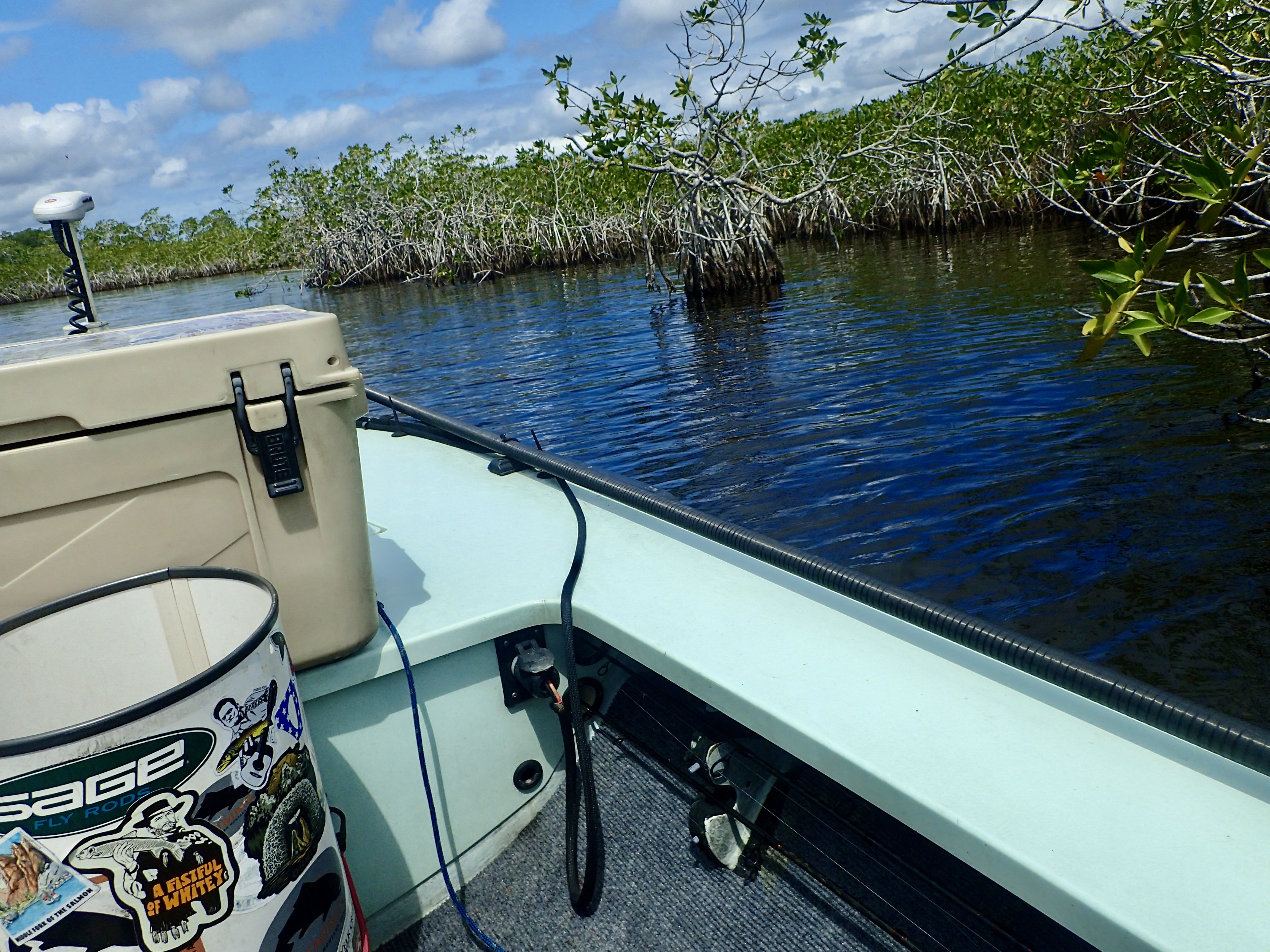
Once again, I was fishing with Capt. Mark Giacobba. Tarpon were first on the agenda, and we spent the better part of an hour getting to the mark. Right on cue, we found rolling fish. (Tarpon will come up to the surface to gulp air, and these “rolls” give away their position.) To make a long story short, I had two follows and one take upon which I completely blew the hookset. A little later, we found some 40+ pound fish in a shallow lagoon, but they were immediately on to us, and skedaddled for points elsewhere, leaving opaque clouds of silt in their wake. With the sun continuing to climb (we’d launched at 6:30am), the target turned to snook. Hell, yeah. Let’s go.
This would be a good time to say that the fishing has been a little off in the Everglades this spring. The nights and mornings (and, consequently, the water) have been cooler than normal. The snook bite was funky; it was either action on the first few casts or nothing. We bounced around from mark to mark, staying when there were fish, bailing when there weren’t. I held off taking any pictures since I was hopeful to lock into a bigger one, but ’twas not to be. You can see one of the smaller fish I landed on Instagram @stevecultonflyfishing.
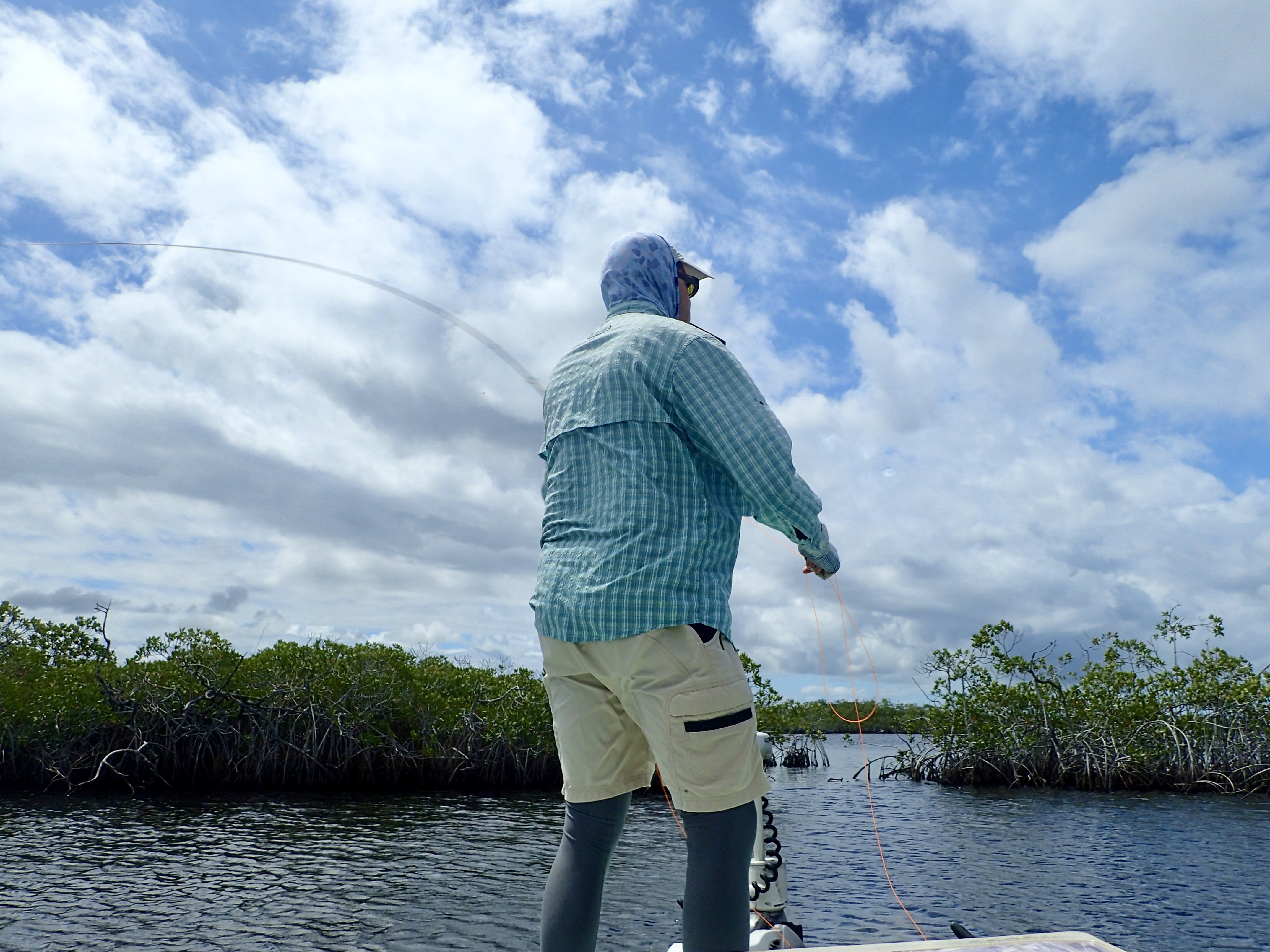
Th final tally was six snook and one sea trout. Not great. Not terrible. Definitely fun. Up next: Day 2. It’s a story of disappointment and redemption (of sorts). You’ll see.

