Hello, all. I haven’t posted in a while, but here I am. Part of it was wanting to leave the contest post up to maximize exposure. I see we’re now a quarter of the way to the magic 1K followers mark — won’t that be exciting? In the meantime, you can still enter the 900 followers contest — but you’ve got to be a follower, and you need to leave a comment on the original post. Thanks to everyone who’s entered — I appreciate your feedback! I may do a Zoom around some of the questions and topics you’re interested in, kind of a currentseams potpourri. Stay tuned.
I’ve also been busy writing a piece for Surfcaster’s Journal where I’ll be the guest columnist for their fly fishing section. It’s about using floating lines and greased line swings and large flatwings to wreak havoc during the spring herring run. SJ is an online ‘zine, so subscribing or buying that issue will be the only way to read it.
And can you believe it? I still haven’t gone fishing this year. Ten lashes unless I find a remedy. In the meantime, I hope you’re getting out, having fun, or preferably both.
Pondering the question of the day, very likely “When the heck am I going to get my sorry butt out on a river again?”
Happy Wednesday, fellow Currentseamsers. It’s almost Valentine’s Day, so let’s share the love as we celebrate currentseams.com reaching the 900 followers mark! Suffice to say I couldn’t have done it without you, so thank you for being part of the Fine Nine Hundred. As usual, we’re doing a flies-tied-by-Steve giveaway. Here are the rules:
1) No purchase necessary.
2) You must be a follower of currentseams to enter. (If you’re not one already, you become a follower by clicking on the Sign Me Up button below the “Follow Blog via Email” header, at the top right if you’re on a laptop, and at the bottom of the scroll on a mobile device.
3) To enter, leave a comment on this thread that responds to at least one of these questions: What would you like me to write about? What questions about fly fishing or tying can I answer? What flies that I tie would you like to see video of? One entry per person. Deadline for entering is 11:59pm February 28, 2022. Three winners will be chosen at random. The winners will be notified in the comments section of this thread or by email, and will be responsible for sending me their address so I can ship the flies out. Sorry, I can only ship to U.S. addresses.
4) All decisions by me are final.
Thanks again for reading and following currentseams.
I get lots of questions about tying wet flies, and Jim B. recently sent me this one: Do you use hen saddle or hen cape feathers for your wet fly ties? My answer: hen cape feathers, primarily Whiting or Hebert Miner.
Then it occurred to me that some of you may be wondering, what’s the difference? For starters, capes and saddles come from different areas of the bird. The saddle is located on the lower back just in front of the tail. You’ll find the cape on the back of the neck. Both produce useful soft hackles with varied degrees of webbing. For me, the difference maker in favor of capes is their shape, and most importantly, the range of sizes of the feathers. For the sake of simplicity, I’m going to limit this discussion to the Whiting and Hebert Miner (not “Herbert”, as I often see them mistakenly called) genetic lines of wet fly hackle.
Whiting (left) and Hebert Miner genetic hen capes. The Hebert Miner cape is specifically marketed as “wet fly hackle,” and as you can see it’s a little longer than the standard Whiting cape. Like the Miner, the Whiting genetic packaging says “hen cape” at the bottom; that graphic is obscured by the feathers. Both capes come stapled to the thin cardboard sheet; if you remove the staple, do it carefully. Otherwise you’ll rip the skin patch if you try to pull the cape off the sheet. The Whiting cape is white dyed dark dun; this is the color I use for the Dark Hendrickson winged wet. The HM cape is a natural medium brown dun.
Capes give you the widest choice in feather size and colors. The feathers tend to be longer and narrower than saddles. But where capes really shine is that they give you feathers to tie bigger soft hackles (8 and larger) as well as the smaller ones you’d need for patterns like tiny BWOs and midges. (For one of my favorite tiny soft hackles, Smut Number 1, I use a Whiting cape for hackle; likewise with Pat Torrey’s Tiny BWO Soft Hackle.) That’s a huge range of sizes, and those tyers who value both extremes will be in hackle heaven. Even if you’re never going to tie size 6 steelhead or bass soft hackles, you can use the larger feathers for tailing material.
A tale of two feathers. Both of these hackles came from the same cape. Both have their uses. You can see that I’ve already begun taking some of the fibers from the larger feather for tailing material. Once removed from the patch, I keep these feathers in a ziplock baggie and store it in the back of the original packaging for easy access. Note that the larger feather has a generous amount of webbing; typically, the webbing becomes less prevalent as you work your way down the patch toward the smaller feathers. This is why I always recommend buying capes in person; you’ll want to rummage through the bags and find the capes with the webbiest feathers throughout. The smaller feather would make a fine hackle for a midge or a tiny BWO soft hackle.
I’m not going to get into the multitude of other hen soft hackle options that are available to you, like India Hen, Bantam Hen, Coq de Leon, and American Hen. I own several of these types of feather patches, both saddle and cape, and while they all have their uses, the vast majority of my wet fly tying with hen involves Whiting or Hebert Miner capes. It should also be mentioned that I primarily use genetic hen hackle for winged and wingless wets. (Most of the North Country Spiders I like to tie use game bird or starling hackle.)
It would be nice if money were no object, but the current going rate for these hen capes is about $30. Still, that represents a tremendous value since you’re getting hundreds of usable feathers. (I have some capes that are almost 20 years old and still have many flies left in them.) If I had to start with only three colors, I would choose, from left to right, light dun, brown, and light ginger. You can expand your collection as you get more into the wonderful world of soft-hackled flies.
If you’ve read James Leisenring’s book The Art of Tying The Wet Fly, you know that he was quite particular about hackle. (Cockerel, anyone? In case you didn’t know, cockerel is a young-of-year rooster.) He even suggests making friends with poultry farmers so you can pluck their birds, preferably in February or March. A fine pro tip, but certainly not as convenient as buying a patch of good genetic hackle. Fortunately for us, modern wet fly hackle is pretty darn good in terms of color options, feather size range, and availability.
One of Leisenring’s favorite wingless wets, the Brown or Red Hackle, tied with a furnace hen hackle. Interestingly, “furnace” isn’t what the package is labelled — it’s simply called “brown” — but this particular cape was a variant with many feathers that were close the classic furnace pattern, which Leisenring describes as a dark list near the stem and on the tips of the fibers, with a lighter color in between. Grab one if you see it, or I will!
With the Edison Fly Fishing Show in the books, I thought it deserved a detailed re-cap. The bad news was that not only did the show have to contend with the still-looming specter of Covid, it lock had a double whammy of an incoming snowstorm Friday night into all day Saturday. The good news is that The Fly Fishing Show continues to be a tremendous experience regardless of what’s going on in the outside world. Where else can you meet and speak to and learn from some of the best tyers and anglers on the planet?
Being a risk-averse kind of guy, I wore my N95 mask both days, even when I was presenting. (I’d say the majority of people attending were masked.) The exhibitor turnout was smaller than usual. (Since I’m not a gear junkie, this didn’t really affect my experience. Give me the Keough booth and Badger Creek, both present this year, and I’m happy.) After a year’s hiatus, it was great to see old friends, and have the opportunity to make new ones. The Friday crowd was lighter than usual due to the impending storm. Saturday’s crowd was small, but surprisingly larger than I’d expected, what with much of the northeast locked down in a blizzard. Sunday was predictably busy, by far the best crowd of the weekend. Looking back, I wish I’d taken more photos. But here are a few to tide you over.
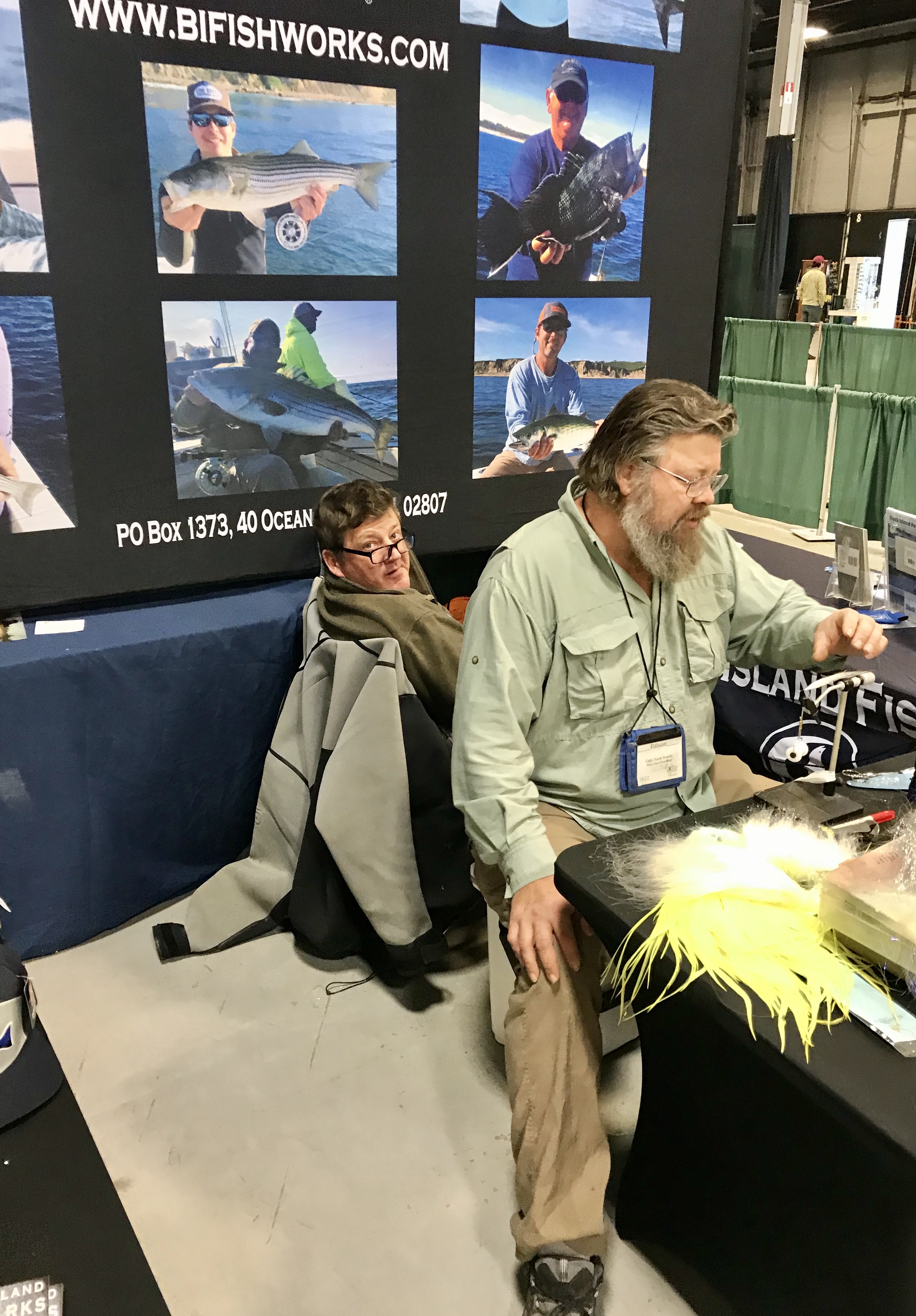
Not a bad lineup! This was Saturday’s schedule in just one of the seminar rooms. Seriously, this has to be the best bargain in all of fly fishing. For the price of admission you get to see and talk to George Daniel, Pat Dorsey, Andy Mill, Ed Engle, Tim Flagler, Joe Cordeiro, and a whole bunch of other great anglers I didn’t mention. I debuted my seminar Modern Wet Fly Strategies on Friday, drew a decent crowd, and we followed it up with some engaging Q&A. Shades of the Sunday ice storm in Marlborough three years ago: I feared that no one would show up for my Finding Small Stream Nirvana gig on Saturday (I had the first slot of the day). Not to worry! Thanks so much to everyone who attended.The flatwing dudes, Joe and Greg Cordeiro, had a great stash of saddles and longer peacock herl. Since it was a slow day, they helped me rummage through the Keough bins in my never-ending search for a decent red grizzly saddle, which, I’m delighted to say, Joe found for me. I wish I had a photo of my first ever tying demo at The Fly Fishing Show. Being a Featured Fly Tier was a great experience. You’re mic’d up, you’re on a large screen TV, and the audience sits in front of you. You basically have an hour, and I managed to cover a spider/soft hackle, wingless wet, and winged wet. Since this all happened on Saturday at the height of the storm, I was again concerned that no one would show. Once again, not to worry! I had one of the better crowds, and I believe we all had a good time. Another pleasant surprise was my Saturday class. Since it was a smaller group (thanks again everyone for showing up!) we were able to tailor it to meet everyone’s needs, which was very gratifying. I can’t remember a faster 150 minutes.The guide booths also represent a tremendous opportunity to learn about a specific fishery. I’m already what you’d call Block Island-savvy, but if you’re not, my buddies Captain Hank (foreground) and Captain Willi from Block Island Fishworks are a fantastic resource for all things Block. We spent a good chunk of time on Friday talking about last year’s fishing, and salivating at the prospects for this year. They do spin fishing, too. A family charter is a most excellent way to spend a day.
And that about wraps it up. Don’t forget that the Marlborough show was postponed to April 22-23-24. I know it’s right when we’d all like to be out fishing, but I encourage everyone to support the show, and take advantage of its opportunities.
In all the excitement of doing the Edison Fly Fishing Show, I plum forgot to say thank you to Philadelphia’s Main Line Fly-Tyers. I was supposed to present to them in person last Thursday night, but we had a potential Covid issue, and it was decided to play it safe with a Zoom. Disappointed but unflustered, we all went forth through the ether and had a most excellent time. I gave them my original “The Little Things“ talk. Once again, I was impressed with the number of engaging questions and their friendly, matey nature. As things tuned out, they had a table at the show — I was at the show — and I got to put faces to some of the names. Thanks again, folks, and here’s to being in the same room for the next presentation!
I’ll have a summary of the Edison Show up soon.
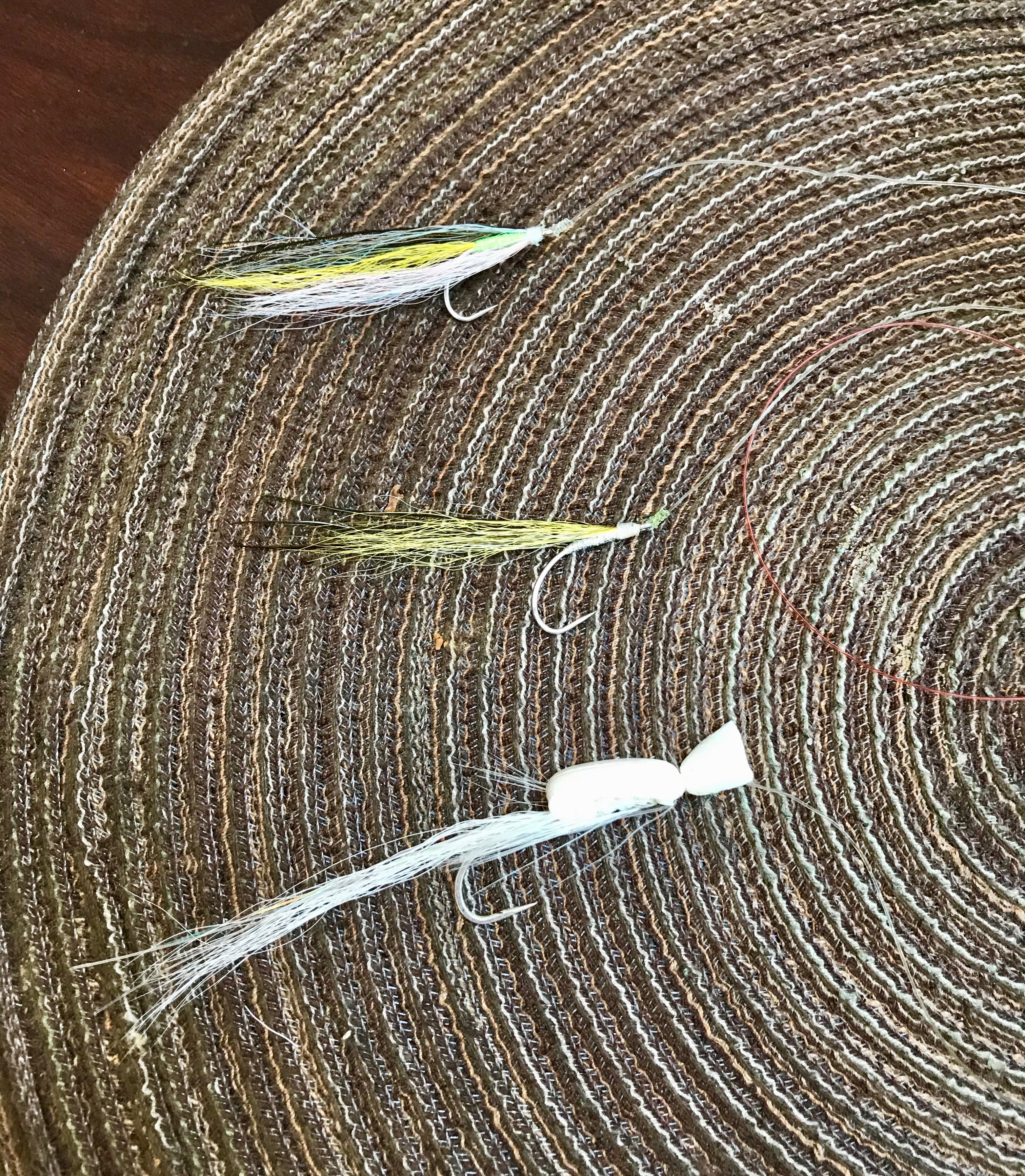
Here’s a little thing, free of charge: whether you’re fishing in fresh or salt water, droppers are always the fastest way to find out what the fish want. You can offer them different shapes, sizes, colors, species, and life stages. This is a small baitfish suspension dropper rig. The Gurgler, on point (farthest away from me) acts as a suspension point with the floating line. So on a dead drift, the small bucktail flies are just below the surface film. You fish the Gurgler like a dry fly, managing the drift for a more natural presentation in current. For more on droppers in the salt, read my article How To Tie And Fish Dropper Rigs For Stripers.
Last night I presented Wet Flies 2.0 to the Ashokan-Pepacton Watershed Chapter of Trout Unlimited. I’m sure we would have all liked to have done it in person, but Zoom being the next best thing, we had at it, and a pleasant time was had by all. (Really good questions, group!) Thanks so much for being so welcoming, and let’s do it again, hopefully in person. Tonight, it’s The Little Things with Philadelphia’s Main Line Fly-Tyers, also via Zoom.
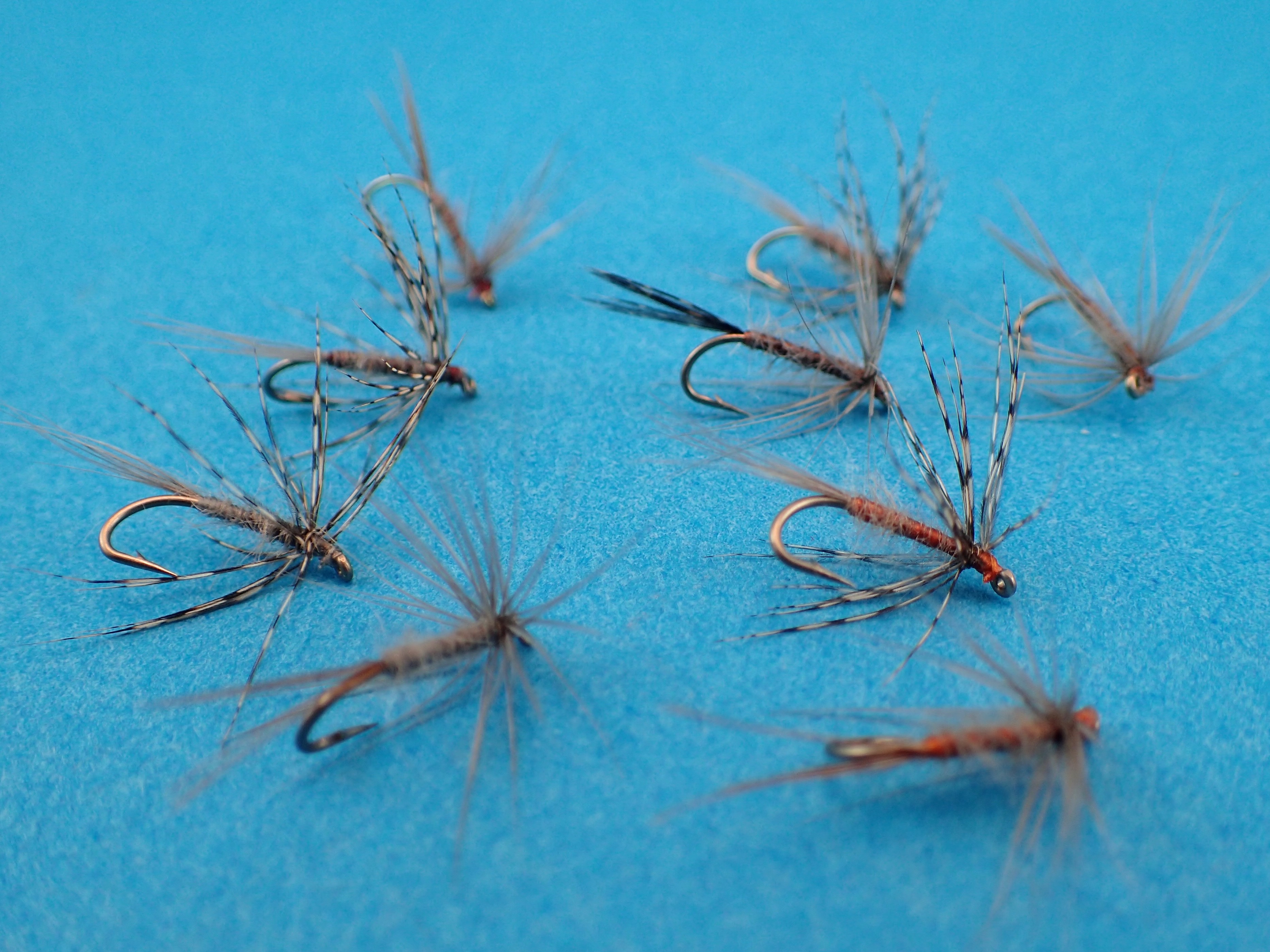
Tip of the week: When you’re matching the hatch with wet flies, pay attention to size and color. These are a bunch of Hendrickson soft hackles (with several variants in the mix). The trout liked all of them, and why not? They generally match the naturals in size and color.
I was recently added as a “Featured Fly Tier” at the Fly Fishing Show in Edison, NJ, Saturday, January 29 at 12:30pm. The focus will be wet flies, specifically Spiders, Winged & Wingless Wets. It’s going to be a busy Saturday with a seminar (Finding Small Stream Nirvana), this demo, and a wet fly tying class, but busy is good! Please take the time to come say hello.
A classic North Country spider, the Grey Partridge (Grey Watchet). I’ve always admired the look of this fly. Trout like it, too. Wet flies are generally very simple ties, but there are nuances to the art form. Come to my tying demo in Edison and see for yourself.
I just finished rehearsing my new seminar, Modern Wet Fly Strategies. Folks, I’m really excited about this one! It’s almost entirely new material, with lots of new video. It’s a bit more fast-paced than previous presentations, and it represents my deepest dive yet into the ancient and traditional art of wet fly fishing.
“Modern Wet Fly Strategies” makes its debut next week at the Edison Fly Fishing Show, Friday, January 28, 4:30pm in the Catch Room. You’re coming, right?
Want more details? Here you go: Modern Wet Fly Strategies builds on the basics of Wet Flies 101 and expands on the tactics of Wet Flies 2.0. With new video and content, this is a more detailed program about wet flies and wet fly fishing. Topics include matching hatches, situational use of wet fly types, presentation options, gear, and the tactical use of wet flies under varying conditions and situations. A must for anyone who wants to improve his or her subsurface game!
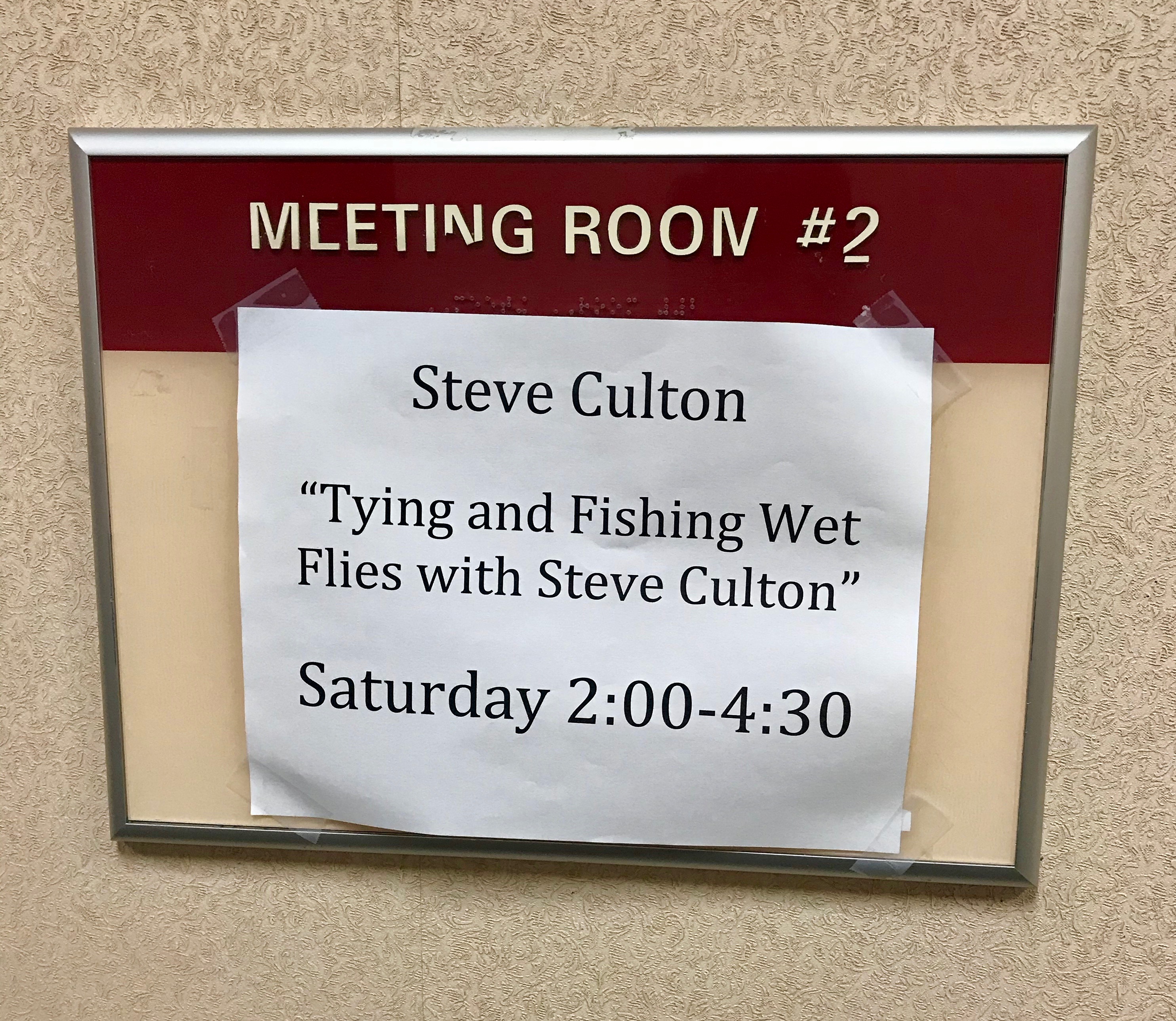
Here’s a little sneak peak, part of a promo video I made for the Fly Fishing Show. Don’t forget, I’m also teaching a class on Saturday, January 29, at 2:00pm: Tying and Fishing Wet Flies with Steve Culton: Learn to tie and fish classic North Country spiders and other wet flies that trout can’t resist. The course also covers basics like leader construction, fly selection, where to fish wet flies, and how to fish them. Intermediate. Click HERE for details and to register.
Greetings, fellow fly addicts. I don’t know how many of you are football fans, but I binge-watched the entire slate of wild card weekend games…and there’s still one more game to go. But, I digress. To the subjects at hand.
For the last two winters, I’ve held Tuesday Night Zooms — little fireside fly fishing chats over the internet. If you’ve participated, you know these were fun, informal presentations. It was a fantastic way for us to safely connect in these challenging pandemic times, and I’m grateful for the number of people who chose to spend an hour with me. I’ve made the decision to suspend those Zooms at least until after the Super Bowl. Part of it is trying to build up excitement for the Edison Fly Fishing Show (you’re coming, right?). Part of it is that I’m socked in editing film and building two new presentations, Modern Wet Fly Strategies and Finding Small Stream Nirvana. And part of it is other writing commitments (teaser: it involves flatwings and herring and striped bass). I may try to do a few later this winter. We’ll see how it goes. Don’t forget the Marlborough Show in April!
It’s a midgey time of year, whether small streams or the big water of Church Pool. Smut No. 1 is your friend, fished wet or dry or as the top dropper on your nymph rig.
I see currentseams has reached the 900 followers mark. Hooray! We will be having our usual celebration of a random drawing fly giveaway. As per policy, I’ll wait a bit to make sure that number doesn’t fall below the bar. Stay tuned for the announcement.
Lastly, dagnabbit, I have yet to fish in the New Year. Damn all this work. Methinks I need to throw responsibility to the four winds and play hooky. Hmmmmm….
I’m hoping you’ll join me for the new world premier (ok, so no searchlights, tuxes, gowns, or red carpet, but still it’s technically accurate) of Director Matthew Vinick’s film, “Summer on the Farmington.” Same place (Brewery Legitimus in New Hartford), same time (7pm), new date (Thursday, February 24)! You can only get tickets in advance online through the FRAA. Hopefully this current spike will be over and we can look forward to enjoying a tasty craft brew.





 currentseams.com