Housatonic Mini-Report 6/17/21, or: I went smallmouth fishing and ended up catching a bazillion trout

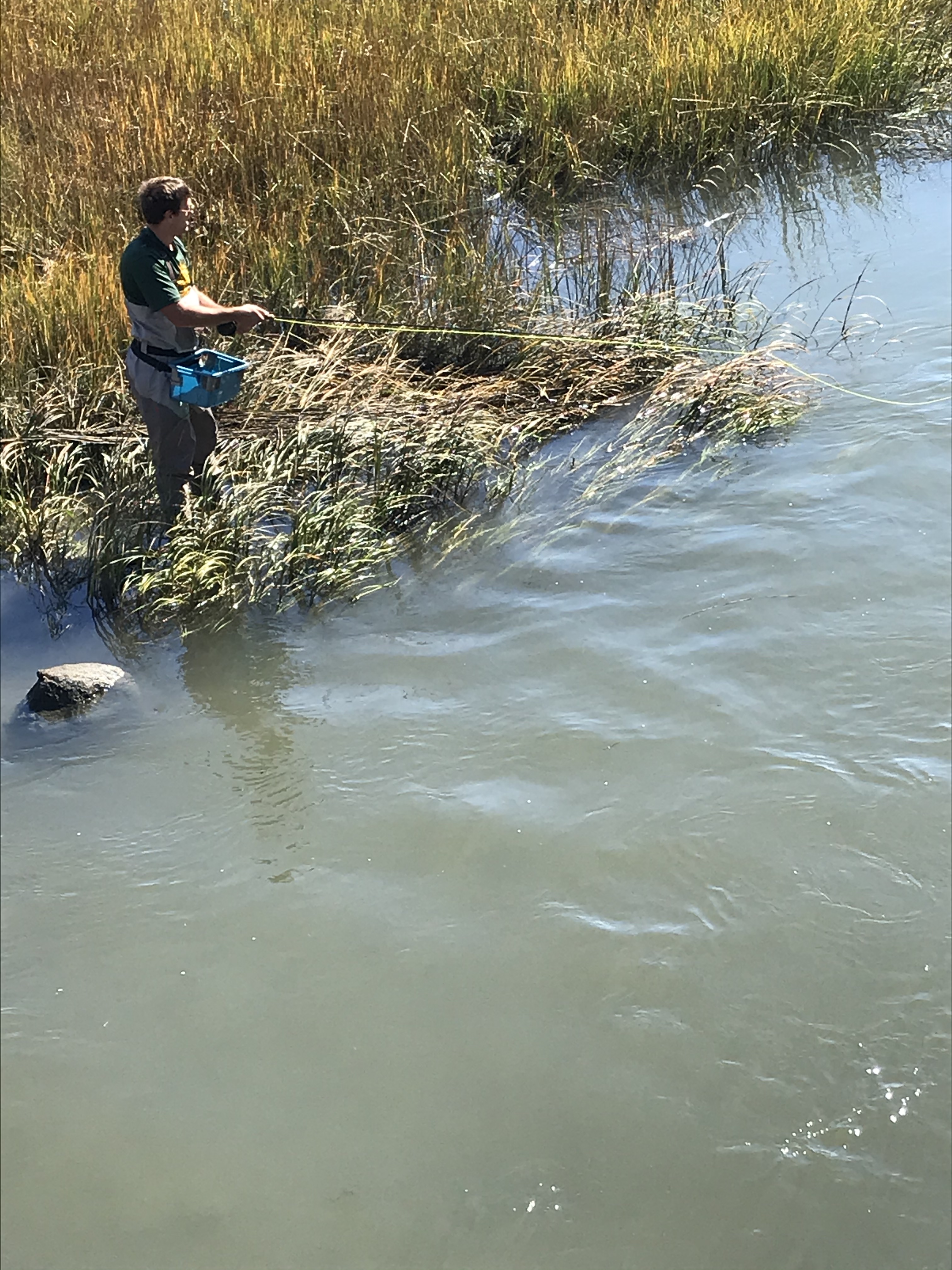
Forgive the brevity, but here’s what happened. I fished from 5:30pm-9:15pm. I started way far below the TMA in search of smallmouth. I managed one on a Gurgler, and a rather large fallfish on a wet fly. The river was lightly stained and running at a normal 575cfs. Water temp was upper 60s. After 90 minutes, I was unimpressed with this mark, so I headed up to the TMA. A massive caddis hatch had occurred, and size 16 tan caddis blanketed the rocks along the shore and swirled everywhere. They were soon joined by a strong showing of sulphurs and Cahills. I managed a stout smallie on a streamer, but the sight of trout eagerly snapping at emergers had me switching to wet fly in a hurry. First cast, bang, and it was all fantastic action until dark. I made the switch to dries around 8pm, and for a half hour it was a trout on every cast. They were greedily feeding just like they do during a Hendrickson emergence, mouths open, launching at the fly. It slowed a bit until I called it at dark, 9:15, but I was still catching on Light Cahill Catskills dries and Usuals. A few rainbows in the mix but mostly browns. With elevated water temps, I used 4x tippet so I could get the fish in fast. All of them looked very healthy. Hopefully they will find the thermal refuges before the water gets too warm.

One of many customers, all of which have been eating well. Spectacular dry fly action!

The shortest distance between two anglers is a hello

This has been happening more and more: I’m fishing near people, and later in the parking lot they come up to me and introduce themselves. That’s great, because I love meeting currentseams readers. But invariably they tell me that they didn’t say hello on the water because they didn’t want to “bother” me (the air quotes are mine). Folks, you’re not bothering me. Please introduce yourself.

Sure, if I’m guiding a client, I probably can’t have an extended conversation with you; that would be unfair to my client, who deserves my full attention. But it’s no secret that places like the Farmington River are more crowded than ever. Space in prime fishing marks is often scarce. So instead of me looking at you as a potential hostile invader — and vice versa — wouldn’t it be better if we could share the water without angst? Come say hello. If you’re looking for a place to fish, ask if there’s room. (Maybe if I get there after you, I’ll ask you!) If there is, we’ll make it work. If there isn’t, there’s always next time. And at the very least we now have faces and names connected. That’s a win for everyone.

Speaking of sharing water, I want to thank everyone I’ve encountered this season who has been so darned friendly and accommodating about doing so. I typically expect the worst from people, so it is a delight to be proven wrong about human nature. Kindness from strangers is a blessing. May the river gods bestow the tightest of lines upon all of you!

These gentlemen came all the way from Spain (really) to say hello.

OLYMPUS DIGITAL CAMERA

Farmington River Report 6/13/21: Wet fly doldrums, then all dry fly hell breaks loose

I fished a different section of the lower river yesterday, from late afternoon into dark. The water was clear, cool, running at 460cfs — just about right. As is my my custom, I arrived rigged for wet fly, anticipating a typical very late spring pre-hatch wet fly bonanza. ‘Twas not to be. The early evening hatch never materialized. Well, it did if you count three sulphurs and four spotty rises in 90 minutes. But I was sorely disappointed with the lack of activity. I managed a measly four bumps, and only one of them resulted in a hookup. (Then again, the prime wet fly water in the run was occupied.)

At 7:30 I re-rigged for dry fly. It took a while for things to happen, but when they did, it was fast and furious. Observed: sulphurs size 16, tiny BWOs, Isonychia size 12, dark gray stoneflies size 12, and mats of midges. I focused on the yellow stuff, and threw Magic Flies, Usuals, and Catskills Light Cahills, all of which were eaten. Noteworthy: the world’s longest refusal (drifting over a gravel bank into a drop-off, and this guy rose and shadowed the fly for a good fifteen feet, nearly taking it several times before saying no); an epic 50-foot drift where I had three(!) different trout commit to the fly with a splashy take, none of which resulted in a hookset; and a comical take where a brown blasted the fly like it was going to hurt him, which, as it turns out, it did — in his haste to dine he fouled himself in his pectoral fin.

I was fishing in some fairly technical water, which I often prefer with dry fly because of its challenges. (We’re talking longer leaders, precision mends, and tricky drift management.) I didn’t connect as many times as I would have liked to, but I did hook fish from as far away as 45 feet and a close as a rod’s length. The frenzied feeding really didn’t begin until 8:30, and when I dragged myself away at 9:15, I’d just hooked a trout on a drift I couldn’t see.

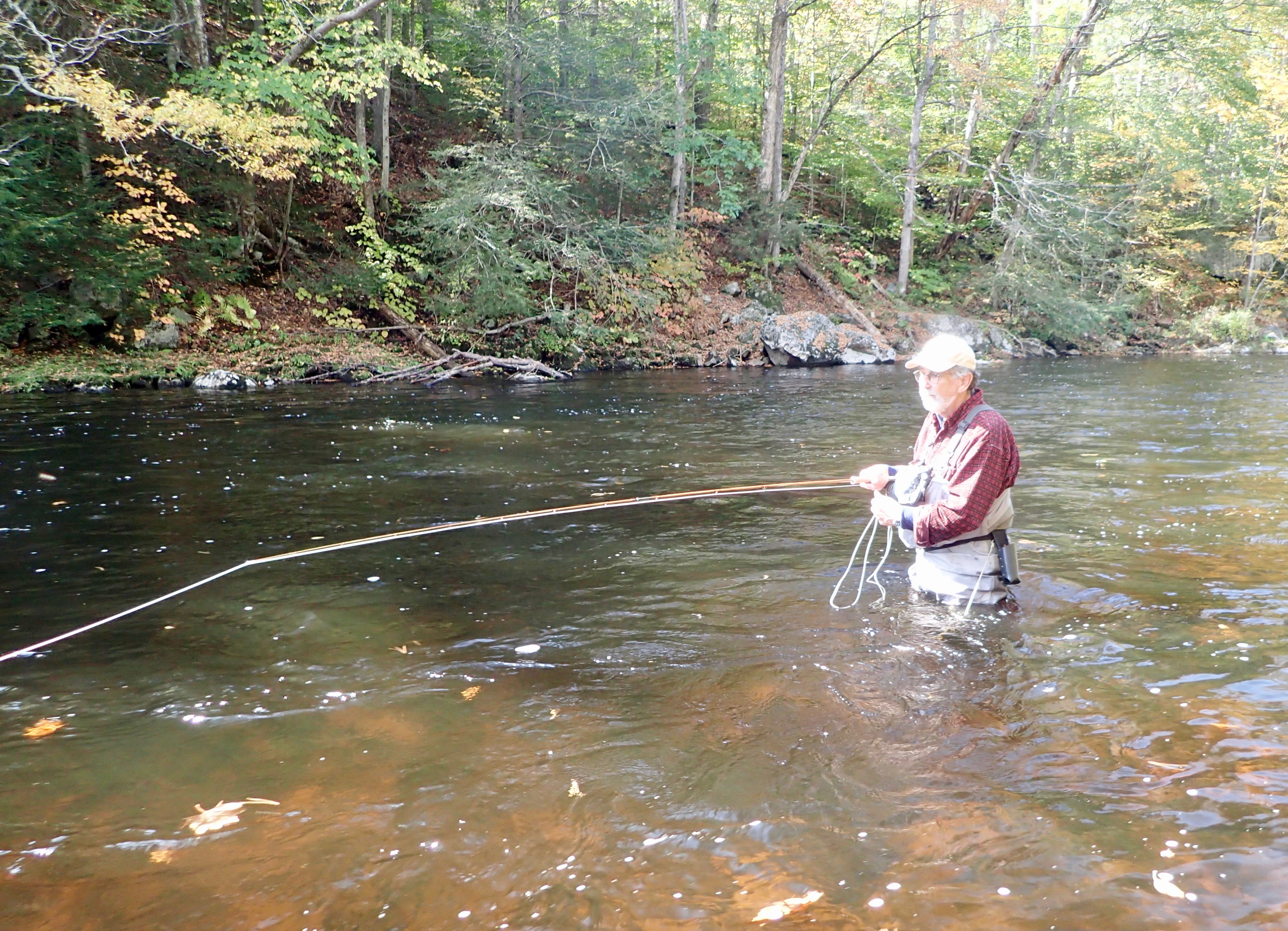
A strange but pleasant evening. The first outing with the cane pole is always a treat.

This one’s worth repeating. There comes a stage late in the hatch where trout are feeding on both duns and spinners. Then, it transitions solely to spinners. You don’t need to stress about which stage they’re eating if you’re using a Catskills style dry like this Light Cahill. Trout will eagerly take it even when they’re on spinners. Every year, some of my biggest dry fly trout come on this pattern when the only feeding tell is the gentle, subtle spinner rise ring. Pro tip: you can upsize the fly so you can see it in the gloaming.

Farmington River Mini-Report 6/7/21: I think I’m done with that spot (for now)

I can be a massive creature of habit. But sometimes I like to return to a mark several times within a short period of time simply because I’m curious how things change, evolve, or otherwise go chaotic. I had a little over two hours Monday night, so I revisited an old favorite place on the Lower River. This is where I slayed them two weeks ago, and had a slow night last week. Monday was a repeat of last week: little-to-no hatch activity and even fewer fish rising. I got into a half dozen trout, including some lovely wild browns, but I had to work my butt off for them. I was most disappointed in the lack of a hatch. You’d think with a warm, sunny day, cool water, and not too much of it, you’d get a gangbusters sulphur emergence. Nope. So off to parts elsewhere, when I can, that is. Busy rest of the week. I would think that the vast majority of the Farmington above Collinsville is in its very late spring wet fly wheelhouse. Catch ’em up!

No, I have not forgotten about you. Your time is coming.

Squirrel and Ginger in the Current Issue of American Fly Fishing

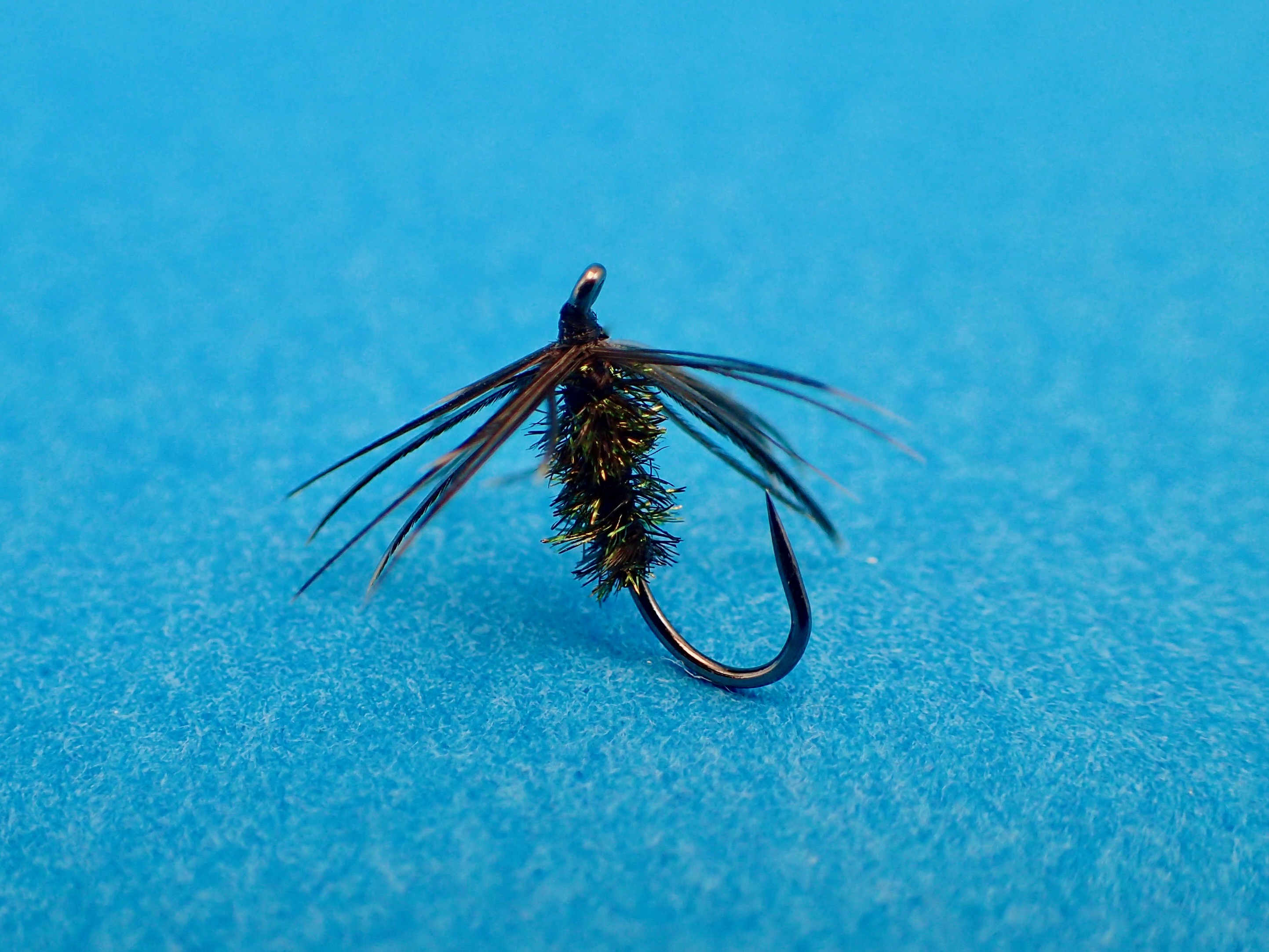
As many of you are already aware, my favorite caddis soft hackle, the Squirrel and Ginger, is featured in the “In The Vise” column of American Fly Fishing (May/June 2021). You get my narrative, materials list, and step-by-step tying instructions. Please support publications like American Fly Fishing, one of the few remaining fly fishing magazines.

Now appearing on a newsstand near you. You can also order a copy from the American Fly Fishing website.

Farmington River Report 5/27/21: Mother Nature hits the reset button

On the heels of Tuesday night’s red-hot wet fly action, I returned to the scene of the crime. We’d had a little rain Wednesday night, so the flow was up 100cfs to 550cfs, which is still a very average flow for the lower Farmington this time of year. I fished from 6:30pm-8:30pm. Despite a warm, sunny day, neither the caddis nor the Light Cahills came off in any numbers. Rather than being surrounded by trout eagerly taking emergers, I experienced a boil here, a boil there, but nothing steady and rhythmic. Whereas all I had to do on Tuesday night was drift my team over a fishy area or target an active riser, on Thursday I had to work hard just to reach a half dozen trout. Not that I mind that. It’s just fascinating to me how unknown factors can have such a dramatic impact on the day-to-day fishing. I also went for my first swim of the season. It’s not an awful time to experience the sensation of water spilling down your waders and soaking into your drawers, but it’s still mighty unpleasant. As I write this today, the lower Farmington has topped 1600 and is no doubt the color of chocolate milk. More rain is on the way. Reset. Pause. Then we’ll start again.

I took a mix of stocked rainbows and wild browns. My first fish came in some pocket water along the bank. Squirrel and Ginger was the winning fly. Parr marks, halos, a never-say-die fighting ethos — man, I love these wild jewels!

Farmington River Report 5/25/21: Spectacular wet fly action

After my Instagram (stevecultonflyfishing) post the other day, I wanted to see for myself. So, following the advice of my rose bushes, I headed for the lower end of the Farmington River to fish the Light Cahill hatch.

The water has come down nicely — in fact, I’d call 445cfs just about right — and it’s still plenty cold. I started off at a favorite mark around 5:30pm, and worked my way down a series of snotty riffles and pockets. The action wasn’t quite what I expected, even though I stuck a half dozen trout. There just wasn’t nearly the hatch activity I’d expected, nor were there many fish feeding near the surface. I’d started out with a Squirrel and Ginger (sz 12) as top dropper, a Starling and Herl (sz 14) in the middle, and a Partridge and Light Cahill (sz 12) on point. After no hookups on the dark middle fly, I made two command decisions: replace the Starling and Herl with a Pale Watery Wingless (sz 12) and move to a new mark.

And those two choices made all the difference. I was in the water by 7pm, and for the next 90 minutes I took trout after trout. It was one of those I-have-no-idea-how-many-fish-I caught nights. What was most interesting to me was the difference a half mile makes. The new spot had more bugs and far more active feeders. The fish were mostly stocked rainbows (and a bonus big brook trout), but I did get a few wild browns in the mix, including a hefty 16″wild thing.

If you’ve taken a wet fly lesson with me, you’ve heard me say that when you hit it right, wet flies will make you look like a fly fishing wizard. I caught every riser I cast to, save for one. I caught them on all three flies. I caught them on the mended swing, the dead drift, the dangle, and the Leisenring Lift. Folks, I hit it right, and you can, too. Wet flies, people. Wet flies.

Lousy picture, nice fish. 16″ of wild Farmington brown taken on a size 12 Magic Fly on a dead drift. He was slashing at emergers at the wrinkled head of a pocket run. It took be a short while to figure out what I’d hooked — it was either one of those fat stocker rainbows or a chunky wild brown. I was glad it was Option B. This guy bulldogged and battled and generally behaved very poorly. I love him for that.

Farmington River Report 5/24/21: finding fish with wet flies

I guided Eric yesterday and we had a mix of sun and clouds and moderate, cold flows (380cfs in the Permanent TMA and 445cfs on the lower River). We fished two marks with mixed success. At the first, there was very little hatch activity and we observed no fish rising. One bump was the best we could do, so we decided to seek our pleasure elsewhere.

And that’s one of the best pieces of advice I can give you if you want, like Eric, to learn how to fish wet flies: if one spot isn’t producing, find one that is. And, once you get there, work the water. Cover as much of it as you can. Determine where you think the trout will be holding and feeding. We fished a three fly team of a Squirrel and Ginger on point, a dark soft-hackle of Eric’s creation in the middle, and a BHSHPT on point. All of our action came on the point fly. Eric did a great job of navigating some not-that-easy-to-wade water (sometimes it pays to get into those more difficult areas). While the second mark was not as productive as I’d hoped — the caddis hatch was disappointing, and there were no regular, active feeders — Eric managed to stick four nice trout.

The answer to the question, “Why is this man smiling?” can be seen in the foreground. Great job, Eric! You’re on your way.

Striper Report: All you can eat (grass shrimp)!

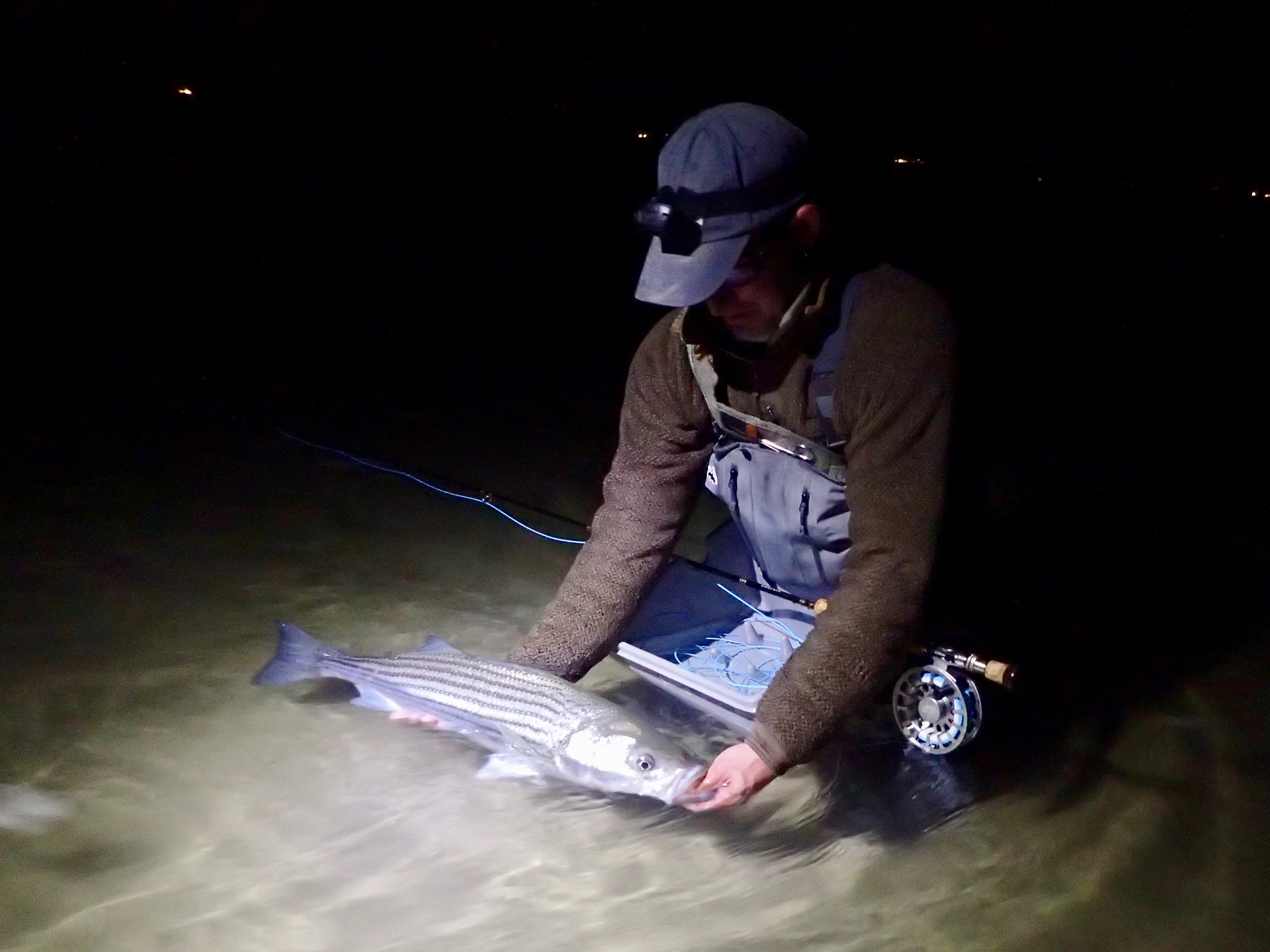
Last week, while you were asleep — certainly some of you were, as the tide widows crept into the wee hours — I was banging around several marshes and estuaries looking for stripers feeding on grass shrimp. I found substantial numberqs of grass shrimp in every mark I visited, and varying numbers of bass. Grass shrimp are present year round, but they spawn when the water warms, and it’s getting to be that time of year. You can find grass shrimp swimming around if you shine your light in the shallows, but they mostly prefer to skulk along the bottom. They’re translucent creatures, so they’re not as easy to see as, say, a green crab. Their eyes reflect your headlamp beam, so that’s an easy way to spot them.

I see your beady little eyes. These guys are in less than six inches of water.

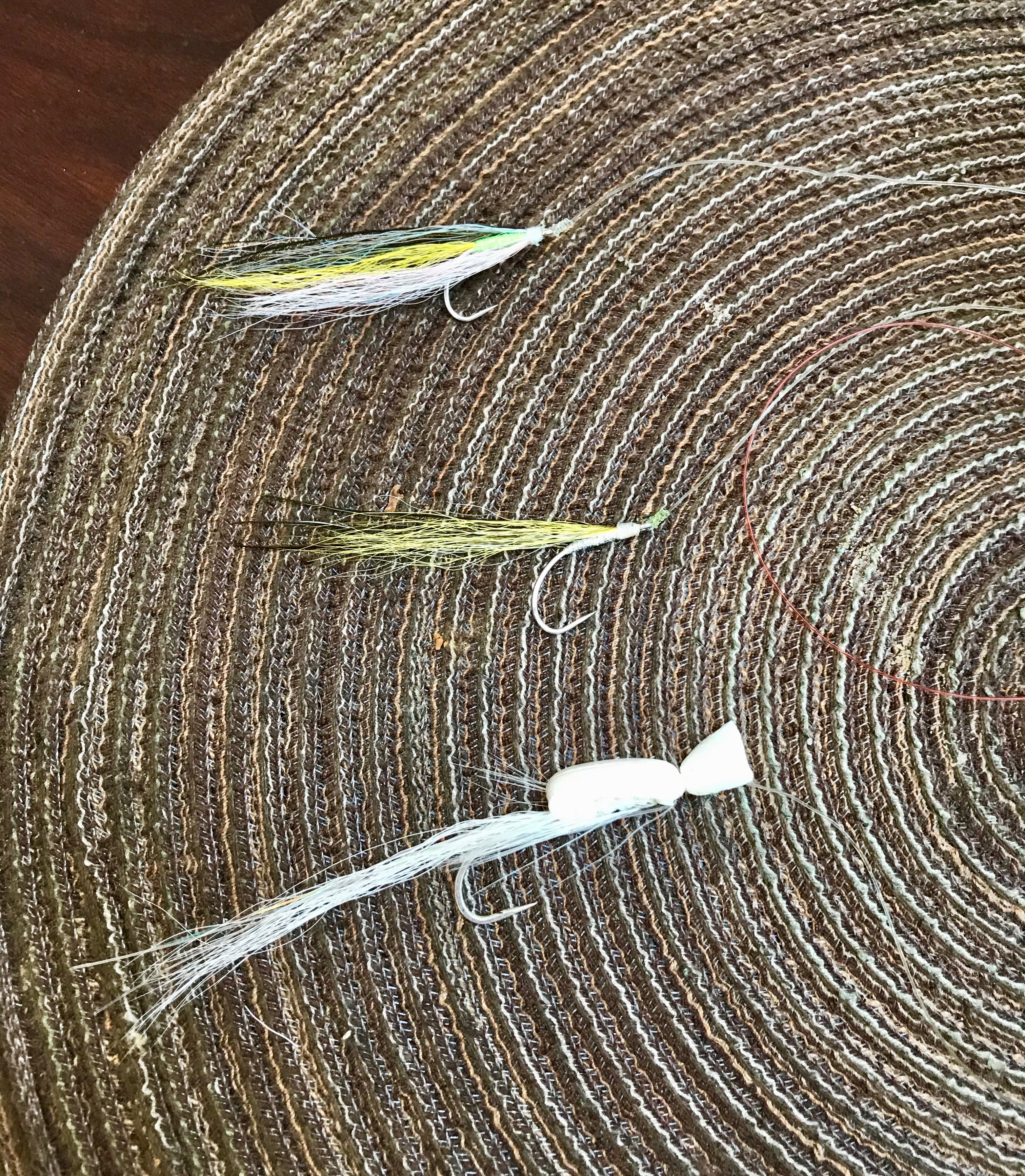
I almost always fish the grass shrimp swarm with a team of three. The patterns vary, and sometimes I’ll throw a clam worm like the Orange Ruthless into the mix, but last week I fished a deer-hair head on top dropper, a black General Practitioner on middle dropper, and Micro Gurgling Shrimp on point. I took fish on all three flies, although I was intrigued that I only caught bass on the black GP on the one night when I had bright moonlight. (The lessons are never-ending.) The fish weren’t very large — 20″ was the best I could manage — but I could tell from some of the feeding pops that there were bigger bass around.

My most recent three-fly grass shrimp team. L-R: Black GP, Caddis Shrimp, Micro Gurgling Shrimp. This gives you a good idea of the size of the naturals, which are the size of these flies or smaller. Note that none of these flies attempt to be a carbon-copy of the actual bait. They’re simply designed to match size and profile, to look alive, and create a favorable impression on the stripers. Ultra-realistic flies are to be admired for their craftsmanship, but not necessarily for their fish-catching ability.

To bead head on point or not? A simple rule-of-thumb for a three-fly wet fly team

The more you fish wet flies, the more you’re going to encounter situations where you want your team of three to behave in a very specific way. This can happen from day to day, location to location, and even from moment to moment within a single run. As always, ask yourself the question “What do I want the fly to do?” Let the answer be your guide.

If you want to sink your rig, then a bead head on point is good choice. Of course, the size of the bead, the material (brass or tungsten), the speed of the current, your leader length, and your mending skills will all factor into how much depth you can achieve. I’ll use red thread at the head to help me identify the tungsten beads in my fly box should I choose to go heavy. I like to keep the heaviest fly on point; I find it easier to cast, and as the heaviest member of the team it will want to pull the entire rig down.

Say you’re fishing a bead head pattern on point, and you notice an active riser above your position. The fish is taking emergers just below the surface. In this case, a sinking rig may not be to your advantage — you want to make it easier for the buyer to buy.

To keep the team of three near the surface, I’ll switch out a bead head point fly for a soft hackle. If I’m making an upstream presentation to a fish that’s feeding just below the surface, I want the flies on my team likewise just below the surface. Of course, match the hatch if you can. We did this yesterday with a trout that was feeding on caddis in some slower, shallower water. Off came the bead head point fly, on went the unweighted caddis, and a few well-placed casts later, bingo! Fish on.