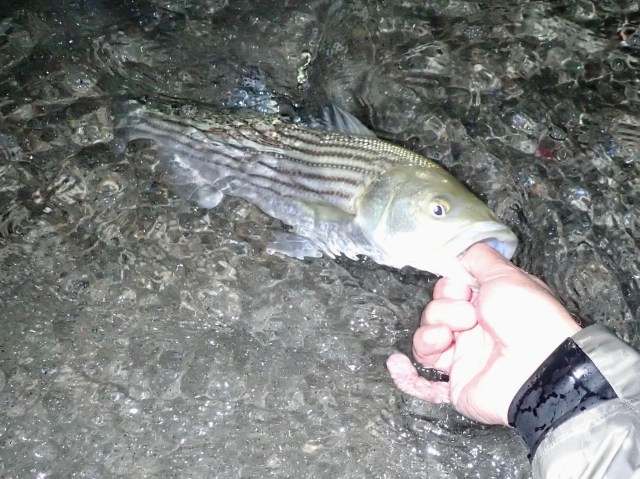
Salmon River Report 11/19 &20: Steelheading isn’t fair

You’ve heard me tell that my mother used to say that life isn’t fair.

I hated hearing that, but over the years I’ve grudgingly accepted it. I know she had my best interests in mind. But if she really wanted to help me, she would have added, “And steelheading is even more unfair.”

Cam and I fished the Salmon River last week. We had cold, warm, ice, snow, and sunshine. We had 350cfs and 750cfs. We had fish on and fish off. And we had the cruel fickleness of the beast and the sport.

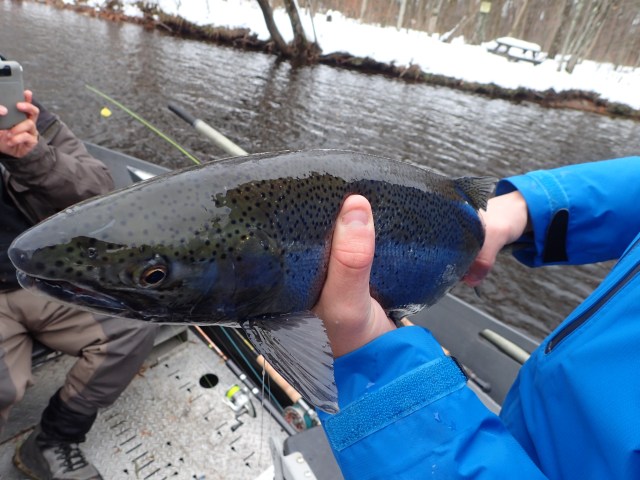
Day One. After a slow start, Cam gets into a slob of Lake Ontario’s finest. He went three for three. This is his first of the morning.

OLYMPUS DIGITAL CAMERA

~

It was Jim’s birthday, and since we were both taking a break we insisted that he fish and catch a celebratory steelhead. This guy’s good. Here’s proof.

OLYMPUS DIGITAL CAMERA

~

A different perspective on the grip-and-grin. We kept all the fish in the net in the water until it was time for a quick photo op.

OLYMPUS DIGITAL CAMERA

~

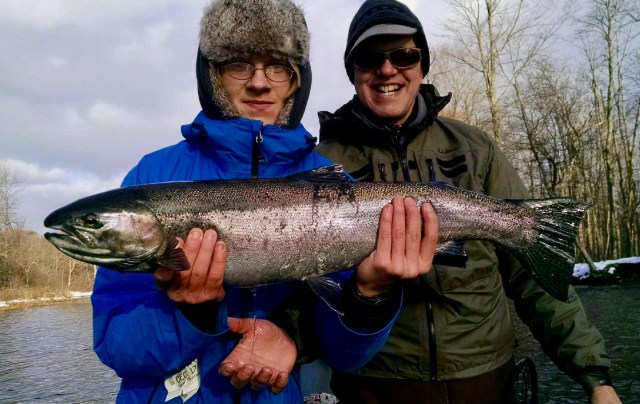
By now, you’re asking, “But Steve — where’s your fish?” Ahem. I pounded the same water as Cam all morning on day one and not. A. Touch. Steelheading isn’t fair, remember? On the way downriver, I fouled one first cast in a deep hole. Farther down, I went one-for-two in another deep pool while Cam blanked. Are we seeing a pattern here? This is Cam’s last fish of day one. I dropped my first fair-hooked fish to an incredibly bad set. The second was camera shy, but was about the size of this one and polished metal bright. One steelhead to boat makes it good day.

FatherSonSteel

~

Oh, the injustice of Day Two! This tank of a buck is the only fish we boated. Now, anyone who’s steelheaded for years can tell you that fish are often lost to operator error. They’ll also tell you that you can do everything right and still lose the fish. Friends, I’m here to testify (with Jim and Cam as my witnesses) that I had four indicators go under, and I was dead-balls-on every hookset. Fast, sweeping downstream, hard — sticky sharp hooks — and every fish came unbuttoned. Three right after set, and one that I managed to keep on for a couple runs. You can do what you can do, and beyond that it’s up to the steelhead gods. Repeat after me: Steelheading isn’t fair!

OLYMPUS DIGITAL CAMERA

Ontario Tribs Steelhead 11/6-11/8: Back in the New York Groove

There’s something about steelheading that’s — I don’t know — sad. I’ve written about its emotional rollercoaster, and how when you’re down the track seems like an endless journey into melancholy. The highest percentage play on these tribs, a presentation along the bottom, makes me weary by tedious repetition. Let’s not even mention the weather, which can turn a suck day into shit faster than you can tighten the strings on the hood of your rain jacket.

But when the bite is on and weather is tolerable and the people are pleasant and — this is not insignificant — your luck is good, it’s about as much fun as you can have while wearing rubber pants.

A little crick stompin’ on day one. Up at 4:20am, spot secured by 5:10, waiting for first light. Any day I can land one steelhead is a good day. Skunk off early is even better. Bright, beautiful chrome that shone even in the rain.

OLYMPUS DIGITAL CAMERA

~

We bounced around from pool to pool. I had to work my butt off for this steelhead. It was a very difficult presentation for a lefty, and in an hour maybe I got maybe a dozen quality drifts. One of them was good enough to fool this sparsely spotted fish.

OLYMPUS DIGITAL CAMERA

~

Loved the last spot on day one. Best steelhead of the day, and one of the better ones of the trip. I got into some double-digit pounders, and the word was that there was a good mix of bigger fish this year. I hooked this one about a rod’s length away from me, and had to chase her downriver once she left the pool.

UJP

~

Why we keep coming back — and why we gird our loins for days like day two: not a freaking touch. Most miserable moment: last two hours, guy below me hooks four. Guy above me hooks three. I snagged the bottom. A lot. Little did I know, tomorrow was going to be great.

OLYMPUS DIGITAL CAMERA

~

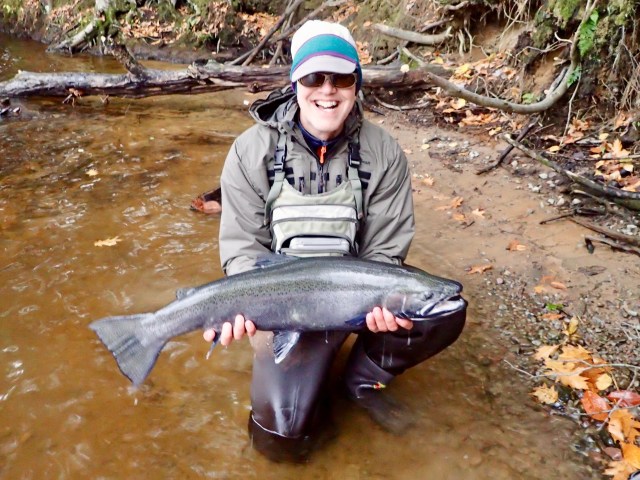
Day three: there’ll be no birthday skunk! A splendid buck, just beginning to color up. I shared the water with several other anglers who couldn’t have been nicer. Thank you, gentlemen. Not the world’s best picture, but you get a good sense of the size of the fish.
OLYMPUS DIGITAL CAMERA

~

My father always said, “I’d rather be lucky than good.” When you’ve got the hot steelhead hand, you recognize the manifest truth of his words.

OLYMPUS DIGITAL CAMERA

~

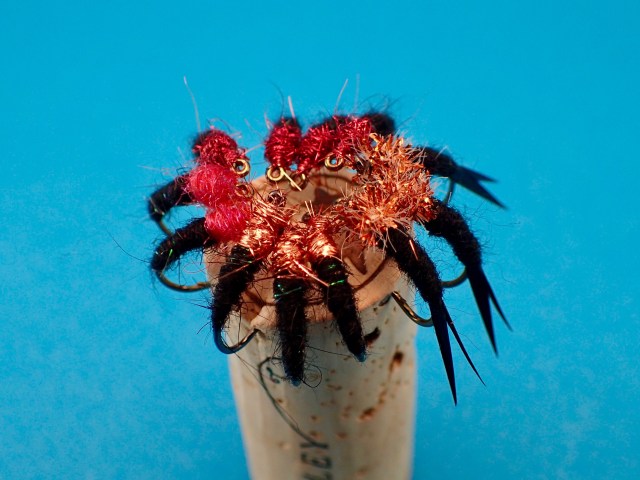
If you ever figure out steelhead fly selection, please let me know. I fished this same spot — and some others nearby — last year with little copperhead black stones, and nothing. They were all over the bling. This year, if it was small and black and had a copper head, they wanted it with a sense of urgency. What a strange game we play.
OLYMPUS DIGITAL CAMERA

~

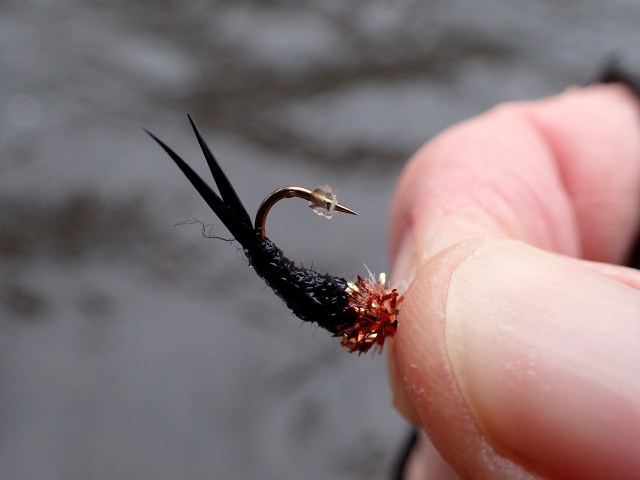
To be read in your best baseball announcer impersonation voice: “Fouled off. Just got a piece of it.” Upon rig retrieval, it was easy to see why I dropped the fish at hookset. On this day I hooked nine and landed six, which doesn’t suck for a batting average. I lost one on a terrible initial hookset, and no idea what happened with the third.
OLYMPUS DIGITAL CAMERA

~

The last fish of a memorable day. It was the 91st steelhead I’ve landed. 

OLYMPUS DIGITAL CAMERA


Striper report: and then, there was one

Eleven consecutive months of a striper on the fly from the shore down. One to go.

I decided to start this month’s quest early — ten hours into November, to be exact. The tide was outgoing, of an unremarkable height, slightly stained. I saw some small baitfish, but no birds were working. Another fly angler flogged the water across from me; two dudes with spin rods joined the fray as I was getting ready to leave.

To the fishing. I was using a 3″ September Night on a floating line. As so often is the case this time of year, the fish will hang out on the bottom. I gave it half hour with he floater, then switched to the full sink integrated line. Bingo. I was snagging the occasional mussel, but one time the bottom fought back. A fine 20″ striper, hooked neatly in the corner of the mouth. And since no one else was catching anything, I reeled up and headed back home.

Forgot the camera, but like this one, November’s bass was clean and bright and fresh from the ocean.

OLYMPUS DIGITAL CAMERA


Small stream report: foliage vs. Fontinalis fin

Time to go for a long walk in the woods with a stick and a string. The thin blue line was running medium high and cold. And the air temperature, which started out in the 30s, hadn’t climbed much higher by noon. I fished upstream with a bushy dry (size 14 Improved Sofa Pillow, up from a 16 to discourage hooking the younguns) and, in some of the deeper pools, dry/dropper (size 18 2x short SHBHPT). I pricked dozens, landed an honest 12 or so, and had my usual festive chuckles at their kamikaze antics.

At the turnaround point, I switched to subsurface, with the intent of running tungsten bead head micro buggers through the deeper recesses of select pools. White first. I felt a nip, then on the next cast saw what was for this brook a behemoth char follow the fly. I couldn’t get him to eat, so I switched over to black. (I like to fish black or white streamers when there are leaves in the water.) Another tug, but no commitment. Just when I had resolved to try something smaller, the fish hit for keeps. It was my best wild brookie of 2018, a handsome old buck that was no doubt the tribe elder in this sacred water.

After lunch, dessert: a JR Cuban Alternate Montecristo #2. Delicious.

OLYMPUS DIGITAL CAMERA~

My prize refused to sit still for a formal portrait, so I had to settle for a shot in his temporary home.  Of course, it’s only my opinion, but these fins beat the pants of any peak foliage. I thought about how long this char has been alive — at nearly a foot long, a giant in this tiny brook — how many redds he’s fertilized, and how many of his progeny I’ve touched before. Then, back he went.

OLYMPUS DIGITAL CAMERA

The Hunt for Striped October

It was 9:30pm and everyone was drowsy. So when my wife and son announced they were going to bed, I decided it would be a good time to load up the Jeep and head to points salty. I’d failed in my first attempt to catch my October bass on the fly from the shore, and now there were now less than two weeks remaining to accomplish that mission.

At first it seemed like the wrong decision. A stiff, gusty breeze was blowing off the Sound,  and it didn’t look (or smell) very fishy. So I settled in with my cigar and waited for a more favorable tide. I passed the time with a few swings and dangles, and that’s how I uncovered my first clue: a peanut bunker snagged on my point fly. A few casts later, another snagged peanut. This gave me hope. The old saw of “find the bait, find the fish” ain’t always true, but at least I knew that stripers would have a reason for being here, even if I couldn’t see them.

At the turn of the tide I moved to another nearby location. Still no signs of bass (or even worried bait). But this is a universal truth: flies in the water catch more fish. I made a cast and let the flies swing around into a dangle. BAM! The hit came out of nowhere, but it was unmistakably a bass. No surprise — it took the peanut bunker bucktail fly on the team of three (the other two were silverside and anchovy). I made one more cast after I landed the 20″er, thought better of it, reeled up, and decided that I’d done exactly what I wanted to. I whooped and hollered and cackled all the way back to the Jeep.

The two are not mutually exclusive, but it is far more important to be a good angler than a good caster — or a distance caster. Which location? What tide? Where are the bass likely to be? What’s the bait? How can I present my flies in a way that makes it easy for the bass to eat? The cast that took this fish was all of 20 feet (and that includes 10-and-a-half feet of rod).

OLYMPUS DIGITAL CAMERA

The State of the Farmington River Survivor Strain Brown Trout

Nature doesn’t always cooperate with mankind’s timetable, and that was the case this fall with the attempted collection of broodstock browns on the Farmington River. Rain, rain, and more rain — coupled with unusually high releases from Hogback — conspired to muck things up to the point where a Hail Mary had to be called. Many thanks to the DEEP staff and anglers who came out Wednesday to collect broodstock. The results weren’t what we’d hoped for, but you get what you get and you don’t get upset (a nod to Mrs. Kawecki,  my kids’ pre-K teacher). Life goes on, as will the Survivor Strain program.

The good news is that the Farmington River browns are in pre-spawn mode, and there’s plenty of water in which to get jiggy. DEEP tells me that the Farmington River wild trout population is doing well, (I can confirm that through personal experience.) What’s more, back at the DEEP reproduction facilities, 16-18″ Survivor Strain trout are also ready to do their thing. Those fish will be released into the Farmington next spring, and their progeny to the Farmington and the Hous.

If you’re interested in reading more about the Farmington River Survivor Strain Program, here’s an article on the subject.

This is why we do it. Not a Survivor Strain brown, but she could be the mother of many.

DCIM100GOPROG0013068.


Late Farmington River Report 10/15/18: olives, caddis, and cold & wet

I guided Mark and Sandy on Monday and we made the command decision to go for bigger, wild fish. That meant certain areas of the permanent TMA, and our method was streamers. The water was medium/high at 535 cfs, a few leaves, and the air was raw, with showers that came and went. We managed to bump a few brutes, but no hooksets. We fished four different spots. One of them saw a decent caddis (14-16) hatch with a few tiny BWOs in the mix. Even in the high water, there were a few risers on the caddis. We ended the day with some nymphing. In all the wetness, the camera never made it out of its sheath, so we’ll post sexy trout photos next time. Well done Mark and Sandy in some less than optimal conditions.

Maybe you were one of our streamer love tappers?

OLYMPUS DIGITAL CAMERA


Calling all Farmington River fly anglers: help needed Wednesday, October 17. You fish, DEEP collects, big trout are created.

Due to heavy rains, there was no draw down of the Hogback dam this fall, which meant no broodstock collection for the Survivor Strain program. DEEP is going to try to do it au naturel tomorrow — by fishing with hook and line — and they need your help. How much fun is this job? You fish, catch a big one, the DEEP collects it and takes it back to the hatchery to do its thing. Here are details from Neal Hagstrom:

“I wanted to confirm for you that we will be meeting with anglers at the Greenwoods parking lot on Wed.  We will try capturing brown trout to use as Farmington River Survivor Broodstock using hook and line.  I will be there with the tank truck about 9 am and will bring smaller live cars for use in the river.  There are a couple of anglers who will be starting earlier in the day, so I will be at the river early (7am) and have to leave to get the tank truck from Burlington.  I will stay as late as people want.  We greatly appreciate everyone’s willingness to help out. Law enforcement has been notified of that effort.”

A Survivor Strain broodstock brown sulks in the shallows. Quality fish like these — and their wild progeny — are counting on you tomorrow to help keep the program going.

OLYMPUS DIGITAL CAMERA

Farmington River Report 10/1/18: That dull thud

Two-and-a-half hours mid-day yesterday, dedicated to the streamer cause. River was still up (670 cfs in the permanent C&R), very lightly stained, and cool (didn’t get a water temp). I hit three spots and found fish willing to jump on in two. Two of the pools had an intense caddis hatch window, about 15 minutes, and the fish were on the emergers, although most of what I saw rising was small. Fished the full sink integrated line with both yellow Zoo Cougars and a cone-head white/chartreuse bugger; all fish came on the latter fly. Gadzooks, the river was crowded for a Monday in October! Didn’t see anyone else hook up, so I took what I could get on this slow day.

Cast, mend, a short swing, a strip, and I felt that old familiar dull thud of a streamer hit. This Survivor Strain brown looks small; in reality, it was mid-teens class and a strong fighter. Taken on the cone head bugger.

OLYMPUS DIGITAL CAMERA

Farmington River Report 9/19/18: Better get out the scale…

I waited two years for yesterday. A day after a heavy rain where the river would be up and off-color but still wadeable; preferably late summer or fall; some cloud cover; with most anglers opting out of fishing. Classic streamer conditions. Huck a bug at the banks, strip away, and wait for that telltale thud from a bruiser brown.

I fished three spots in the permanent TMA, and while all of them produced (including a smallie, the farthest north on the Farmy I’ve ever caught one) the action was slow. Still, I made the command decision to stay away from the recently stocked areas in the hopes of trading numbers for size, and that’s what happened. All trout to net were over 18″, including my biggest of this year.

The method: target banks with a full sink line, a longer (7-8 feet) leader and a deer hair head fly to get some neutral buoyancy going. Black is the classic stained water streamer solution, but they wanted it bright yesterday (nothing on black or olive — they were into white, yellow and chartreuse). Every day is truly different.

The type of trout you measure in pounds instead of inches, this pig was sitting six feet off the bank in a foot-and-a-half of water. Second cast, first strip, and he rolled on it. Right away I could see he was a good fish. Taken on a yellow Zoo Cougar, and a worthy opponent in a 750+cfs flow. Wonder what’s in that tummy?DCIM100GOPROG0013068.