Hudson River Striped Bass 101

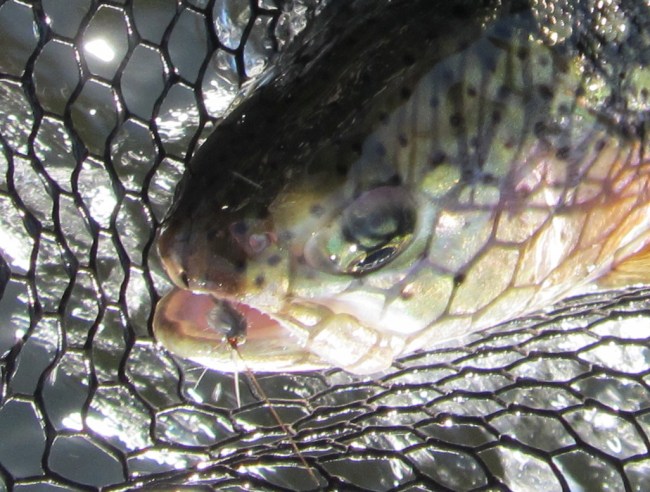
Smile, oh big-mouthed Hudson River tribe member. 

Images

Bob Creeden recently made a detailed post about the Hudson River striper stock on the Stripers Online Fly Fishing forum. I found it so informative that I asked Bob for permission to share it with my readers. He graciously agreed (thanks, RJ). And here it is:

The Hudson River filling in was done mostly in the 19th Century. The Railroad did 80% of it. Especially on the eastern shore between Manhattan and Albany. It was polluted in the 19th and early 20th Century. And when the bass crashed in the mid 1980s it included the Hudson River strain.

There have been many changes in the past 45 years in the Hudson River and the 25,000 square Mile watershed that feeds it.

Today, the Hudson is clean. Clean enough to be recognized as a Class “A” swimming water from Albany to the NY City Line. The Hudson River striped bass stock was the quickest to recover from the over fishing of the 60s, 70s and early 80s. It is the best environment for healthy striped bass production. The 100 miles of freshwater tidal from Cornwall, NY (below Newburgh) to the first barrier dam North of Troy, NY, is consistently productive with no lack of water and no high water temperatures like the Chesapeake Bay Estuary has been experiencing for the past 20 years.

I was born on the banks of the Hudson. (Manhattan – Washington Heights) Grew up and maintained a boat on the Hudson from the age of 12 (docked a 1/4 mile up the Croton River at Crotonville) and lived most of my adult life on or near the Hudson in the Catskill Creek to Kinderhook Creek portion above the Rip Van Winkle Bridge. When I got out of the Marines in the 1960s, the upper Hudson from Catskill to Troy, NY was a dead sewer of a river. Since the mid 1960s, thanks to Nelson Rockefeller’s Clean Waters Act that had water filtration plants built in every village, town and city down the NY City line, the river is vibrant and alive. A birthing place and nursery for hundreds of fresh and saltwater species. I was appointed to the Hudson River Estuary Management Advisory Committee (HREMAC) during Cuomo’s administration and sat on it through two other Governor’s terms. George Pataki’s Environmental Bond Issue, voted by the majority of New York residents, built on the foundation supplied by the Clean Waters Act. It has gotten better and better from those great environmental steps.

We still have landings of 50 to 70 pound striped bass and a solid female contingent of 8+-year-old female striped bass producing a decent level of Young of the Year striped bass. Healthy 30 to 40 pound Hudson River DNA striped bass are counted, tagged and released every spring while they hang out in the freshwater tidal portion of the river. The spawning creates each year class, that are counted in September in that same clean freshwater tidal area of 100 miles as they come out of the bays and creeks along with YOY American Shad and YOY Blueback and Alewife Herring. The daily bag length should be reduced to a single fish and the length set at 35 inches. This would at least allow the females to have two full years of egg production with out being culled from the biomass before they can contribute to the stability of their species.

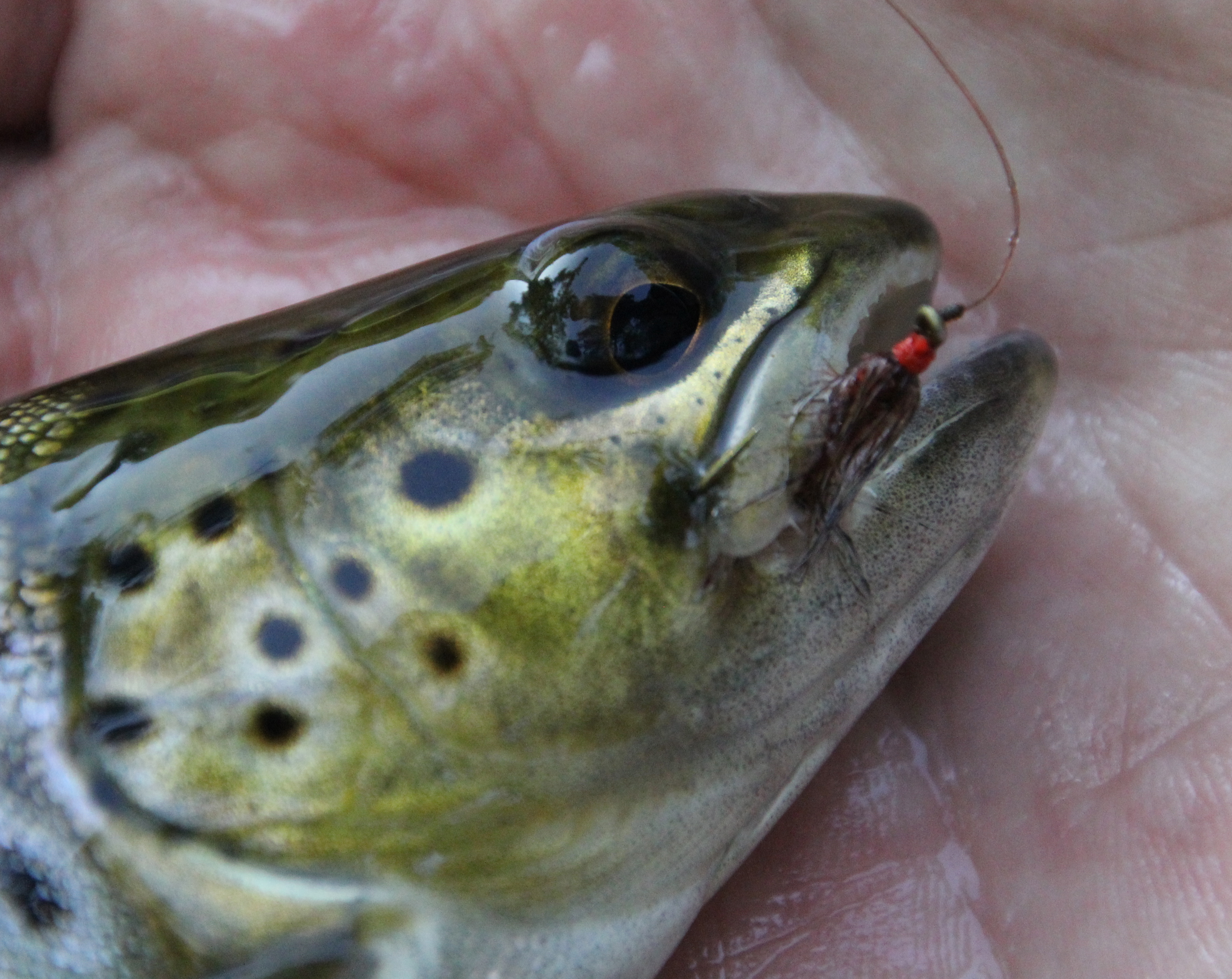
Another Hudson Riverling. Hard to imagine she was once smaller than a silverside.

Image

The Hudson River DNA Tribe is the second largest producer of migratory striped bass on the East Coast. The Chesapeake Bay DNA Tribe produces 60% to 70% of all YOY counted annually in September. The Delaware River DNA Tribe is the smallest producer, due to the shortness of its spawning range and its reliance on a strong spring run off of snow pack and spring rains to keep the salinity of Delaware Bay from Chester, PA to the C&D Canal just below New Castle. 2011-12, “The winter that wasn’t” failed to produce enough freshwater to allow for a minimal spawning effort. I’m not sure the runoff this past spring was much better.

The problems caused by human population explosions along the shores of the Chesapeake Bay’s western shoreline and the Chicken Broiler production of a billion chickens annually for meat consumption down the length of the Eastern Shore in DE, MD & VA has loaded the bay with a choking amount of nitrate’s and potassium that create algae blooms that have cut off the cool deep water refuges needed by juvenile striped bass. They are genetically programmed to spend almost three years in the Bay and its tributaries before migrating out into the clean and cold Atlantic. It is estimate that 70% of the YOY counted in the Chesapeake Bay the September after they are hatched will die before they are old enough to reproduce. That is were a huge loss is occurring. Millions of immature Chesapeake Bay striped bass are dying because they cannot seek the cool depths and are forced into the stress of living in 90 to 95 degree water in the summer months. These conditions are destroying the productivity of the Chesapeake Bay Striped Bass Tribe.

A fully mature female striped bass is 8 years old. She is between 31 and 32 inches and weighs 15 to 16.7 pounds when full of eggs. The Hudson River 8+ Female count is strong and steady. No great fluxuations over the past 15 to 17 years. I’d really like to see what the Female age 8+ is doing in DE, MD and VA. In 2011 VA or MD declared the greatest number of YOY striped bass in 50 years had been produced. in 2012 it declared it had the worst YOY count ever for striped bass.

We folks in NJ, CT, RI, MA, NH & ME benefit from the migration of striped bass from the Chesapeake Bay every spring, summer and fall. I believe the anglers in the areas north of Cape Cod in MA, NH and ME have seen a steady decline in the number of mature striped bass they are seeing in their waters. Most of the striped bass south of the Cape Cod beaches are Hudson River fish with a little bit of Delaware River SB mixed in. The Hudson River Tribe’s migration after spawning goes south to Cape May and North to the southern beaches of Cape Cod. We all should pay a little more attention to what is happening to the Chesapeake Bay Striped Bass tribe.

Striped bass, like shad and river herring, need freshwater to spawn in. The river herring tribes and the shad come out of the summer nurseries they grow in between May and September and they come down the fresh water rivers and make their way to the ocean.

The Hudson River YOY move down the river and travel to the rivers and bays that are salty. They move into the Hackensack, Passaic, Raritan, Shrewsbury, Navesink and Shark rivers of NJ. They make their way up the East River and out into Flushing Bay and the western end of LI Sound. From there they invest in all of the salty ends of the south flowing CT, RI and MA River. Plus the north and south flowing rivers and bays of Long Island, NY. They will spend the next two seasons growing and sharpening their predatory skills in those waters. When they reach their 3rd Spring (in March or April) they begin to migrate to the Atlantic Ocean and spend the next 5 or 6 years maturing. Then they return to the Hudson River starting in March of their 7th or 8th year. Some 7 year old females will produce eggs and spawn that spring. Others will produce eggs and fail to spawn at age 7. Those green eggs will be absorbed back into the flesh of the 7-year-old female as protein. A baby striped bass will hatch and the outer shell of its egg will remain attached to the tiny, perfect striped bass baby. That tiny fish will absorb the shell protein into its body and when that process is completed it will begin to prey on food too small for us to see. As it grows and needs more protein, it will begin targeting larger and large prey. The biologists believe that immature female striped bass use the egg absorption process they used as tiny YOY.

Young-of-year brook trout

I was bushwhacking past a bathtub-sized pool deep in the northeast woods when I saw dozens of dark forms scatter. So I sat at the water’s edge for a few minutes. Then stuck the camera underwater and started rolling. This is a good-sized school of young-of-year Salvelinus fontinalis — the eastern brook trout. Class of 2013. Can’t wait for them to put on a few ounces. Stay strong through the winter, my little friends!

Yorkshire, Meet Pulaski: Small Steelhead Soft-Hackles

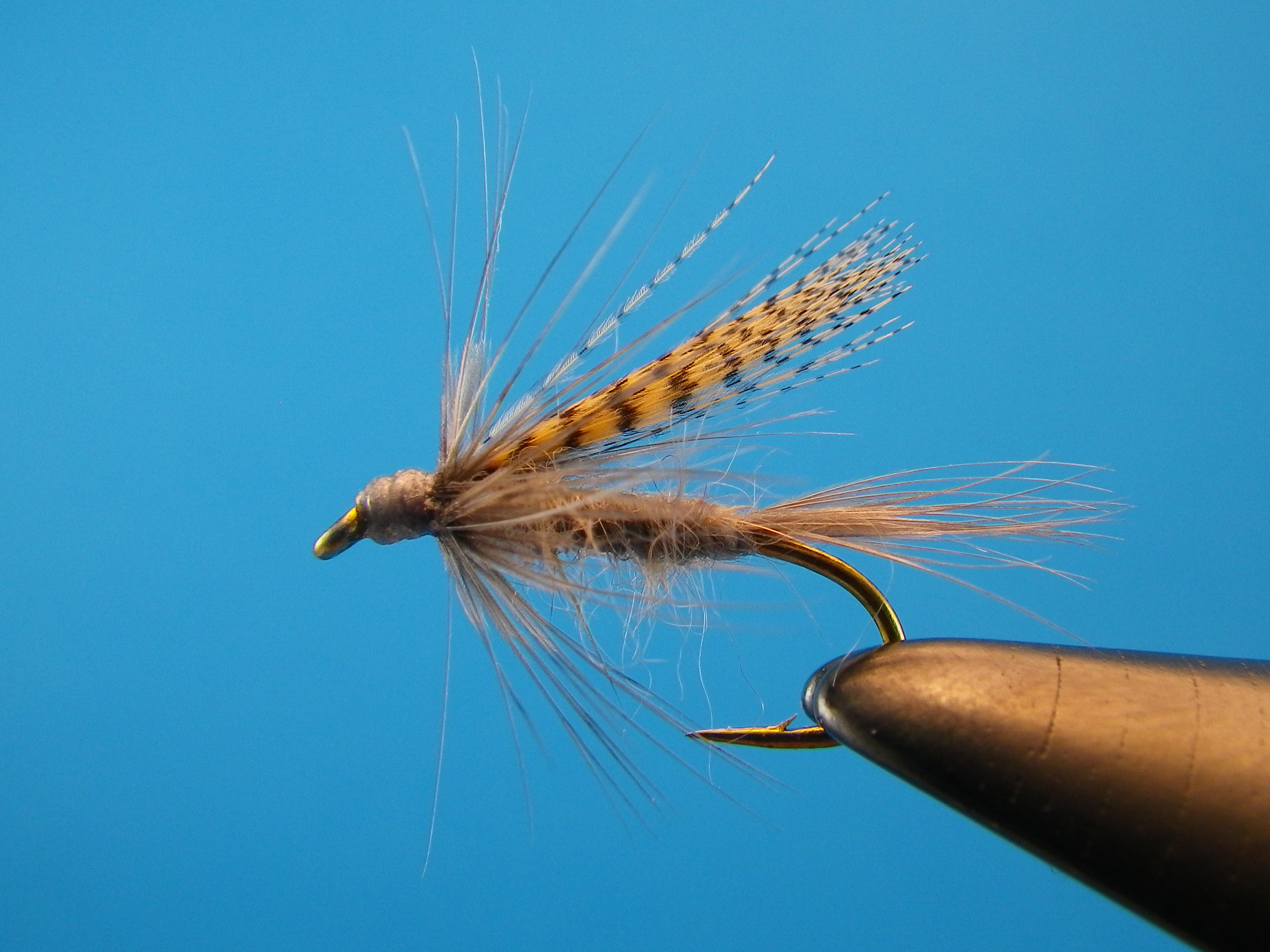
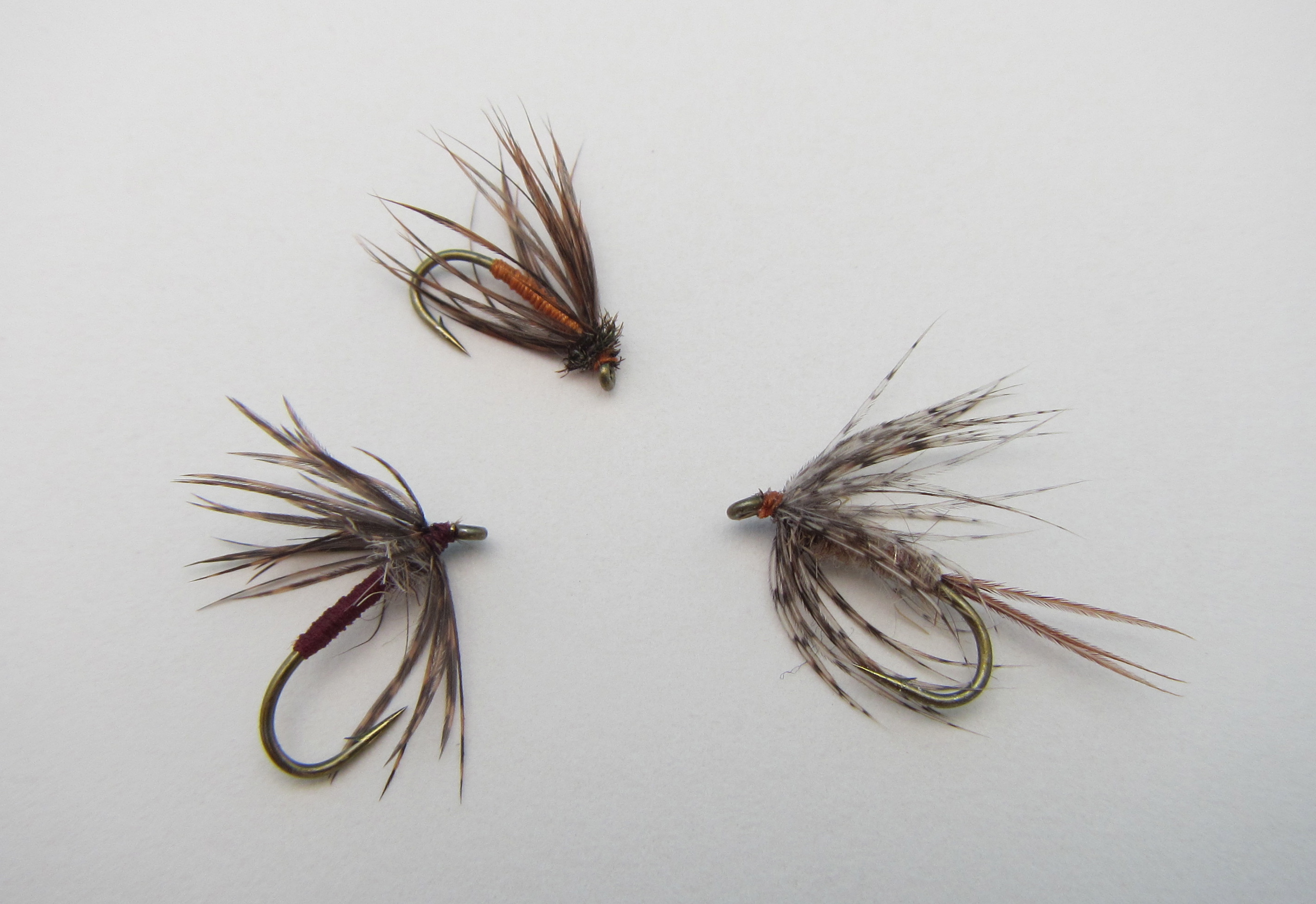
In The Soft-Hackled Fly, Sylvester Nemes writes about fishing for — and catching — steelhead on traditional soft-hackles like the Partridge and Orange. Here’s my steelhead take on four classic patterns, clockwise from upper right: Tups Indispensable, Snipe and Purple, Partridge and Green and Orange, and Grouse and Orange.

Small Steelhead Soft-Hackles

Image

These are all tied on 2x stout, 1x short hooks. They’re a size 10, so effectively they’ll fish like a size 12. Construction should be fairly intuitive from looking at the photo. But, here are the complete recipes.

~

Tups
Thread: Yellow
Tail: Dun hen hackle fibers
Body: Fluorescent yellow floss
Thorax: Hot pink yarn
Hackle: Dun hen
~
Snipe and Purple
Thread: Pearsall’s Gossamer silk, purple
Rib: Gold oval tinsel
Hackle: Snipe
~
Partridge and Green and Orange
Thread: Fire Orange
Body: 1/2 fluorescent chartreuse yarn, 1/2 fluorescent orange yarn
Rib: Gold oval tinsel
Hackle: Grey partridge
~
Grouse and Orange
Thread: Fire Orange
Body: Fluorescent orange yarn
Rib: Gold oval tinsel
Hackle: Grouse

Two years ago, I hooked (and ultimately lost) what was easily the largest steelhead I’ve ever done battle with. He took in the deeper end of a swift run that becomes a shallow whitewater nightmare at its head. I saw him clearly during his cartwheeling histrionics, and he was massive. We finally parted ways when he found a submerged logjam my leader didn’t get along with.

The fly he took was the one at lower left.

~

Steelhead soft hackles Rogues’ Gallery:

Snipe and Purple, November 2016

sr11_10_16

Somewhere out there. (Thataway.)

Middletown isn’t actually in the middle of Connecticut. It’s more like the mid-point between New York and Boston. Being centrally located has its benefits. I’m 45 minutes from Housatonic stripers. Just over an hour to Rhode Island. The Farmington River is as close as 35 minutes. But to get where I was going Thursday, I needed about two-and-a-half hours. One way.

In addition to drive time, the price of admission includes a hike that sends your heart rate soaring. (And, if you like to detour off the trail to get to those feeder streamlets that tumble down the sides of mountains as much as I do, some semi-treacherous bushwhacking.) It’s definitely not for everyone. But for the adventurous soul, rich rewards await in the form of magnificent solitude. Seductively clear water. And armies of obliging brookies.

~

The day began grey with dense fog banks and light drizzle. My energy on the way into the woods was the typical I-can’t-wait-to-get-my-line wet rush. It usually takes a lot to distract me when I’m in hurry-up fishing mode. But I was captured by this splash of color against muted brown.  Sitting here at home now, I’m glad I stopped.

Image

~

We haven’t had much rain in the northeast during the last month. The brooks were way down compared to last fall. (And nice and cold at 50 degrees.) But even the feeders were teeming with char. Nature finds a way. Like this hemlock, growing hard against a rocky outcrop, roots searching for precious water, splayed out like the tentacles of a beached squid.

Image

~

I began fishing downstream, dry, with a size 16 Improved Sofa Pillow. When streams are this low and clear, the bite is often better if you go subsurface. It’s easy to figure why. The fish are feeling vulnerable in the lower flows. Whereas they’re bashful about showing themselves on top, they remain undisciplined gluttons below.  Once I made the change to weighted beadhead soft-hackles, I saw an exponential increase in strikes. The nips began the moment the fly settled beneath the surface. One of the flies I used — as yet unnamed — was a soft-hackle with a hot chartreuse bead head I tied up a few weeks ago. I could easily track the fly in the water, as well as the dark forms that would materialize out of nowhere to attack the intruder.

Image

Image

“Unnamed”
Hook: 2x stout, 3x long, size 14
Thread: Black
Bead: Tungsten, chartreuse
Tail: Black Krystal flash
Body: Peacock Ice dub
Hackle: Grizzly hen

~

Most of the brookies I pricked and brought to hand were in the 3-6″ class. But there were a few more substantial fish in the mix, like this handsome buck, ablaze in fall spawning colors. A proper Brobdingnagian, he’s been in the brook for quite a few years.

Image

~

Turned out nice again. It’s hard to manage the thought of the coming snow and shelf ice when the mercury’s pushing 65 and the sun is dancing off the tree tops.

Image

~

Can you stand to look at one more picture of a brook trout in blazing fall technicolor? If we must. I could wax poetic about the Fontinalis fin, the haloed spots, and the vibrant belly. But the camo pattern on the dorsal fin is inspired.

Image

~

Like fishing trips, all fishing reports regrettably must end. This is the fish from the photo above just at the moment of release. Till we meet again.

Image

Many thanks to the FRAA for hosting me tonight

Tonight I presented my “Wet Flies 101” program to the Farmington River Anglers’ Association. Good crowd, plenty of familiar faces, and many engaging questions. I hope everyone who attended had as much fun as I did. Thanks again.

Image

Stripers-by-numbers

2: Number of cigars I smoked, a Gispert Churchill on the drive down to Rhode Island, and an H. Upmann 2000 Reserve corona gorda on the way back to Connecticut.

5 and 9: The weight rod and line I used. Perfect for the tight confines of the first spot we fished. I could load the rod with a minimum of line, and shoot the rest with a flick of the wrist.

7 and 9. The weight rod and line Jon used.

1: Number of stripers we caught in the first spot (Jon was the successful angler).

4,957: Number of weeds I hooked in the first spot. At least it seemed like that many. I was fishing a greased line swing, then a dangle, and I could feel the tick the moment the weed hit the fly.

1: Number of stripers we saw in the second spot. Jon noticed a wrinkle on the surface in the moonlight. As we worked our way along the bank, I felt a quick little bap! And then he was gone. Other than seeing a few silversides and a juvenile fluke, the place was as dead as Julius Caesar.

86: My heart rate when we got to our last stop and saw a couple fish feeding out in the current.

10: As we were already well past our cutoff of 11pm, our agreed-upon time limit, in minutes, to catch a striper.

1: Number of bass we caught. (My turn.)

2: Happy anglers who made the drive home to Connecticut.

New article in American Angler: Wet Fly 101

Check out the current (Nov/Dec) issue of American Angler for my latest article, “Wet Fly 101.” Wet flies have been fooling trout for centuries, and the fish aren’t getting any smarter. This piece serves as a broad introduction to wet flies. It covers basics like fly types; building a traditional three-fly team; what kind of water to target; and presentation. For those looking to take the ancient and traditional path to subsurface success, it’s a fine place to start.

Image

The Black Caddis steelhead hair wing

If you’re the sort who likes things neatly categorized, you can divvy deer hair winged steelhead flies into two groups. The first would be the waking dries, shrimp flies like the Grease Liner and all manner of skating caddis. The second would be the subsurface streamers/wets like the Muddler Minnow or the Muddler Daddy. I took a decided path toward the latter with the Black Caddis.

The Black Caddis

Image

Hook: 1x short, 2x strong wet (this is the Orvis 1641) size 8-12
Thread: Black 6/0
Body: Lagartun chartreuse mini braid with grizzly hen hackle, palmered
Hackle: 2-3 wraps of the grizzly hen, continued from the body
Head/Wing: Black deer body hair

Tying notes: Lagartun mini braid is easy to work with and comes in a range of spiffy colors. Like a Muddler Minnow, the Black Caddis has a head of clipped deer hair; the wing is an extension of those fibers. Because the fly is intended to be fished below the surface, I’ve kept the wing and head sparse. To form the head and wing, make a few taut wraps of thread to secure the wing, then, while wrapping the thread forward, bind down tightly on the hair (give it 3-4 good wraps). The wing should behave itself, while the hair for the head will flare outward. On your next thread wrap, carefully move the flared hairs up and toward the rear of the fly with your thumb and forefinger, while moving the thread under it and forward to the eye. Whip finish. Trim the hair to your liking.

The Hot Chocolate Stone steelhead nymph

You’re up before the sun. As you hike to the river, there’s a distinct chill in the air that tells you in another month the trail will be covered in snow. Once you get to your spot and wade in, you can feel the gripping cold of the water against your legs. Should have worn the neoprenes. Maybe not, though. It’s supposed to get up to the high 50s today. It’ll be warm enough later. But for now, damn, you’re just about shivering. You’ve already had your coffee, but you want something else. Something warm. And sweet. A cup of hot chocolate would do nicely. The kind your mom used to make after you came in from outside on a snow day. Hmm. Maybe the steelhead would like some, too. A little chocolate brown stone, just like the ones you saw hatching yesterday morning. A hot orange bead to get their attention. Soft hackles that say, “I’m alive.” And a buggy body because that’s what fish like. Once you get that first steelhead on, you’ll be downright toasty.

The Hot Chocolate Stone

Image

Hook: 2x strong, 1x short emerger, size 8-12
Thread: Hot Orange
Tail: Brown Coq de Leon
Body: Fiery brown angora goat, dubbed roughly
Hackle: Grouse
Bead: Hot Orange

Tying notes: This is a pretty straightforward tie. If you want to add a little more weight to the fly, you can seat the bead with about 8 wraps of undersized wire. Coq de Leon and grouse are beautifully barred materials that naturally create the illusion of segmentation. Angora goat is one of my favorite body materials; it’s spikey and rough, and you can get it in all kinds of colors from muted naturals to fluorescents. Use a dubbing loop to get than uber-buggy look. Play around with different bead colors at your discretion; the fish will always tell you if they have a preference.

~

The Hot Chocolate Stone Rogues’ Gallery:

Salmon River (NY) November 2012

Image

So, this guy walks into the woods carrying a fly rod…

We haven’t had rain in a while; the brook was low and the forest floor dry as tinder. Still, I found a spirited rivulet of groundwater that wended down the fall line before tumbling over a mossy ledge. When the water is this clear and low, the brookies tend to stay in the darker, deeper sections — or in the whitewater just below that miniature waterfall next to the moss-covered boulder.

Image

~

Vibrant red spots ringed by blue halos adorn an eastern brook trout. Brookies are the only trout (technically, they are char) native to much of the eastern United States.

Image

~

Fall is living up to its name. The deluge of soon-to-be-ex-flora has already begun in the hills. Fishing-wise, the leaves weren’t really an issue; I only hooked a few here and there. I was looking for photo ops when I glanced down at my feet. I was struck by contrast of these two leaves against the rock, but what really captured my fancy was how, in that swift current, did they manage to find a toehold — and how are they able to so stubbornly cling to their perch?

Image 

~

A lot of people don’t know this, but Vincent Van Gogh was an avid fly fisherman. He used to jet from his estate in Holland to his cabin in the Appalachian foothills, where he could pursue his passion: fishing for Salvelinus fontinalis. The flank of the brook trout is said to have been Vincent’s inspiration for his masterwork Starry Night

Well, at least that’s what I heard.

Image

Fishing notes: Water was 56 degrees. Not surprisingly, most of the fish I pricked came from deeper holes, dark runs, and plunge pools. I found one abyss where there was a bona fide lunker (for this size stream) of about 11-12 inches. Pricked him twice, but couldn’t get a good enough hookset to close the deal. I tried for over a half hour, and in the end decided that that fish might be responsible for populating hundreds of yards of brook — and with spawning season so close, would be better left uncaught. I fished mostly downstream. Dry fly was a size 16 Improved Sofa Pillow; wets were a cornucopia of bead head soft-hackles. Cigar was an Aroma de Cuba Reserve maduro Churchill.