The Dark Hendrickson Winged Wet

We had spent the morning nymphing, but as the hour hand worked its way toward eleven, the bite slowed. One o’clock would be the visible start of the Hendrickson hatch — you can set your watch by it on the Farmington — but I figured right now was about time for creatures to be stirring a foot below the surface.

I rigged up a team of three wets, with a Dark Hendrickson on point, and began walking down a long, three-foot deep run. When I got to the tailout, I encountered an angler reclining on rock, enjoying the warmth of the late April sun. I hailed him and asked how his fishing had been. He told me he hadn’t yet wet his line. “Waiting for the Hendrickson hatch to start,” he explained.

Oh, it’s already started, I told him. “I don’t see anything coming off,” he said. I shook my head. You can’t see it yet. It’s going on below, and it’s going to be a good one. See my friends up there? I’ve been catching them all the way down the run, just swinging wets. They’ve been keyed on this fly here.

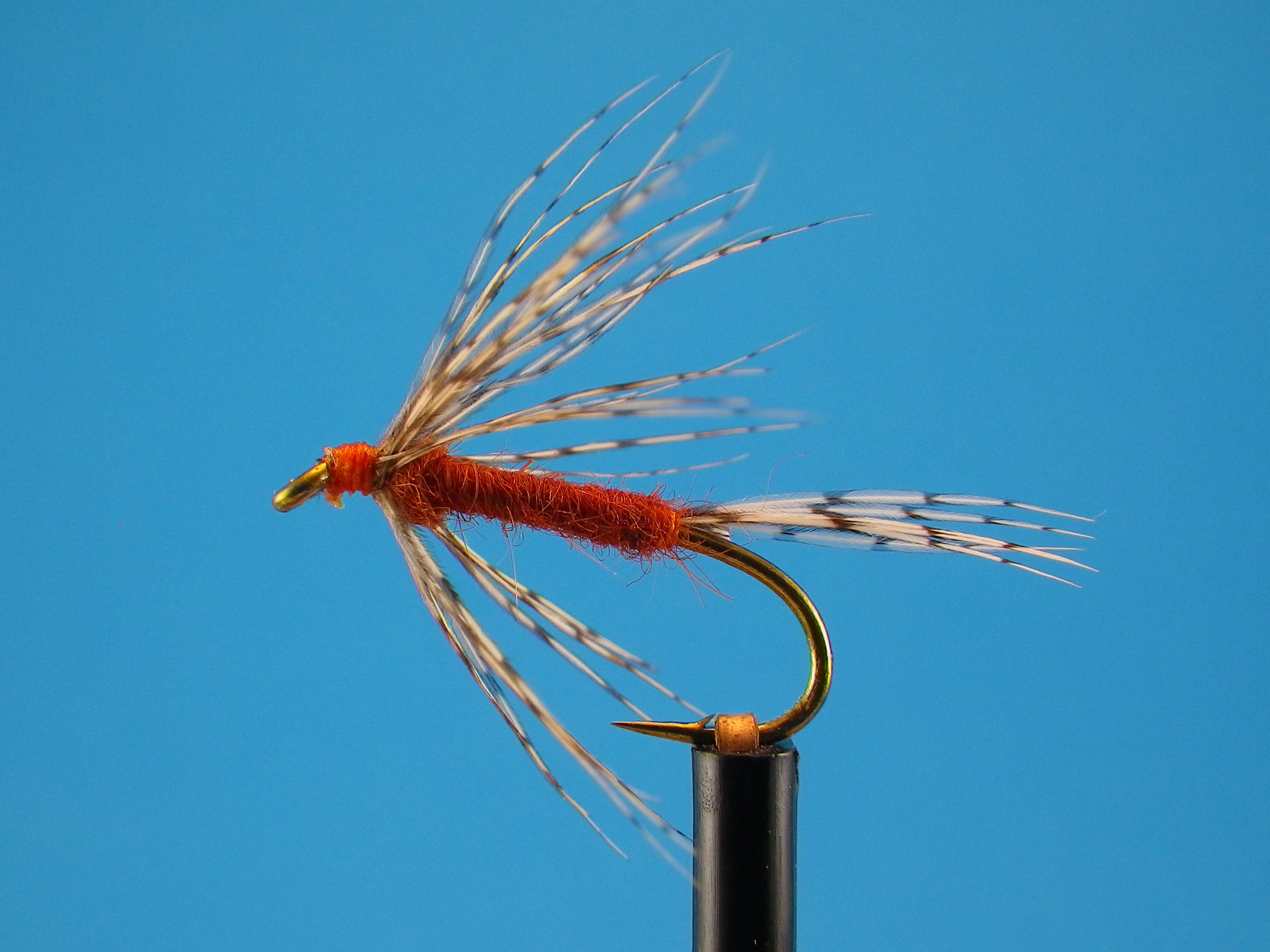
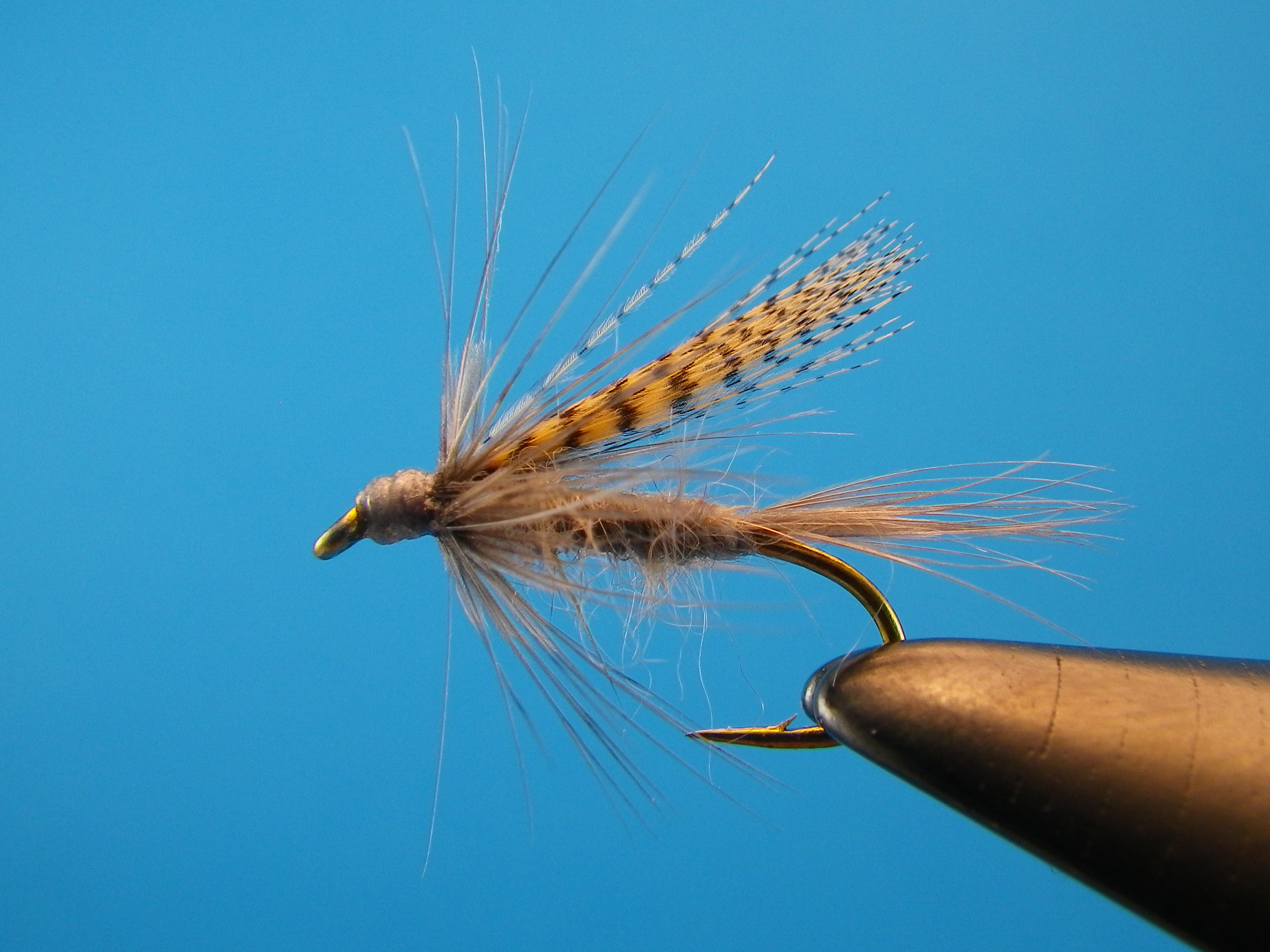
The Dark Hendrickson Winged Wet is a legacy American pattern that has been fooling trout for over a century. I’ve been fishing it only a fraction of that time, yet I couldn’t possibly tell you how many trout I’ve taken on it. This fly would easily make my Top Ten Wets list. Match the size of the naturals (about a 12 on the Farmington), then drift, swing, or dangle it over rising fish, and hold on.

The Dark Hendrickson Winged Wet

Image

Hook: 2x strong wet fly
Thread: Grey
Tail: Dark blue dun hackle fibers
Body: Muskrat fur
Hackle: Dark blue dun hen
Wing: Lemon wood duck

~

Tying notes: I like to use darker muskrat fur, particularly the soft grey underfur. Pick out and discard the black, stiffer guard hairs when you snip off a patch. A little fur goes a long way, and if you happen to have an entire skin, you’ve got enough fur to keep your great-great grandchildren in Hendricksons. Keep the body thin; the hero of this fly is wing. Be sure to leave plenty of room for the head and the wing; you can see on this fly that I just about made it. (Although the trout won’t care a lick.) To form the wing, I usually fold a small section of wood duck over itself with the dull side facing in, but I don’t get too crazy about trying to make every fly perfect. Make the wing about as long as the bend. If you don’t tie this fly, please start. You’re going to be happy you did.

Looks like the Hendrickson hatch has started.

Image

~

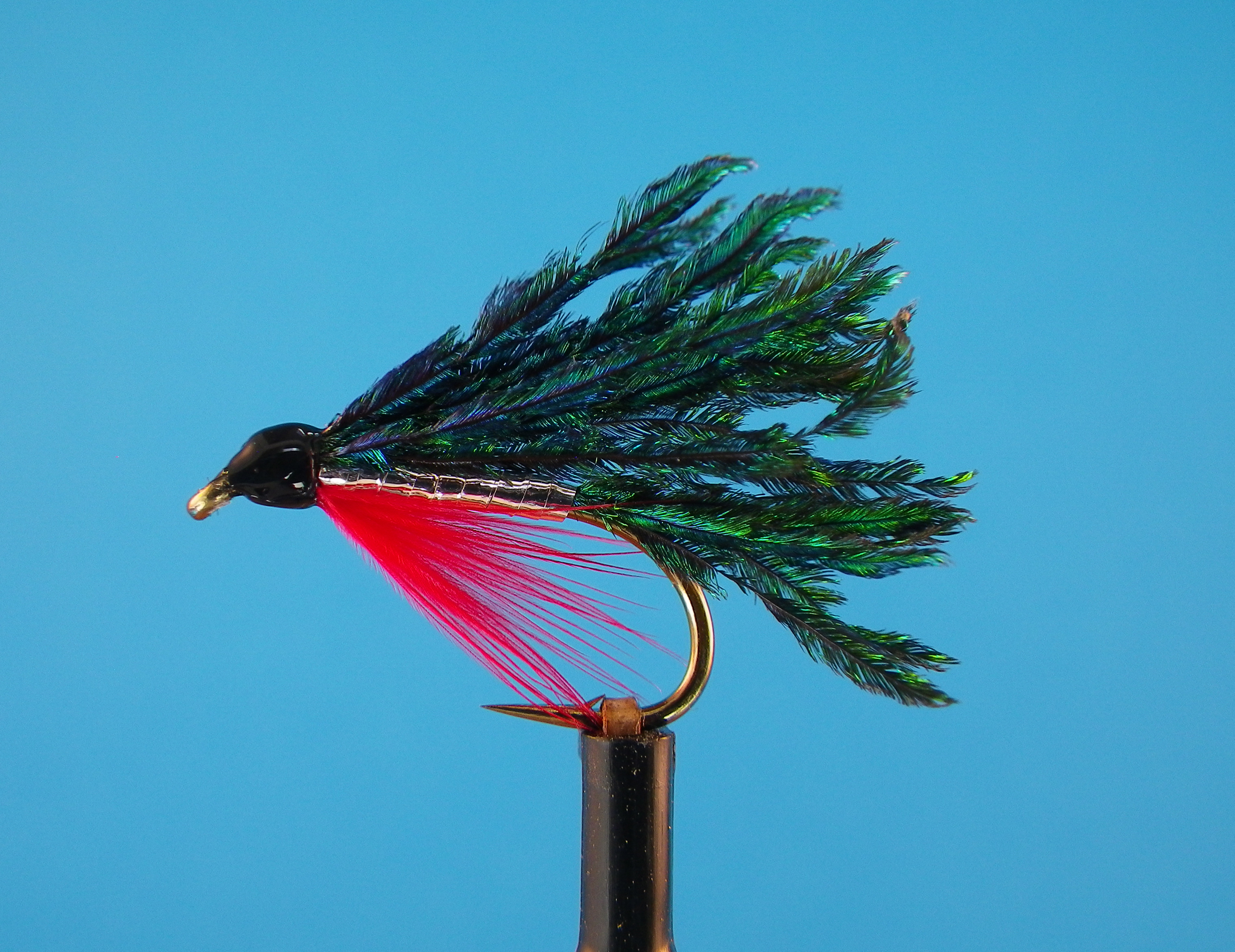
The Dark Hendrickson Rogues’ Gallery

Image

Pizza is your friend: Thanks to CVTU for hosting Wet Flies 101

When you travel around the northeast making evening presentations to fly fishing clubs, you learn to keep a stash of protein bars in your case. Especially if you get grumpy when you’re hungry.

Or, you could just present to the Candlewood Valley Trout Unlimited Chapter. They trot out a spread of cheese pizzas, and invite you to have at it. So, thank you, CVTU for being such gracious hosts. I really enjoyed presenting “Wet Flies 101” to such an engaging group.

One of the many gorgeous creatures you can expect to catch with wet flies.

CUFarmyBrown 7:13

I also thought I’d make this thank you note a little more appealing to those who weren’t in attendance. At the end of each presentation, I open the floor to questions. Here are a few topics we covered.

Q: Where do you attach weight to the leader if you want to quickly sink the flies?

A: One BB shot to start, just above the knot that forms the middle dropper.

~

Q: When your team of wets is downstream, how do you re-cast them? Do you water load the rod and shoot them upstream?

A: It depends on where I want to make my next cast. If it’s upstream, and doesn’t require a precision or a long cast, yes, I’ll water load the rod and shoot the whole works. But mostly, I like to aerialize the line before I cast. Still, I like to keep false casting to a minimum.

~

Q: How long do you dangle?

A: Shocking! I can neither confirm nor deny the rumors. But seriously, the issue is how long do I leave the flies dangling in the current below me? If I know a fish is there, I might leave it for several minutes. I might also animate the flies by slowly raising and lowering the rod tip, perform a hand-twist retrieve (with the rod tip raised), or sweep the flies back and forth in the current with side to side mends.

~

Just a reminder that my next presentation (also Wet Flies 101) is to the Narragansett (RI) TU Chapter, Thursday, February 26. You can get directions at their website, tu225.org.

Saturday, March 1, I will be doing a small stream tying demo at the Compleat Angler in Darien, CT. Their website is compleatangleronline.com

Thanks to today’s “Wet Flies for the Farmington River” class at UpCountry Sportfishing

We had a sellout crowd at today’s class — thanks to everyone for taking the time to come. Really good group, very enthusiastic, and we spent as much time talking about wet fly tying, theory, and fishing as we did tying. I had fun, too — so much that I couldn’t believe it when I looked at my phone and it was 1:40pm. Like a soccer match, we added some extra time, and in the spirit of one more cast, squeezed in another tie. I’d also like to take this opportunity to formally warn the trout in the Farmington River: there are now five more anglers who are going to be fooling you on regular basis. For your own safety, stay within the TMA.

Busy, busy, busy. Time flies — did I really just write that? — when you’re tying soft-hackles.

Image

Tying and talking. Do not try this at home.

IMG_9906

Just a reminder that I will be giving a presentation, “Wet Flies 101,”  Tuesday night, 2/11, at the CVTU meeting at 7pm at Armando’s Restaurant, 47 Stony Hill Rd, Bethel, CT. Hope to see some of you locals there!

Thanks to everyone at the CFFA Show

I was humbled by the number of people who stopped by my tying table today. Old friends, new introductions, online names to connect with faces, an excess of positive energy, talking fishing and tying, and some really good questions. I’ve been going to the CFFA Show for years; this was my first time as tyer/exhibitor. The CFFA was a terrific host. I value the little things in life, like finding out that they had a spiffy little box lunch set aside for me. Feed me, and I’m happy.

I did manage to sneak away and do a little shopping (thanks, Gary and Todd for watching my swag). Found some goodies like a bag o’ wood duck feathers, an el cheap jungle cock neck (the nails need some work, but a little wax and some flexible cement and they’ll be quite passable). My master score was two large white bucktails with scads of straight fibers over 5″ long. $5 each!

I just know there was a saddle suitable for flatwings hiding somewhere in that room. Perhaps next year.

Pardon my humble setup: some MDF screwed to 2x4s and my Universal No. 2 clamp vise that I bought from Clapp & Treat in 1976 for $13.95. Sadly, it’s on its last legs. There’s a new toy on the way, but nothing will ever replace my baby who has served me faithfully for so many years. “It’s not the arrow, it’s the indian.”

Image

Slight change in plans for the CFFA Expo this Saturday

I just learned that UpCountry Sportfishing had to pull out of the show; I’m still going to tie, but obviously not at their table. I had planned on focusing solely on wet flies for trout, but I’ll probably do a little saltwater, too. You can find me on Tyers Row.

Also, due to some prior commitments, I won’t be able to tie the whole time. Figure something like 9am to 1pm-ish. Hope to see some of my local followers there.

The CFFA Expo is held at Maneeley’s, 65 Rye Street, South Windsor, CT, 2/1/14.

Wet Fly Tying Demo at the CFFA Expo

I will be tying wet flies at the UpCountry Sportfishing table at the CFFA Expo, Saturday, February 1. The event runs from 9am-3pm; unfortunately, due to some prior commitments, I won’t be able to tie the whole time. Figure something like 10am to 1pm-ish. Hope to see some of my local followers there.

Image

The CFFA Expo is held at Maneeley’s, 65 Rye Street, South Windsor, CT.

New Tying Class: Wet Flies and Fuzzy Nymphs for the Farmington River

This is one of my more popular tying classes. We explore buggy, impressionistic wets and nymphs geared toward fishing the Farmington, but the patterns and skills you’ll learn will serve you well on almost any trout stream. The class places an emphasis on using natural materials to create flies for specific hatches, as well as attractor patterns. Participants will need a vise, thread and tools. All other materials will be provided from my magical, mystical stash. The cost is $50.

Learn to tie the Squirrel and Ginger, and many other patterns that trout won’t be able to resist.

Image

When: Sunday, February 9, 2014, 9am-2pm

Where: UpCountry Sportfishing, New Hartford, CT

Sign Up:  I can’t enroll you; you can sign up by calling UpCountry at 860-379-1952.

Somewhere out there. (Thataway.)

Middletown isn’t actually in the middle of Connecticut. It’s more like the mid-point between New York and Boston. Being centrally located has its benefits. I’m 45 minutes from Housatonic stripers. Just over an hour to Rhode Island. The Farmington River is as close as 35 minutes. But to get where I was going Thursday, I needed about two-and-a-half hours. One way.

In addition to drive time, the price of admission includes a hike that sends your heart rate soaring. (And, if you like to detour off the trail to get to those feeder streamlets that tumble down the sides of mountains as much as I do, some semi-treacherous bushwhacking.) It’s definitely not for everyone. But for the adventurous soul, rich rewards await in the form of magnificent solitude. Seductively clear water. And armies of obliging brookies.

~

The day began grey with dense fog banks and light drizzle. My energy on the way into the woods was the typical I-can’t-wait-to-get-my-line wet rush. It usually takes a lot to distract me when I’m in hurry-up fishing mode. But I was captured by this splash of color against muted brown.  Sitting here at home now, I’m glad I stopped.

Image

~

We haven’t had much rain in the northeast during the last month. The brooks were way down compared to last fall. (And nice and cold at 50 degrees.) But even the feeders were teeming with char. Nature finds a way. Like this hemlock, growing hard against a rocky outcrop, roots searching for precious water, splayed out like the tentacles of a beached squid.

Image

~

I began fishing downstream, dry, with a size 16 Improved Sofa Pillow. When streams are this low and clear, the bite is often better if you go subsurface. It’s easy to figure why. The fish are feeling vulnerable in the lower flows. Whereas they’re bashful about showing themselves on top, they remain undisciplined gluttons below.  Once I made the change to weighted beadhead soft-hackles, I saw an exponential increase in strikes. The nips began the moment the fly settled beneath the surface. One of the flies I used — as yet unnamed — was a soft-hackle with a hot chartreuse bead head I tied up a few weeks ago. I could easily track the fly in the water, as well as the dark forms that would materialize out of nowhere to attack the intruder.

Image

Image

“Unnamed”
Hook: 2x stout, 3x long, size 14
Thread: Black
Bead: Tungsten, chartreuse
Tail: Black Krystal flash
Body: Peacock Ice dub
Hackle: Grizzly hen

~

Most of the brookies I pricked and brought to hand were in the 3-6″ class. But there were a few more substantial fish in the mix, like this handsome buck, ablaze in fall spawning colors. A proper Brobdingnagian, he’s been in the brook for quite a few years.

Image

~

Turned out nice again. It’s hard to manage the thought of the coming snow and shelf ice when the mercury’s pushing 65 and the sun is dancing off the tree tops.

Image

~

Can you stand to look at one more picture of a brook trout in blazing fall technicolor? If we must. I could wax poetic about the Fontinalis fin, the haloed spots, and the vibrant belly. But the camo pattern on the dorsal fin is inspired.

Image

~

Like fishing trips, all fishing reports regrettably must end. This is the fish from the photo above just at the moment of release. Till we meet again.

Image

So, this guy walks into the woods carrying a fly rod…

We haven’t had rain in a while; the brook was low and the forest floor dry as tinder. Still, I found a spirited rivulet of groundwater that wended down the fall line before tumbling over a mossy ledge. When the water is this clear and low, the brookies tend to stay in the darker, deeper sections — or in the whitewater just below that miniature waterfall next to the moss-covered boulder.

Image

~

Vibrant red spots ringed by blue halos adorn an eastern brook trout. Brookies are the only trout (technically, they are char) native to much of the eastern United States.

Image

~

Fall is living up to its name. The deluge of soon-to-be-ex-flora has already begun in the hills. Fishing-wise, the leaves weren’t really an issue; I only hooked a few here and there. I was looking for photo ops when I glanced down at my feet. I was struck by contrast of these two leaves against the rock, but what really captured my fancy was how, in that swift current, did they manage to find a toehold — and how are they able to so stubbornly cling to their perch?

Image 

~

A lot of people don’t know this, but Vincent Van Gogh was an avid fly fisherman. He used to jet from his estate in Holland to his cabin in the Appalachian foothills, where he could pursue his passion: fishing for Salvelinus fontinalis. The flank of the brook trout is said to have been Vincent’s inspiration for his masterwork Starry Night. 

Well, at least that’s what I heard.

Image

Fishing notes: Water was 56 degrees. Not surprisingly, most of the fish I pricked came from deeper holes, dark runs, and plunge pools. I found one abyss where there was a bona fide lunker (for this size stream) of about 11-12 inches. Pricked him twice, but couldn’t get a good enough hookset to close the deal. I tried for over a half hour, and in the end decided that that fish might be responsible for populating hundreds of yards of brook — and with spawning season so close, would be better left uncaught. I fished mostly downstream. Dry fly was a size 16 Improved Sofa Pillow; wets were a cornucopia of bead head soft-hackles. Cigar was an Aroma de Cuba Reserve maduro Churchill.

Farmington River Report 9/29/13: Blue ribbons all around

First Place Winner: James. James is an experienced fly angler who wanted to learn the ancient and traditional ways of the wet fly. He aced Wet Flies 101, got into double digits of fish, and even had a double on a February Red and a Squirrel and Ginger. Good job wading, good job mending, good job presenting. If he keeps at it, James is going to be a dangerous machine. Trout, you’ve been warned.

Almost a grownup. The signature ink of youth has just about faded away from his flanks. A spirited fish, this one. I’m amazed he held still long enough for a photo.

Image

First Place Winner: The weather. Cool air. Warm sun. Blazing, brilliant sunshine. All day long. Water temp 59. Whoever ordered this day, I’d like to buy you a drink. And a cigar.

First Place Winner: The bite. Thank you, trout, for making my job easy. Your recklessness creates the illusion of genius in the form of a fishing guide. I really appreciate it.

First Place Winner: The hatches. See “The bite.” Caddis (smaller creamy size 16 and big tan size 12s), midges, BWOs, and especially a bumper crop of Isonychia. All our trout came on the Squirrel and Ginger (caddis) size 14, size 12 February Red, and size 12 Hackled March Brown.

James’ brown. The hardest working trout in the Farmington River? Or simply one of the many fish James brought to net?

Image