Currentseams Best of 2022: #4-#2

#4: Getting Published for the First Time in a Real Book, Surfcasting Around The Block II. Although I was late to it in terms of its bookshelf life, I’m a big fan of Dennis Zambrotta’s Surfcasting Around the Block. So you can imagine my delight when, a couple of years ago, Dennis asked if I wanted to write a couple of chapters for the followup. Like filmmaking, writing a book isn’t an instantaneous proposition. In fact, the journey from idea to manuscript to holding bound paper and glossy cover in your hands can be glacial. (Maybe these days that’s not such a good analogy. But I digress.) Published in the fall of 2022, Surfcasting Around the Block II is a must-read for any fan of this fishery. Modesty prevents me from listing my favorite chapters, but suffice to say there are many pearls within the entire book to be harvested by the keen student.

From the original book. (The text, not the fly.)

#3: A Striper That Could be Measured in Pounds Instead of Inches. It’s been a few years since I caught a striper on the fly this big, and man, I don’t have to tell you how good this one felt. After putting in my time at this general mark over several years, what a gas to finally connect with a good fish. And I did it on a fly with which I’ve never had any success, the RLS Sure Thing. So summon your best General Patton voice and shout along with me, “Ken Abrames, you magnificent bastard, I read your book!” Photo by striper master Toby Lapinski. Read more.

#2: Two Glorious Days in Cheesman Canyon. Good lord, what have I been missing all these years?!? I continue to kick myself for never having experienced fly fishing for trout out west before this year. The river was the South Platte; the beats, sections of Cheesman Canyon; the guide, Chris Steinbeck from Pat Dorsey’s Blue Quill Angler. I spent two days in a state of trout nirvana, one with my son Cam and the other solo. Maybe I simply hit it right. Maybe I was spot-on my game. But I know this for sure: an hour on this tailwater has the potential to beat the tar out of a week on the Farmington in terms of nymphing action and robust, belligerent, hefty wild trout. Wow! (It just occurred to me that I never finished my triptych. So I shall endeavor to give you the last part in early January.) Read the first two installments here, and here.
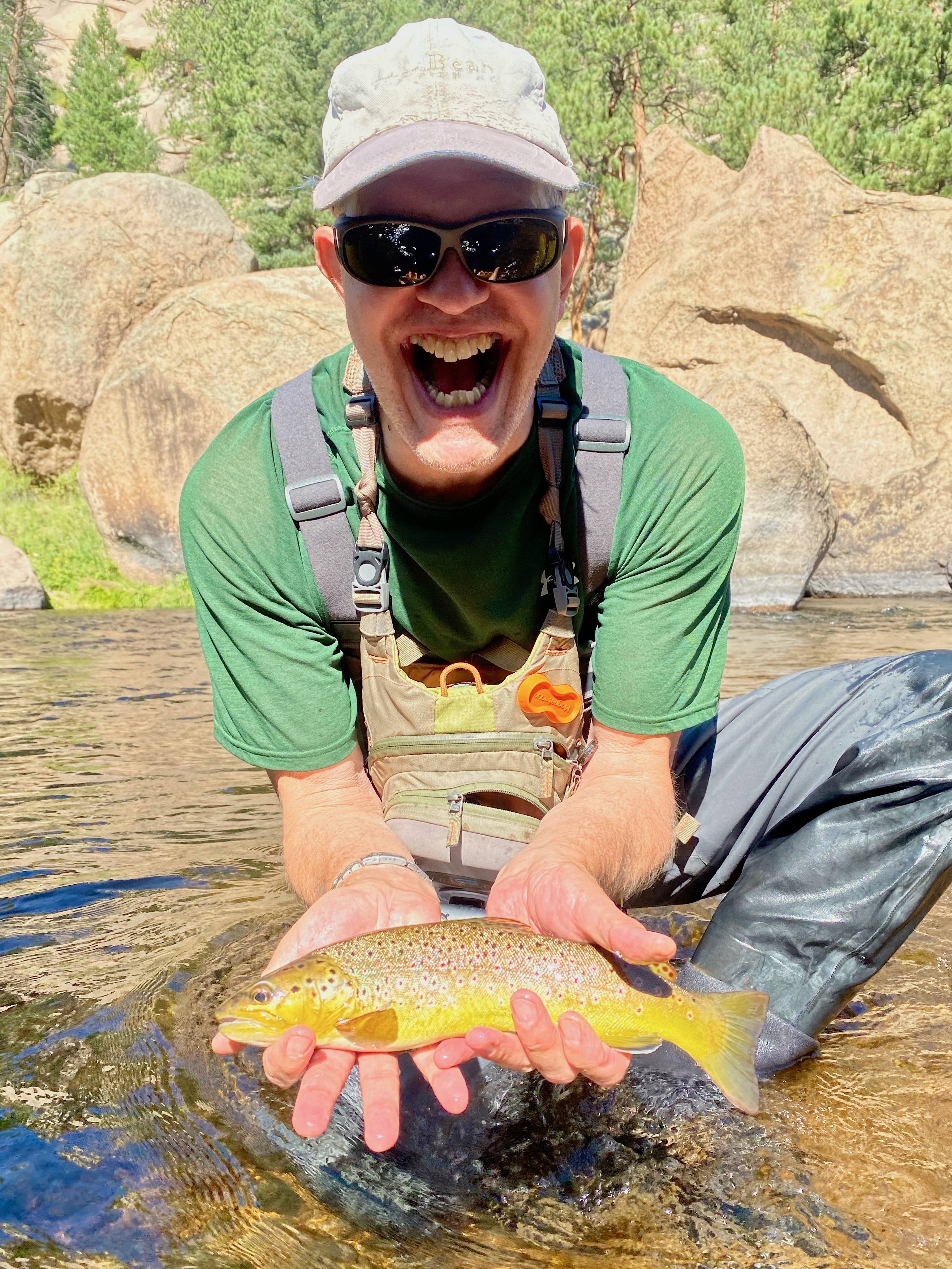
Ironically, my first fish of the trip was by far the smallest. Still, a powerful fighter.

Coming soon…the #1 event of 2022!

Tell the ASMFC “No!” to Striped Bass Commercial Quota Transfers

Once again the ASMFC can’t get out of its own way. Their latest hijinks involves allowing states to transfer unused commercial quotas — in other words, killing more striped bass. Sounds like a terrific way to conserve the stocks, yes?

You can get a more in-depth look at this madness on the American Saltwater Guides Association website. Or, here’s a brief synopsis from our friend George Baldwin from his Facebook page: “The receiving state that this mostly refers to is Delaware, who believes they have gotten shorthanded when the quotas were last assigned. The states that haven’t filled their quotas were unable to find enough striped bass to do so. This, in addition to the fact that we’re trying to rebuild striped bass populations by 2029, does not indicate a healthy enough striped bass population. Doing anything that has a good chance of increasing striper harvest while we’re trying to rebuild diminished stocks that were determined to have been overfished does not seem like a great idea. Especially after poor spawning success in the past few years. We’ve got to lower the mortality rates that got us into this position, not raise them.”

Here’s where you come in. The ASMFC is taking public comments on this proposal. It takes about five minutes and the stripers really need your help. Again, this comes from George Baldwin (thank you, George, for being such a strong advocate for striped bass!):

You can help by writing a short letter or email to ASMFC stating your name and state of residency, that you are a recreational fisherman, and that you prefer the commission adopt Option A for Striped Bass Draft Addendum 1, which is to keep the status quo (no commercial quota transfers).

Public comment will be accepted until 11:59 PM (EST) on January 13, 2023 and should be sent to Emilie Franke, FMP Coordinator, at 1050 N. Highland St., Suite 200 A-N, Arlington, Virginia 22201; or at comments@asmfc.org (Subject line: Striped Bass Draft Addendum I).

Your letter doesn’t have to be anything elaborate. It can be as simple as something like the following (feel free to use this as a template for your own email):

To the Striped Bass Management Board, To: comments@asmfc.orgSubject: Striped Bass Draft Addendum I

I am a recreational angler from the state of <INSERT STATE HERE>. I’m writing to express my preference for the options being proposed in Draft Addendum I to the Striped Bass Fishery Management Plan. I prefer option A – status quo, no commercial transfers. Any of the other options are likely to increase mortality at a time when the stock is rebuilding. Thank you.

Sincerely,

<INSERT NAME>

<your email address>

There is great power in conservation, preservation, and proper catch-and-release. Please go send that email!

Steve Culton Schedule for the Fly Fishing Show Marlborough, Jan 20-21-22

I just received my schedule for the Fly Fishing Show in Marlborough, MA, and it looks like I’m going to be busy! Seminars, presentations, tying demo, tying classes — covering both fresh and saltwater. The show is Friday, January 20, Saturday, January 21, and Sunday, January 22. I’ll be appearing all three days. As always, I’m counting on a good currentseams turnout! All seminars and Destination Theater talks are included in your admission price; the classes require pre-registration and an additional fee. Here’s my schedule:

Friday, January 20: 11am, Destination Theater Room A, Finding Small Stream Nirvana. 1pm, main show floor, Featured Fly Tier, Presentation Flies for Striped Bass. 4:30pm, Seminar, Release Room, Beyond Cast & Strip: Presentation Flies for Striped Bass.

Saturday, January 21: Classes With The Experts, 8:30am-11am, Tying and Fishing Wet Flies. You must pre-register for this class. 2pm, Destination Theater Room A, Modern Wet Fly Strategies.

Sunday, January 22: Classes With The Experts, 8:30am-11am, Presentation Flies for Striped Bass. You must pre-register for this class. 1pm, Destination Theater Room A, Hot Bronze: Wade Fishing for Summer Smallmouth.

Mark your calendars! I’ll be telling you more about my programs in the coming weeks.

Currentseams Q&A: Greased line swings, lateral lines, and finding flies in dirty water

Happy Monday. We’re back and at it, and it feels good! This question comes from new subscriber Travis. It’s a good one, and since the answer is not simple, I thought I’d share it. Question: After listening to your Saltwater Edge podcast episode, you’ve motivated me to start trying out greased line swings and other similar presentations for stripers in my local estuary. This article brought up similar concerns I have about this tactic where I fish because the water is quite stained while still being mostly salt. How do the stripers’ lateral lines function in regards to a dead drift or swing presentation? Does this method require the fly to be that close that it goes by their face like a trout, is there vision better than we give them credit for in murk or are their lateral lines more sensitive than always needing a strip retrieve? Still trying to get one on the swing.

Answer: I could write a lengthy chapter to answer. But rather than over-complicate, let’s simplify. The conditions are stained water with poor visibility. The first question is how do the striper’s lateral lines function in regards to a dead drift or swing presentation? My reaction response is, danged if I know. My second response, while sounding facetious, is actually an attempt at serious: probably the way they always do. But I know where Travis is going with this. What’s he’s asking is, how do stripers find a fly in murky water? Do they see it? Do they rely on their lateral line? Does the fly need to be moving for them to find it?

Here’s what I can tell you. I fish a couple estuaries where the water, at best, is the color of tea, and perhaps most of the time is more like tea and milk. That is, lousy visibility. The bait is grass shrimp about an inch-and-a-half long. Every time I go, I hear the pops of bass feeding. So, I know they’re finding the naturals in stained water in the dark. Now, I don’t know if they’re finding the bait through vision or their lateral line or a combination of the two. But I do know that they can and will find my grass shrimp flies, which could hardly be described as patterns that — and I’ll use a phrase that generally drives me bonkers — “push water.” These flies are swung or dangling in the current. Sometimes the hits come when I ‘m pulling in over a hundred feet of line and backing. But mostly it’s on the swing and dangle.

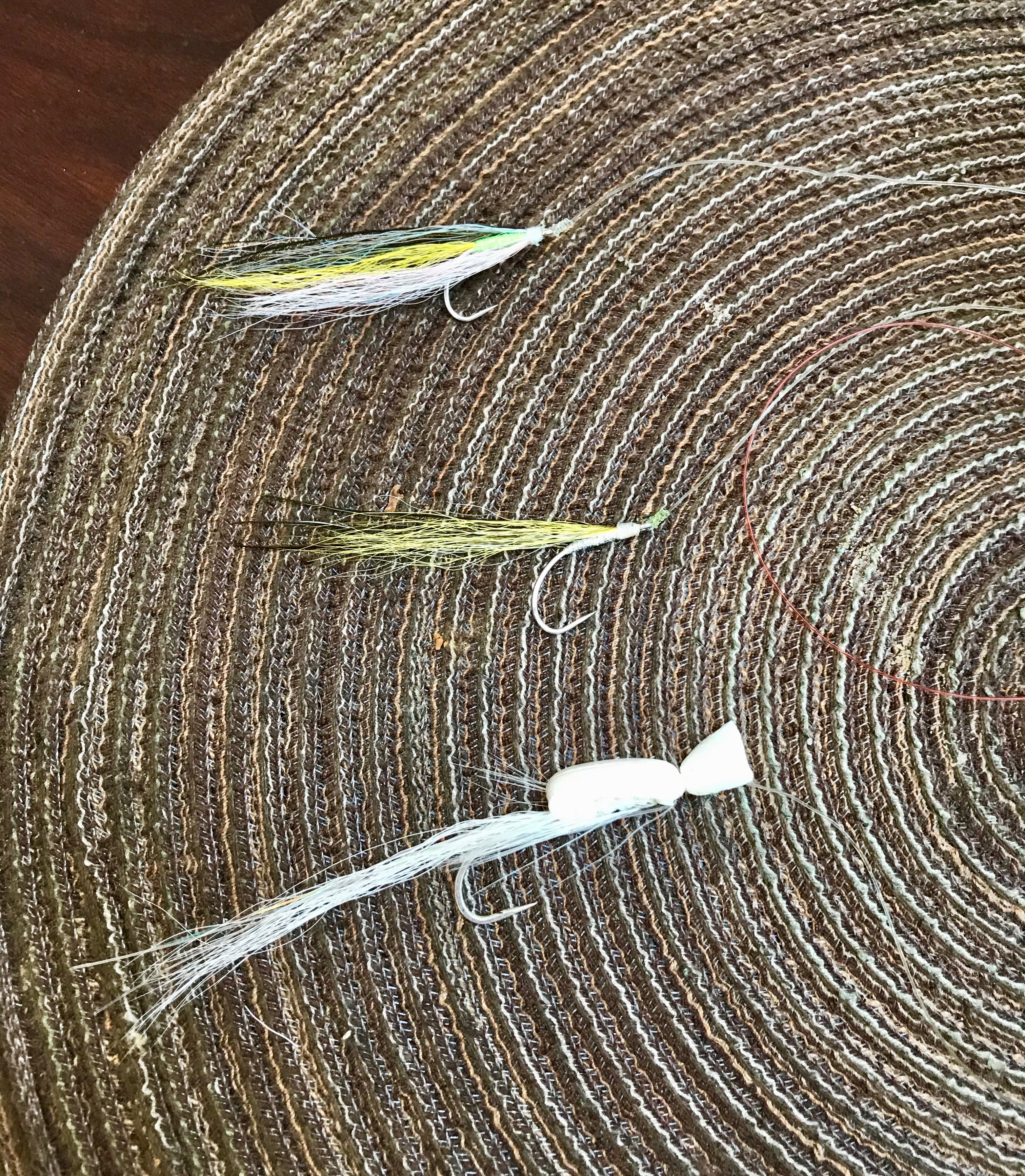
Exhibit A: All of these flies are small. All of them have produced stripers, on static presentations, even in stained water. I fish them with confidence on the swing or dangle with a floating line because I know they work, and I know I am presenting the flies in a manner in which the naturals are being eaten.

I don’t know how the bass are finding my flies; I might even suggest that it doesn’t matter, because they are finding my flies, just as they find my skinny sand eel flies at night on the dark of the moon in the whitewater wash of a pounding surf. I fish bigger flatwings in the spring in a different estuary system where the water is frequently stained. Granted, those are much bigger patterns, but the presentation is still a natural drift, swing, or static dangle; regardless, the bass find those flies.

What Travis is really asking for, I believe, is permission to believe that the bass will find his flies in murky water. Permission granted. But ultimately, the permission has to come from you, Travis — and the only way to obtain it is to get out there and fish. Hope that helps!

Exhibit B: flatwing found in lightly stained water.

The burning question of the day is: If using a floating line in chop/surf is causing me to lose contact with my fly…

…then how am I catching all those stripers?

The answer should be self-evident.

I wanted to briefly make another point about using floating lines for stripers. If I could change minds on one aspect of using a floating line for stripers from the shore, it might be the notion that one must have weight (fast sink tips, etc.) incorporated into the system — and/or that you’ve somehow got to get the fly down into some imaginary strike zone. Certainly, there are times when stripers are grubbing. But bass are usually looking straight ahead or up. I rarely use sink tips or weighted flies with the floater. That 20-pounder from last month came on a totally floating line setup, and the take came where a wadeable reef drops off into substantially deeper (overhead) water. Not surprisingly, the bass found my fly near the surface.

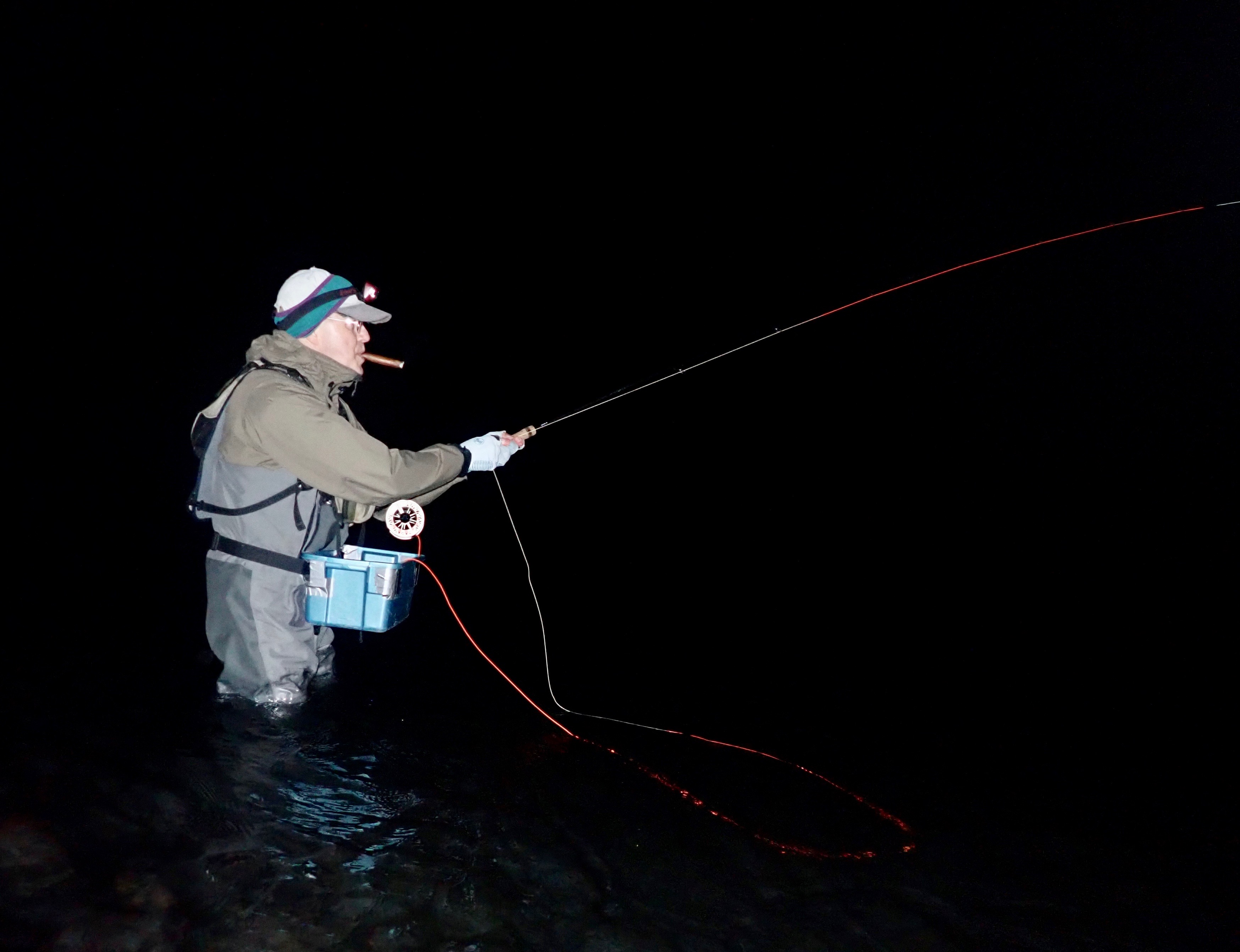
An oldie but goody from Block Island. I’m standing in thigh-deep water, but I was casting into water that was probably over my head. The bass are usually looking up. Using a Rio Outbound 9-weight floating line with a 7 1/2 foot leader.

“Surfcasting Around The Block II” is here!

Surfcasting Around The Block II — Forty Years of Striped Bass Surfcasting Stories, Articles and Legends from the Islands of Block and Aquidneck is on the shelves! Dennis Zambrotta’s much-anticipated follow-up to his out-of-print classic Surfcasting Around The Block is actually a group effort with multiple contributing authors — many of them Block Island surfcasting legends. Although the focus is on fishing the island with spinning gear, the astute fly caster will be able to glean a treasure trove of information on fishing the island.

Sitting in my favorite reading chair, looking for intel from Campo, McKenna, Abate, Winters, and that Zambrotta guy…

And yes, there are two chapters devoted to fly fishing Block Island authored by yours truly. The first part is a story about a particularly memorable Block Island All-Nighter. The second covers gearing up for fly fishing on Block Island. Where can you get Surfcasting Around The Block II (ISBN979-8-218-07120-2)? The Saltwater Edge. The Island Bound Bookstore. And The Surfcaster. Happy reading!

What a football of a Block Island bass! This is a really good story. I think you’re going to like it.

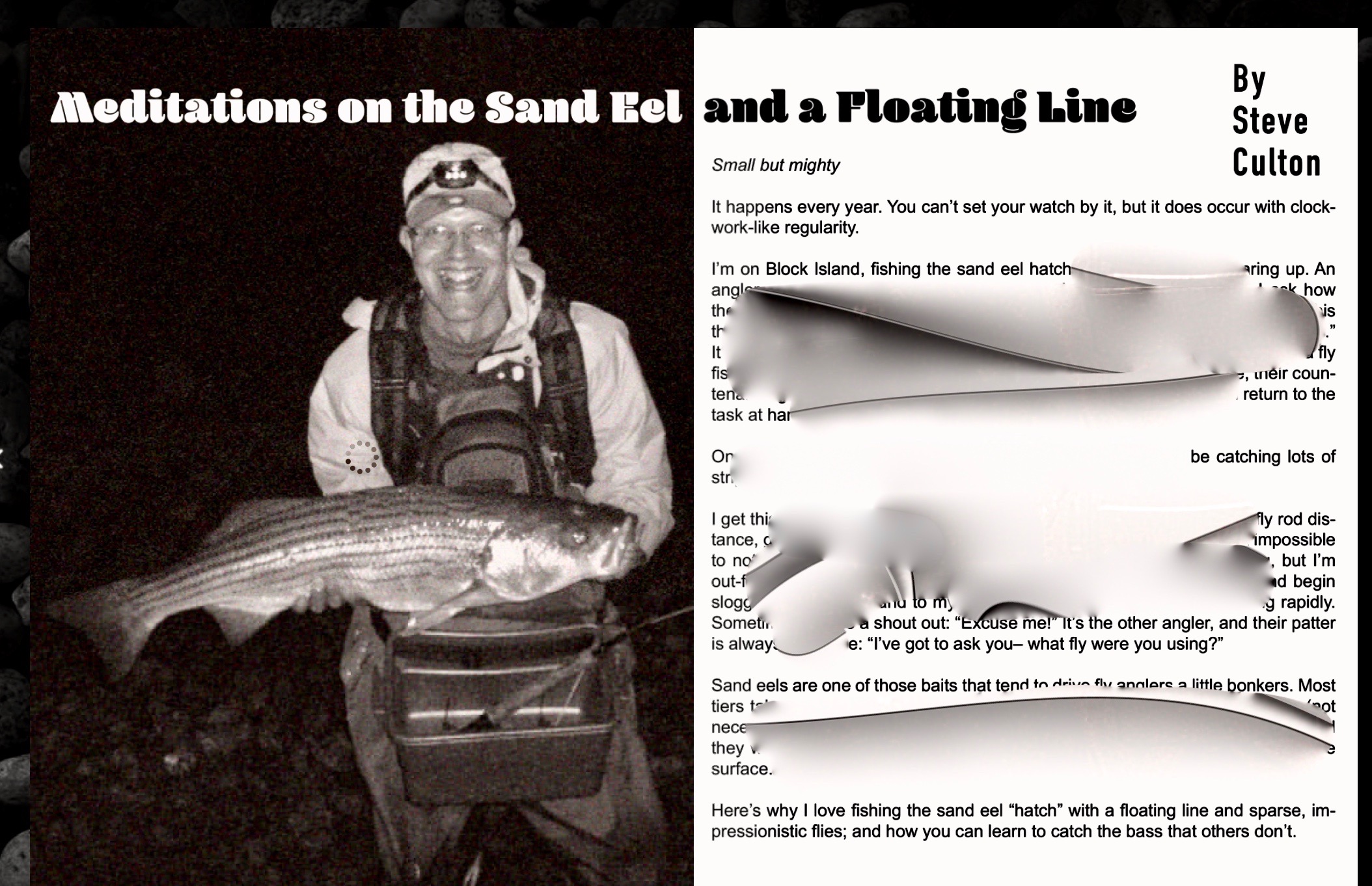
“Meditations on the Sand Eel and a Floating Line” in issue #75 of Surfcaster’s Journal — plus a short striper report

I’m delighted to have piece in the diamond issue of Surfcaster’s Journal. Meditations on the Sand Eel and a Floating Line is exactly what it sounds like: my thoughts on fishing this important bait using traditional patterns and salmonid tactics — and catching more striped bass. Most anglers I see targeting stripers feeding on sand eels use intermediate lines and weighted flies. They’re missing out, and typically only catching the stripers that are willing to chase. Some of the answers to the mysteries of “How come I can’t catch those bass?” when they’re feeding on sand eels are unveiled within.

Surfcaster’s Journal is an online e-zine. If you’re not reading it, you should be. Although the focus is primarily on using spinning gear, there is some in-depth fly casting content (like this piece) — and there is plenty of invaluable information that may be gleaned from the traditional surfcasting articles. It’s only 20 bucks for a year. You can subscribe here.

I remember this night like it was just a few months ago: Block Island, July, and a school of 15-20 pound bass were in close harassing sand eels for several hours. The stripers were very willing to jump on. But what about those frustrating nights when you can’t buy a hit? Read Meditations on the Sand Eel and a Floating Line and become a closer.

Mini-striper report 10/16/22: I fished for several hours last night with surfcaster extraordinaire Toby Lapinski. He was plugging and I was on the 2H fly rod. Conditions appeared to be perfect, but the neither the bass not the bait got the memo. Toby managed two school bass and yours truly took the skunk. Toby had a trenchant analysis of the evening, which, as you have not yet heard it, I will now precede to relate: “Bleaaahhhh.” That’s a direct quote.

One month away! International Fly Tying Symposium tying class and seminars

Steve Culton will be making his first appearance at the 2022 International Fly Tying Symposium, November 12-13 in Somerset, NJ. (I know, sounds like a press release, but this kind of is.) In case you haven’t visited, and are looking for more information, the Symposium site is live. There was a glitch yesterday in the class registration link; that has been fixed. So, if you want to attend my class, Tying Soft Hackles, Winged and Wingless Wets, Saturday Nov 12 from 1pm-3:30pm, you can register here.

I’m currently working on two new seminars that will debut at the Symposium. The first, on Saturday at 10:30, is Tying and Fishing Wet Flies. This will cover some basic wet fly construction, theory, and how to present and fish wet flies — and you’ll also get to see some of my favorite patterns. On Sunday at 11am, it’s Beyond Cast and Strip: Presentation Flies for Stripers. I’ll be covering fly design, use of natural materials, sparseness in design, and — drum roll — presentations other than cast and strip. If you want to attend either or both, you just show up, and I’m hoping for a good turnout from currentseams followers. And of course, I’ll be at a tying table when I’m not teaching and presenting.

If you’re just casting and stripping, a spinning rod is a much better tool for that job. Find out why I tie striper flies the way I do, the secret ingredient in all my patterns, and how to present them — at this year’s International Fly Tying Symposium.

Striper Report: All good things to those who wait, or: The Sure Thing

On page 77 of my copy of A Perfect Fish, scribbled in the margin just to the right of the recipe for the R.L.S. Sure Thing, is a single word. Fall. Then, below that, in smaller letters, 8-9″, night time when there’s a little moonlight KA 3/12/10. These are the notes I took from a phone conversation I was having Ken Abrames on that date. If you went through my copy of the book, you’d find notations like this one sprinkled throughout. Such are the benefits of befriending the author.

The funny thing about the Sure Thing is that up until last week, the only thing that was certain about that pattern was that I would blank when I fished it. To be fair, I didn’t fish it a lot. But over the years it got enough time in my rotation to cause a chuckle whenever I thought of the name. Pshaw! Sure thing, indeed.

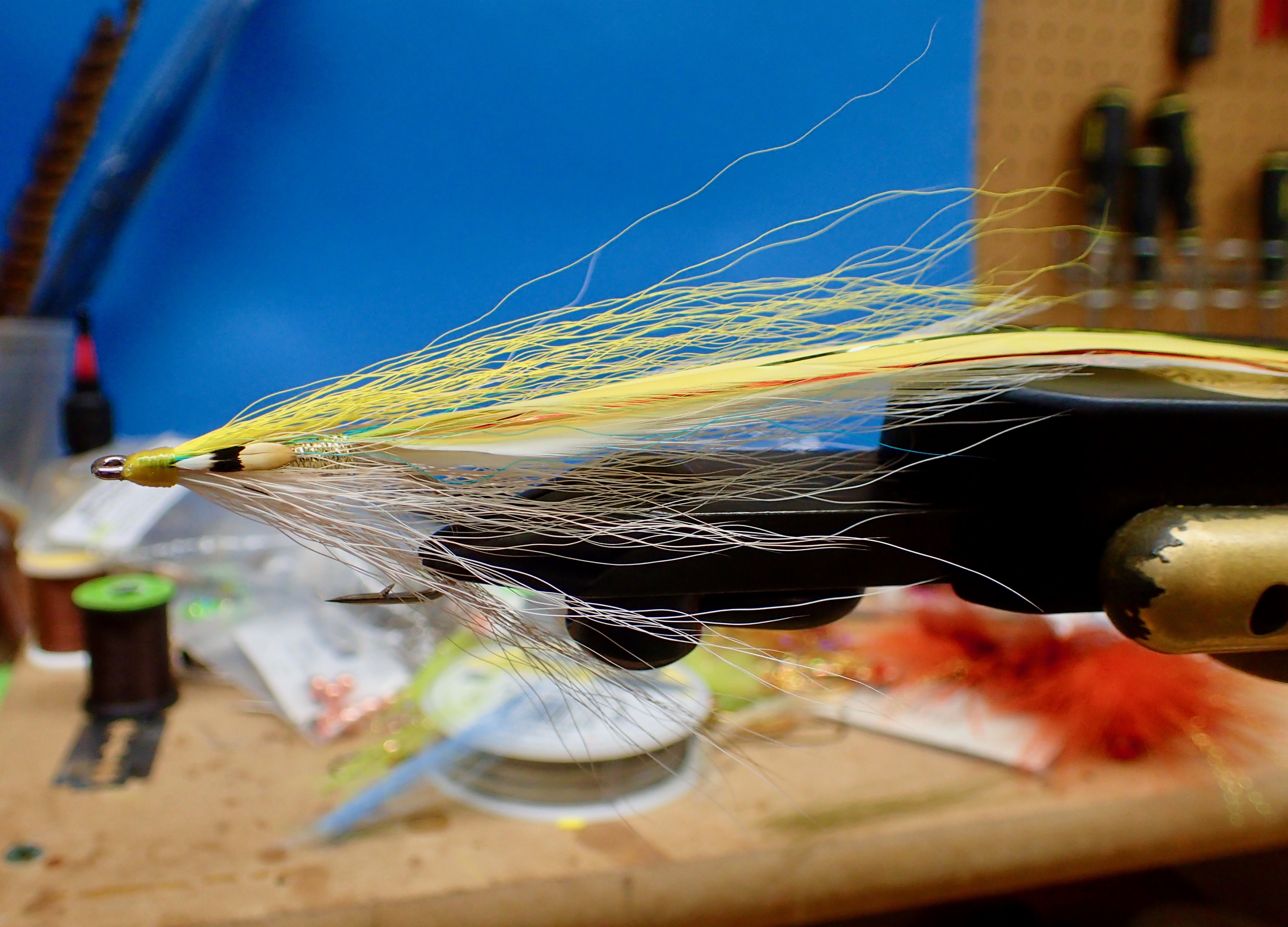
Nonetheless, I tied one up last Thursday because I was going out in the fall with a little moonlight, just after dusk. I made it 9″ long like the man said. And I remember thinking, as I lashed feather to hook “If not tonight, when?” Besides, Toby (Lapinski, surfcaster extraordinaire) had done well his previous outing at this mark with a yellow needlefish. The Sure Thing is a three-feather flatwing with at least one yellow saddle and plenty of yellow bucktail. It would be a very reasonable facsimile of Toby’s plug.

My newly minted R.L.S. Sure Thing, as yet unshaped, but ready to hunt. I’ll try to remember to feature this pattern and recipe in a future post.

We settled in and began to cast, me with my two-hander and floating line and Sure Thing, Toby with his surf rod and bag of plugs. Right away Toby was into stripers. Nothing too big by his standards, but enough to whet our big bass appetites. Even though it was early in the incoming, the current was already beginning to pick up speed as it rushed across the rocky bottom. This was my second time here, and I knew what I had to do: make a cast, immediately throw a large upcurrent mend, gather in the slack, and let the fly greased line swing over the bar.

Big fish don’t miss, and this one drilled the Sure Thing with precision accuracy. The beauty of the greased line swing manifests with such takes; you feel the heaviness of the fish, see the surface erupt in a chaotic whitewater geyser, and hear the distinct sound made by a large object as it thrashes on the surface. My cast had only been about 70 feet, and I quickly came tight to the striper.

I set the hook. Then again, and once more. Normally, I’d put a bass this size on the reel, but I’d already begun stripping her in. It wasn’t until she was about 25 feet out that I questioned my decision. I let her take a little line from hands, and used the rod tip to deflect the more frantic short bursts. She was close now.

Always fight a big fish from the bottom third of the rod. Note that the rod angle is below 45 degrees. I was confident in my hook set, and the fact that I had a sticky sharp 3/0 hook and a 30-pound mono leader. It’s only when I feel the fish is running out of fight that I raise the rod tip to lift its head and lip it. The raised rod tip also cushions any sudden late bursts by the fish, which are sometimes difficult to manage when you’re hand stripping a larger bass. Photo by Toby Lapinski

Twice I thought I was in a good position to lip her. Twice she refused. And then it was over. The camera was readied, rod tucked under arm, fish supported — she never left the water — and then the most satisfying part. Release. Watching her melt into the dark waters of Long Island Sound, knowing you may catch her again some day. Perhaps it’s the fist bump from the friend who was there to share it with you that is the most satisfying. Or, maybe the victory cigar.

Whatever. It doesn’t have to be a sure thing.

38″, 20-pound class, R.L.S. Sure Thing. This has been my best year since 2018 for bigger bass. Photo by Toby Lapinski

Striper Lesson & Report 9/26/22: Love that dirty water. (Or not.)

Bert took a striper lesson with me on Monday. We banged around two different tidal marks near Long Island Sound. The wind made for a few casting and mending challenges, and the water was heavily stained. Bert learned about non-stripping presentations where the angler brings the fly to the fish. The greased line swing, the dangle, strategic mends — these are all now part of Bert’s striper fly fishing vocabulary. We even had a tug in the midst of this mid-day maelstrom. We also covered fly selection, dropper rig construction and presentation, and baitfish ID. If you want to catch those hard-to-catch, unwilling-to-chase, and (most of all) bigger striped bass on a regular basis, you need to learn presentation. Great job, Bert!

Despite the low visibility, we saw several bait balls of juvenile Atlantic Menhaden. Nice loops!

Then, Monday night, I ventured to the Ocean State. It never occurred to me that the entire southern New England coastal waters might be stirred up by the blow. Yep, the estuary I fished was the same sandy mess and weed farm. Bait was everywhere — mullet, peanuts, silversides — but the only thing that was on them were a few bass in the 12″-16″ range. In a little over two hours I managed a couple hits from these smaller guys, but no hookups. I stayed out way later than I should have, and I didn’t hit the pillow until after 3am. Maybe next time.