I got a late start today, and there’s so much to do: plow the driveway, catch a workout, pre-Christmas prep, a virtual wine tasting tonight (been looking forward to that for weeks!). I started the day proper by building a fire, an old Culton snow day tradition. I’ve also got lots of writing to do, but won’t get to it today: for Dennis Zambrotta’s followup to Surfcasting Around The Block, for my year-end wrap-ups for currentseams…plus Santa brought me an early gift of a new video camera. Gotta figure that out and hopefully make some even spiffier tying videos.
But for now, here’s a piece I did last year on the best nymphs for winter fly fishing. (Understand that “best” means my favorite, high-confidence patterns.) Also, remember that I don’t Euro nymph, so add weight and jig hooks to these patterns as you see fit. Enjoy the snow day.
We don’t need no stinking fake logs and propane fire!
Yep. I’m picky about the stuff I wear and the stuff I use when I’m fly fishing. I have very little patience for gear that doesn’t do what it’s supposed to do, or makes me uncomfortable, or just generally sucks (like this awful lamp). A winter hat seems like something that’s so simple, it shouldn’t require much thought. Therein lies the beauty of the UnderArmour Primaloft Ridge Reaper Hunt Beanie: it’s warm. It’s comfortable. It does what I want it to do.
For starters, I like to wear a ball cap when I’m fishing, even in the winter. The visor keeps the sun out of my eyes and precipitation off my glasses. On those really cold days, I like to wear a ski-type hat over the ball cap. My issue with previous hats was that they were too snug or too small or not warm enough. The last thing I want to be doing out on a river when it’s 20 degrees is be futzing with my hat. So the Ridge Reaper, even though it’s one size, is stretchy and roomy but snugs down nicely around my head and ears with no fuss.
New hat: the UnderArmour Primaloft Ridge Reaper Hunt Beanie.
Cosmetically, I like that the logo is understated. I’m not a fan of high-visibility, high-contrast logos, and as an outdoors person, you can understand wanting to blend in. According to the UA website, the yarn in this hat is breathable and water resistant, and it has a double layer knit lining. Sounds perfect. Like most UA products, this is more than I’d like to pay. $40 for a hat? But, as with so many other things, my eventual cost-per-use will make me forget the price, as will the hat’s performance and comfort.
Price: $40
Rating: *****
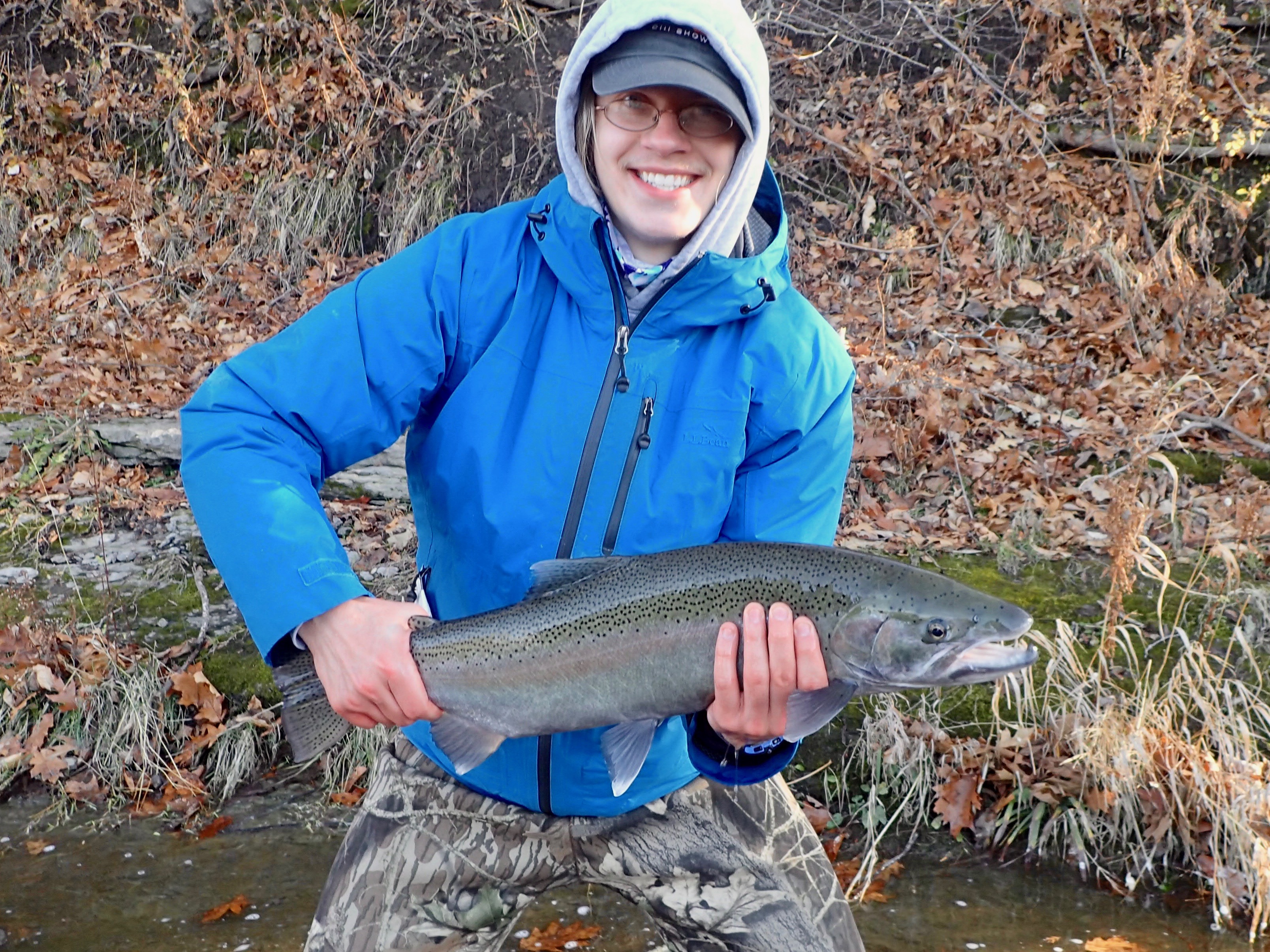
A post-steelhead-landed victory shot, hat under the hood. A warm angler is a happy angler.
As promised, here’s a pre-currentseams oldie but goodie. The events took place in December 2009, my first real winter steelheading trip. It’s amusing now to read this over a decade later, recalling how raw I was and little I knew about hooking and landing steelhead. I’ve included a link to a video old fishing buddy Todd Kurht made where you can see the battle and the beast. I hope you enjoy this little slice of steelhead dreaming,
“That Boy is a P-I-G pig!” With apologies to Babs from Animal House (and the steelhead involved) he truly was.
We started out on a beautiful winter morning with moderate temperatures and plenty of sunshine in a pool I had never fished before. The water was low (>350cfs), cold (33 degrees), and crystal clear. I had high hopes for this trip, my first winter steelheading venture, and I thought the conditions would only help us out. I sparked up a churchill to start enjoying on the walk down to the river. An hour later, I was still puffing on it, fishless. Bob had moved to spots elsewhere, and Todd and I were beating the water thoroughly. I just didn’t know this spot well. I spent a half hour around a really sexy-looking stump tangle before wading over to discover that the water was much shallower than I thought.
Then, I waded though a deeper channel that I didn’t know was there, and realized that that was where I should have been fishing (later confirmed by Trapper, one of the good guides, who shared the pool with us and his client). But, such is the learning curve on new waters.
I had tied on an Opal Blue Estaz egg and was fishing a current seam along the far bank when the indicator paused. I set the hook like I had already done dozens of times today, only this time the rig didn’t come flying out of the water. It stuck. And then the water boiled up 50 feet away from me.
I could see it was a good sized fish, but I didn’t have the full picture until the first run. Criiiiiiiiiiiiiiiiink! The drag sang out in the warm December air. The fish rolled again, and I could see once more that it was a good fish. Todd was on the scene by now, and confirmed it was a sizeable steelhead. And that’s when the line went slack.
Well, I told myself, that’s why they’re called “steelhead.” At least I had hooked a big fish, and at least I had my adrenaline rush for the day. Can’t win them all.
So why is my fly line moving upstream at a very rapid pace?
You must understand that I have a minimal corpus of knowledge when it comes to steelhead. “Rookie” would be accurate. I had forgotten how quickly they can turn on a dime and shoot upstream. The last time this happened was the first steelhead I hooked over a year ago. I lost that fish. Frantically, I stripped and reeled line as the fish passed me. Yes! Still on. I reset the hook as hard as I dared, and the fish dashed downstream at a breakneck pace, peeling line off the reel like I’d never experienced.
Again, understand that my experience base of fighting a fish like this on single digit test tippet is nil. The steelhead melted through the flyline in a matter of seconds. I was into the backing good. Of course, Todd is kibitzing the whole time, providing moral support, and telling me this is a great fish. I kept thinking, “Todd, you just put the whammy on me.” I decided nothing ventured, nothing gained. I was uncomfortable with well over a hundred feet of line out, so I started to reel in. Every time I felt weakness on the other end, I reeled in more. I regained the majority of the line before the fish blistered off on another long run. But all this oxygen-burning fury was taking its toll. And for the first time, cigar clenched in my teeth, puffing away, I felt good about landing this beast.
Finally the end was in sight. I had the fish in the shallows. At this point I felt if it broke off, I had at least achieved a moral victory. Todd came up behind the fish, tailed it, and a prize that was measured in pounds, not inches, was ours.
Talk about good fortune: the egg fly was dangling from a paper thin section of tissue in the steelhead’s mouth. We took some pics then released it, watching it porpoise as it skulked back to its lie. Not a bad steelhead to be your first on a fly you tied. And here it is.
This caption was not part of the original piece, but the photo was. I believe this is still the largest steelhead I’ve landed, and I’d estimate it to be about 15 pounds. You can see the fly dangling by a thread of tissue — such is the case when planets align and good fortune is in the forecast.
I went and sat on the bank to savor the rest of the cigar. I was shaking. I think I giggled out loud for a half hour.
The battle preserved on video. Maybe I’m being too hard on myself, because I think I at least look like I know what I’m doing. The main even is from about 0:23 through 1:03.
I’ve received several emails in the last week asking about doing pay-per-view fly tying Zoom lessons — so now I’m throwing the concept out to the subscription base. Is this something you’re interested in, too? I don’t have any details ironed out, but I imagine it would work something like this: I pick a topic/fly, like North Country spiders or sparse striper bucktails or getting started with flatwings or high-confidence nymphs — you get the idea. I’d set up a class date/time — probably an hour-long session — and send the link to everyone who sends me a small fee via PayPal — $10? $20? We’ll have to see how many players we have to make it work. If this is something you’re interested in, please respond in the comments section, and it wouldn’t hurt to list the types of stuff you’re interested in tying. I should also say that if you want me all to yourself, I do private tying lessons for $65/hour. So now, ladies and gentlemen, it’s up to you…
By all accounts, it’s been a challenging fall on the Salmon River. That was the main reason I skipped my usual early November trip. But now, later in the month, it was time for my annual father/middle son Cameron steelhead bash. Prepared for the worst, but hoping for the best, we headed northwest. Here’s how it went down.
Monday, November 23: Too many teardrops for one heart. I generally don’t count fish, but steelhead being what they are, I keep track of my landing-to-hookup ratio, and especially my total landings. For those of you keeping score at home, I was at 96 landed at the start of this trip. A combination of egregiously slow action and bad timing in the last 18 months had slammed the brakes on my progress. But with a clean slate of two days to fish, the magic number of 100 was certainly in reach. One good day — hell, a few good hours — could get me there.
As always, the Cam trip is done under the guidance of my friend James Kirtland, aka Row Jimmy. Given the dearth of consistent action in the upper and mid-river boat runs, we made the decision to wade the lower end of the Salmon. Jim’s clients had hooked 10 at this mark yesterday. But you know how that goes with steelhead — here today, gone tomorrow, and at 8am, Cam and I sans hookup, the last thing I wanted to hear Jim say was, “I don’t like this. We had a half dozen fish on by this time yesterday. “
But all it takes is one, so when I set the hook on a dropping indicator and felt the bottom shake its head, I was stoked. My set was fast and sharp (with a second one thrown in for good measure) so I was a little surprised when the fish came undone about a minute into the skirmish. That’s the thing about steelheading. You can do everything right and still drop the fish. Something uncontrollable, like the wrong angle of attack or a bony insertion point can spell doom, and there’s nothing you can do but wonder why.
My second hookup was a chromer that treated the lineup to several entertaining aerials. When that fish got off, I was beginning to question my capabilities. Have I lost it? I don’t think so. I wasn’t doing anything differently. Then I saw it. Scales impaled on the point of my chartreuse Steelhead Hammer. Clearly a fouled fish.
Well, that explains that.
My final touch of the day also ended bitterly. This time it was a snapped tippet. I can’t remember the last time I broke 6-pound Drennan. Surely this was due to an abrasion or other accident of war. Regardless, the result was disappointment, and I was left to cry, cry, cry, cry, 96 tears.
Tuesday, November 24: Down to our last strike. Tuesday’s options were run the mid-river or try creek stomping. The Sunday night/Monday early AM rains were just enough to make us think that some fresh fish might have wanted to make the run, so creeks it was. I settled into a favorite pool while Jim and Cam headed upstream. You’ve always got to be ready with that first light first cast — a take is a damn good way to start the day — but an hour later I still didn’t have a touch.
Then, the indicator slowed, and I set the hook. (Today was a strong case for learning the nuances of indicator nymphing. Of the three fish I hooked in this pool, none of them pulled the indicator under — it simply slowed or deviated from its downstream path. You’ve heard me say it before, and it’s probably the best advice I can give you for this style of fishing: look for a reason to set the hook on every drift.) A powerful head shake, then fish off. C’mon. Really? When I hauled in my rig for an inspection, my tippet was again sawed off. Good grief. But about 15 minutes later, a domestic rainbow decide to eat, was landed, and I was somewhat off the schneid.
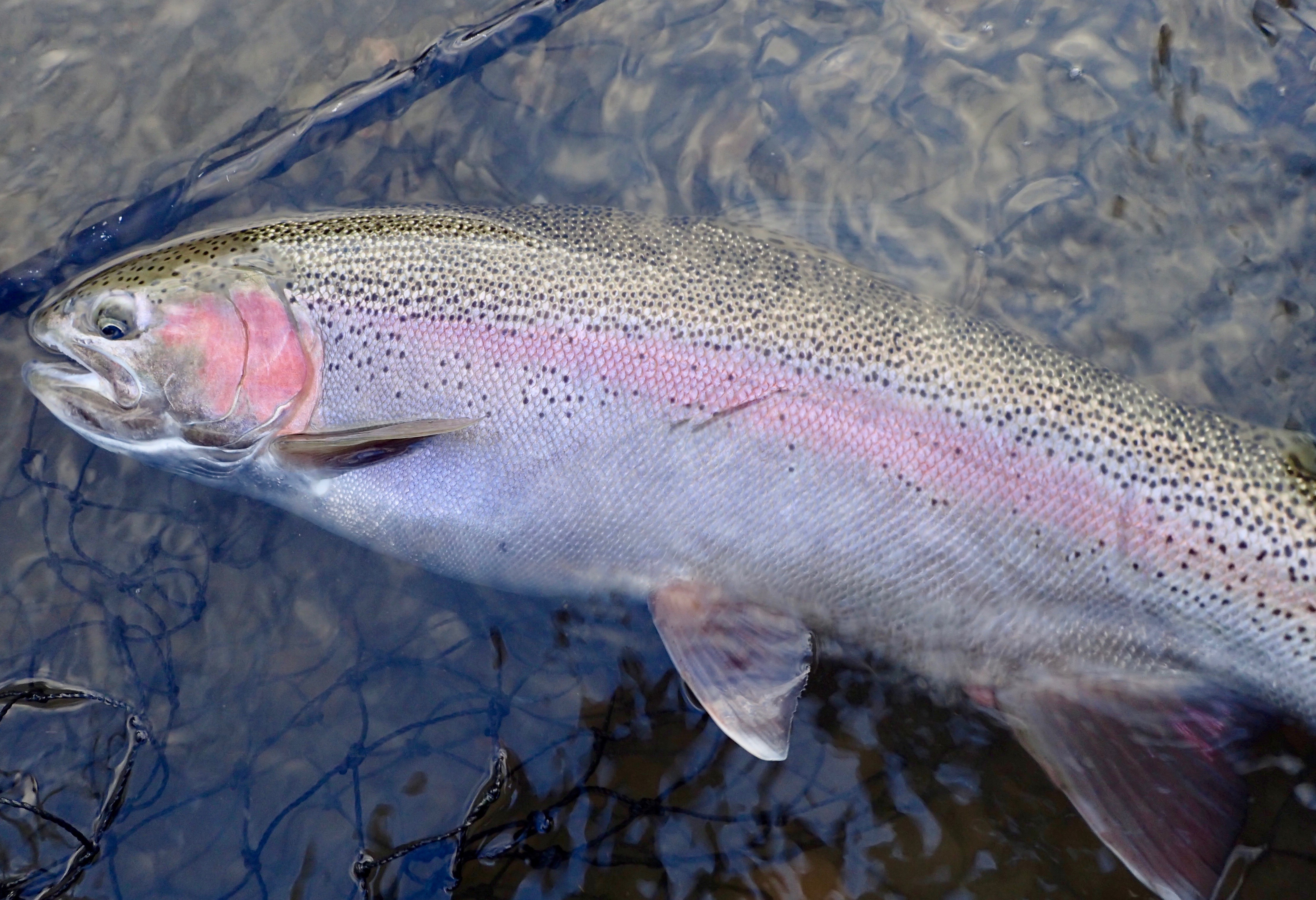
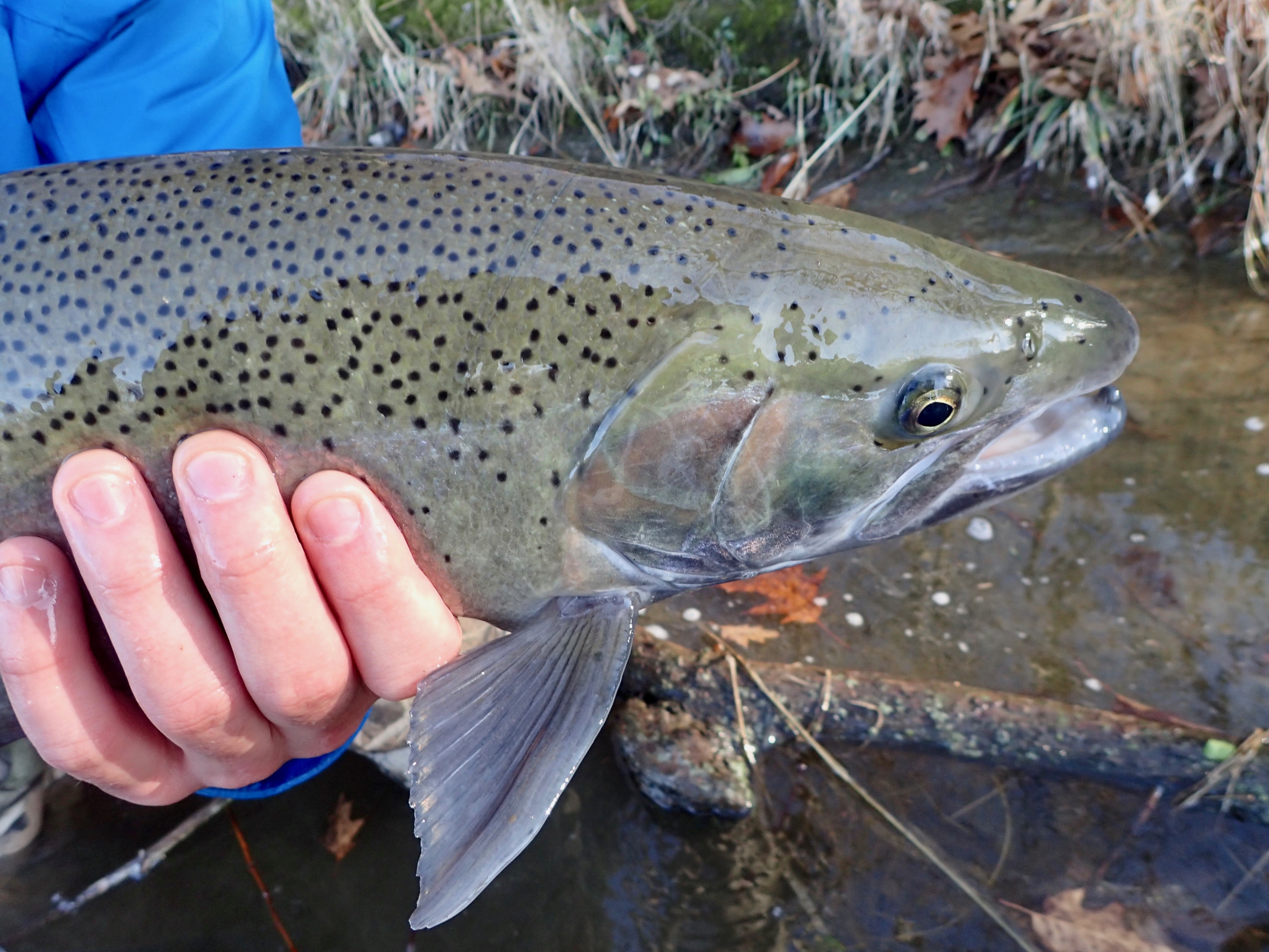
Finally, this egg-laden hen pounced. She kept to the pool during our tussle, and once she was safely in the net, I couldn’t help but admire her glorious iridescent colors. She reminded me of the hen on page 10 of Matthew Supinski’s book Steelhead Dreams. I’d just admired that photo last night, and I wondered if somehow I channeled her into taking on that drift.
Whereas Monday was well above freezing, Tuesday was not. Iced-up guides were a constant challenge, as were cold hands. Funny how you forget all of the sensory negativity when you’re fighting a fish.
Then there was poor Cam. He didn’t have a touch(!) on Monday, plus a disaster leak in one boot foot compounded his misery. Tuesday’s shot at redemption was even more frustrating: he had several takes and no good hook sets to show for it. (We don’t think Cam was at fault, either. In the interest of finding fish, Jim had a line in the water too and missed three steelhead — and he’s a really, really good angler.) And now, it was early afternoon and just about at the end of our session. I could tell Cam was emotionally done, but I encouraged him to take a few last casts while I walked downstream to cross the river.
And that’s when it happened. Two outs, down to our last strike, bottom of the ninth, and we drill this walk-off steelhead. I think I’ll just shut up and let you appreciate the simultaneous fatigue, relief, and joy on this young man’s face.
Not everyone was as enthusiastic as Cam, but we appreciate you playing, Mr. Buck. We surely do. This was the second time we’ve had a last-cast, day-saving steelhead while fishing with Jim.
Another November ritual completed: the refilling of the steelhead box. (One of them, at least. This is my main box.) It’s emptiness or fullness before I begin is usually a good indicator of the previous season. Did I go on a lot of trips? (An average number.) Did I lose a lot of flies to the bottom gods or to the unyielding material of a steelhead’s jaw? (Not so much. Slow year.) I will restock the box with old favorites, and perhaps a few new experiments. The order of its contents remains a comfort. Nymphs, soft hackles, stoneflies to the left; eggs, attractors, and junk flies to the right. Such a contrast between dull blacks and browns and the riot of fluorescence. Which patterns will be the hot item this year? Only one way to find out.
The best steelhead nymphs are the ones in which you have the most confidence. After all, “best” isn’t measurable. But if you buy into the old saw that the proof of the pudding is in the eating of it, I’d like to offer up five steelhead nymphs that have proven their worthiness on New York’s Salmon River.
So, what qualifies a steelhead fly as a nymph? For the purposes of this list, I’ve kept it to flies that are size 8 or smaller; flies that feature predominantly muted colors (hot spots, contrast points, and bead heads are allowed); and flies whose basic construct is at least 50% actual invertebrate driven. So, no bigger stoneflies here. No Steelhead Hammer types. And no black-light poster colors. Here we go, in no particular order. As a bonus, some of the patterns have links to my tying video.
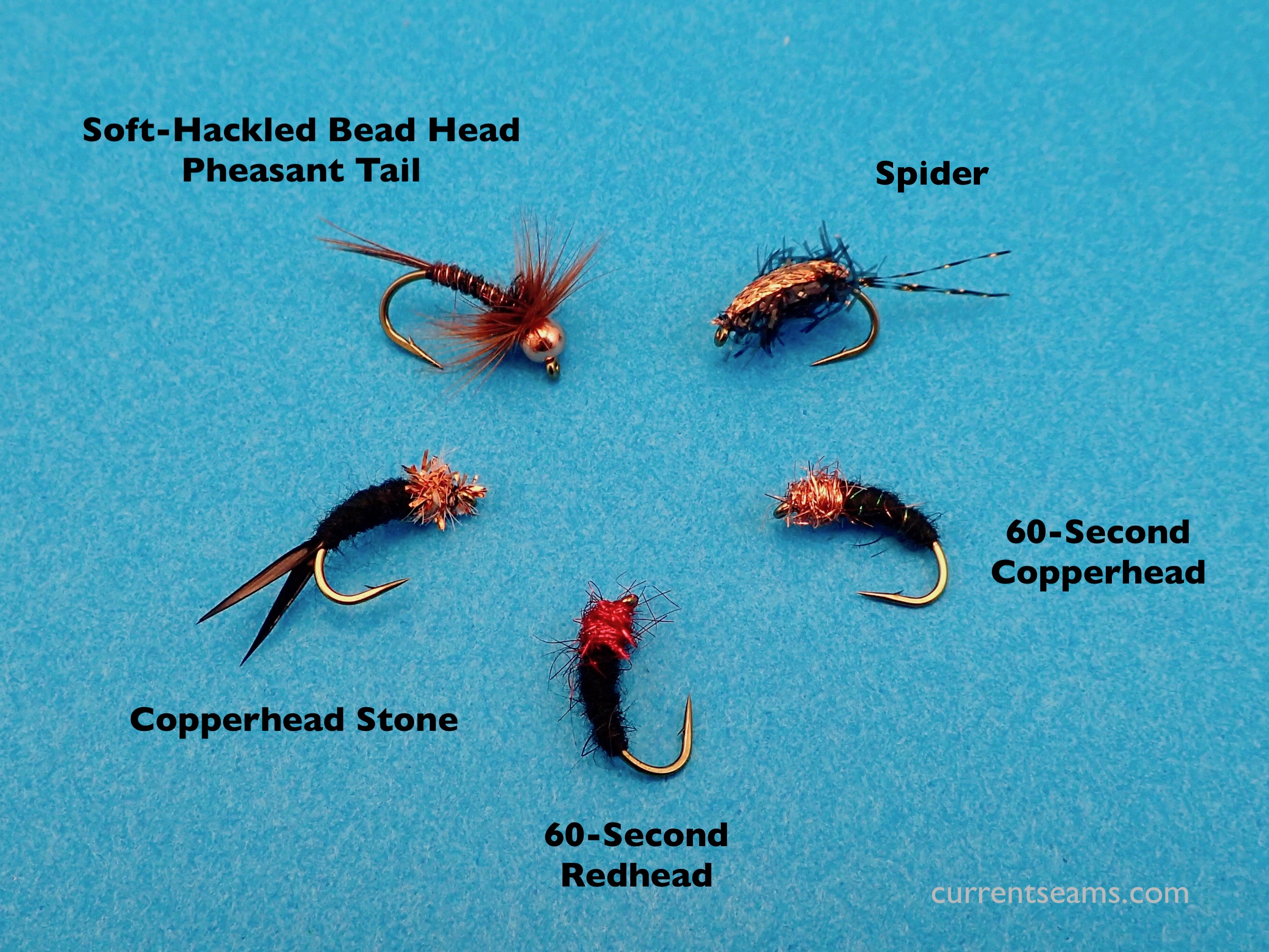
Soft-Hackled Bead Head Pheasant Tail. I was pleased no end to discover that Salmon River steelhead would eat this rather muted pattern. I’ve done really well with this fly in winter.
60-Second Redhead. The beauty of this fly isn’t that if you lose one to the bottom gods, you’re not depressed because they’re so fast and easy to tie. It’s that this fly, which would never catch your eye in a retail bin, is like candy to steelhead when they’re eating bugs.
60-Second Copperhead. After pounding up so many steelhead on the redhead, I wondered if they’d like a version with a copper Ice Dub head. A wise old Salmon River veteran once told me, “It’s hard to go wrong on this river with black and copper.” He was mighty right.
Copperhead Stone. I landed my first steelhead on this fly, and years later, it still works. I remember one morning in the Lower Fly Zone when I was handing them out to everyone who wanted to know, “What fly are you using?”
Spider. Another ridiculously simple tie (notice a pattern here?): size 12 hook, black Krystal Flash tail, black Estaz body, copper (the original calls for olive or pearl) braid flashback. Designed by Clyde Murray for Erie fish, the Salmon River steelhead like it just fine.
My top five steelhead nymphs for the Salmon River in Pulaski, NY, are all very simple ties. Note that they all have some kind of contrast, flash, or hot spot. These are all high-confidence patterns for me, all proven producers, and it’s hard to go wrong with any of them when you suspect the steelhead are eating nymphs.
To be fair, it was only a few hours — I fished from noon to 3pm — but the going was glacially slow. I hit four favorite nymphing marks below (450cfs) and within the TMA (390cfs), and I found a trout willing to jump on in only one of them. I used a combination of tight line and indicator nymphing methods, and I even switched out my point fly and dropper — none of it seemed to make any difference. The angler traffic continues, with nine other folks sharing the water with me during my travels. Mine was the only fish I saw hooked all day, which is not to brag, but rather to illustrate how slow the fishing was. I stopped at UpCountry on the way home to do some shopping, and Torrey Collins said that nymphing has been slow for him lately, too. So it goes.
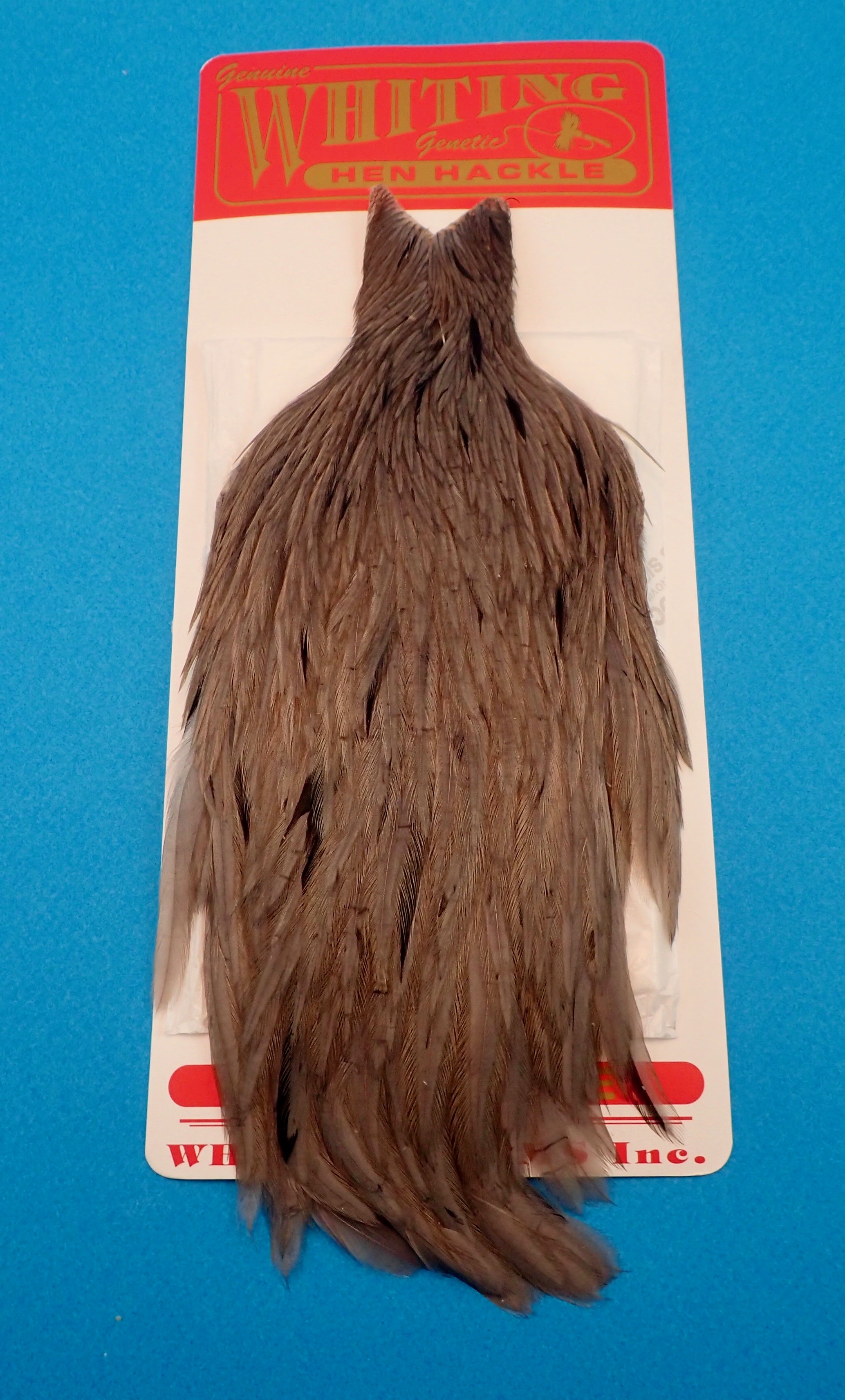
The day wasn’t a total loss. I scored this beautiful, webby dark dun hen cape at UpCountry. Just what I need for my next batch of Dark Hendrickson winged wets.
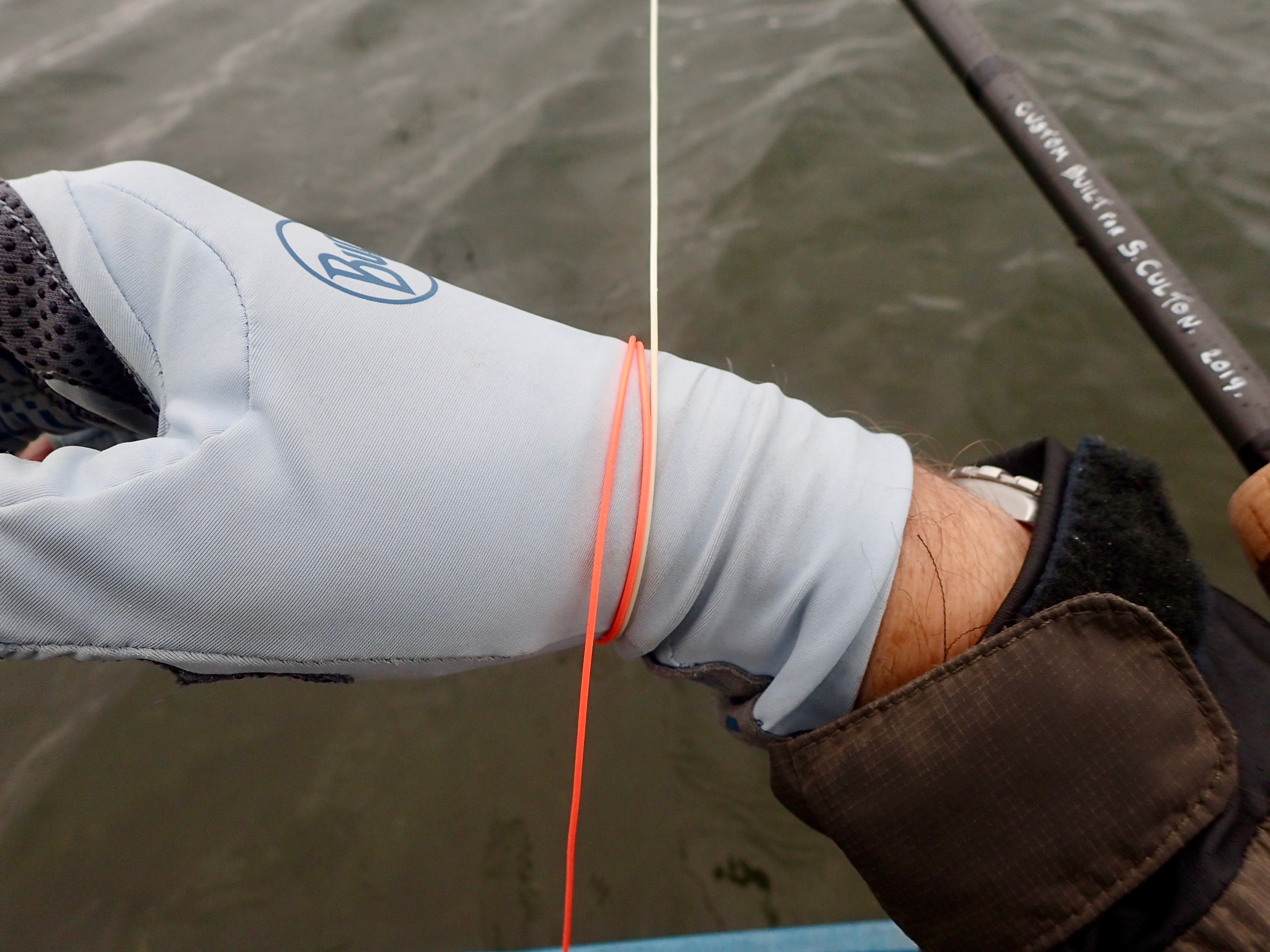
If you fish a two-handed rod, or if you use a modern shooting head integrated line (like Rio Outbound or Airflo 40+) with your single hand setup, you’ve undoubtedly encountered this scenario. You want to change your fly, or check the hook point, so you tuck your rod under your armpit and gather in the line. Problem: while you’re fiddling with the fly, the current grabs the line — those shooting heads have a lot of surface area — and downstream goes your head, taking your running line along with it. Now, you’ve got to re-strip 60, 70, 80 feet of line again — time you could be fishing.
Solution: wrap a couple loops of the running line around your off-hand wrist. I like to gather in the running line till the shooting head is just outside the rod tip. The orange running line below my wrist remains inside my shooting basket. This way I’m ready to cast as soon as I change flies. That’s more time spent fishing, and that means more potential time catching.
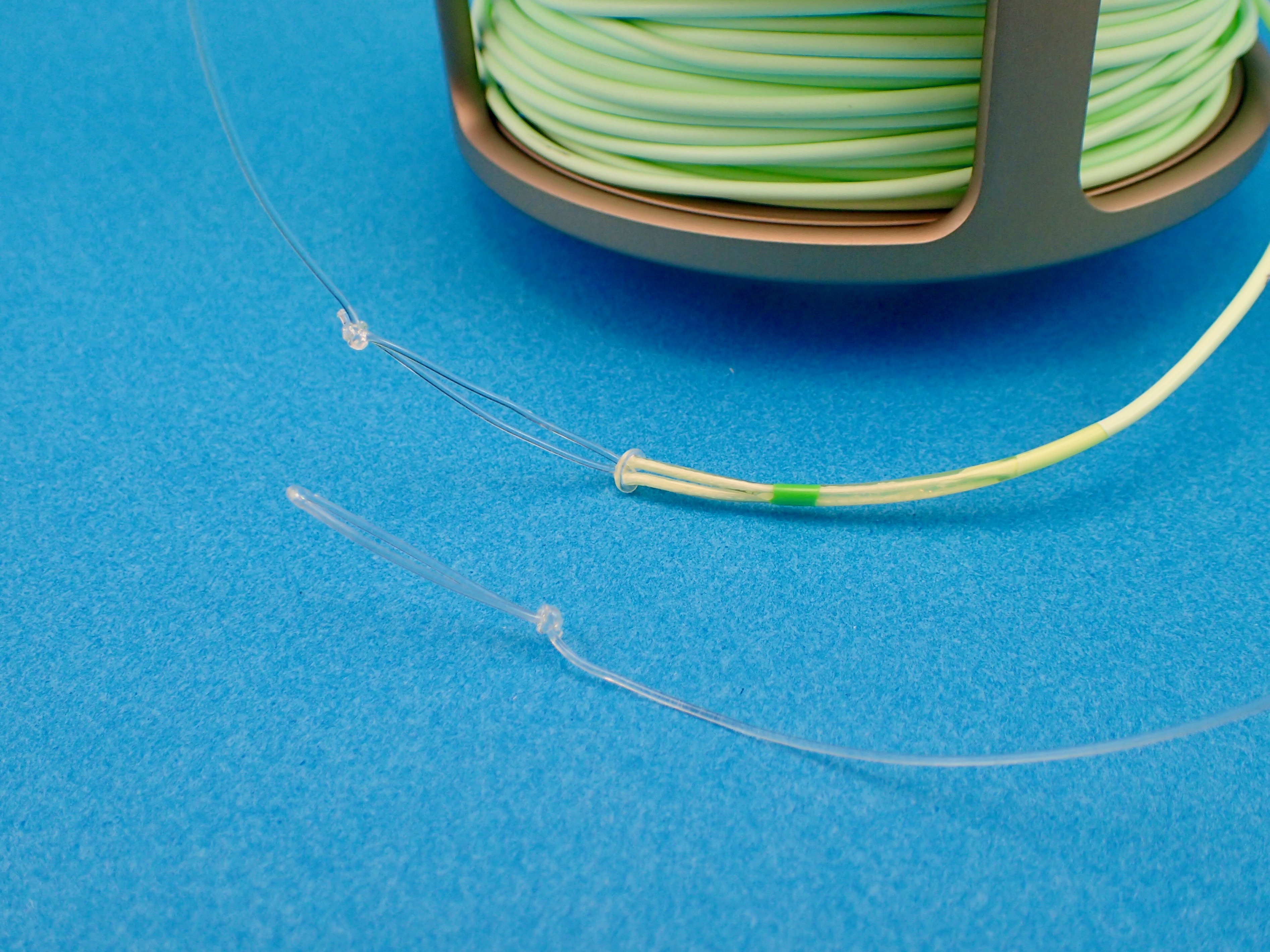
Many, if not most, modern fly lines come with a factory welded loop for an easy leader connection. The problem is that if you’re using a straight shot of leader material that’s under 40lb. test, the diameter of that leader can cut into the the welded loop while fighting a big fish, trying to free a snag, or inducing any other stress that puts extreme pressure on the connection.
Solution: create a short mono butt section to act as a buffer between your welded loop and leader. I’ve been using a foot-long length of 50lb. or 60 lb. mono. Just tie a perfection loop (here’s a great tutorial from Animated Knots) at both ends, and you’re good to go! I’ve been using this system with my two-handed shooting head for over a year.





 currentseams.com