Three things striper fly tyers (and anglers) could learn from Gary LaFontaine

As I continue to pore through Gary LaFontaine’s masterwork Caddisflies, I’m reminded of the sheer volume of universal concepts that apply to fly fishing. So, even though he’s talking about fishing for trout that are feeding on caddisflies, LaFontaine could easily be talking about stripers feeding on sand eels or grass shrimp. A true maverick, he isn’t afraid to think or act differently, to challenge conventional wisdom, or conduct experiments to prove his theories. (Listen to the science. You’ve heard that one before) The more you fish for trout and stripers, the more you begin to see patterns and similarities between the species and how you should be fishing for them. Here are three themes in Caddisflies from which I think striper anglers and fly tyers who want to dramatically elevate their game could benefit.

Realism is the least important factor in fly design. I don’t have the actual stat, but I’m comfortable in saying that nine out of ten striper baitfish patterns feature glued on, ultra-realistic eyes. (Other than on these pages, when was the last time you saw a squid fly without big googly eyes?) If realism, from eyes to full-bodied profile to opacity to exact coloring, etc., is so important, how come my baitfish flies (and yours, and everyone else’s) continue to catch stripers long after they’ve literally been ripped to shreds? It’s a rhetorical question, but I’ll answer anyway. It’s because the bass are keying on certain bait or environmental characteristics that serve as bite triggers, and those triggers are still present in the remnants of the fly. LaFontaine knew that making a favorable impression on the fish — by showing them at least one primary feature or action that identified the fly as something that looked like what they were eating — was far more important than rendering a carbon copy.

I get this all the time: “That doesn’t look like a squid.” But Ken AbramesMutable Squid isn’t designed to “look like a squid.” It’s designed to create the illusion of life. I don’t know what stripers think it is, but they’ve eaten this fly enough times for me to know that they think it’s something good to eat.

Energy efficiency is the reason for selective feeding. Fish, especially bigger ones, are essentially lazy. So when they’re glommed onto grass shrimp in a feeding lane, you can engage in the futile activity of ripping and stripping a big fly past them, or deliver what they’re eating to their waiting mouths. This is why there is no one-size-fits-all “go-to” striper fly — and why learning presentation with a floating line is so important. Match the hatch, learn its nuances, make it easy for the stripers to feed, and you’ll catch more bass.

Fish are not intelligent. There is no such thing as an educated striped bass. Fish cannot reason. They are programmed for survival, and these primal forces have nothing to do with fly fishing or why you can’t fool that lunker. The fish is simply doing what’s it’s doing, and it’s up to you to crack the code.
Farmington River Mini-Report 4/21/21: First wet fly fish of the year

I only had 90 minutes to fish, so I chose the lower Farmington because it was closer to my house, and also to where I needed to be at 2pm. Plus, there was that front bearing down on us. Didn’t want to get stuck in that mess, especially after witnessing a foreboding fork of lightning slicing through the sky. After waiting for the dark clouds to disperse, I was on the water a little before noon. The plan was to swing wets and see if there was any Hendrickson action. Conditions weren’t great — 600cfs is a little high on the Farmington for wet fly, so I used a tungsten bead head Pheasant Tail soft hackle on point to sink things a bit. Still, the water I fished was fast and heavy, and if I was interested in numbers, nymphing would have been the way to go. I had a half dozen whacks in the fast water, with no hook sets, before I connected in a deeper slot. The wind was also a factor — forget roll casting for any distance — and I had to be vigilant to keep the rig from tangling. But by the end of the outing, I had three trout to hand, two on the BHSHPT and another, the biggest, on the top dropper, a Squirrel and Ginger. A My Father Le Bijou 1922 Gran Robusto proved to be a fine companion. Speaking of fronts, I can’t believe how much the temperature has dropped.

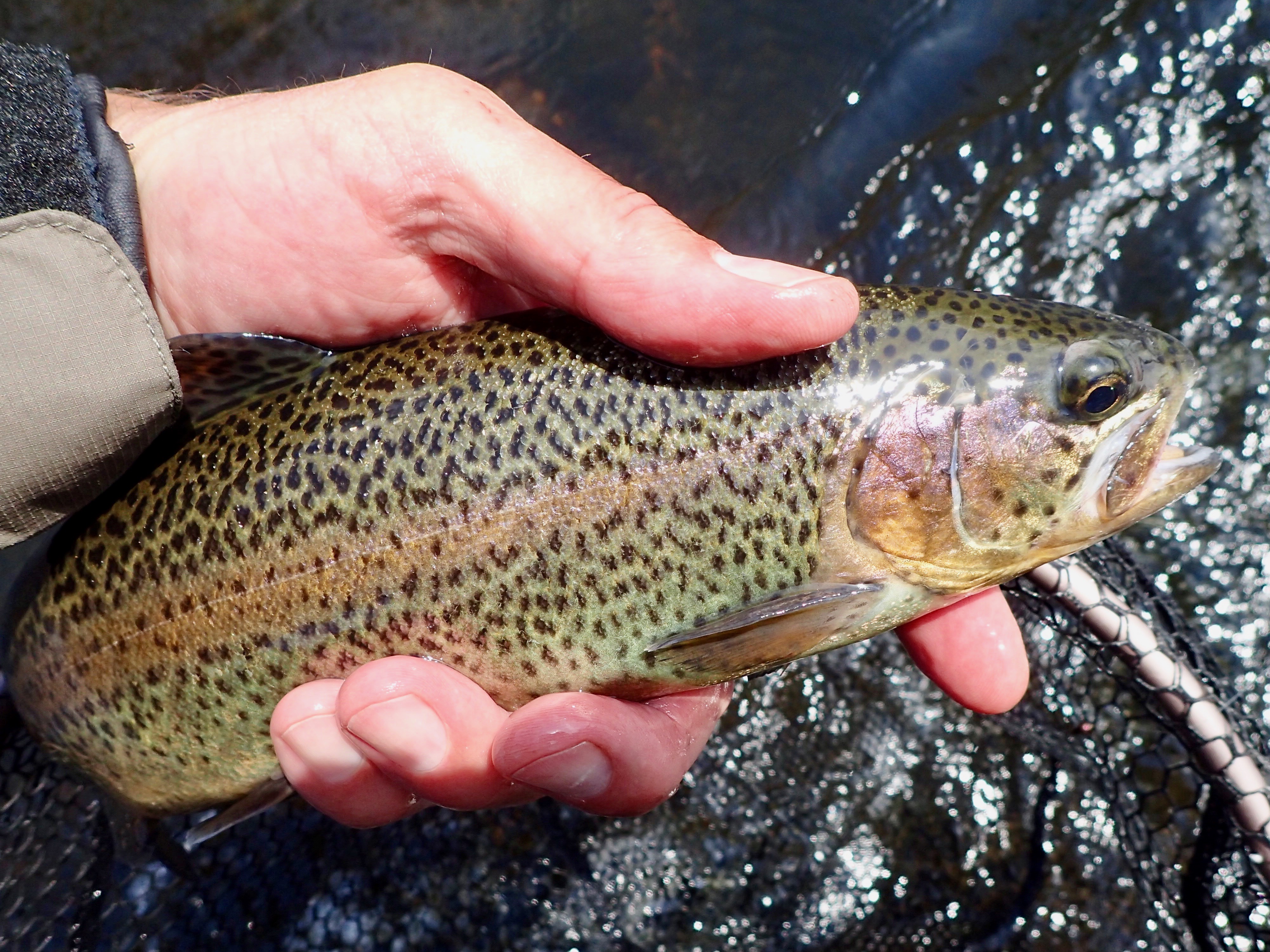
It always feels good to land the first wet fly trout of the year, even if it is a stocker rainbow. This one treated me to two aerials. The last two were fatter, and took a bit of forceful coaxing to come to net. I didn’t see any Hendricksons or caddis, but then again I only fished until 1:30pm. My wet fly box desperately needs a restocking!

Reaching the century mark: Steelhead #100

Finally, after so many disappointing outings, I hooked and landed my 100th steelhead. Not the prettiest fish given the time of year, but beautiful and perfect in his own way. It was an eventful day — full report to come next week. In the meantime, here’s a picture worth a hundred words.

Striper report 4/11/21: The walk of shame

This one’s going to be brief, folks, because I have nothing good to report. Well, that’s not entirely true. I got to meet up with old striper partner-in-crime Bob. We each enjoyed a cigar on the walk out. And I got to shake some of the rust off my two-handed casting. Beyond that, it was cold, the wind was blasting out of the east at 15mph (with higher gusts), it rained most of the time we fished, seaweed and grassy detritus was an issue, and neither of us got a single touch. I saw one striper caught by a spin angler. I talked to another fly angler in the parking lot who said he caught two small fish, and that it had been fairly slow thus far. I wish I could tell tales of the Bass-O-Matic, but that will have to wait for another day.

Dr. Griswold performs the walk of the skunked. I was right there with him, just out of camera range.

Farmington River Report 4/9/21: Nature (quickly) finds a way

Just a quick two-hour session on the lower River last Friday. The sun was shining, the air was warm, the water was low and crystal clear, and there was a strong caddis (size 16-18) hatch. I fished three marks and found acton in only one. I purposely stayed away from areas that I knew had been stocked as I wanted to try to find the Salmo that had made it through the winter. I tried several techniques, each to match the conditions and marks I was fishing: tight/long line micro jig streamer, tight line drop shot nymphing, and then indicator nymphing.

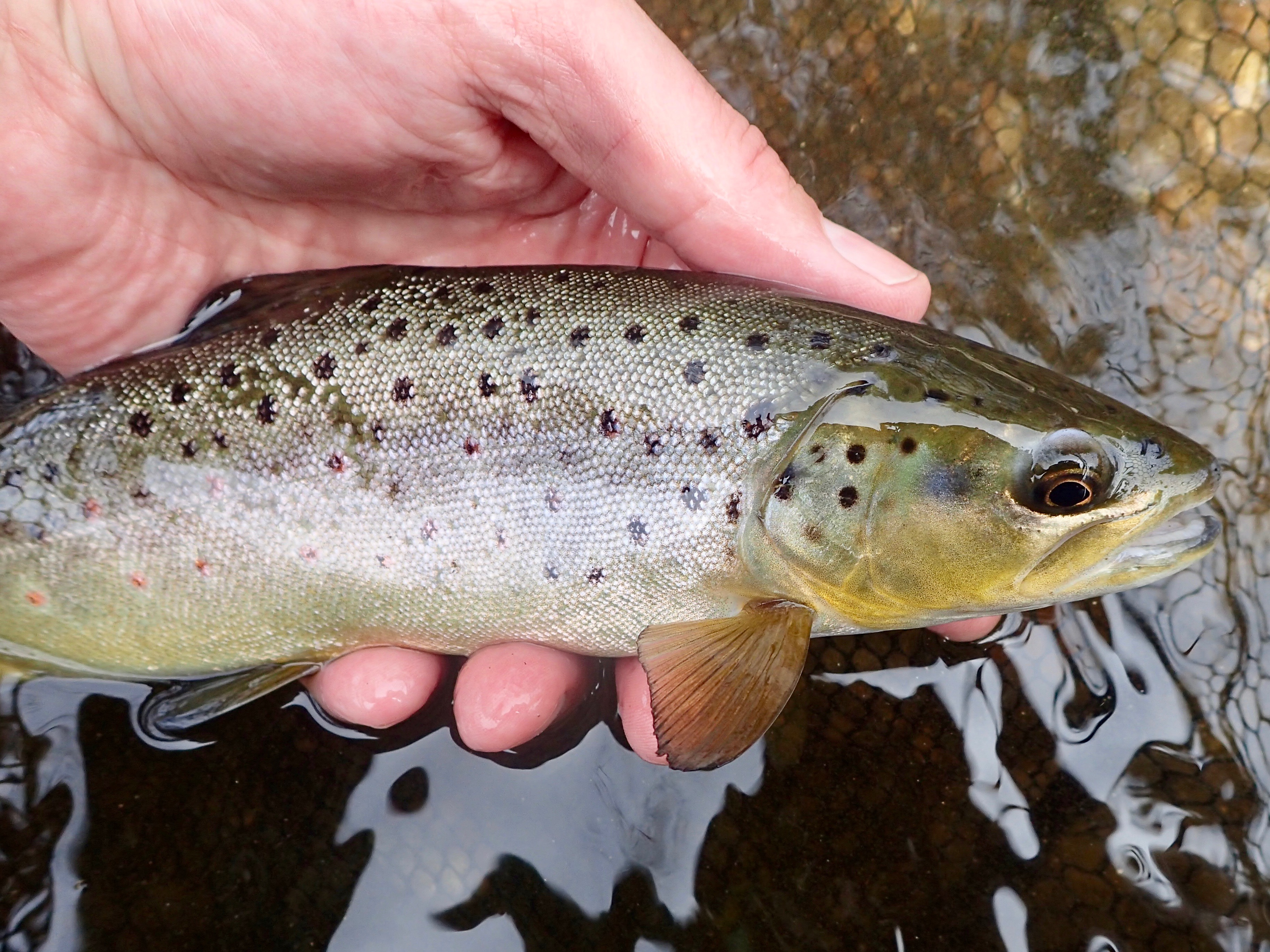
Funny thing! I had just landed my first fish, a tiger of a wild brown, when lo and behold, Ye Olde Stocking Truck showed up. What I found fascinating — and I’ve witnessed this before — was that within minutes, the fresh fish were porpoising and snapping at caddis emergers in a back eddy. It doesn’t take long for them to discover where their next meal is coming from. It’s genetic programming at its finest.

Love these holdover/wild fish. They just refuse to come to net without a furious argument. This guy fought way above his weight class.

Reminder: ASMFC Striped Bass Amendment 7 PID comments due Friday, April 9

If you care about building a sustainable striped bass fishery, please take a few minutes to send your comments. Here’s the link to last week’s post that gives you everything you need to know about the ASGA’s position/plan, and how to submit a comment. Thank you.

Small stream report: hiding in plain sight

I had the pleasure of fishing with Toby Lapinski earlier this week and even though it’s that time of year, our quarry was not striped bass, but rather small wild trout and char. This brook was new to me, so I was stoked to be on undiscovered waters. The stream is overgrown with briars and saplings, to say nothing of the broken limbs and downed trees that seemed to be everywhere. It had riffles, glides, plunges — a nifty combination for a brook that is in some places small enough to jump across. (That’s, of course, if I could get a running start. And not be wearing waders. And be 20 years younger.) Funny thing! I’ve driven past this brook hundreds of times and never knew it was there.

I was hoping these schools of fry in the sunlit shallows were YOY browns or brookies. But no. They’re black nosed dace YOY, maybe a couple centimeters long. Did you know that some scientists think that the eastern BND spread after the last ice age from a single colony in present-day Connecticut?
Not a bad bit of camo. You get the sense of the wildness of the place. I’d estimate the water to have been medium-high — remember, this was my first time here — which is a good spring flow, but we had bright sunshine and no canopy working against us. We saw midges, and there was also a decent hatch of small (16-18) tan caddis. Some of the sexiest runs and holes were surprising blanks, like this one. There’s always next time. Photo by Toby Lapinski.
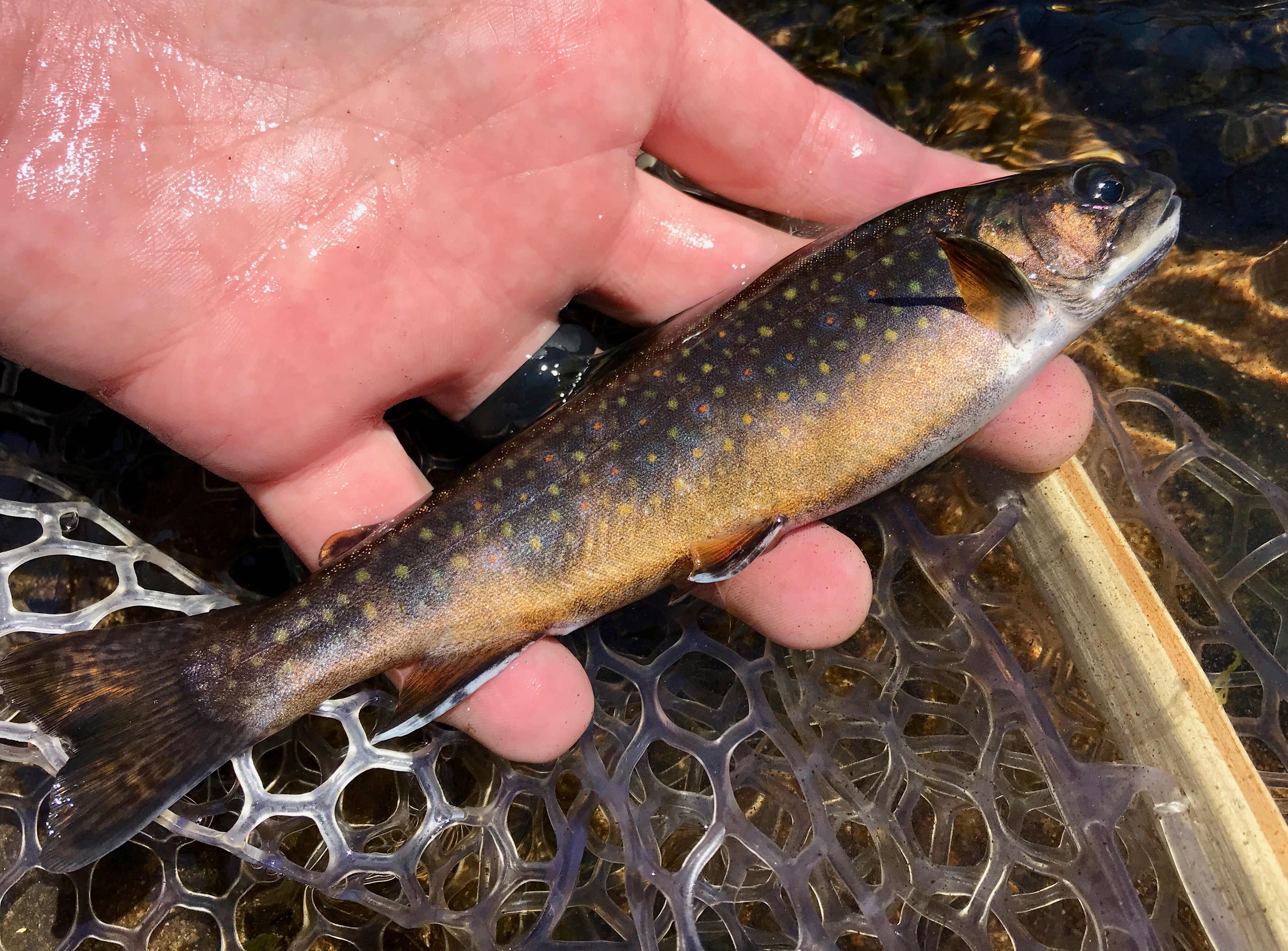
Toby captured the largest fish of the outing, this vibrant char. We both fished a dry/dropper, and while Toby had some takes on the dry, all of my action came on the dropper, which was 2x short size 18 BHPT. I also tried some micro streamers, but had no takers. I highly recommend a dry/dropper setup on a new stream. It’s the fastest way to find out what the fish want. Photo by Toby Lapinski.
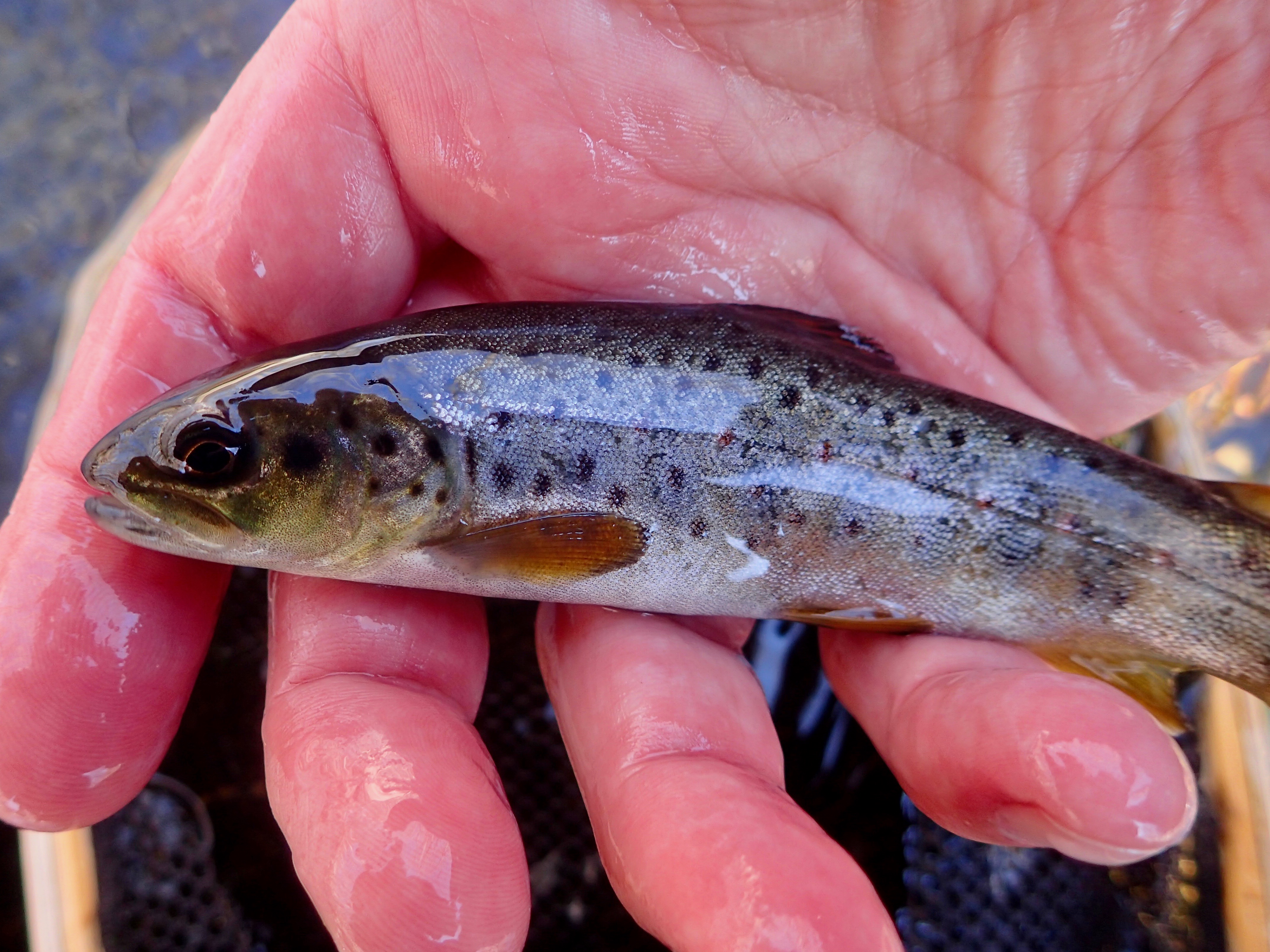
Small stream wild browns like this are fearsome fighters. It’s almost like playing a minute smallmouth bass. I pricked several more little browns on the tiny dropper nymph.

A little something to whet your (and a striper’s) appetite

Soft-Hackled Flatwings and Big Eelies recently completed for a client. Could be on tonight’s tying menu…

Last Currentseams Tuesday Night Zoom of the spring, 3/30/21, 8pm: “Traditional Striper Flies”

I’ve got stripers on the brain, and so we’ll be talking about the traditional-style striper flies I like to tie and fish: sparse bucktails, soft-hackles, and flatwings. The discussion will include materials and hooks I use, and I’ll throw in a tying demo of something tbd. If you haven’t been getting the Zoom links — I send them out Tuesday late afternoon — please check your spam box. If you’re sending a request to get on the list, please don’t wait until 7:45 p.m. Tuesday night…I won’t be checking my email that late. Thanks!

Me and Cam and a couple of brookies

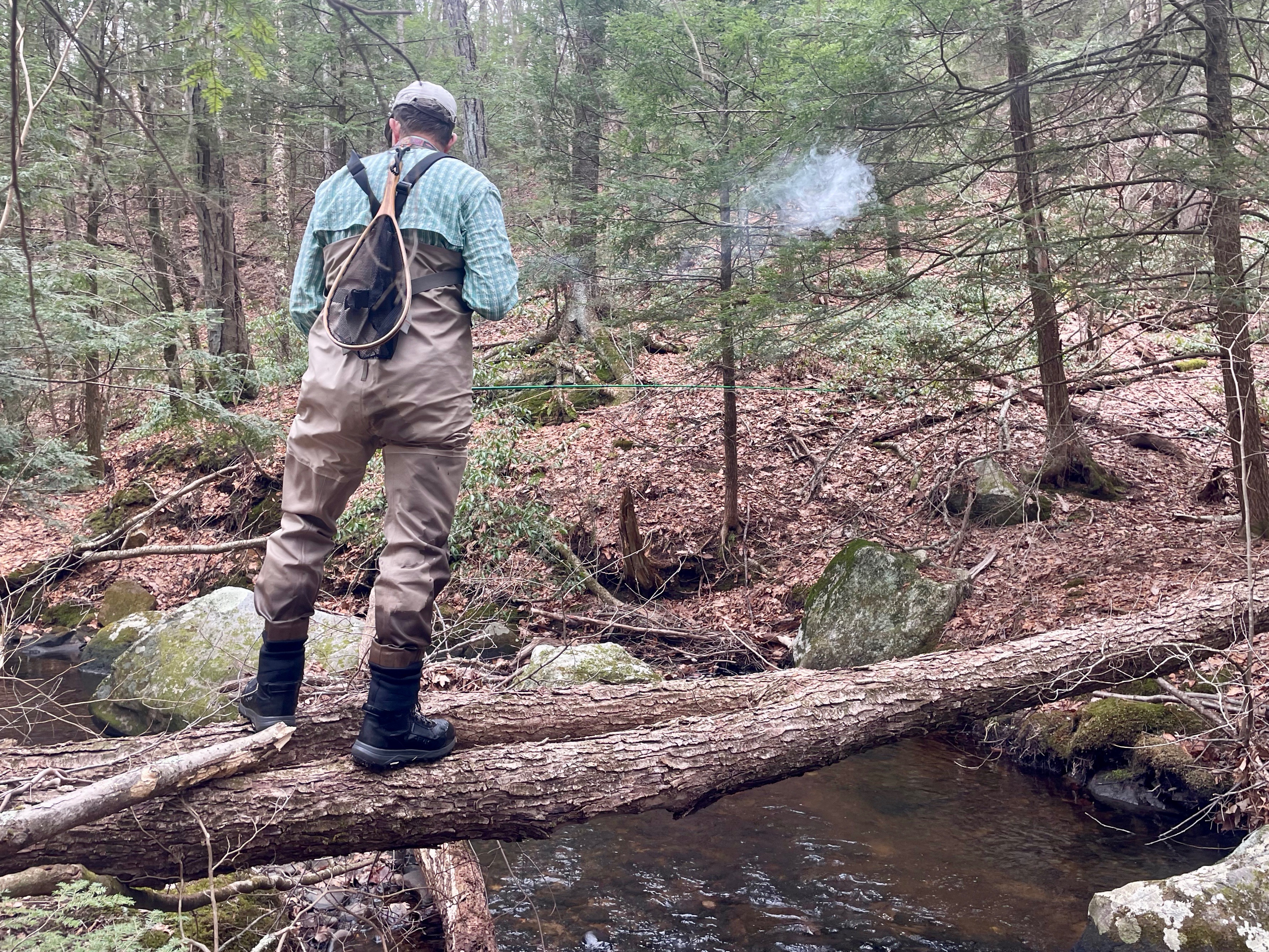
Three hours in the woods is good for the soul, especially if it involves a thin blue line and fishing with one of your sons. In early spring the woods hold so much promise. The buds look ready to burst, the skunk cabbage pips are poking through the swampy sections of forest floor, and if you’re lucky you can be fishing in shirt sleeves. I prefer these tiny woodland wonders when there’s canopy, but I’m always curious about what the day will bring regardless of conditions. We both fished bushy dries, save for a few exploratory plunges with an ICU Sculpin. We didn’t find many players, but those we did attacked the fly with fervor. (All photos by Cam Culton save for the one of him fishing.)

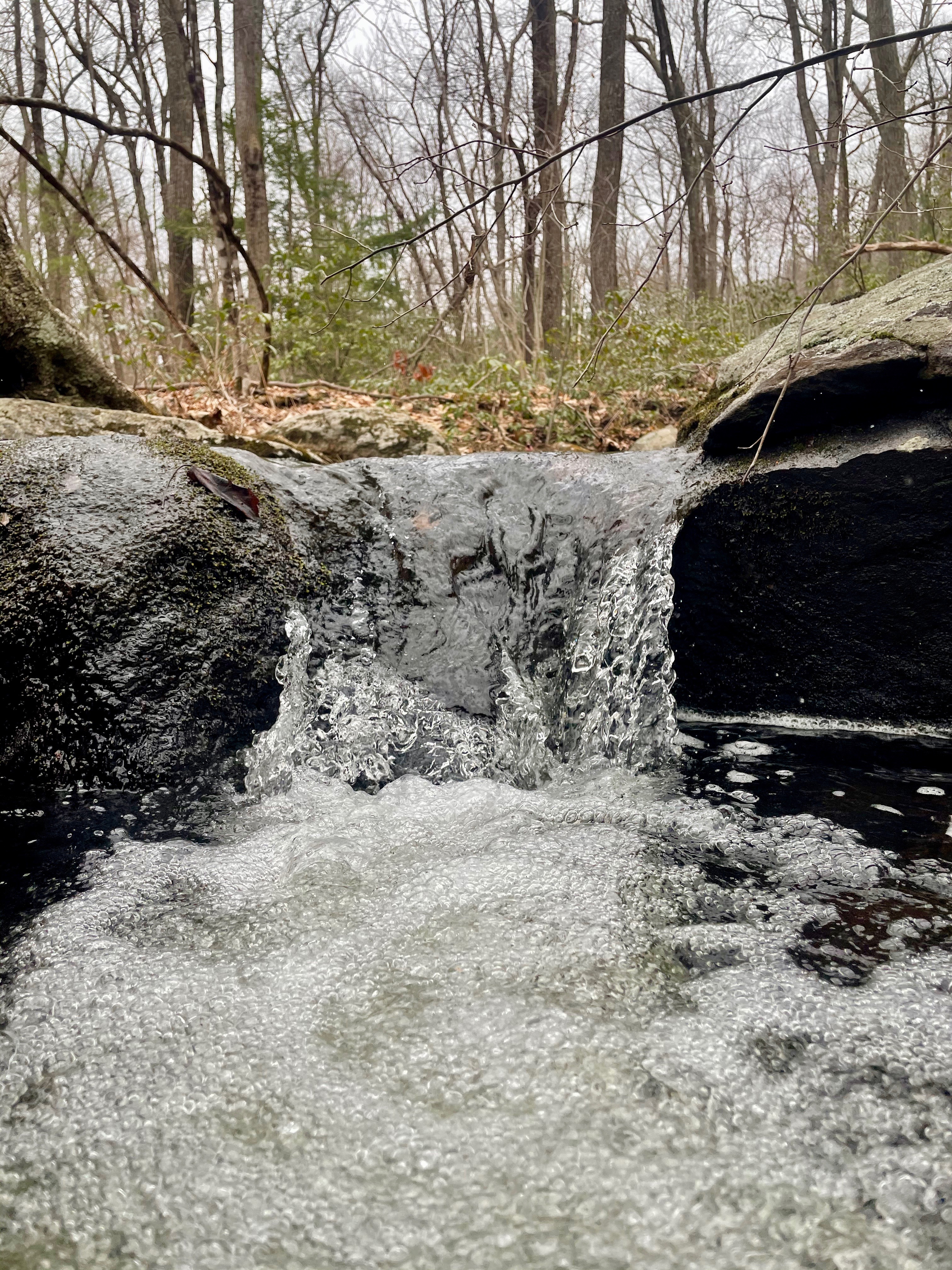
We paid a lot of attention to the white water and its borders around the plunge pools, but what was lurking beneath didn’t feel like coming up. Areas like this one are usually money once the warmer weather arrives.
Contemplating my best approach to this logjam of a pool over an Olive Serie V Melanio.
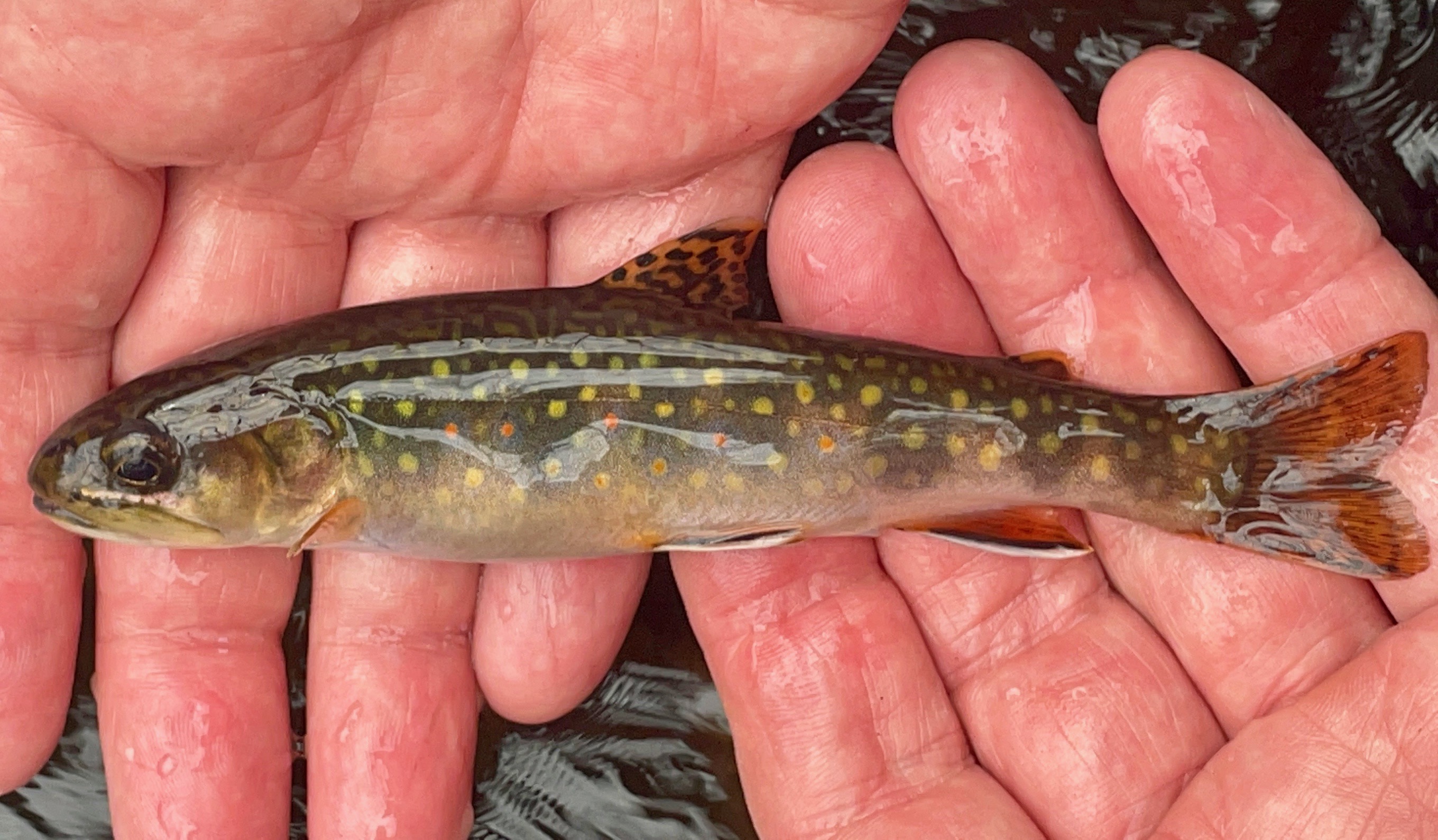
We saw a fish rising in the tailout of pool. Turns out the brookie was holding a few feet upstream near a submerged tree limb and opportunistically falling back to feed. She took my fly on the first drift. To be able to cradle such a treasure and then release her…this just never gets old. Our outing was a mid-to-late afternoon jaunt, and while there was no significant bug activity we did witness sz 14 caddis, midges and what I can only guess were some tiny olives. We pricked about a half dozen fish; this was the only one brought to hand.
Young man at work. We found a player in a small run who slashed at the fly maybe a dozen times over the course of 15 minutes. (Part of that time was spend sitting stream side, resting the pool. Not a bad way to spend five minutes.) We switched out the big bushy dry for a smaller Yellow Humpy, but even thought the char was a decent size for this brook, we couldn’t get the hook to stick. We tried a Snipe and Purple, and finally the ICU Sculpin, then tipped our hat to the fish and began the long hike out of the woods.