The White Mini-Bugger

This time of year I redouble my efforts to visit small streams. The canopy is in full, providing cover and shade for bashful trout. Water temperatures remain moderate (especially after a cool, rainy spring like this year’s). Food sources are plentiful.

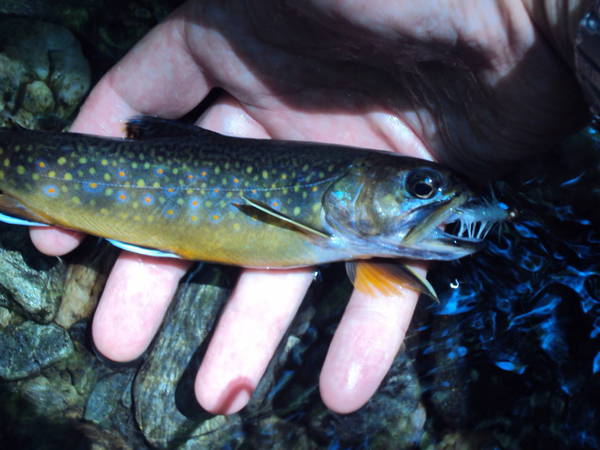
I don’t always manage to get out as much as I’d like, but small stream dreaming has me thinking about one of my favorite flies for wild trout, the White Mini-Bugger. Oh, it’s a Woolly Bugger alright. But I’ve made several strategic changes to the classic template. For starters, it’s just smaller, the easier to be eaten by trout measured in inches. The tail is shorter and sparser, which cuts down on nips away from the hook point. The hackle and collar is soft hen, which flows and breathes. With a tungsten head and wire underbody, this fly sinks like a stone, causing it to rise and fall like a jig when you strip it. If the light is right, you can clearly see this fly even in a deep plunge pool. Try not to laugh when you watch the shadowy marauders surround and pummel the fly as you work it through the depths.

Image

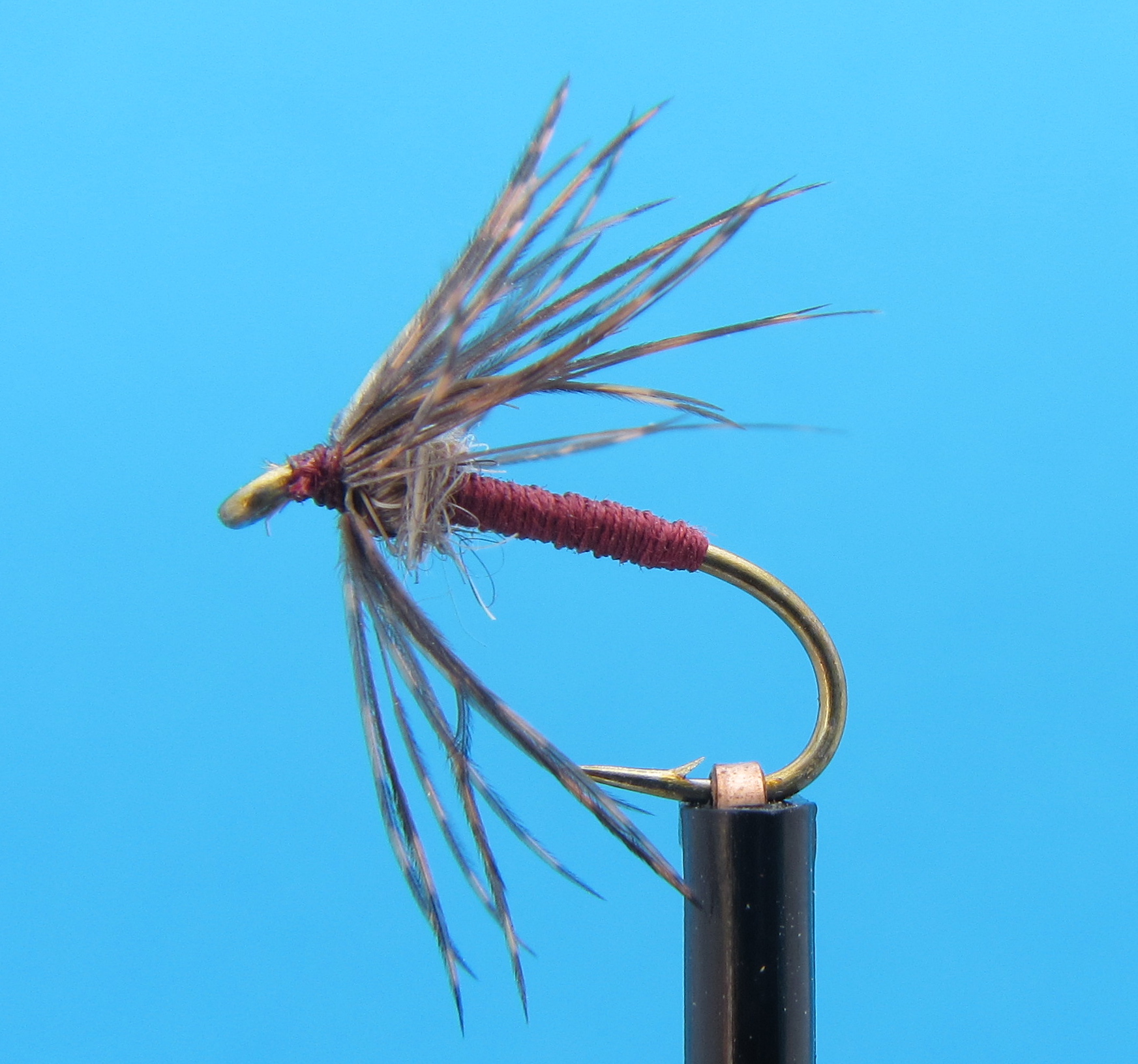
White Mini-Bugger
Hook: TMC 5262 10-12
Thread: White 6/0
Bead: Copper tungsten, seated with weighted wire
Tail: Short marabou wisps over pearl Krystal flash
Body: Small fluorescent white chenille, ribbed with pearl flash, palmered with soft white hen
~
Tying notes: Of course, you can tie the Mini Bugger in any color your heart desires. I tend to be boring, so I mostly stick to white and black/grizzly. Same deal with beads: I have a thang for copper. (Thinking of tying some of these up in black with a copper bead for Salmon River steelhead? You should. It works. And with a chartreuse bead. And orange. And…) The shorter, sparser tail has absolutely increased my hookup percentage. To form the tail, I use a single piece of Krystal Flash, and double it/cut it multiple times to get a 16-strand tail. The body hackle is Whiting hen neck, the same I use for standard-issue wet flies. Tie the feather in by the tip, and if you have enough hackle after winding the body, try to form a collar.
~
The White Mini-Bugger Rogues’ Gallery:
Image


Farmington River under attack — again. Save Satan’s Kingdom!

Last year it was the jolly old yo-ho-ho University of Connecticut that wanted to divert millions of gallons of water from the reservoir.

Now, it’s a planned industrial park on the banks of the Farmington in the Satan’s Kingdom area. Here’s what I know: the proposed property borders a 2000-foot stretch of the river in Satan’s Kingdom Gorge. Even though the area holds a Wild and Scenic designation, the required setback is only 100 feet.

Image

How can you help?

1) Go to the New Hartford Zoning Commission meeting at the New Hartford Town Hall on Wednesday, May 28, 7:00pm and tell them we don’t need no steenking industrial park.

2) Like this group on Facebook: https://www.facebook.com/savesatanskingdom

We kicked UConn’s butt last year. We can do the same with this threat. Grassroots activism works!

Sunrise on a misty summer morning in the gorge. Do I really need to see an industrial park peeking through the trees?

Image

A kilo of salmon, please

Last week, I was guiding two clients on the upper TMA of the Farmington River when the bucket brigade swooped in. Not meat farmers — at least not in the harvesting sense — but rather, sowers. Their crop: Atlantic salmon fry. Love them (food for big browns) or hate them (annoying beasts that nip at your fly ad nauseum), Atlantic Salmon have been a part of the Farmington River watershed for years.

 Never-ending ringed walls and two alien beings peering in from above. Soon you’ll be free! Each bucket holds one kilo of fry.

Image


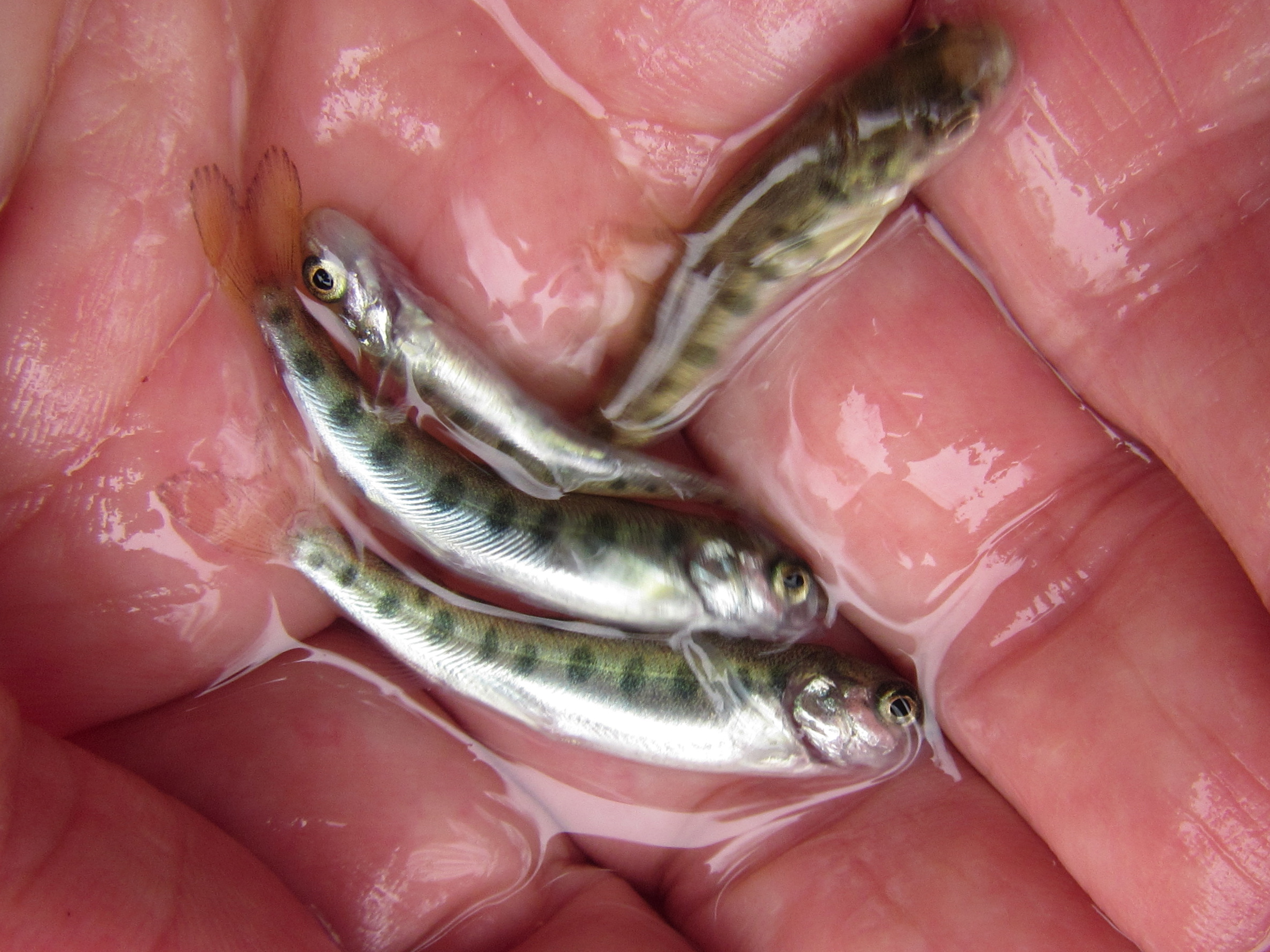
A closer look at the biomass. Will they lead prosperous lives and make it out to the sound? Or will they become so many croquettes for Mr. Lunker Brown?

Image

“We can’t catch a break.”

This just in from Farmington River Anglers Association president Drew Butler: “Sorry guys, but I just received word they are bumping the release from the dam back up to 500 from the current 330 cfs level. Combined with the slowly dropping Still River the total flows through the upper TMA will be back over 800 again. We can’t catch a break lately. I was kayaking on Hogsback Reservoir on Sat and you would not believe the amount of water coming directly into the reservoir from the surrounding hills.”

(This is where we join in a rather large collective sigh.)

Tying flies in the noon day sun

So I pulled up to the pavilion at Mathies Grove around 9am and no one’s there. Except the lone sentinel in her sand chair who informed me that she was saving it for the softball players. Say what? I looked northward, and there was the Spey Clave in the field. I hadn’t planned on tying in the sun — I was wearing a long sleeve rugby shirt — but as the father of a Marine, I know that you adapt, overcome, and improvise. A few volunteers later, we were lugging a picnic table 150 yards across a field, and there I was, all set up and ready to tie.

Several thank yous are in order. Thanks to everyone who stopped by to chat, watch, and ask questions. The old faces were comforting, and the new ones a pleasure to meet. Thanks to Ben Bilello for tying such beautiful salmon flies. Thanks to Mother Nature for making the sun warm and the air cool. Thanks to Scott from the Compleat Angler for grilling up a storm (that burger hit the spot). And thanks to Fred and Jerry from Spey Casting North East for hosting me. (I’ll give them a from-the-heart — and head — plug: if you are interested in two-handed casting, you will not meet a nicer, welcoming, experienced team of instructors. Brilliant, both of them.)

Image


Swing shift

As the Farmington rages (again) at a million cfs, we fondly recall Thursday, when the flows in the upper TMA were a very wadeable 460, the water temperature was 50, and the anglers swinging wets were two.

I had the pleasure of instructing two old friends, Gary and Joe, in Wet Flies 101. I don’t use the “p” word as a throw-away adjective; both were strong casters and anglers and they made my job about as easy as it gets. We began the day under a gloomy overcast and dense fog banks. Hatch activity was nil. The fishing was only slightly better; Gary had the hot hand early, and since Joe was fishing well I couldn’t figure out why he wasn’t having more action other than being, as they say in soccer, unlucky.

Gary hooks up on the swing.

Image


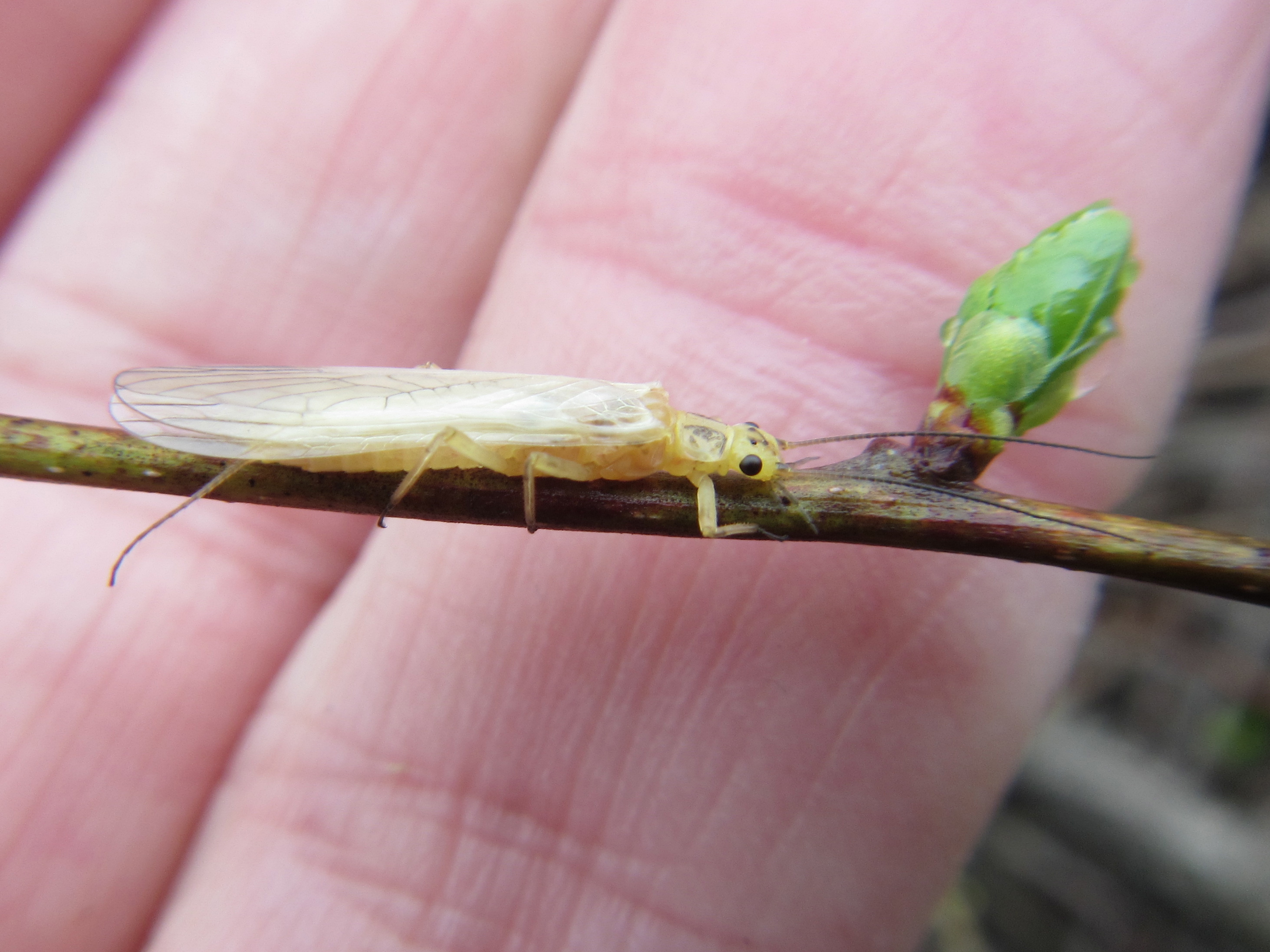
Hello, my little yellow friend.


Image


After a steady late morning rain, we agreed we had beaten the water to pieces, and decided to head upriver. Run A proved unproductive. I hemmed and hawed about where to go next; every once in a while I get lucky, and off we went to Run B. Ding-ding-ding! That was the dinner bell ringing for a good 2:30pm showing of BWOs. Once the hatch started, so did the bite. Gary got into some active feeders, then suddenly Joe was on fire, hooking up multiple times.

We often wish each other well with, “tight lines.” Joe turns our fondest hopes into reality.

Image


The fish, a beautiful Survivor Strain brown, bathed in reflected light and liquid elements.

Image


After Gary and Joe’s session ended, I decided I deserved a little wet fly time. The run I wanted to fish was occupied, so I made a few unproductive casts at its head before venturing a few hundred yards upriver. WHACK! on the dangle below me, a substantial rainbow that strenuously objected to being brought to net. A few more customers, then one last brown on the mended swing, netted as the smoke from my El Rey del Mundo curled upward into the windless sky.

A good way to end the day. Some intriguing marking on this fish, from haloed orange dots to married black splotches.

Image

Avoiding crowds, finding fish

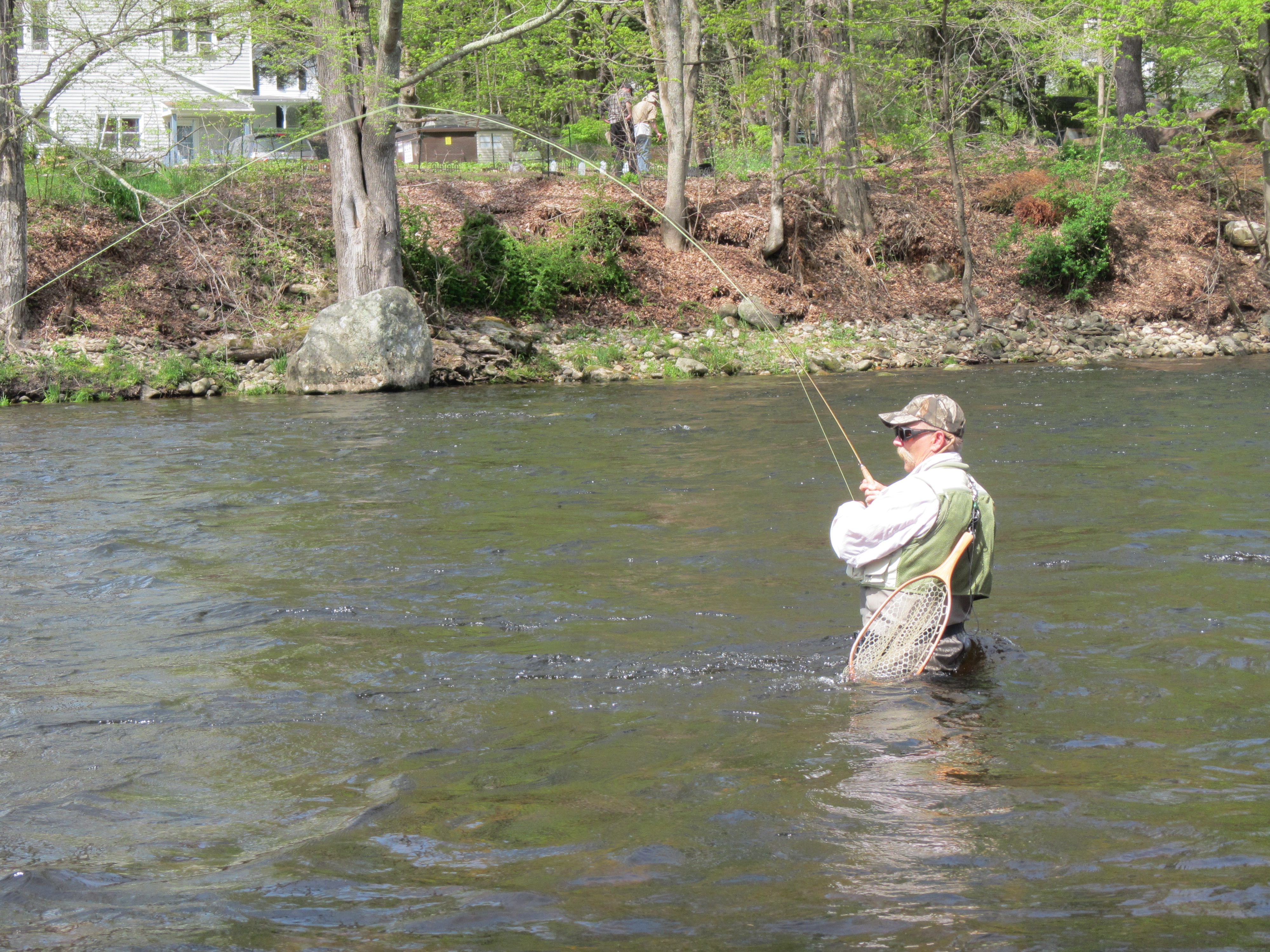
You would have thought it was the weekend on the Farmington River Upper TMA. Mobs of anglers everywhere, eager to get their Hendrickson hatch on. Fortunately, Carl and his son Joel wanted to brush up on their wet fly technique today, so we were able to play keep-away from most of the crowd.  We found two spots that were not only productive, but also without another angler in sight. Both Carl and Joel are experienced fly anglers who took to the wet fly like they’ve been doing it for years.

Carl with a good bend in the rod. He worked hard for that fish — well done, sir.

Image

Things got a little weird from the get-go. How about Hendrickson egg layers swarming at 9:30am, and a spinnerfall at 11am? Never seen that before. We found dozens of active risers that proved a challenge to hook. Both Carl and Joel solved the puzzle, though, and we were off to a strong start.

A handful of spinners. Scads of them in the film this morning.

Image

We buzzed around the Upper TMA before ending the day on a section of river that rarely gets fished. Another good Hendrickson hatch, but this time precious little feeding on it. We still managed to get into fish.

Here’s Joel, net at the ready, about to savor another trout he put some serious time into fooling. Some fish don’t come easy, but when they do come, how sweet it is.

Image

Today’s runaway favorite fly was a size 10 bead head soft-hackle Pheasant Tail. River was medium high at 575cfs, noon water temperature of 53 degrees. Glorious sunshine, solitude, and two fly fishermen that are now officially dangerous wet fly swinging machines. Thanks again, guys. You made my job an easy one.

Partake in this madness? Fuggedaboutit. We found our pleasures in water no one was fishing.

Image

Tying at NE Spey Clave III, Saturday May 17

I will be doing a tying demo, Wet Flies for the Farmington, at this year’s NE Spey Clave III. If you plan on going, swing by my little picnic table and say hello. By popular demand, I will have a small selection of wets for sale. If you’ve never been, here are some details from Spey Casting NE:

New England Spey Clave III – May 17, 2014

Mathies Grove on the Farmington River

Sponsored by FRAA

Many manuf. Reps will have rods and lines to test cast

Demonstrations on the Farmington River

Andrew Moy – Topher Brown – Rich Murphy – Mark Sedotti – Fred Wilson

Free lunch by: The Complete Angler, Darien, CT

Raffle for Spey Rods and Lines – Proceeds for FRAA

Image

Farmington River conditions: down she comes

This in from FRAA President (and dry fly angler extraordinaire) Drew Butler:  “Just received notice that they are reducing flows to 300cfs from the dam, dropping it from the 880cfs that it has been for the last few days. Total flows through the upper TMA will be below 500cfs for the first time in a while. Yesterday brought a fair BWO hatch along with a few Hendricksons and Quill Gordons. The water temp had dropped from 52oF down to 48oF so the fish were not as active on the surface. Still managed a half dozen or so on top, all on some form of Hendrickson emerger before it quit around 5 or so. There was a decent spinner fall on Wed. and I expect that the spinners will just get better as the temps warm up early next week. Time to break out the size 12 rusty egg-sac spinners!!”

In case you’ve never heard of Drew, he holds the current (and still growing) record for consecutive months catching a trout on a dry fly. I’m not sure where he’s at, but it’s well over 100. You do the math.

I would also expect the Mahogany Duns to begin making an appearance. For those of us who love swinging wets, this can be a productive afternoon hatch. Try a February Red, size 16-18.

The February Red. This is a size 12, so shrink it down for the paralepts.

Image


Simplifying the currentseams name

To all who follow Currentseams:

Easier is better. Simpler is better. So, going forward, the url for this site will be currentseams.com. New name. But same content, same personnel.

It may take a few hours for the change to manifest. I’m assuming that if you signed up for email alerts, you’ll continue to get them. If not, you’ll know where to find me.

As always, thank you for following currentseams, thanks for reading, and thanks for participating in this wonderful sport.

Steve Culton