Fly Tying Class Sunday 2/8/15: Wet Flies and Fuzzy Nymphs for the Farmington River

This class will by led by yours truly at UpCountry Sportfishing in New Hartford, CT, Sunday, February 8. Here is the blurb from the UpCountry website:

“Join outdoor writer and Farmington River guide Steve Culton as we explore tying buggy, impressionistic wets and nymphs geared toward fishing the Farmington. The class will place an emphasis on using natural materials to create flies for specific hatches, as well as attractor patterns. From classic North-Country spiders to some of Steve’s own creations, you’ll learn to tie high-confidence patterns that have been battle-tested and proven on the Farmington. Steve will also discuss wet fly methods for each pattern. Participants will need a vise, thread and tools. All other materials will be provided, including a pattern recipe sheet. The class starts at 9am and will run between four and five hours. Space is limited to six people. Tuition is $75.”

Please do not contact me to register for this class. You must enroll by calling UpCountry at 860-379-1952. Hope to see some of you there.

North-Country spiders. You betcha we’ll be tying some.
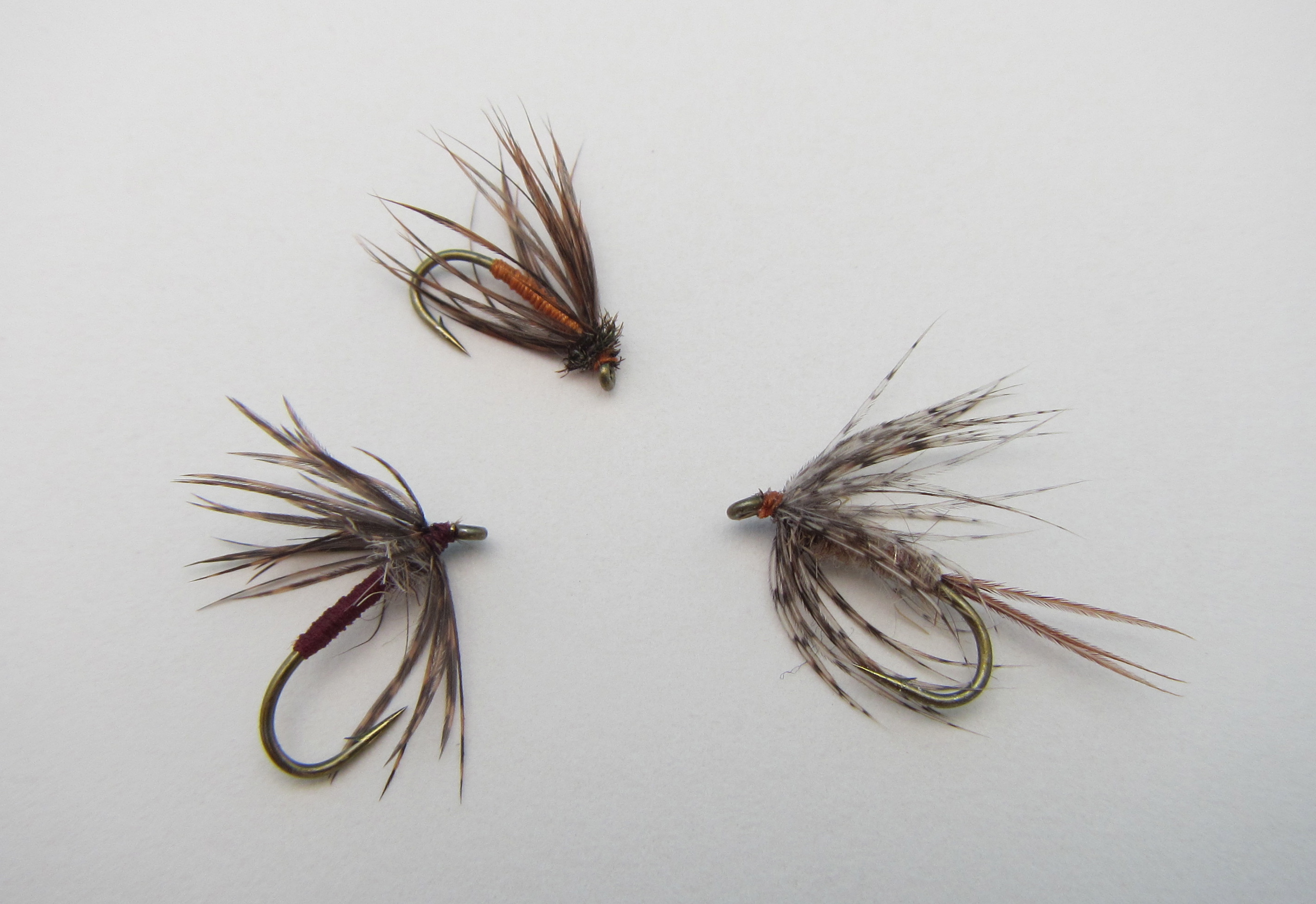
Soft-hackles

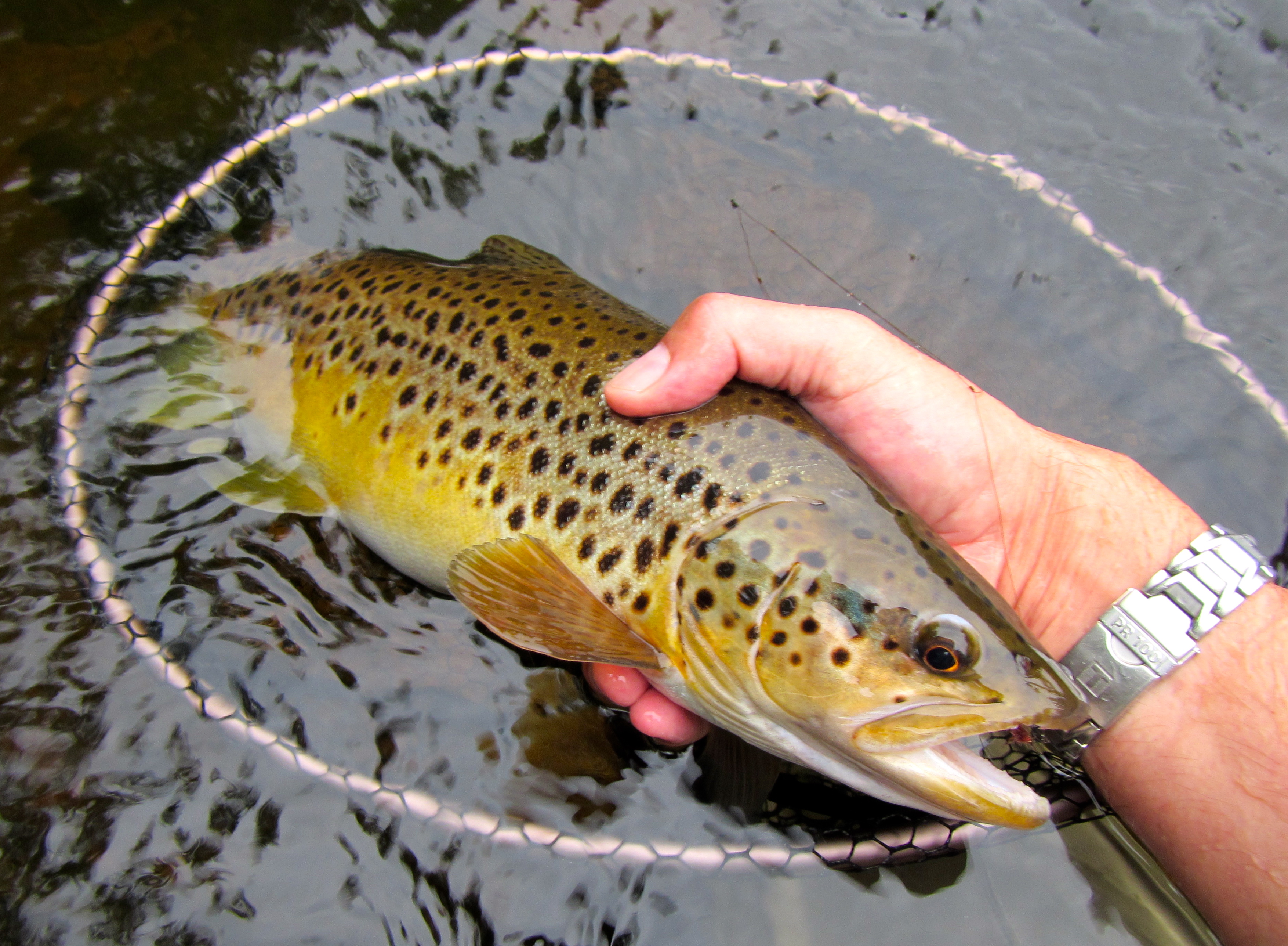
What can you catch on wet flies? Trout like this. (Hackled March Brown, size 12)
20%22Brown8:18:13

Of steelhead and stoneflies

Steelhead Stones

Front cork: 60 Second Redheads and 60 Second Copperheads.

Rear left cork: Copperhead Stones and BHSHPTs

Rear right cork: North Country Steelhead Spiders (purple and black), Spider (originated by Clyde Murray) variant

Mindset: Fresh chrome. Uncorked.

Tying the 60 Second Redhead

I’m not sure this really needs a how-to video, but the 60 Second Redhead is such an amazingly productive steelhead fly that I had to share it.

Dispatches from the word front

Hello, fellow fly fishing reader. Get your eyeballs ready for a couple articles from yours truly.

Soft-Hackles for Winter Steelhead will be in the next (Jan/Feb) issue of American Angler, which should be out in early December. It takes a look at some of my favorite patterns for Great Lakes winter steelhead, and of course includes a few fishing stories into the bargain.

Winter on the Farmington will be out early next year in the Mid Atlantic Fly Fishing Guide. One guess as to the subject matter. Gadzooks, I have yet to write this. And my deadline approaches rapidly from the east.

On the noncommercial front, I still owe you my Block Island Diary 2014 and a report from my recent steelhead trip. I ask for your patience while I restock my pens.

As always, thanks for your readership. And thanks to those of you who follow currentseams.

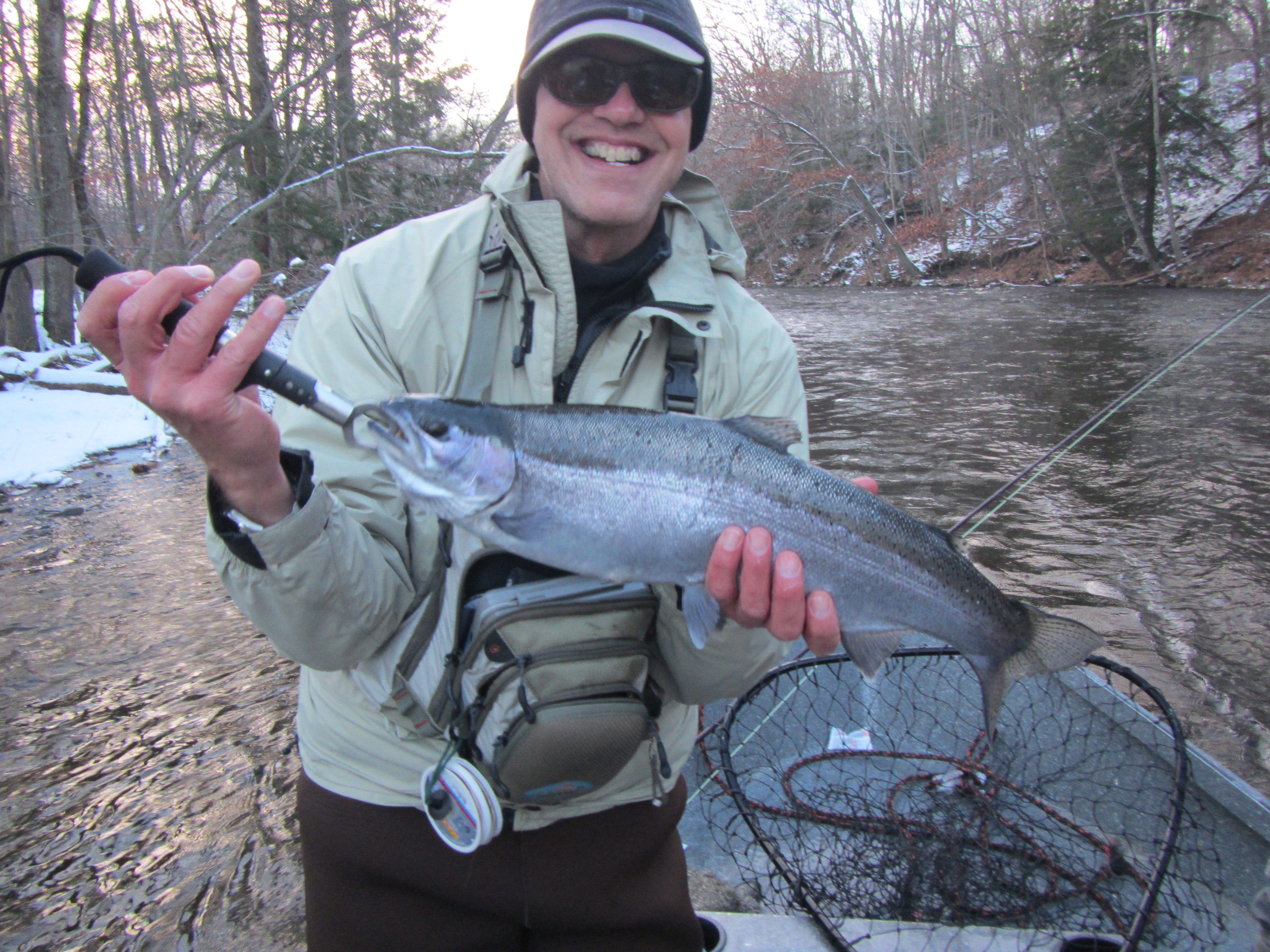
Winter. Steelhead. Smile.

IMG_1353

Presenting “The Little Things” at the FRAA Meeting, Wednesday, November 19

IF YOU WANT TO CATCH MORE FISH, PAY ATTENTION TO the little things. That’s the title of my newest presentation, and I’ll be delivering it this upcoming Wednesday, November 19 at the FRAA monthly meeting.

They say that 10% of the anglers catch 90% of the fish. If that’s true, it’s not because those 10% are supernaturally gifted angling demigods. It’s not because they are lucky. It’s because they do a lot of little things that other anglers don’t. As a guide, I have the opportunity to observe how people fish. I see their mistakes as well as their triumphs. When I’m fishing, I am constantly making adjustments and trying new approaches. That’s what The Little Things is all about – seemingly minor factors that can make a big difference in your fishing.

Little Things

The meeting starts at 7pm, and it’s held at the Farmington Senior Center, 321 New Britain Avenue, Unionville, CT. For more information, visit fraa.org. Hope to see you there.

Steelhead Marabou Stingers

It’s the modern way with so many streamers. But today I am not interested in pushing water. I want to embrace it. Cherish it. Become one with its fluidity.

Here are two simple, elegant streamers, tied on articulated shanks with a trailing stinger hook. Their intent is seduction, not overt lateral line pandering. A tail of rabbit with some Krystal Flash. Soft, flowing marabou that caresses the currents and whispers, “I’m alive.” A little flash to augment the flavors, not overpower them. Intended for steelhead, but certainly appealing to trout. Cast. Swing. Dangle.

And hold on.

Steelhead Marabou Stinger

Steelhead Marabou Stinger

Shank: Fish Skull Articulated Shank 35mm
Thread: Black 6/0
Stinger: Gamakatsu Split Shot/Drop Shot, size 2, attached with 30 pound Fireline
Tail: Black rabbit strip with black Krystal Flash.
Body: Palmered marabou: black, then wine, then purple, then two turns fluorescent red
Topping/Cheeks: Red, blue, purple flashabou.

 ~

Steelhead Marabou Stinger 2

Steelhead Marabou Sringer 2

Shank: Fish Skull Articulated Shank 35mm
Thread: Chartreuse 6/0
Stinger: Gamakatsu Split Shot/Drop Shot, size 2, attached with 30 pound Fireline
Tail: White rabbit strip with pearl Krystal Flash.
Body: Palmered marabou: white, then pink, then four turns chartreuse
Topping/Cheeks: Silver, blue, green flashabou.

Housatonic Mini Report 10/29/14: More fun with streamers

After last week’s rains placed her flows into the thousands, the Hous TMA was down to a very wadeable 988cfs. The water, however, still had a moderate stain, and it was noticeably colder than last week. Cloudy conditions with a bit of a breeze. Fished a floating line with a seven-foot leader. I tied up a yellow and white marabou articulated streamer the night before in the hopes that it would discourage the smaller fish from jumping on. That kind of worked. I still had plenty of bumps, but the foot-long fish weren’t making it much past the initial strike stage. I did manage several some-teen-inch fat rainbows that kept me entertained with their cartwheels. In the higher flows, even a mid-teens fish felt substantial. I bounced around to five different name pools, and I had action in four of them. Getting stoked for a steelhead on a streamer next month.

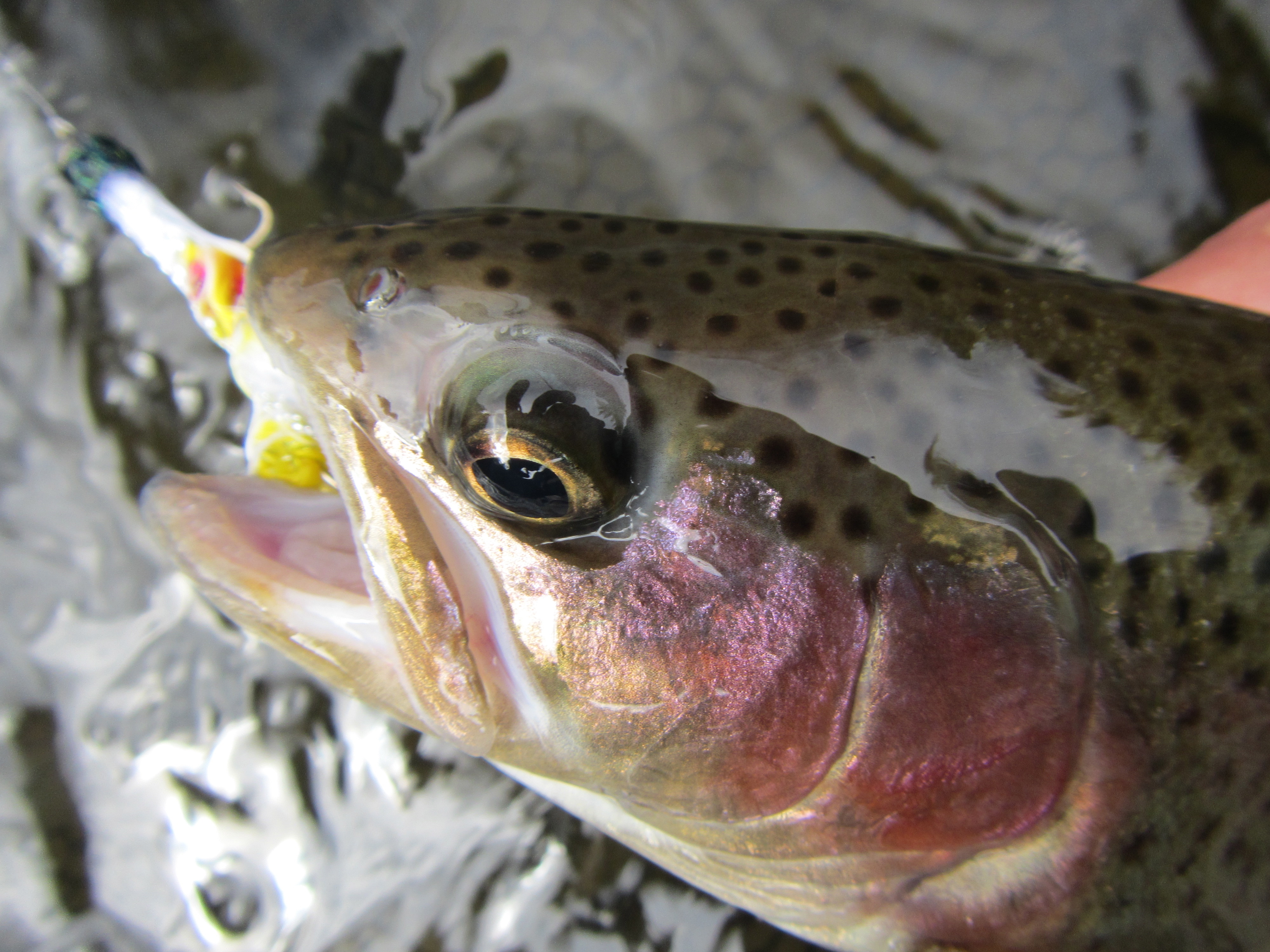
Fat, aggressive, and obstreperous. Just the way I like my rainbows.

Housy Rainbow 1

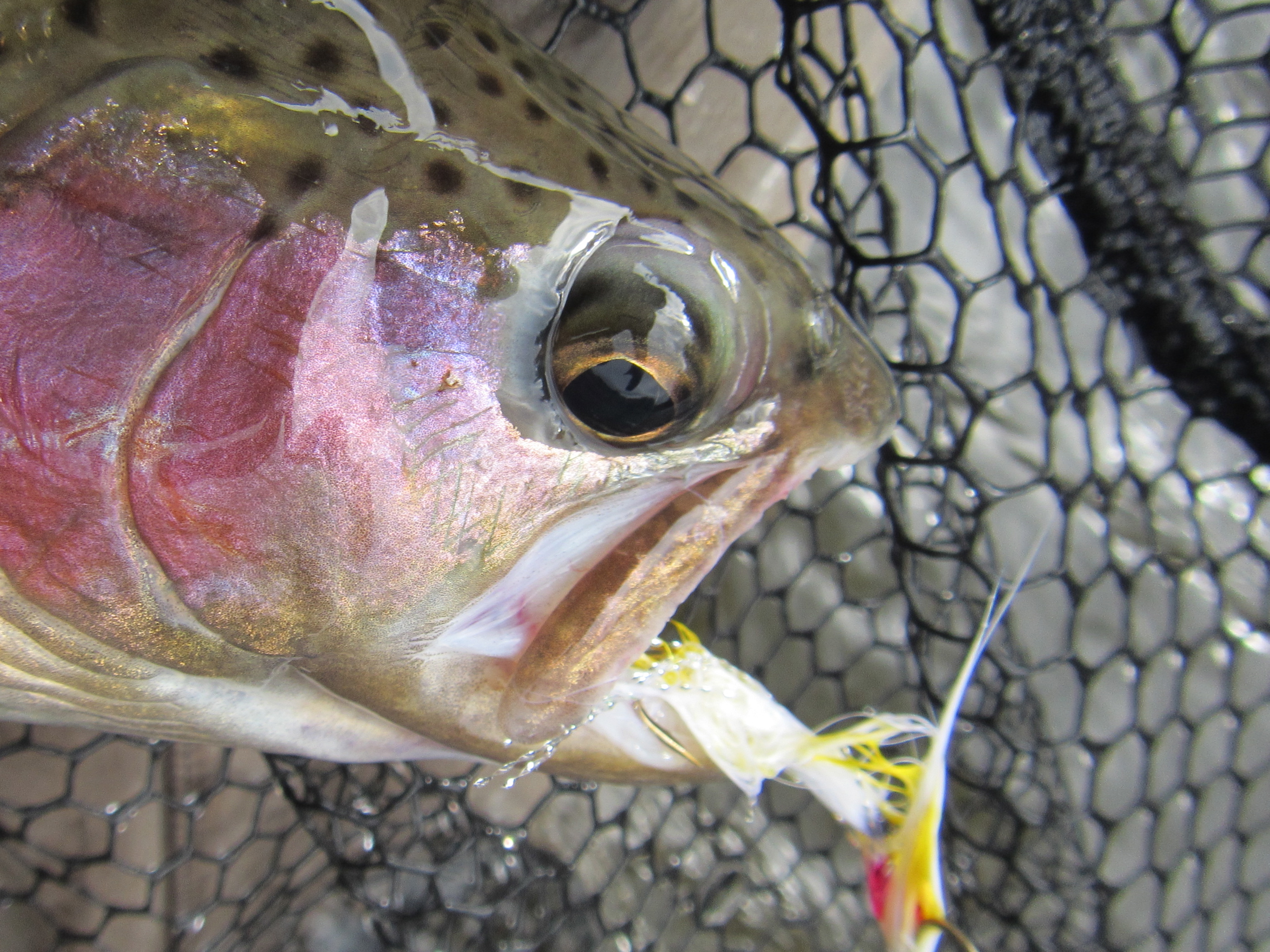
Do I have something on my lip? I had confidence this streamer would work, but it’s nice to get approval from the target audience focus group.

Housy Rainbow 2

Currentseams Q&A: attaching a soft-hackle to the hook shank

Q: When tying soft-hackled flies do you tie in the tip of the feather or the butt?

A: I’m almost always a tip guy. The stem of any feather is more flexible at the tip, and therefore easier for me to wrap. Also, feathers like starling are quite fragile — when I try to grip the tip of a starling feather with my hackle pliers, I often break off feathers to the point of rage. We don’t like rage when we’re tying. Maybe I just need to dial back the wrapping pressure. Or quit lifting weights.

Tying in by the tip is neither right nor wrong. It’s just the way I like to do it. I originally learned from Dave Hughes’ book Wet Flies, and he advocates tying in by the butt. I tried it that way, then tried it this way, and here we are. I encourage you to do the same in your tying and fishing: try different methods and pick the one that suits you. If I am tying a pattern like Stewart’s Black Spider, where I am starting at the head then winding the hackle rearward along the body, I will tie the feather in by the butt. This results in a tapered flow of hackle from large in front to small in back.

These hackles were all tied in by the tip. They look OK to me, and the trout certainly like them. So I must be doing something right.

Soft-hackles

Currentseams Q& A: Tying the bead head soft-hackled Pheasant Tail

Q: Can you give me the recipe for your BHSHPT nymph?

A: You betcha. As a point of procedure, it is not “mine.” People have been tying this fly for generations. I’m just another in a long line who discovered the magnetic mojo of adding webby brown hen to the mix. I’ve really got to do a video of this pattern.

The bead head soft-hackled Pheasant Tail:

7a34cc32_vbattach314446

Hook: Size 8-16 1x short 2x strong scud
Thread: Tan or brown 6/0 or 8/0
Head: Copper brass or tungsten bead to size 
Tail/body: 6 (less as the hook gets smaller) pheasant tail fibers
Rib: Fine copper wire counterwrapped over body
Thorax: Peacock herl
Hackle: Soft brown hen

Tying notes: Old faithful, old reliable. Over the years. this fly has accounted for a significant percentage of the trout I’ve caught. Tying should be fairly intuitive. Lately, I’ve taken to tying in the hackle after I wind the peacock herl thorax. A few stray hackle fibers here and there on a nymph looks lovely to a trout. Once I get down to an 18 or 20 on this fly, I dispense entirely with the peacock herl. I also will use only three pheasant tail fibers on an 18 or 20.

Tying the Magic Fly (Pale Watery wingless wet variant)

The Magic Fly (Pale Watery wingless wet variant)
Hook: 1x fine, size 16-20
Thread: Pearsall’s Gossamer silk, primrose yellow
Hackle: Light ginger hen
Tail: Light ginger hen hackle fibers
Body: Rabbit fur, color to match the natural

I will be the first to tell you that I don’t believe in magic flies – you know, flies that you tie on and you automatically start bailing fish. This pattern is the closest I’ve found to being the exception. The Sulphur hatch is notorious for producing stillborn flies and frustrated anglers. The same could be said of the summer stenos, which have left me muttering to myself and spitting oaths on numerous occasions. The first time I fished this fly, it was a classic June Sulphur night on the Farmington. I had a whole pool of trout at my command. They rose to the fly with such confidence that I couldn’t believe what was happening. It must be magic! I treat this fly with silica floatant (my favorite is Frog’s Fanny) and fish it like a dry, on a long leader on a dead drift. The soft hackles and spikey body create a must-eat-me-now illusion that turns trout stupid. Alter the size and color and you’ve got a fine match for dorotheas and stenos.

The Magic Fly is based on the old English Pale Watery wingless wet pattern.

If there is a downside to this fly, it’s that it is a victim of the materials that make it such a success. The wet fly hackle quickly absorbs water, sinking the fly deeper into the film. Sometimes this is a good thing. Most nights, though, I find the trout want the fly a little higher on the surface. Even repeated shakes in a floatant canister and a re-dusting of silica won’t keep the fly where it needs to be. So make sure you tie up a half dozen in each size. Speaking of size, of the trout aren’t taking the fly, try going down one size. Sometimes that makes all the difference.

~

The Magic Fly Rogues’ Gallery:

Brown PWWwet


~


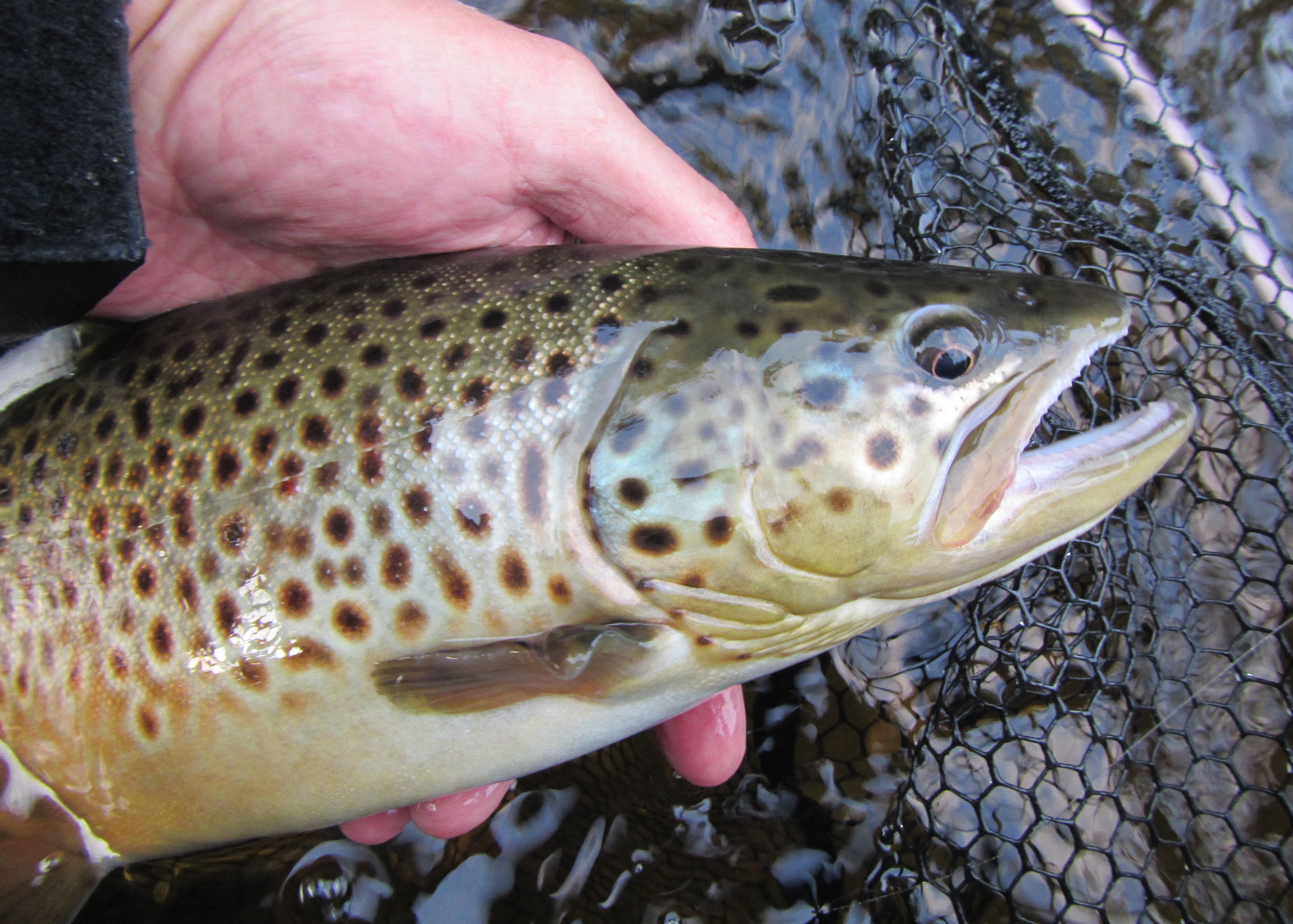
High-teens long, fat Farmington brown taken 7/21/14 on a size 20 Magic Fly

Big Brown on Magic Fly