It’s hard to believe, but yesterday was the first time this year I got out on the Farmington River — and most of the afternoon was dedicated not to fishing, but errands and work. Poor me, having to spend an afternoon in an office that included shirtsleeve weather, sunshine, Hendricksons, trout, and good company!
Besides fishing errands — new boots and two nets on the item list — I spent some time distributing info sheets on gathering fly patterns and photos for the book. Then I hightailed it to the river to get some shots of guide Steve Hogan with his client. Finally, I spent an hour idly swinging a team of three wets. I’d missed the earlier hatch window, but I stuck a pile of juvy Atlantic salmon and then finally a rambunctious stocker rainbow.
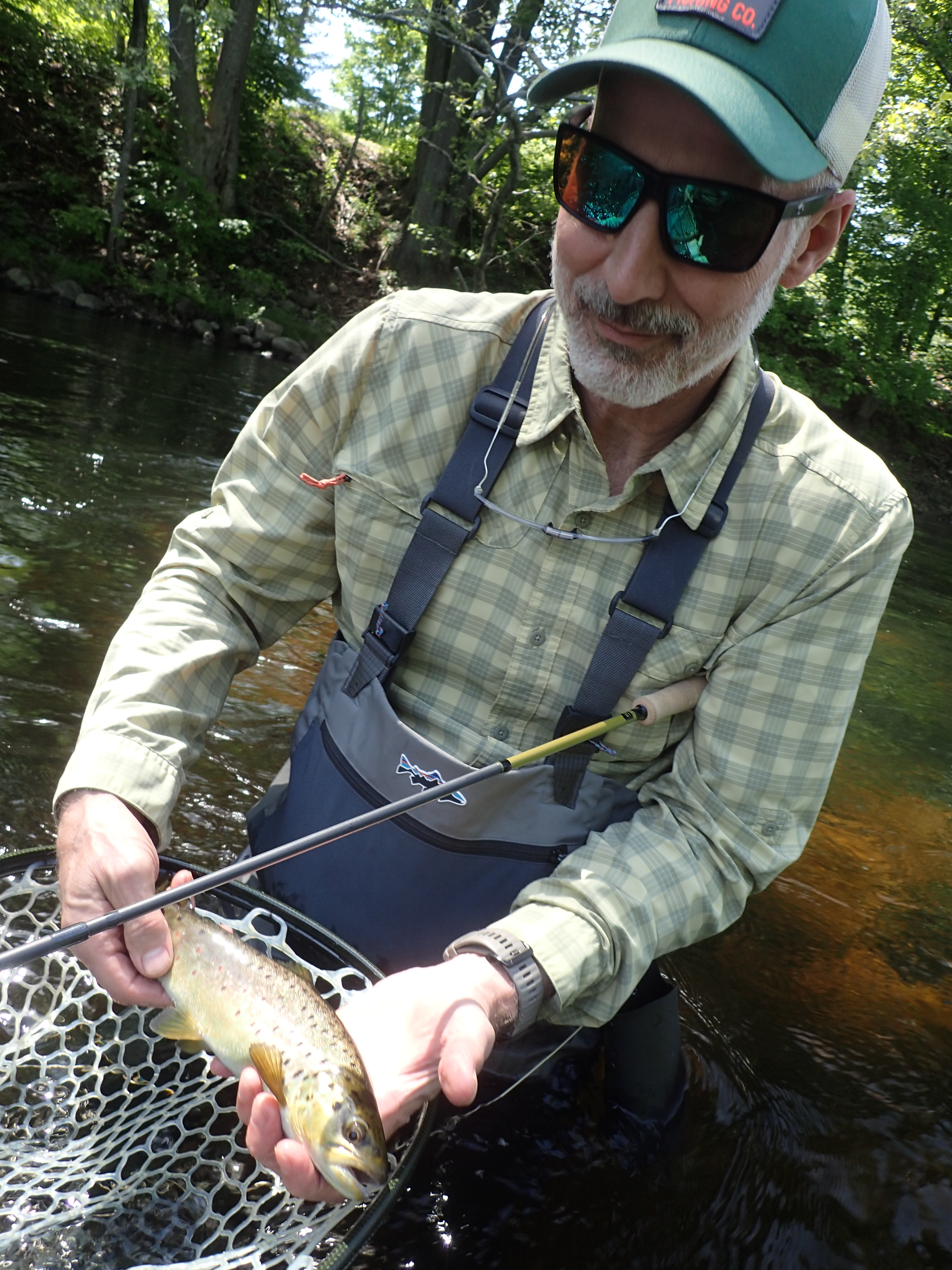
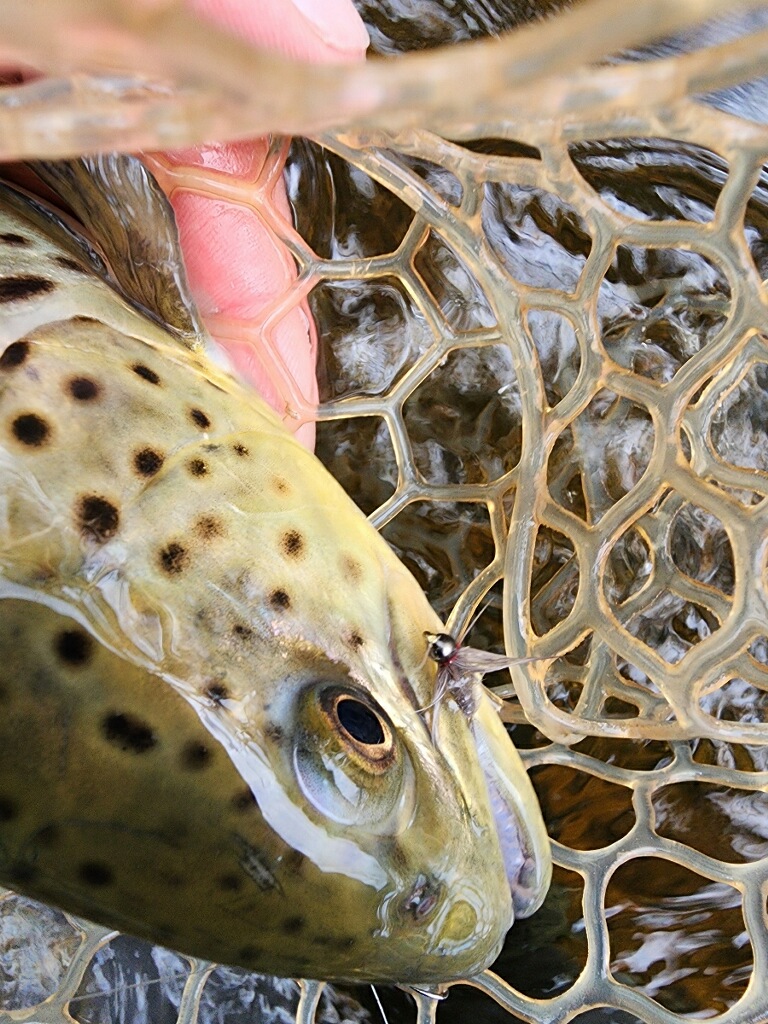
I’d given Steve a tungsten bead head soft-hackled Hendrickson, and later in the day he sent me this photo, taken upriver. Well done, Mark! While there were some Hendricksons in the air, the hatch has progressed to north of the PTMA. Church Pool was devoid of anglers at 3pm, so there’s your proof.(Photo by Steve Hogan)
This one’s only about a year old, but in case you missed it, it’s certainly a must-listen — especially if you like to swing wets, if you’re considering learning how to do so, or even if you need a refresher course. Here’s the link to the original post, and within that you’ll find a link to the podcast. Enjoy, and beware: you’re about to start catching more fish.
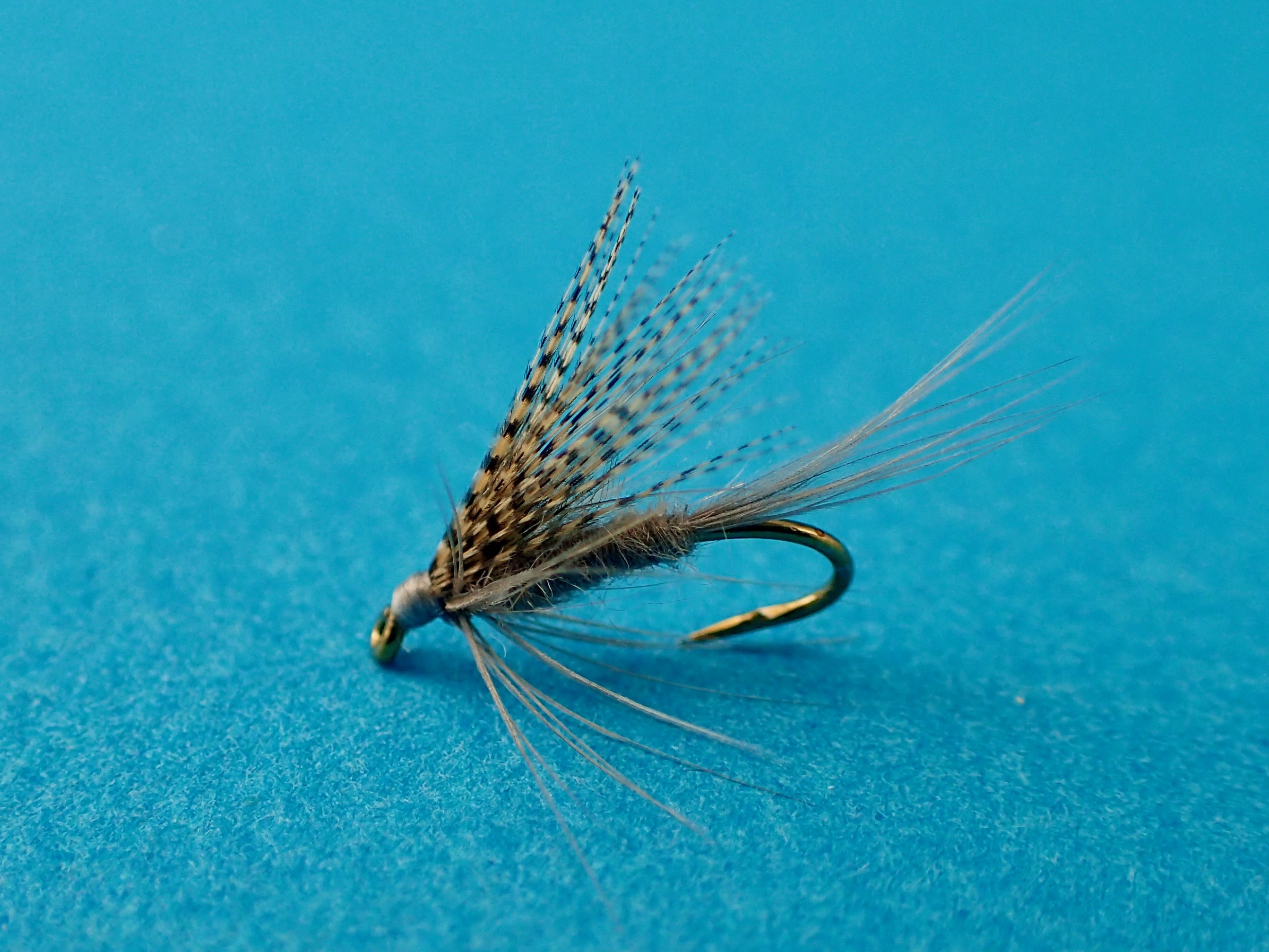
You should be fishing this pattern, the Dark Hendrickson winged wet, right now.
I’m super-excited to announce that I just signed a book contract with Stackpole. The working title is Fly Fishing Guide to the Farmington River. This will be a comprehensive resource for the West Branch, from the river to trout to maps to access to hatches to how-to-and-when. I plan on including information from local experts and guides, as well as a selection of must-have fly patterns. If you have any of Stackpole’s “Fly Fishing Guide To” river books, you know the level of detail I’ll be delivering.
The final manuscript isn’t due for over a year, so it’s going to take some time for this to get to press. In the meantime, please wish me luck as I set off on this big adventure. As always, I thank you for your support and readership, and of course I’ll keep you updated as the project progresses.
Coming soon to a bookshelf near you! While this isn’t the working title or cover shot, the description is spot-on.
Yeah, baby, it’s getting to be about that time. OK, maybe not for a couple more weeks. We’ll see what Ma Nature has in mind as far as warmth and rain are concerned. But indeed it is coming. And right now is the perfect time for you to stock the box with your favorite Hendrickson patterns.
If you’re not fishing under the Hendrickson hatch with wet flies, you’re missing out. In fact, you’re missing out on some of the best trout-on-the-fly action of the year. Tie these up, place them over a rise, and hold on. Oh. And be prepared to clip one or two flies off your three-fly team. Such are the travails of the angler getting doubles and triples!
On the surface, you may be unthrilled (rather than enthralled) by this topic. But I think it’s worth your time, especially if you tie soft hackles. I get a lot of questions about hen hackle types, and this article covers the subject nicely.
There’s something very satisfying about finding a top-shelf hen cape. While the price of both has gone up, you still occasionally see these in deep discount fly shop and show bins..
Looking back at this post, I can happily say that I’ve given many of these patterns far more than a test drive. I find it highly satisfying that the flies that Leisenring fished with confidence on his beloved Pennsylvania streams work just as well on the Farmington River. The post is formatted so that if you click on a pattern title, you’ll be taken to the recipe, along with a little blurb about the fly.
Hot tip: try Liesenring’s Old Blue Dun in a size 12 during the Hendrickson hatch. The original works, but if you want to make it a little truer to the natural, use dark dun for the tail and hackle.
When I went back to this oldie-but-goodie article, I was struck by two things. First, I love how Leisenring incorporated the soft hackle into these nymph patters. And second, I have not fished these patterns nearly enough, whether on a dead drift near the bottom or as a swung wet fly. None of them have beads or UV dubbing or special sparkle flash, but they all look like they’re alive and something fish would like to eat. To the vise (again)!
Anyone can luck into a big fish. Way back when, when I was just starting out, I wanted no part of that. I wanted to be able to consistently catch big stripers.
If you want to catch big bass — and make it repeatable — you don’t need a casting lesson. You don’t need to be able to reach 90 feet. You don’t need the latest in intermediate line technology. You don’t need a huge monstrosity that looks more like a plug than a fly.
You need to study. And ask questions. Why would there be a big striped bass where I’m fishing? Is there current, cover, and food? Is it pre-spawn? Is it migration time? Is the bait spawning (and therefore gathering in large numbers)? Is it dark, so the fish feels comfortable coming in close? What’s the barometer doing? Which way is the wind blowing? What’s the tide, and how is it moving? These are all part of the equation.
Then, you need the right fly. Something that looks like the bait, or what the bait should be at this time and place. Does the fly look alive and like something good to eat, even when at rest?
Don’t forget presentation. You need to learn that, too. Big fish are lazy, and frequently unwilling to chase. How can you present the fly in a way that makes it easy for the striper to eat?
Last but not least, you need to put in your time. There is no substitute for time on the water. You can do all of the above, check all the boxes, and still blank. (Ask me how I know.) Nevermind, I’ll just tell you. Last year, I fished the mark I fished last week six times and had only two tiny bass nibbles and no bass to hand for my efforts. But every year is different, and this is what I found on a greased line swing with an 11″ Bombardier flatwing in March of 2024:
Miss Piggy went 25 pounds and taped 39 inches. This was one of the best fights I’ve ever had with a bass, and I hope to write about it sometime soon. I am humbled and grateful for the chance to hook, land, and release this fish. I’ve been doing this for years, folks, and I was so pumped with adrenaline that my hand was shaking as I took this photo.
I received a message last week from a fan of Stewart’s Spiders. He was delighted to find them so lovingly rendered on this site by yours truly, so I thought it might be a good time and place to revisit them. (Yup, I’m still encumbered with house stuff and other projects.) If you haven’t seen them, you’ll like. This is simplicity, elegance, and deadly rolled into a single pattern format. Here’s the article link.
I didn’t really have the time yesterday, but since my default setting is when in doubt, go fishing, I did. The venue was a small woodland stream, and the time frame was 3:45pm-5:30pm. It was mostly cloudy and very warm for February, with a water temp of 48 degrees. The stream was running medium-low and clear. No hatch activity, although I did see one lonesome sz 600 midge flitting about.
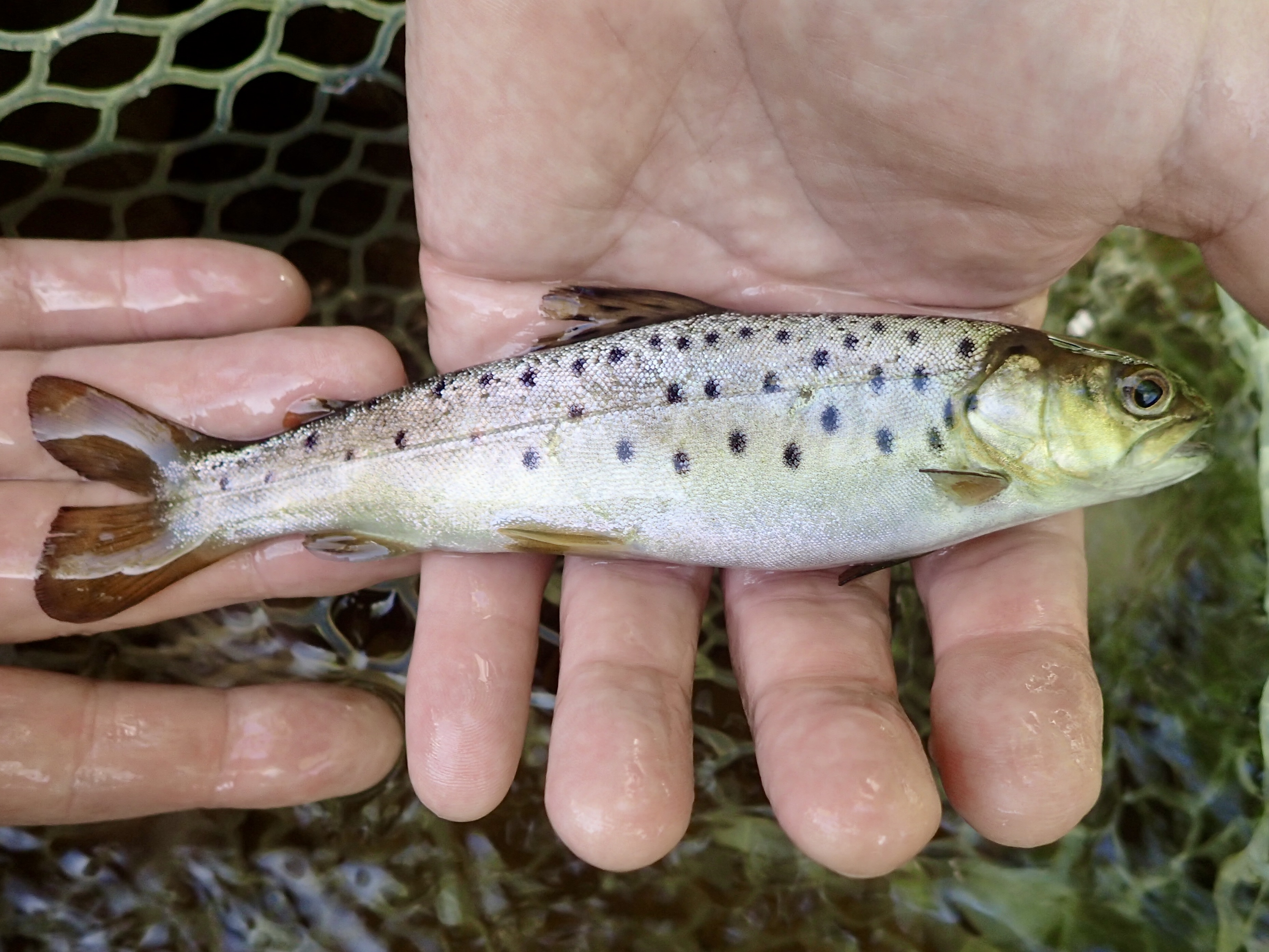
I’ve written before that I’m a massive creature of habit, but on this outing I decided to explore about 100 yards of new water. I was glad I did, as that turned out to be my most productive stretch. I fished mostly subsurface with the Squirmy Worm Jiggy Thingy, but I did get a hysterical swing and miss on a bushy dry for the 5 minutes I fished it. All told, I pricked about 18 and brought probably a third of them to hand. I did catch the same beautifully spotted hen I took in January at the same hole. She really clobbered the fly.
A few of my favorite things: a cigar, a glass rod, and a small stream, and if I can get them all at once that’s even better. What a glorious day to play hooky for a few hours and lose myself in a babbling brook.