Leisenring’s Favorite Twelve Wets: Old Blue Dun

The Old Blue Dun would make a fine representation of those bigger early season BWOs we get on the Farmington. Use a darker blue dun hackle and it’s easy to imagine it as a Hendrickson. Clearly, Leisenring thought highly of this pattern. And the trout you present it to will, too.

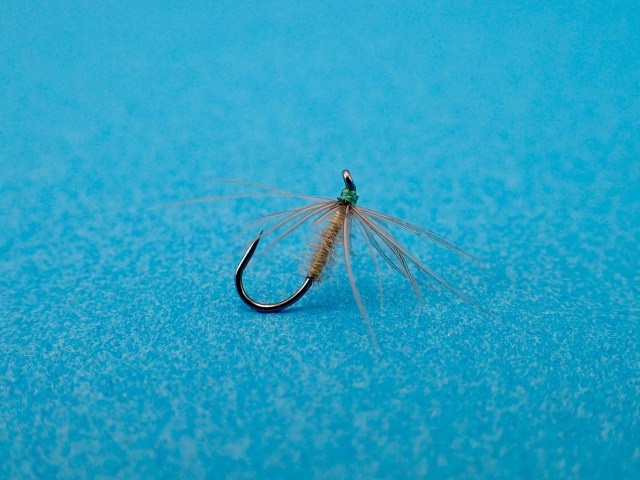
Old Blue Dun

OLYMPUS DIGITAL CAMERA

~

Hook: Dry or wet fly, 12-14
Silk: Primrose yellow
Hackle: Blue dun hen
Tail: 2-3 glassy fibers from a rusty blue dun cock hackle
Rib: One strand yellow buttonhole twist
Body: Muskrat underfur spun on primrose yellow silk, a little of the silk showing through at the tail
Wings: Starling (optional)
~
Tying Notes: We’re back to the DMC embroidery floss (#744) as our buttonhole twist substitute. Make sure you pick out the muskrat guard hair — you want the soft, dark underfur. I didn’t leave a lot of the yellow silk showing through at the tail here; I wonder if Leisenring’s intention was to craft the illusion of an egg-layer? Nonetheless, this fly will hunt.

TGIF Currentseams Odds & Ends

Those paying attention to this sort of thing will notice that we have reached and passed the 700 followers mark. So it’s time for a celebration fly giveaway. Thank you, everyone, for your loyal readership. Details to come shortly!

If you’re a member of the Cape Cod Flyrodders, I’ll be speaking at your meeting next Thursday the 21st. The topic will be Targeting Big Stripers From The Shore: Fly Fishing Tactics and Techniques. If you’re a Currentseams follower, please let me know.

I’ve gotten a lot of praise for my Housy piece in the current issue of Eastern Fly Fishing. Thanks for all your kind words. The Farmy piece for the same pub is in the can, out later this year.

I hope you’ve been enjoying my recent intensive series on North Country spiders and (still ongoing) James Leisenring’s favorite wingless wets and soft hackles. It’s a good warmup exercise for my wet fly gig at Legends next Saturday.

Finally, I went striper fishing Wednesday night. One touch, no hookups. But it’s coming.

Tight lines and good fishing karma to all.

The big girls will be showing up soon.

bigstripersshorecover

Leisenring’s Favorite Twelve Wets: Light Snipe and Yellow

Inspired by classic North Country flies, James Leisenring developed an arsenal of reliable patterns to match the hatches of his beloved local streams. You can clearly see the Snipe Bloa and Poult Bloa influence in the Light Snipe and Yellow. Farmington River trout love this fly, a lesson that is repeated on cool June nights when Light Cahills or Sulphurs are emerging and the water surface is boiling.

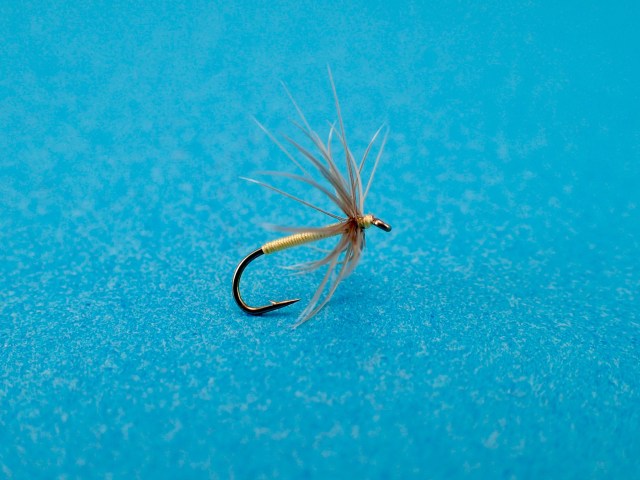
Light Snipe and Yellow

OLYMPUS DIGITAL CAMERA

~

Hook: Dry or wet fly, 14
Silk: Primrose yellow
Hackle: Snipe undercovert
Rib: Fine gold wire
Body: Primrose yellow buttonhole twist
~
Tying Notes: Instead of working silk, Leisenring used buttonhole twist (the thread that’s used on the borders of buttonholes) for the body. You don’t need to do that — your favorite silk or thread will work. But if you’re shooting for authenticity and can’t find buttonhole twist, try DMC embroidery floss. It comes in a bazillion colors (this is #744). It’s multi stranded, so cut a length then separate a single strand for the body. No snipe? Try starling or woodcock undercovert. You can find a general North Country spider video tutorial here.

“The Little Things” at Russell Library, Middletown, CT, May 1, 6pm

I will be presenting “The Little Things” at the Russell Library, 123 Broad St., Middletown, CT, 06457, on Wednesday, May 1, 6pm-8pm. This is my original “The Little Things” program, so if you haven’t seen it here’s your chance. As usual, we’ll have a post-presentation Q&A, and if there’s time I may tie some flies. Hope to see you there!

The original. Then came LT 2.0. And now, I’m building “The Little Things 3.0.” It should be ready to go for the fall of 2019.

Screen Shot 2019-03-05 at 1.08.45 PM

~

My wet flies event at Legends on Saturday, March 23, is sold out. Thanks if you’re one of the attendees!

Best of North Country Spiders: Waterhen Bloa

You’ll often find BWOs on the greyest of days, so ’tis fitting that this ancient-and-tradtional Olive pattern sports the same somber hues. It also makes a fine Early Grey Stone.

Waterhen Bloa

OLYMPUS DIGITAL CAMERA

~

Hook: Dry or wet fly, 14-18
Silk: Yellow
Body: Silk dubbed with water rat (muskrat) or mole fur
Hackle: Waterhen under covert feather
~
Tying Notes: Waterhen is difficult to track down. Starling or blue-grey dun hen are suitable replacements. You should be able to see the thread clearly through the dubbing — I call it “dusting the thread.” This fellow is slightly on the heavy side of dubbing. Keep enough thread waxed (I used cobbler’s wax) to avoid having a bright yellow head. You can find a general North Country spider video tutorial here.

Best of North Country Spiders: Orange Partridge

What’s the difference between a Partridge and Orange and an Orange Partridge? Not much. And everything. Sure, the gold rib provides segmentation and a hint of flash. But for me, it’s the brown speckled hackle that gives the Orange Partridge an entirely different energy. They liked this pattern for olives on the streams of Yorkshire; I’m seeing caddis all the way. Tell you what: let the trout decide what it is. And hold on tight.

Orange Partridge

OLYMPUS DIGITAL CAMERA

~

Hook: Dry or wet fly, 14-16
Silk: Orange
Rib: Fine gold wire
Hackle: Brown speckled feather from a partridge’s back
~
Tying Notes: Another straightforward tie. You can find a general North Country spider video tutorial here.

Best of North Country Spiders: Snipe Bloa

The Snipe Bloa is one of those flies that has a palpable energy, even when it’s resting in the palm of your hand. I think I prefer James Leisenring’s take on this pattern, the Light Snipe and Yellow, which uses Primrose silk, a fine gold wire rib, and snipe undercovert. This version (you can find many iterations of the Snipe Bloa; Pritt lists two) is taken from Sylvester Lister. It’s also called the Snipe and Yellow. Yellow Sallies, Sulphurs, Dorothea, Summer Stenos — the answer is “yes.”

Snipe Bloa

OLYMPUS DIGITAL CAMERA

~

Hook: Dry or wet fly, 16-20
Silk: Yellow
Hackle: Small darkish feather from under snipe’s wing
~
Tying Notes: No snipe? No worries. Starling is your friend. This is a fast, simple tie. You can find a general North Country spider video tutorial here.

Best of North Country Spiders: Grey Partridge (Grey Watchet)

My interest in North Country Spiders is twofold: that they’re cool (traditional, sparse, elegant, simple), and that so many of them translate well to our streams here in the U.S. Like the Grey Partridge. I first saw this pattern in Syl Nemes’ Two Centuries of Soft-Hackled Flies. Nemes saw it in T.E. Pritt’s North Country Flies. Now I’m sharing it with you. This pattern doesn’t get a lot of juice, but it makes a darned good Light Cahill. Just ask the trout.

Grey Partridge (Grey Watchet)

OLYMPUS DIGITAL CAMERA

Hook: Dry or wet fly, 12-16
Silk: Straw
Hackle: A light feather from a Partridge’s breast
Head: Peacock herl
~
Tying Notes: If you’re going for authenticity, tie the head in first and finish the fly behind the hackle. I used two strands of herl spun on thread for this fly; you can see the technique in my Drowned Ant video here. Next, attach and wind the hackle rearward. (It take s little practice.) Wind the silk body and finish. You can find a general North Country spider video tutorial here.

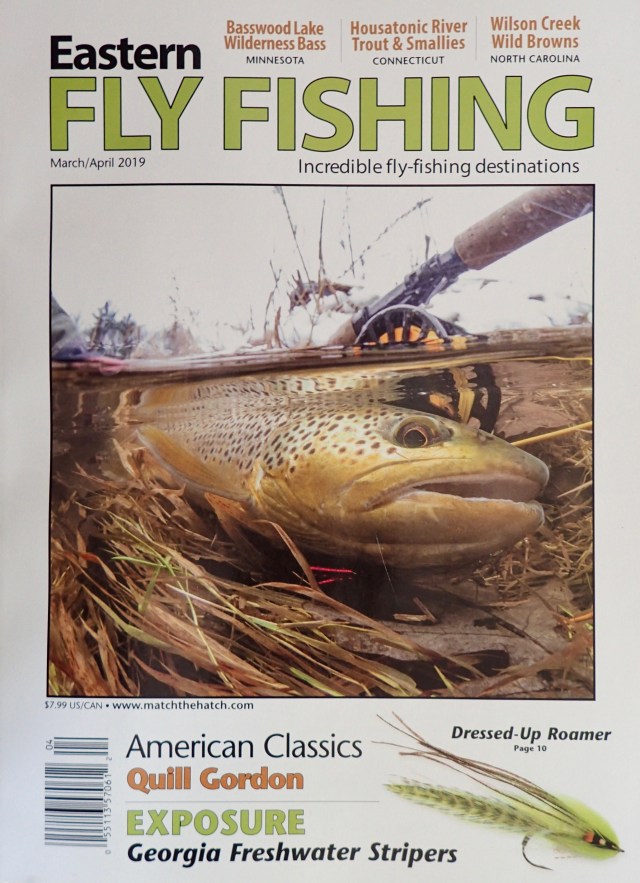
Housy Trout & Smallies in the March/April issue of Eastern Fly Fishing

Hot off the presses: “Upper Housatonic River, CT — The Smallmouth River That Thinks It’s A Trout Stream.” You can read it in the March/April issue of Eastern Fly Fishing. You’ll find a little river history, a little reconnoiter, some trout and smallie basics, and a couple of my favorite Housy fly patterns. Oh. It’s also a pretty good read (said the author modestly). I believe you can get a copy at matchthehatch.com.

Where we set out to prove the O.W. Holmes quote, “There’s no tonic like the Housatonic.”

OLYMPUS DIGITAL CAMERA


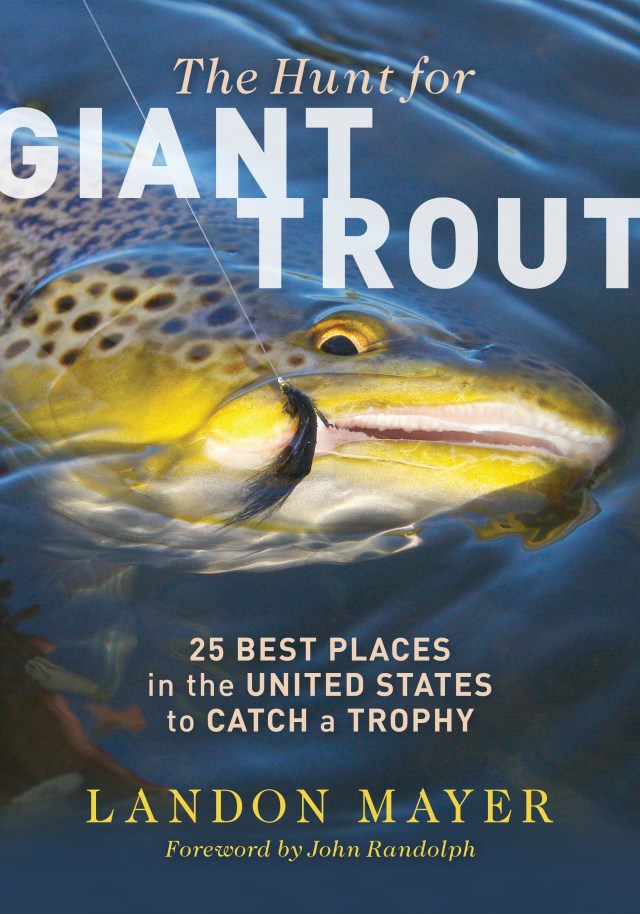
Book Review: “The Hunt for Giant Trout” by Landon Mayer

Well now — who doesn’t want to catch a giant trout? My first encounter with such a creature came in the early 1970s on CT’s Salmon River: twenty-three and one-half inches of malevolent brown beast. Its perfectly formed paddle fins and striking colors indicated that this was a holdover of at least several seasons. I just happened to be the kid who stuck it.

Yes, I’m addicted. Not quite as big as that Salmon River fish, but within trophy range. Farmington River, September 2018.

DCIM100GOPROG0013068.

~

Catching a giant trout changes you, and once you decide to pursue them you realize that big fish really are different — one of the many instructive points author Landon Mayer makes in his new book, The Hunt For Giant Trout — 25 Best Places in the United States to Catch a Trophy.

The Hunt For Giant Trout is divided into two sections: Strategies & Techniques, and The Fisheries. Strategies & Techniques is loaded with information on giant trout behavior and how-to (from reading water to fighting tactics). As a seasoned angler, I often judge fly fishing books from the perspective of: tell me stuff I don’t already know. There’s plenty of that in the first section, and I’m always delighted to discover how much I still have to learn.

The Fisheries takes you on a tour of 25 locations where you can fulfill your quest. I like that Mayer involves locals (some big names in there!) in each writeup; who knows the water better than someone who fishes it a hundred days a year? Included are favorite patterns and recipes, from bulky articulated streamers to midge nymphs. (As a fly tying nerd I’m always curious about what other people are tying and throwing.)

Mayer’s style is conversational and easy to read. Everyone learns differently, and there’s a ton of visual reference, from photos to diagrams. Even if there weren’t pictures of Landon holding giant trout, you’d still come away with the notion that this guy knows what he’s talking about. Minor quibbles? Only three of the twenty-five fisheries are within driving distance of New England; the list skews heavily western U.S. Still, there’s more than enough quality information here for me heartily recommend The Hunt For Giant Trout. Now I’ve got to go back and read it again. Summer’s coming, and that two-footer is lurking under a logjam, waiting for the opportunity to strike.

One of the coolest parts of doing presentations at places like the Fly Fishing Show is that you get to meet people who have caught way more big trout than you. Like Landon. He’s also one of the nice guys in our sport. So get this book and read it. The Hunt for Giant Trout by Landon Mayer, Stackpole Books, ISBN 978-0-8117-3719-7.
GiantTroutCover