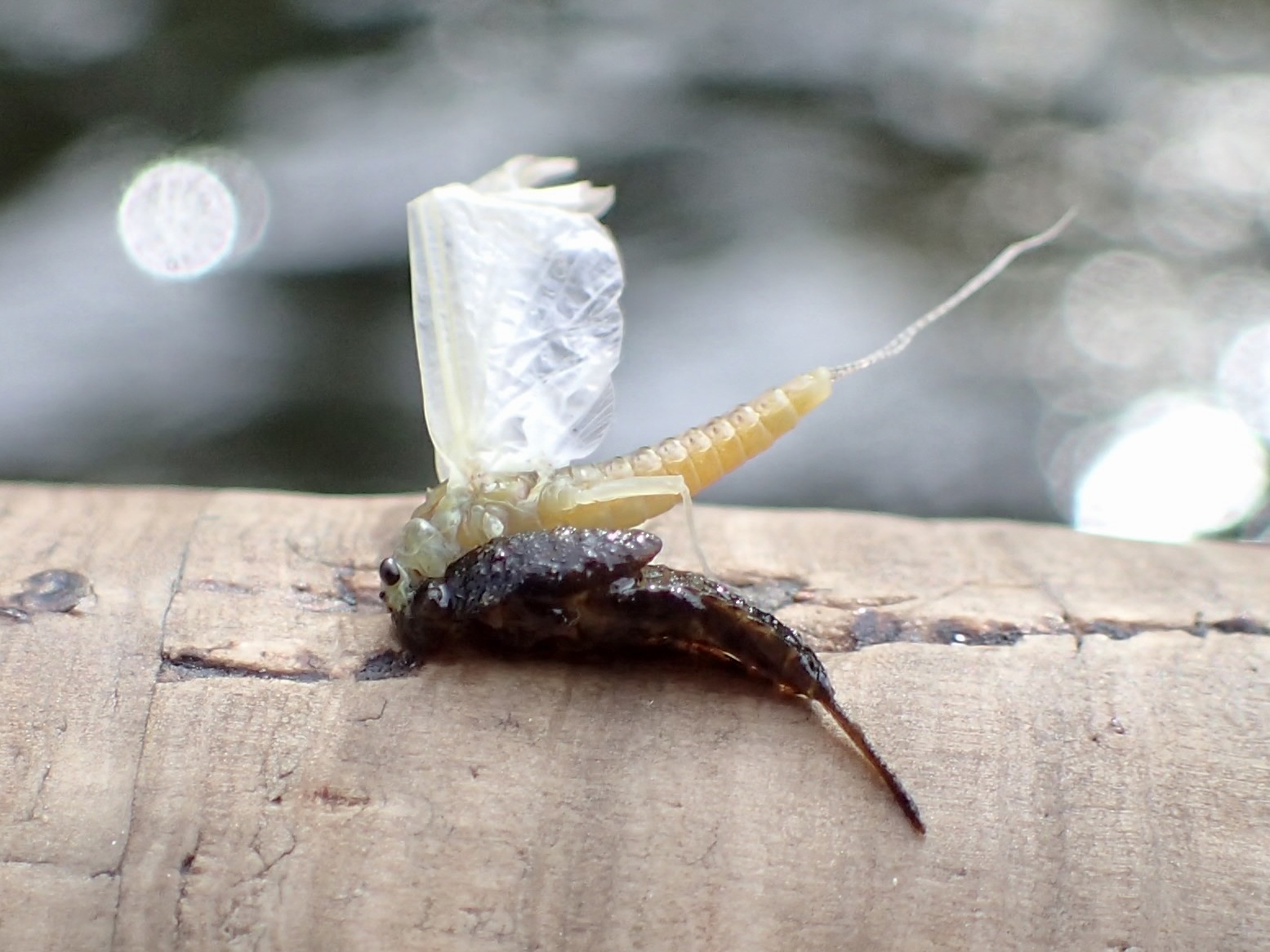
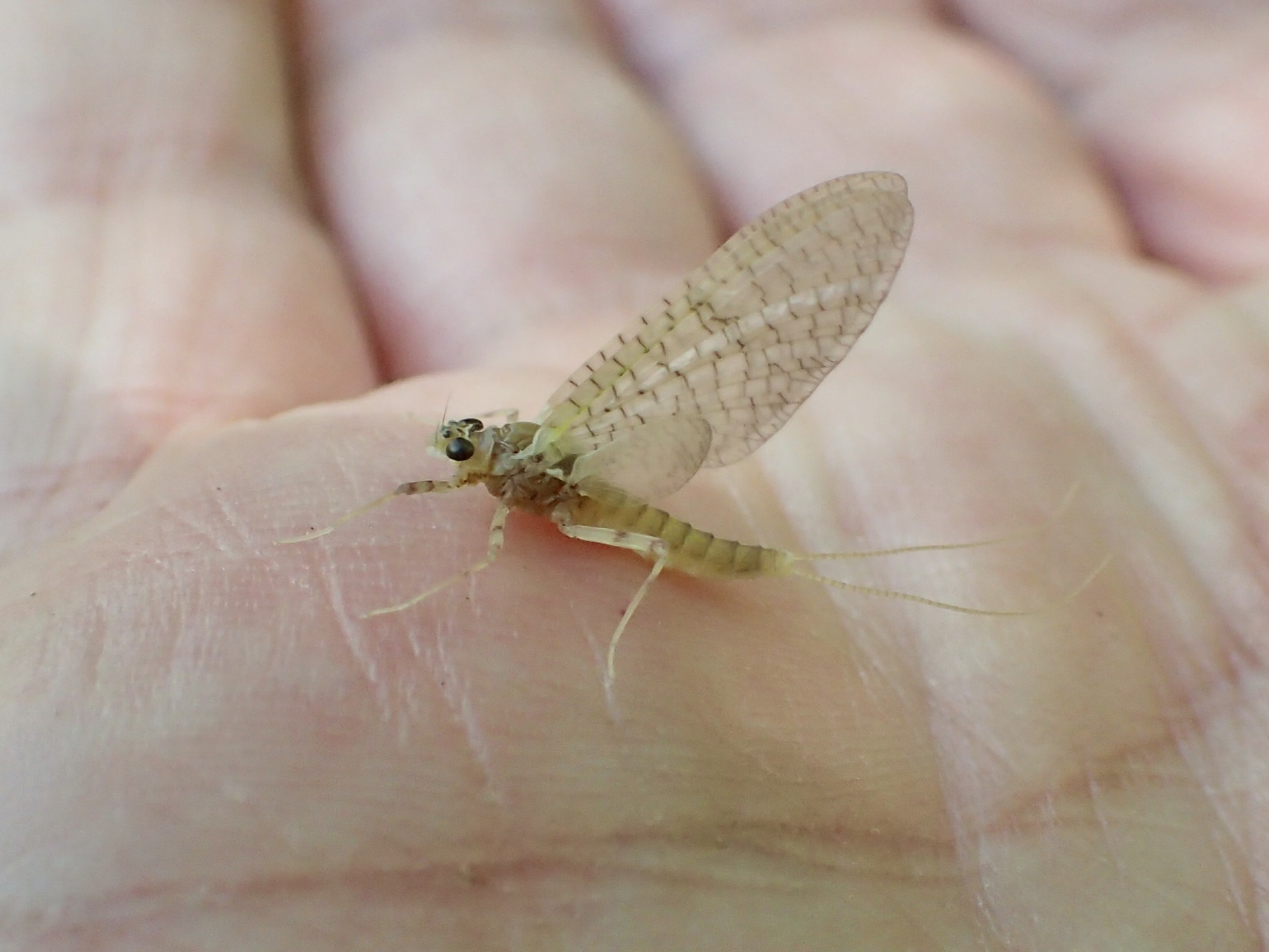
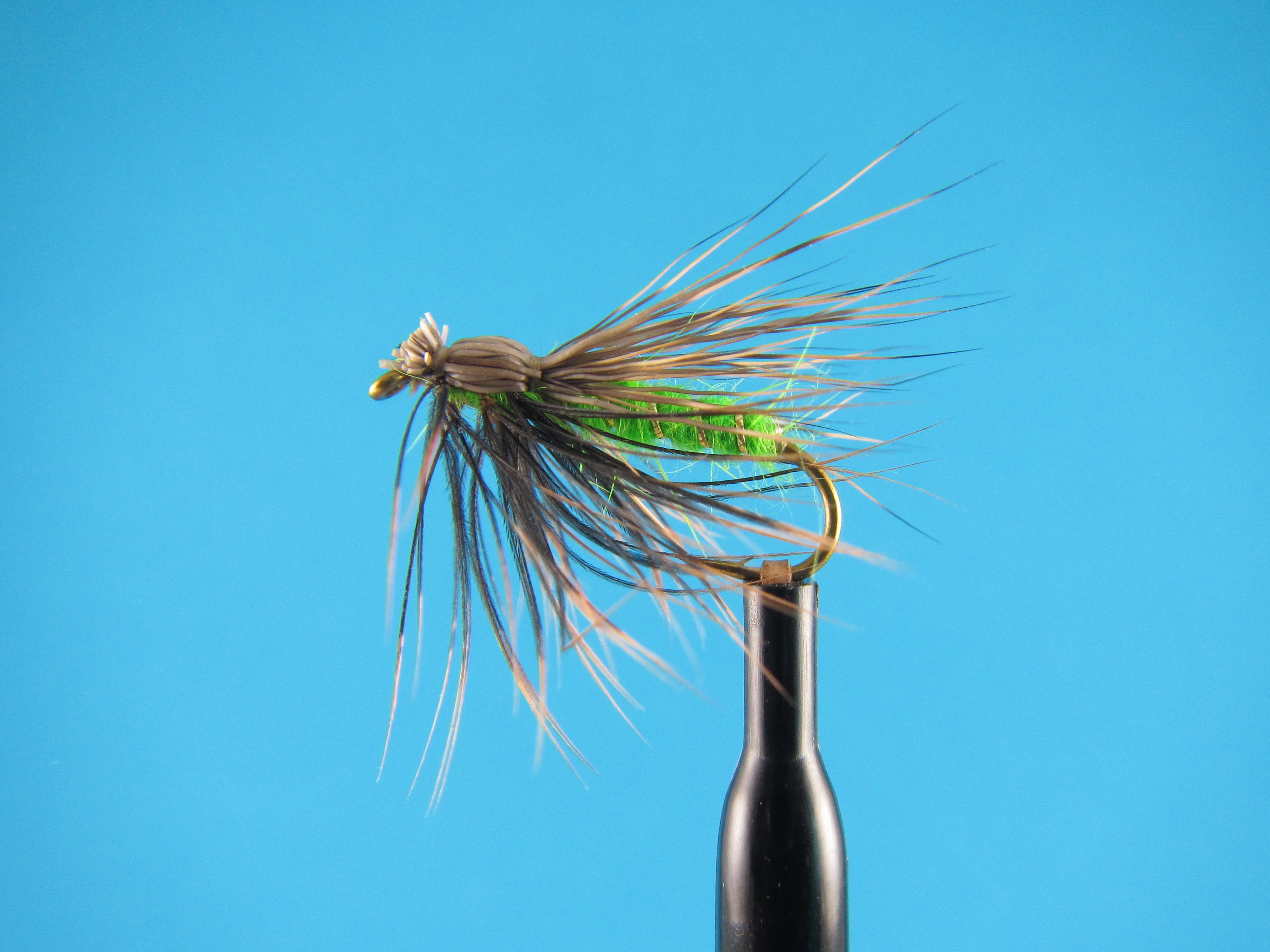
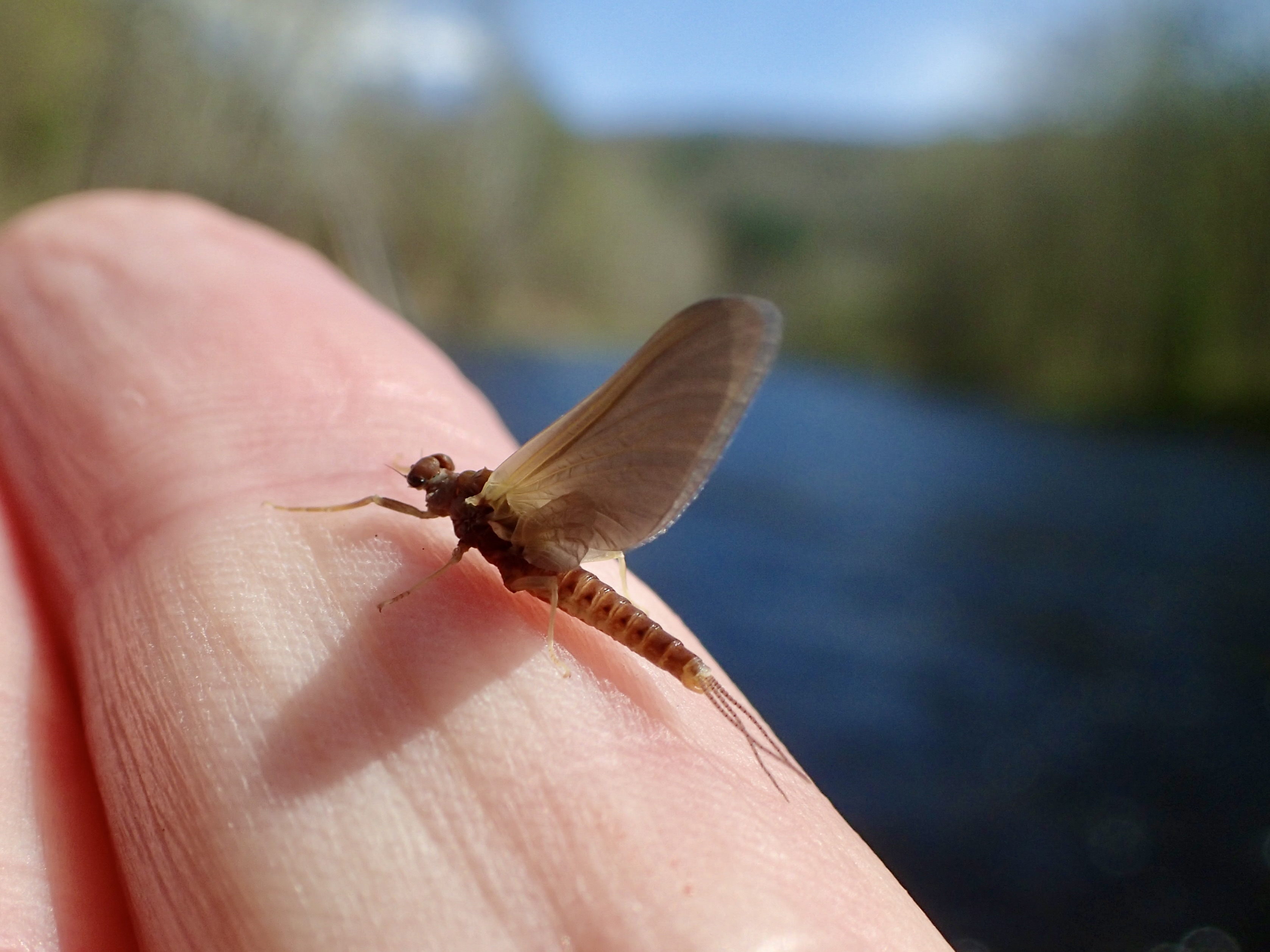
Another super simple tie that can be rendered with common materials. You can add a tail if you like. With creamy mayflies just around the corner, the Partridge and Light Cahill soft hackle is a must-have in your box!

Another super simple tie that can be rendered with common materials. You can add a tail if you like. With creamy mayflies just around the corner, the Partridge and Light Cahill soft hackle is a must-have in your box!

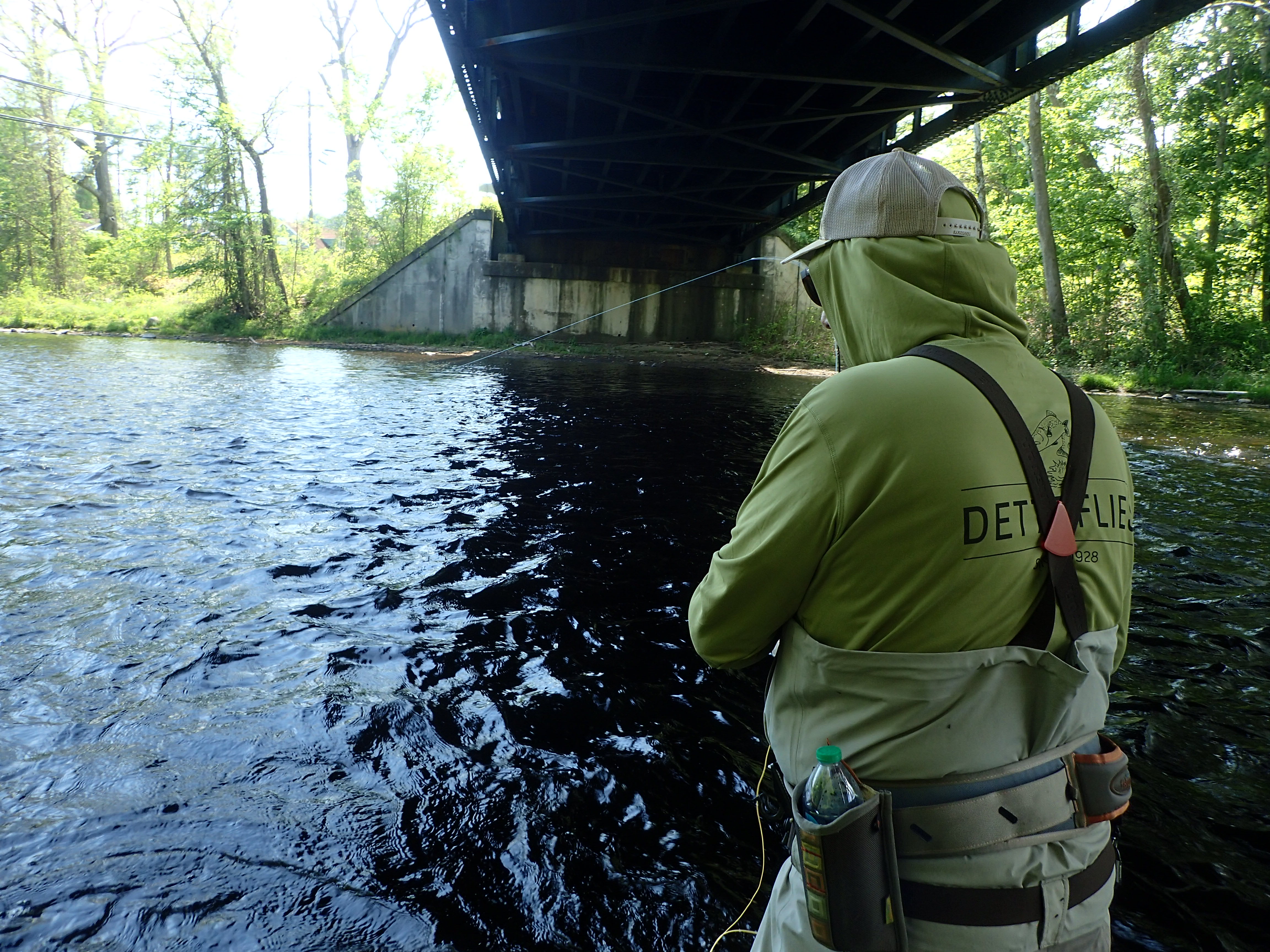
Tom is a long-time currentseams follower and an avid fly fishing show attendee and angler. He couldn’t have picked a finer day weather wise for a wet fly lesson: sunny, 85, 210cfs and 52 degrees water temp in the PTMA…and all those caddis! At one point I counted over 2 dozen of them crawling around his legs and backside: tan, black, and one funky darker one I couldn’t ID. Plus: micro caddis. Really small stuff that flitted around my forearms under the Church Pool bridge, enough of them to be a nuisance.
So where are all the trout? Not feeding near the surface. I saw just three rises in our four hour session. We stuck two, landed one, and that was two more fish than seven of the other nine anglers we watched or talked to had. One angler said he did very well nymphing, and so that spring trend has continued into mid-May despite the warm weather. Tom did an excellent job of managing his drifts, and he deserved far better than what the river gave him on this day. But he is certainly a dangerous wet-fly-machine in the making! Way to go, Tom.

Usually, by this time of year, I’ve given you at least one report headlined with words like “spectacular wet fly action.” But not in 2026. It continues to be cooler than normal and windy and blech. When hatch activity has been strong, the fish seem content to feed on the bottom. This, of course, will change. I feel like we’ll go instantly from early spring to mid-summer weather, the surface bite will pick up, and you’ll get your enthusiastic, superlative-laden wet fly report. But for now, it’s keep on-keeping on.
I gave Jason a wet fly lesson from 11am-3pm on Thursday, and he deserved way, way better than what he got, which was two hits in four hours. To be fair, one of them was a very good fish, although it was camera shy. Jason did an excellent job of casting and getting his team of three where it needed to be, then mending and presenting. Some time later this month or in June, he’s going to hit it right, and people are going to be following him off the water, asking him, “What fly were you fishing?!?”

We had 310cfs in the PTMA and points south. Water temp was in the high 50s. When it’s windy, the seed pods that blow into the water (which look very much like soft-hackled flies) do us no good, and that was yet another factor. Oh, did I mention the cold front that came through the night before? We got into our fish because we moved aggressively through pools, looking for biters. Do likewise when the fishing is slow, and you’ll up your odds significantly.
And a reminder: May is caddis month on the Farmington.
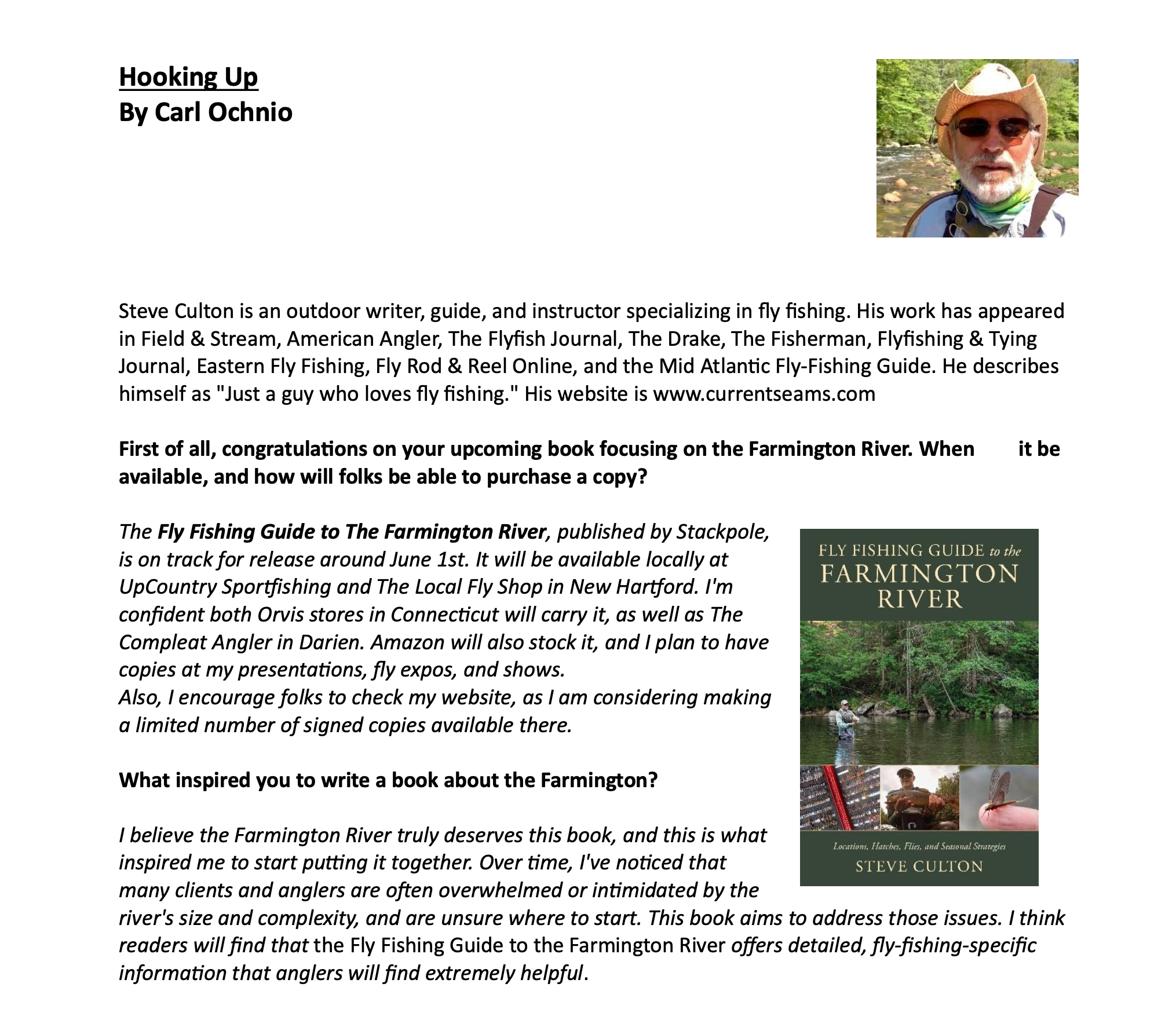
In late winter I sat down with Carl Ochnio to talk about my upcoming book, Fly Fishing Guide to the Farmington River. (There’s still time to put your name in for a personalized signed copy.) This is part of a the “Hooking Up” interview series Carl has been doing for the CFFA. With his kind permission, I’m able to share a pdf of the entire interview. You can find it in the link below the photo.

This has been a cool spring with lower than average temperatures and not a lot of rain. While the hatches have been strong — this year’s Hendrickson showing has been far better than last year’s — I have yet to have a seems-like-a-fish-on-every-cast wet fly outing. (The river is usually good for at least one by month’s end.)
I gave James a wet fly lesson in mid-April, and we managed only one to net. We pounded several sections of river north of the PTMA, and managed only one bump. (Our lone fish came from within the PTMA.) I managed a day to myself during the Hendrickson hatch in the PTMA, and the number of rising trout fell far short of the bug volume. That certainly could be a function of me fishing where there weren’t many fish. Historically, though, the mark I fished holds a multitude of trout in April. On Tuesday, I did some advance scouting for Wednesday’s wet fly lesson. It was a fish here, a bump there, and none of it very impressive. I ranged from the lower river in Burlington up to the PTMA. I did manage to foul a beast mid-river; when the fish swam the leader over a rock, we parted ways.
Which brings us to yesterday’s lesson with Michael. We fished two marks, the lower end of the PTMA, and then mid-river. While the action wasn’t spectacular, we did find fish that wanted to eat in both locations. Our session began at 11am and we wound up at 3:30pm, a little over, but for a very good reason.

The second mark featured faster water, and it was a little deeper in spots. Even though it was a mid-river location, there were a surprising number of Hendricksons coming off. Nothing too wow, but there were a few trout rising in the frog water edges, and farther down from us in longer pool where the current slowed. We’d switched to a Dark Hendrickson BH soft hackle on point, and our next fish, a stocked brown, ate that fly. Even though it was close of business, I wanted to make a few casts at the fish feeding downstream.
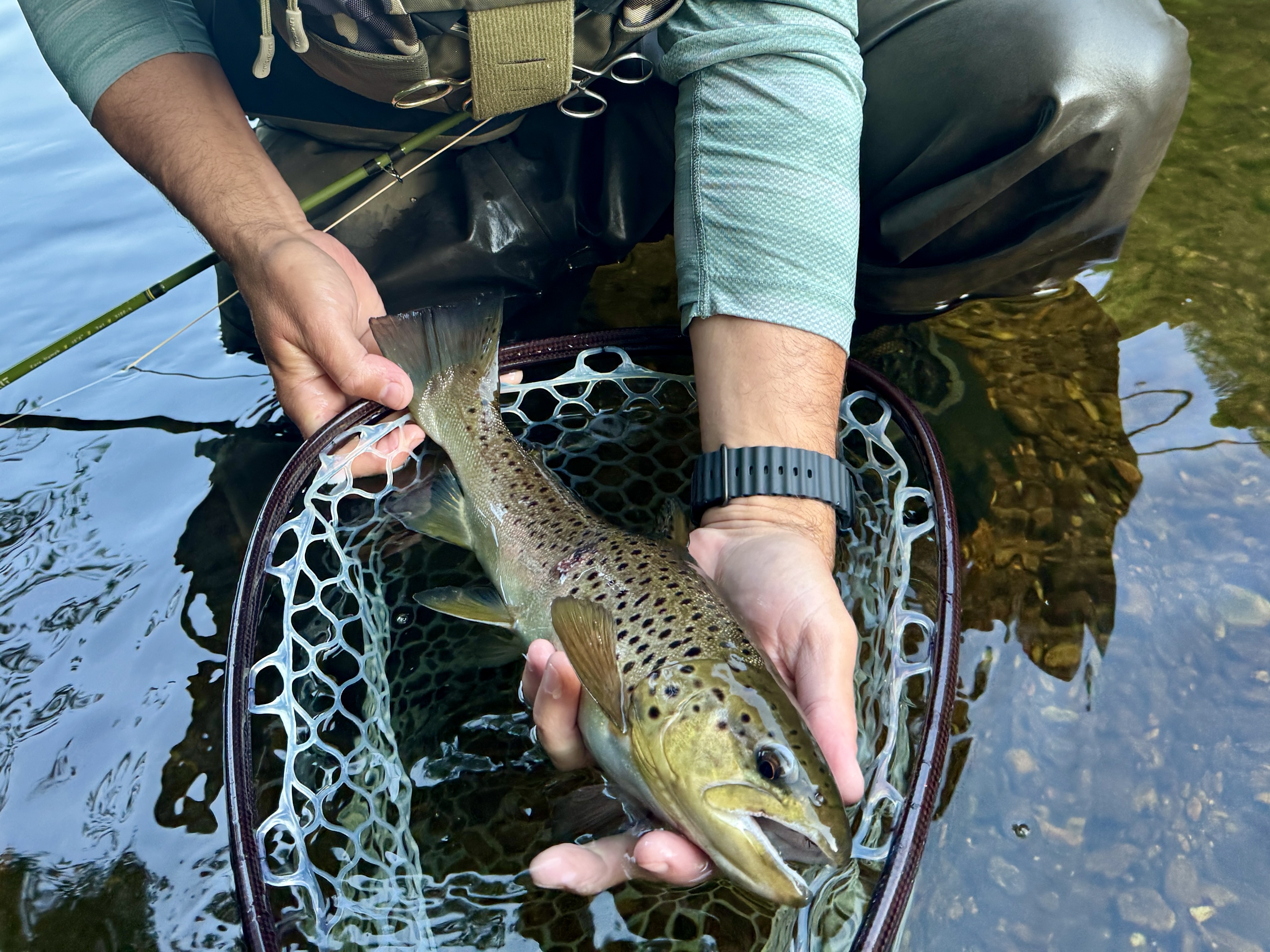
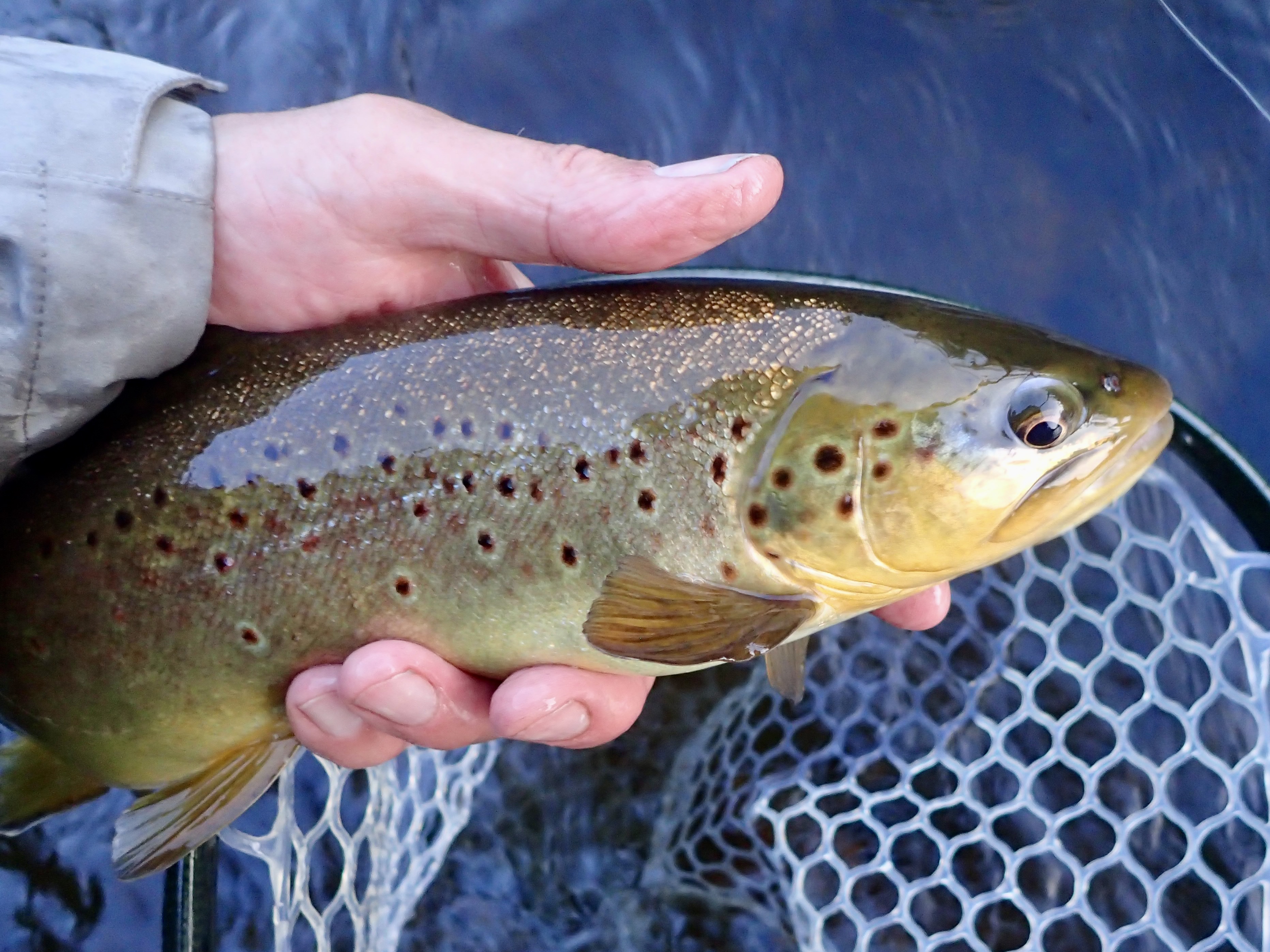
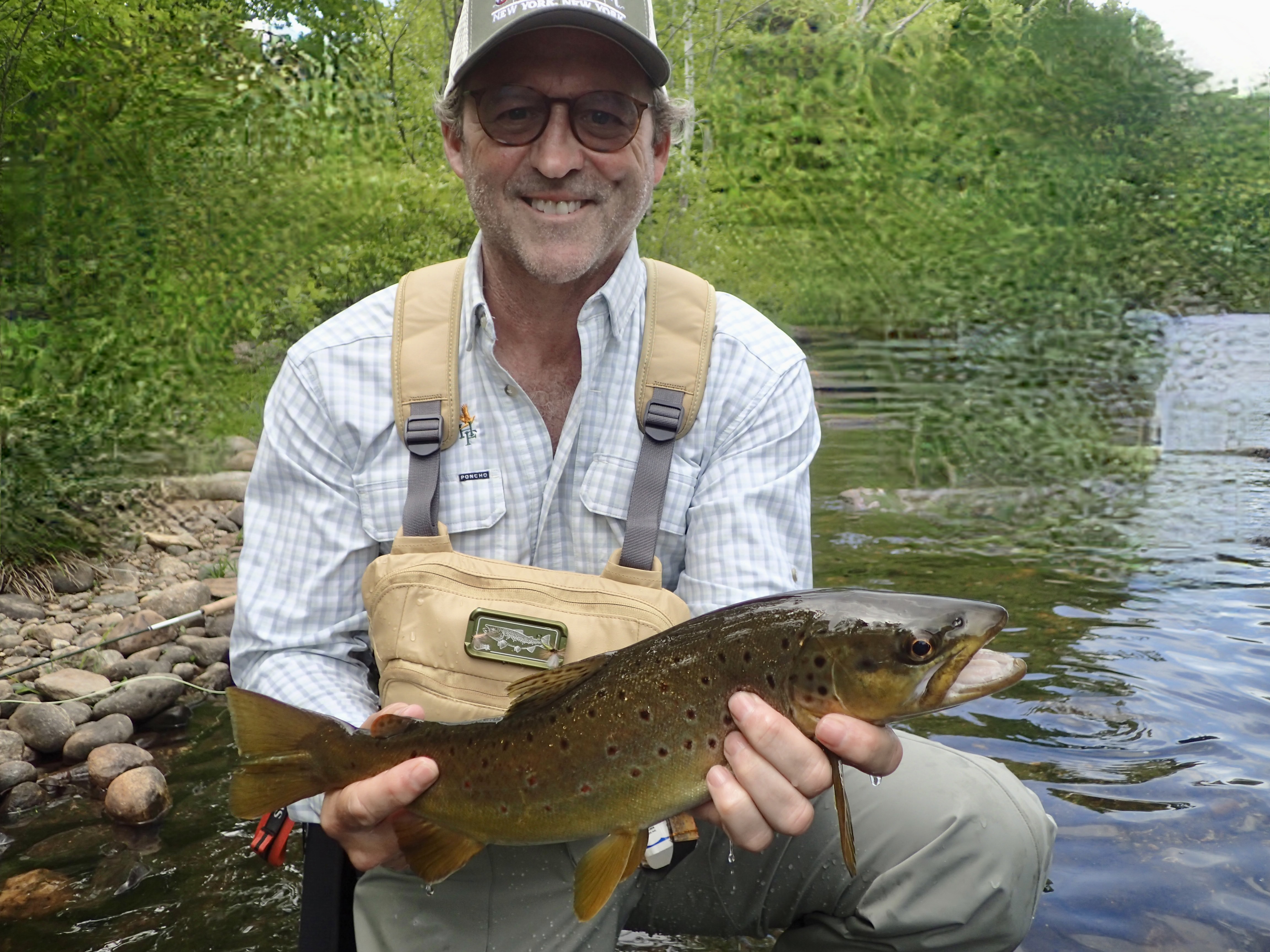
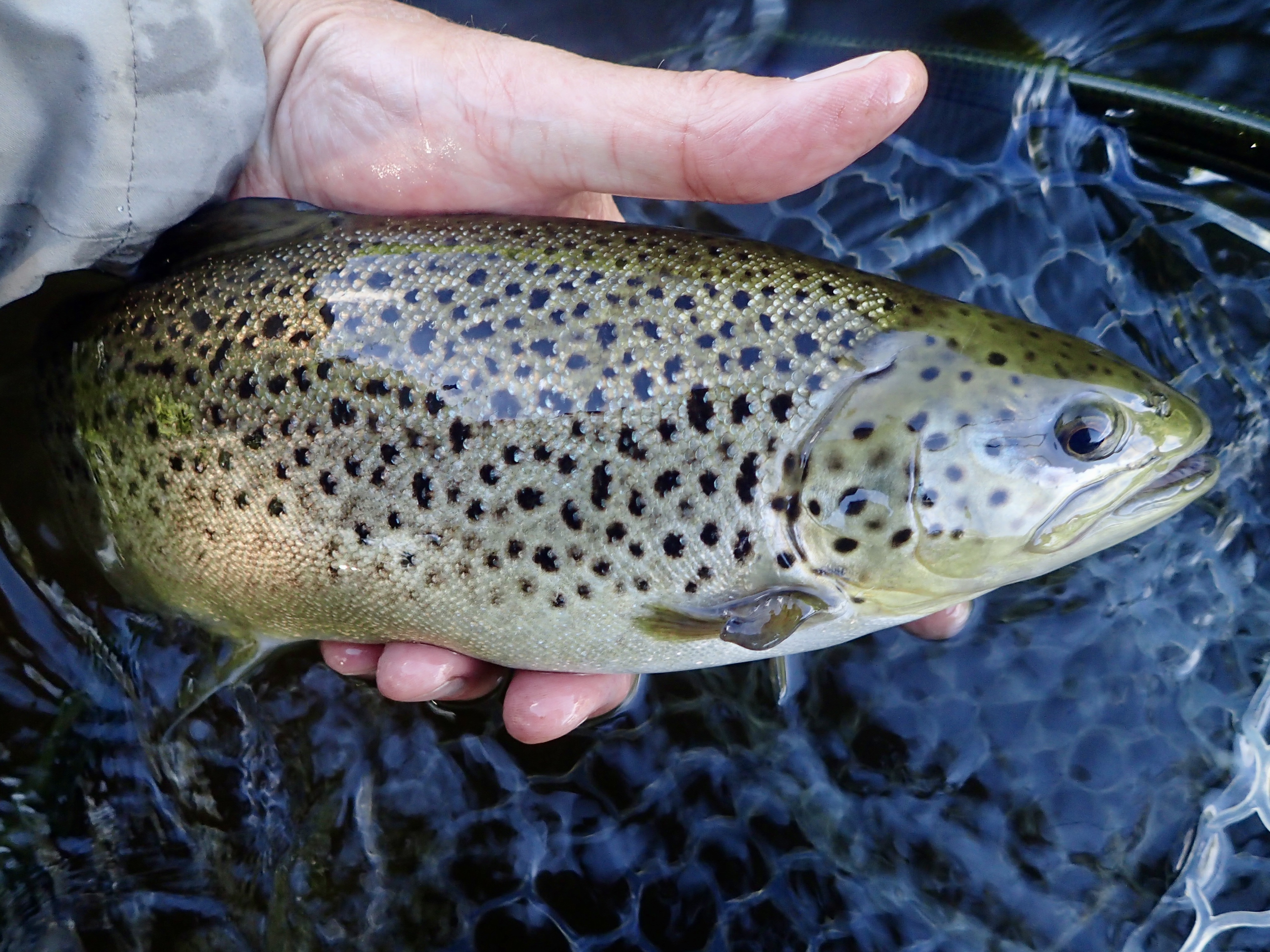
We waded down and out as far as we comfortably could. Because the fish were rolling on mergers, I removed the BH point fly and replaced it with a Dark Hendrickson winged wet. Good call, because that’s what a gorgeous high teens wild brown hen decided to eat. Great job, Michael, fighting and landing that fish! If you head over to Instagram some time today, you can see a photo.
Hopefully, this is the beginning of better wet fly action. May is a strong caddis month, and caddis are a dish best served to trout subsurface.
I fished the lower end of PTMA yesterday from noon to 3:30pm. Once got to the river, I ran into a group of wonderfully chill gentlemanly anglers, and we had a short gab-fest before I decided to head into the river for some pre-hatch prospecting. Bob, of Bob-and-Andy fame, was also there. I’d met Bob-and-Andy at this mark many years ago, and since then, it’s really not April unless we cross paths on the river.
The wind made it an unfavorable day for casting a team of three wets, but I managed to go almost the entire session without a fouled-up leader. After an hour that produced one lonely bump, I declared to the group that one or more of three things was true: there are not a lot of fish here; the hatch is going to be underwhelming; the trout are content to feed on the bottom. It turns out that options A and C were likely in play. When the hatch finally got going, around 2:15pm, there were bugs everywhere: in the air, on the surface — and precious few trout rising to them. I’d give this hatch volume an 8 out of 10; when you can count the rises per minute on a few fingers (instead of dozens) that’s not going to make for epic fishing. Normally, with this Hendrickson hatch volume, I’d bang up a good dozen fish or more fishing wets pre-hatch and during the emergence. Not today.

What did follow script was the place in the water column where the fish were feeding. Pre- and during emergence, they took the wet, until the point where they didn’t, and then it was dry flies on the surface. This is a good time to talk about shadow hatches, which I do in the Farmington River book. In addition to Hendricksons, there were also caddis and BWOs in the mix. The savvy wet fly angler will want to have at least one of those other food groups represented. What do you know? Of the three trout I took on wet flies, two came on the caddis middle dropper (Hare’s Lug and Plover).
I managed two more on the surface, bringing my total to five. At the risk of sounding ungrateful, I was not impressed. Of course, I could have gone elsewhere. But with three anglers below me and five above me, real estate was scarce. So I stayed.
Today, writing about it, I have to scold myself for being so dour. It was a sunny, April day. The Hendricksons were out. There were some rising fish who wanted to eat. I got to reconnect with old friends and make some new ones. I didn’t put two dozen in the hoop or land a 20″ wild brown. But, yeah. That’s still a really good day of fishing.
When the rest of the world zigs, Steve Culton usually zags. Nowhere is this more evident than in my fly fishing (wet flies, anyone?).
When I was researching the Fly Fishing Guide to the Farmington River, I spent a significant amount of time on and off the water with other guides and serious, highly skilled anglers. One thing they all had in common: they carried lots and lots of fly patterns. They also tended to have multiple fly boxes. Even a see-through plastic-lidded nymph box a little larger than a letter-size envelope has room for over a hundred flies, and many of those boxes they carried were filled. What they didn’t carry, they kept in more boxes in their vehicle. Out west, my good friend Pat Dorsey also has a — I think the scientific term is “shit ton” — of fly boxes stuffed with fly patterns. (He may have more midge patterns than I have total flies!) Pat’s one of the best guides on the planet, so he’s doing something right.

There are two points of consequence that must now be stated.
The first is that clearly, these people have a system that works for them. They will likely be prepared for any situation with any number of patterns, variants, sizes, and colors. They believe in their system.
The second is that this approach is not for me (see “Steve Culton zags,” above).
I don’t want to carry that many patterns, let alone tie them. It’s not a matter of brain freeze, or fear of paralysis by analysis. Clearly, I do not suffer in the slightest from FOMO. It’s simply this: I have, over time, curated a selection of high confidence patterns that consistently produce. Yes, I do occasionally add new patterns into the mix. But many of the patterns I use on the Farmington have been in my rotation for decades: the Magic Fly, BHSHPT, and Squirrel and Ginger, just to name a few. I’m in good company. Legendary guide and Catskills trout angler extraordinaire Ed Van Put was famous for using precious few flies over the course of the season, even on highly technical rivers like the Delaware.

Use the system that works for you. Because this is true: confidence catches fish.
Happy Tuesday. I’m sure we’re all chuffed that it’s April, with winter (despite subfreezing temps tonight) in the rearview mirror. The glorious promise of a new season is spread before us like an all-you-can-eat buffet. Since I haven’t written anything instructional in a while, here are some considerations for April fly fishing in the northeast, submitted for your approval.

Is this a great time of year to be a fly fisher, or what?
The Fly Fishing Guide to the Farmington River is getting closer. I had my first conversation yesterday with my book publicist. (I’m going to let the fact that I have a book publicist go to my head for about 15 seconds — it feels good — and now I can get over it and move along.) We have a lot to talk about.
As was foretold by fearless forecaster Chuck G., the official release date is Tuesday, August 4. That’s about 4 months of wait time. If we keep busy fishing this spring and summer, it’ll be here before we know it.

There will be multiple ways for you to get a copy. The first is to pre-order from your favorite bookseller. (The publisher encourages pre-orders.) You can also inquire at your favorite fly shop to make sure they’re aware of the book release. I will be reaching out to several popular fly shops in the state to set up book signing/promo events. (Naturally, I’ll tell you about those here and on social media as they come to fruition.) If you attend the Fly Fishing Shows in Marlborough, Edison, and Lancaster, the book store at those shows will certainly be selling copies. If you’re taking a lesson from me, or having me speak at your club, I’ll try to always have a few copies with me.
Then, there’s this way, which is beginning to roughly take shape: get a copy directly from me, which I will personalize and sign and ship to you. The cost is TBD; the cover price is $39.95, plus I’ll have to add on shipping/materials cost. While I’m researching that, if you’re interested in going this route, please do this: Send me an email or reply to this thread saying that you’re planning on getting a personalized copy from me. I need to gauge the interest before I commit to this. Also, please note, if this happens, it will be a one-time situation deal. I have no desire to be an online merchant. Payment will likely be by cash, check, or P2P payment app like Venmo or PayPal. There may be a chance that I can get these copies out before the official release date, but don’t quote me on that. Sorry, no international orders — way too hard.
It’s all tremendously exciting. And I thank everyone for your patience and interest and readership.
August 2026. I know we were all hoping for June, but it is what it is. Believe me, I’m ready to have the Fly Fishing Guide to the Farmington River out right now, but I don’t get to make these decisions. So we’ll all have to be patient.
I do have a call scheduled tomorrow with the publicist, and if I learn anything new I will pass it on post haste. I’m still working on how to make a limited number of copies available on currentseams — the idea being to get you a personalized, signed copy of the book. I need to work out the numbers and then gauge interest. That’s all I have to share right now, other than Tom Petty being right (I you know, you know.)