Farmington River Report 6/19/15: Fishing with Batman

Those of you old enough to remember the classic 1960s series on prime time — or young enough to know it through syndication —  are familiar with the show’s schlocky fight sequences, complete with comic-book graphics: BAM! POW! OOOFF! Hold that thought for a moment, please.

I got to the river at 6pm last night, and I quickly learned two things. One, one of my favorite wet fly runs that might produce one or two fish in the daytime is infested with feeding trout in the evening. And two, I can enjoy it in glorious solitude. Save for the cedar waxwings.

To the hatch: sulphurs (16-18), caddis (16-18), Isonychia (10-12), and BWOs (18). Midges, of course. Then a tremendous sulphur spinner fall at dark. Feeding came in waves; seemingly long periods of nothing followed by five minutes of boiling water. Every fish I took was an active feeder.

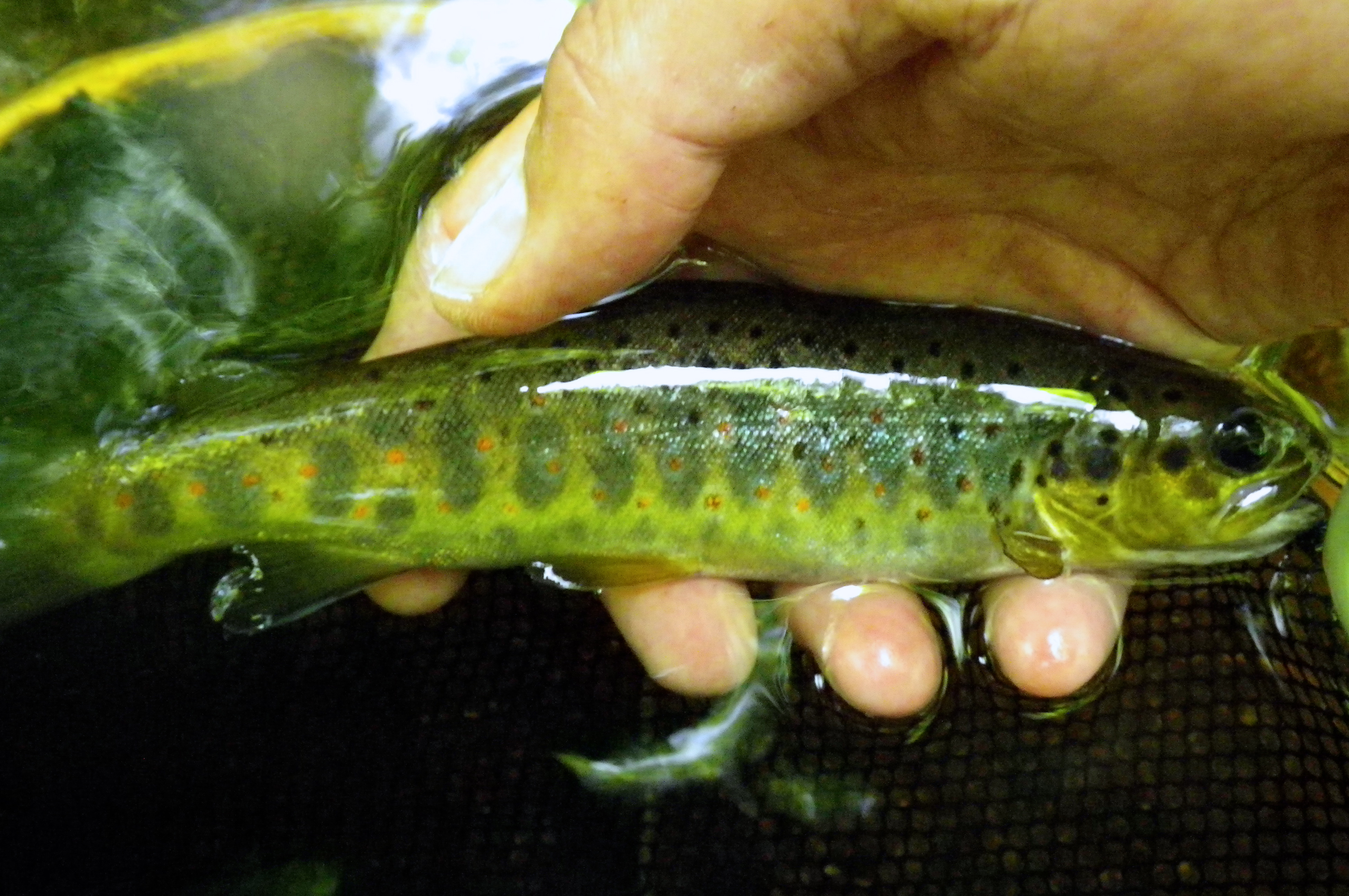
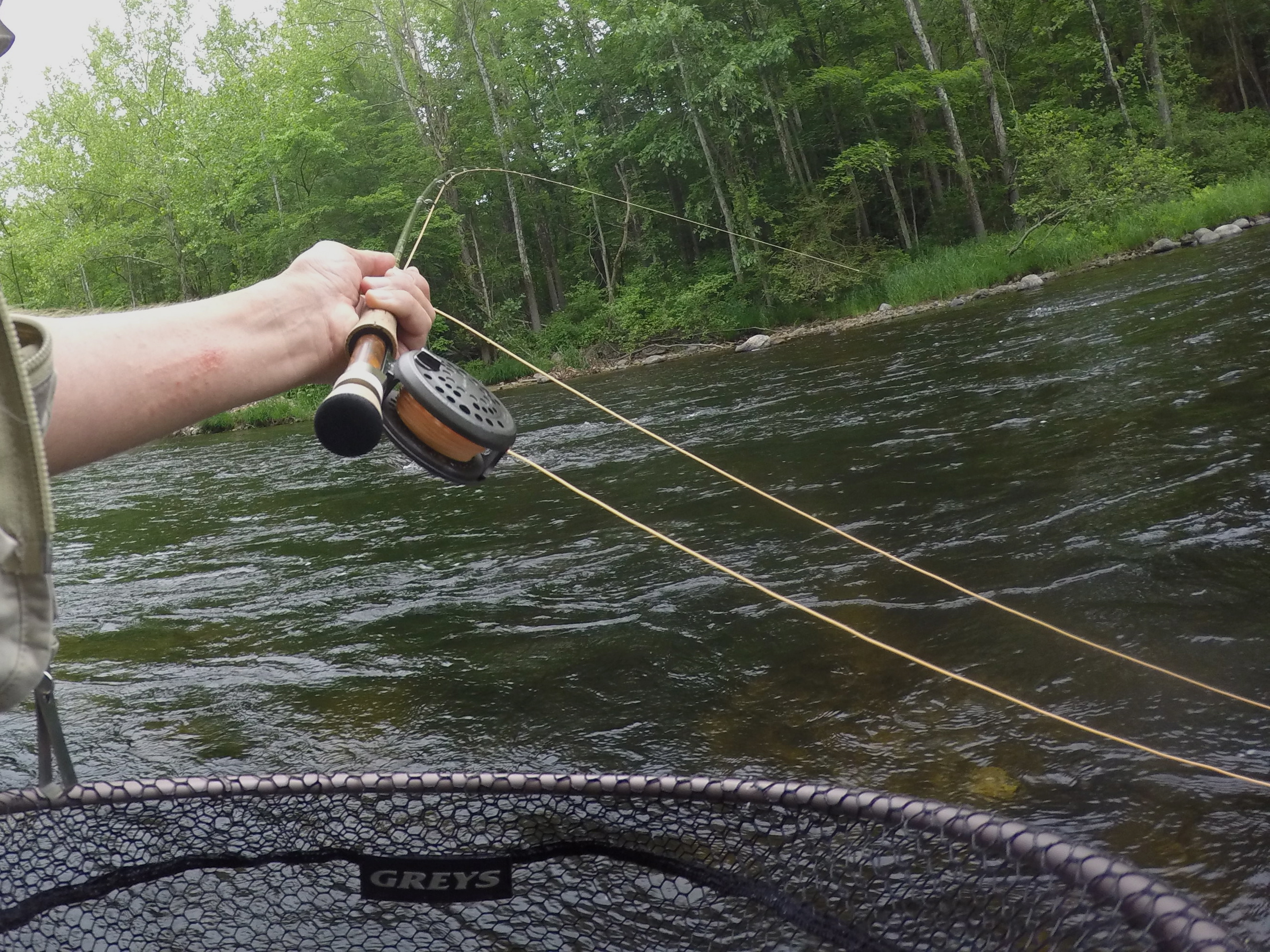
Back to Batman. Remember my last report of fish rising to my flies and coming away with nothing? Not last night. These were some of the most aggressive rises I’ve seen in a while. Acts of pure hostility that kept me delighted beyond measure.  Many of the trout were fat, mid-teens rainbows. One was the smallest wild brown I’ve caught on the Farmington. Another was its polar opposite. This guy absolutely murdered my size 16 Magic Fly. One tremendous leap, then the fish tore downstream like he was late for a job interview. My cane rod is outfitted with a click-and-pawl reel — there’s no rim to palm — so the only drag is my fingers on the line. I applied pressure at the end of his second run, then (to borrow from Batman) PLOINK! Popped the tippet. Now, 6x Frog Hair paired with the forgiveness of cane should be able to handle most Farmington trout. I have no doubt that the loss was a result of compromised material — or the misfortune of nylon wrapped around fin. I fantasized about re-catching him and getting my fly back, but I knew that would be an unrealized dream.

A closer look at this bruiser’s mouth reveals that this isn’t his debut with a hook.
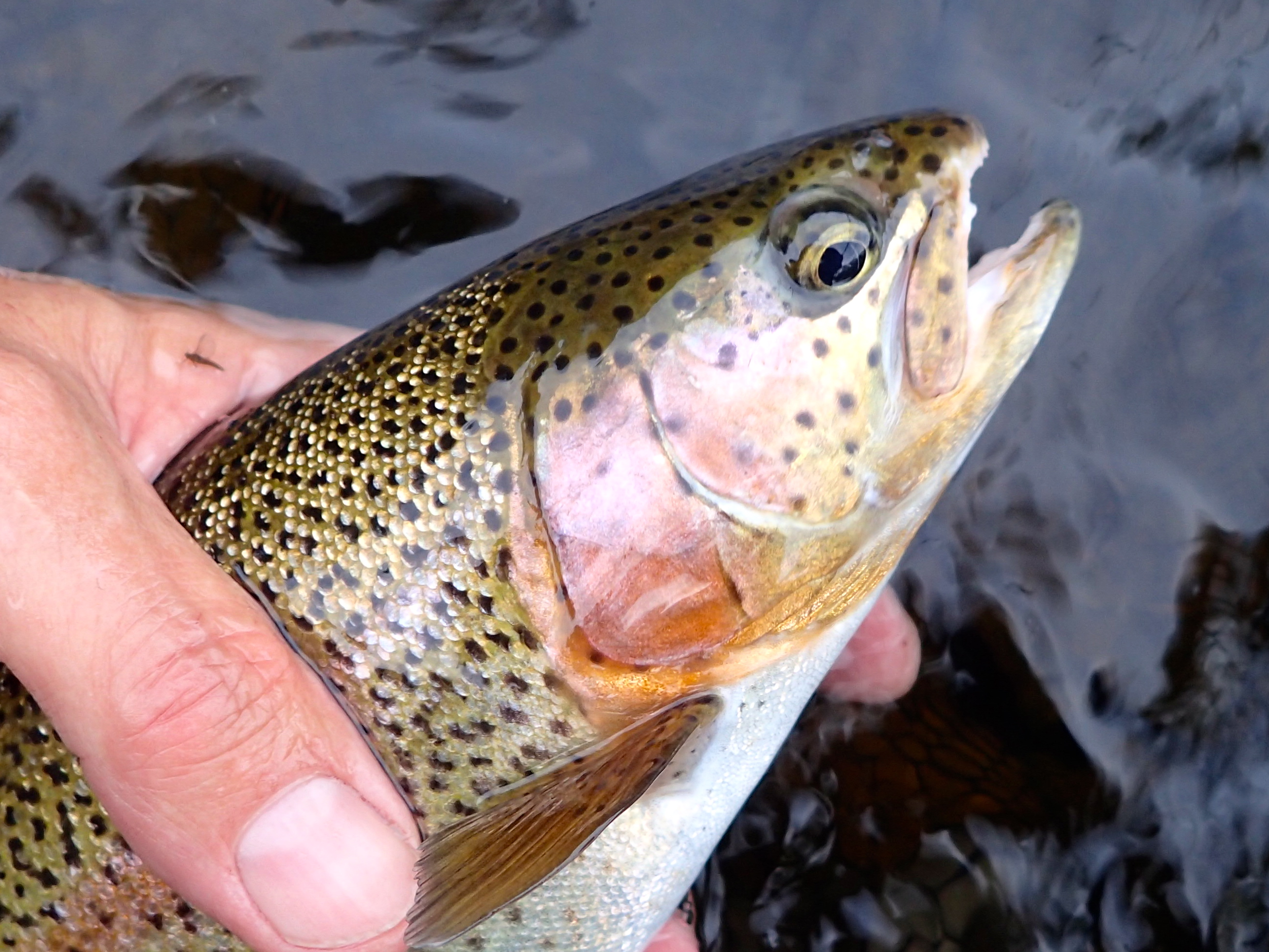
Fat Rainbow Dry

What the Isonychia hatch lacked in numbers, it made up for with gorging trout. It was very much like a good Hendrickson hatch, with dozens of reckless fish lacerating the surface with showy takes.

Between 8pm and about quarter past, the pool was strangely quiet. I had just made the decision to move to another spot downstream when the spinner fall commenced. I moved into some water with a smoother surface, and had at a multitude  that were still taking emergers and gently sipping. I stuck my last brown at 9:15pm, when I could no longer see the fly.

All I could say was, WOW!

Excuse me sir, but is that a Pale Watery wingless wet in your mouth?

Magic Fly Rainbow

Notes: Flies I caught trout on: size 16 Pale Watery wingless wet, size 16 creamy Usual, size 12 grey Usual, size 10 Isonychia Comparadun, size 18 and size 12 Light Cahill Catskills dry.

Jefferson, a former wet fly student, made this report from the permanent C&R section: I had an excellent evening. I was fishing wet blue wing olives, size 12 and size 16. Everyone else thought the fish were hitting sulphur spinners (cus it was evening and it was sulphur season, perhaps?) One of the beauties of fishing wet right at dark is that one doesn’t have to obsessively try to see the  fly on the darkening water. All you have to do is watch the line and have a general idea of where the fly is.

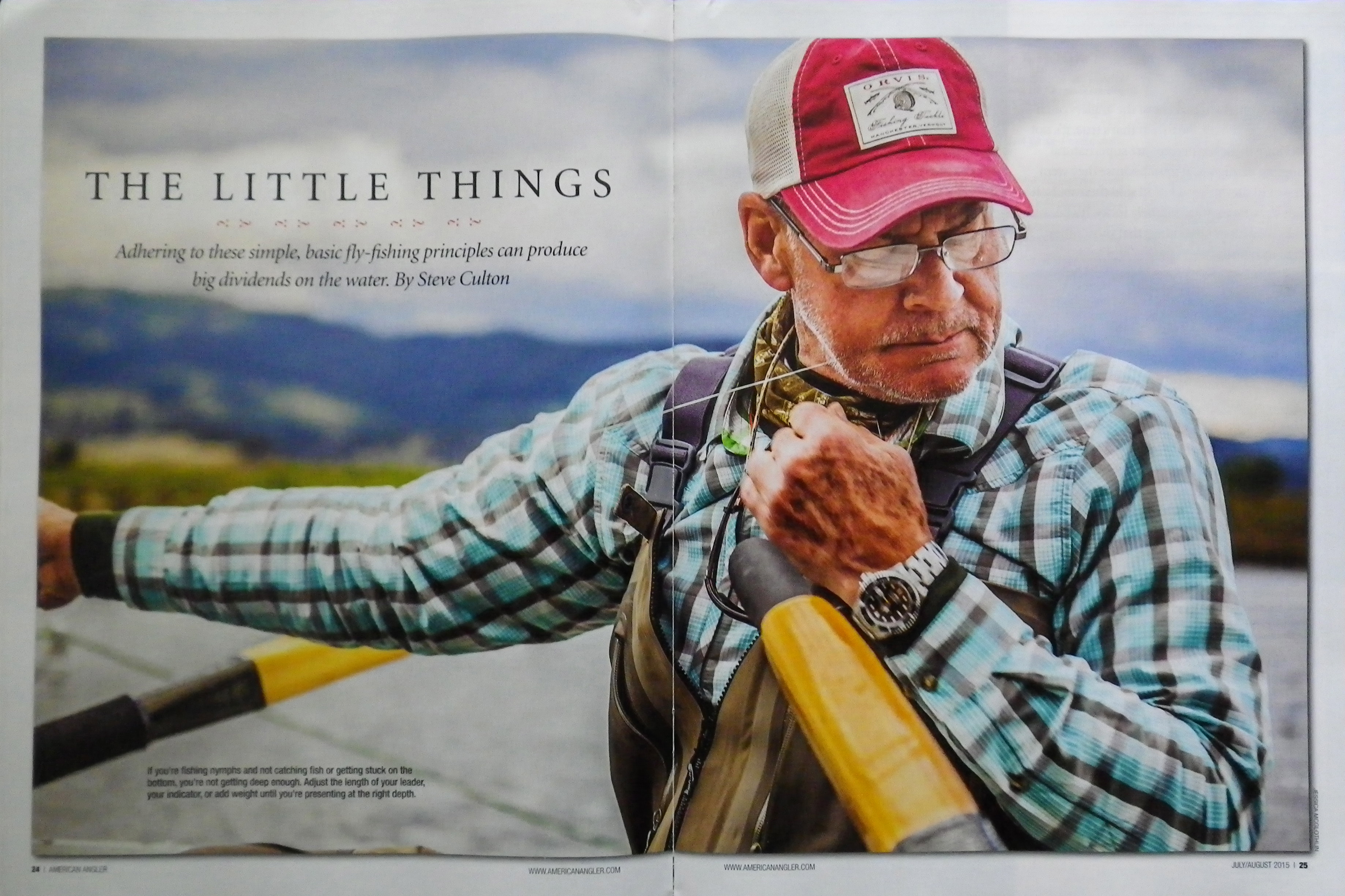
“The Little Things” in the July/August 2015 of American Angler

In case you didn’t know, I have the cover story in the current issue of American Angler, now available at your favorite fly shop or news stand. The piece is called “The Little Things,” and it’s about seemingly small adjustments you can make in your fishing that can have a large impact on the outcome. I have a followup — Son of “The Little Things” if you will — and several other pieces coming up in American Angler.

Read all about it.

AALittleThings 1

Not a picture of me. But a good photo nonetheless. I love guides who can multitask and make it look easy. 

AALittleThings 2

Farmington River Report 6/14/15: Just like Summer Stenos

Mid-June on the Farmington means an annual pilgrimage to a popular dry fly pool with the Tonka Queen for the sulphur hatch. I figured the permanent TMA would be jammed — after all, it was a gorgeous weekend day, and the rains were coming — and unfortunately, I was right. The lot was mostly full when I pulled in. I almost bailed right there, but I figured it was worth a look-see. To my surprise, most of the anglers were concentrated in the middle section of the pool. Plenty of room at the head. So in I went.

I fished from 5pm until after it was too dark to see a size 12 Light Cahill Catskills dry. What a strange evening it was.

Sulphurs came off from the time I entered the water until roughly 7:30. It wasn’t a particularly strong hatch, but there were enough bugs to keep me and the trout entertained. I used both The Magic Fly (Pale Watery wingless) and the Usual, sizes 16-20, for the first three-and-a-half hours with mixed results. Oh, I induced a good dozen trout to rise and take — we’re talking some quality boils — but each time I lifted my rod, nothing.

Certainly there was a rust factor in play — first time out with the cane and a long (13 feet) leader — but this felt just like summer stenos, a hatch I love to hate. Present to feeding fish. Perfect drift. Rise. Take. Nothing.

Once dusk arrived, the mosquitoes came out in force. Absent traditional insect repellant, a Gispert Churchill filled in nicely.

Smoke and Bamboo

I did witness several refusals, and this got me thinking that it was possible the trout were feeding on something other than sulphur emergers: size 16-18 BWOs or size 16-18 black caddis. Other factors to consider: multiple rise forms (porpoising gently as for spinners), slashy/splashy rises, and open mouths with a tail kick).

Around 7:30 I finally connected with a nice wild brown on the Magic Fly. The next hour was a puzzling series of casts, mends, and even more swings and misses. As darkness fell, I switched over to the Light Cahill Catskills dry, first size 14, then size 12, and stuck a fish on each, the last when I couldn’t even see the fly.

An outing as frustrating as this one ultimately raises more questions in my mind than I care to mention, but here are a few. Are the fish simply missing the fly? Am I too slow on the hook set (and if I am, how come I hooked those bazillions of trout before tonight with the same speed hook set)? Are the fish committing to the take, then bailing at the last second? How come no one else was catching (over four hours of fishing, I saw six fish hooked, including my three)? What were the trout feeding on besides sulphurs (I suspect it was the black caddis)? How come I didn’t get a sniff on small (size 20 & 22) spinner patterns?

Folks, I guide, teach fly fishing and write articles on the subject, and I have to tell you that I don’t have all the answers. Thankfully. Because now I need to go back and do some more research.

Two shad. Not bad.

The tide had reached its highest rise

Beneath the starry late spring skies

And so the time had come to pass

To maybe catch a stripe-ed bass.

~

Absent hearing a loud pop,

Into the water flies did drop

A drift, a mend, and then a tug

A shrimp fly ate by silver thug.

~

A small bass was caught next to me,

“I’m the Shad King!” was my decree.

A second one on deer hair shrimp

on whose materials I did scrimp.

~

On the dangle, another spot

I felt the bump, but hooked ’twas not

Then, while standing in a slog

I lost my fly rig on a log

~

And so it goes, this striper funk

More trips than not I get the skunk

It makes me want to scream and shout

Instead I think I’ll fish for trout.

~

I fought the log and log won. A stupidly simple grass shrimp pattern: sparse fine bucktail tail, silver body braid under criss-crossed white thread, deer hair wing, head trimmed caddis style.

Deer Hair Grass Shrimp

Farmington River Report 6/9/15: Lessons learned (and re-learned)

Learned: If you lose your Cocoons on Sunday night in two feet of water because you were stupid enough to try to wedge them over your cap on top of your headlamp, you can return on Tuesday morning to the scene of the bumbling and recover them. (This might have been the highlight of my day.)

Re-Learned: You can follow a nymphing session where you drop nearly every fish with one where you land nearly every fish.

Learned: When caddis are hatching and you’re dedicated to the nymphing cause, a Squirrel and Ginger makes a damn good top dropper on a two-fly drop-shot rig. (Every trout I took today while nymphing came on that top dropper. First time I used that fur-hackled wet in that position, and it won’t be the last.)

Re-Learned: If you want to fish alone, stay outside the permanent TMA.

Re-Learned: When fish start taking emergers, it’s almost never a bad idea to swing a team of wet flies.

Water was medium height, clear, and cold. Midges and a few creamy mayflies (size 12), but mostly caddis (size 14-16).

Off you go. Didn’t think that caddis emerger was going to bite back, didja?

Farmington River Mini Report 6/7/15: Let the dry games begin

A quick 90-minute session on the river last night from 7:30-9:00. Walked a riffle-pocketed run swinging wets. A couple bumps, but no firm hook sets. I was a little disappointed by the lack of surface feeding activity — there were plenty of bugs (caddis, midges, light Cahills), but nothing on them. That changed once I moved down to some smoother dry fly-type water. Three anglers were just leaving, so I moved in. I witnessed three different rise forms: the showy slash/splash, the subsurface boil, and the spinner sip. Unfortunately, it was one of those evenings where very few of the fish were showing any consistent feeding pattern. Still, I managed to stick a half-dozen browns ranging from nine to about fifteen inches. They liked the Pale Watery wingless (Magic Fly) size 18 and a size 20 Catskills Light Cahill. There was one good fish feeding (spinner sip) in about a foot of frog water on the edge of a impossible-to-mend-across current seam. I had at him repeatedly over the course of an hour. He did not come to net, but getting him to take was the highlight of the evening.

Time to warm up the cane pole for sulphurs.

Farmington River Mini Report 6/4/15: Butterhook

Those of you with more than a passing familiarity with Roger Moore’s first turn as James Bond will recognize the reference. For my purposes, it was simply one of those days. Sharp hooks, but some decidedly obtuse hook setting.

Tee Hee does his thing. Now, if only I could do mine.

live-and-let-die-271

I dropped so many trout it was comical. OK, so most of what I lost was moments away from being netted, so I got my money’s worth of play time — like that rainbow that twice erupted from the depths like a Polaris missile — but this was ridiculous. Bad hook sets, bad luck, or a combination of both, but I suspect mostly the former. Well. Now we have something to aspire to next outing.

I’ve been on a nymphing kick, and I started in Spot A somewhere below the permanent TMA. Three fish, and one unidentified monster. The indicator dipped, I set the hook, and felt the bottom. Then the bottom started vibrating. And moving upstream. With the sensation of substantial mass. Suddenly, the hook pulled free. This came in some water I had never fished before, so I consoled myself with the knowledge that now I know where it lives. Till next time.

After I lost my nymph rig, I tied on a Hi-Liter streamer. Yes, you can catch a nice low teens wild brown on a day-glow streamer in the middle of the day in June in water three feet deep. This guy whacked it once, missed, then charged after the fly like a striper on a Gurgler. Funny to watch, and even more fun to catch.

Spot B was above the permanent TMA. Blanked.

Spot C was within the permanent TMA. What a dork I am. Not only did I drop a nice some-teen inch brown, I did it twice. The first time I was just about to slip him into the net when he popped. Male, big black spots, paddle tail. I could taste that fish. Fifteen minutes later, I hooked him again. Same spot, same fly, only he came undone after he thrashed about on the surface ten seconds into the fight. Like the beastie from earlier in the day, I know where he lives. As I was leaving, I muttered, “The fighting is in rounds. This is round one.” (Anyone get that movie reference?)

Water was ever-so-slightly stained, 350cfs, 52 degrees.

Small stream report 6/3/15: Alive and well and living in Connecticut

The original plan was to throw streamers in the murky waters of the Farmington. But the river wasn’t high or dirty enough for my liking. Still, needs must fish. What better option than the outgoing tide on a small stream? None, as it turns out.

Conditions were perfect: 68 degree air temperature, water at a medium-high level after the rains and running clear and cool (58 degrees). Oh, the bugs! Yes, indeed. There were the usual suspects, like caddis and midges and mosquitoes. But how about size 16 sulphurs? Size 14-16 golden stones? Heck, let’s throw in some mongo golden stones (size 4-6?) into the mix — I’ve never seen those on this stream. And some egg-laden mahogany dun spinners, size 16.

The brook fished very well. I pricked dozens of fish, many of them in pools where I haven’t caught anything in years. Mostly brookies, but three wild browns in the mix. All on the upstream dry (elk hair caddis and Stimulators).

After the draconian winter of 2014-2015, how comforting it is to have nature reaffirm that she will always find a way.

Intriguing markings on this hen.

Brookie 6-2015

Another hen, this one of the Salmo trutta persuasion. Best hit of the day. She all but slaughtered the fly. You’ll have to bear with me on the substandard photography. I lost my good camera, and my backup had issues today. I hope to have the situation rectified in a few weeks.

Brown 6-2015

A few odds and ends on a rainy Monday

Happy June. Although today feels more like early April. But we desperately needed this rain. Nature finds a way.

I have the cover story in the current issue of American Angler. The article is called The Little Things, and it’s about seemingly small adjustments, strategies, and practices that can have a significant impact on your fishing. When I get my copy, I’ll post some pictures and devote a post to it.

Come say hi. “Are you Steve Culton?” This has been happening more and more when I’m fishing, and I’m glad for it. People often follow it with something about not wanting to bother me, which is very polite, but unnecessary. You’re not bothering me. If we’re sharing the same water, please say hello. It’s always a treat to put faces to names.

Help me help you. I get a lot of requests like this: “Can you give me the recipe for (fly pattern name)?” I am always happy to help, but many of the flies I mention in my posts are already archived on this site. You can find them by using the currentseams search function on the right side of the page. It looks like this:

Screen Shot 2015-06-01 at 4.28.58 PM Just type what you’re looking for in the box, then hit enter or return. If it’s on currentseams, you’ll get a list of links.

Use email or phone to contact me. Many people try to contact me through the comments section of various posts. I respond, then often never hear from them again. If you’re interested in purchasing flies or booking a guide trip, please call me or send an email. You can find that information here.

Speaking of guiding, my schedule should start to open up some in June. June and July are great times to fish the Farmington. As always, I highly recommend weekdays over weekends for a more pleasant, less crowded angling experience.

Closing in on 300 followers. That means another fly giveaway. Of course, we need to hit the magic mark first. In the meantime, this is a good time to thank you for following, thank you for reading, thank you for your positive energy, and thank you for all your kind words. I truly appreciate them.

Farmington River Mini Report 5/31/15: Love that Emergency Bag

The Emergency Bag is probably over-named. Perhaps it should be the “Boy Scout” Bag (Be prepared). Or maybe call it what it truly is, which would be the “Spare Clothes In Case I Fall In and Other Miscellaneous Outerwear I Might Need” Bag. But, I’ve always called it the Emergency Bag, and so it is.

The cool thing about the Emergency Bag is that if you go to the river on the one day of the month when they’re calling for the deluge, and it hits, and you’ve forgotten your Gore-Tex rain jacket, that old rubber one you keep inside its blue confines comes in right handy.

So, to the fishing. I had to run a quick errand at UpCountry Sportfishing, and of course rest stops were an imperative on the drive home. The lower river was low (295cfs) cold, and was largely devoid of hatch activity. I managed to hit two spots before the heavens opened, and took one trout on a size 12 SHPHPT. My final stop produced one more take in a good old-fashioned Noah’s Ark downpour, but as I was bringing the fish in, lightning hit close enough to make me rethink the wisdom of holding an aluminum-tipped pole while standing in a river. So I disengaged and sprinted for the safety of the truck. A little shaken, but quite dry. And I owed it all to the Emergency Bag.

Come to papa. Playing tug-of-war with a standard-issue rainbow.

DCIM100GOPROG0010813.