A low-water drop shot nymph rig with sighter

I recently mentioned that in these low, clear water conditions I had temporarily ditched my beloved indicator nymphing for a straight line drop-shot approach. I had many questions about the method, but also about the rig, which is presented below. The template is the same as the one I use in higher water; I’ve simply swapped out some materials to create a leader system that makes strike detection easier and uses thinner diameter nylon.

So, what’s changed?

— The top of the butt section is now Hi-Vis Gold Stren. You can of course use whatever color you like, or even a different material (like Dacron). The yellow jumps out to my eyes, though, and we can all agree that it’s important to be able to see your sighter.

— The bottom of the butt section is P-Line Floroclear (it’s fluorocarbon coated material). I’ve been using P-Line for years in my steelhead leaders. It’s strong as hell and has a thin diameter. Good stuff. I use it on my indicator drop-shot rigs, too.

— I sometimes use 5x instead of 4 lb.  Maxima Ultragreen for the top dropper. It’s strictly a diameter choice I leave up to the angler.

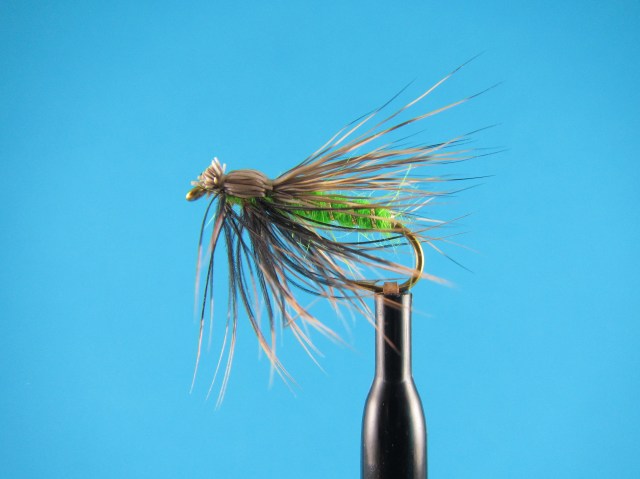
— The drop shot tag goes down a size to 6x. This is to a) insure the weakest link breaks on a shot snag, and b) I typically use smaller patterns for the point fly in the winter, and the 6x is easier to squeeze through the eye of a 16 or 18 hook.

— I’m using round BB shot, no wings. Hopefully that means less bottom hangups.

For your leader constructing pleasure.

OLYMPUS DIGITAL CAMERA

Here’s a pdf: lowwaterdropshotnymphrig
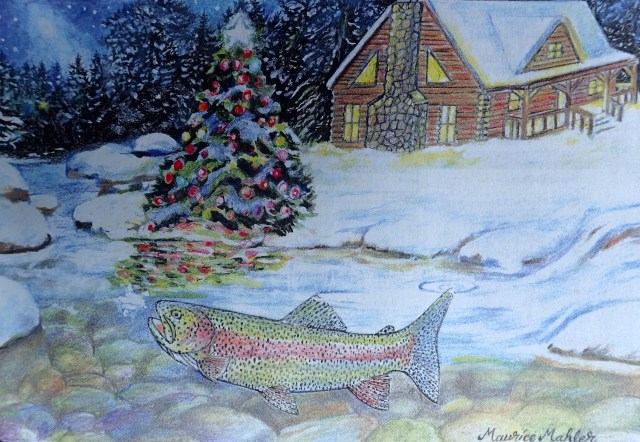
Merry Christmas and Best Fishes

Merry Christmas! I hope you’re doing something fun today. I myself am about to go downstairs and join the family party. Good food, wine, cigars, and most of all, love, await me. I am truly a fortunate man.

The artwork comes from Maurice Mahler. It graced the cover of the final issue of the Mid Atlantic Fly Fishing Guide.

OLYMPUS DIGITAL CAMERA

What you leave out of a fly may be as important as what you put in

Here’s to impressionism in fly tying. Here’s to creating the illusion of mass without adding bulk. Here’s to using water as a key ingredient in a fly pattern. Here’s to tying flies that try harder to look like something that’s alive and good to eat than try to carbon copy the bait or insect.

I often think of the discussions anglers have about herring or menhaden patterns. The chief complaint seems to be that a given pattern doesn’t mimic the deep belly profile of the bait. The next question that should be asked is, “Is that really necessary?” Anyone who has fished a large flatwing on the greased line swing to stripers feeding on herring knows the answer.

If you talk to Ken Abrames, he’ll tell you about how an angler will come to him and complain that he’s not catching any fish. One of the first things Ken will do is ask to see the fly. If it’s up there on the opacity meter, Ken will start pulling bits of hair and flash out of the fly. Often, the angler then begins to hook up (ask me how I know).

By all means, tie and fish the patterns you have confidence in. Just consider the sage advice of Bill McMillan, who doesn’t like to pretend that a fish is anything other than the primitive animal it is.

I don’t see any big honking bellies or ultra-realistic 3D eyes on these flies. Funny thing! Stripers eat them like candy.

Rock Island Flatwings

~

Doesn’t look like the any of the grasshoppers I used to catch when I was a kid. Yet this fly is in grave danger any time I drift it past a grassy bank on a sunny summer day.

Culton_Hopper_Hammerdown

~

For hundreds of years, the ultimate in sparse impressionism. And the fish haven’t gotten any smarter.

FebRedPPT

“Building a Better Trout Stream” in the Jan/Feb 2017 issue of American Angler

“Building a Better Trout Stream,” written by yours truly, is a neat little conservation piece. It’s about Hatchery Creek, a man-made — yet sustainable — trout stream built in south central Kentucky. Cool stuff, and you can read all about it in the current issue of American Angler.

You can create a perfect little trout stream out of dry land. Find out how on page 8.

OLYMPUS DIGITAL CAMERA

~

Yes, Virginia, there are more projects in the article pipeline. Details on those as they near printing stage in 2017.

I also have a busy appearance schedule this winter, including The Fly Fishing Show in Marlborough, MA. Updates to come in January 2017.

Farmington River Report 12/13/16: Subsurface spectacular

Going to be mighty chilly later this week, so I thought I’d get my licks in today. Good call. I fished within the permanent TMA from 9am-1pm, and found very cooperative fish in two of the three runs I fished — not to mention precious solitude. Here are the day’s notes:

Nymphing was incredibly productive for me. Those of you who are currentseams regulars know that I am a huge fan of indicator nymphing, especially in winter. However, in this low (100cfs and falling) and cold (34 degrees) water, I’ve gone away from the indicator to a basic short-line approach. The trout are beginning to stack up in their winter lies, and since the water is so shallow, those lies are very accessible via the long rod. I still like the indicator for covering water and for fishing faster, deeper runs, but in these conditions I’m doing better with the short-line approach. Still using the drop-shot rig, only I’ve added a yellow sighter.

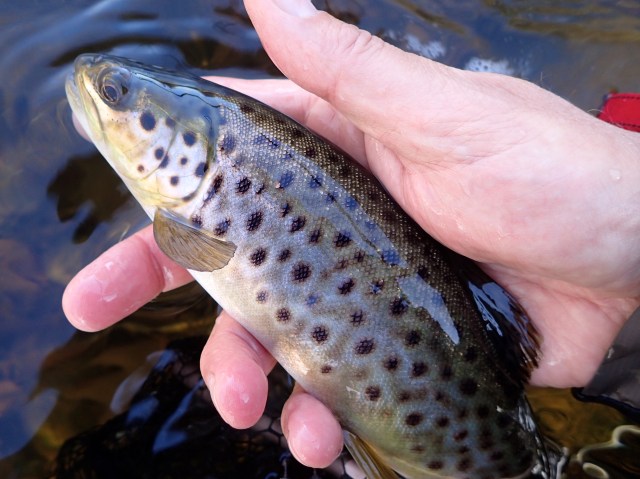
Most of today’s trout were foot-long wild fish like this beauty. I did manage a well-fed rainbow and a mid-teens brown. 

OLYMPUS DIGITAL CAMERA

~

I fished two flies today: a size 16 2x short Frenchy variant on point and a size 16 March Brown wingless wet dropper. The trout were just about evenly split on both. But it’s interesting to note that my first half-dozen fish came on the top dropper. This came in advance of another strong morning W/S caddis hatch. It could have been that the trout were keying on emergers 1-2 feet off the bottom, or simply that they were looking up. Regardless, droppers continue to be the fastest way to find out what the fish want.

A fascinating mix of strike styles today. Some were oh-so-subtle pauses in the vertical line, others were sharp tugs. Good stuff.

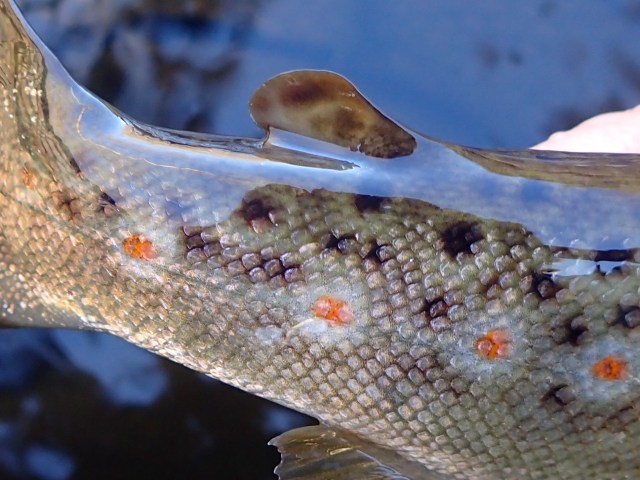
Don’t let the exquisite red spots and delicate parr marks mislead you: this fish fought like a badass. I’d like to rumble with him again in a couple years.

OLYMPUS DIGITAL CAMERA

~

Finally, support your local fly shop. UpCountry Sportfishing is a good friend of currentseams, and they have a tremendous selection of just about anything you’d need for fly fishing or tying. Make sure Santa knows where to find that new rod, reel, vise, or whatever it is you don’t have — or need more of.

Housy Mini-Report 12/8/16: Lots of water — action, not so much.

I missed my annual October/November Housy streamer trips this year, so I went yesterday. The HRO website declared that at 860cfs, it was a good time to fish big streamers on a full sink line. I concurred. Sadly, the trout did not. I fished five familiar, favorite pools and came up blank. Not a touch. Oh, I nicked the bottom many times, and sacrificed three streamers to the river gods, but ’twas not my day. Fast water, slower water, pocket water, shallow and deep — bright colors, muted naturals — fast retrieve, slow retrieve, no retrieve — nada. On the positive side, I had the entire river to myself, always a bonus. We’ll get ’em next time.

With both air and water temperatures in the 30s, this is sound advice.

OLYMPUS DIGITAL CAMERA

Farmington River Report 12/6/16: Wet fly action in…December?

Trout blasting wet flies on the swing with a water temp of 36 degrees? Yes, indeed.

I fished the permanent TMA today from 9am-1pm. I was rigged for nymphs, and I spent the first 30 minutes bouncing along the bottom, desperately trying to ignore the growing number of trout slashing at W/S caddis. After the second or third time of telling myself that I was acting like an angler throwing Clousers at a school of stripers feeding on the surface, I disengaged the shot and re-tied the point fly to match the dropper: size 18 soft-hackled pheasant tail. It was by no means a proper wet fly rig, but what the heck — I’m lazy. Second cast, whack! A lovely late fall  wild brown. Next cast, ker-pow! (Those old enough to have watched will recognize the channeling of my inner 60s Batman TV show memories.) And so it went until the hatch waned.

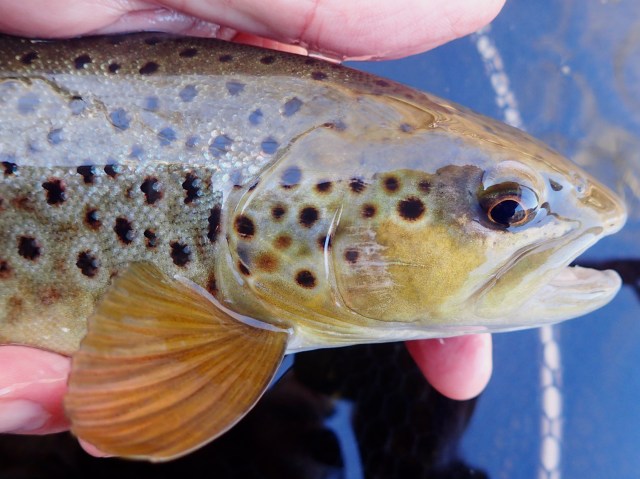
The first fish of the day is always memorable, made even more so when it sports such finery.

OLYMPUS DIGITAL CAMERA

~

I got out to warm up, and after ten minutes the slashing resumed in earnest. Only this time it was tiny BWOs they were after. The fish proved to be more difficult to catch during this hatch; they wanted the fly on the dangle (if they wanted it at all). By now the sun was up good and proper, and the trout were for the most part hugging the shade line of the eastern side of the river. I had to work hard for the two I landed, but when you’re swinging wets and it’s December and you’ve never had this much success with that method this late in the year, you’re squarely in a no-kvetch zone.

One of the BWO trout, a low teens wild thang.

OLYMPUS DIGITAL CAMERA

~

But wait, there’s more. We also had a five-minute-blizzard of a midge hatch. I switched to dries for this, and fooled two on a size infinity Griffith’s Gnat, but sadly didn’t stick either fish.

And at this point, I won’t even bother writing about how I blanked on streamers.

On the way out I spoke with fellow guide Mark Swenson. Mark was Euro nymphing and had done quite well (in fact he landed one while we were chatting). He was also fishing small stuff, size 18s.

But for over two hours, I had the river all to myself. Just me, the trout, the bugs, and a December sunshine that made me feel like summer could come any day now.

Book review: 25 Best National Parks To Fish

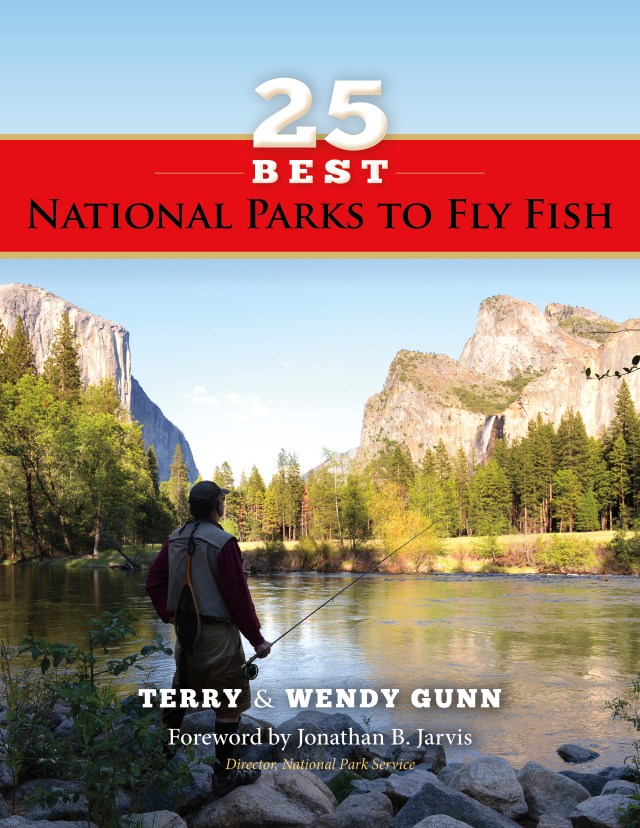
25 Best National Parks To Fish by Terry and Wendy Gunn, Stonefly Press, ISBN:978-1-63496-904-8, $32.95.

Stonefly Press continues their “Best” (Tailwaters to Fish, etc.) series with this new offering from Terry and Wendy Gunn. Best, of course, is always relative, but you need to make a stand somewhere, right? The authors do a fine job of choosing 25 national parks to fly fish, from the warm salt of the Florida Keys to the bracing salmon runs of Alaska, and from down east Maine to California dreamin’.

Since the authors can’t possibly have an intimate working knowledge of all these wondrous places, they don’t pretend to. Instead, they rely on the first-hand experience of local guides and outfitters. It’s a good strategy, and it lends an agreeable credibility to each chapter.

You will like this book if you are planning on making a pilgrimage to fly fish a national park — or you like to dream about doing so, and maybe this will be the impetus you need to set the wheels in motion. For example, my wife and I have been talking about making a family trip to Grand Canyon. Well, lookee here. Chapter 12, Grand Canyon National Park.

I get an overview map with trail access; general information on the location; specifics about the Colorado River and its tributaries; notes on fisheries management; notable nearby water; and a general list of tackle, gear, and flies to bring. Each chapter includes a detailed short-list sidebar with essentials like logistics information, local fly shops, guides/outfitters, places to stay, where to eat, and even if you’ll find bars on your cell phone. Of course, there are the obligatory scenic view photos and local specimen fish porn. Each chapter is unique in its informational offerings. For example, you might also find details on hatches; resident animal life; and seasonal conditions.

Maybe I’ll start up in Maine with those Acadia salters. Ay-uh.

Have Santa put 25 Best National Parks To Fly Fish on your list.

25-best-national-parks-cvr-5

Stripers en Espanol

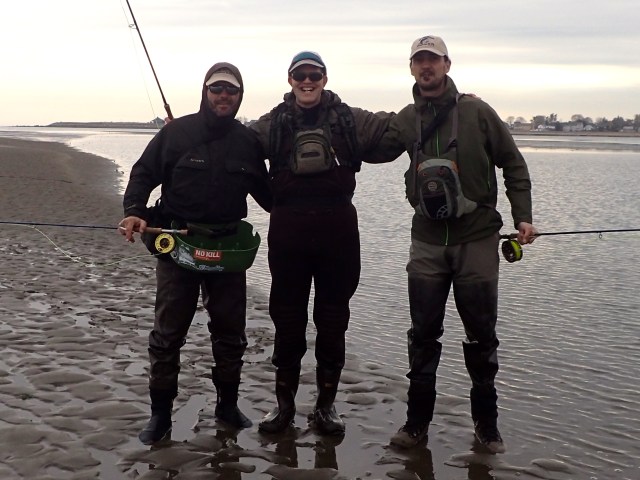
Last week I had the pleasure of guiding Asier and Moncho. They wanted to learn more about linea engrasada (greased line) fishing for striped bass. What was remarkable about the session was that they came all the way from Spain to do it. I’d like to tell you we slayed legions of bass, but we saw only one fish caught in the two hours we were on the water.

But if there ever was an outing where catching was truly secondary, this was it. Moncho speaks limited English (and I know even less Spanish), so Asier served as an able translator. We talked fishing, greased line, Ken Abrames, asked and answered questions, drew diagrams in the sand, exchanged flies and hooks and cigars, laughed at our communication gaps — what an appropriate way to spend the the day after Thanksgiving.

Asier recently posted this in the comments section of my guide service link. I am both honored and humbled by his words. “We come from Spain to learn with Steve, we only spend two hours with him… much more than enough to convince me he is the kind of guide always wanted, the knowledge, the philosophy, attitude, positivism, and of course the way he teach… How much he teach us in two hours in the sea, I can´t imagine how much he can teach in the river…. I really would like to come back and…. let’s try… more!!!!! Thanks Steve, people like you make sense to fishing.”

Three amigos. Moncho is on the left, Asier on the right.

OLYMPUS DIGITAL CAMERA


Farmington River Report 11/30/16: What’s all that wet stuff?

Not since the heady days of July have we seen this much water in the Farmington. 240 cfs! I fished in and out of the permanent TMA for 3 1/2 hours today. The water was somewhat stained — the closer to the Still, the greater the color — and 40 degrees. I saw midges and some really small BWOs, and even a few risers in some of the classic dry fly water. Streamers were the plan today, and things began well with several bumps and one mid-teens wild brown to hand. Then it got slow. Real slow. The last three places I fished were all blanks. I must confess to being a little surprised, given the warmth of the day, the height and color of the water, and the deep overcast. But such is life on the streamer edge.

For those who care about these things, I celebrated blowing off responsibility with an El Rey Del Mundo Flor de Llaneza. Like the fishing, it did not suck.

More rain is on the way, so whatever rain dances you’ve been doing, please carry on. I had most of the water to myself, but I would think that will change this weekend.

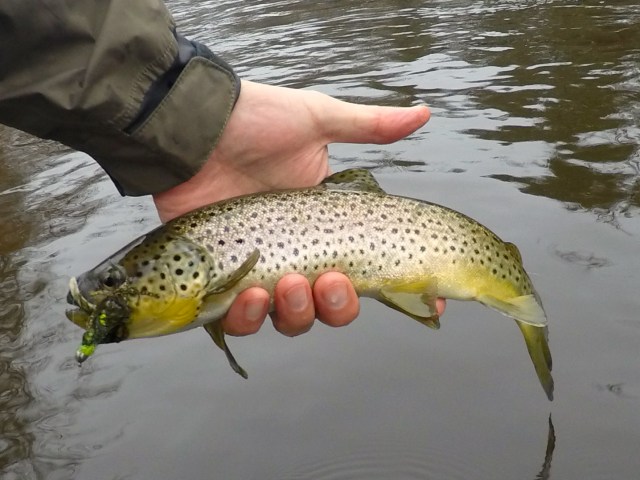
Excuse me, do I have something on my lip? The Deep Threat in olive/grey comes through again. The trout hit the fly three times over the course of two casts before delivering the kill shot.

DCIM100GOPROG0013600.