Farmington River Report 7/17/18: Big Bang Boom

I guided Paul for four hours yesterday before the fireworks began. Atmospheric, that is — although the fishing was slow, we managed to conjure up plenty of electric action. We fished three locations within the permanent TMA and found players in all of them. The water was down to 237cfs (they dropped the dam 100cfs) but still plenty cold. Wet flies were the first order of business, and we induced a savage strike from a lovely wild brown in the snotty water at the head of a run. Upstream there were trout smutting in that difficult-to-present-to frog water along the edge of a faster current. Then I saw a moth skitter across the surface, and one of the trout snapped at it. We clipped off the SHBHPT on point and tied on a Stimulator. Three trout later, we moved to another spot. This was a very sexy run, but we had no interest in swung wets. I figured there were trout in residence, so we added a BB shot to the middle dropper knot and presented along the bottom. Ding! We have a winner, with Paul landing a gorgeous kyped Survivor Strain brown. Great job by Paul with his casting, wading, presenting, and especially his no-time-wasted landing those trout. They just didn’t stand a chance. A pleasure, sir!

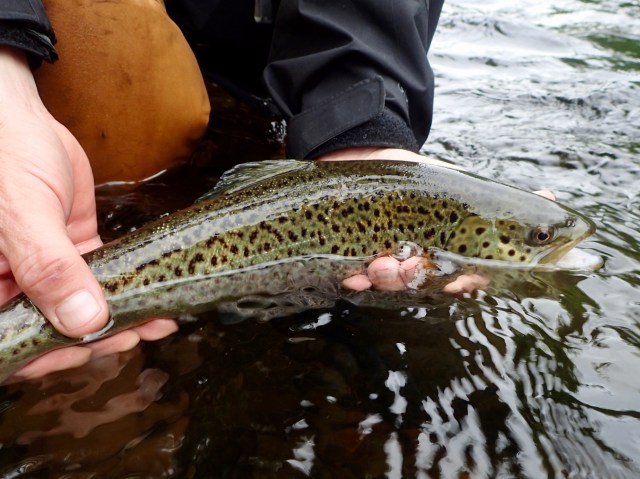
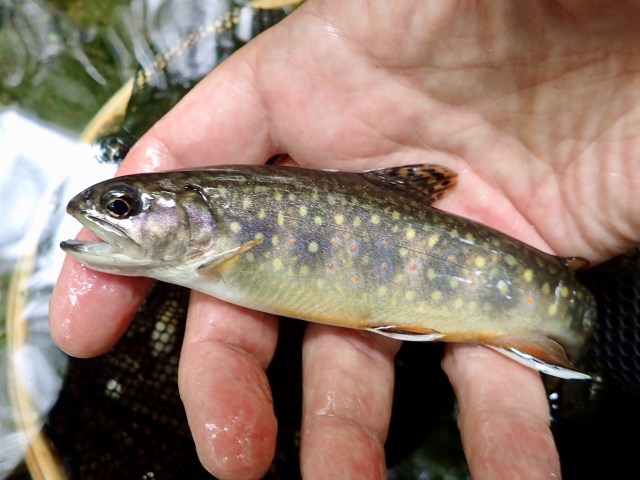
The skunk was off with this lovely wild brown. Man, did he open up a can of whupass on the wet fly.

OLYMPUS DIGITAL CAMERA

~

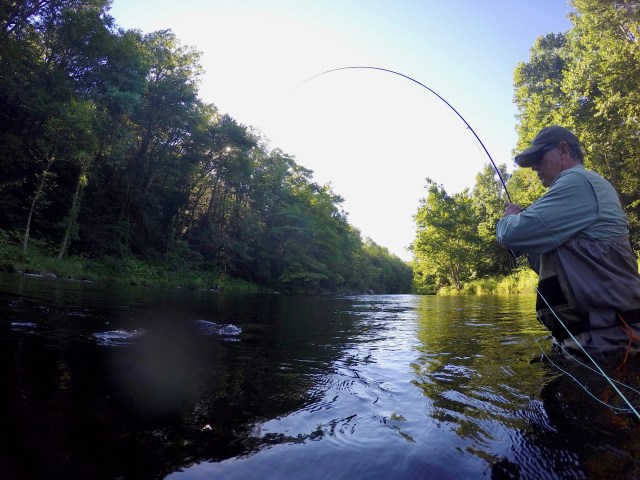
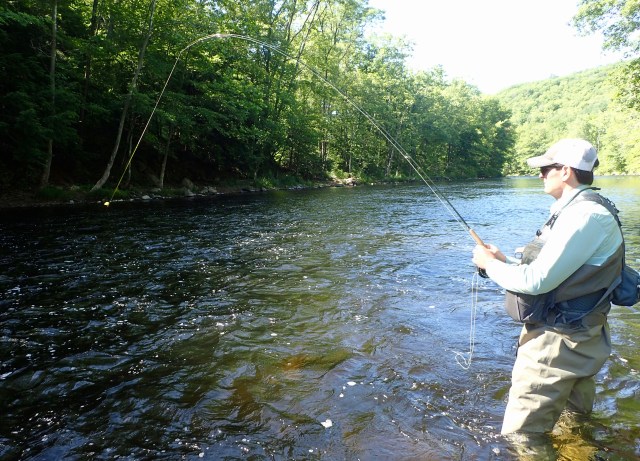
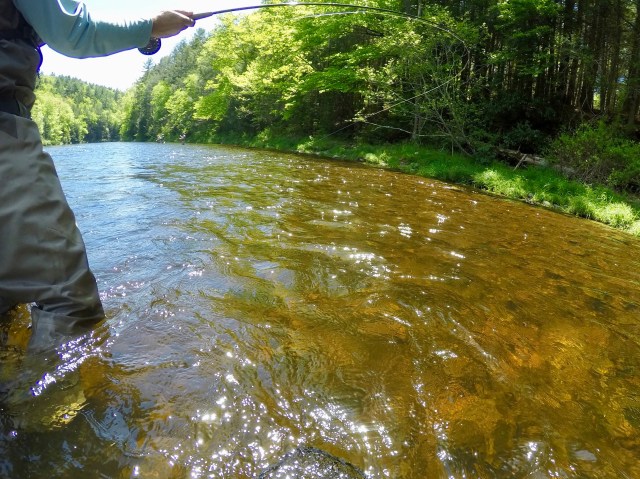
Men at work: Paul demonstrating the advantages of a ten-foot rod on the Farmington.

OLYMPUS DIGITAL CAMERA

~

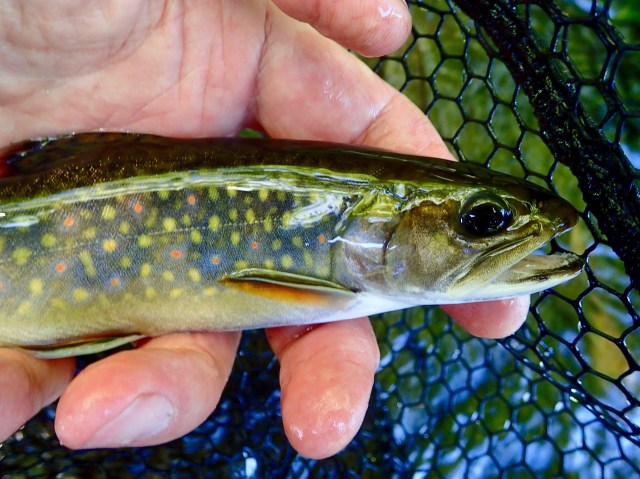
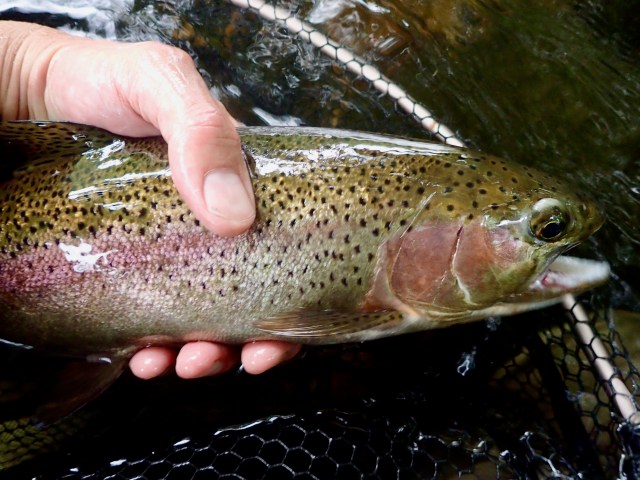
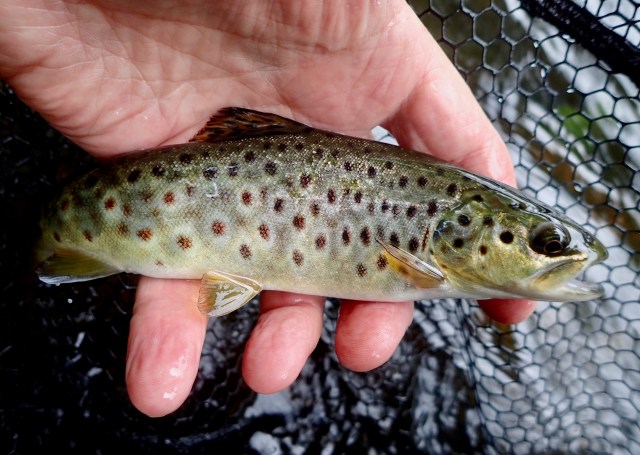
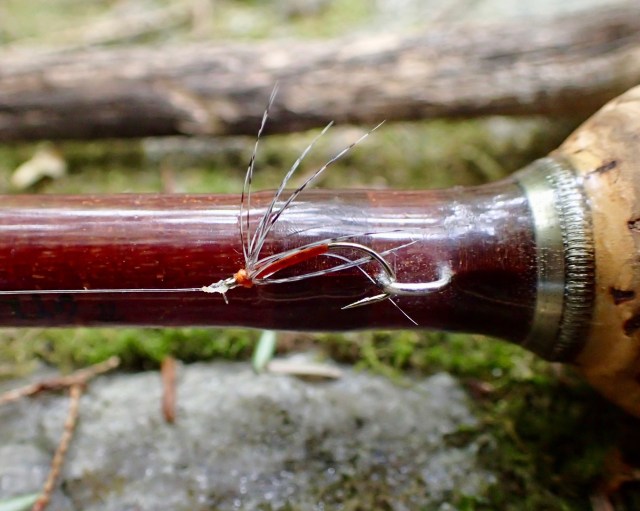
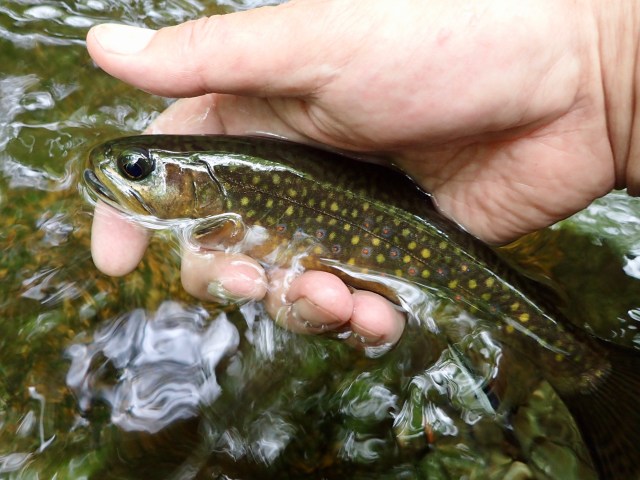
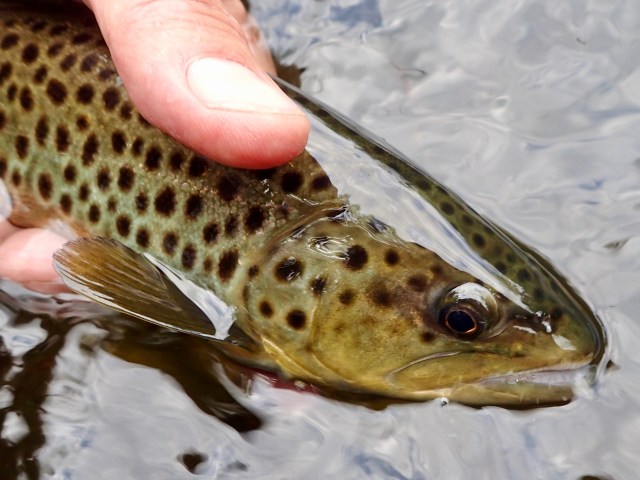
What the fly saw moments before the take. A good fish, Survivor Strain, well-earned. (There’ll be no pictures of anglers thrusting fish into the camera at arm’s length on this site.)

OLYMPUS DIGITAL CAMERA


Farmington River Report 7/11/18: The heat of the moment

Friends, I’m here to tell you that the Farmington River is cold. Readings of 58 and 54 degrees confirm that, as will Mark, my client — and he’ll also testify that the fishing is incendiary!

So. Mark came to me with the request — like so many of my clients do — to tell him “what I’m doing wrong.” In most of these cases, it’s not so much one grand point of error as it is a bunch of little things that could be improved upon. We started out below the permanent TMA for a little indicator nymphing. Mark took to it nicely, and we stuck a pile of fish on both a size 14 Rainbow Warrior (point) and a size 14 March Brown wingless (dropper).

Off we went upstream for the evening rise, which was that and then some. From 5:00 to 8:30 it seemed like there was always a target to cast to, and often multiple options within a couple rod lengths. We stuck fish on the Magic Fly, the Usual, Catskills Light Cahill, and Sulphur comparadun. The bug activity was mostly tiny BWOs, a few sulphurs, but mostly Dorotheas and perhaps some summer Stenos. The trout were on the emergers as well as duns on the surface. It was an easy night to be a guide. Well done, Mark! You were doing a lot of things right, as your fish count confirms.

Mark landed this nice wild brown on a March Brown wingless. The fish were taking the nymphs in the faster water at the head of the pool.

OLYMPUS DIGITAL CAMERA

~

The sweet sight of success: bent rod, splashy combatant. (Wide smile on client’s face not visible.) Speaking of visibility, we had varying degrees of fog for most of the evening. It didn’t seem to bother the fish.

OLYMPUS DIGITAL CAMERA

Farmington River report 7/9/18: Presentation is Everything

I guided David yesterday afternoon into the evening. David wanted to work on his presentations — a man after my own heart — and we began by swinging wets through some choppy water in the permanent TMA. Bug and surface activity was light — nonetheless, I was surprised that we didn’t find any players. We then headed upstream to some classic dry fly water to prepare for the evening rise. We had surface activity from around 4pm through darkness, and a lot more bugs in this pool: sulphurs, Light Cahills, mats of midges and a few caddis. The fishing wasn’t easy — David had dozens of quality drifts that went unscathed — but we fooled quite a few trout and netted some beauties. We fished with a 13-foot leader (9′ 5x) and tippet (4′ 6x) system, and took fish on the Pale Watery wingless (16), Catskills Light Cahill (14-16) and Sulphur Comparadun (18). Great job, David! And man, was that water cold. 56 degrees. I haven’t shivered that much since the winter. Double layers next time.

Mr. Presentation, getting it done.

DCIM100GOPROG0015823.

~

The size of the rise doesn’t always belie the size of the fish. This high teens Survivor Strain brown was making tiny swirls along the edge of some frog water. David did an exemplary job with his hook set and landing. All the fish we hooked were fat, healthy, and happy.

OLYMPUS DIGITAL CAMERA

Farmington River Report 6/26/18: Subsurface Success

Chris wanted to work on his subsurface game, so we spent the morning nymphing and swinging wets. Success! We fished three spots below the permanent TMA and found players in two of them.

We started off indicator nymphing (using my homebrew indicators) with a drop shot rig, and I continued my catching-a-fish-while-doing-a-demo streak. (If you want to look cool, pretend you meant to do it.) Chris took over and made a bunch of quality drifts with no love. All of a sudden, it happened. An unseen hatch was underway, the trout were feeding, and we hooked a bunch if fish in 15 minutes.

Wets were next. Run A was a blank, and Run B did not produce in the areas it usually does. No worries — Chris kept a positive attitude (confidence catches fish), and it rapid succession he stuck a bunch of trout tight to the bank. Great job, Chris! The trout should be worried.

We won the weather lottery: Bluebird skies, warm sun, cool air. Of course, a tight line makes any day sunnier.

OLYMPUS DIGITAL CAMERA

~

We spotted a distressed rainbow in the shallows. It had been hooked, lost, and had the terminal tackle and a short length of mono still attached. Unfortunately, we failed in out attempts to net it.

OLYMPUS DIGITAL CAMERA

~

Chris kept pounding the banks in a shade line, mended swing presentation, and was rewarded with several slashing strikes. This gorgeous wild brown took the top dropper on his team of three wets, a Squirrel and Ginger.

DCIM100GOPROG0025627.

~

After our session, I spent two very entertaining hours swinging wets. I fished a Squirrel & Ginger (caddis) on top, a Drowned Ant middle dropper, and a Light Cahill on point. I saw all three insects out and about, as well as tiny BWOs, midges, inch worms, and sedges. Among the players today were three wild brookies. Funny thing! They all took the Drowned Ant. I don’t think it was a coincidence. This stunner is clearly from the Farmington River hatchery.

OLYMPUS DIGITAL CAMERA

`~

Another hat trick today, thankfully without a broken rod. This low-teens wild brown was feeding just along a shade line in about a foot of water. First cast, bang! Squirrel and Ginger. Catch-and-release works in the wild, too — note the long-ago healed bird wound just above the gill plate. I bounced around to three spots, found hungry fish in all of them, and lost track of both time and fish landed.

OLYMPUS DIGITAL CAMERA


Farmington River Report 6/20/18: Going out with a wet fly bang

The last day of spring 2018 was a memorable one for me. The evening wet fly bite was spectacular (where one loses count of fish). I had a Farmington River hat trick (brown, brookie, rainbow). And I landed a porcine high teens rainbow (after it snapped the tip of my cane rod mid-battle).

But let’s focus on the positive. I fished below the permanent TMA from 5:30pm- 9pm. Water was a perfect height and still plenty cold. The bug activity was an 8 out of 10. I had much to work with: midges, a few small (size 18) caddis, lots of size 16 sulphurs and size 14 Light Cahills, and some mongo mayflies (10-12) that were perhaps March Browns or Isos. I fished a three fly team until 7:30pm: Snipe and Yellow size 14 on top, size 16 Magic Fly in the middle, and a winged Light Cahill size 12 on point. All three flies produced. The conditions were perfect for wet flies: bugs, birds working, and a multitude of sloppy, splashy rise forms that went on for hours. I spent most of my time targeting active fish, and often the take came on the first cast. I even caught one dangling my line in the current below me as I walked to the shore to put on my jacket.

Then, disaster. The hit came suddenly and with ferocity. It felt like a decent enough fish, but once I got it in close I could see it was a big rainbow in the upper teens. Fat, spirited, and uncompromising in its belligerence. I didn’t even feel the rod tip snap; suddenly, it seemed, it was just broken. I cursed my luck (as it was). Fortunately, I had brought a second rod stream side: I waded out, re-rigged, and was back at it.

I finished the session throwing dries: Magic Flies, Usuals, and Light Cahills. The trout liked all three. As the gloaming lost its struggle against darkness, I walked back to the truck, unsure how to process the conflicting sensations of delight and regret.

At this size and coloration, most certainly not from the factory. You can’t see it here, but the dorsal side of these fish is dramatically dark. They almost look like chrome steelhead when you’re bringing them in.

OLYMPUS DIGITAL CAMERA

~

The culprit. The opening of my net is 17″; this little piggy exceeded that. So far, the best trout hit of the year. She took the Pale Watery wingless (Magic Fly), not the Cahill as I previously posted.

OLYMPUS DIGITAL CAMERA

Farmington River Report 6/13/18: Workin’ hard, playin’ hard

On the river for ten hours today and loving every minute of it! I started by guiding Brian from 11am-3pm. Brian had a story that is typical of many of my clients: loves the Farmington, but has had too many encounters with the skunk. He wanted to focus on wets, but I suggested we spend an hour working on his nymphing game, since that is the year-round highest percentage play on this river. Brian has mostly Euro-nymped, but I set him up with a drop shot ring under an indicator. He took to it like he’s been doing it forever. There’ll be no skunk, today, Brian. The first fish was noteworthy because the indicator never went under — it merely twitched. Look for a reason to set the hook on every drift, and like that Brian was on the board.

It was a cool, wet day, and there was precious little bug activity. The water is still unusually cold, with 48 degrees at the bottom end of the permanent TMA, which was running at 330cfs. Nonetheless, we managed a mix of browns and rainbows by (you’ve heard this if you’ve taken my class) moving around and covering water. Nice work, Brian.

Every guide loves the sight of a bent rod and a tight line. Brian did a great job with his hook sets today.

DCIM100GOPROG0015239.

~

Thank you for playing. They liked the bottom nymph, a size 14 Frenchie variant.

OLYMPUS DIGITAL CAMERA

~

Now it was my turn to play. I grabbed a sandwich and headed off to a snotty run to swing wets under a leaden sky. The cold from the river was a stark contrast to the warm and humid air (my lower legs and feet were uncomfortably cold by the time I finished.) By this time (4pm) there was a slight uptick in bug activity. Whack! My second cast produced a gorgeous wild brown.

They don’t make ’em like this in the factory. Absolutely flawless fins.

OLYMPUS DIGITAL CAMERA

~

Any pre-hatch period is my favorite time to swing wets, and I moved down to a more languid section of water. Sure enough, as the clock moved toward 5pm, there was an uptick in bug activity, mostly Light Cahills (Vitreus) 12-14 and caddis 14-16. The fish were rising a little more regularly now. I was fishing a three fly team of a Squirrel and Ginger on top, a Light Cahill winged in the middle and a Hackled March Brown on point. My strategy was to target active risers, and I caught a bunch of trout on all three flies.

There comes a time during every hatch when the subsurface wet becomes ineffective, and today it was 7pm. I switched over to dries, and had a blast fooling trout on the surface. I fished Magic Flies and Usuals, 14-16, and had a good couple dozen takes — but only about half of them stuck. I was going to leave at 8pm, but I remembered how fiercely I admonish those who depart from the river before the magic hour in June and July, so I stuck around until 9pm. The last half hour, the river was simmering with rise forms. I switched over to classic Light Cahill dries, 12-14, and ended the session with a healthy brown who was just showing the beginnings of a kype.

The best part? There was no one there except for me, the trout, and the bugs.

Our Lady of the Blessed Pink Band. First Farmy trout of the year on a dry. 

OLYMPUS DIGITAL CAMERA


Cape Crusaders

Got back yesterday from a 36-hour Cape Cod stripers on the fly trip. I met a friend from England who fishes out there several weeks this time of year, and a couple other guys I knew from the SOL forum.  Tuesday night we fished an outflow. I took a 20″ bass on my first cast, and I supposed that it was going to be one of those lose-track-of-the-count-after-a-dozen nights. Or not. That was my only striper of the evening.

Wednesday AM we fished the mouth of an estuary. I could sense almost right away that it wasn’t going to happen, and it didn’t. The most fun I had that morning was casting Mike’s (the Englishman who is also a rod maker) cannon of a two-hander. (Good Lord, I need one of those for windy days.) Or maybe it was breakfast. It was pretty tasty. I think I’ll go with breakfast. We headed for a bay to catch the last of outgoing, but with the wind in my face, a tired body, and the only bass around being in the stocked trout size range, I decided to save my chips for later.

Good call. The Wednesday dusk and night bite was off-the-charts good for numbers (not so much for size) but you take what the striper gods give you and offer thanks. Mike and I started by working a beach, and we ran into a good old-fashioned classic blitz, with terns dive bombing the bait and a striper on just about every cast-and-strip. We were fishing about 25 feet off the beach, walking down current, casting parallel to the shore. This went on until dark, and we fairly giggled about it on our walk over to where Chris and Chuck were fishing.

I loved this second spot: an outflow with stripers holding on station, unwilling to chase, feeding on something small. I was feeling lazy, but after Chris mentioned the deer hair grass shrimp he’d seen in my box the night before, I realized that the standard baitfish fly was going to be nothing but casting practice. While bass popped around me, some within a rod length away, I tied up a three fly dropper team with the shrimp on top, a 1.5″ saltwater Hornburg, and a Gurgler on point to suspend the rig. I generally avoid the phrase “that was the ticket,” but I beg to report that that was, indeed, the ticket. For the next hour, the skunk turned into a touch or multiple touches on just about every cast. The fish were small and hard to hook, and with the action winding down, I decided to end on a high note after I took a double.


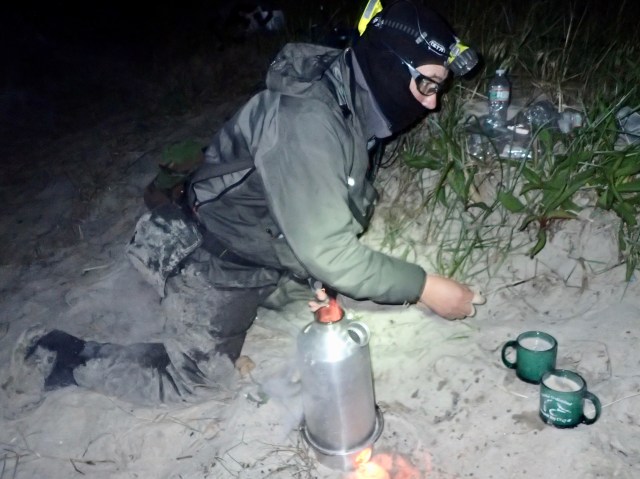
Mike demonstrates the proper technique for serving tea in the field, taken directly from the pages of the British Commando manual. Tea and milk on the beach after a night’s fishing. How civilized! Yes, the weather was October cold.

OLYMPUS DIGITAL CAMERA

~

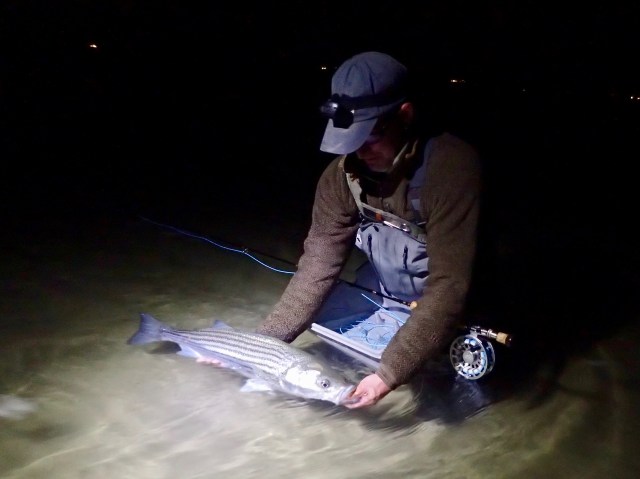
Chris with the best fish of our 36 hours, taken in an outflow on a Big Eelie. A fine demo of proper catch-and-release.

OLYMPUS DIGITAL CAMERA

Another back country brookie adventure

The cathedral was built at the end of the last ice age. As the glacier receded, it carved out the path of the stream and dotted its edges with granite boulders. Tens of thousands of years later, I came to worship at its altar.

In one of the Beatles’ Christmas records, John Lennon waxes romantic about the Elizabethan high wall. Here’s to the New England low wall. What was once farmland is now dense woods, and every once in a while you stumble across one of these gems, as if it were part of some random design plan.

OLYMPUS DIGITAL CAMERA

~

I’ve been fishing this stream for years, and in late May you can always count on a good hatch of yellow sallies. I spent 15 minutes sitting beside a pool watching the char rise in earnest to both midges and stoneflies.

OLYMPUS DIGITAL CAMERA

~

I started with a dry (Improved Sofa Pillow variant)/nymph (Frenchie variant) dropper and had interest in both. I switched out the nymph for a North Country spider, the Partridge and Orange, to which the answer was a resounding yes. White micro bugger, ICU Sculpin, Squirrel and Herl — they liked them all. Pricked dozens, landed a few less, and spent most of the morning giggling about it.

OLYMPUS DIGITAL CAMERA

~

I love how the brookies change their colors to match their environment. This guy came from a shallow, well-lit run with a light stone bottom…

OLYMPUS DIGITAL CAMERA

~

…while his cousin came from the depths of a plunge pool that may only see sunlight for a few days each year.

OLYMPUS DIGITAL CAMERA


Striper report: It’s grass shrimp time, baby

My striper fishing cycle goes through an almost ritualistic pattern, following bass and bait to certain spots at certain times of the year. May and June are always a good time to target stripers feeding on tiny grass shrimp in the many estuaries along the Connecticut shoreline. These diminutive crustaceans swarm to mate, and the stripers know that they’re there, literally queuing up to feed on them. Throw in some clam worms and smaller baitfish like mummichaugs and you’re got a veritable saline smorgasbord.

I’ve been trying to expand my menu of usual places, so last night I ventured out to try two new locations. Both had grass shrimp and stripers. The fish weren’t very big — 16″-20″ — but they weren’t easy to catch, and I like a good presentation puzzle. Wouldn’t you know that I caught my first one when I wasn’t paying attention. My rod was tucked under my arm, flies dangling in the water below me while I was trying to figure out a murderous eddy, when WHACK! Once I had the drifts calculated, the takes began in earnest.

I didn’t shoot many photos — we all know what a school bass looks like — but this is the sweet silly who took the fly on the dangle. My apologies for the focal challenges.

OLYMPUS DIGITAL CAMERA

~

Droppers give you a strategic advantage when there is a multitude of tiny bait in the water. Last night’s rig: a micro Gurgler, Simpson’s Hairwing Shrimp, and an Orange Ruthless clam worm. For perspective, the Ruthless is 2″ long. The bass liked all three flies, the clam worm in particular.

OLYMPUS DIGITAL CAMERA


Farmington River Report 5/21/18: Working hard on a glorious day

Adam won the weather lottery when he picked yesterday for his wet fly lesson. It was easily one of the ten best days of the year. The river was 415cfs and 58 degrees in the permanent TMA. The trout were a bit less cooperative, but we stuck with it and ended up with several to net.

The plan was to walk a couple long stretches, actively fishing and picking pockets, swinging through runs, and dangling over likely holding areas. This was one of those days where Mother Nature tells you, “Nice try, boys, but today the trout are going to be stuck to the bottom.” High pressure sometimes does that. So after 90 minutes all we had to show for our efforts was a bump and a missed hookset.

We were standing in a run that I knew held fish. We added a shot to the middle dropper for  a short-line deep presentation, and what do you know? We hooked up on our demo cast. Adam went to work and had a customer in short order.

Bug activity was about a four on the 1-10 scale: small (size 18) caddis, midges, BWOs, and a couple larger un-IDed mayflies. We did see some smutting trout in a classic dry fly pool. Our persistence paid off in the second run we walked through, with the trout nodding their approval to Adam’s soft hackles. Well done, young man!

What we like to see and hear: a bent rod and a singing drag.

DCIM100GOPROG0015048.

~

A rambunctious rainbow moments before capture. With the warm of the air and the refreshing splash of cold water on your hands, all is right with the world.

DCIM100GOPROG0015075.