Hello, old friend

Spring began as a promise and summer as a dream. Winter would relent at some point (God, it was long and cold!) and the water temperature would rise a few precious degrees and the stripers would begin to stir. We’d have the spring run – or not, as it turned out – but at least the sun would be warm on your face and you could feel your fingers and you would feel alive standing in the brackish water as it raced past your feet to meet the sea.

The herring would be in in a few weeks – or not, as it turned out – and with them would come the big bass (see previous “or not” statements). Worms would hatch, and anglers would mutter about picky fish, but all would be as it should. After that would come summer and sand eels and silvery Block Island bass covered in sea lice and eager to act twice their size. It all happened, and it was extraordinary, as each year is in its own way.

And now, it is fall.

The calendar won’t proclaim it so for another six weeks. Football is still in training camp. The warning track of meaningful September baseball is many strides away. But the first leaves have already fallen (you can find them in your yard right now). A few weeks ago your deck was in bright sunshine at 3pm. Now it’s in deep shade. The Dog Days (which have less to do with heat and humidity than with the position of Sirius, the Dog Star, relative to the sun) are nearly over. And so begins fall.

Last night I stood in a Cape Cod creek amid an assembled multitude of silversides. Against the far bank, stripers were feeding in earnest. They know it’s time to bulk up in preparation for that long journey home.

Welcome, old friend.

Don’t even get me started about steelhead. Big Steel 11:14

Tip of the week: look for a reason to set the hook on every drift

This is one of my favorite nymphing maxims. It is one of those abstract truths that proves itself worthy of consideration many times over the course of a season — especially if you like to nymph with an indicator. Sure, false positives mean you also end up wearing your line, leader, and nymph rig around your head more than you’d care to. But those comical moments are quickly forgotten whenever hook point finds fishy mouth.

A few days ago, I set the hook for no reason other than my yarn indicator deviated ever so slightly from its course downriver. It didn’t go under. It didn’t stall. It didn’t shudder like it does when the rig is bumping along the rocky bottom. Nope, it just started to move in a way that neither current nor structure could account for. So I set the hook. And there he was, the best trout of the day, a mid-teens wild brown.

The guide I float with on the Salmon River, Jim Kirtland, likes to say, “It doesn’t cost anything to set the hook.” Make an investment in watching your sighter or indicator like a hawk — and watch the dividends roll in.

There was no mistaking the take of this fish, but I’ve had plenty of hookups with steelhead this size and bigger that began without the indicator going under. Once you think you know what you’re looking for — anything that looks like a remotely suspicious move by your indicator — the fun begins. Remember the sage advice of Ken Abrames: “It’s a fish until proven otherwise.”

Steel Cam and Me

Even if you don’t fly fish for stripers, you should read this

Ken Abrames taught me how to fly fish for stripers. (He taught me a lot more than that, but those are stories for another day.) He would tell you that it all came from within me, but clearly the striper angler I am today was formed by Ken’s hand. That stuff I post about striper fishing with five weight rods and three-fly teams and flies that are not much more than a few strands of bucktail and the hint of a suggestion of what the bait might look like? That’s all Ken’s influence. He recently wrote something on his website (stripermoon.com) that I liked so much, I wanted to share it with you. Even if you don’t fish for stripers, there are many pearls within. So, enough from me. Here it is:

“The tiny crabs are coming down the rivers
One-eighth to three-sixteenths across
They are translucent gold
And Fish eat them one at a time
no matter what you may have heard, they do not take them in mouthfulls
even though our reason says they must.
They are not burdened by reason as we are.
Size sixteen hooks and tiny goldish flies work
trout tackle

Also:
Isopods, tiny crustaceans that look like fresh water shrimp are swarming on the rock bars in the open ocean
The bass gorge on them
again, about a half- to three-quarters of an inch long
Dont be afraid of trout tackle.
Heavy leaders wont go throuugh the eyes of the trout hooks.
and
There is a major clam worm hatch going on in the open ocean too
These worms are of several kinds
One is yellow another is red
and another is red and yellow
They are thin from three quarter to two inches long and move like speed boats
and the squid and the bass are feeding on them.

So now you know
There are other ways to fish in the ocean than with standard gear…
it is always good to think outside of the box that marketing presents.
It doesn’t ever know how to lead
It follows
and when it leads it likes to control opinion
sales
that is business
but it is not fishing.
Fish do not read magazines or blogs.
Fishing is discovery not formula.”

Thirty-pounder on the fly. All because someone took the time to teach me how present a flatwing on a greased line swing.

Thirty pounder

Fly Fishing for Striped Bass: Meditations, Musings, and Observations

I don’t know about you, but when I’m out fishing I tend to get lost in my thoughts. Some of those thoughts involve the standard issue routine of life. Others, a problem that is currently in want of a solution. Most often, though, I’m thinking about fishing. I’m also doing a lot of observing — conditions, other anglers, how fish are feeding, what the bait is doing. You know. The truly important stuff. Recently, I was fortunate enough to spend eight glorious nights fly fishing for stripers. Here are thirty-six hours and nearly a hundred stripers’ worth of thoughts and observations wrapped up into six hundred words.

~ Stripers often feed like trout. Consequently, you should be prepared to fish for them like trout. Match the hatch (bait). Present your fly (or flies) to the bass in the manner the natural bait is behaving. Target specific rising fish.

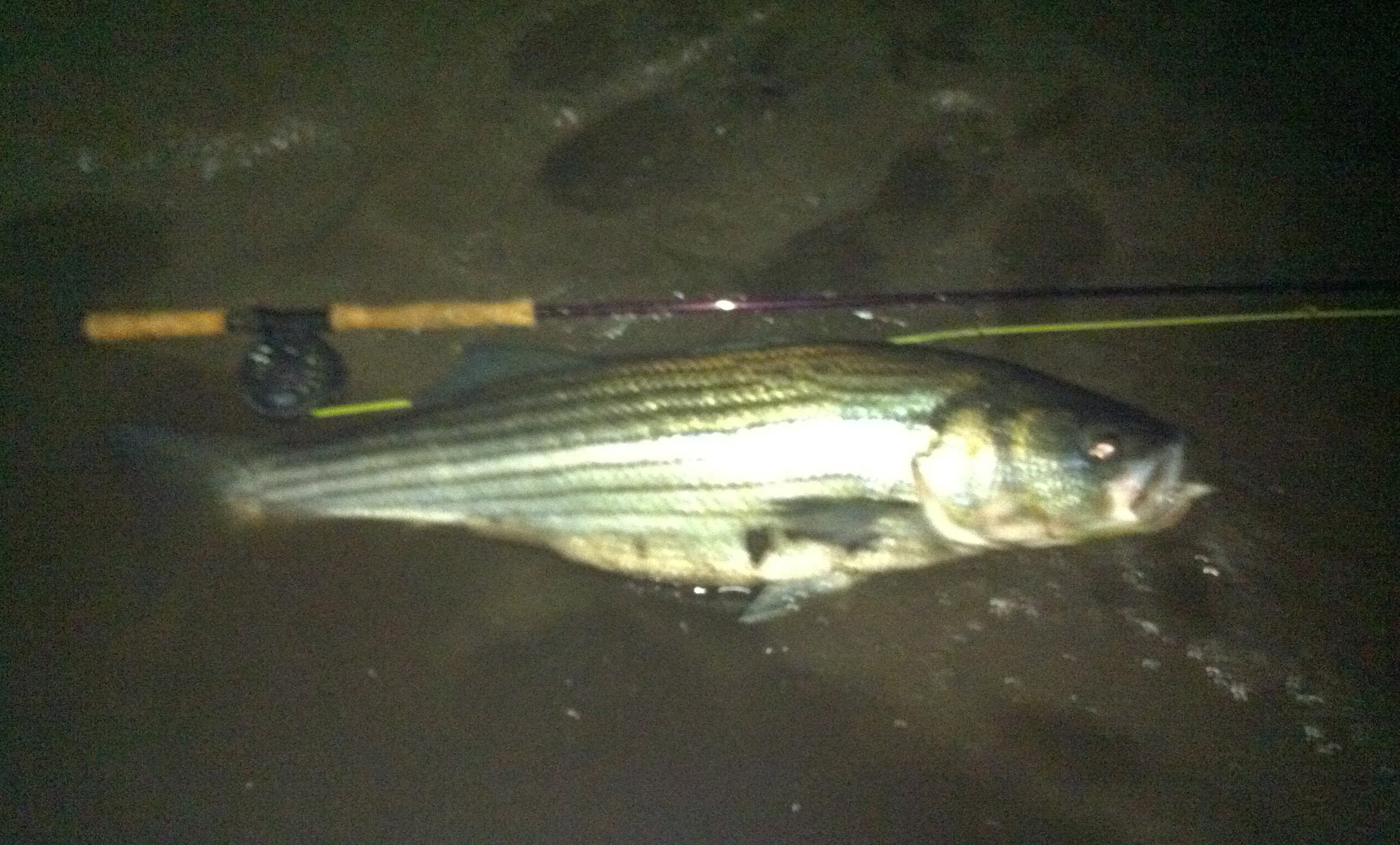
~ If you use stealth and caution, you can get remarkably close to actively feeding stripers, especially at night. I have waded to within two rod-lengths of a striper that was rising in three feet of water, and caught him by dapping my sand eel fly in the film.

I love sight fishing on rocky flats at night. After I crept up on his position, I watched this bass feed for several minutes before making a cast. Taken on a chartreuse and olive Eelie.

Block Island Bass

~ Stripers will frequently chase and hit a rapidly stripped fly. The more you fish for stripers, though, the more situations you will encounter where they will ignore a rapidly stripped fly. If you want to catch those fish, you’ll need to have other presentation arrows in your quiver.

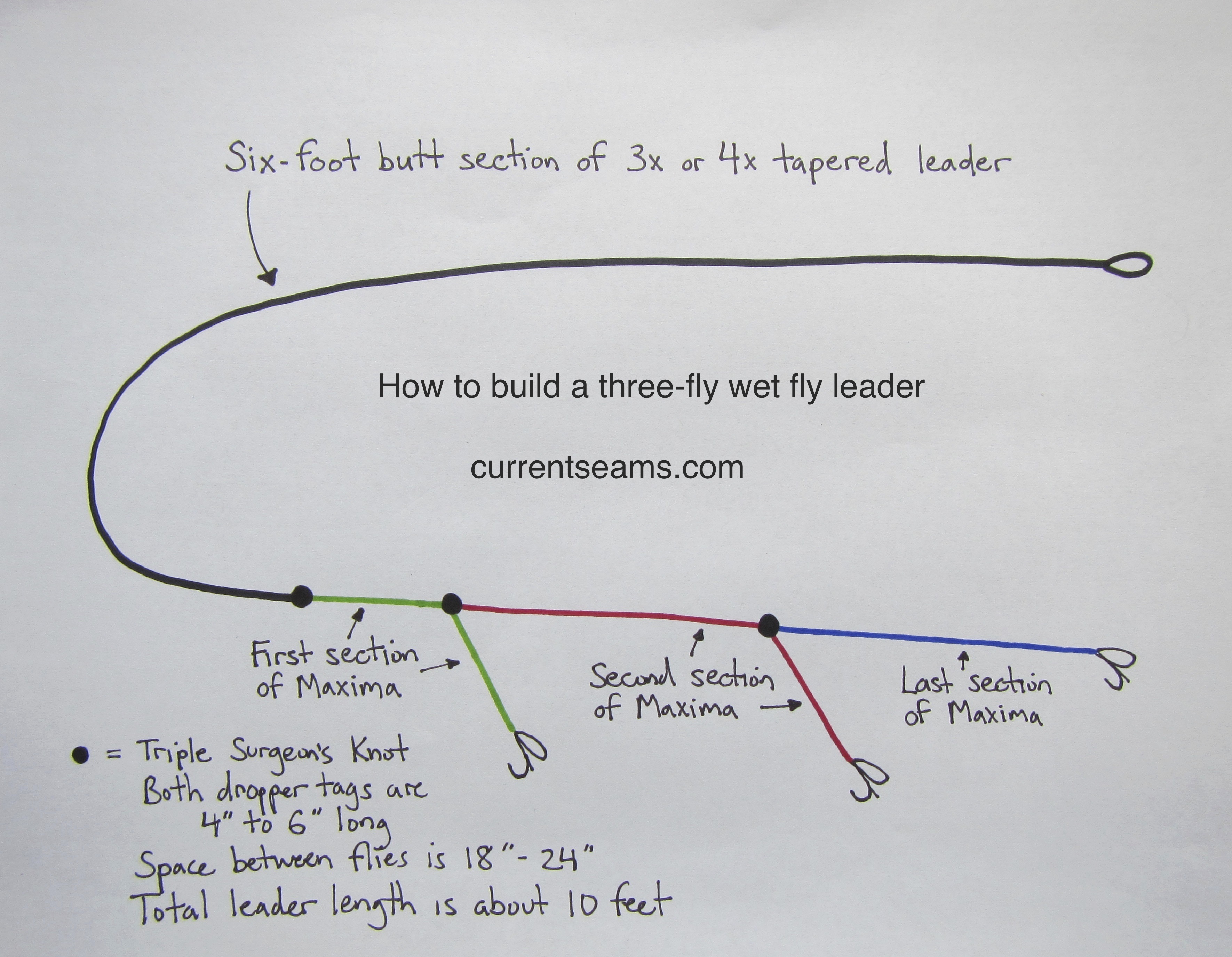
One of my favorite ways to catch stripers is by dead drifting a three-fly team. The point fly (in this case a Gurgler) and the floating line stay on the surface; the two droppers are suspended just below. I use this approach when there’s a lot of bait in the water, especially small bait like clam worms or grass shrimp or sand eels. The takes are sublime. Rather than a bull rush smack, the sensation is one of building pressure as the bass, feeding with confidence, sucks the fly into its mouth. The explosion comes moments later at hook set. It is a poetic and beautiful and — when bass are feeding near the surface — highly effective way to catch striped bass.

Sand eel dropper rig

~ A floating line allows you to present deep (and deep in current), on the surface, and all points in between, without having to change lines or tips or flies. You can mend a floating line over the tops of waves along the beach.

~ The notion that a weighted fly is all you need to fish for stripers is like saying that a Woolly Bugger is all you need to fish for trout.

~ Sticky sharp hooks. Always.

~ If stripers are crashing 2”-3” sand eels on the surface, do not be surprised if they ignore a 6” Black Bomber or dumbbell-eyed sand eel fly.

~ Striper fishing spots can be notoriously fickle. The moon changes, the weather changes, winds shift, tides move, bait moves, stripers move. If you’re not getting any action, go find the fish. Make note of the most favorable conditions for a given spot.

~ A fine, hand-rolled Dominican cigar is an effective (not to mention, delicious) way to keep the no-seeums away. Certain botanical sprays, not so much.

~If you want to catch more stripers, fish when other people don’t, fish where other people don’t, and, most importantly, fish how other people don’t.

Pay attention to the little things, and the results can often be measured in pounds.

900x900px-LL-8da1a41d_38incher-1

Guest blogging on J.Stockard: Three Great Wet Flies for Summer

Yours truly makes another appearance on the J. Stockard Fly Fishing site blog, Thoughts On The Fly. This month’s topic will be nothing new to my regular readers, but it is a worthy subject nonetheless: “Three Great Wet Flies For Summer.” You’ll pardon the highly unimaginative title.

Here’s the link to “Three Great Wet Flies For Summer”

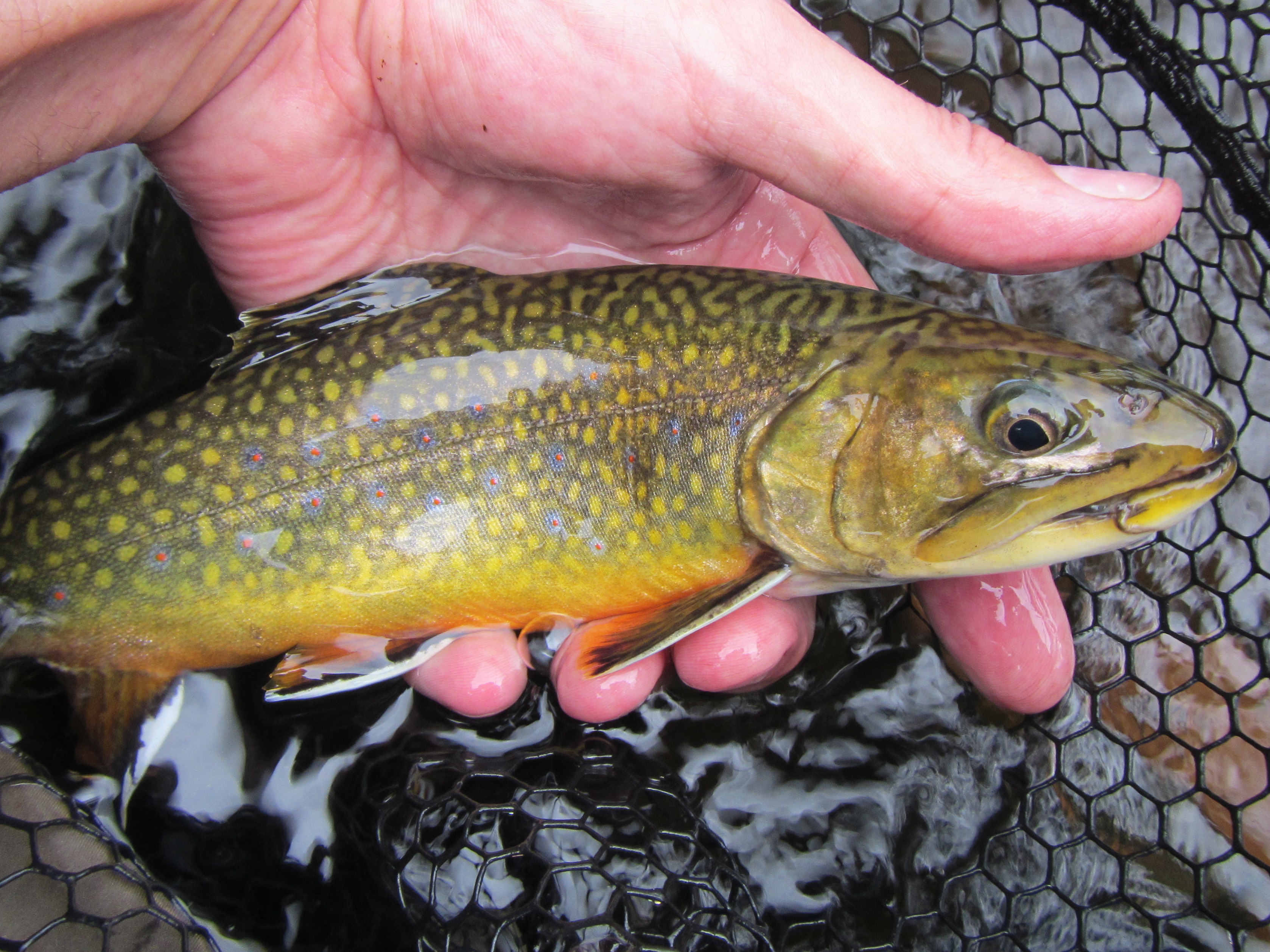
This amazingly marked wild Farmington brookie took a late summer wet fly.

Farmington Wild Brookie

Speaking of wet flies and summer, my Saturday “Wet Flies 101” class at UpCountry Sportfishing is sold out. Maybe I’ll see some of you there.

And we are getting tantalizingly close to 300 followers…and a fly giveaway.

A new feature in the current issue of The Flyfish Journal

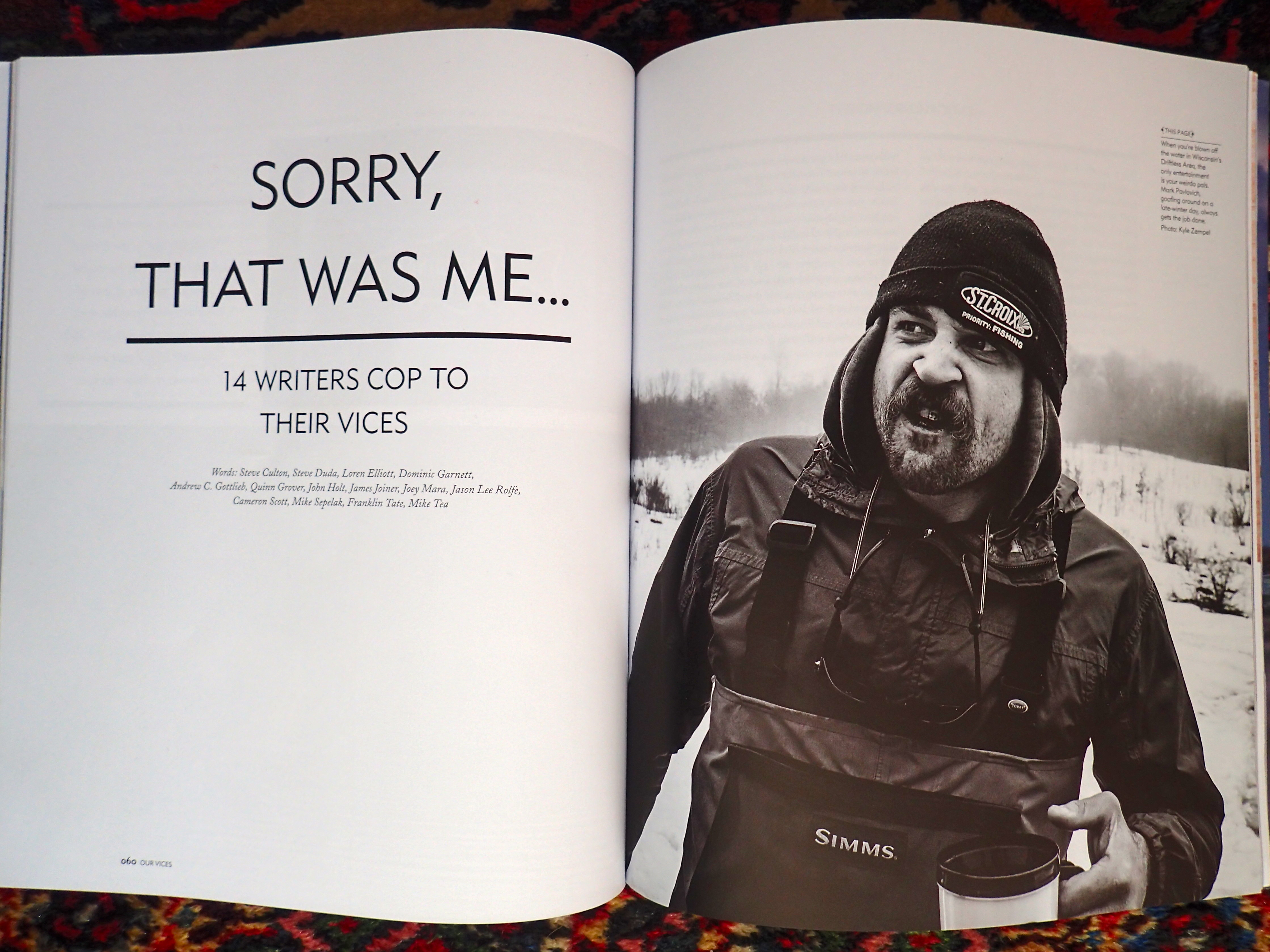
The Currentseams word factory is on a bit of a roll here, with another contribution in The Flyfish Journal, Volume Six, Issue Four. It’s a concept piece called “Sorry, That Was Me…14 Writers Cop to Their Vices” (great idea, Steve Duda, and not just because you’re the editor). Bad habits, character flaws, personal issues — it’s all fair game and a fun read.

Look for it in your mailbox, and if you don’t subscribe, at a newsstand near you.

Flyfish Journal Vol. 6 Issue 4

~

In addition to yours truly, contributors include Steve Duda, Loren Elliot, Dominic Garnett, Andrew C. Gottlieb, Quinn Grover, John Holt, James Joiner, Joey Mara, Jason Lee Rolfe, Cameron Scott, Mike Seplak, Franklin Tate, and Mike Tea. Some good company.

FlyFish Journal Vices

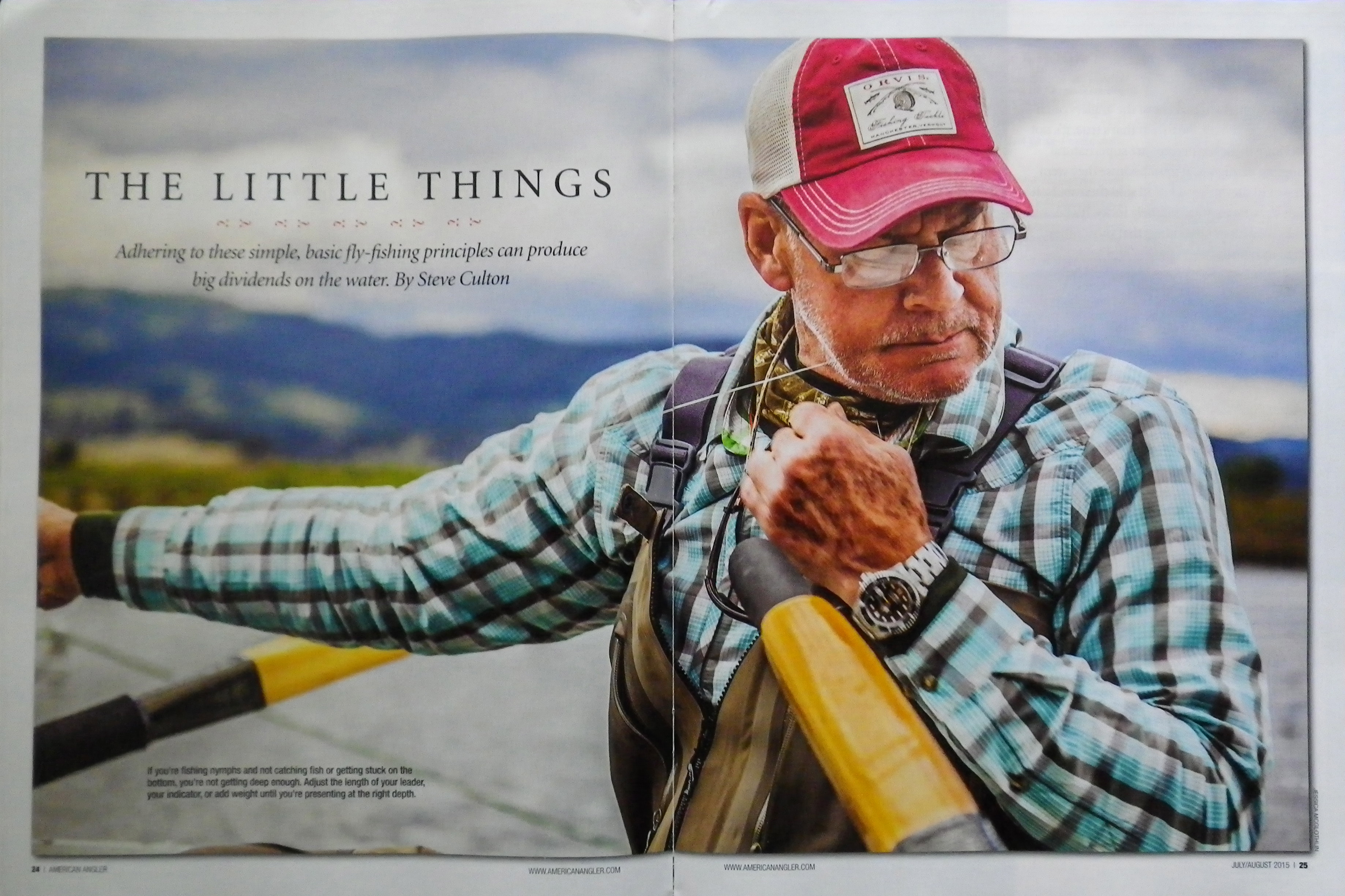
“The Little Things” in the July/August 2015 of American Angler

In case you didn’t know, I have the cover story in the current issue of American Angler, now available at your favorite fly shop or news stand. The piece is called “The Little Things,” and it’s about seemingly small adjustments you can make in your fishing that can have a large impact on the outcome. I have a followup — Son of “The Little Things” if you will — and several other pieces coming up in American Angler.

Read all about it.

AALittleThings 1

Not a picture of me. But a good photo nonetheless. I love guides who can multitask and make it look easy. 

AALittleThings 2

“The Streak” in the current issue of The Flyfish Journal

Catching a striped bass on the fly from the shore for twelve consecutive months takes determination, fortitude, and luck. It also takes you to some pretty strange places.

At long last, “The Streak” has arrived in Volume Six, Issue Three of The Flyfish Journal. “The Streak” is about my second attempt to go twelve-for-twelve, January through December. How it ends really isn’t important. It’s all about making the attempt.

Let me know if you get the chance to read it.

The Streak. Read all about it in the current issue of The Flyfish Journal.

feature-the-streak-og-m1428442139

~

Whether they admit it or not, every outdoor writer likes seeing their work in print. When it’s in “fly fishing’s coffee-table bible,” it makes it even sweeter. In addition to the words, I have two photos in the book. I’d also like to give a shout out to my brother David, who earned a full page for his beautiful time-lapse night shot of the SoCo shoreline. David also took the photo of yours truly for the Contributors page.

22-small-og-m1428087489

Three Fly Tying Materials I Can’t Get Enough Of

Your humble scribe is now a guest blogger on the J.Stockard Fly Fishing website. (If you’re unfamiliar with J.Stockard, they have a huge selection of mail-order fly tying materials.) They’ve asked me to make regular contributions to their blog, and this is the first.

The three fly tying materials I can’t get enough of are blood quill marabou, Angora goat, and Ice Dub. You can read all about it here: http://www.jsflyfishing.com/blog/three-fly-tying-materials-i-cant-get-enough-of/

This weekend is supposed to be nice. I hope you’re all able to get out and fish.

I can’t get enough red fox squirrel, either.

S&G ready to finish

A Floating Line Myth. Sunk.

Striped bass don’t read internet forums or hang out in breachway parking lots. This fifteen-pounder was part of school that was feeding in a strong rip. The bait, sand eels, was trapped between the rip and the shore and the stripers were feeding with impunity. It was one of those magic moments (rather, episodes — it lasted close to 90 minutes) where it was a fish on every cast. You guessed it. I was using a floating line.
Mouth
~