So much water the stream was on fire

I had taken about six steps into the brook when I fell in. A poor foothold, a little water ballet in a desperate attempt to regain my balance, then flat on my seat, left forearm soaked and a shot glass-worth of water into my waders.

Well, I thought, things could only get better.

They did. The creek was up, but at a perfect medium-high level, almost imperceptibly tinged, and running at a cool 63 degrees. What’s more, the skies were a grey block of granite. Rain was coming. But for now, it was just me, the woods, the brook, and the trout.

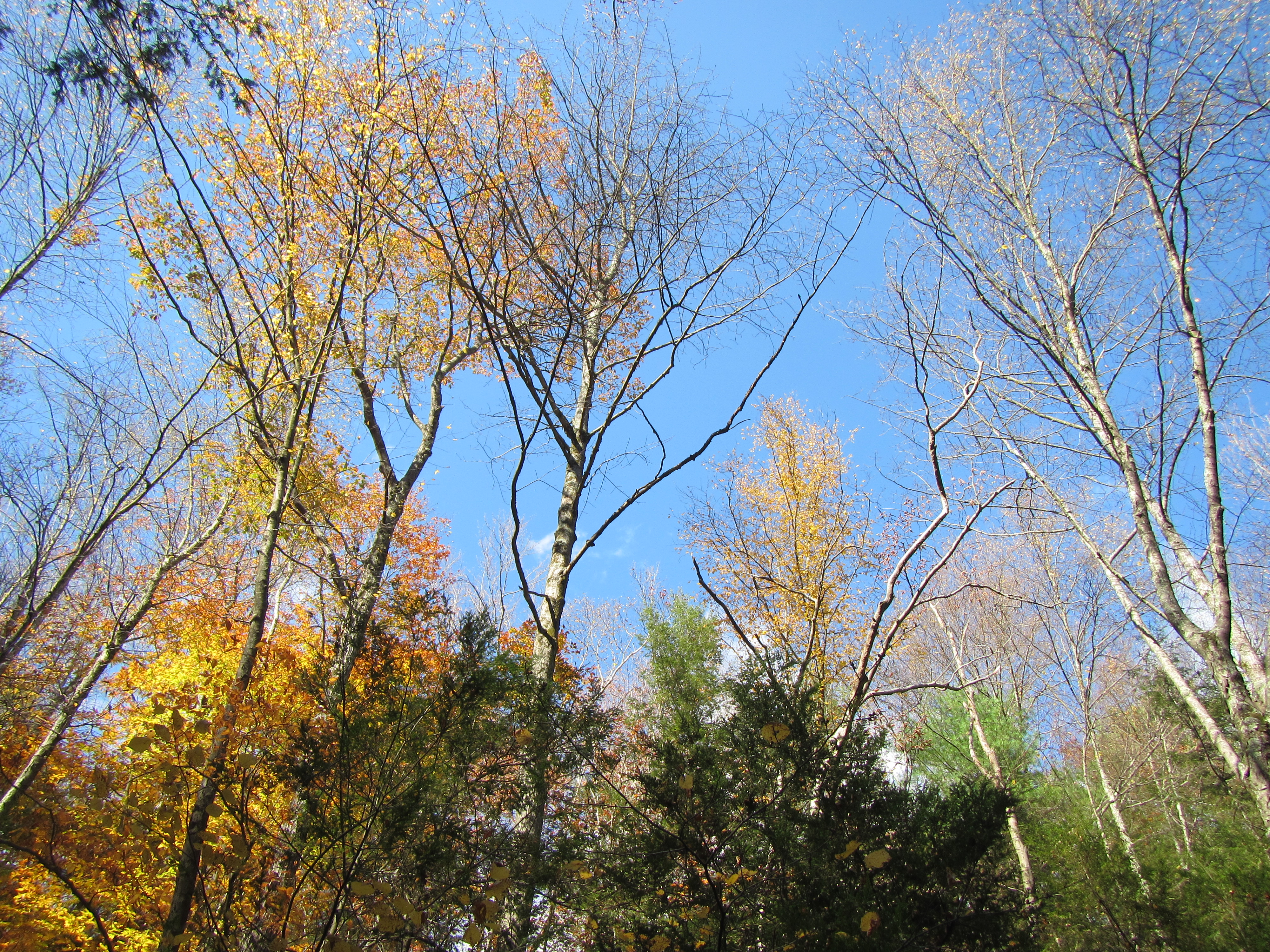
How you can tell it’s mid-June in the Connecticut woods. Our state flower, the mountain laurel, grows wild anywhere there’s shade. Some of the shrubs don’t produce flowers, but plenty of them were decked out in their white streamside finery.

Image

I spent the better part of the morning committed to the dry upstream cause, even though I knew it was costing me fish in some of the deeper pools. Most of the trout I raised were small — three inches or less — and very few of them were actually hooked. That was OK with me, though. Just to know they’re there tells me the brook is in fine shape, and those fish will be seven-inch lunkers in a few years.

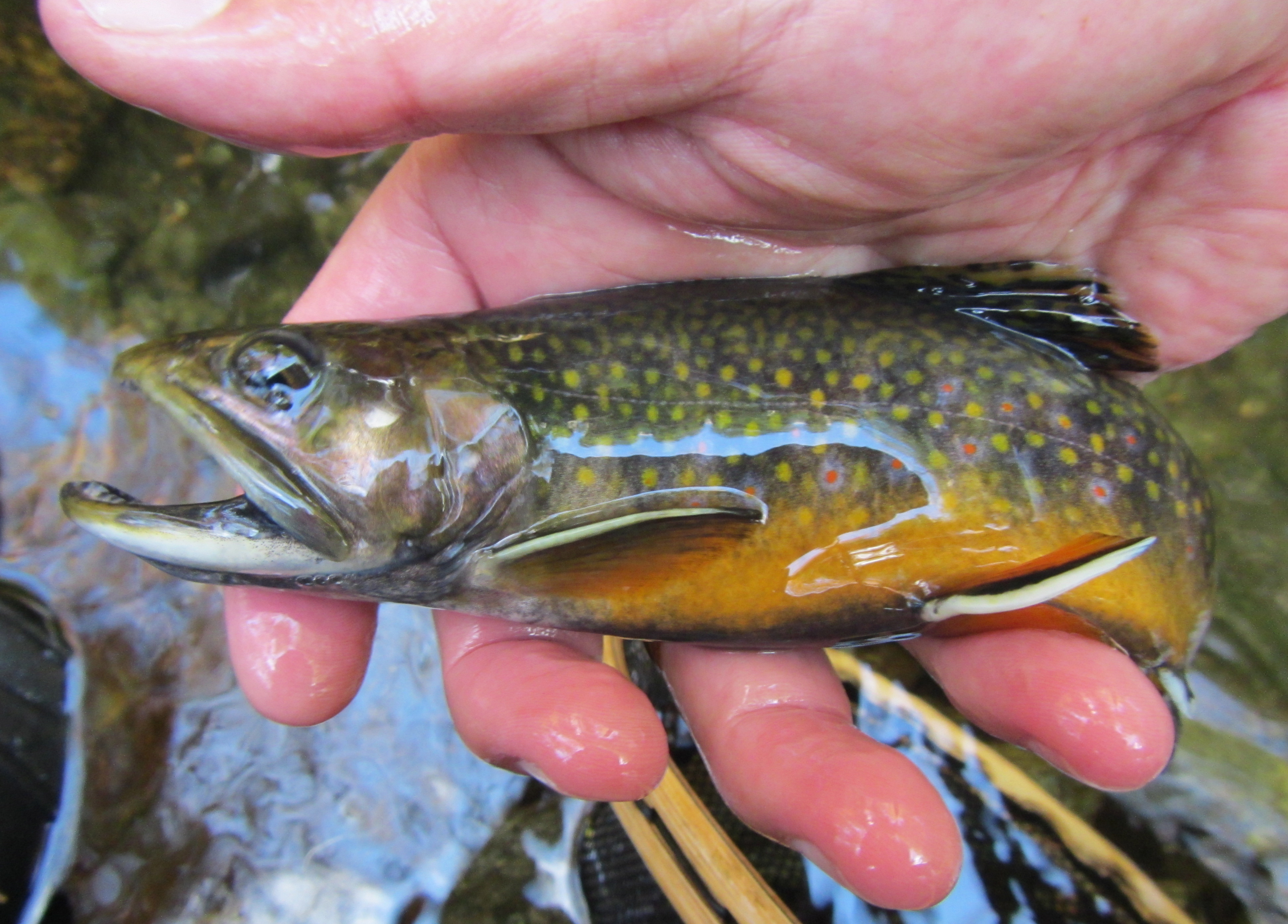
My best brookie of the day took a dry presented upstream in a dappled seam that rushed along the side of a large boulder. She ran all the way into the bottom of the next pool. Terrific little fighter, this one.

Image

One product of receding high waters is that the fish are spread out in the brook. I found trout almost everywhere I went, including some places where I usually don’t. Many times I could see them bull-rush the fly (a size 16 Improved Sofa Pillow) as soon as it hit the water. When the water’s up like this, I like to plop the fly in the middle of a glassy micro-pond at the edge of a plunge pool or current seam. The brookies suddenly  materialize from beneath the maelstrom, or the inky protective edge of underwater structure. I had a lot of first cast hits today.

Not much going on hatch-wise: midges, mosquitos, and a few stay caddis.

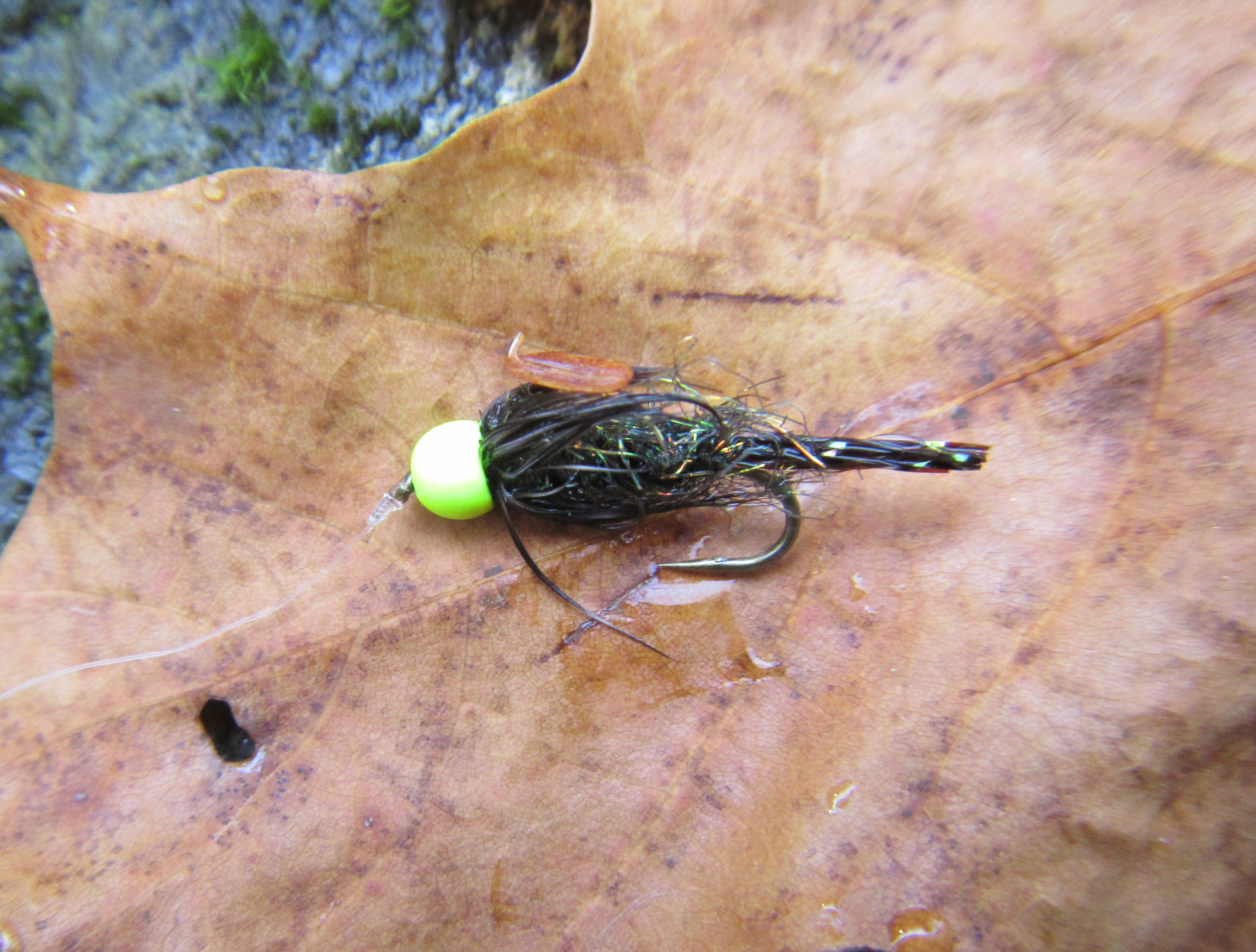
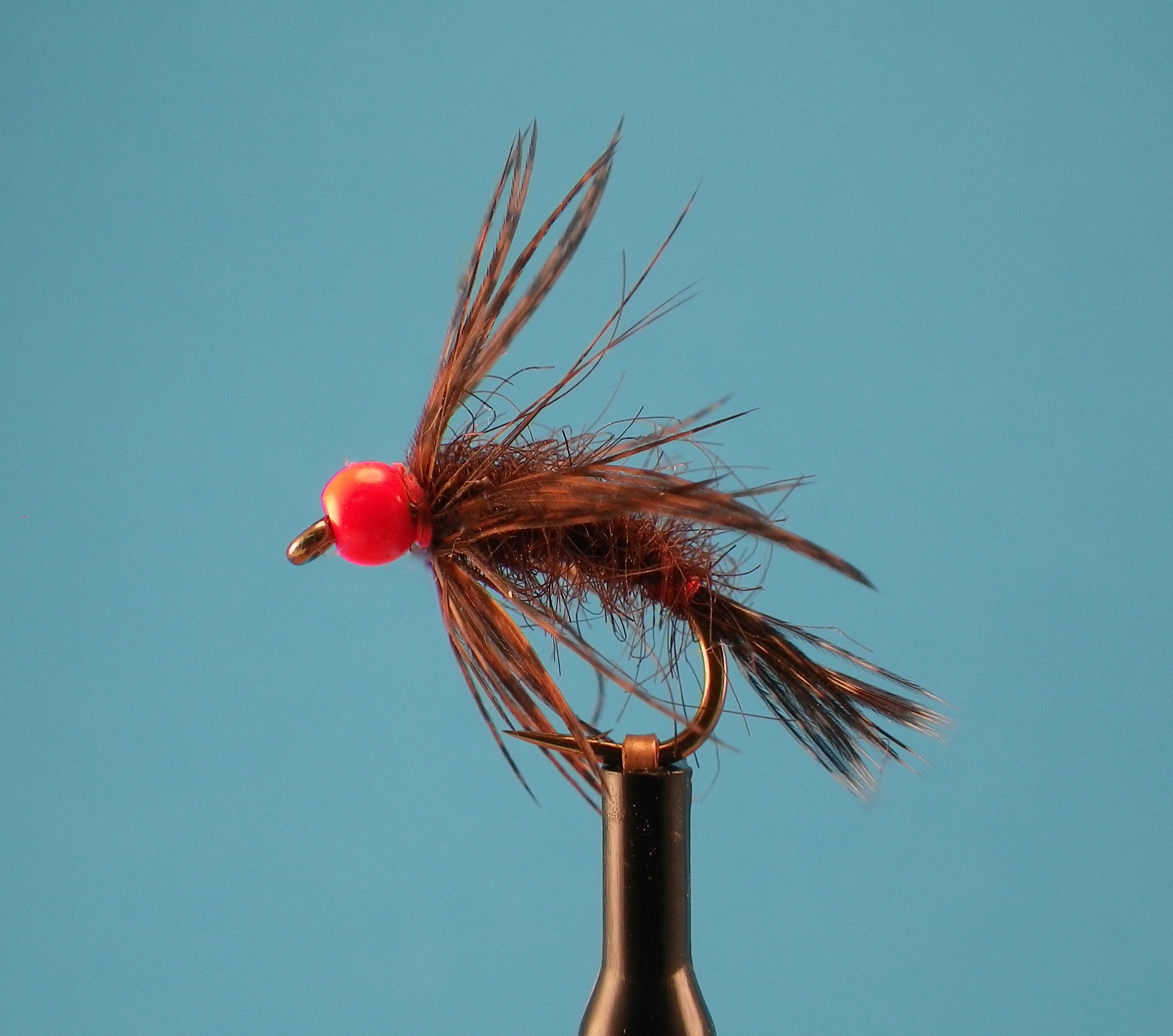
On the way out, I decided to take a page from my recent Upstream, Downstream, Small Stream article and fish a few of the deeper pools with a downstream weighted wet. The fly was a beadhead Grey Hackle Peacock, and among the trout that found it to their liking was a spiffy brown, who tracked the fly on the retrieve before striking.

Halo, I love you. Nice brown, lousy photo. This is what happens when your good camera runs out of battery and you’re forced to go with a quickie from the phone.

Image

I was able to coax the better part of two hours out of this morning’s cigar, a Gispert Churchill. The air was still enough to blow smoke rings over dark waters, where the fishing was incendiary.

The Light Cahill Winged Wet

This is a classic American wet fly, named for Dan Cahill. Ray Bergman wrote in Trout, “If it was necessary to confine my assortment of flies to only two or three, this would be one of them. Basically, it is an Eastern pattern, particularly effective in the Catskill waters and similar Eastern mountain streams.”

High praise indeed. I’ve been fishing this fly with great success for years. So when creamy mayflies are coming off on the Farmington — or any river for that matter — the Light Cahill winged wet is usually  the first fly I’ll tie on. There’s something about wood duck that states “buggy” and “alive” in no uncertain terms. I usually fish at least two of them on a dropper rig, and look to target specific rising fish. Trout will hit the fly on the dead drift (mend your rig like you would a dry) and at the drift’s end. Just let the flies sit there – and hold on. Some of the most violent takes I’ve ever experienced while trout fishing have come on this fly.

Image

Hook: 2x strong or 1x fine, size 10-20
Thread: Tan 8/0
Hackle: Light ginger or cream hen
Tail: Fibers to match hackle
Rib: Fine gold oval tinsel (optional)
Body: Hareline Dubbin #1 Light Cahill, or light fox
Wing: Wood duck

Tying notes: Sometimes I tie this fly with a tail of wood duck or partridge, or substitute partridge for the hackle. Sometimes I’ll add a gold rib. While all these iterations work, the fly pictured here on a 2x strong hook is the one I fish the most.  I like to keep the body sleek and tapered, so no dubbing loop. It’s a pretty straightforward tie, and you can crank out a bunch in a short time. I’ve seen some versions of this fly where the hackle is clipped off the top half of the fly, but I leave it on. I tie the wing in last.

6/1/13 Farmington River report: Catch-and-release works.

Fished the Lower TMA last evening from 6pm-8pm. I haven’t fished the lower river at close to a 1,000cfs in a while, and I was curious to see how some of my favorite spots fared in the higher water.

It was still crazy humid, but the water was warm enough (67 degrees within a foot of the surface –don’t worry, it’s colder along the bottom) to defeat any notion of those classic Farmington River fog banks. Visibility was good, although there was still a light stain. My plan was to fish wets with an emphasis on Light Cahills (three fly rig from top dropper to point: Squirrel & Ginger, Partridge and Cahill, Light Cahill winged wet), but the hatch never materialized. I only saw two lonely creamy duns, a few stray caddis, and the omnipresent swarming midges. That last crew made me happy I had a cigar.

Catch-and-release works. Some sporting bird of prey tried to drill a hole in Mr. Brown’s head, then had the decency to let him go.

Image

Fished a long deep run for about 45 minutes, waiting for a hatch that never happened. So I hiked upstream about 500 yards, and fished a series of rapids, walking, wading, and swinging the flies close to shore. Took the bird-wounded brown above in that maelstrom, along with a JV Atlantic Salmon.

Finished up in a deep pocketed run where I took a leaping brown on my second cast. Signs of good things to come? Sadly, not. One more courtesy tap, and that was it.

Small Stream 101: Fishing the outgoing tide.

The brook was dozens of miles from the sea. Yet there I was, fishing the outgoing tide. At least that’s what I started calling it several years ago. Let me explain.

What I mean is, I’m fishing a small stream in the day or days after a heavy rain. As with an ebbing tide, the water level is dropping. It’s a great time to fish. Here’s why. The waters have gone from raging and murky to some semblance of normal. They may still have a light tea stain to them, which makes it a little harder for the fish to see you, but not your fly. Most of all, the trout have transitioned from hunker-down survival mode to dinner bell-ready. That was certainly the case today.

I would crawl on my hands and knees through a skunk cabbage-filled boggy mess to catch a wild brookie like this. Oh, wait. I did.

Image

The lovely woodland stream I visited today is one I haven’t fished in many months. I usually make a pilgrimage in April, but the time-space fishing continuum conspired against me. The woods are only starting to display a vague suggestion of green in April, but on May 31st they were  lush. It was already too hot and humid to be bushwhacking in waders at 8am, and non-biting midges swarmed me. Such was the price of admission for the wild troutstavaganza.

There were fish everywhere, with plenty of young-of-year brookies in the mix. This is always a good sign, as 2012’s new recruits will be 2015’s lunkers. It’s especially gratifying to see nature finding a way after last year’s terrible late summer drought and heat wave.

This blindingly beautiful wild brown hit the dry like a ton of bricks. Excuse me for a minute. I’ve got to wipe away the drool I got while gazing longingly at those parr marks.

Image

The fish were particularly active today. I witnessed three good-sized (for this stream — it’s small enought to jump across in more than one spot) trout feeding on the surface. Two were noisily slashing at emergers; the third was clearing the surface as he chased caddis. All of them were camera shy. Every time I tried to shoot some video, they suddenly stopped feeding. Little bastards.

Fished a new dry today, the (Improved) Sofa Pillow in a size 16, along with a bead head Grey Hackle Peacock. The dry got the lion’s share of the action, fished mostly upstream. Pricked a good couple dozen trout, and lost many of them when the hookee ran into the omnipresent underwater stick pile. These twig and branch masses were everywhere. One of the pitfalls of fishing right after a big storm.

Today’s implements of destruction: A bead head version of the classic wet, the Grey Hackle Peacock, and the (Improved) Sofa Pillow.

Image

I held out on the cigar for as long as possible, but eventually the midges tipped the scales. Nonetheless, I declared victory as they scattered. Thank you, Romeo & Julieta Havoc Magnum. Besides, I managed to ignore work for the entire morning while catching wild trout. Clearly, that makes me the winner.

How does a stream stay cool in piss-stinking hot weather like today’s? Canopy. This photo was taken at high noon, yet virtually the entire stream is covered in shade. Nature finds a way.

Image

UConn wants to divert 5 million gallons of water a day from the Farmington River. What can you do about it? Start here.

Yes, the same UConn that drained the Fenton River Class 3 Wild Trout Management Area dry a few years back, killing hundreds of trout. They’re up to their greedy, water-sucking ways again. Only this time it’s the Farmington River they’re after. Yep, the same Farmington River that had lethally low flows last August, killing scores of fish. But, what’s another five million gallons a day in the name of progress? So what if we have to build a pipeline halfway across the state? Who cares if more fish die, or if people can’t fish or kayak or float, or if businesses that depend on the river suffer?

If you do care, please sign this petition. Pass it along to a friend.

http://petitions.moveon.org/sign/voice-your-support-for?utm_source=2013-05-30+UConn-MDC+water+petition+%2B+calls&utm_campaign=UConn+water+petition+5-30-13&utm_medium=email

The future of the Farmington remains cloudy. Help send a clear message to UConn and the MDC: Leave our river alone!

Image

Chunky Farmington browns on streamers

On Thursday night, the Farmington crested in the upper TMA at around 1,500cfs. By this afternoon, is was still pumping out 750. Winds were gusting to 30mph. What a great day for some streamers.

I felt like fishing something new, so this morning I went down to the bench and pulled out a size 6 streamer hook. Since I didn’t know how much the water had cleared, I went for high-visibility. On went a gold bead, seated with some heavy wire. Made a tail out of marabou and gold Krystal flash, a body of gold mylar braid, and a doubled white marabou collar as long as the fly. On top, some silver Krystal flash. Any self-respecting ambush predator should be able to see that.

Line choice was a bit of a puzzler. I hemmed and hawed, and finally decided to go with an integrated full-sink tip, not so much to get the fly down — that would certainly be welcomed in areas where the current slowed — but mostly for casting in the banshee wind, and to keep the line below the flotsam that was sure to be bobbing merrily on its way downriver.

Yowzah, it was cold. I immediately regretted leaving my fleece vest in the truck. The wind chill had to be in the 40s or 30s. Some pinhole leaks in my waders and 53 degree water certainly didn’t help. But at least I was no longer slinging mulch in my garden. Even if I was able to do that in the comfort of a t-shirt.

The river was off-color, more of a tea-stain than muddy. As I suspected, lots of leaves/branches/twigs combos in the water. There were bugs out, but their presence was mostly belied by the legions of swallows working overhead. And yes, there were trout.

I spent most of my two hours working the banks, casting and stripping in short bursts. In my first cycle through the run, I took four browns and dropped a couple more. The trout weren’t particularly big, but most of them were chunky holdovers that fought well in the current. (Sorry, no pictures. Left the camera at home. Too cold/lazy to get the iPhone out.) I had a few swipe, miss, and come back for seconds. That’s always good for a thrill.

Dropped a handful more on my second and third go-rounds, and that was it. Pretty soon it will be time for streamers under cover of the night. And if I’m lucky, I’ll be fishing in shirtsleeves.

Just completed a new article for the Mid Atlantic Fly Fishing Guide: “A Good Night For The Five-Weight.”

I don’t fish for stripers like most people do. Sparse flies with no eyes. Floating lines. And perhaps most of all, unconventional rods.

For five years now, I’ve been catching striped bass on my trusty five-weight. The first time I used it, I fished in fear. The second time, more excited than frightened. By the third outing, I had completely embraced the concept of using lighter tackle to fish for stripers. Every year I try to push the limits of what I can to with my nine-foot TFO TiCr. Every year, I discover that I have far more power with a lighter rod than I ever imagined. Not to mention fun.

My new personal best on the five-weight, This 33″ chubette from a few weeks ago had some shoulders. She easily went 15 lbs.

Image

For those of you interested in exploring the wonders and challenges of catching bass on lighter tackle, “A Good Night For The Five-Weight” covers basics like rod selection, rigging, and how to play and quickly land larger fish.  It will be in the July 2013 issue of the Mid Atlantic Fly Fishing Guide. You can find a copy of the Guide in fly shops from southern New England to North Carolina, or though their Facebook page.

Let me know what you think.

Paul’s First Brook Trout

I had the pleasure of guiding Paul for four hours today on the Farmington River. Paul told me he wanted to concentrate on fishing streamers, so we set off for the upper TMA rigged with a beadhead black and grey bunny thingy fly. Believe it or not, before today Paul had never caught a brook trout. We took care of that in the first half hour with a kype-jawed buck.

The size of the fins on this brookie lead me to believe that he’s lived in the Farmington his entire life.

Image

Today the trout took the fly on the dangle and on the strip. It rained on us, but we both found it relaxing and beautiful. Either way, it beats sitting at a desk. Adding a couple more notes: water was about 430cfs (that figure has gone way up with the afternoon rains), lightly stained, and temp was low/mid-fifties. Very little in the way of hatch activity: a few clunky light colored caddis and a smattering of tiny BWOs. We saw only one rise.

Lousy fishing, terrific class

Many thanks to Mark, Ron, and Ted for taking my Wet Fly 101 class yesterday. We had excellent weather and a good group of anglers who came loaded with questions. Unfortunately, we didn’t find too many cooperative trout (I found the wet fly fishing to be slow on Friday, too).  But the day will come when those bashful fish be racing to get to that soft-hackled fly, and then it will all fall into place. We learned some new water, and plenty of new fishing tactics. Thanks again, guys.

Farmington holdover browns on wet flies

Spent a few hours today doing some advance scouting for Saturday’s wet fly class. Found fish everywhere I went. Gloriously alone today, but that won’t be the case on Saturday. Water was a crisp 50 degrees, skies overcast, and a few showers here and there. We need more rain than this.

Not a lot going on bug or rising fish-wise, but I did see some light tan caddis, about a size 16, a few lonely Paralepts, and mounds of miniscule midges. I was fishing a Squirrel and Ginger as the top dropper, Leisenring’s classic Iron Blue Dun in the middle, and a black bead head grey soft-hackle nymph on point. The trout were split right down the middle, half of them on the Squirrel and Ginger, half on the point fly. They took the fly with gusto. Powerful, demonstrative hits.

A lovely Farmington River holdover brown that took the top dropper, a Squirrel and Ginger, on the dead drift.

Image

Two trout of note. The first came where a riffle dumps into a long, deep pool. I was being lazy, mindlessly fishing wets downstream, when I looked above me and saw this pocket that I’d swung flies through a thousand times before. I made an upstream cast to it, letting the flies dead drift, when I saw a trout flash at an emerger just below the surface. Just as my brain was forming the thought, “Must cast there again,” I realized the emerger was my Squirrel and Ginger. It was a  handsome holdover brown, metallic and buttery.

A little farther upstream, there’s a sapling that hangs over the river like a drunk caught in mid-stagger. Its branches drag in the current, and the shade from its leaves clouds the already mysterious waters beneath it. It’s one of those spots where there’s always a fish. But not today. Well, not on the upstream side. Just below, whack! This brown did her finest impersonation of a steelhead, cartwheeling out of the water multiple times. I could see it wasn’t a big trout, but I almost put her on the reel. Up and down the pool she went. Foul hooked, I wondered? Nope. Just a fat, obstreperous holdover brown, about 14″,  with the Squirrel and Ginger lodged neatly in the corner of her mouth.

For a moment, I considered putting her on the reel. She had some shoulders, this one.

Image

Now, if the trout will only cooperate Saturday.

It’s wildflower season on the Farmy. I don’t know what these are, but they’re everywhere.

Image