This is the tying menu for my Featured Tier presentation at the Marlborough Fly Fishing Show, Friday, January 17, 2025. PDF format. Thanks for watching!

This is the tying menu for my Featured Tier presentation at the Marlborough Fly Fishing Show, Friday, January 17, 2025. PDF format. Thanks for watching!
Right now is a great time to sign up for one or both of my “Classes With The Experts” at the Edison Fly Fishing Show the last weekend in January. This is a great opportunity for you to book some time with me for far less than the cost of a guided trip. Both classes are designed to duplicate a teaching session on the water. Here are some details.
Tying & Fishing Wet Flies. Friday, January 24, 2:00-4:30PM. What you’ll learn: When, where and how to fish wet flies; how to tie classic spiders, soft hackles, winged and wingless wets (I will demo these patterns and discuss materials); leader construction and how to build a team of three wet flies; matching the hatch and fly selection; plus more. Oh yeah, we’re going to have fun!

Beyond Cast & Strip: Presentation Flies For Stripers. Saturday, January 25, 8:30-11:00AM. What You’ll Learn: How to catch the stripers that other anglers can’t; why cast-and-strip presentations are ultimately limiting; how to target and catch bigger bass on a consistent basis; how to tie classic New England-style sparse flies like bucktails, soft-hackles, and flatwings (I will demo such patterns and discuss materials); the presentations that bring your fly to the fish; and more! Same deal — we also want to have fun.

To register, you have to go to the Edison Fly Fishing Show site here. See you there!
I’m so honored to have the opportunity to twice be the Featured Fly Tier at the Marlborough Fly Fishing Show next weekend, Jan 17-18-19. I’ve added new content to one program, and the other program is entirely new. All Featured Fly Tier demos take place on the main show floor.
Up first is “Matching The Hatch With Wet Flies,” Friday, Jan 17 at 2:30pm. I debuted this presentation last November at the International Fly Tying Symposium. Since then, I’ve added some more specific visual reference about the characteristics of the hatches I’ll be covering, which I think takes the program up another level.

On Saturday, January 18 at 11:30am, “Farmington River Favorites” will have its premier performance — and you can be there when it happens! This program will cover at least one pattern from each of the four major fly groups: nymph, wet, dry, and streamer. If time permits, I’ll throw in a bonus fly. These are all proven producers for me on the Farmington, and of course they’ll also work on any river in the northeast.

Once again, I’ll be leading two “Classes With The Experts” at the Marlborough Fly Fishing Show next weekend. This is a great opportunity for you to book some time with me for far less than the cost of a guided trip. Both classes are designed to duplicate a teaching session on the water. Here are some details.
Tying & Fishing Wet Flies. Saturday, January 18, 2:00-4:30PM. What you’ll learn: When, where and how to fish wet flies; how to tie classic spiders, soft hackles, winged and wingless wets (I will demo these patterns and discuss materials); leader construction and how to build a team of three wet flies; matching the hatch and fly selection; plus more. Did I mention having fun?

Beyond Cast & Strip: Presentation Flies For Stripers. Sunday, January 18, 8:30-11:00AM. What You’ll Learn: How to catch the stripers that other anglers can’t; why cast-and-strip presentations are ultimately limiting; how to target and catch bigger bass on a consistent basis; how to tie classic New England-style sparse flies like bucktails, soft-hackles, and flatwings (I will demo such patterns and discuss materials); the presentations that bring your fly to the fish; and more!

To register for these classes, you must go to the Fly Fishing Show website. See you there!
It’s just a month away! The 2025 Marlborough Fly Fishing Show will be held Friday, January 17 though Sunday, January 19. I’ll be there all three days, along with some of the best and brightest in the fly fishing world. This is a great opportunity to up your skills, meet some exceptional anglers, and have a plain old great time. From demos to talks to classes, I’ve got a busy schedule:
Friday, January 17, 11am, Destination Theater Room A: The Farmington River: Southern New England’s Blue Ribbon Trout Stream. In addition to the river, I’ll also be talking about my upcoming book on the Farmington River.

Friday, January 17, 2:30pm, Featured Tier: Matching the Hatch with Wet Flies. Come see me on the main show floor as I talk about matching specific wet flies to popular hatches — then show you how I tie the fly. These patterns are all consistent producers that should be in your box.

Friday, January 17, 4:30pm, Seminar (Release Room): Wet Flies: Fishing Under the Hatch. A new look at fishing wet flies and soft hackles. If you’ve ever wanted to be that person who is catching all the fish, come to this seminar. There are times when wet flies will dramatically out-fish any other style, and the angler who understands the hatches — and how to match them — will be handsomely rewarded.
Saturday, January 18, 10am, Destination Theater Room A: The Farmington River: Southern New England’s Blue Ribbon Trout Stream. In case you can’t make it Friday, a repeat performance. In addition to the river, I’ll also be talking about my upcoming book on the Farmington River.
Saturday, January 18, 11:30am, Featured Tier: Farmington River Favorites. Come see me on the main show floor as I talk about and tie some of my favorite Farmington River guide flies. My secret weapons revealed!
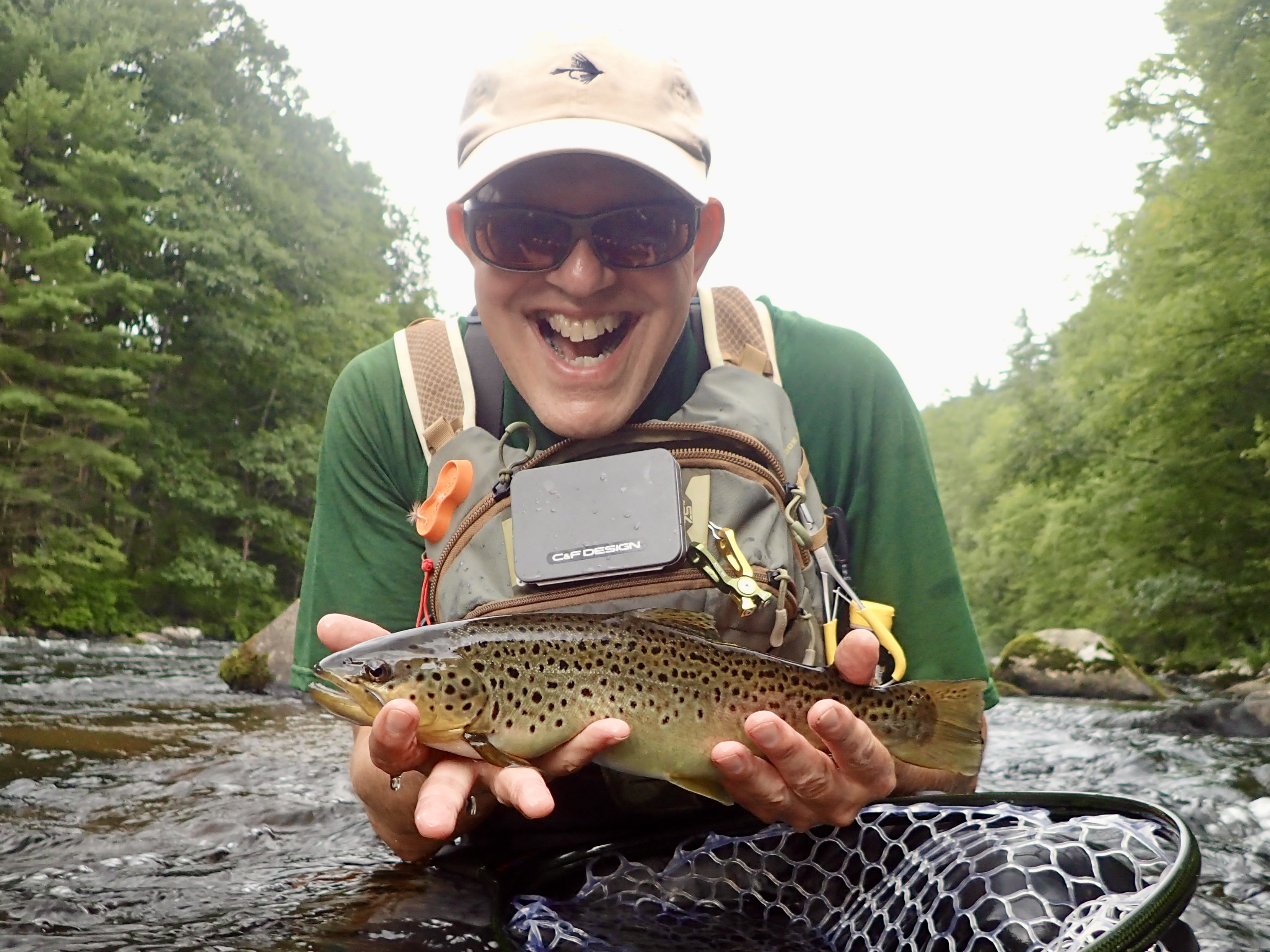
Saturday, January 18, 2pm – 4:30m, Class: Tying and Fishing Wet Flies with Steve Culton: This is the next best thing to a lesson on the water! You too can become a dangerous wet fly machine. While not a tying class, I will demo tying classic North Country spiders, winged, and wingless wet flies that trout can’t resist, and show you how to rig and fish them. The course also covers basics like leader construction, matching the hatch, fly selection, where to fish wet flies, and how to fish them. All levels. Click HERE for more info and to register.
Sunday, January 19, 8:30am – 11am, Class: Beyond Cast & Strip: Presentation Flies for Striped Bass. Have you ever wanted to catch bigger stripers on a consistent basis — or the stripers that no one else seems able to catch? This class is for you! It covers traditional New England-style bucktails, soft-hackles, and flatwings, and how to fish them. These are sparse flies that look alive even when at rest and creat the illusion of life. While not a tying class, I will demo some patterns. All Levels. Click HERE for more info and to register.
Sunday, January 19, 3pm, Destination Theater Room A: Wet Flies 101. If you’re not fishing wet flies, you’re missing out. This is an intro to the ancient and traditional art of subsurface fly fishing with wets and soft hackles.
As usual, I’m counting on the currentseams crew to make a strong turnout. See you there, and please come say hello.
I don’t usually make posts like this. But if people want to know what to get you for the holidays, and you’re struggling with gift ideas, here are two suggestions.
Book a guide trip with me for 2025. There’s no real gift certificate, but there is the promise that we’ll go out fishing for four hours next year. Your gift giver pays now, but it’s at my 2024 rate (rates usually go up every few years). I build a 20% gratuity into the price, so all you have to do is show up with your gear on a mutually-agreed-upon date and time and we have at it. If you’re interested in wet flies, we’re looking at a May-Juneish window. Because of the book writing process, I will be limiting my guide trips in 2025, so this is a great way to lock in. Easy-squeezy…
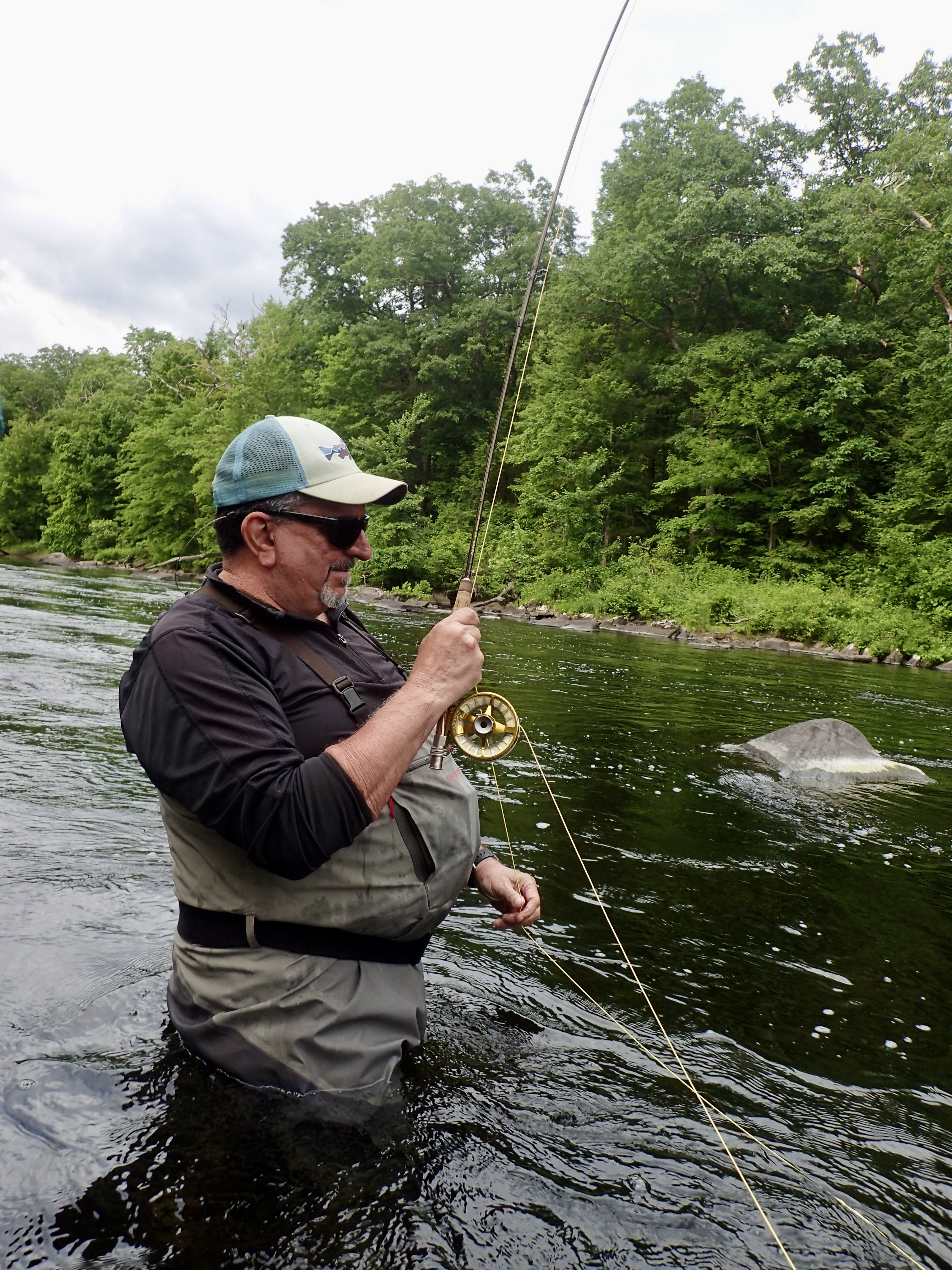
Take a “Classes With The Experts” with me at the Fly Marlborough Fishing Show. With this, you get almost instant gratification. Two choices: Saturday, January 18, 2pm-4:30pm, Tying and Fishing Wet Flies with Steve Culton: Watch Steve tie classic North Country spiders, winged, and wingless wet flies that trout can’t resist, and learn how to rig and fish them. The course also covers basics like leader construction, matching the hatch, fly selection, where to fish wet flies, and how to fish them. All levels.
Or, Sunday, January 19, 8:30am-11am, Beyond Cast & Strip – Presentation Flies for Stripers with Steve Culton: Learn how to tie (Steve will demo) presentation flies – traditional New England-style flies that create the illusion of life even when at rest – and how and where to present them. All Levels.
For the Fly Fishing Show classes, you cannot register and pre-pay through me. You do that on the Fly Fishing Show Site, which is here.
I’m hoping to be offering the same for Edison on January 24-26, but that schedule has not been released. Stay tuned for my full Marlborough and Edison schedules.
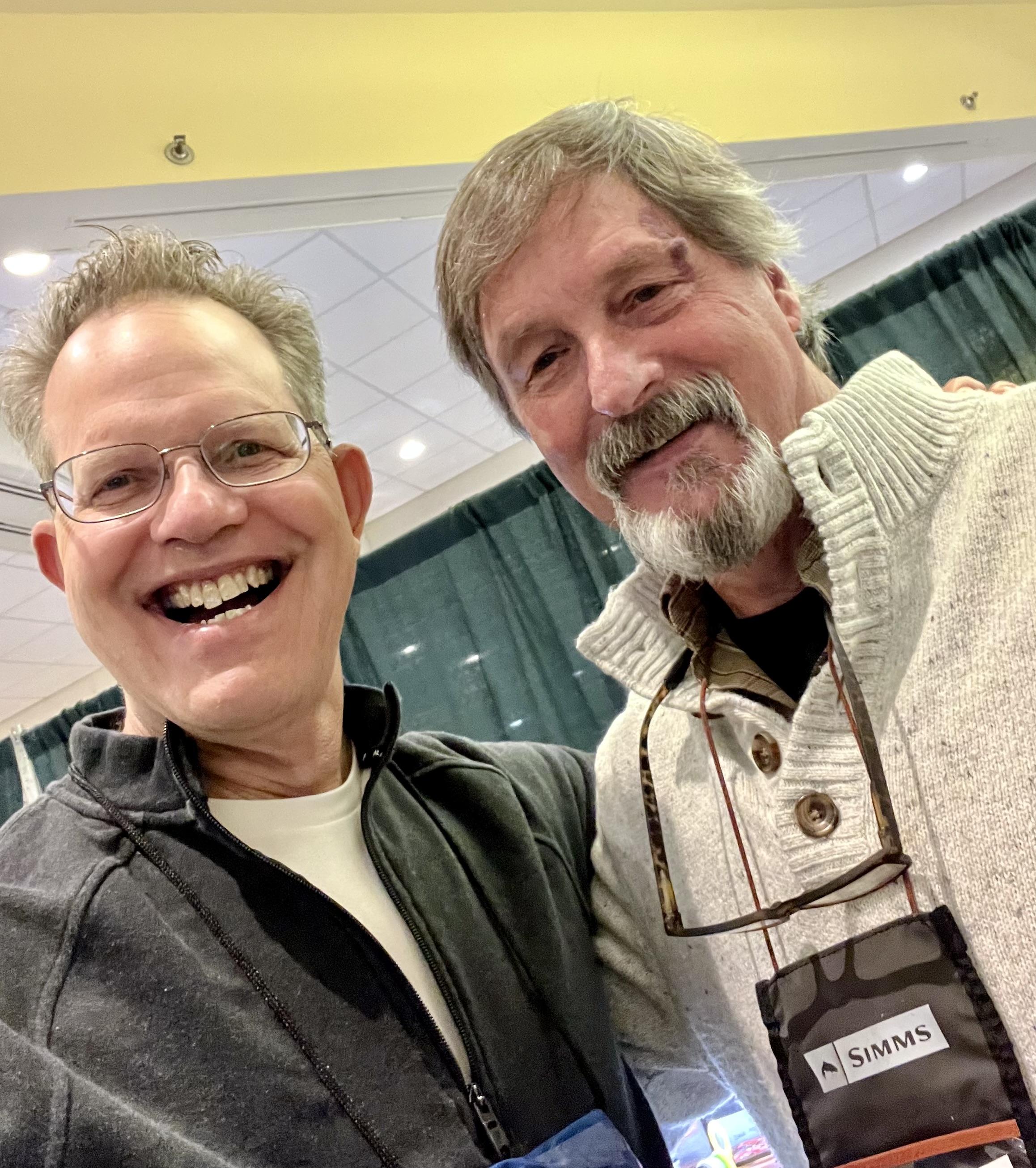
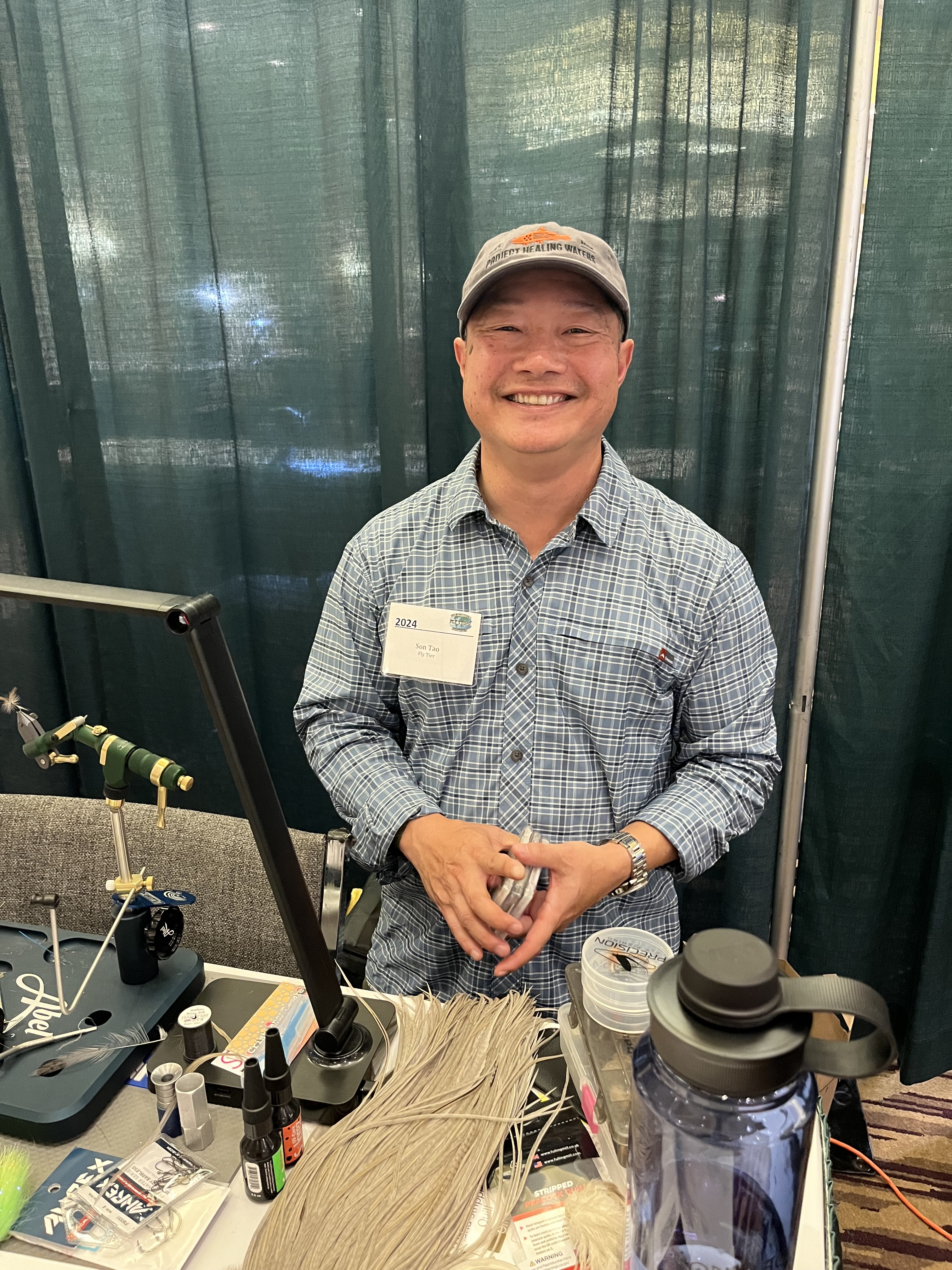
The 2024 International Fly Tying Symposium has come and gone, leaving in its wake many fond memories, new tying swag, and new acquaintances made. The event runs from Saturday to Sunday; Saturday is typically the busy day, with crowds dwindling by Sunday afternoon (it’s hard to compete with the NFL). If you’ve never been, you should, because it’s a tremendous opportunity to watch some of the best tyers in the world in action. You can meet them, watch them, talk to them, ask questions — I do all of that when I take a break and walk the room. There are private classes where you can receive personalized instruction. There are seminars that are included in the price of your ticket. And four times a day, featured fly tyers who tie and present to a small audience.
On Saturday night there’s a banquet, and everyone who attends gets a goody bag of fly tying swag. Thread, tools, materials…it’s all good stuff. Post-dinner, I hosted a little wine party attended by several luminaries in the fly tying world. Properly hydrated, Sunday went off without a hitch. Here’s some of the weekend in photos. Check out my Instagram @stevecultonflyfishing for more, soon.


“Matching The Hatch With Wet Flies.” That’s the title of my Featured Tier demo this Sunday at 11:45am at the International Fly Tying Symposium in Somerset, NJ. As I prepare for the demo, I had a few thoughts I wanted to share.
When you’re fishing wet flies, matching the hatch doesn’t matter — until it does. And then, you’d best be prepared. What I mean is, there will be times when fish will eat a wet fly simply because it looks alive and like something good to eat. The bug that wet fly is supposed to represent may not be hatching at that moment. It may be entirely out of season. It may be the wrong color or size. But nonetheless, it gets stomped.
However, the more you fish with a team of three wet flies, the more you will encounter situations where the trout will only have what’s hatching, presented in the water column exactly where they are feeding on the naturals. They may pick out one fly on the three fly team to the ruthless exclusion of the other flies. That’s when matching the hatch pays dividends. You’ll be the person leaving the pool, trailed by other anglers who will want to know, “What fly were you using?”
So: know your hatch windows. Understand what food is most likely to be in the water. Understand how those bugs behave. Specific patterns aren’t as important as matching size, color, and profile. Give the trout a choice. They will always tell you when you get it right.
See you this weekend!

Time flies when you’re writing a book, and I can’t believe we’re only one weekend away from the 2024 International Fly Tying Symposium. That’s right, next weekend, November 16-17 in Somerset, NJ. They will be vendors galore with all kinds of hard-to-find-stuff, along with some of the best fly tyers in the world. There are classes, seminars (free with admission) and featured fly tyers (like yours truly!) Check out the seminar schedule:

And the featured tier list! (Note the slot on Sunday at 11:45, which of course will be of particular interest and importance.)

I’m looking forward to seeing you there. Please come say hello!
I got this question when I spoke earlier this month the EJTU meeting. It’s a good one. I’d just shown the group a video of trout taking sulphur emergers. The rises were regularly timed and showy/splashy. You could also see the bugs in the air.
The question was: When you get to the river and you see a scene like that, do you automatically go to a a dry/dropper? A: No. I will start with a wet fly team of three, and two of them will likely be sulphur patterns. There’s a lot to unpack here in terms of that decision. In this particular video, it was late afternoon in June. The rise forms clearly said the fish were on emergers. The time of year, time of day, rise forms, and visible bugs (sulphurs, whose nymphs are in the drift a good long time before emergence) indicated that the trout were taking their food just below the surface. A dry/dropper might get you some takes, but why not feed the fish like they’re already eating? Which is, subsurface, just below the film. A wet fly team of three fits that bill perfectly.

Note that a dry-dropper may be a better method for presenting just under the surface with different hatches. A midge pupa in winter would be a good example of that.

