And, we’re underway

Kicked off my 2014 guiding season yesterday with Matt. Matt wanted to take my Wet Flies 101 half-day course, and we headed to the upper TMA in search of feeding fish. Two-thirds of nature cooperated; an absolutely glorious late April sunshine, and a snow flurries-like caddis hatch (with a few Quill-something mayflies and mounds of midges for good measure). Unfortunately, the third that really counts was in absentia. Not a damn riser anywhere. Nothing for the nymphers, and even the spin guy only managed one on his Rooster Tail. Off to below the upper TMA, where Matt rousted up a nice brown on a bead head soft-hackle Pheasant Tail. Speaking of Matt, it was gratifying to see how much he improved over the course of just a few hours. So often, you get out of something only what you put in, and he worked hard on his mending and wet fly presentations. By the end of the day, quality drifts were the rule rather than the exception. Well done, Matt!

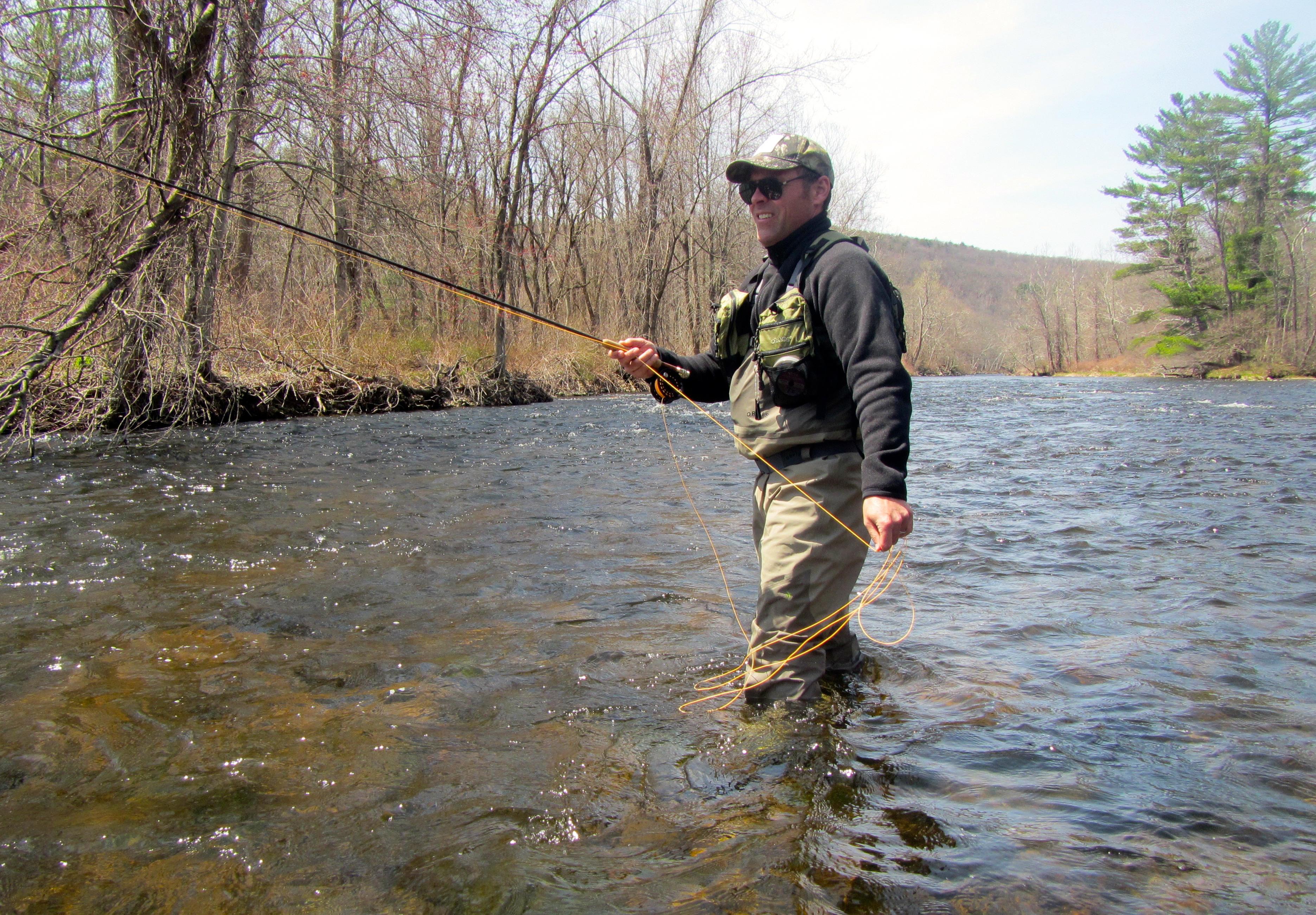
Matt executing a mended swing, focused, intent, and best of all having fun.
Image


After our session ended, we headed downstream where we found some fish willing to jump on. I also saw the first Hendricksons of the year, although two doesn’t make me do handsprings — and there was nothing rising to them. Not to be a wet blanket, but my enthusiasm is also tempered by the fact that we’re in for some cold, wet weather over the next few days. But come, they will.

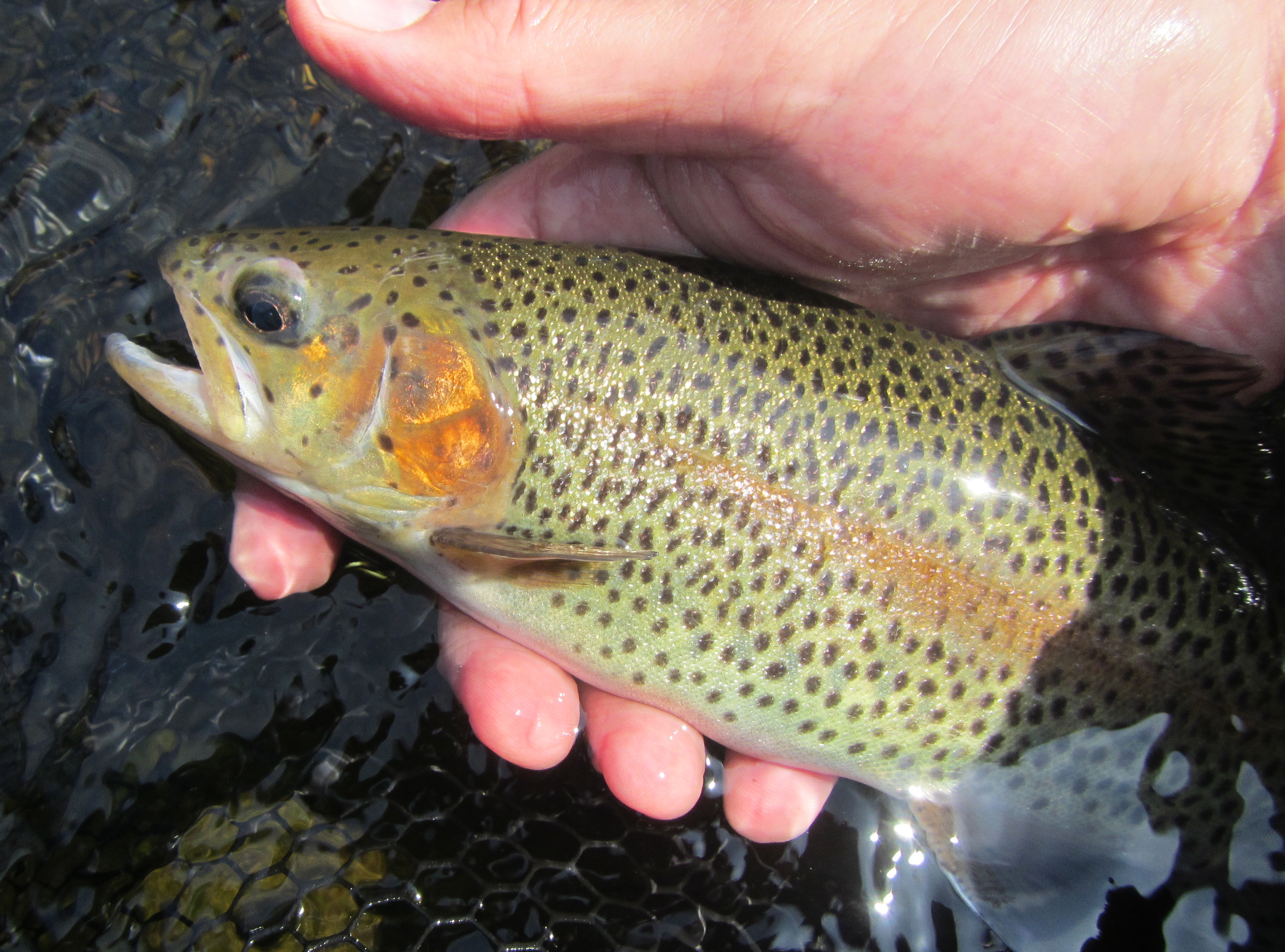
An intriguingly marked rainbow that took my BHSHPT. Love the colors on the gill plate. Landed a nice wild brown as well, and LDRed a third. A fun way to end the day.
Image


Thank you, CT/RI Coastal Fly Fishers

Last night I concluded a busy winter and spring presentation schedule with “Wet Flies 101” at the CT/RI Coastal Fly Fishers. Nice people and — bonus! — pizza are the friends of any speaker. Thanks for helping me set up, thanks for the spirited Q&A, and thanks to the gentleman (a thousands apologies, I forgot your name) who gave me the articulated streamer. Hope to see you again soon.

 A RI coastal scene from a couple summers back, taken a few hours before fly fishing commenced.

Image


Many thanks to the TU Naugatuck Pomperaug Chapter for hosting “Wet Flies 101”

I learned two things tonight. One, it’s hard to find pizza by the slice in Naugatuck. And two, the guys of TU Chapter 281 are perfectly willing to share a couple slices of their own.

A fed guest speaker is a happy guest speaker, and thus fortified I presented “Wet Flies 101.” Another receptive, friendly group, armed with lots of good questions. I am truly fortunate to be able to do what I do. Thanks again!

Image

In other news, I have some more videos in the works, and a currentseams exclusive interview with striper legend Ken Abrames. Stay tuned.


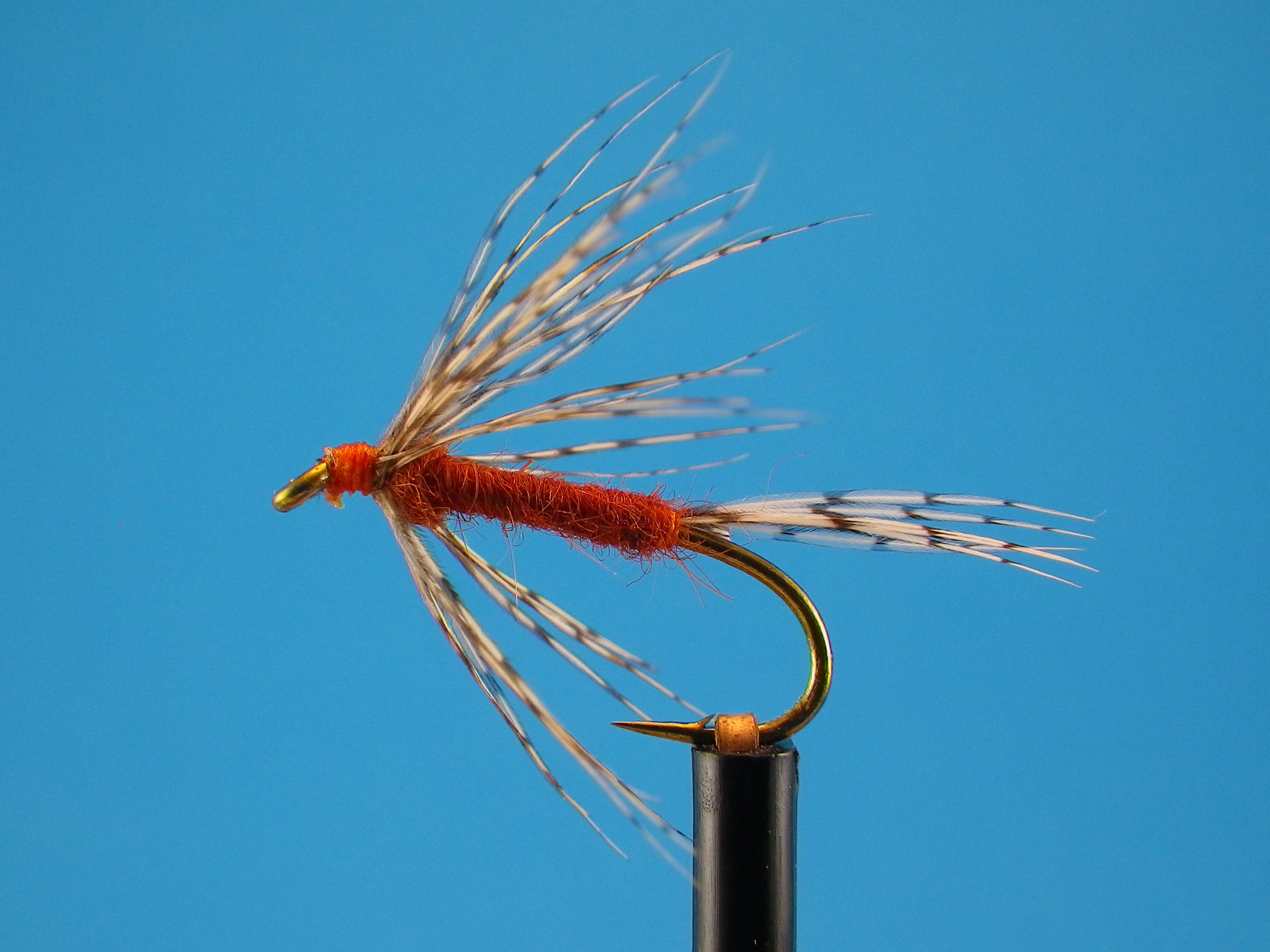
The Hackled March Brown Spider

“March Brown” is a name you see attached to a lot of different wet fly patterns. Some of them are caddis; others, mayflies. This spider is intended to represent the latter. I discovered it on page 116 of Sylvester Nemes’ Two Centuries of Soft-Hackled Flies. It was originally published in 1936 in an English book, Trout Fishing From All Angles.

The Farmington River is not known for its March Browns; while we do experience that hatch, it’s not on the level of, say, Hendricksons or Sulphurs. But we do have a good showing of Isonychia, and I have taken to fishing the Hackled March Brown spider in the late summer to represent those substantial mayflies.

Last August, I was fishing a snotty run that was studded with boulders and pockets. There wasn’t much going on hatch-wise, and I had the Hackled March Brown spider as the point fly on my team of three wets. The hit was one of unrestrained violence and brutality, such that it ripped the line from my hands. The trout went immediately on the reel; I never saw it until I was able to coax it into the shallows. Over twenty inches long, it was my biggest trout of 2013.

Image

Hook: Wet fly, size 12
Silk: Orange Pearsall’s Gossamer
Tail: Grey partridge fibers
Body: Hareline Dubbin Rust (HD23)
Hackle: Brown partidge

 Tying notes: A straightforward, simple fly to tie. The original calls for a body of “hare’s ear dyed red ant colour.” I have settled on “rust,” and the trout seem OK with it. You could make the body a little buggier than I have here, but I like this fly with a thin profile. There are a multitude of brown feathers on a standard partridge skin; they’re located along the back of the bird.

The Hackled March Brown Rogues’ Gallery:

Image

“Wet Flies 101” April 2, April 15, and HAN radio appearance

We’re really making the rounds here on currentseams. I have two more appearances scheduled for April; both of them are “Wet Flies 101.”

On Wednesday, April, 2, I will be at the Trout Unlimited Naugatuck Pomperaug Chapter meeting in Naugatuck, CT. The meeting starts at 7pm, and you can get directions at tunaugpomp.org.

On Tuesday, April 15, I will be at the Trout Unlimited Thames Valley Chapter meeting in Bozrah, CT. The meeting starts at 6:45pm, and you can get directions at thamesvalleytu.org.

I also did my first radio interview today for John Kovach’s Yankee Fisherman show on HAN radio. The subject was wet flies, and I’ll post a link to the show when they put it up.

Image

Tying the Greensleeves North-Country Spider

Most North-Country spiders are very simple ties. T.E. Pritt’s Greensleeves is no exception. You wrap some tying silk around the hook shank, wind on a soft woodcock shoulder feather, then whip finish. Greensleeves is a highly effective green caddis pattern; I usually tie it in a 14 or 16.

The Dark Hendrickson Winged Wet

We had spent the morning nymphing, but as the hour hand worked its way toward eleven, the bite slowed. One o’clock would be the visible start of the Hendrickson hatch — you can set your watch by it on the Farmington — but I figured right now was about time for creatures to be stirring a foot below the surface.

I rigged up a team of three wets, with a Dark Hendrickson on point, and began walking down a long, three-foot deep run. When I got to the tailout, I encountered an angler reclining on rock, enjoying the warmth of the late April sun. I hailed him and asked how his fishing had been. He told me he hadn’t yet wet his line. “Waiting for the Hendrickson hatch to start,” he explained.

Oh, it’s already started, I told him. “I don’t see anything coming off,” he said. I shook my head. You can’t see it yet. It’s going on below, and it’s going to be a good one. See my friends up there? I’ve been catching them all the way down the run, just swinging wets. They’ve been keyed on this fly here.

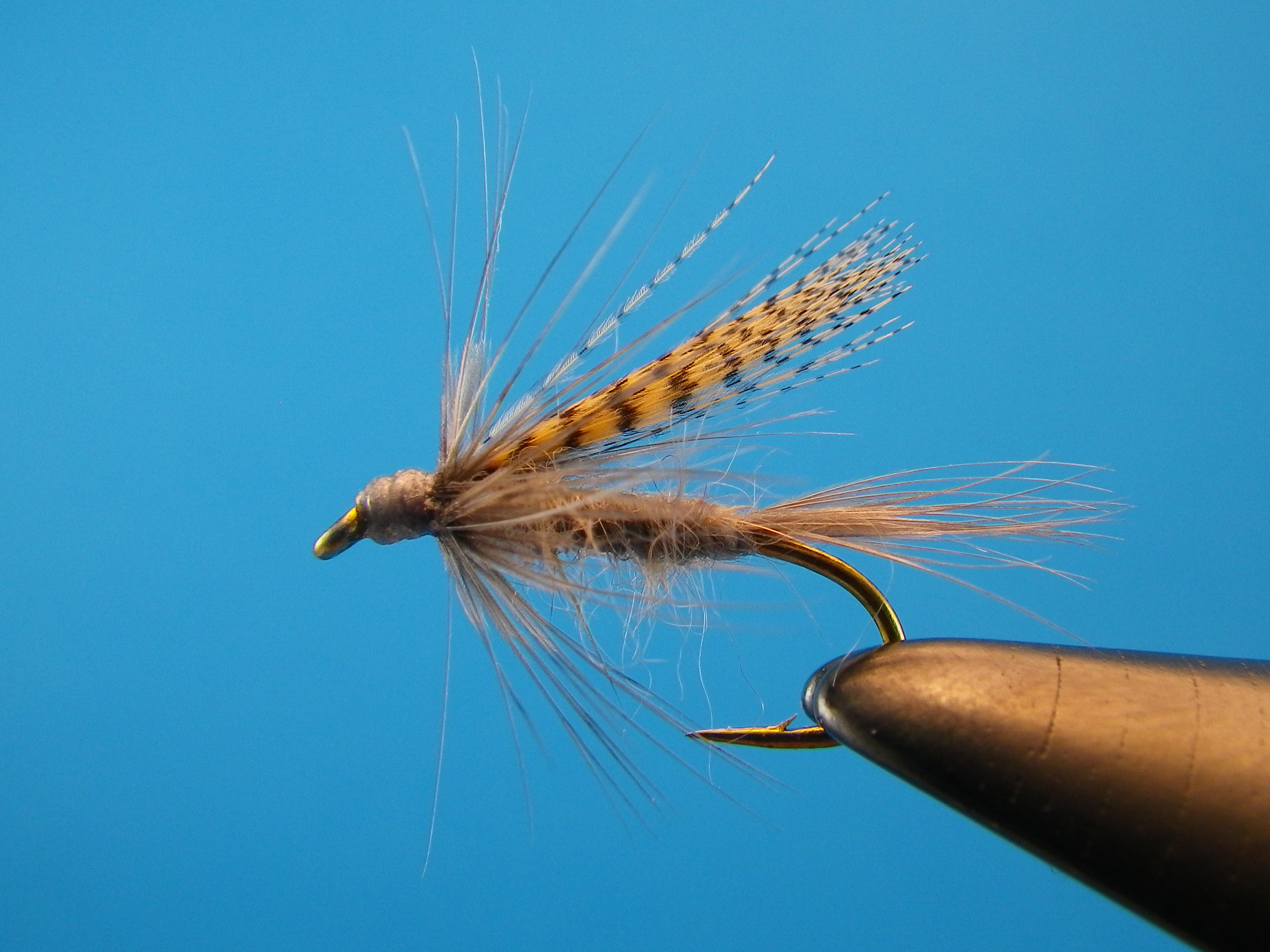
The Dark Hendrickson Winged Wet is a legacy American pattern that has been fooling trout for over a century. I’ve been fishing it only a fraction of that time, yet I couldn’t possibly tell you how many trout I’ve taken on it. This fly would easily make my Top Ten Wets list. Match the size of the naturals (about a 12 on the Farmington), then drift, swing, or dangle it over rising fish, and hold on.

The Dark Hendrickson Winged Wet

Image

Hook: 2x strong wet fly
Thread: Grey
Tail: Dark blue dun hackle fibers
Body: Muskrat fur
Hackle: Dark blue dun hen
Wing: Lemon wood duck

~

Tying notes: I like to use darker muskrat fur, particularly the soft grey underfur. Pick out and discard the black, stiffer guard hairs when you snip off a patch. A little fur goes a long way, and if you happen to have an entire skin, you’ve got enough fur to keep your great-great grandchildren in Hendricksons. Keep the body thin; the hero of this fly is wing. Be sure to leave plenty of room for the head and the wing; you can see on this fly that I just about made it. (Although the trout won’t care a lick.) To form the wing, I usually fold a small section of wood duck over itself with the dull side facing in, but I don’t get too crazy about trying to make every fly perfect. Make the wing about as long as the bend. If you don’t tie this fly, please start. You’re going to be happy you did.

Looks like the Hendrickson hatch has started.

Image

~

The Dark Hendrickson Rogues’ Gallery

Image

Pizza is your friend: Thanks to CVTU for hosting Wet Flies 101

When you travel around the northeast making evening presentations to fly fishing clubs, you learn to keep a stash of protein bars in your case. Especially if you get grumpy when you’re hungry.

Or, you could just present to the Candlewood Valley Trout Unlimited Chapter. They trot out a spread of cheese pizzas, and invite you to have at it. So, thank you, CVTU for being such gracious hosts. I really enjoyed presenting “Wet Flies 101” to such an engaging group.

One of the many gorgeous creatures you can expect to catch with wet flies.

CUFarmyBrown 7:13

I also thought I’d make this thank you note a little more appealing to those who weren’t in attendance. At the end of each presentation, I open the floor to questions. Here are a few topics we covered.

Q: Where do you attach weight to the leader if you want to quickly sink the flies?

A: One BB shot to start, just above the knot that forms the middle dropper.

~

Q: When your team of wets is downstream, how do you re-cast them? Do you water load the rod and shoot them upstream?

A: It depends on where I want to make my next cast. If it’s upstream, and doesn’t require a precision or a long cast, yes, I’ll water load the rod and shoot the whole works. But mostly, I like to aerialize the line before I cast. Still, I like to keep false casting to a minimum.

~

Q: How long do you dangle?

A: Shocking! I can neither confirm nor deny the rumors. But seriously, the issue is how long do I leave the flies dangling in the current below me? If I know a fish is there, I might leave it for several minutes. I might also animate the flies by slowly raising and lowering the rod tip, perform a hand-twist retrieve (with the rod tip raised), or sweep the flies back and forth in the current with side to side mends.

~

Just a reminder that my next presentation (also Wet Flies 101) is to the Narragansett (RI) TU Chapter, Thursday, February 26. You can get directions at their website, tu225.org.

Saturday, March 1, I will be doing a small stream tying demo at the Compleat Angler in Darien, CT. Their website is compleatangleronline.com

Thanks to today’s “Wet Flies for the Farmington River” class at UpCountry Sportfishing

We had a sellout crowd at today’s class — thanks to everyone for taking the time to come. Really good group, very enthusiastic, and we spent as much time talking about wet fly tying, theory, and fishing as we did tying. I had fun, too — so much that I couldn’t believe it when I looked at my phone and it was 1:40pm. Like a soccer match, we added some extra time, and in the spirit of one more cast, squeezed in another tie. I’d also like to take this opportunity to formally warn the trout in the Farmington River: there are now five more anglers who are going to be fooling you on regular basis. For your own safety, stay within the TMA.

Busy, busy, busy. Time flies — did I really just write that? — when you’re tying soft-hackles.

Image

Tying and talking. Do not try this at home.

IMG_9906

Just a reminder that I will be giving a presentation, “Wet Flies 101,”  Tuesday night, 2/11, at the CVTU meeting at 7pm at Armando’s Restaurant, 47 Stony Hill Rd, Bethel, CT. Hope to see some of you locals there!

Thanks to everyone at the CFFA Show

I was humbled by the number of people who stopped by my tying table today. Old friends, new introductions, online names to connect with faces, an excess of positive energy, talking fishing and tying, and some really good questions. I’ve been going to the CFFA Show for years; this was my first time as tyer/exhibitor. The CFFA was a terrific host. I value the little things in life, like finding out that they had a spiffy little box lunch set aside for me. Feed me, and I’m happy.

I did manage to sneak away and do a little shopping (thanks, Gary and Todd for watching my swag). Found some goodies like a bag o’ wood duck feathers, an el cheap jungle cock neck (the nails need some work, but a little wax and some flexible cement and they’ll be quite passable). My master score was two large white bucktails with scads of straight fibers over 5″ long. $5 each!

I just know there was a saddle suitable for flatwings hiding somewhere in that room. Perhaps next year.

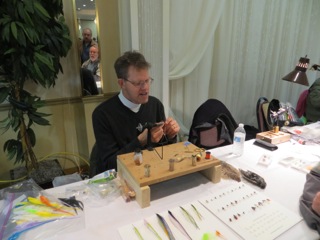
Pardon my humble setup: some MDF screwed to 2x4s and my Universal No. 2 clamp vise that I bought from Clapp & Treat in 1976 for $13.95. Sadly, it’s on its last legs. There’s a new toy on the way, but nothing will ever replace my baby who has served me faithfully for so many years. “It’s not the arrow, it’s the indian.”

Image