“A Team of Three Wets” in the current issue of Mid Atlantic Fly Fishing Guide

Calling all wet fly junkies! This article discusses the how and why of fishing a three-fly team of wet flies. It includes a diagram that shows you how to build a three-fly leader. MAFFG is distributed free in fly shops all over the — well, Mid-Atlanctic area. Who knew?

This magazine is an underrated gem.

Image

How to tie the Dark Hendrickson Winged Wet

The Dark Hendrickson Winged Wet is a fairly easy tie that uses readily available materials. Best of all, it is a real fish catcher. I couldn’t possibly tell you how many trout I’ve taken on the Dark Hendrickson over the past few years. Match the size to the naturals on the river, pick out a rising trout, drift or swing the fly over its position, and hold on.

Farmington River report 3/21/14: It didn’t feel like spring

A sunny day  in late March can be misleading. On Friday, any warmth generated by the sun was fleeting, captured and quickly dispatched by a chilly, gusting wind. The water was only 34 degrees, well below normal for this time of year, lightly stained, and running at 450cfs in the upper TMA. There’s still plenty of snow on the ground that has to melt and become part of the ocean; until that happens, expect cold water.

So, to the fishing. Well, it was what we in the trade call a slow day. Even the guys I spoke to who were fishing shiners were having a tough go of it. I jumped around the river, dedicated to the streamer cause, and the only trout I managed came by accident. I was messing around with the streamer, an articulated white and chartreuse bunny/bugger thing, to see how it looked in the water. Right in front of me, about ten feet away, and this brown rose from the depths and stomped it. Rather lucky than good, but we’ll take it.

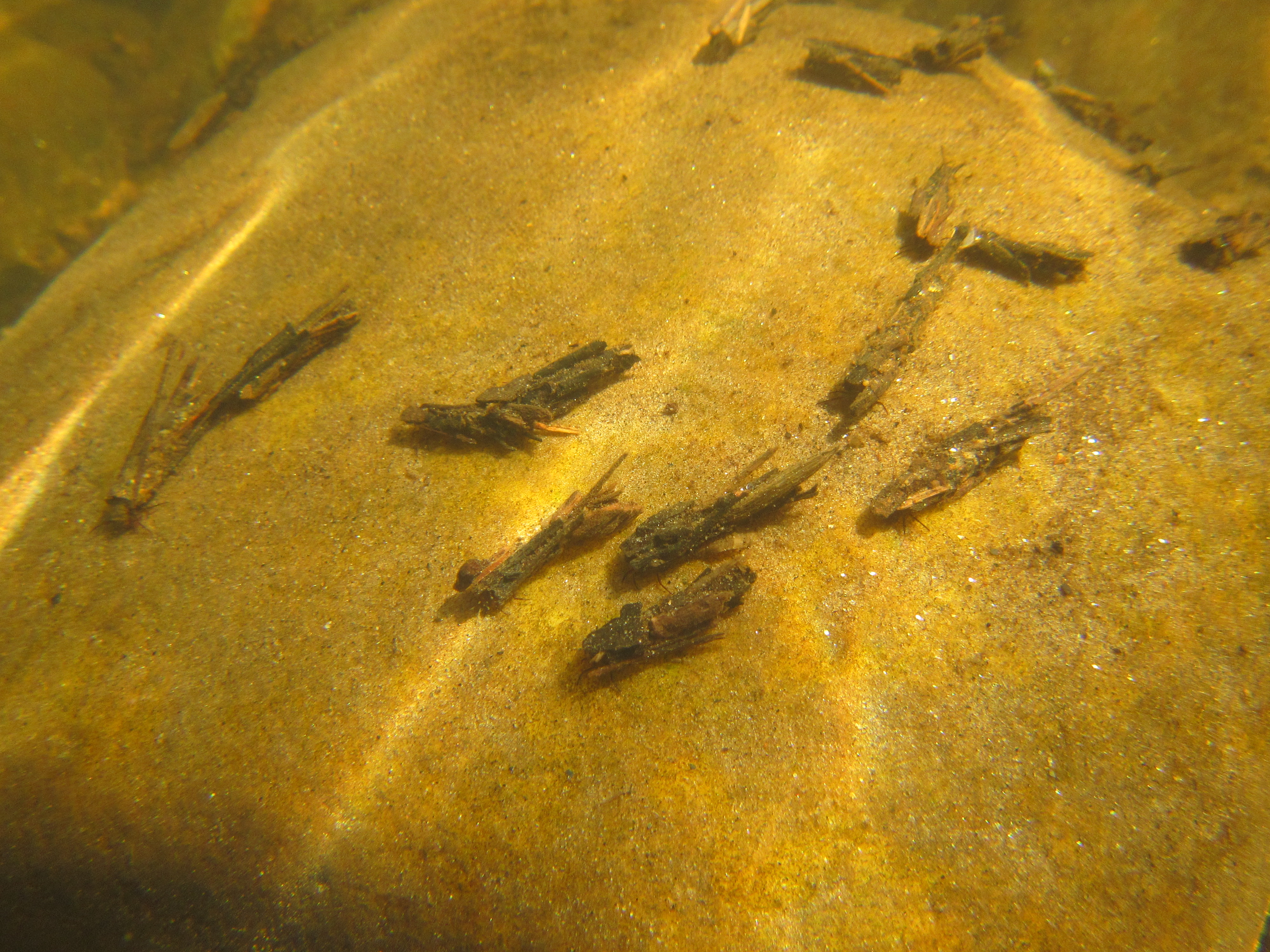
Cased caddis everywhere in the last spot I fished. I’m still amazed that a little wormy thing can build a house out of sticks. Please appreciate this photo. My hands and forearms were still cold about a half hour after I took it.

Image

An occupant. Sorry, little guy, for putting you out on the street. 

Image

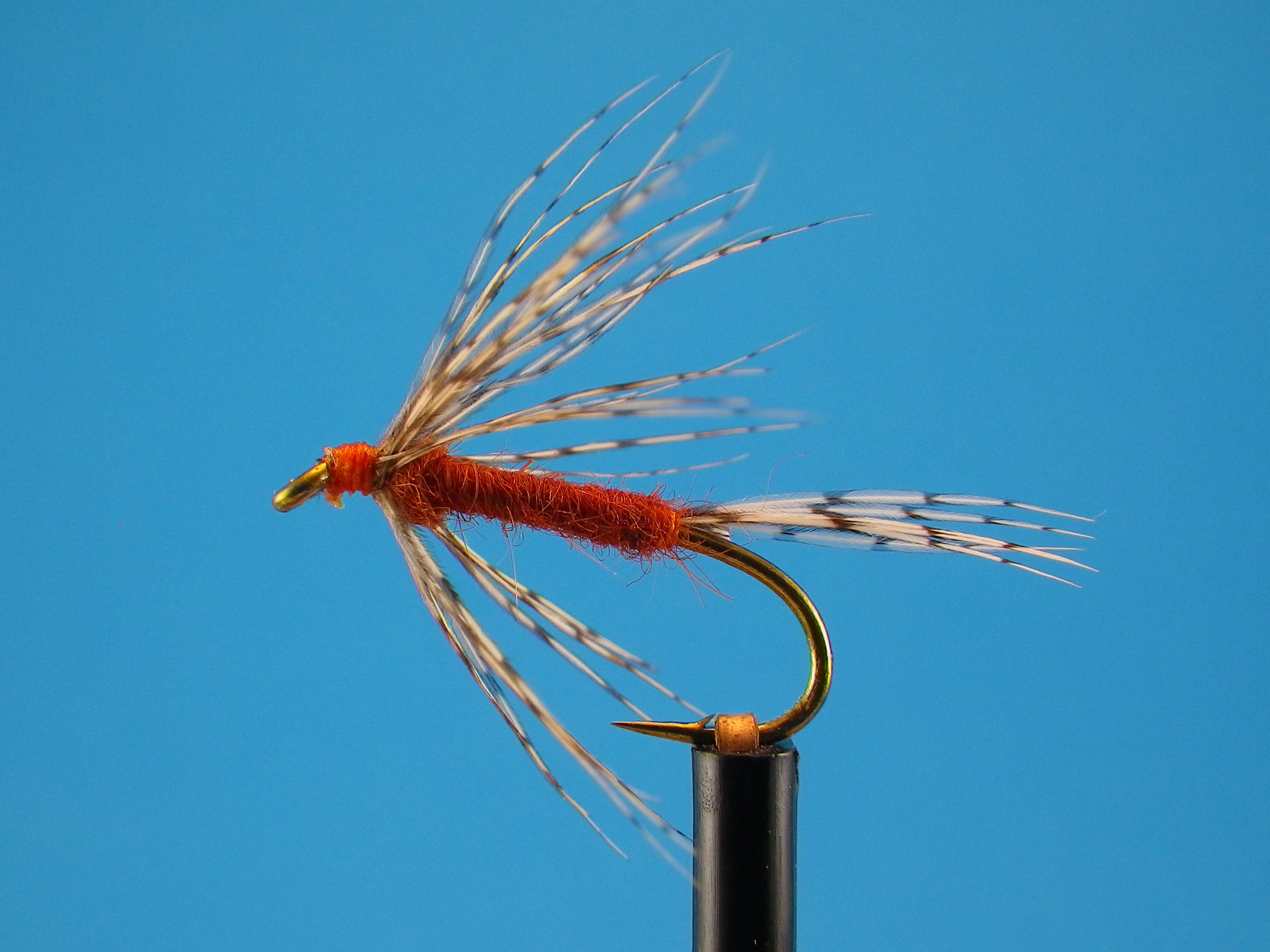
The Hackled March Brown Spider

“March Brown” is a name you see attached to a lot of different wet fly patterns. Some of them are caddis; others, mayflies. This spider is intended to represent the latter. I discovered it on page 116 of Sylvester Nemes’ Two Centuries of Soft-Hackled Flies. It was originally published in 1936 in an English book, Trout Fishing From All Angles.

The Farmington River is not known for its March Browns; while we do experience that hatch, it’s not on the level of, say, Hendricksons or Sulphurs. But we do have a good showing of Isonychia, and I have taken to fishing the Hackled March Brown spider in the late summer to represent those substantial mayflies.

Last August, I was fishing a snotty run that was studded with boulders and pockets. There wasn’t much going on hatch-wise, and I had the Hackled March Brown spider as the point fly on my team of three wets. The hit was one of unrestrained violence and brutality, such that it ripped the line from my hands. The trout went immediately on the reel; I never saw it until I was able to coax it into the shallows. Over twenty inches long, it was my biggest trout of 2013.

Image

Hook: Wet fly, size 12
Silk: Orange Pearsall’s Gossamer
Tail: Grey partridge fibers
Body: Hareline Dubbin Rust (HD23)
Hackle: Brown partidge

 Tying notes: A straightforward, simple fly to tie. The original calls for a body of “hare’s ear dyed red ant colour.” I have settled on “rust,” and the trout seem OK with it. You could make the body a little buggier than I have here, but I like this fly with a thin profile. There are a multitude of brown feathers on a standard partridge skin; they’re located along the back of the bird.

The Hackled March Brown Rogues’ Gallery:

Image

The Dark Hendrickson Winged Wet

We had spent the morning nymphing, but as the hour hand worked its way toward eleven, the bite slowed. One o’clock would be the visible start of the Hendrickson hatch — you can set your watch by it on the Farmington — but I figured right now was about time for creatures to be stirring a foot below the surface.

I rigged up a team of three wets, with a Dark Hendrickson on point, and began walking down a long, three-foot deep run. When I got to the tailout, I encountered an angler reclining on rock, enjoying the warmth of the late April sun. I hailed him and asked how his fishing had been. He told me he hadn’t yet wet his line. “Waiting for the Hendrickson hatch to start,” he explained.

Oh, it’s already started, I told him. “I don’t see anything coming off,” he said. I shook my head. You can’t see it yet. It’s going on below, and it’s going to be a good one. See my friends up there? I’ve been catching them all the way down the run, just swinging wets. They’ve been keyed on this fly here.

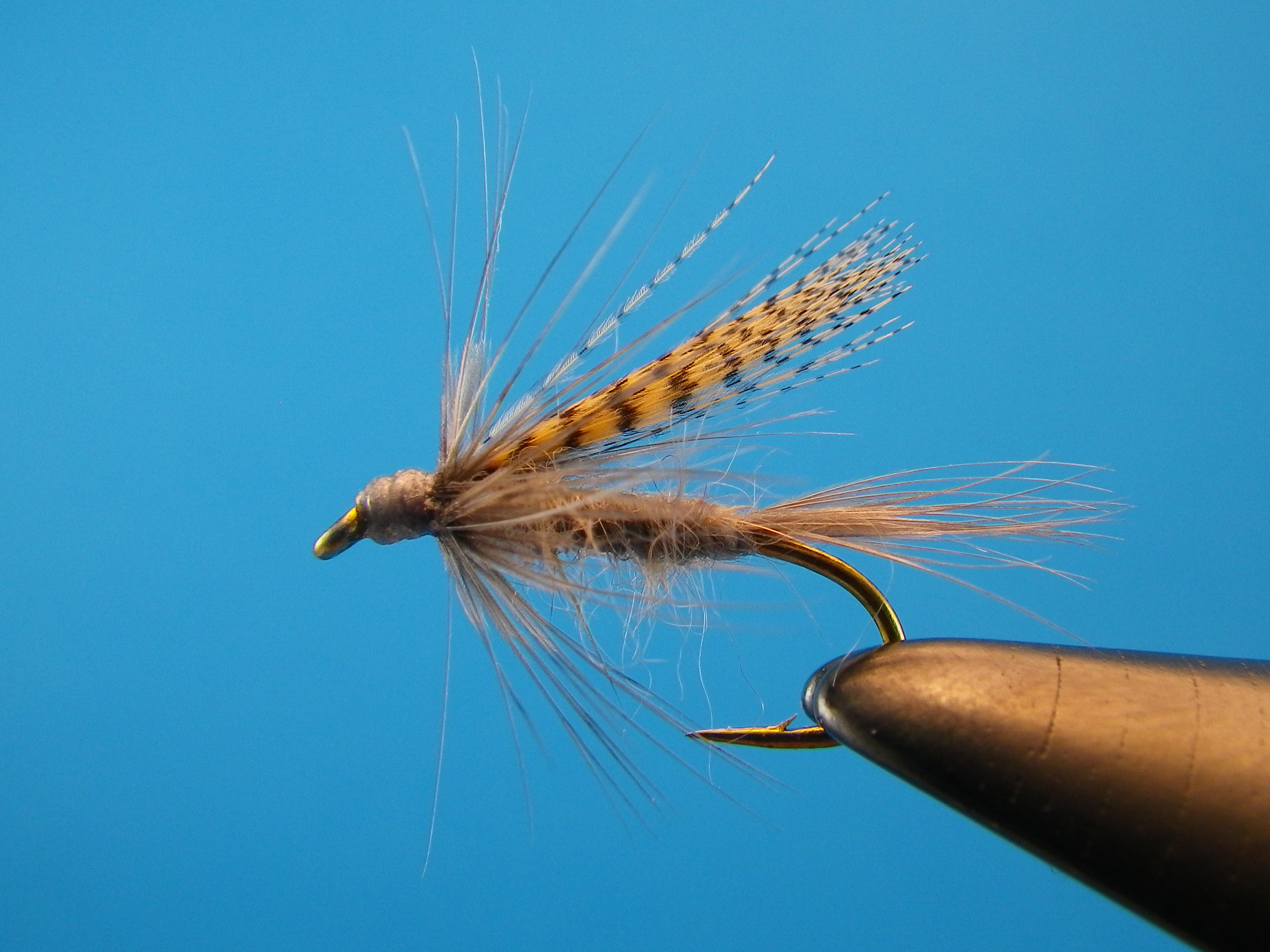
The Dark Hendrickson Winged Wet is a legacy American pattern that has been fooling trout for over a century. I’ve been fishing it only a fraction of that time, yet I couldn’t possibly tell you how many trout I’ve taken on it. This fly would easily make my Top Ten Wets list. Match the size of the naturals (about a 12 on the Farmington), then drift, swing, or dangle it over rising fish, and hold on.

The Dark Hendrickson Winged Wet

Image

Hook: 2x strong wet fly
Thread: Grey
Tail: Dark blue dun hackle fibers
Body: Muskrat fur
Hackle: Dark blue dun hen
Wing: Lemon wood duck

~

Tying notes: I like to use darker muskrat fur, particularly the soft grey underfur. Pick out and discard the black, stiffer guard hairs when you snip off a patch. A little fur goes a long way, and if you happen to have an entire skin, you’ve got enough fur to keep your great-great grandchildren in Hendricksons. Keep the body thin; the hero of this fly is wing. Be sure to leave plenty of room for the head and the wing; you can see on this fly that I just about made it. (Although the trout won’t care a lick.) To form the wing, I usually fold a small section of wood duck over itself with the dull side facing in, but I don’t get too crazy about trying to make every fly perfect. Make the wing about as long as the bend. If you don’t tie this fly, please start. You’re going to be happy you did.

Looks like the Hendrickson hatch has started.

Image

~

The Dark Hendrickson Rogues’ Gallery

Image

The Un-Dead of Winter

One from the archives. I wrote this several years ago to remind myself that Pete Seeger was right. Not to mention Paul.

The Un-Dead of Winter

By Steve Culton

© 2009. All rights reserved.

I was heading out of the office on a freezing January afternoon when the receptionist, noticing how I was dressed, asked me if I was going fishing. I told her yes, and she responded with an incredulous, “In the dead of winter?!?”

I smiled in affirmation, but on the way to the stream, her words got me thinking about the bum rap winter takes when it comes to natural rhythms  — and angling — especially if you plan on forsaking the homey comfort of the ice fishing hut in favor of wading. The reality is, fall is when things die. Winter is when life begins. And it truly is a wonderland, alive and well and overflowing with vitality.

Step into your backyard or some nearby woods. The trees and bushes are already covered with buds, nature’s amazing automated leaf and flower systems, full of life (in the dead of winter!) and waiting for the warmth of spring to pop. As I write this, the mercury is well below freezing, yet my forsythia is as green as a springtime lawn, stems so bud-laden I can only imagine the yellow riot that awaits me in April. Mountain laurel and rhododendrons proudly display the evergreen banner, and from my window I can see a cardinal and his mate searching for seeds in the compacted snow.

An exquisitely parr-marked Farmington River brown. Even on a cold January afternoon, she was more than happy to chase a swung fly.

Image

Even on the small stream I was fishing the day our receptionist questioned my sanity, there was life in the air and beneath the water. Though the high never made it past 30 degrees, size 14 charcoal grey midges flitted about. Wild trout were holding low on the river bottom, ready to gobble any food that came tumbling along. It started to snow, and as my cigar smoke drifted slowly into the windless air, creating a tapestry with the chunky flakes, I felt as alive and happy as I would be sipping lemonade a warm July afternoon.

A few weeks later, I was fishing a salt estuary in Rhode Island. The temperature had plummeted into the low twenties, and a bitter west wind tormented the exposed skin on my face. Yet, there were snails and grass shrimp and, as this was the new moon, perhaps even clam worms doing what they always do: living. (The stripers, sadly, were living somewhere out of casting range.)

What mysteries remain uncovered along the frozen banks of our rivers and shores? You don’t know if you don’t go.

Image

I used to view winter as a time to store the rods and gear and prepare for the reawakening rituals of spring. No longer. I’m out on our streams and rivers and in the salt, almost always gloriously alone, left to my thoughts, the wonders both seen and unseen, and the bounty of life that reminds me spring is on the way.

New article in American Angler: Wet Fly 101

Check out the current (Nov/Dec) issue of American Angler for my latest article, “Wet Fly 101.” Wet flies have been fooling trout for centuries, and the fish aren’t getting any smarter. This piece serves as a broad introduction to wet flies. It covers basics like fly types; building a traditional three-fly team; what kind of water to target; and presentation. For those looking to take the ancient and traditional path to subsurface success, it’s a fine place to start.

Image

Farmington River Report 9/29/13: Blue ribbons all around

First Place Winner: James. James is an experienced fly angler who wanted to learn the ancient and traditional ways of the wet fly. He aced Wet Flies 101, got into double digits of fish, and even had a double on a February Red and a Squirrel and Ginger. Good job wading, good job mending, good job presenting. If he keeps at it, James is going to be a dangerous machine. Trout, you’ve been warned.

Almost a grownup. The signature ink of youth has just about faded away from his flanks. A spirited fish, this one. I’m amazed he held still long enough for a photo.

Image

First Place Winner: The weather. Cool air. Warm sun. Blazing, brilliant sunshine. All day long. Water temp 59. Whoever ordered this day, I’d like to buy you a drink. And a cigar.

First Place Winner: The bite. Thank you, trout, for making my job easy. Your recklessness creates the illusion of genius in the form of a fishing guide. I really appreciate it.

First Place Winner: The hatches. See “The bite.” Caddis (smaller creamy size 16 and big tan size 12s), midges, BWOs, and especially a bumper crop of Isonychia. All our trout came on the Squirrel and Ginger (caddis) size 14, size 12 February Red, and size 12 Hackled March Brown.

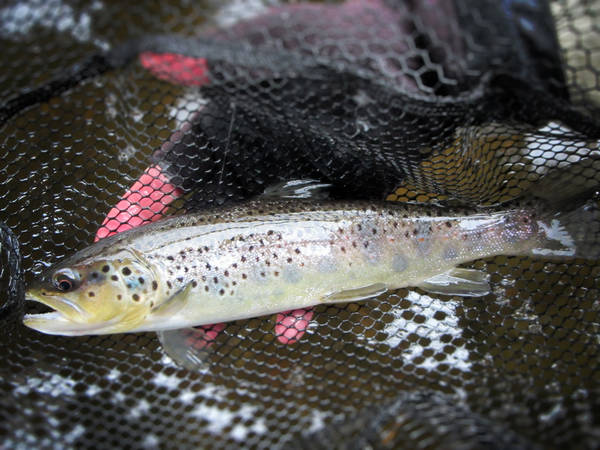
James’ brown. The hardest working trout in the Farmington River? Or simply one of the many fish James brought to net?

Image

8/14/13 Farmington River Mini-Report

It was a slow day on the river for most of the anglers I spoke to. We were likely done in by the sudden shift in weather and the noon spike of the dam flow (the Upper TMA jumped from 370 to 480cfs; water was lightly stained and 65 degrees). Still, my friend Pete and his brother got into some very nice larger browns in the Upper TMA. As for your humble scribe, I had to be content with a mob of juvenile Atlantic salmon and one lonely rainbow trout. I was committed to the wet fly cause today — I just got an article assignment from American Angler on wets and was hoping to get some good fly-in-trout-mouth shots. Instead, you’ll have to settle for this simple flora-at-dusk portrait:

Image

Farmington River Report 8/7/13: Foul language and rank stupidity. Plus some trout.

“Hey, you gotta move your @#$%ing truck!”

Clearly, this fishing trip was not starting well.

I had just turned into one of the many dirt pulloffs that border the Farmington River. This particular one holds at least three vehicles. There already was a car in it, facing south. I had been heading north, so the fronts of our respective vehicles were pointing at each other. To leave, we’d each have to back out the way we came in. You know, like you’d do at any gas station.  Rudimentary Driver’s Ed stuff.

I got out and started gearing up. The occupant of the other car was on his cell phone, and from what I could overhear, he wasn’t having a happy conversation. He ended his call, and that’s when he shouted out his unpleasant greeting.

“Excuse me?” I said.

“Move your @#$%ing truck!”

“Really? Are you telling me you can’t back out of here?”

More wrathful profanity, and that’s when I realized: disengage. Now. What if he has a gun? What if he comes back with some friends? What if he vandalizes my truck? Sad to say, but that’s the world we live in. I could back out of the pulloff — and potentially, an even uglier scene — simply by acquiescing. Politely. And keep my dignity in the bargain. So I did.

Still, once I got in the water, I couldn’t enjoy it. I kept looking up at the road, waiting to see if my new friend was coming back to look for trouble. Every sound of an approaching car elevated my heart rate. Thankfully, he never returned.

So, what about the fishing? A slow day for swinging wets. Very little hatch activity, but the water was a perfect height at 321cfs and a delightful 64 degrees, ten out of ten for August. I was fishing a Squirrel and Ginger on point, a Drowned Ant in the middle, and a clumsy deer hair wing/head soft-hackle that suggested a drowned hopper or a big stone fly on top. I had several swirls at the big fly, but no takes.

Finally, on the dead drift, the line stalled, I came tight to the fly, and I had a good fish on. I was hoping for something approaching 20 inches, not only from the size of the fly, but from the fact that the fish immediately went deep and sulked on the bottom. A powerful surge up a whitewater channel, and he went on the reel. In the end, it was a mid-teens rainbow. It was the only trout I took in the 90 minutes I walked the run.

My best trout of the day took this monstrosity, still wet and fresh from the fish’s mouth.

Image

I decided on the spur of the moment to rig for indicator nymphing. The section I fished is a deep run below some riffles. I gave it 15 minutes, and the only trout I took came on the second cast.

A nice little brown who liked the look of Yerger’s Miracle Nymph, size 16.

Image

The day ended far downstream, where I took my largest juvenile Atlantic salmon of the year, about nine inches long. Bright silvery flanks, and fat. No wonder. When I was taking the hook out, I peered down his throat. It was loaded invertebrates to the point of overflowing. It reminded me of a bluefish spitting up bait. Off he went. Then off I went.

I had to get @#$%ing home.