Farmington River Report 3/30/20: Bump. But no WHUMP!

I thought this would be a great day for streamers with the river up (615cfs in the permanent TMA) and the substantial cloud cover. ‘Twas not. I fished four marks from noon-2:30pm, and could manage only two bumps in one of them. At least the river was not the mob scene I expected — I had three runs all to myself. So, the whump will have to wait for another day. Hatch monitors, take note: lots and lots and lots of tiny (size 22-26) BWOs on the water. Thanks to everyone who took the time to say hello!

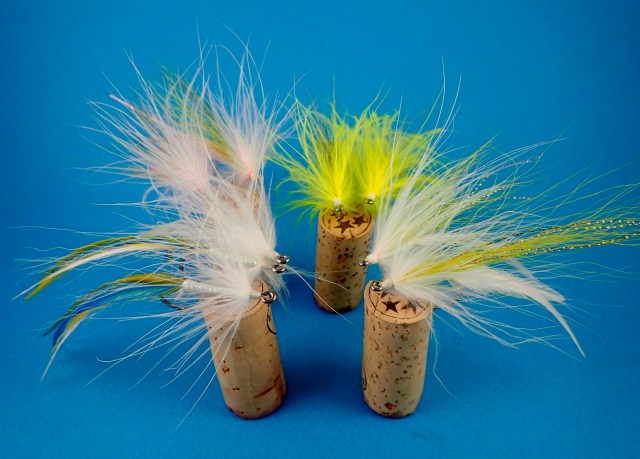
This was supposed to be a picture of a gator brown, but my quarry was most uncooperative. I’m still really surprised I didn’t get more action, at least from smaller trout. Today’s streamers were Coffey’s Sparkle Minnow (pictured below) and the Hi-Liter. This Sparkle Minnow is the size of a good shiner, one of my favorite baits from my spinning days.

OLYMPUS DIGITAL CAMERA


Small Stream Report: The natives aren’t restless

Thursday was small stream fishing day. March isn’t exactly the wheelhouse for a small stream — there’s no canopy, the water is typically up and cold, and the wild brookies haven’t moved out of their winter lies — but Cam and I went for no other reason than to enjoy the woods and pretend we were many miles from civilization.

As I suspected, the action was painfully slow. We rose and landed one char all day. Yet, what better way to feel alive than to be out on a thin blue line and be so warm you’ve got to start removing layers?

Given the conditions, we decided stealth was in order. Here’s Cam doing a little commando fishing. We started off with bushy size 14 dries; after those went unmolested, I added a tiny nymph dropper to my rig. Still no love, so tied on an ICU Sculpin for Cam to jig in some deeper plunges. That’s what he’s doing here. 

OLYMPUS DIGITAL CAMERA

~

We saw a decent number of bugs: omnipresent midges, and a few small (size 18) tan caddis. But the brookies remained hunkered down. Finally, as we were bushwhacking out, I invoked the “One More Cast” Rule. The slashing strike came out of nowhere. After a few more rises on a waking presentation, I decided a size 14 Stimulator was too big. On went a size 16 Humpy, and the next cast produced this fine buck.

OLYMPUS DIGITAL CAMERA

Thanks to the Gov for opening the season early!

Leisenring’s July Dun Nymph

We wrap up the series of Leisenring’s favorite soft-hackled nymphs with the July Dun Nymph. No doubt Leisenring thought the July Dun matched the summertime bugs he encountered on his beloved Pennsylvania creeks. Certainly this fly could cover any number of small, dark nymphs that trout would think are good to eat.

I hope you enjoyed this little stroll down legacy fly pattern lane!

Leisenring’s July Dun Nymph

OLYMPUS DIGITAL CAMERA

~

Hook: 15, 16
Silk: Orange waxed with colorless wax.
Hackle: One turn of very short, soft-rusty-dun cock hackle.
Tail: Three fibers of a ginger hen’s hackle tied very short.
Rib: Fine gold wire halfway up the body.
Body: Darkish-brown-olive seal fur.
Thorax: Medium-dun mole fur.
~
Tying notes: You don’t need to use precious tying silk on a pattern like this one (says the guy who used silk). Hen replaces cock for the hackle. Dark Olive Squirrel SLF Spikey Dubbing replaces seal fur. Leisenring uses mole in many of his patterns; a standard-issue mole skin will keep you in thoraxes till your old age. (Mike Hogue has some good skins at Badger Creek.) If you don’t have a mole skin, try rabbit.

Leisenring’s Pale Watery Nymph (light-colored dun version)

This is the second Pale Watery Nymph listed in Leisenring’s book. He adds the qualifier, “effective when light-colored duns are on the water.” No doubt. Buggy, simple, and highly edible.

Leisenring’s Pale Watery Nymph (light-colored duns)

OLYMPUS DIGITAL CAMERA

~

Hook: 15, 16
Silk: White, waxed with colorless wax
Hackle: One turn of very short honey dun cock hackle.
Tail: Three strands of very short, soft-blue-dun cock fibers.
Rib: None.
Body: Undyed seal fur or pale buff Australian opossum fur dubbed lightly at the tail and thicker at the thorax.
~
Tying notes: Absent cock hackle, I used hen. I didn’t have the right color opossum, so I used Hareline Dubbin rabbit. This is a very straightforward tie.

W.C. Stewart’s spiders from “The Practical Angler,” in list form with photos

I recently published a short feature series on W.C. Stewart’s spiders, three ancient and traditional Scottish soft hackles. They first appeared in print in Stewart’s 1857 book “The Practical Angler or the Art of Trout Fishing, more Particularly Applied to Clear Water.” Here now is a single reference list of the trio: the Black Spider, Red Spider, and Dun Spider, a photo of each pattern, and a link to the original post with my comments and tying instructions. If you’re interested in reading an online copy of Stewart’s Book, you can find one here.

W.C. Stewart on the soft-hackled feather: “So soft are they, that when a spider is made of one of them and placed in the water, the least motion will agitate and impart a singularly life-like appearance to it.” — W.C. Stewart

W.C Stewart’s Black Spider

OLYMPUS DIGITAL CAMERA

~

W.C. Stewart’s Red Spider

OLYMPUS DIGITAL CAMERA

~

W.C. Stewart’s Dun Spider

OLYMPUS DIGITAL CAMERA

~

Apply these to clear water near you, and let your mind wander back a few centuries. Picture Stewart on a wee Scottish burn, fishing his beloved spiders upstream…


“Little Things 3.0” March 31 at Russell Library postponed

Due to the evolving coronavirus situation, my seminar, “The Little Things 3.0,”  originally scheduled for March 31 at the Russell Library in Middletown, CT, has been postponed. The earliest possible rescheduling would be mid-April, but there is no target date. My apologies for any inconvenience.

If you’re attending my Wet Flies & Soft Hackles class this Saturday, please come healthy, and it’s BYOHS (Bring Your Own Hand Sanitizer).

You cannot get coronavirus from kissing a fish.

OLYMPUS DIGITAL CAMERA


Leisenring’s Pale Watery Nymph

Big Jim loved his Pale Watery nymphs. We know this because he’s got two of them listed in his book. This is the first Pale Watery nymph, and it’s a simple, buggy tie. I’m picturing it as the point fly on a team of three; dropped off the bend of a Usual or Light Cahill dry; or below a dry with the dry on a tag. Speaking of Pale Watery, keen students of Leisenring’s fly patterns will remember the Pale Watery Dun Wingless — one of his “favorite twelve” — from last year’s series here on currentseams.

Leisenring’s Pale Watery Nymph

OLYMPUS DIGITAL CAMERA

Hook: 15, 16
Silk: Primrose yellow
Hackle: One or not more than two turns of a darkish-blue cockerel hackle only long enough to suggest wing cases.
Tail: None.
Rib: Fine gold wire halfway up the body.
Body: Cream colored fur (Chinese mole or Australian opossum) dubbed very thinly at the tail and heavily at the shoulder and thorax.
~
Tying notes: No gots cockerel, so I used a dark dun hen cape. For body fur, I chose Hareline Dubbin Light Cahill (HD1). It is here that find myself faced with a disturbing question. Leisenring specifies that the rib should go “halfway up the body.” Does this mean his other nymphs were meant to have a rib that continued over the thorax? It’s quite possible. I’m not a fan of ribbing over a heavily dubbed thorax — it kind of defeats the purpose of that buggy section — but Leisenring may have intended otherwise.

Leisenring’s Dark Olive Nymph

James Leisenring’s Dark Olive Nymph is sure to be popular among the finned set. For starters, it’s buggy as hell. Not only does it cover the pre-emergent Blue Winged Olive family, it’s also one of those flies that looks like lots of bugs in general, but not necessarily any one in particular.  That’s the good news. The flip side — if I may editorialize — is that I suspect a soft-hackled Pheasant Tail does the same duty, and is easier to tie. One way to find out!

Leisenring’s Dark Olive Nymph

OLYMPUS DIGITAL CAMERA

~

Hook: 14, 15
Silk: Primrose yellow
Hackle: One or not more than two turns of the tiniest blue dun hen’s hackle.
Tail: Two or three very short, soft blue dun cock fibers.
Rib: Fine gold wire.
Body: Dark green-olive seal’s fur mixed with a little dark-brown bear’s fur (found next to the skin) spun lightly at the tail and quite heavily at the shoulder or thorax.
~
Tying notes: It should take me a few minutes to bang out Leisenring’s Dark Olive Nymph; when it takes longer than that to tie in the bloody “very short” tail, I curse my lot in fly tying and pine for the simplicity of the soft-hackled pheasant tail nymph. At this size, Angora goat (my standard seal’s fur substitute) would be an unruly mess. And since I’m right out of bear, I made the command decision to use Squirrel SLF Spikey Dubbing, dark olive and dark brown. I’m pleased with the results. A single dubbing loop for both abdomen and thorax.


Wet flies, weather, and other random Sunday musings

Just a simple Sunday “Dear Readers — how’s it going? Here’s what’s happening here” post. No pressure for me to make it perfect (although I’ve now rewritten the opening three times, dammit). So. I’m fed, caffeinated, and off we go.

I’m pleased to announce that my Saturday, March 14 Wet Flies & Soft Hackles tying and teaching event at Legends on the Farmington is sold out! Many thanks if you’re one of those who are attending. See ya there.

Snipe and Purple. Because you can never have too many soft hackles…

OLYMPUS DIGITAL CAMERA

~

Speaking of wet flies, I hope you enjoyed my recent series on W.C. Stewart’s spiders, and are currently enjoying my series on Leisenring’s favorite soft-hackled nymphs. There are four more to go.

~

This infernal disaster cold I’ve had for the last month — that’s not a misprint — seems to be on its way out. I have not fished since early January and I have not had a cigar since Christmas. We’ll try to remedy one of those this week. Warm weather approaches, so I expect the rivers to be crowded.

~

There has been some discussion about an early spring striper run. Every year is different, and the contributing factors are many. Some years I’ve bailed fish in late March. Other years I’ve blanked until mid-to late April. I’m sure when it happens, social media will light up. But you probably won’t hear it from me. Also, stay tuned for a new conservation-minded catch-and-release striper policy that I plan on putting into practice this spring.

~

800 followers is so close, yet so far. Usually I add a hundred followers a year, but that has slowed. So if you want the chance to get your hands on some Steve Culton flies, get a friend to subscribe to currentseams. When we reach 800, the games begin.

~

Last but not least, I have not been writing for magazines for the past 10 months. That is changing as I have one confirmed assignment for Eastern Fly Fishing and a few more irons in the fire. Till next time, good reader — and if you see me out on the river, please come say hello.

Leisenring’s Half Stone Nymph

Finally, Leisenring dispenses with those noseeum tails! (Not to worry. They’ll be back.)

I rather like the Half Stone Nymph. I know a small stream that gets a decent late spring hatch of yellow sallies. This pattern, dropped off the back of a bushy dry, will drive the char absolutely out of their minds. On the smaller side at 13-14, I can also see it supersized to an 8 or 10. Its grey and yellow palette reminds me of Ken Abrames’ R.L.S. Easterly (and the soft hackle I tie by the same name). Mole fur is underused in the modern fly, so it’s good to get reacquainted. Bonus: Mole skins are cheap and fairly easy to find. Look for one at Badger Creek.

Leisenring’s Half Stone Nymph

OLYMPUS DIGITAL CAMERA

Hook: 13, 14 (I’m using a 2x heavy, 1x long 14)
Silk: Primrose yellow
Hackle: Very short blue dun hen’s hackle, 2 turns or 3 turns at the most.
Tail: None.
Rib: Very fine gold or silver wire.
Body: Primrose yellow buttonhole twist.
Thorax: Mole’s fur dubbed fairly heavily.
~
Tying notes: Much easier of a tie without those infernal very small tails! As always, DMC embroidery floss #744 is my primrose yellow buttonhole twist substitute, one separated strand’s worth. I attach it just below the thorax, then wrap back up over the first layer. I think a dubbing loop makes for a buggier thorax.