800 Followers and Growing

According to today’s tally, there are 807 people officially following currentseams.com. The number tends to go up and down a little every week, but as most of you know, I do a fly giveaway contest every 100 followers. This isn’t the official announcement — I’ll be making it sometime in the next few weeks — but I wanted to take this time to thank all of you for your loyal readership. I truly appreciate it.

It’s almost contest time! You too could be the proud owner of fly swag like this.

OLYMPUS DIGITAL CAMERA


Farmington River Report 7/19/20: So many bugs!

From the moment I arrived at the river — about 6:00pm — till the moment I left — about 9:20pm — the water and air above was crackling with mayflies and midges. After enduring several recent outings marked by poor hatches, this was Mother Nature’s make-good outing. As a bonus, this was a working session, as I’d planned to shoot video for a new wet fly presentation I’m building. Conditions could not have been better. First it was sulphurs, size 16-18, then an influx of olives, size 18. Micro midges were everywhere. The fish were still feeding when I left the water.

This is a video still, so the quality is not great, but splashy rises like this were everywhere for the first 90 minutes. I enjoyed some spectacular wet fly action, swinging a team of three (Squirrel and Ginger, Partridge and Light Cahill, and Light Cahill winged wet). I took numerous fish on all three patterns, presenting upstream, downstream, and across. There came a time when the fish no longer took the subsurface fly, about 8pm. That’s when I switched to dries.

Screen Shot 2020-07-19 at 11.15.14 PM

~

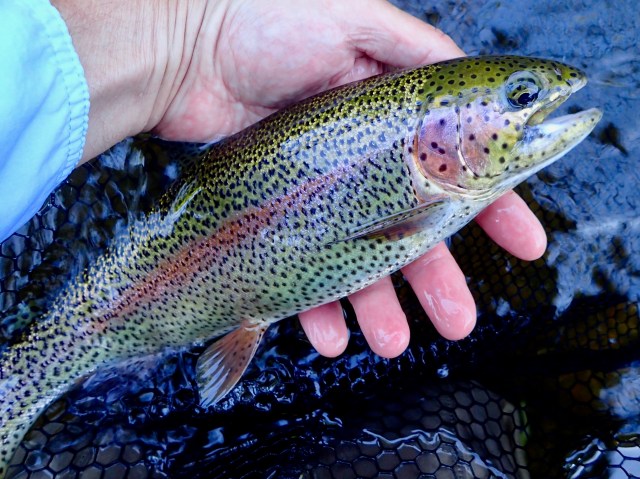
Another video still. I can’t say that I can get too excited about domestic rainbow trout, but the Farmington rainbows this year are in a new class of fun. They’re fat, they’re feisty, they’ll bulldog you the entire fight, and many of them are taking on holdover characteristics like intact scales, deep coloration/pink bands, and well-formed fins. Corpulent mid-teens inches rainbows like this one are in faster water everywhere. Most of the browns I took came after 8:30pm.

Screen Shot 2020-07-20 at 12.12.44 PM

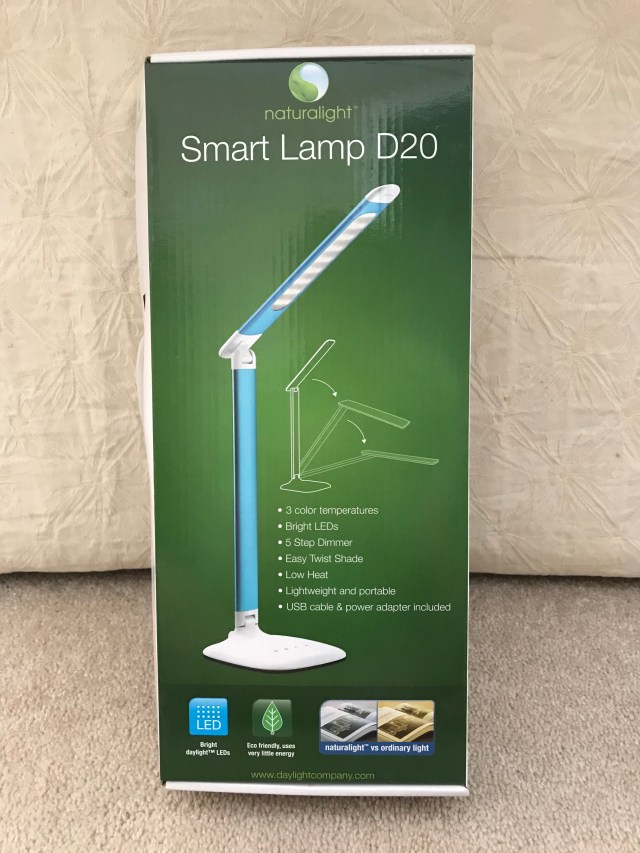
Lemon alert: Naturalight Smart Lamp D20 (and some shoddy customer service to boot)

I really didn’t want to write this piece, but as you’ll soon see, The Daylight Company, maker of the Naturalight Smart Lamp D20, left me no choice. (Regal Engineering, the seller, also shares some of the responsibility. We’ll get to that in a bit.)

Several years ago I saw other fly tyers using the Smart Lamp D20 at the shows. I liked the way it looked, so in January 2016 I bought one through Regal Engineering. For two years it worked fine. Sometime in 2018 it began a pattern of sketchy behavior; some of the light colors (warm, cool, and daylight) would suddenly switch intensities, even though I had not touched a switch. By early 2019 the functionality was down to a single color and intensity, and in December 2019 it stopped working entirely. As in dead. No light. Nothing.

Call me old-fashioned, but I expected a heck of a lot more for a $100 lamp. What a lemon!
Lemon

So early this year I went to the Regal site, the place where I’d bought the lamp,  and filled out their customer service form, explaining the problem. I was thanked by the robot and was told that someone would get back to me soon.

Or not. No response. Nothing. So I contacted the manufacturer. I spoke with a very polite customer service agent who told me that since there was a two-year warranty, there was nothing she could do. She offered me the chance to speak to her supervisor. Yes, please, I said.

What ensued was a highly frustrating exercise in futility. I explained the situation, and stated my position: if you make a good product, you should stand by that product. $100 is a lot of money for a lamp, and it should work properly for more than two years, don’t you think?

(Lacking a recording, I will paraphrase the responses.) Well, if you had come to us earlier, we might have been able to do something, but now it’s four years later and the warranty is only for two years…

Wait a minute…it didn’t start to malfunction until after the warranty expired…so what does it matter that I’m coming to you now?

If you had come to us earlier, we might have been able to do something, but the two year warranty has expired…

Whoa. I just said that it didn’t start to crap out until the third year. You’re telling me two things that are contradictory.

You bought the lamp from Regal so you should have gone to them when the problem started…

So basically it’s my fault? You’ve made a substandard product and now you won’t stand behind it. You don’t know me, and that’s OK, I don’t expect you to, but you should know I have a website and Instagram and well over 1,000 readers. So I’m going to write a story about this, and you can choose one of two narratives: One, you made a crappy lamp, but you value your customers and want to do right by them, because customer satisfaction is your ultimate goal, so you fixed the problem. Or two, you made a crappy lamp, and the warranty has expired, and that’s tough noogies for the chump who bought it. I mean, I can’t believe you’re not even offering to replace it or look at it or give me another at a reduced rate…

The D20 is no longer made, so we can’t replace it…

~

There was more, but suffice to say you’ve got the gist. And so, with Option B being chosen, here we are.

I did a little research, and according to Amazon reviews, I’m not the only one with a bad D20 experience. If you take my review out the equation, half of the reviews are negative. I’d end it here, but Regal needs to take a little hit. Frustrated with the lack of action from the Daylight Company, I reached out again to Regal. Again, no response. Very disappointing.

So: don’t buy this lamp. Don’t buy anything from Naturalight or Daylight Company. Save your money for products made and sold by people who stand behind their work and value their customers’ satisfaction.

And now, I need a good, strong, portable, DURABLE fly tying lamp. Suggestions?


Farmington River Report 7/14/20: A learning experience (for me, too)

I guided Michael yesterday from 2pm-6pm. Michael is new to fly fishing, so we had a lot to work on. We stayed within the Permanent TMA, where conditions were excellent:  280cfs flow and water plenty cold. Hatch and feeding activity was again low, although we did experience a 15-minute window where there was something going on underwater and the feed was on. We spent the first half of the lesson on indicator drop-shot nymphing. Once Michael got used to the nuances of the rig, he stuck four fish. Great job, Michael, on a day when the bite was slow. (A seasoned angler remarked to us as we were gearing down that the fishing “stunk today.”) We finished up swinging wets and managed a juvenile Atlantic Salmon. So, while I was disappointed in the activity, I was excited to watch Michael’s skills develop in a matter of hours.

Hey, this indicator nymphing thing really works! Our first fish was a rainbow that treated us to a couple of aerials. 

OLYMPUS DIGITAL CAMERA

~

After our session I headed upriver where the water was even colder. The evening rise was OK — 5/10 for feeding and hatch activity. What was a learning experience for me was my success presenting a team of three wet flies upstream to feeding fish. I caught four of the six trout I took on wets this way. All the takers were in faster water with a broken, curling surface, all were active feeders, and all took my Light Cahill winged wet or Partridge and Light Cahill flies. Most success I’ve ever had fishing that way. At 8pm I switched over to dries and caught trout well into dark.

This chunky rainbow was slashing at emergers about 30 feet above me. First cast, upstream presentation, dead drift, bang! Light Cahill winged wet. As you can see, this guy’s been caught before. What a handsome fish! Love the spots and coloration.

OLYMPUS DIGITAL CAMERA

Re-Thinking the Gamakatsu SC15 for Striper Flies

For years, I’ve been using the Gamakatsu SC15 on smaller patterns like baitfish and clam worms. No issues until a couple weeks ago on Block. I was dead-drifting a team of three, when bang! It was an unusual hit for this type of fishing; the takes are usually a subtle pull or a building sensation of weight. When I retrieved the fly from mouth — the fish wasn’t that big, maybe 22″ — I was shocked to see the opening bend in the hook from that hit. I’m wondering if it’s one-off randomness or a recipe for disaster on a bigger fish. I’ll let you know…

I like the Gamakatsu SC15 size 2 for this smaller baitfish profile. The hooks are light, with a short shank, wide gap, tin plating, and they’re sticky, sticky sharp, critical for this type of light-take or quick-bump-and-set fishing. As you can see, the bottom hook experienced significant failure. I used the same hook in a 2/0 without incident.

OLYMPUS DIGITAL CAMERA

Farmington River Report 7/9/20: what a way to go!

I worked with Bill yesterday on his indicator nymphing and wet fly skills. Water conditions were perfect in the Permanent TMA: 325cfs, cold, clear. The trout and bugs were a wee bit more uncooperative. Hatches (sulphurs, caddis, olives) were spotty and the feeding was inconsistent at best. We fished two marks and saw four trout hooked all day, and since we had two of them, we declared victory. On the plus side, Bill landed his PB non-lake-run brown. He nailed it at high noon (we fished from 10am-2pm) while nymphing. I was observing from upstream, and when he set the hook it sure looked like a fish to me. Bill thought he was stuck on the bottom — that happens sometimes with larger Farmy trout — and then, gloriously, the bottom fought back. Sadly, Bill snapped his rod during the battle, but the fish was landed, much to his delight. To say nothing of mine!

Bill’s new personal best, a gorgeous high teens wild brown. Love those halos. He took the took dropper in our nymph rig, a size 18 soft-hackled pheasant tail. Since that hook was a 2x short, it’s effectively a size 22 fly. Do not underestimate the power of tiny soft hackles this time of year. I almost always make my top dropper on my drop-shot nymph rig a soft hackle. Congratulations, Bill!

DCIM100GOPROG0013941.


Mark Gustavson’s Squidsicle

If you fish for stripers and tie striper flies, and you don’t know about Mark Gustavson’s excellent website Fly Fishing For Moriches Bay Striped Bass, you should. It’s a hidden gem. I don’t think Mark actively posts anymore, but his fly patterns, heavily influenced by Ken Abrames, are lovely. They’re also effective. Here’s my take on his excellent Squidsicle, reminiscent of Ken’s Banana Squid. I used an Eagle Claw 253 size 4/0 instead of the Mustard 3407DT size 3/0.

Mark Gustavson’s Squidsicle, ready to swim. Try fishing a fly like this along shorelines, troughs and flats, using a gentle hand-twist retrieve. Beware of the tap! The tap isn’t the take; rather, it’s the striper flaring its gills and sucking the fly into its mouth. Wait for the pull and the weight of the fish, then set the hook. 

OLYMPUS DIGITAL CAMERA

Tying the R.L.S. Mutable Squid Flatwing

Tucked away in the back pages of Ken Abrames’ masterwork A Perfect Fish are three squid patterns you should have in your box: the R.L.S Indigo Squid, the R.L.S. Orange and Blue Squidazzle, and today’s tying feature, the R.L.S. Mutable Squid. Don’t be mislead by the fact that these patterns didn’t make the main squid chapter of the book; Ken thinks highly of them, particularly the Orange and Blue Squidazzle. Perhaps the under-rated gem of the bunch is the Mutable Squid.

If you do know diddley-squid, you know they can change their colors in an instant, so the name is apropos. I only fished this fly once, and it produced — stripers love squid — so I figured it was time to have another in my box. And here it is, hot off the vise, for your viewing and tying pleasure.

R.L.S. Mutable Squid

OLYMPUS DIGITAL CAMERA

Hook: Eagle Claw 253
Thread: Gray
Platform: Light gray
Support: Gray neck hackle
Tail: First, a medium-gray saddle, second, a ginger saddle, third, 4 pearl Flashabou, fourth, a pink saddle, fifth, 5 strands Flashabou one each red, gold, blue, emerald green, purple, sixth, a medium-gray saddle.
Body: Light blue braid
Collar: Bucktail, medium gray, bottom and both sides
Wing: Bucktail, medium gray
Cheeks: First, 3 hairs each orange, turquoise, chartreuse, violet, pink; second, Lady Amherst pheasant tippets, one each side.
Eyes: Jungle cock


OLYMPUS DIGITAL CAMERA

Tying Notes: Construction should be intuitive. I used 6/0 thread and a 3/0 hook.  I chose hair from the lower part of the bucktail for the collar and wing to get a bit of flaring action (the fly has not yet been shaped). The flash is 1″ longer than the saddles, giving this tie a total length of 8 1/2″.


Block Island All-Nighter X: The X Factor

You never know what you’re going to get on a Block Island All-Nighter. My tenth reminded me that I’m not young anymore. The spirit is willing, but after nine straight hours and no sleep, the body protests. The last time I did this was 2015 — I had to look it up — but the conditions were perfect in terms of tide (high at dusk), moon (new) and weather (consistent SW flow), so going was almost an imperative on principle alone. Besides, I’d have company, old pal Peter Jenkins, owner of The Saltwater Edge. So off we went aboard the 7pm ferry.

Logistics were a challenge. Be advised that fewer ferries are running and passenger numbers are limited. We couldn’t get a car reservation, and taxi service on the Island was deemed spotty due to the current situation. That meant renting a Jeep, which worked out just right. Here’s Jenks doing some leader prep as we sail past Crescent Beach. I like a simple 7’6″ straight shot of 25# or 30# mono. Block bass are not leader shy.

Jenks

~

Angler traffic was light throughout night, as a few hardy souls came and went. The bass traffic was similar: not here. Then here. Then gone. No large schools or consistent feeding. But the fish that showed came to eat. I had the early hot hand with a half dozen bass by midnight. Then Jenks caught fire. No keepers in the mix — I had bass in the 20″-24″ range with a couple 26″ers thrown in. What the fish lacked in size was made up for in pugnacity. Here’s a scrapper from early on. 

OLYMPUS DIGITAL CAMERA

~

I’m often asked, “How do you figure out what the bait is?” I suppose by now I qualify as a old salt, and old salts know that this time of year on Block it’s sand eels, sand eels, sand eels. You can feel then plinking and ploinking against your waders if you shuffle your feet. And sometimes the answer can be found in a photograph (look along the lateral line).

OLYMPUS DIGITAL CAMERA

~

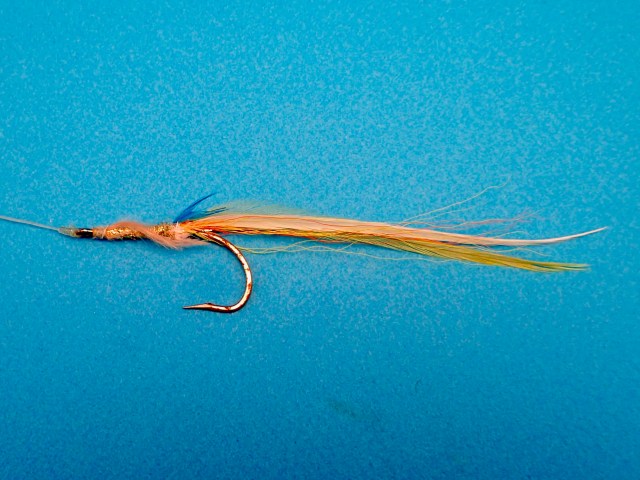
The Big Eelie is a high-confidence pattern for me on Block. I fish it on a floating line on a dead drift, or with very short (6″) erratic, drunken strips. It doesn’t matter what color I choose (and I fish everything from dark to lighter fluorescents to dull hues) — it’s a profile and action pattern. And, as you can see, the bass love it. This used to be a beautiful Crazy Menhaden Big Eelie. Now it’s missing two saddles and most of the marabou collar. I was still catching on it when I switched it out at false dawn for a…wait for it…Big Eelie in RLS False Dawn colors.

OLYMPUS DIGITAL CAMERA


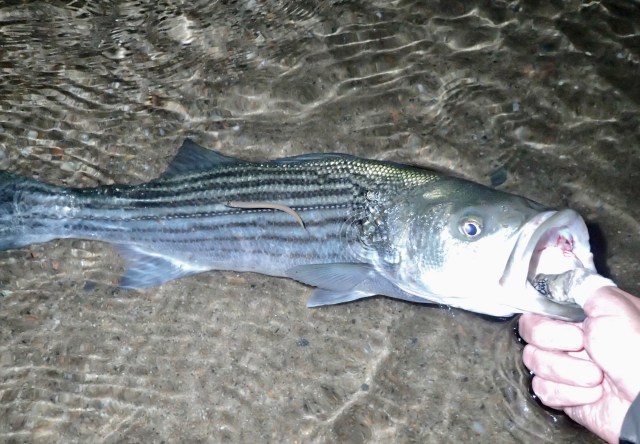
We did some surf fishing on the west side after midnight and again at sunrise. Conditions were about as good as you could hope for: a moving tide, moderate surf, and best of all, no weeds. Fish were present both times: stripers in the dark, and bass, bluefish, and shad in daylight. Here’s one that went bump in the night.

OLYMPUS DIGITAL CAMERA

~

There comes a point in the wee hours — for me, it’s usually around 2:30-3:00am — where the gas tank nears empty and the boilers almost out of steam. That’s when I take five (literally). It may seem counterintuitive to introduce a central nervous system depressant into the equation, but after closing my eyes I poured a wee drap of Highland whisky (Old Pulteney Navigator, which seemed highly apropos). I re-slogged out to the beach just before false dawn, and wouldn’t you know? I had hits on my first four casts. Never underestimate the mojo of single malt and a cigar! 

WeeDrap

~

7:00am. Breakfast at Ernie’s. Hungryman Special: two eggs, two pancakes, bacon, and toast. (Thank you, Jenks, for being such a swell fishing partner.)  It feels amazing to have your first real meal in 12 hours. That hard wood bench on the ferry is going to feel even more amazing. I was lights out before we left the harbor. I don’t remember if I had any dreams, but right now I’m drifting off to a place where that sharp tug tells you the bass has committed to your fly and the ensuing battle is a bulldogging fight that only a Block Island striper can produce.

Ernies

Block Island All-Nighter X preview: not too shabby

I did my tenth Block Island All-Nighter this past Sunday into Monday. My fishing partner was old friend Peter Jenkins from The Saltwater Edge. I’m still in recovery mode (and playing catch-up on a bunch of other projects) so I haven’t had time to do a full write-up. But here are some broad brush strokes.

We flayed the water from 9pm to 6am. The fishing was good enough — 6.5 of 10. No consistent feeding, but stripers did show up in small bunches (and if you were willing to walk to find them). No keepers, a grim reminder that we are in a downturn, but on the flip side no micros: the vast majority of bass were 20-24″ with an occasional 26 mixed in, and those fish are great sport on a fly rod. Sand eels were the bait (and Big Eelies the fly) not present in great numbers but there. And yes, we had a darn good time.

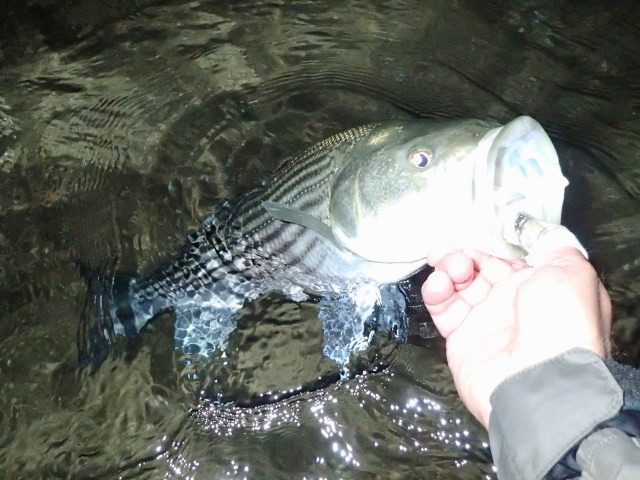
A spunky 22-incher, set against a mosaic tile bottom. We repeatedly marveled at the raw power of these fish. Happy Father’s Day to us!

OLYMPUS DIGITAL CAMERA