I love show season. For me, the front half of January is almost like the buildup to Christmas. And then, suddenly, it’s here. But in the case of the Fly Fishing Show, you have multiple days to enjoy things. It’s rarely, if ever, an emotional letdown. And in the case of this year, it was perfectly excellent.
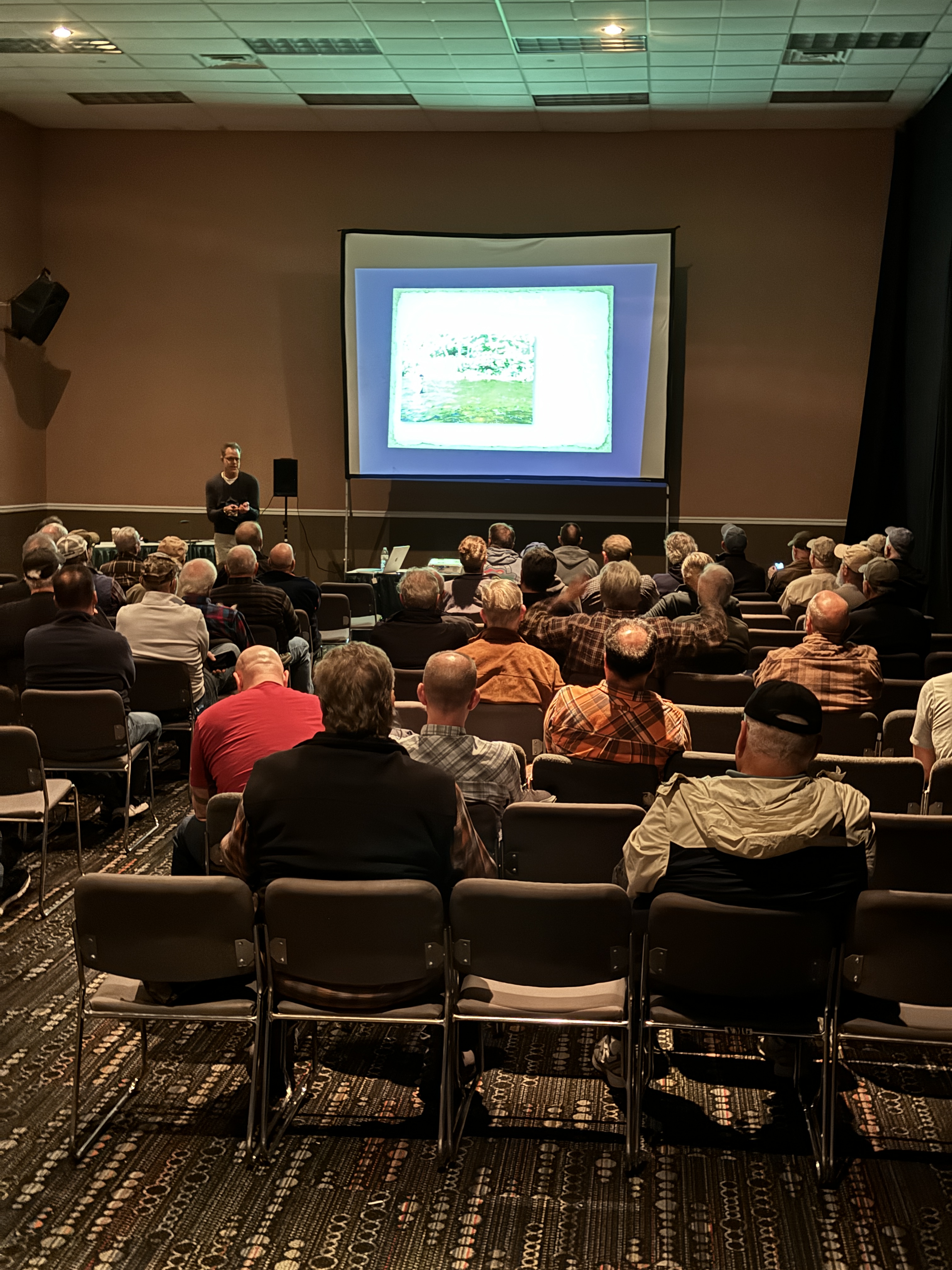
For starters, I was busy. Like talk here, then race down to there, get a bite to eat and say some hellos, and then setup and be Featured Tier, then zip back up there for a Seminar, and suddenly it’s 5:45pm busy. But it’s an extremely satisfying busy, especially so at this show. For my Friday noon Farmington River talk, I had standing room only, with people spilling out into the hall. Wow! More SRO at my Subsurface Caddis Lifestages tying demo. Then 35-40 people at my 4:30pm Seminar, which is a tough time slot to draw just a couple dozen. Double wow! If you were one of the people who showed up, thank you again. And if you’re one of the people who show up to my talks every year — I know who you are — I’m truly both humbled and grateful for your support.
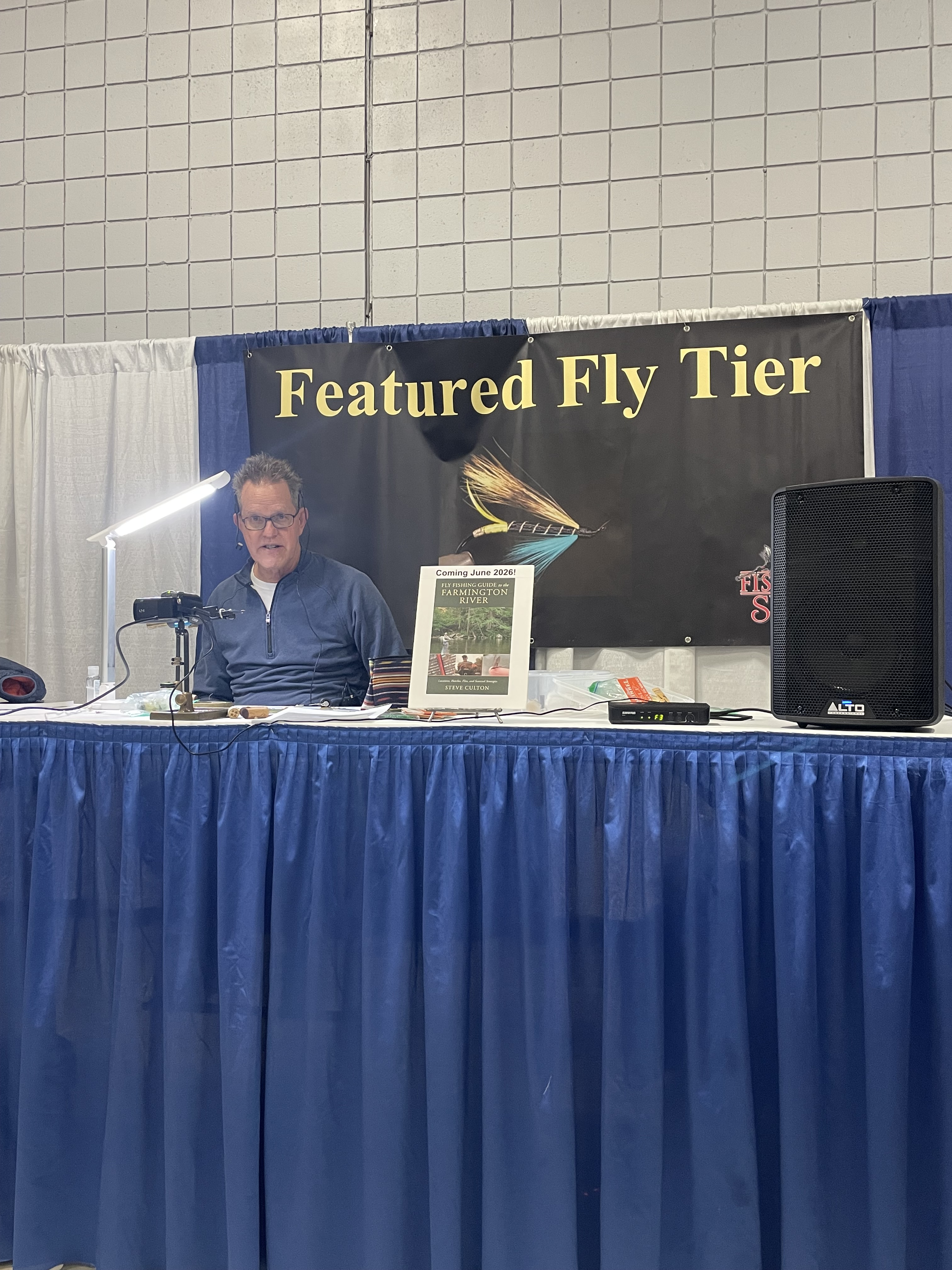
Yeah. You know that guy. I had two Featured Tier gigs, and I had a blast tying and teaching and talking.
I was so busy, in fact, that I got to spend far less time walking Tyer’s Row and socializing and meeting and greeting and — dare I say it — shopping. But, you make time.
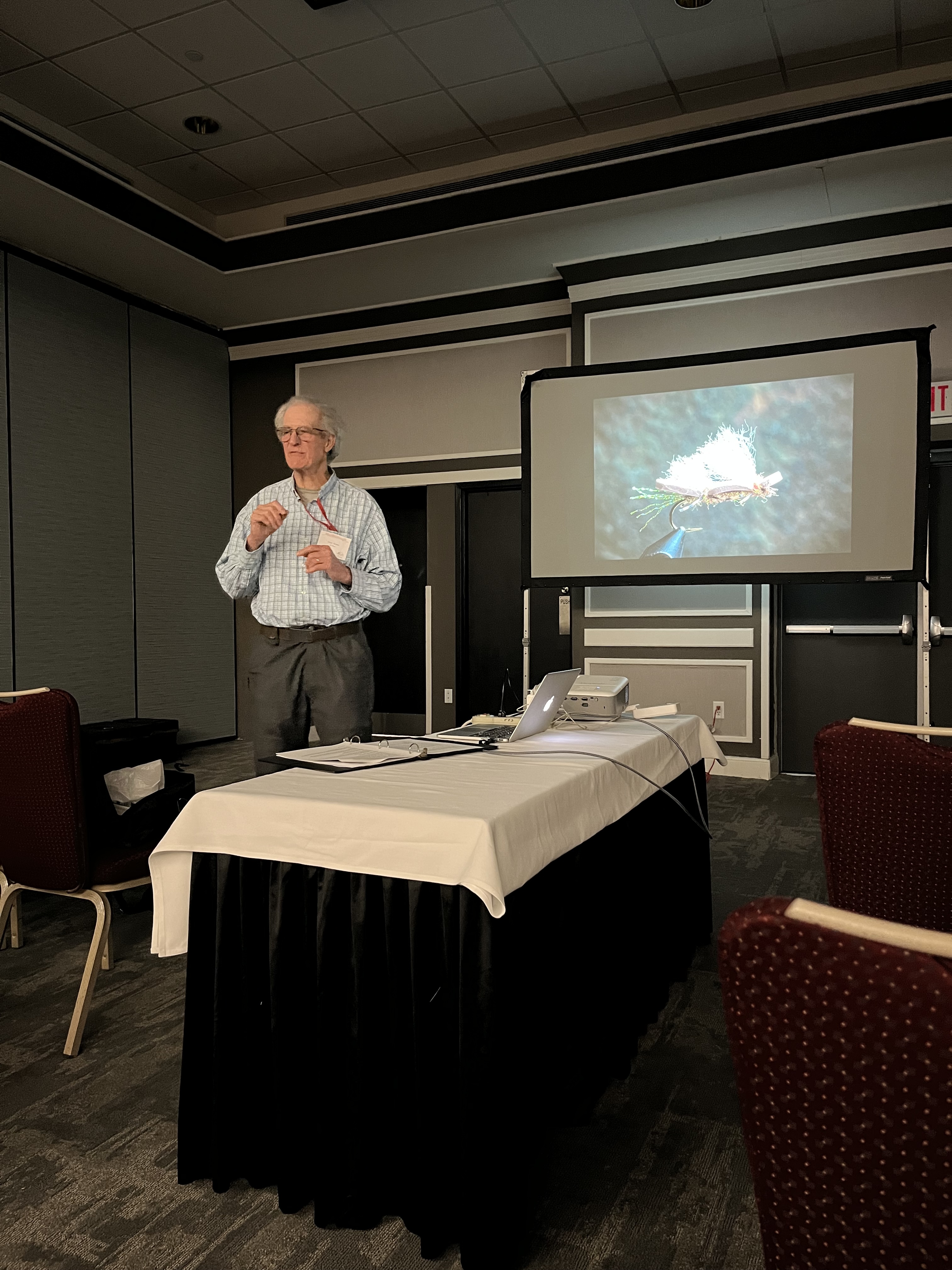
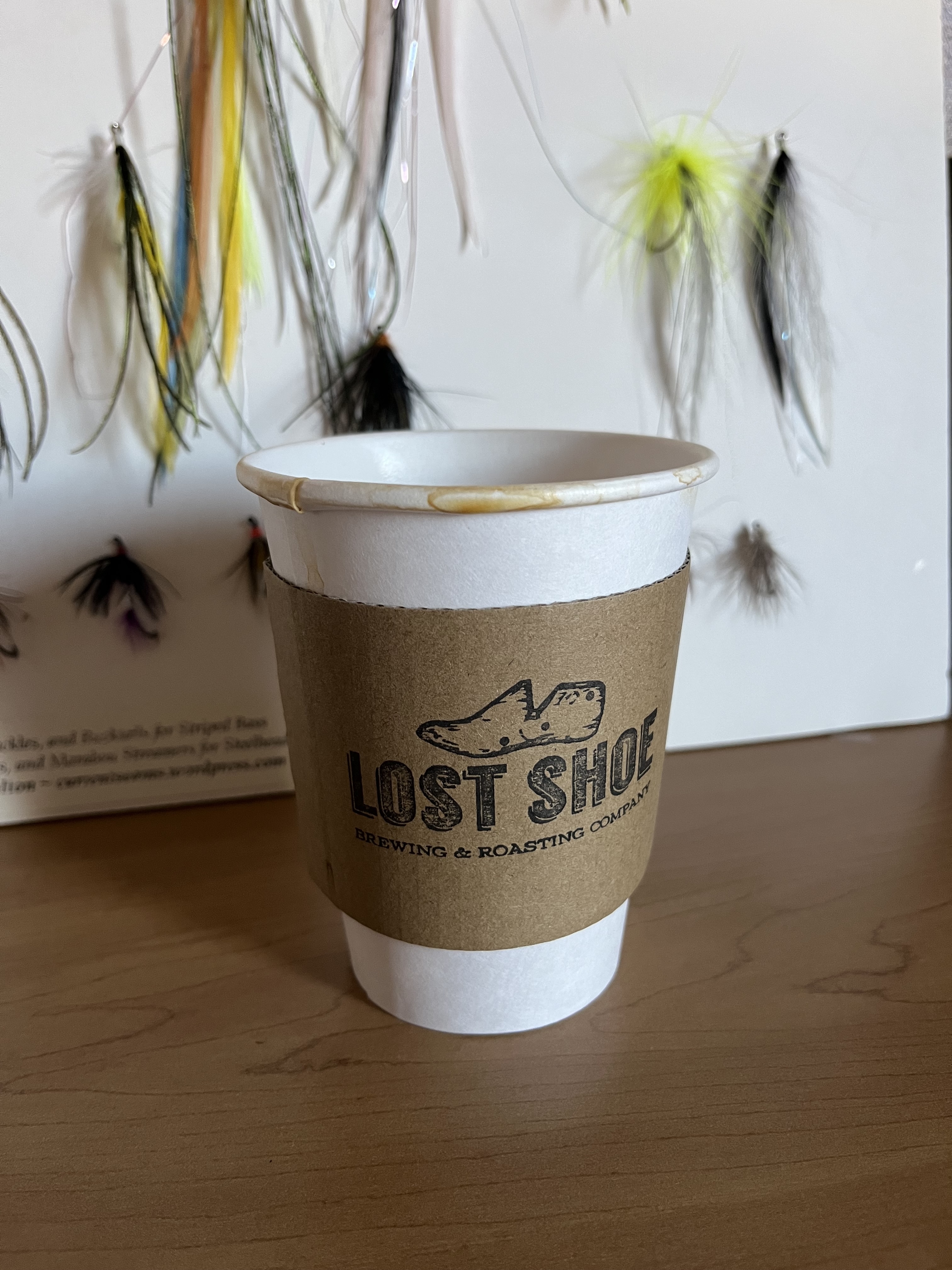
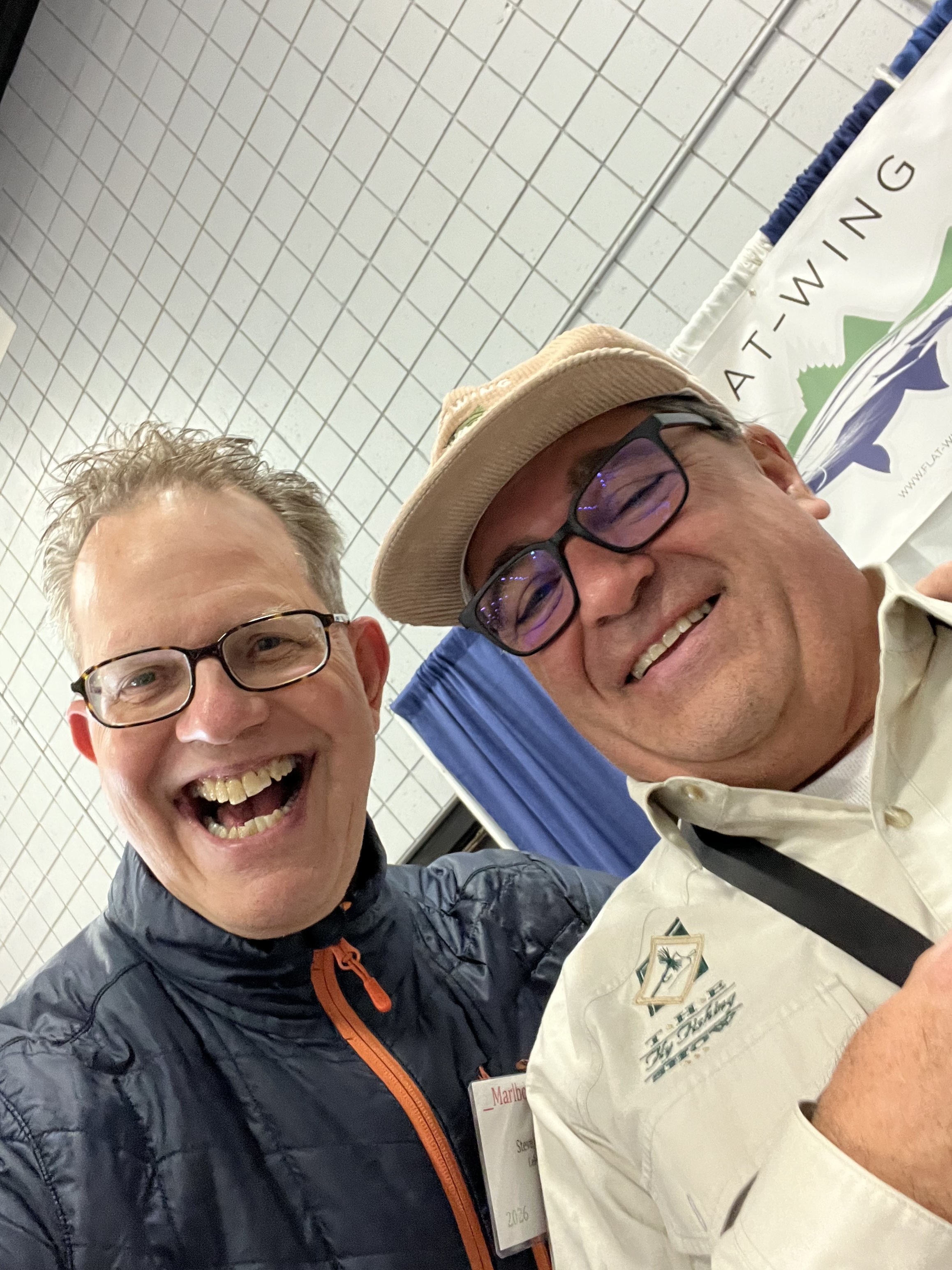
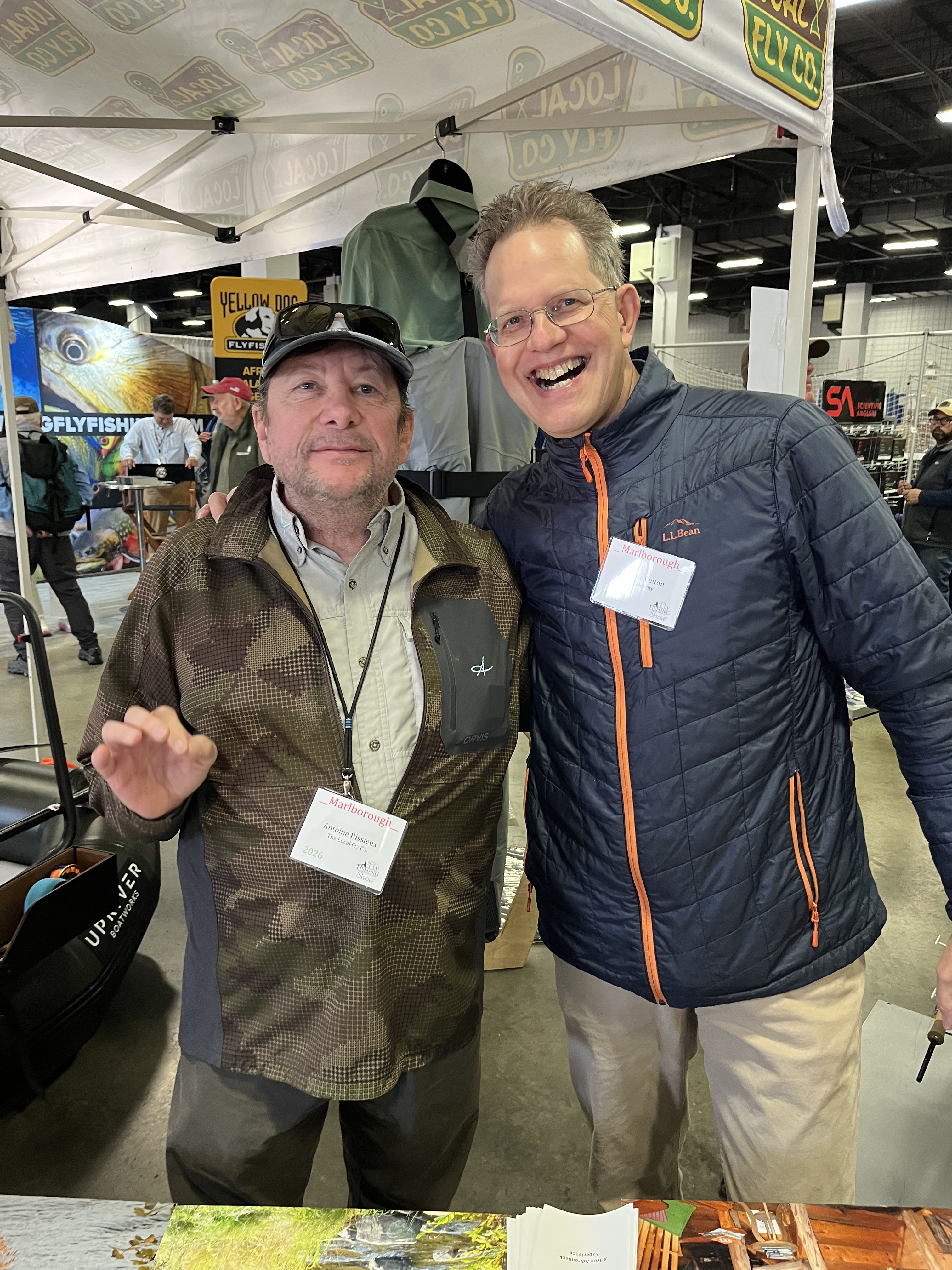
One thing I did get around to was meeting Tom Ames and attending his excellent presentation on modern hatch-matching. Ames’ original Hatch Guide to New England Streams was an invaluable reference material for the Farmington River book. He recently published an undated second edition.Don’t know where I’d be without my pour-over coffee. Oh, wait, I do — I’d be stuck with dreadful hotel coffee. Lost Shoe also makes beer, and I walked away with a four-pack of their double IPA for enjoyment at a later date. Lost Shoe is about 10 minutes away from the show. How convenient!The “Most Hysterical Moment of the Show” award goes to the gentleman who, while I was sitting at Joe Cordeiro’s booth (Joe was off doing a class), mistook me for Joe. When Joe’s assistant told him that I wasn’t Joe, the guy says, “Well, you two look exactly alike!” I mean, you can’t make this stuff up. Cue the laugh track!It was cool to see so many familiar, local faces, among them pal Antoine Bissiuex who was there with The Local Fly Company. I can’t thank Antoine enough for all his help with the book. I think you’re going to really enjoy his contributions, his insights, and experiences.
Once again, I’m honored to be a featured presenter and tyer at the Marlborough Fly Fishing Show. The fun starts tomorrow, Friday January 18, with two presentations. At noon, I’m debuting a new version of my Farmington River program in Destination Theater Room B; at 4:30pm, it’s a seminar in the Release Room, Wet Flies 101. Sandwiched in between, I’m Featured Tier on the main show floor at 2:30pm with Subsurface Caddis Lifestages. Saturday the 17th is just as busy, starting at 10am when I’m Featured Tier demonstrating North-Country Spiders. At 11:30am, you’ll find me in the Seminar Catch Room presenting Finding Small Stream Nirvana. I finish the afternoon teaching a class, Beyond Cast and Strip: Presentation Flies for Striped Bass, from 2pm-4:30pm. No rest for the weary! Sunday morning is my 8:30am-11am class, Tying and Fishing Wet Flies. Noon finds me with an encore presentation of the Farmington River program in Destination Theater Room A.
As of this writing, I still have room in both classes. If you’ve never taken a FFS Classes With the Experts, this is a terrific way to spend some quality instructional time with me. It’s always a low student-to-teacher ratio, so you can be sure you’ll receive plenty of individual attention. And it’s fraction of the cost of a guided trip, so bonus, you. You can sign up HERE.
When I’m not speaking, I’m attending other talks and walking the show floor. Please come say hello. I’m expecting another strong turnout from currentseams followers!
Today’s question comes from Charly F, and it’s a good one. Q: What might you fish on the Farmington during January to March with no real hatches going on?
A: Let’s start with the hatches. There are times during the winter when there’s plenty going on hatch-wise. We don’t have the glamour mayfly hatches, but midges hatch year-round, and are a primary food source. You won’t see trout splashing on the surface like you will during a June Sulphur emergence, bit it is possible to find trout sipping midges or W/S Caddis (a hatch that is sadly on a downward slope) or early stones on the surface or in the film. It should be also noted that March is very different from January and February. But that’s an entirely different article!
If the question is, what does Steve Culton fish on the Farmington in the winter, I can be more specific. I used to do some winter dry fly fishing on the Farmington, but for various reasons I’ve cut back on that. (If I saw fish actively feeding on the surface, I would not hesitate to go the dry fly route.) Most of my winter fishing is nymphing or streamers. The method I choose depends on conditions and what I feel like doing on that day or hour. Much of what is hatching or available to trout in the winter is small. So if I’m nymphing, we’re talking a point fly no bigger than a #14 (like this Frenchie variant) and a dropper above it that’s a #18 or smaller, like a Starling and Herl. That gives me a mayfly/caddis nymph and a something midgey to show the trout. I’m less hung up on patterns than I am presentation: the best winter nymphs are often the ones that are presented at a dead-drift along the bottom in a trout’s feeding lane.
The book will be a tremendous resource for anglers who want to fish 12 months a year. I’ve divided the year into three-month quadrants, and list fly patterns of all types. You’ll also find seasonal strategies to help you determine fly selection, and when and where to fish.
Streamers are a different animal. You’ve got to be willing to accept blanks in the winter. But if the streamer bite is on, you’re going to have fun. I tend to favor core patterns like Coffey’s Sparkle Minnow or my Deep Threat. I don’t go bonkers trying to find a magic color. As with nymphing, presentation matters. I may simply do mended swings. I may go for depth with an integrated sink tip line, weighted fly, and then a slow retrieve. I may do both. What is paramount is that I cover water. I’m looking for that one trout that has a protein payoff in mind.
What’s important to note is that the winter bite can be notoriously fickle. Some days, it doesn’t exist. Other days, it’s 30-45 minute window. Some days (however rare) the feed bag is on from 11am-3pm. Hope that helps!
This is shaping up to be a very busy early 2026! But we like that. As you can see, January is mostly filled; even though there are theoretical dates available, I’m not taking any guide trips from now through January 26 (unless we’re already booked, in which case we’re good to go!), although I could potentially do a Zoom presentation.
So, if you’re the person in charge of arranging speakers for your group, have presentations, will travel (within reason). Or, if we’re geographically undesirable, that’s why they have Zoom. You can find my current presentation menu here. If you’re itching to get out on the water, we can make that happen after January 26.
I’ll have more details as the list fills in, as well as book release updates. I’m hoping for a strong turnout from currentseams readers at the Fly Fishing Shows, so make sure you come say hello.
Admit it: you saw this one coming a mile away. If so, pat yourself on the back, and treat yourself to a New Year’s toast. If you missed with your guess, there’s always next year (now only 365 days away)…
#1: Finishing the Fly Fishing Guide to the Farmington River. I have to admit that while I knew this book would be a lot of work, I didn’t know it would be as much work as it was. Part of it was that I thought I had finished half of it back November 2024. The reality was, instead of over 50% of the manuscript, it was only around 40% of what eventually became over 100,000 words. Then, I needed more photos. I finallyfinished it in June this year. And technically, I’m not quite done — I’m still waiting for final page proofs for final approval before it all goes back to the publisher during the first week of January.
And then…it’s off to the printers and hurry up and wait. As of this writing, I still think we’re publishing June 1. I’ll let you know as the drop date draws near. I’ll also let you know if I’m going to be doing a pre-sale here. Again, tbd. Looking back, I’m immensely pleased by what I’ve written, and I think you will be, too. And of course, there’s one more big question to be answered: What’s my second book going to be about?
While this cover follows the Stackpole “Fly Fishing Guide To” format, I do like it. Bob Lindquist took the hero shot, and that’s Joey Takeman’s box on the lower left.
Much of what’s on this list involves personal achievement. Of course, there’s nothing wrong with that. But what about actual fishing? Because of the book, I did less fishing this year than in recent memory — especially striper fishing, which was limited to less than a dozen outings(!). However, I did get in a good number of guide trips (thanks again if you were one of the anglers I took out this year) and I madeup for some lost time during the summer months. Which brings us to #5…
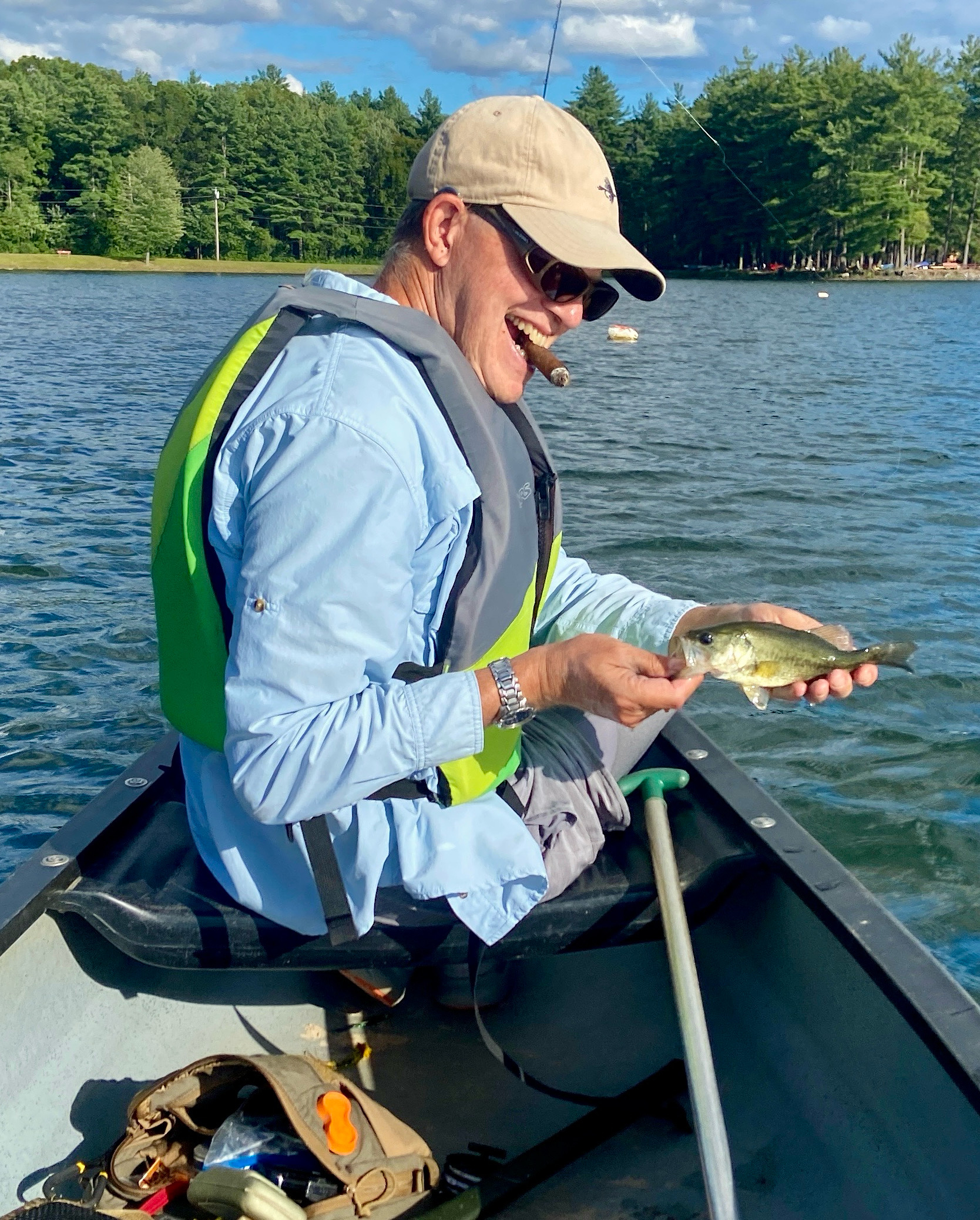
#5: Reconnecting and Fishing with Old Friend and Mentor Mark Bieber. This was a late summer bass trip, and one that, looking back, made me wish I’d done it years sooner. We fished the pond at Winding Trails in Farmington from a canoe, Mark with spinning gear and me with the long rod. Largemouth bass were the target, and we both scored multiple fish. So what if they were smaller than an average Farmington River trout? Fishing with a dear friend who had a major positive impact on your life is time well-spent, fish count and size be damned. And if there’s a cigar in the bargain? That’s really a win! We’re already planning on going next spring.
Bass are truly under-rated and under-fished with the fly rod. This ambitious junior bucketmouth ate a Soft Daddy Crayfish.
#4: Pecking Away at Steelhead. I managed three steelhead trips this fall. When I was chained to my keyboard, I kept picturing indicators dropping and reveling in the knowledge that I would be fishing soon for these prized piscines. The first trip was to Erie, where low water and a dismal fall run kept the numbers down, and the relishing of each fish landed sky high. Trip two was to Pulaski, where there were plenty of fish, but — as always — an abundance of anglers. My batting average in the first day stunk; it was much better on the second day, but I only had three touches all day. Finally, our December trip was a bust of sorts: a 2-hour window of decent conditions, then it went south fast, culminating in a cancellation of the second day. So, the quest for 300 goes on. If you’re keeping score at home, I’ve now landed 288 steelhead.
The December trip wasn’t all bad. Here’s Gordo with his first steelhead ever on the fly rod. Proud papa!
#3: Being Named to the Regal Vise Pro-Staff. This is something I’ve been wanting for a long time. It finally became official at the 2025 IFTS. I’m going to do my best to be a swell brand ambassador, and you can see me and my Regal vise in action at the Fly Fishing Shows in Marlborough, Edison, and Lancaster this winter.
No photo/bio yet. But trust me, I’m there.
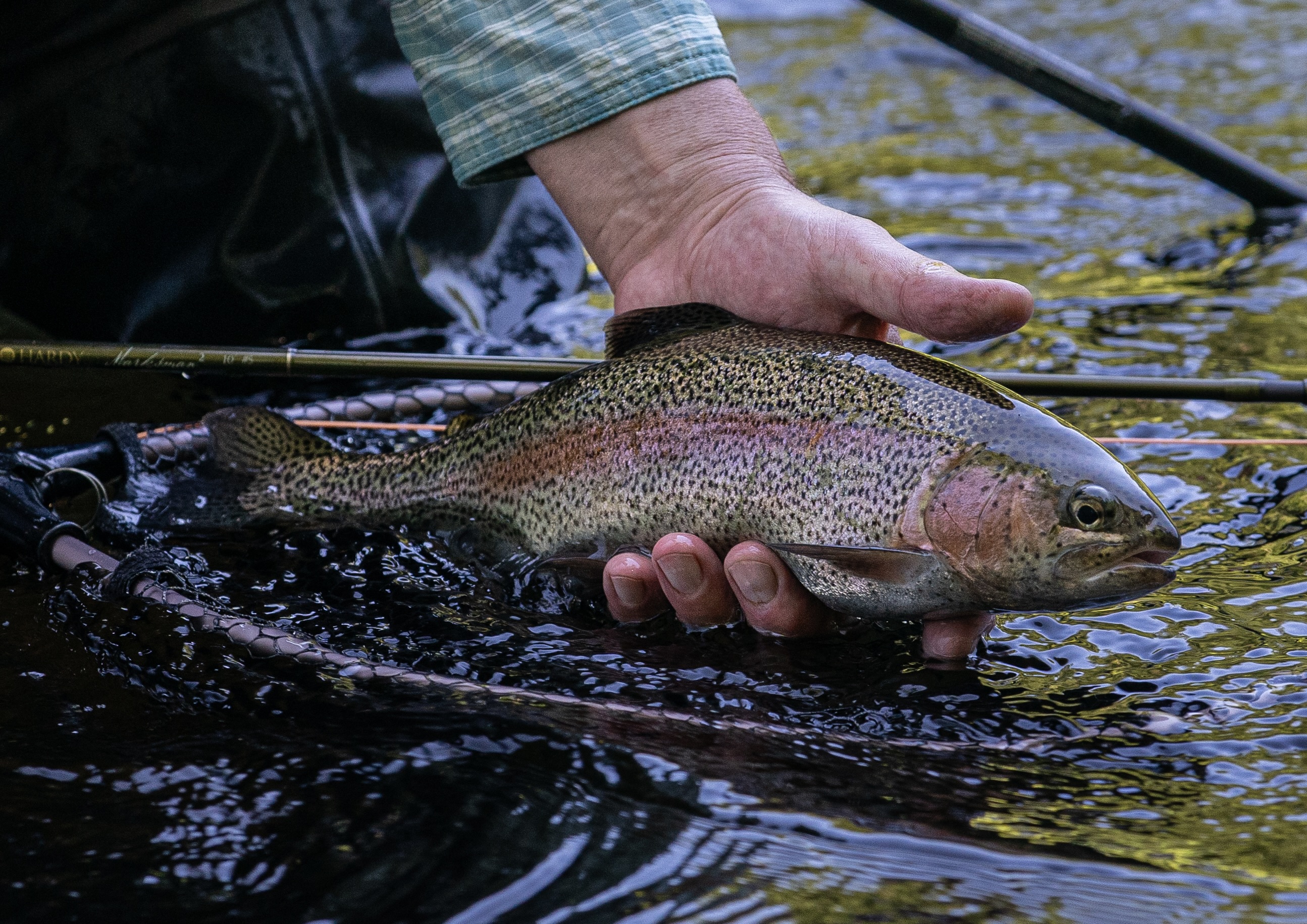
#2: First Time Fly Fishing Montana & Idaho. The bad news was that we went during one of the worst times to fish. The good news was that I got to fish four days in Montana and Idaho. We did a family drift boat trip on the Kootenai one day, and I drifted solo (with a guide) the second. It was a trip of firsts, not only location-wise, but with five new species: native redband rainbow, cutthroat, cuttbow, whitefish, and pike minnow. I did some lake fishing solo, and then we floated the Madison as a family. Gadzooks! I still haven’t written about the second half of the trip. Let’s get that on the to-do list right quick.
Cuttbows sure are pretty things. I have no idea how many fish I landed on the second day. I took them on top dry, on nymphs, and swinging wets. Spectacular action, and all of them wild fish.
I normally do my yearly “Best Of” wrap-up in four segments of 3-3-3-1, but since we’re running out of days, we’ll do it in three. And away we go!
#10: Fly Fishing Shows and IFTS. I remember going to the Fly Shing Show in Marlborough many, many years ago, and thinking, “the next time I come to this show, I’m going to be a presenter.” It took a few years for me to get there, but since then I’ve never looked back. Presenting to an audience and teaching fly fishing still gives me a jolt of energy and pure enjoyment. Whether you’re a speaker or listening in, there’s no better place to ask questions and learn. November’s IFTS unofficially kicked off the 2026 show season, which is nearly upon us. I’ll be doing three days in Marlborough, three days in Edison, and, for the first time, the Lancaster PA show in March.
Thank you, everyone, who came to see me speak, watch me tie, or take a class. See you next month!
#9: Farmington River Book Research and Photos. As you can imagine, writing a guide book is a lot of work. And since I do nothing that I’m passionate about halfway, this was a lot a lot of work. But, it was a labor of love. And I learned so much about the river! In fact, I was surprised to discover how much I didn’t know. I got to interview dozens of fascinating, knowledgable people, hang out with them and watch them fish, take photos, and soak it all in. I can now say that I have walked, waded, and/or fished the entire 22 miles of river from the base of Hogback Dam to the steel bridge in Unionville — and then miles more below. I don’t know many people who can make that claim.
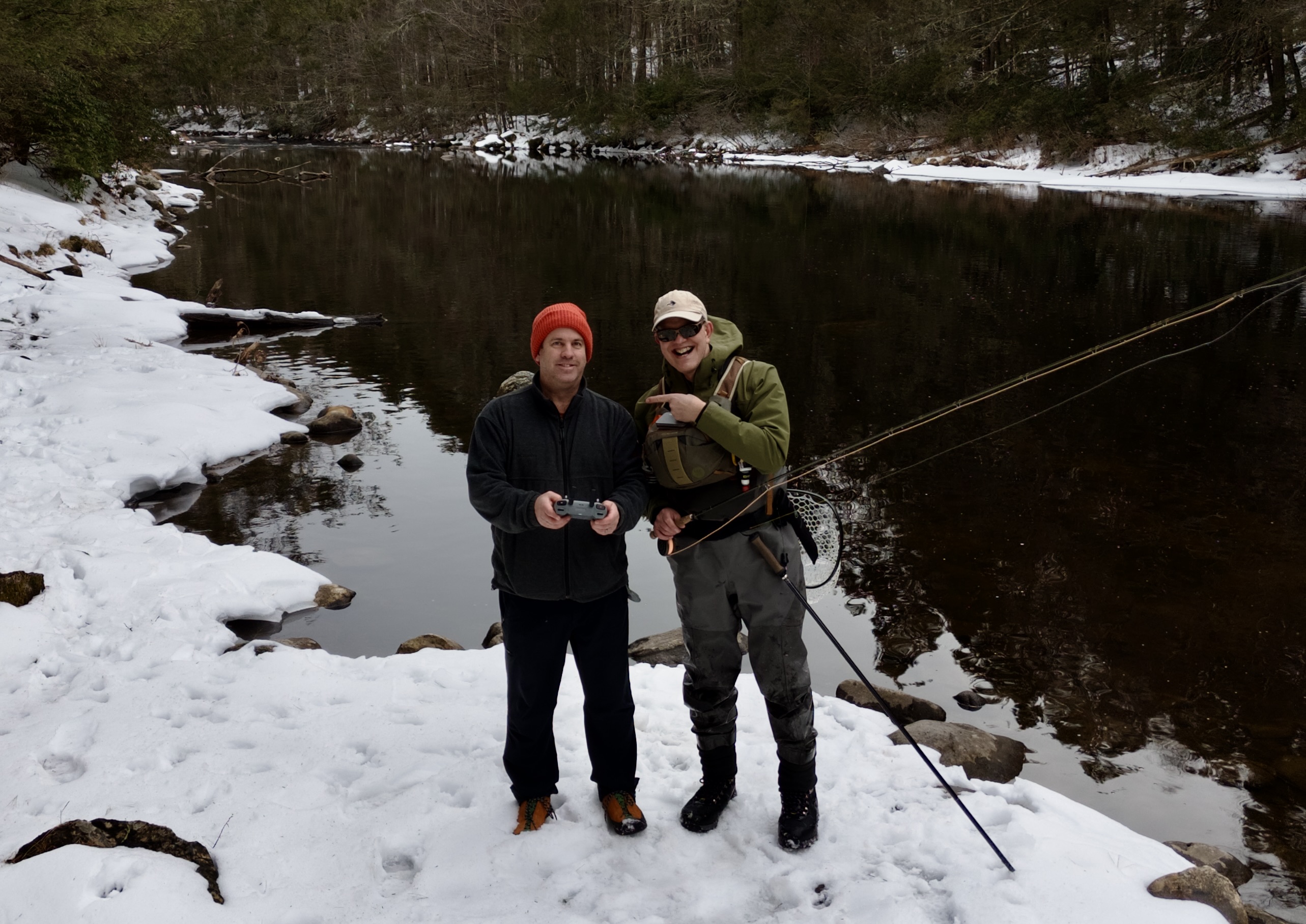
Matthew Vinick took all the drone pictures in the book. There’s some really good stuff!
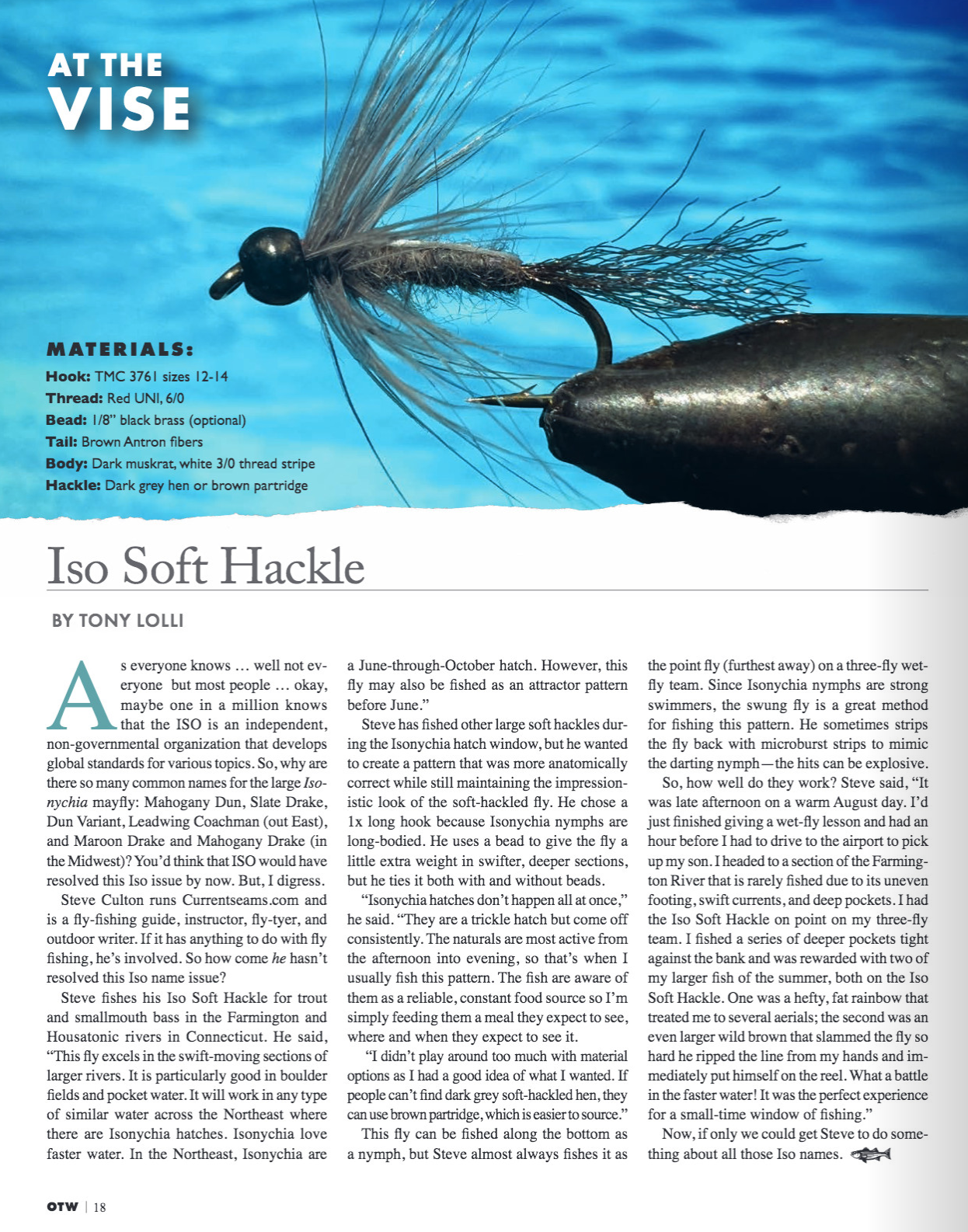
#8: Another Year Being Featured in On The Water‘s Guide Flies. I’m not sure how long I’ve been doing this, but every year I play, and every year, it’s still a gas to see my name in print next to a fly I tied.
My advice for when you fish the 2025 pattern, the Iso Soft Hackle, is: hold on to your rod.
#7: Being Named Again to the Feedspot Top 40 Fly Tying Blogs. My ranking of #17 isn’t really what this is all about; rather, it’s the company Currentseams keeps. AvidMax. Fly Tyer. MidCurrent. Gink and Gasoline. Orvis. Just to name a few. These are all quality sites, worthy of your attention, and I’m honored to be included along with them. Here’s fun project for you to tie: https://www.youtube.com/watch?v=wZFZQTmJmEs
#6: Alan and Steve’s Excellent Albie Adventure. We’ve been planning to do this for years, but finally saltwater angler extraordinaire Alan Caolo and I were able to spend a morning in Rhode Island chasing funny fish. Or, rather, waiting for them to come to us. Pickings were slim, but a splendid time was had by all, and Alan is an excellent teacher and an all-around swell guy. You can read all about it here.
It’s hard for me to grasp the concept that 2025 is almost over. Hopefully, you had an excellent year and caught plenty of fish, particularly that lunker, or that one that wouldn’t eat, but finally did. Your readership and interest in currentseams — and especially the book — is a truly wonderful gift. So: thank you! I’m hoping to put together my traditional best of the year review, starting later this week. Show season is coming fast, so stay tuned for a list of my appearances. In the meantime, festive family fun, food, and wine is calling. Joy to the world!
Tuesday greetings from the Currentseams world headquarters. The show season is upon us, and I have a partial schedule for the Edison, NJ Fly Fishing Show, which happens January 23-25. If you’ve never been, this is the biggest fly fishing show in the world: vendors, tiers, outfitters, guides, world class fly fishers, and instruction. Not to be missed!
Friday, January 23: Seminar, Catch Room, 10:15am: Beyond Cast and Strip — Presentation Flies for Striped Bass
Saturday, January 24: Seminar, Strike Room, 9:45am : Modern Wet Fly Strategies; and Class, 2pm-4:30pm: Beyond Cast and Strip — Presentation Flies for Striped Bass
Sunday, January 25: Class, 8:30am-11am: Tying and Fishing Wet Flies
Classes are a terrific way to get more personalized instruction without the cost of a guide trip. It’s the next best thing to being on the water!
I don’t have my Destination Theater schedule yet, but when it comes in, I’ll certainly share it here. All seminars and Destination Theater talks are included in your admission ticket. You must pre-register for classes, and you can do that here.
Part memoir, part how-to, Ed Van Put’s A Flyfisher’s Revelations: Practical Tips, Strategies, and Wisdom From 50 Years Experience from Skyhorse Publishing. print ISBN: 978-1-5107-8333-1, is absolutely essential reading for any serious trout angler. I loved this book. I’d only heard about Ed after he passed away a year ago, so the name carried no particular weight. That’s a pity, because this is a man I would have like to have sat down with for a chat or an interview — or even better, spent some time together on a river.
If you want to be one of the 10% of the anglers who catch 90% of the fish, Ed’s book is an excellent place to start.
Your permission to believe me comes in the form of a back-cover blurb, where Lee Wulff calls Ed, “one of the best trout fisherman I know.” Once you dive in, you quickly glean that Lee is spot-on. While one of Ed’s claims-to-fame is that he valued presentation over fly selection (he’s known for using very few different patterns on the river, and clams that 70% of his dry fly hookups came from on an Adams), there are plenty of fly patterns pictured, and recipes, in the book. That’s of particular interest to a fly tying nerd like me.
This book works for both beginning and advanced anglers alike. I’m always thrilled when someone who I perceive to be a better angler than me talk about concepts and tactics that I myself teach. Rookie anglers will be able to grasp the over-arching principles without getting bogged down in minutia. I also liked that he starts every chapter with a meaningful quote from another angler. My copy is filled with highlighted sections for future reference.
Now, I’ve gotta go through it all again. There’s more fish to be caught!





 currentseams.com