The case for smaller (and fewer) fly boxes.

When the rest of the world zigs, Steve Culton usually zags. Nowhere is this more evident than in my fly fishing (wet flies, anyone?).

When I was researching the Fly Fishing Guide to the Farmington River, I spent a significant amount of time on and off the water with other guides and serious, highly skilled anglers. One thing they all had in common: they carried lots and lots of fly patterns. They also tended to have multiple fly boxes. Even a see-through plastic-lidded nymph box a little larger than a letter-size envelope has room for over a hundred flies, and many of those boxes they carried were filled. What they didn’t carry, they kept in more boxes in their vehicle. Out west, my good friend Pat Dorsey also has a — I think the scientific term is “shit ton” — of fly boxes stuffed with fly patterns. (He may have more midge patterns than I have total flies!) Pat’s one of the best guides on the planet, so he’s doing something right.
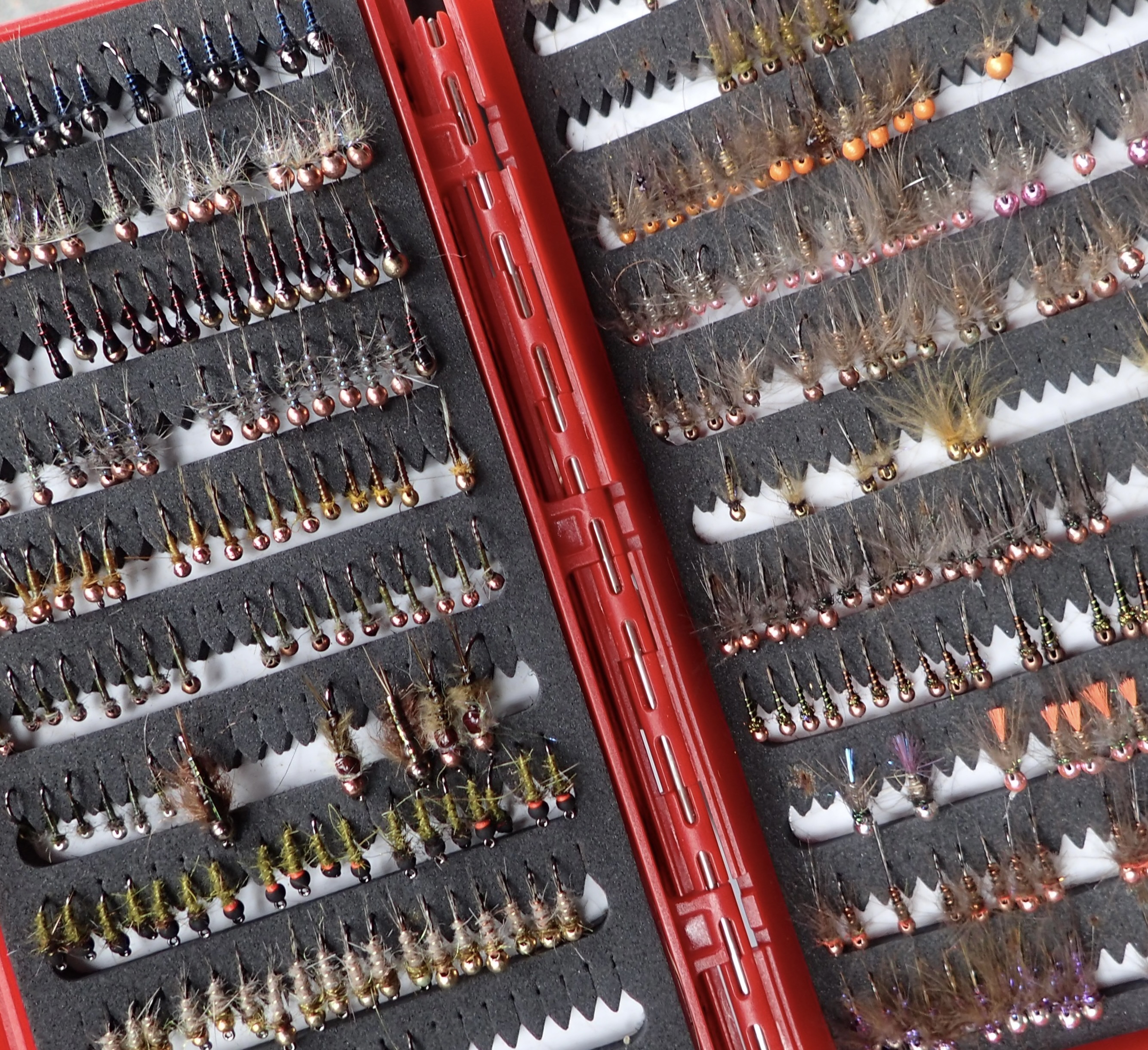
One of Joey Takeman’s many nymph boxes. I was impressed by the sheer volume of patterns he carries, and clearly, as a skilled Euro-nympher, he needs more variance in bead weights to match water speed and depth than a drop-shot nymph guy like me. But this cannot be understated: Joey has a system that works, and works very well for him.

There are two points of consequence that must now be stated.

The first is that clearly, these people have a system that works for them. They will likely be prepared for any situation with any number of patterns, variants, sizes, and colors. They believe in their system.

The second is that this approach is not for me (see “Steve Culton zags,” above).

I don’t want to carry that many patterns, let alone tie them. It’s not a matter of brain freeze, or fear of paralysis by analysis. Clearly, I do not suffer in the slightest from FOMO. It’s simply this: I have, over time, curated a selection of high confidence patterns that consistently produce. Yes, I do occasionally add new patterns into the mix. But many of the patterns I use on the Farmington have been in my rotation for decades: the Magic Fly, BHSHPT, and Squirrel and Ginger, just to name a few. I’m in good company. Legendary guide and Catskills trout angler extraordinaire Ed Van Put was famous for using precious few flies over the course of the season, even on highly technical rivers like the Delaware.
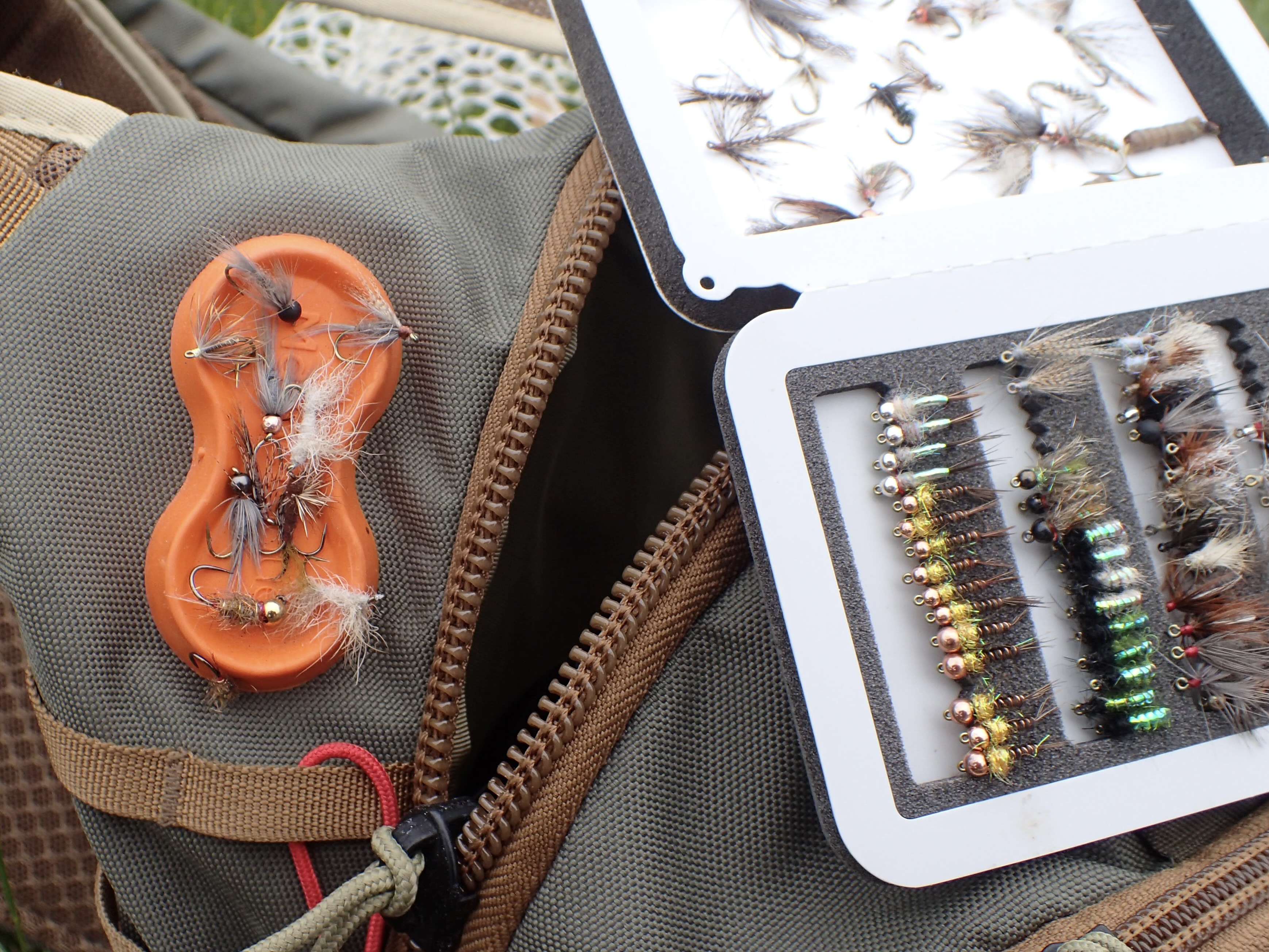
I’m a huge fan of this “day’s worth” size box, right, from C&F Design. I have several of them, each filled with seasonal patterns and fly types. This is my early season nymphs and wet flies box. Note the incredible lack of selection, though to be fair, some rows are out of sight. I’ve since migrated the nymphs to a more traditional nymph box, the kind with the see-through cover. I keep that in my pack 24/7, along with a few of these small C&F boxes, to keep me covered for various scenarios. I attach the C&F box to my pack with a Velcro patch; they’re easy to rotate in and out, so I have what I need at my fingertips, and right in front of my face. Photo from the “Fly Fishing Guide to the Farmington River,” coming August 4, 2026.

Use the system that works for you. Because this is true: confidence catches fish.

Book Review: “A Flyfisher’s Revelations” by Ed Van Put

Part memoir, part how-to, Ed Van Put’s A Flyfisher’s Revelations: Practical Tips, Strategies, and Wisdom From 50 Years Experience from Skyhorse Publishing. print ISBN: 978-1-5107-8333-1, is absolutely essential reading for any serious trout angler. I loved this book. I’d only heard about Ed after he passed away a year ago, so the name carried no particular weight. That’s a pity, because this is a man I would have like to have sat down with for a chat or an interview — or even better, spent some time together on a river.

If you want to be one of the 10% of the anglers who catch 90% of the fish, Ed’s book is an excellent place to start.

Your permission to believe me comes in the form of a back-cover blurb, where Lee Wulff calls Ed, “one of the best trout fisherman I know.” Once you dive in, you quickly glean that Lee is spot-on. While one of Ed’s claims-to-fame is that he valued presentation over fly selection (he’s known for using very few different patterns on the river, and clams that 70% of his dry fly hookups came from on an Adams), there are plenty of fly patterns pictured, and recipes, in the book. That’s of particular interest to a fly tying nerd like me.

This book works for both beginning and advanced anglers alike. I’m always thrilled when someone who I perceive to be a better angler than me talk about concepts and tactics that I myself teach. Rookie anglers will be able to grasp the over-arching principles without getting bogged down in minutia. I also liked that he starts every chapter with a meaningful quote from another angler. My copy is filled with highlighted sections for future reference.

Now, I’ve gotta go through it all again. There’s more fish to be caught!