The Downstream Wet Fly on High-Gradient Brooks

This piece first appeared in the May 2014 issue of Mid Atlantic Fly Fishing Guide. Many thanks to MAFFG for allowing me to share it on currentseams.

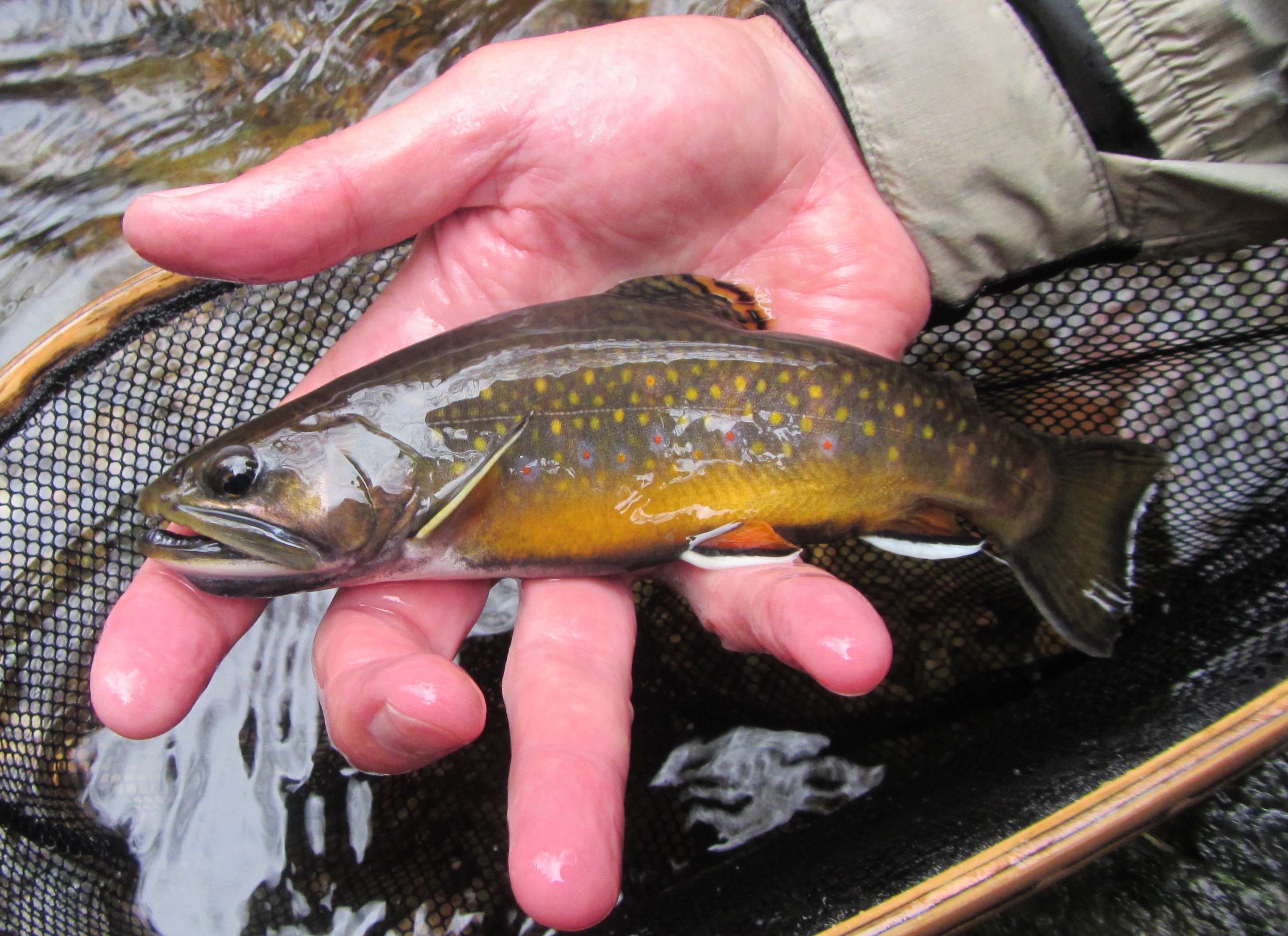
It all started with a bushy dry – an Elk Hair Caddis – that I was presenting upstream. I was fishing one of my favorite thin blue lines, a high-gradient brook nestled deep in the Appalachian foothills. “Brook” may be too generous a word; it’s more of a connected series of waterfalls than anything else.

For years, I had been fishing this exquisite gem with dry flies, always moving upstream, casting into the white water at the head of its plunges. While I’d had a few takers on this day, the brookies weren’t throwing themselves at the dry with their usual fervor. Of course, in unspoiled waters such as this, catching is secondary to simply being there. But on my return down the trail, curiosity got the better of me.

Surely, I reasoned, there were char in the pools where I blanked. Maybe they were just bashful about showing themselves on the surface. A quick rummage through my fly box produced a bead-head micro-bugger, about a size 14. The fly had barely settled beneath the surface when it was set upon by a band of shadowy marauders. Clearly, I was on to something.

The science behind the subsurface magic.

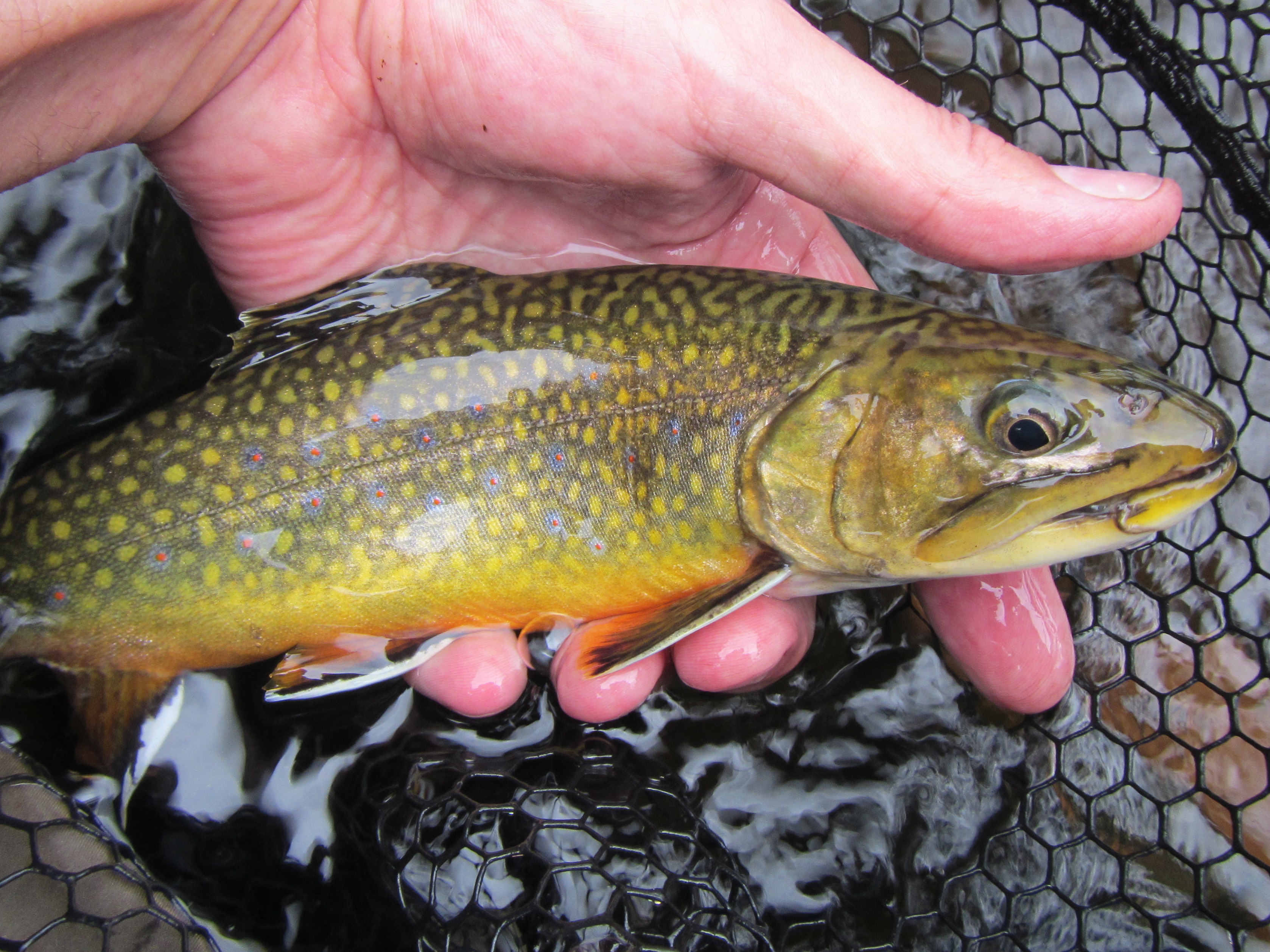
Small stream wild brook trout aren’t renowned for their selectivity. In streams where significant, regular hatches may be a luxury, highly opportunistic feeding habits are crucial for survival. But survival isn’t solely about eating. It’s also about limiting exposure to predators. Every time a brookie rises to the surface, it becomes a target for birds and mammals. Bigger fish are older fish, and older fish get that way by minimizing their chances of getting eaten.

Water level plays a significant role in how you decide to fish a brook. Many small streams are dependent on rainfall to supplement their flows. During extended periods of low water, wild fish settle into survival mode. They keep activity to a minimum, especially in daylight. You may not see them, but they’re there, hunkered down along the bottom, beneath deadfall, submerged ledges, and undercut banks. Good luck getting these ultra-cautious, spooky fish to rise to a dry. But, a submerged fly is an entirely different matter. Even the wariest trout finds it difficult to resist the temptation of a meal drifting past at eye level.

High or deep water also presents a unique set of challenges. Some of the plunge pools I fish are overhead deep, even during normal flows. Trying to coax a brook trout to move six feet to the surface to take a dry is not a high percentage play. Use a weighted soft-hackle to shift the odds in your favor. James Leisenring encouraged anglers to fish their fly “so that it becomes deadly at the point where the trout is most likely to take his food.” Translation: fish beneath the surface. Make it easier for the brookies to eat.

What’s more, brook trout are highly curious creatures. They are eager to investigate new arrivals to their world, especially if it poses no threat, looks alive, and seems like it might be something good to eat. Just as it happened that first time I fished a deep wet, I find that brookies will race each other to take the fly. Often, the competition doesn’t end until the last char has been hooked.

Presenting the downstream wet.

I like to position myself in front of the head of the pool I’m fishing; that often means I’m standing in the tailout of the pool above, along its banks, or on the rocks that create the waterfall (if there is one). Stealth is a matter of conditions and experience. Some pools have a deep holding run with a lane of whitewater or a riffly, mottled surface; in these, you can take a more cavalier approach. Others demand that you channel your inner commando, crouching, crawling, or hiding behind saplings and boulders to get into casting position.

In a plunge pool, I’ll begin by jigging my fly into the whitewater. Delivering the fly can hardly be called a cast; I’m simply dunking it and manipulating the rod tip with an up-and-down motion. If I don’t get a strike – and I’m always surprised when I don’t – I’ll strip out a few feet of line and repeat the process a little farther downstream.

Shallower runs invite you experiment with classic presentations such as the wet fly swing or the mended swing. With the former, you’re making a quartering cast down, then letting the fly swing across and up toward the surface. To slow the speed of the fly as it swings, simply add a few upstream mends.

Letting a soft-hackled wet fly hold in the current downstream – also known as the dangle – is almost never a bad idea on a small stream. As the hackles flutter in the current, they whisper to the brookies, “I’m alive.” By all means, add to the illusion of life with short, pulsing strips, or by drawing the fly toward you, then letting it fall back in the current.

Three proven small stream wets.
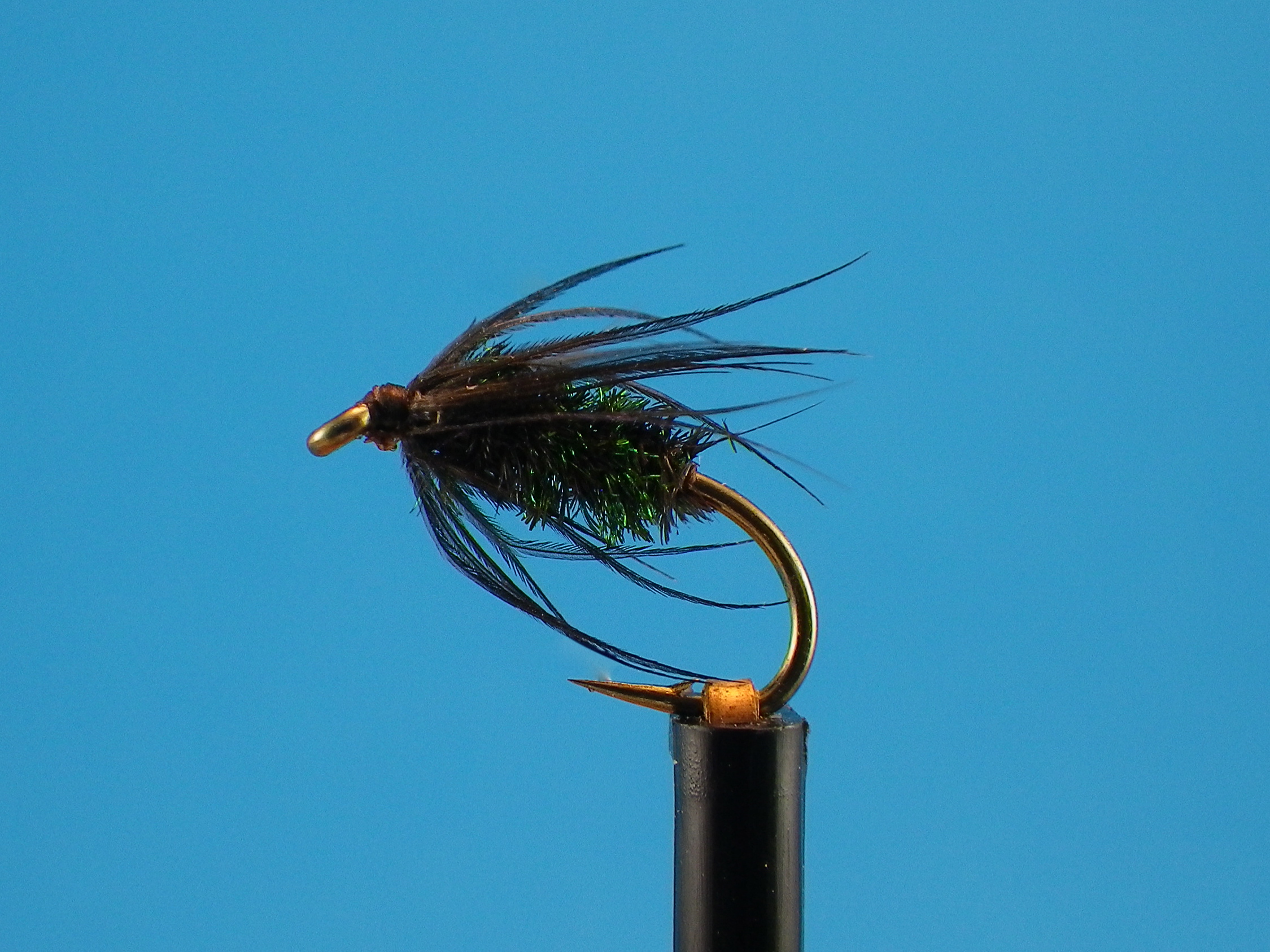
Starling and Herl
Culton_Downstream_Starling&Herl
Hook: 1x fine, size 10-18
Thread: Black
Body: Two strands peacock herl, twisted on a thread rope
Hackle: Iridescent starling body feather

In the warmer months, terrestrials are a major component of the small stream trout’s diet. The Starling and Herl is an old English pattern that makes a fine imitation of an ant, a beetle, or even a dark caddis or stonefly.

~
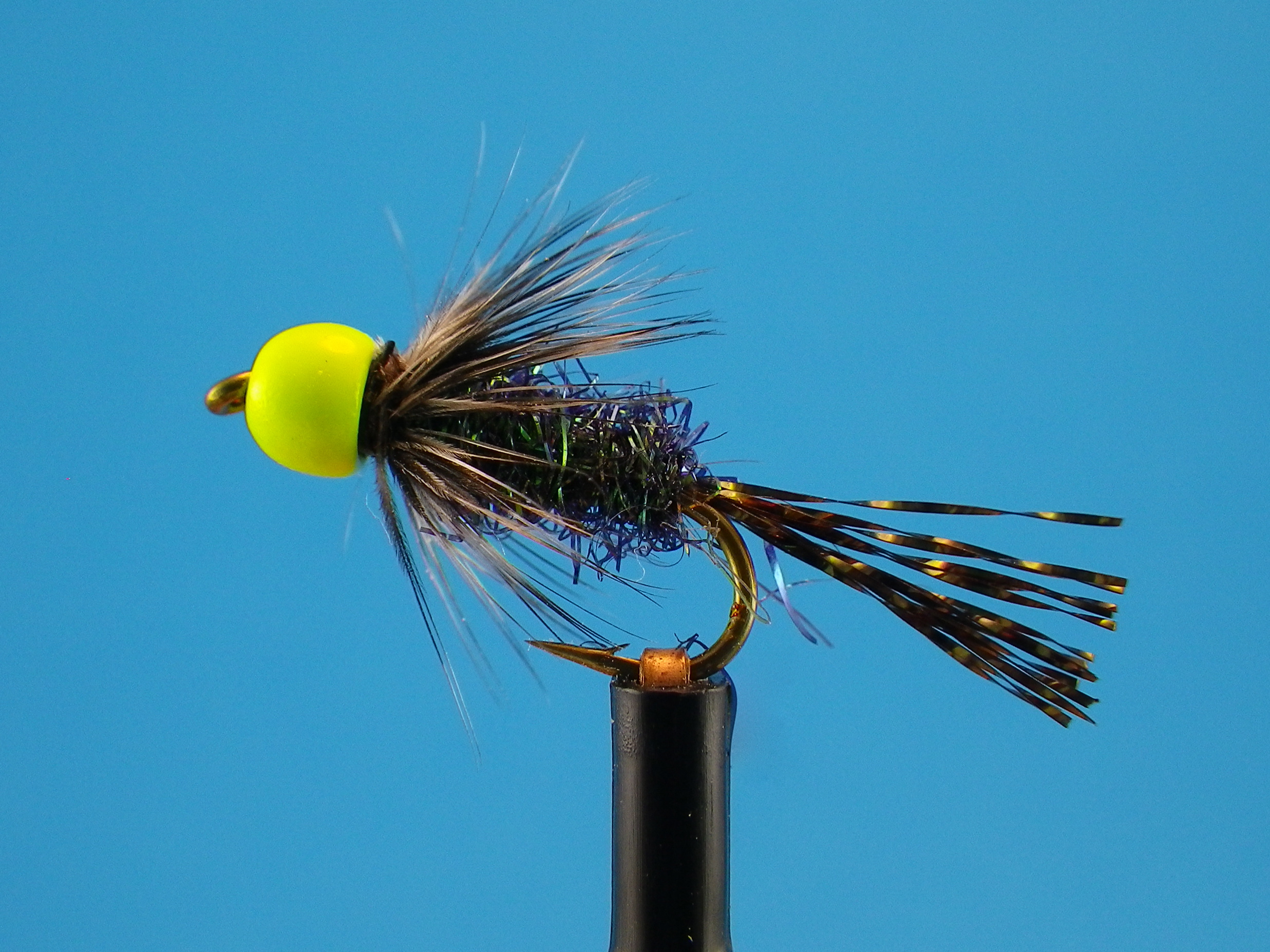
ICU Sculpin
Culton_Downstream_ICUSculpin
Hook: TMC 5262 size 14
Bead: Chartreuse tungsten
Thread: Black 8/0
Tail: Black Krystal flash
Body: Black peacock Ice Dub
Hackle: Grizzly
Sculpins are a favorite snack of wild brook trout, but this pattern is more of an impressionistic attractor than an exact imitation. Whatever the brookies think it is, the high contrast of the ICU Sculpin’s chartreuse bead against its dark, sparkly body makes this fly easy to see, even in a pool several feet deep.
~
White Mini-Bugger
Culton_Downstream_MiniBugger
Hook: TMC 5262 10-12
Thread: White
Bead: Copper tungsten, seated with weighted wire
Tail: Short marabou wisps over pearl Krystal flash
Body: Small white chenille, ribbed with pearl flash, palmered with soft white hen

I’ve made several strategic changes to the classic Woolly Bugger template. The tail is shorter and sparser, which cuts down on nips away from the hook point. The hackle and collar is soft hen. And with a tungsten head and wire underbody, this fly sinks like a stone, causing it to rise and fall like a jig when you strip it.
Thanks TU Naugatuck/Pomperaug

Last night I presented “The Eastern Brook Trout — Connecticut’s Wild Native” to the TU Naugatuck/Pomperaug Chapter. It was my second time speaking before the group, and a splendid time was had (I think) by all. Great to re-meet and re-greet, many thanks for the all the questions and, of course, the pizza.

Wishing I was chasing him instead of being chained to my laptop.

IMG_2314

Final days to help striped bass! Comment on Draft Addendum IV!

ASMFC has been holding hearings this month on the future of east coast striped bass management. If you were unable to attend a hearing, as I was, they will accept email comments until tomorrow, September 30. Here’s what I sent them.

Section 2.5.1 and Section 2.5.2 – I am in favor Option B. We should be referencing the best available, most recent science (as set out in the 2013 Benchmark Assessment) when determining courses of action.

Section 2.6 – Option A. Clearly, a problem exists, and it needs to be addressed immediately.

Section 3.0 – Option B. Further, I am strongly opposed to any option that stretches out harvest reductions over three years.

Size and bag limits – I am in favor of Option B3 (a one-fish bag limit and a 32” size limit on the coast) and Option B15 (hard quota) in the Chesapeake.

I am an active (averaging 20-30 outings per year) catch-and-release striped bass angler; my method is fly fishing from the shore. Since 2010 I have experienced a steady decline in striped bass numbers. In some cases the fall has been precipitous.

I’d like to use Block Island as a test example. We vacation there every year, and I fish all week. In the years leading up to 2011, I was catching between fifty and ninety striped bass over the course of seven nights. In 2011, I caught nine. In 2012, I caught five. On the 2012 trip, I went three consecutive nights without a striper; the last time that happened was before I ever started fly fishing for striped bass. Yep. There’s a problem, folks. So, things were better for Block Island anglers this year, especially if you had a boat. Better is, of course, relative. I was horrified by the wanton, wasteful, wholesale slaughter of so many striped bass in their prime breeding years by both charter and private boats.

Striped bass are a precious, finite resource. Please enact regulations that will better protect these magnificent fish and the waters they live in.

Comments should be sent to mwaine at asmfc dot org, subject line Draft Addendum IV.

A little help, here?

FridayBIBass

Farmington River Report 9/24/14: Move it

If you’ve seen my “Wet Flies 101” presentation or fished with me, you know I’m a proponent of moving along until you find fish. Yesterday was a perfect example of why.

I swung wets for two hours in three locations. My team was a size 12 Squirrel and Ginger on top, a size 10 Hackled March Brown in the middle, and a size 10 soft-hackled bead head Pheasant Tail on point. The first place I fished continues to vex me. It screams wet fly. I know there are trout that live there. And I still haven’t gotten a touch in three trips. Moving right along…the second place was a lot of walking for a single JV Atlantic salmon, Salar the Leaper Jr. though he was. Finally, the last spot — ding-ding-ding. A nice assortment of wild browns from the sub-foot to mid-teens class. They were all attractively colored up for fall. Such impressive fins and tails on these stream-born fish. The hands-down favorite fly was the SHBHPT, and every take came on the dead drift phase of the presentation.

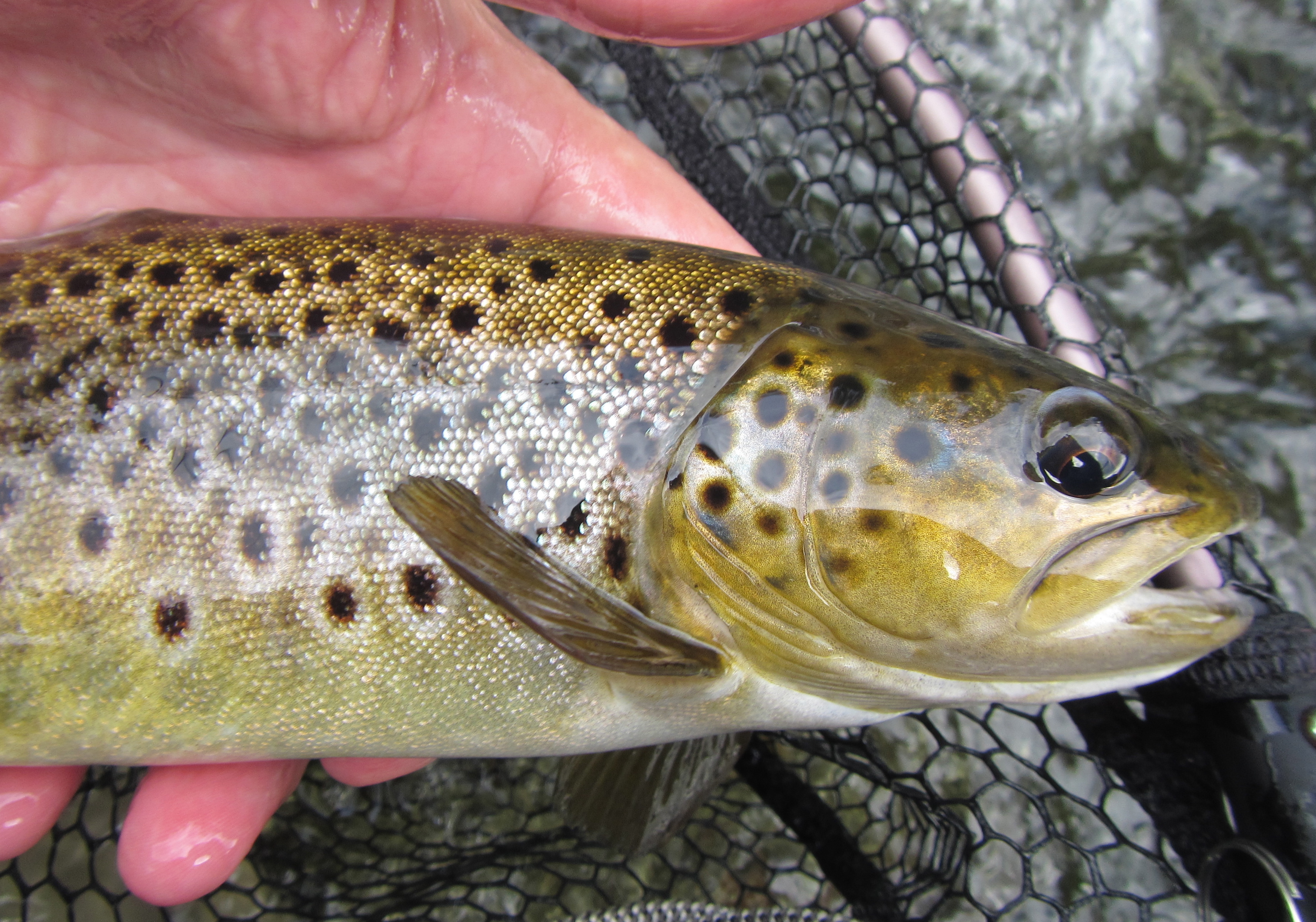
This brown attacked from his ambush position between two boulders in a slick-surfaced run.

9:14 Brown

First stripers of (by the calendar) fall

My calendar is a little different from the rest of the world’s. For me, fall starts in early August, around the time of the Dog Days (another widely misunderstood meteorological phrase, but that’s for another post).

I have been getting my butt kicked on the striper front for the last several weeks, with not even a bump to show for the hours I’ve been putting in. It looked like more of the same last night. Spot  A was the outside of a jetty with the two-hander and an 8″ September Night variant. Bupkiss. I turned to the inside of the jetty, where I performed some greased line swings on the incoming tide that were utterly poetic in execution, if not result.

Got into my truck and drove to Spot B, a bottleneck on the inside. Pods of worried mullet, but nothing I could find that would cause them any kind of neurosis. (See “Spot A/Inside” above for summation of activity and results.)

I was getting a little bummed at this point.

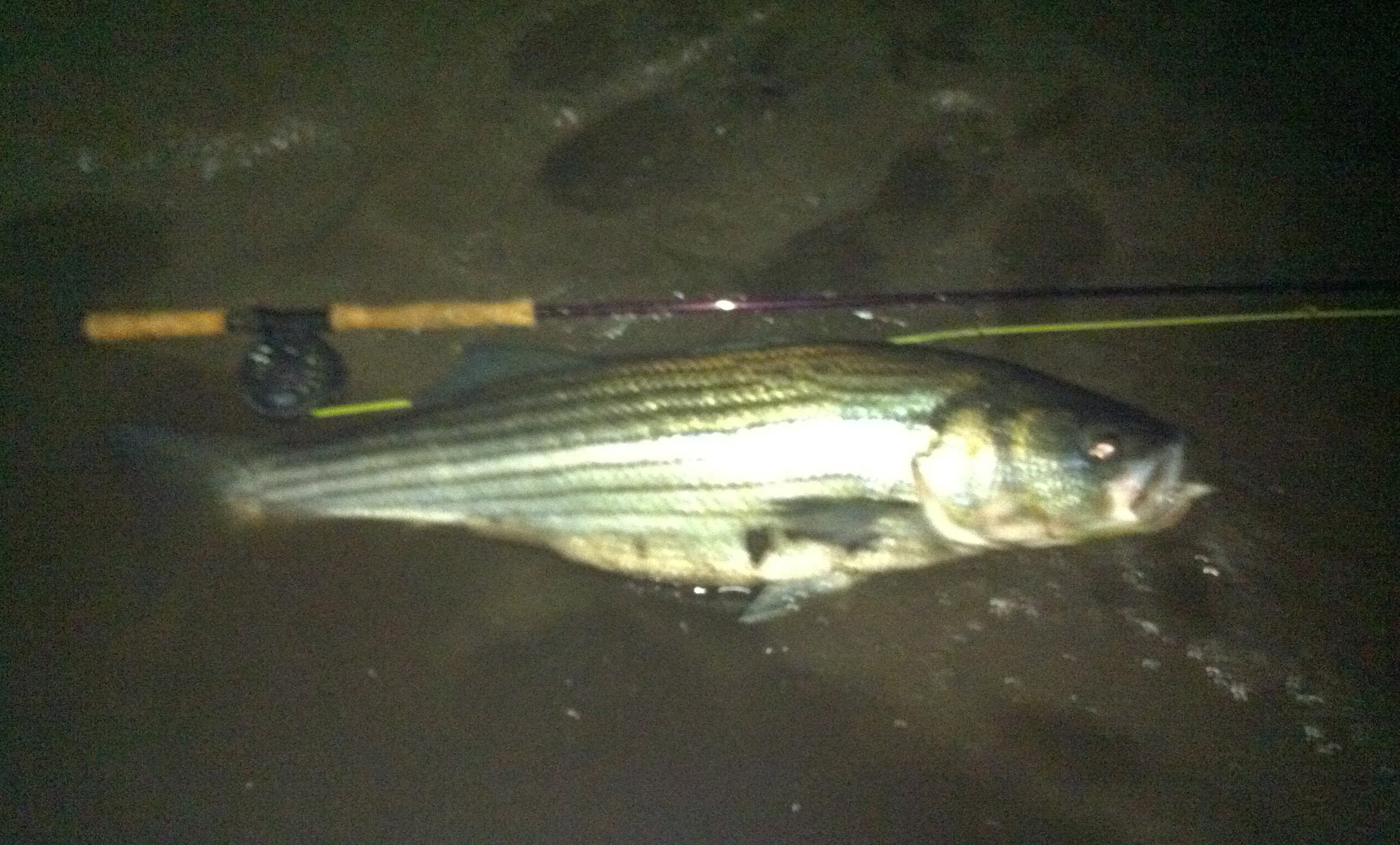
Off to Spot C, a location on a different inside that was perfect for the five-weight. And there I found them. Scads of silversides and a several marauders willing to jump on. Sure, they were all south of 20″, but they hit with fierce conviction — and any striper is unequivocally joyous on the five-weight. I fished a three fly team of a small, sparse PB bucktail on the top dropper, a sparse Eelie on the the middle dropper, and a small September Night on point. I took fish on all three. I savored the romance of wet fly fishing for stripers with a five-weight rod on a lovely fall night with a JR Cuban Alternate Cohiba Esplendido.

Si. Muy bueno.

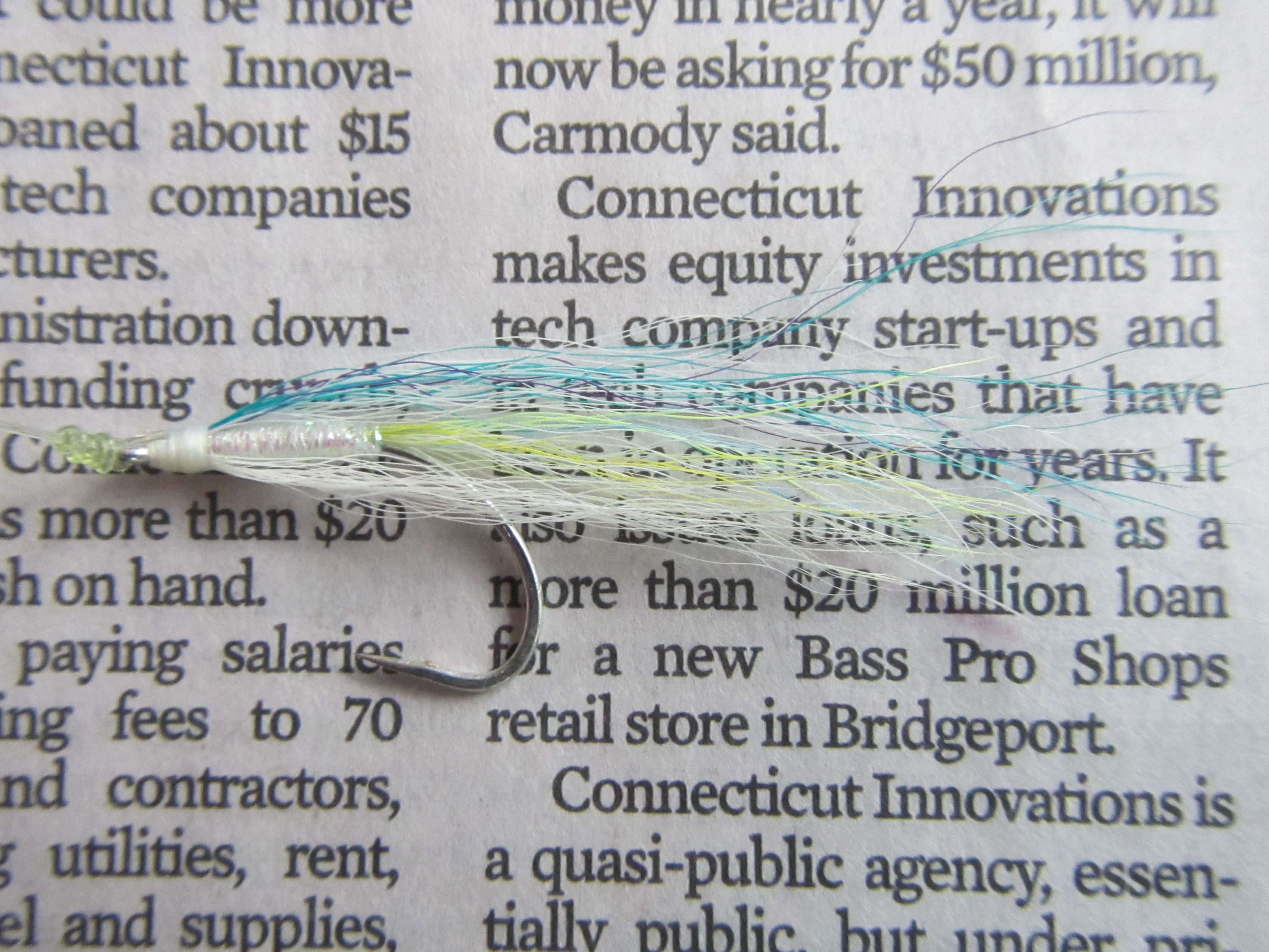
How sparse is sparse? If you can read a newspaper through the fly, it’s sparse. One of last night’s winning flies.

Sparse PB Bucktail

Thanks to TU Croton Watershed for hosting me last night

All I can say is that the bar has been raised. It wasn’t just the great turnout — the room was packed with attentive members who came armed with dozens of good questions. It wasn’t just the welcoming, friendly spirit of the group. No, it was both of those things and the cheeseburger and beer they took me out for before the presentation. A well-fed presenter is a happy presenter.

Last night’s talk was Wet Flies 101. I brought along a selection of a dozen wet flies for their raffle, and left with a Croton Trout Unlimited hat in the bargain. Thanks so much, everyone, for your kindness and hospitality.

Black Caddis Spider

Next up: Eastern Brook Trout at the TU Naugatuck/Pomperaug Chapter on Wednesday, October 1. See you there.

New article in the current issue of MAFFG: “Salmon Fishing for Striped Bass”

“Salmon Fishing for Striped Bass” is a primer on greased line fishing for stripers. I’ve been wanting to write this article for a long time, since the greased line technique is one of my favorite ways to fish. If you’ve never tried it, you’re in for a treat. It is an elegant, effective, and just plain fun way to catch stripers. The greased line swing is tailor-made for presentation flies like flatwings and soft-hackles. You can read all about it in the Steelhead — Salmon — Saltwater issue (October 2014) of the Mid Atlantic Fly Fishing Guide. MAFFG is available free in fly shops from Connecticut to North Carolina.

GLS MAFFG

In any given year, my largest stripers come on big flatwings presented on a greased line swing — like this thirty-pound beauty taken on a 10-inch long Razzle Dazzle.

IMG_1367

Many thanks to the Hammonasset Chapter of TU

Last night I presented The Eastern Brook Trout: New England’s Wild Native to the Hammonasset Chapter of TU. The group really came though in the clutch, locating an extension cord and power strip (must get those for future gigs) for me, and then — this is where it gets good — serving up some delicious pulled pork sandwiches. I really enjoyed meeting everyone and talking fishing and fly tying.

That reminds me: Time for a wild brook trout outing.

UDS Brookie2

Farmington River Mini-Report 9/10/14: Getting there

The DEEP did their broodstock gathering/census on Tuesday, and this morning the flows were nearly back to normal. I fished four spots from 9am-1pm with varying degrees of success: a) one JV Atlantic Salmon, b) a nice assortment of wild browns in the 12″-14″ class, c) blank, d) a brown trout LDR. I stuck with the indicator nymphing thing, and I learned after my fifth (I was a little slow today) weight tag break off that one BB shot played nicer than two. The water was lower than it has been, albeit cool for early September, and it had a light stain. A bit of a funky pond smell in the air. All the takes today were nearly imperceptible; a subtle stall or shudder of the indicator, rather than its wholesale disappearance. Lift your rod, hook point finds insertion, and the dance begins. They liked the size 12 BH Squirrel and Ginger. Forgot my camera, so no photos. Sorry, Ansel.

I hope I enjoyed it, because tomorrow I shall be chained to a desk.

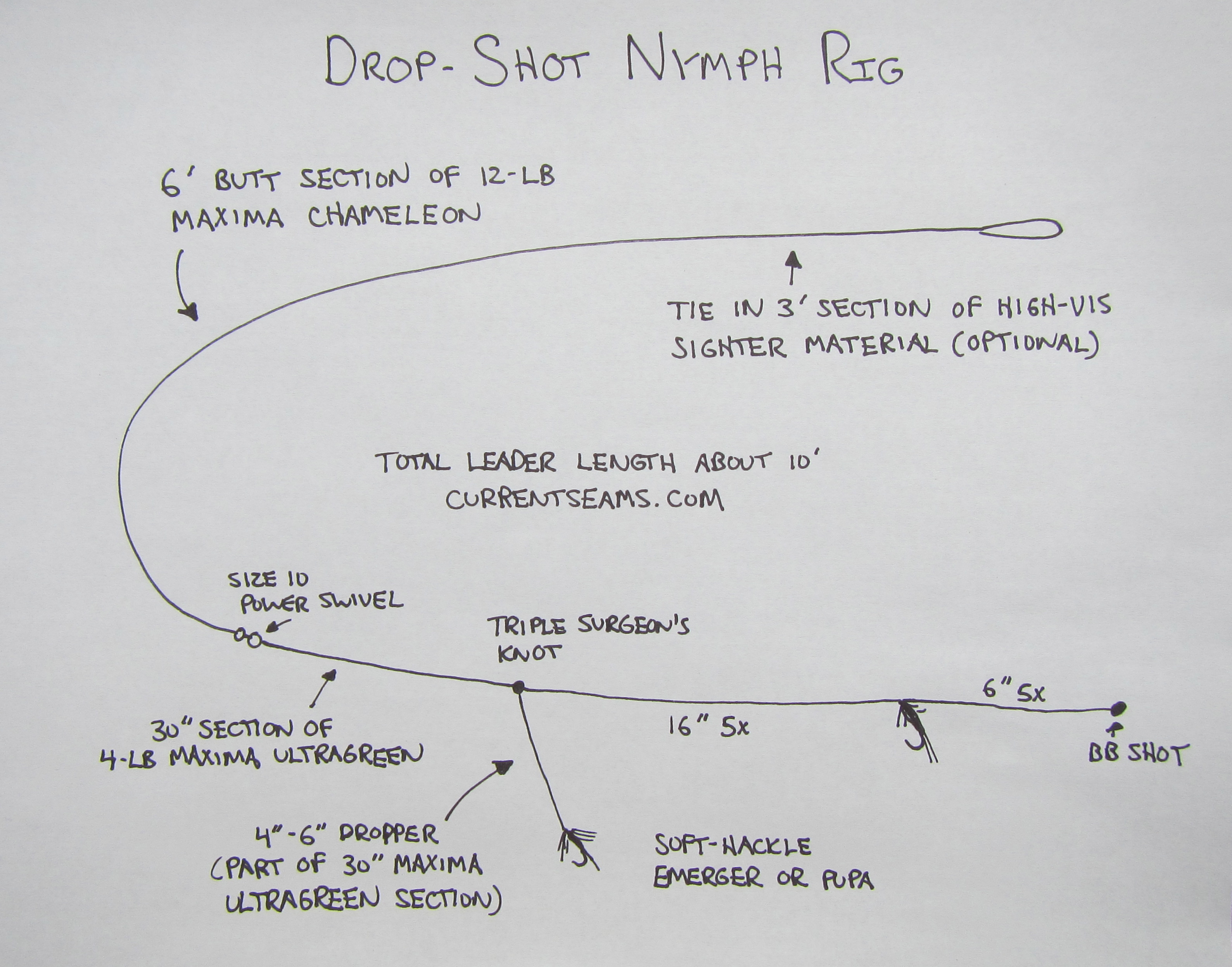
A Drop-Shot Tandem Nymph Rig

I can be as stuck in my ways as the next angler. But from time to time, the curious, adventurous, what if? side comes out to play, and I’ll try something new. I first saw a two-fly drop-shot rigging system on Kelly Galloup’s site. Hmm. Intriguing. After storing it in the back of my brain for several months (and not being entirely satisfied with my regular two-nymph rig with the weight above the top fly) I thought I’d give the drop-shot a try.

There’s much I like about the drop-shot design theory. The weight is at the bottom end of the rig, and, consequently, along the bottom of the river. Because the weight tag is made of weakest link leader material, it should break off on a weight snag before anything else. Six inches above the weight is a nymph-style fly, strategically placed to be at the eye level of bottom-hugging trout. Twelve to sixteen inches above the nymph is a soft-hackle, emerger, or pupa-style fly on a dropper tag. You know from my writing and reports that I am a huge fan of droppers — give the fish a choice — and droppers that can swim freely on a dedicated tag. I especially like the idea of using a soft-hackled wet in this position. I wasn’t crazy about the bottom fly having the weight leader tag attached to its eye — I worried that it might make the fly difficult to eat — but it certainly was a better solution than attaching the weight tag to the bend of the hook. Only one way to find out, and that was to fish it.

There are probably dozens if not hundreds of variations of drop-shot riggings; so here’s one more. I altered the specifics to suit my preferences in leader materials (and also to use what I had on hand). Suffice to say, this thing works.

A simple two-fly drop shot nymph rig.

Drop-Shot Nymph Rig

Here’s a pdf of the diagram:

Drop-Shot Nymph Rig

Construction notes: Construction should be fairly intuitive. I’m an indicator-kind of guy, so I’ve dispensed with the sighter butt section. I’ve been using a six-foot length of Maxima Chameleon 12-pound. You could surely go with ten-pound, or any other butt material you like. If you were going to build in a sighter, you’d still keep the top section six-feet long. I added an SPRO size 10 power swivel because of the disparity in the diameter between the twelve and four-pound material. Maxima is still hands-down the best material I’ve used for dropper tags for trout. I tie an overhand knot four times at the end of the weight tag — I haven’t had any issues with shot coming undone — and I’ve been using one or two BB shot, depending on depth and current speed.  

Yup. Drop-shot nymph systems fished under an indicator work.

Big Rainbow 9-14

 Of course, check your local/state regulations to make sure you can fish two flies, and/or place weight below the flies. I am not responsible for any rules violations.