Regular readers of currentseams will know that I tend to run cold. So when it comes to winter fly fishing (a very poor choice of hobby for me) I need all the warmth I can get. I’d been using an old-school UnderArmour ColdGear compression-style mock neck as a base layer for years, but it was getting a little sketchy, so now was a good time to explore new options.
The UnderArmour ColdGear Base Leggings have served me well for a couple years now and I love them. So migrating to the UnderArmour ColdGear Base 4.0 Crew seemed like a no brainer. (It was.) Here’s the gist, taken from the UA site: “UA Base 4.0 is a men’s baselayer built for extreme cold weather and lower activity. It uses a unique pattern that’s designed to trap heat without adding bulk. Think long underwear, revamped for today’s top athletes.”
At $80, this top isn’t cheap. Quite frankly, I’m a value guy. So if something costs more than I’d like to pay, but it does what it’s supposed to do and I use it a lot — never underestimate the power of amortization — I’m going all in. This version is far warmer than my previous UA top. My only complaint is that I have sensitive skin (wool is out unless I have a solid base layer) and the brushed grid interior on this shirt bugs me just a wee bit. Not to worry — I just wear a breathable UA crew t-shirt beneath and I’m good to go.
Price: $80
Rating: ****1/2
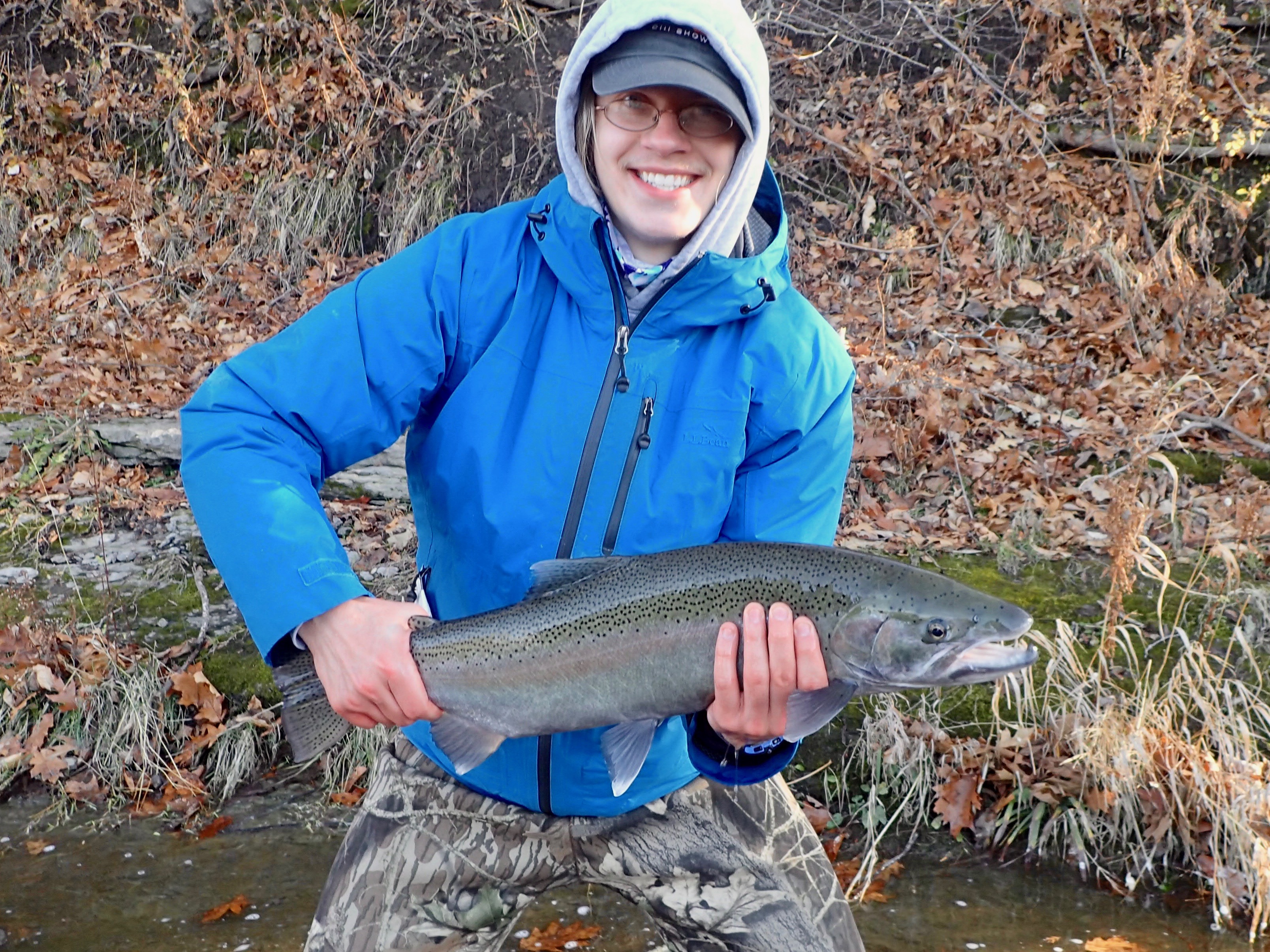
Why is this man smiling? Besides holding a beautiful fish, he’s not shivering even though it’s below freezing. Beneath all of this is my ColdGear Base 4.0 Crew. Full disclosure: I am not connected to UA in any way.
I’m currently reading Dennis Zambrotta’s Surfcasting Around The Block. As you may have read a few days ago, Dennis has asked me to contribute a chapter to his upcoming followup. It’s a little crazy to me that I’ve known about Dennis’ book for years, but I’ve never read it until now. While the focus of the book is on spin fishing the Block with plugs in the surf — and frequently surf under hardcore conditions — there are plenty of secrets that the fly angler keen on building his or her knowledge base will be able to use for their next outing, whether on Block Island or elsewhere. Here are some of my thoughts.
Color matters to needlefish pluggers. The needlefish is a primary choice for pluggers when sand eels are the bait, and the most popular color is fluorescent green. On Block I fish Big Eelies the vast majority of time, in all kinds of colors, and have never found that the stripers have a preference. But now my mind is wandering in to places of color and length. The Big Eelie in L&L Special colors is one of my favorite, high-confidence Block flies. It’s got a lot of chartreuse. Hmmmm….maybe a longer version, seven inches long, with more bright greens?….one way to find out…
Or, maybe the L&L in a Soft-Hackled Flatwing, tied about 7″ long. I really like fishing this color scheme over sandy bottom structure, like Crescent Beach...or on the Cape…
Location matters…and there are so many locations. I like to think that there aren’t too many anglers that know Block Island on the fly like I do, and then I read a book like this and realize how very little I really know — especially when it comes to locations. Part of it is that I’m a creature of habit. Part of it is that I like to fish flats and skinny water more than surf. Part of it is that it can be challenging to fish certain marks with a fly rod in wind and waves (almost constant companions on Block). But I’ve really got to explore more of these boulder fields (check out Gerry Audet’s talk on boulder fields sometime) and the mysteries they hold. In a way, Dennis hasn’t written a book as much as he’s built a roadmap. Follow it to find your own secret spot.
Tides matter. Once you’ve figured out where you’re going to fish, pay attention to the tides. There are certain marks on Block that I fish on universal tides, and others that I’ll only hit at a certain tide. Pay attention to the details in Dennis’ book and you’ll have the code cracked for you on your next outing.
Put in your time. And move around. If the bass aren’t biting where you are, give them a chance to move into the area you’re fishing. If that doesn’t work, move. One of the beauties of the Block is that everything is accessible and everything is short drive from where you are.
Okay, so the days of the multiple 30, 40, and 50+ pound bass blitzes from shore are over. (Dammit! I can’t believe I missed that. Oh, to have been a striper fly fisher on Block in the early to mid 1980s…) It’s been a slow last couple years for me for slot fish and above on Block, the opportunity still exists. Here’s a very respectable double-digit pounder on the fly from two years ago. Miss you, sweetheart.
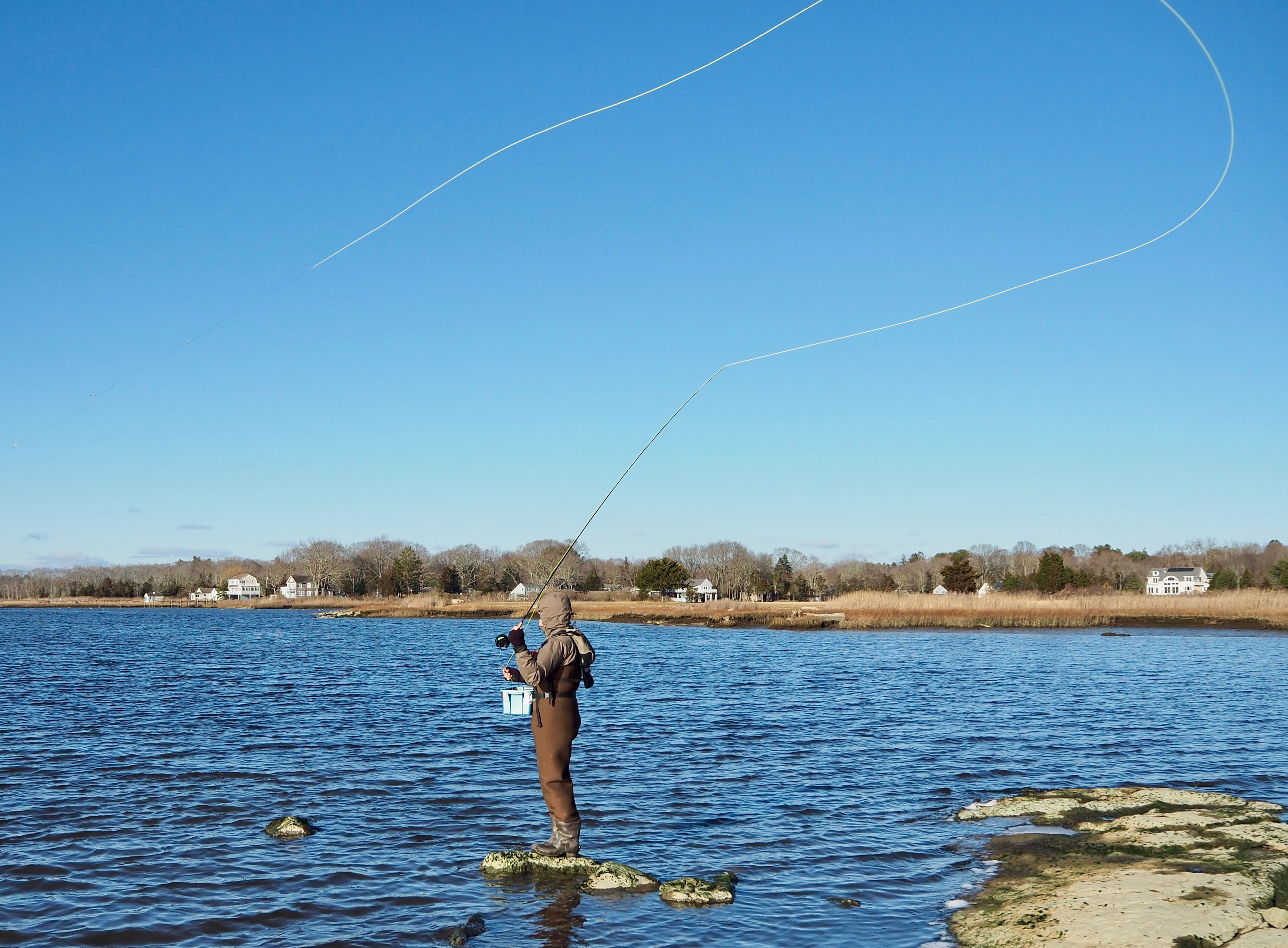
Today was tidal creek stomping day with Toby Lapinski, he armed with his light spinning gear and me with my trusty five-weight. The wind was a bit of an issue for me — as was casting room — but once I reacquainted myself with the nuances of casting a three-fly team with a 9-weight line on the 5-weight rod, everything was jake. We hit two marks on the incoming tide. One was a total blank, and the other produced for both of us. Nothing large, but enough to put a nice bend in our rods. It sure didn’t feel like December.
In these politically charged times, here’s something we can all agree on.
~
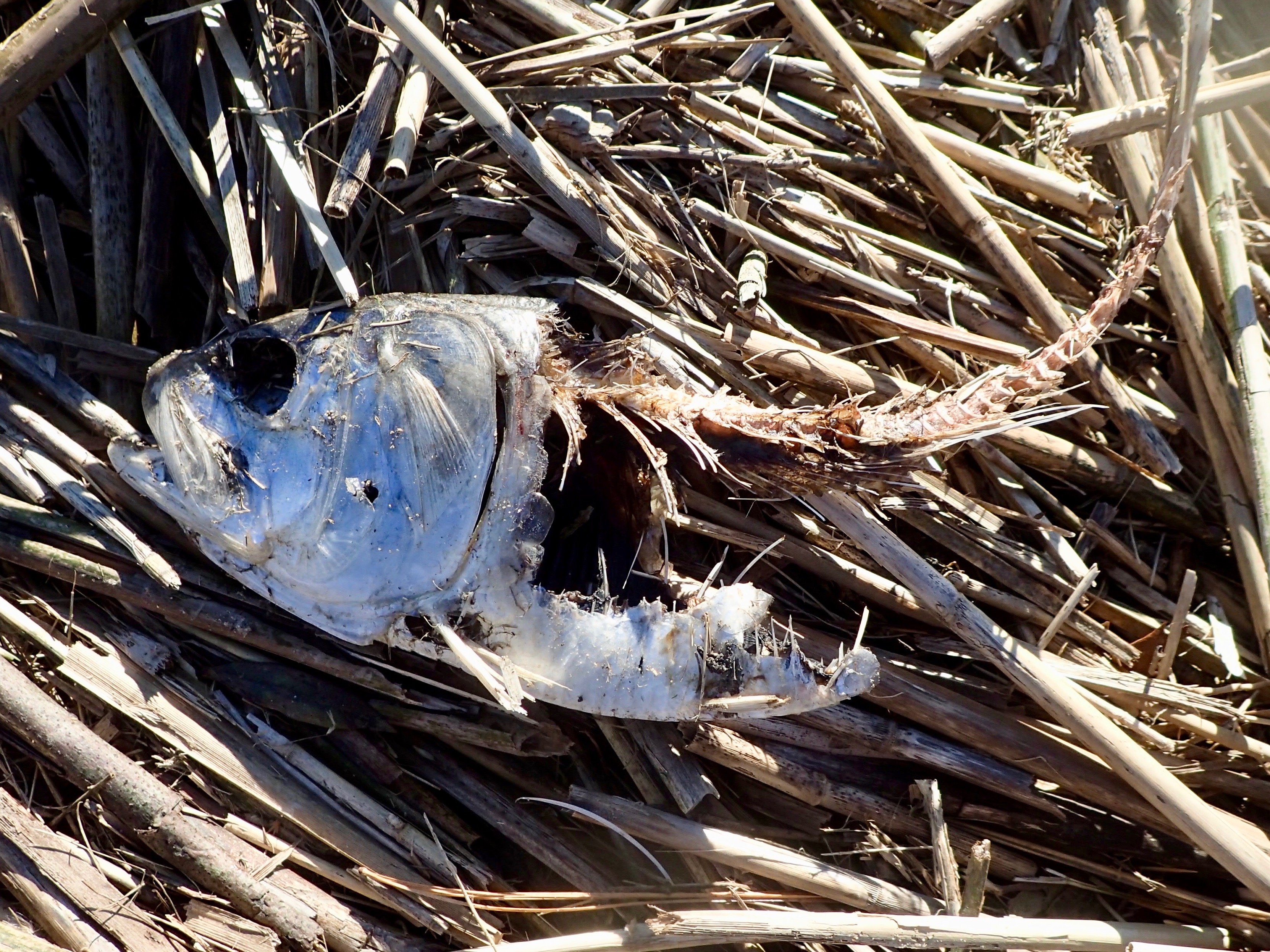
This one didn’t make it. We saw scores of dead bunker, especially at the second mark. Many had bird wounds (post mortem?). Apparently there was a substantial fall invasion of these crazy menhaden.
~
You’ll experience fewer tangles with a three-fly team if you slow down your stroke and open your loop a bit. Photo courtesy of Toby Lapinski.
As promised, here’s a pre-currentseams oldie but goodie. The events took place in December 2009, my first real winter steelheading trip. It’s amusing now to read this over a decade later, recalling how raw I was and little I knew about hooking and landing steelhead. I’ve included a link to a video old fishing buddy Todd Kurht made where you can see the battle and the beast. I hope you enjoy this little slice of steelhead dreaming,
“That Boy is a P-I-G pig!” With apologies to Babs from Animal House (and the steelhead involved) he truly was.
We started out on a beautiful winter morning with moderate temperatures and plenty of sunshine in a pool I had never fished before. The water was low (>350cfs), cold (33 degrees), and crystal clear. I had high hopes for this trip, my first winter steelheading venture, and I thought the conditions would only help us out. I sparked up a churchill to start enjoying on the walk down to the river. An hour later, I was still puffing on it, fishless. Bob had moved to spots elsewhere, and Todd and I were beating the water thoroughly. I just didn’t know this spot well. I spent a half hour around a really sexy-looking stump tangle before wading over to discover that the water was much shallower than I thought.
Then, I waded though a deeper channel that I didn’t know was there, and realized that that was where I should have been fishing (later confirmed by Trapper, one of the good guides, who shared the pool with us and his client). But, such is the learning curve on new waters.
I had tied on an Opal Blue Estaz egg and was fishing a current seam along the far bank when the indicator paused. I set the hook like I had already done dozens of times today, only this time the rig didn’t come flying out of the water. It stuck. And then the water boiled up 50 feet away from me.
I could see it was a good sized fish, but I didn’t have the full picture until the first run. Criiiiiiiiiiiiiiiiink! The drag sang out in the warm December air. The fish rolled again, and I could see once more that it was a good fish. Todd was on the scene by now, and confirmed it was a sizeable steelhead. And that’s when the line went slack.
Well, I told myself, that’s why they’re called “steelhead.” At least I had hooked a big fish, and at least I had my adrenaline rush for the day. Can’t win them all.
So why is my fly line moving upstream at a very rapid pace?
You must understand that I have a minimal corpus of knowledge when it comes to steelhead. “Rookie” would be accurate. I had forgotten how quickly they can turn on a dime and shoot upstream. The last time this happened was the first steelhead I hooked over a year ago. I lost that fish. Frantically, I stripped and reeled line as the fish passed me. Yes! Still on. I reset the hook as hard as I dared, and the fish dashed downstream at a breakneck pace, peeling line off the reel like I’d never experienced.
Again, understand that my experience base of fighting a fish like this on single digit test tippet is nil. The steelhead melted through the flyline in a matter of seconds. I was into the backing good. Of course, Todd is kibitzing the whole time, providing moral support, and telling me this is a great fish. I kept thinking, “Todd, you just put the whammy on me.” I decided nothing ventured, nothing gained. I was uncomfortable with well over a hundred feet of line out, so I started to reel in. Every time I felt weakness on the other end, I reeled in more. I regained the majority of the line before the fish blistered off on another long run. But all this oxygen-burning fury was taking its toll. And for the first time, cigar clenched in my teeth, puffing away, I felt good about landing this beast.
Finally the end was in sight. I had the fish in the shallows. At this point I felt if it broke off, I had at least achieved a moral victory. Todd came up behind the fish, tailed it, and a prize that was measured in pounds, not inches, was ours.
Talk about good fortune: the egg fly was dangling from a paper thin section of tissue in the steelhead’s mouth. We took some pics then released it, watching it porpoise as it skulked back to its lie. Not a bad steelhead to be your first on a fly you tied. And here it is.
This caption was not part of the original piece, but the photo was. I believe this is still the largest steelhead I’ve landed, and I’d estimate it to be about 15 pounds. You can see the fly dangling by a thread of tissue — such is the case when planets align and good fortune is in the forecast.
I went and sat on the bank to savor the rest of the cigar. I was shaking. I think I giggled out loud for a half hour.
The battle preserved on video. Maybe I’m being too hard on myself, because I think I at least look like I know what I’m doing. The main even is from about 0:23 through 1:03.
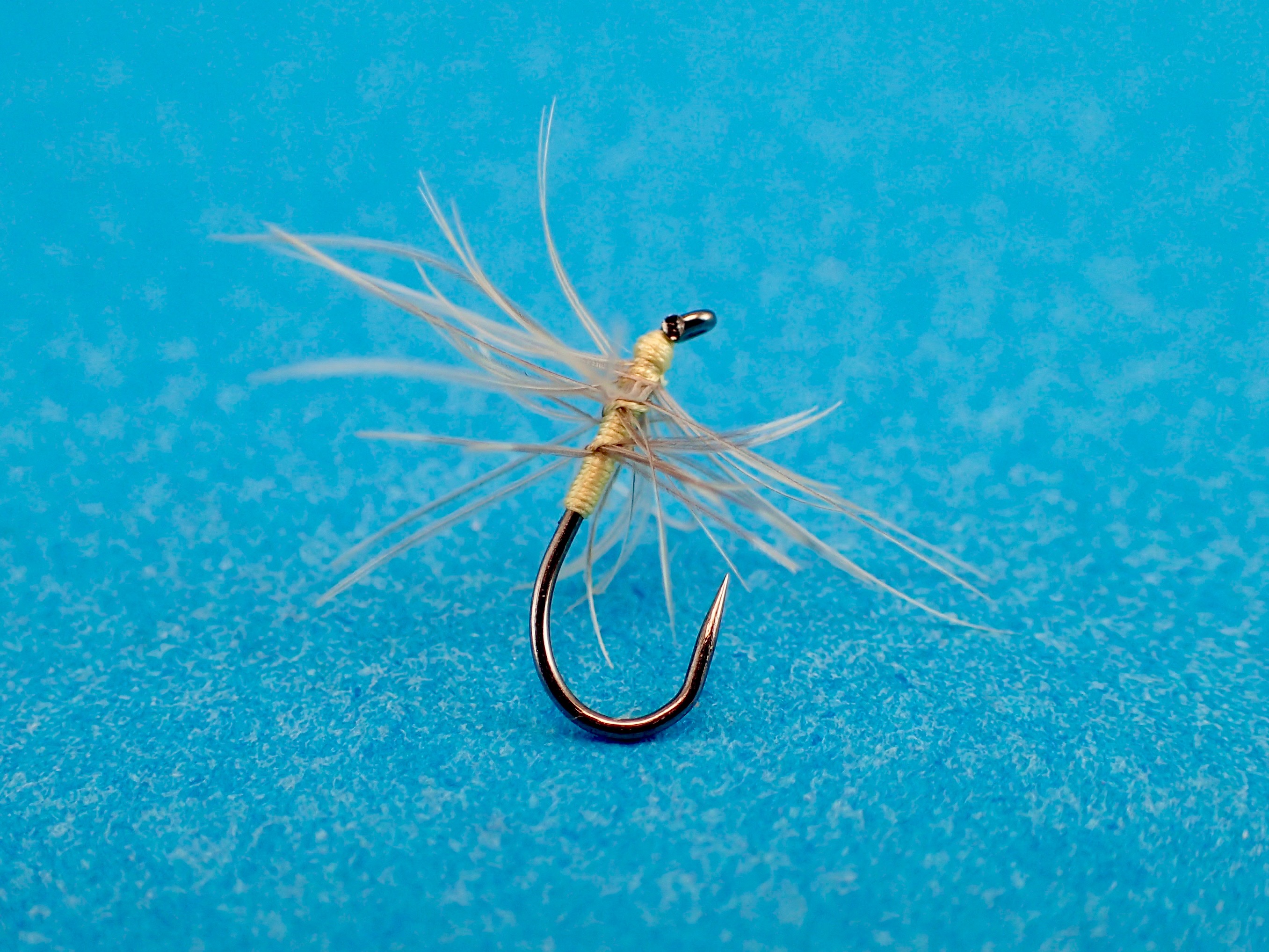
A few months ago I asked that you suspend fishing on Connecticut’s small streams until the drought was remedied and the spawn was complete. Check on both boxes. With a favorable amount of water for two months, the locals that survived the harsh summer conditions have had a chance to recover, fool around, and now prepare to hunker down for the winter. I have two requests (I know, I ask a lot) if you must fish small streams. First, try to stay out of the water as much as possible. The thought behind this is that you don’t want to walk over a redd and destroy the next generation before they’ve had a chance to hatch. Two, consider using a bushy dry with the hook point removed, or an over-sized dry that the little guys can’t get their mouth around. It’s nice to hold a small wild char in your hands and release it, but truly, isn’t the fun really derived just from fooling a fish? I appreciate your consideration. Tight lines, be safe, and be well.
The stark beauty of a small stream in winter. Please respect the brook and its residents. We all thank you.
I’ve received several emails in the last week asking about doing pay-per-view fly tying Zoom lessons — so now I’m throwing the concept out to the subscription base. Is this something you’re interested in, too? I don’t have any details ironed out, but I imagine it would work something like this: I pick a topic/fly, like North Country spiders or sparse striper bucktails or getting started with flatwings or high-confidence nymphs — you get the idea. I’d set up a class date/time — probably an hour-long session — and send the link to everyone who sends me a small fee via PayPal — $10? $20? We’ll have to see how many players we have to make it work. If this is something you’re interested in, please respond in the comments section, and it wouldn’t hurt to list the types of stuff you’re interested in tying. I should also say that if you want me all to yourself, I do private tying lessons for $65/hour. So now, ladies and gentlemen, it’s up to you…
It’s been a tough streamer bite my last two outings — another blank, with only two bumps today compared to half dozen on Wednesday. The river is in fine shape, 500cfs and clear, just in time for tomorrow’s deluge. I hit four marks today, all within the Permanent TMA, and had a bump in each of the first two, but neither felt like a good fish. I played around with size, color, and presentation, but whatever I was throwing, and how I was throwing it, the trout just weren’t that interested. So goes the battle. Just a note that if you’re going to fish the Boneyard, there is an active shotgun season, so be safe and wear some blaze orange.
I lost a Barr’s Meat Whistle to the bottom gods in a very deep pool of the Farmington. Even though it’s tied on a jig hook, this happened when my full sink line got tangled around an obstacle.
One question I get a lot is, “How do you determine how you’re going to fish the Farmington?” The answers can be complicated, but sometimes it’s simply dictated by conditions and, especially yesterday, what I feel like doing.
First, conditions. We had a high water event Monday night, the river spiked, and now it was coming down. 875cfs in the Permanent TMA is not for novice or foolish waders, especially in very late fall. That water is moving and it’s cold. You need studded boots and a wading staff, and especially you need to stick to wading slower, shallower stretches (that’s often where you’ll find the fish).
I liked yesterday’s overcast, and we even had a few snow showers to boot. Or is that to glove?
Next, method. I felt like swinging streamers. I fish for my own pleasure, and even though winter streamers on the Farmy can be dicey — the trout are either biting or they’re not — when it’s on, it’s good. And fun. I was using an integrated full-sink tip line with a short (3 feet) leader and a mix of weighted and neutrally buoyant streamers. I also played a bit with different colors.
So, how was the fishing? It started off great, with a bump on my first cast. I made the same cast and the fish hit it again. But no real grab. Sadly, this was to be the pattern of the two-hour session: lots of bumps, but no real takes. I fished two marks hard, then packed it in around 4:30pm.
One of my favorite parts of steelheading is taking some time to rummage around the shops in Pulaski to try to find stuff that I don’t see around here. This fall’s trip yielded a bounty of choice swag. Shops like All-Seasons Sports and Whitakers — where I bought these goodies — rely on your business to stay in business. So I encourage you to shop locally, both near your home river, and then also when you’re far away.
My swag, clockwise from left: Rusty Brown deer hair strip (I never buy deer hair sight unseen, and this was by far the best pack in the lot); Drennan 6lb. fluorocarbon (the only fluoro I use — it sees action for steelehead, and for trout/smallmouth streamer leaders); P-Line Floroclear 10lb (I use this for my nymph rig and steelhead butt sections); Fluorescent Orange and Fluorescent Chartreuse mallard flank, which I rarely see, for streamers). Coming soon to a river near you!
By all accounts, it’s been a challenging fall on the Salmon River. That was the main reason I skipped my usual early November trip. But now, later in the month, it was time for my annual father/middle son Cameron steelhead bash. Prepared for the worst, but hoping for the best, we headed northwest. Here’s how it went down.
Monday, November 23: Too many teardrops for one heart. I generally don’t count fish, but steelhead being what they are, I keep track of my landing-to-hookup ratio, and especially my total landings. For those of you keeping score at home, I was at 96 landed at the start of this trip. A combination of egregiously slow action and bad timing in the last 18 months had slammed the brakes on my progress. But with a clean slate of two days to fish, the magic number of 100 was certainly in reach. One good day — hell, a few good hours — could get me there.
As always, the Cam trip is done under the guidance of my friend James Kirtland, aka Row Jimmy. Given the dearth of consistent action in the upper and mid-river boat runs, we made the decision to wade the lower end of the Salmon. Jim’s clients had hooked 10 at this mark yesterday. But you know how that goes with steelhead — here today, gone tomorrow, and at 8am, Cam and I sans hookup, the last thing I wanted to hear Jim say was, “I don’t like this. We had a half dozen fish on by this time yesterday. “
But all it takes is one, so when I set the hook on a dropping indicator and felt the bottom shake its head, I was stoked. My set was fast and sharp (with a second one thrown in for good measure) so I was a little surprised when the fish came undone about a minute into the skirmish. That’s the thing about steelheading. You can do everything right and still drop the fish. Something uncontrollable, like the wrong angle of attack or a bony insertion point can spell doom, and there’s nothing you can do but wonder why.
My second hookup was a chromer that treated the lineup to several entertaining aerials. When that fish got off, I was beginning to question my capabilities. Have I lost it? I don’t think so. I wasn’t doing anything differently. Then I saw it. Scales impaled on the point of my chartreuse Steelhead Hammer. Clearly a fouled fish.
Well, that explains that.
My final touch of the day also ended bitterly. This time it was a snapped tippet. I can’t remember the last time I broke 6-pound Drennan. Surely this was due to an abrasion or other accident of war. Regardless, the result was disappointment, and I was left to cry, cry, cry, cry, 96 tears.
Tuesday, November 24: Down to our last strike. Tuesday’s options were run the mid-river or try creek stomping. The Sunday night/Monday early AM rains were just enough to make us think that some fresh fish might have wanted to make the run, so creeks it was. I settled into a favorite pool while Jim and Cam headed upstream. You’ve always got to be ready with that first light first cast — a take is a damn good way to start the day — but an hour later I still didn’t have a touch.
Then, the indicator slowed, and I set the hook. (Today was a strong case for learning the nuances of indicator nymphing. Of the three fish I hooked in this pool, none of them pulled the indicator under — it simply slowed or deviated from its downstream path. You’ve heard me say it before, and it’s probably the best advice I can give you for this style of fishing: look for a reason to set the hook on every drift.) A powerful head shake, then fish off. C’mon. Really? When I hauled in my rig for an inspection, my tippet was again sawed off. Good grief. But about 15 minutes later, a domestic rainbow decide to eat, was landed, and I was somewhat off the schneid.
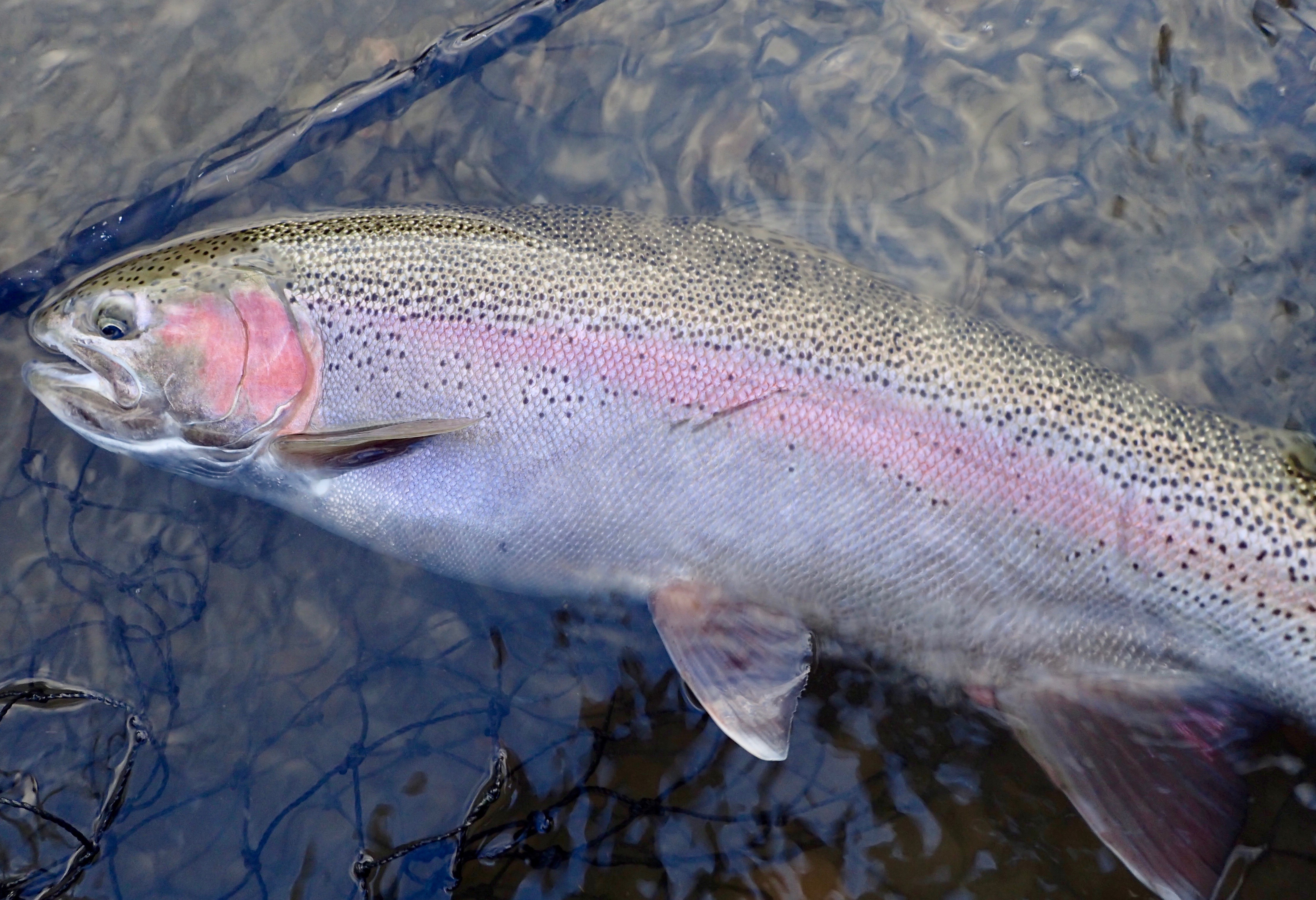
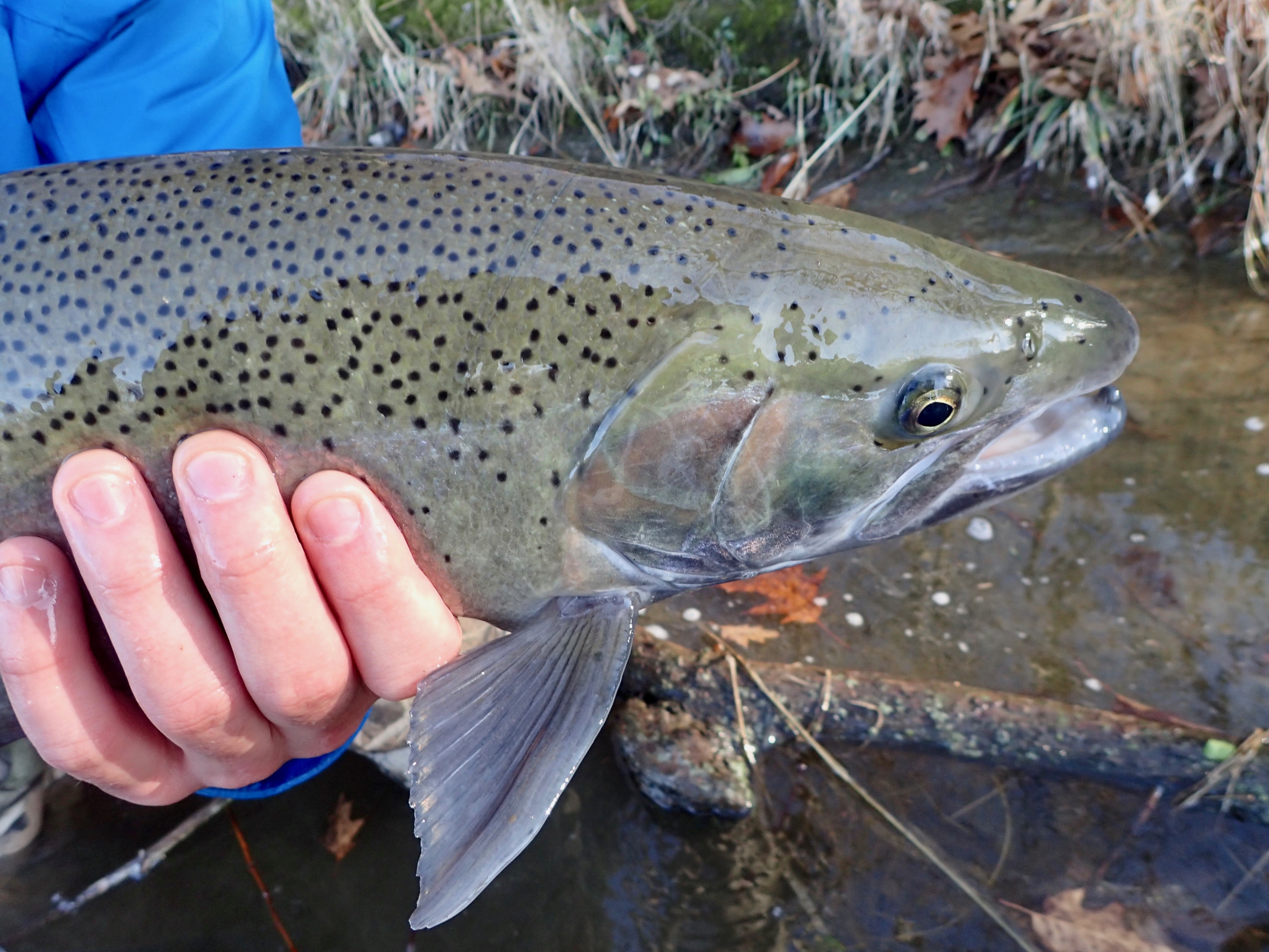
Finally, this egg-laden hen pounced. She kept to the pool during our tussle, and once she was safely in the net, I couldn’t help but admire her glorious iridescent colors. She reminded me of the hen on page 10 of Matthew Supinski’s book Steelhead Dreams. I’d just admired that photo last night, and I wondered if somehow I channeled her into taking on that drift.
Whereas Monday was well above freezing, Tuesday was not. Iced-up guides were a constant challenge, as were cold hands. Funny how you forget all of the sensory negativity when you’re fighting a fish.
Then there was poor Cam. He didn’t have a touch(!) on Monday, plus a disaster leak in one boot foot compounded his misery. Tuesday’s shot at redemption was even more frustrating: he had several takes and no good hook sets to show for it. (We don’t think Cam was at fault, either. In the interest of finding fish, Jim had a line in the water too and missed three steelhead — and he’s a really, really good angler.) And now, it was early afternoon and just about at the end of our session. I could tell Cam was emotionally done, but I encouraged him to take a few last casts while I walked downstream to cross the river.
And that’s when it happened. Two outs, down to our last strike, bottom of the ninth, and we drill this walk-off steelhead. I think I’ll just shut up and let you appreciate the simultaneous fatigue, relief, and joy on this young man’s face.
Not everyone was as enthusiastic as Cam, but we appreciate you playing, Mr. Buck. We surely do. This was the second time we’ve had a last-cast, day-saving steelhead while fishing with Jim.







 currentseams.com