The infographic below just about says it all. I’ll be posting more on the ASGA position for ASMFC Amendment 7 soon, but in the meantime here’s a great way to have fun and get informed. You can register for the event here.

The infographic below just about says it all. I’ll be posting more on the ASGA position for ASMFC Amendment 7 soon, but in the meantime here’s a great way to have fun and get informed. You can register for the event here.
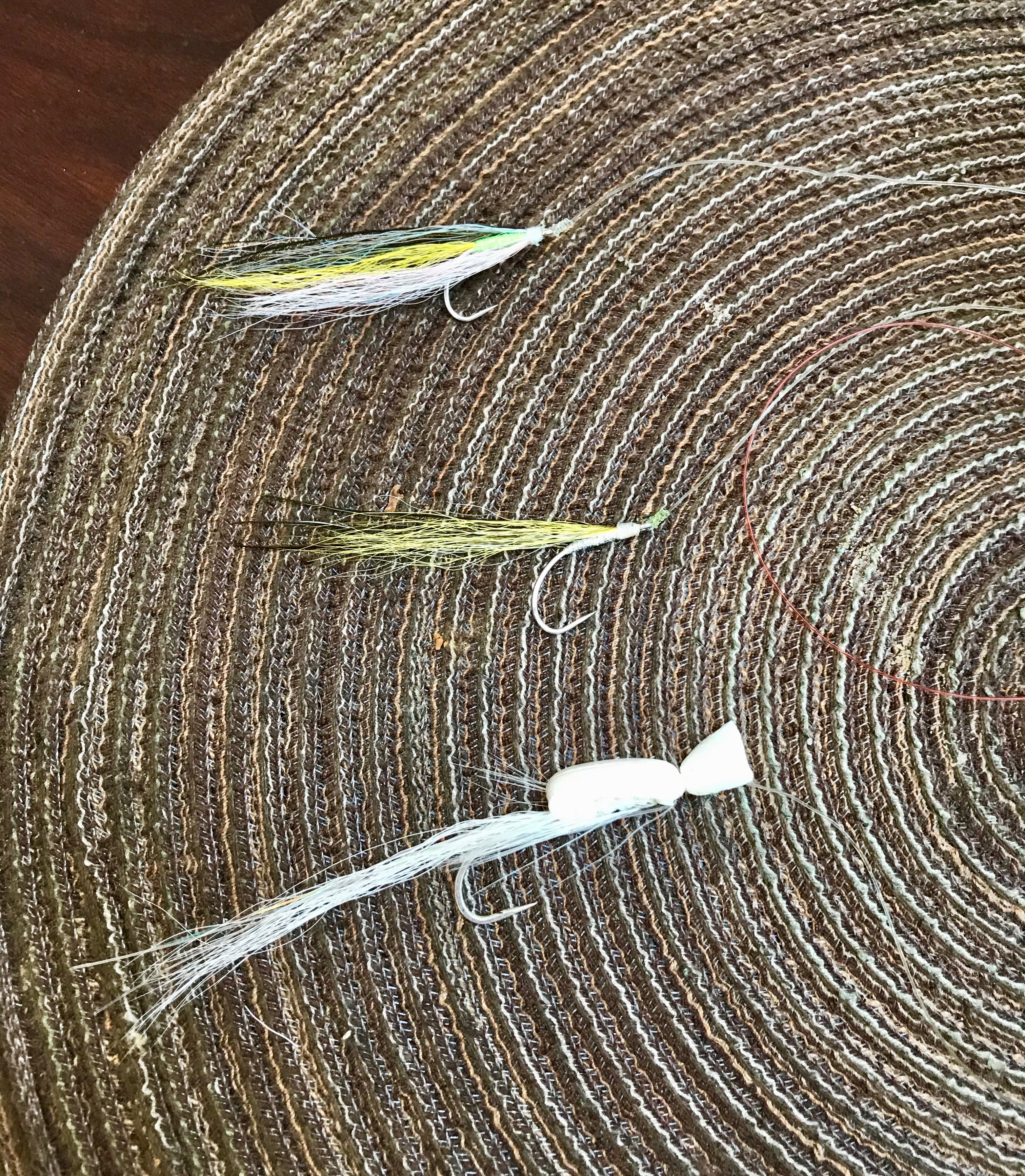
It’s a Squirmy Worm. It’s a jig nymph. It’s a shameful fly. It’s all of the above, and I love it.
This fly comes from Toby Lapinski — who first showed it to me on a small stream outing in December. The brookies went nuts for it. Toby tells me he riffed off similar patterns, added a collar for added contrast, et voila! You have this horrible wonderfulness. I’m going to try jigging this with a soft hackle dropper above it on some small streams this spring. I would also think this pattern will drive steelhead out of their tiny minds.

I’ve been doing a little housekeeping on currentseams. The biggest visual change is the menu bar. If you’re on a laptop, you’ll see an expanded menu, shown below, that directly links to pages with essential information. If you’re on a phone, you’ll still have a drop-down menu, albeit a newly expanded one. My hope is that this makes everyone’s life easier.
Yesterday afternoon I dumped all the entries into a bucket and had my independent panel of one randomly select three winners: Steve M, Zach G, and Glenn D. Congratulations! The winners have already been notified by email. Now, to the vise…
I’d like to thank everyone who entered, and everyone who reads and follows currentseams. I see we’re only 65 people away from 1,000…so get a friend to subscribe and we’ll be doing this again soon!
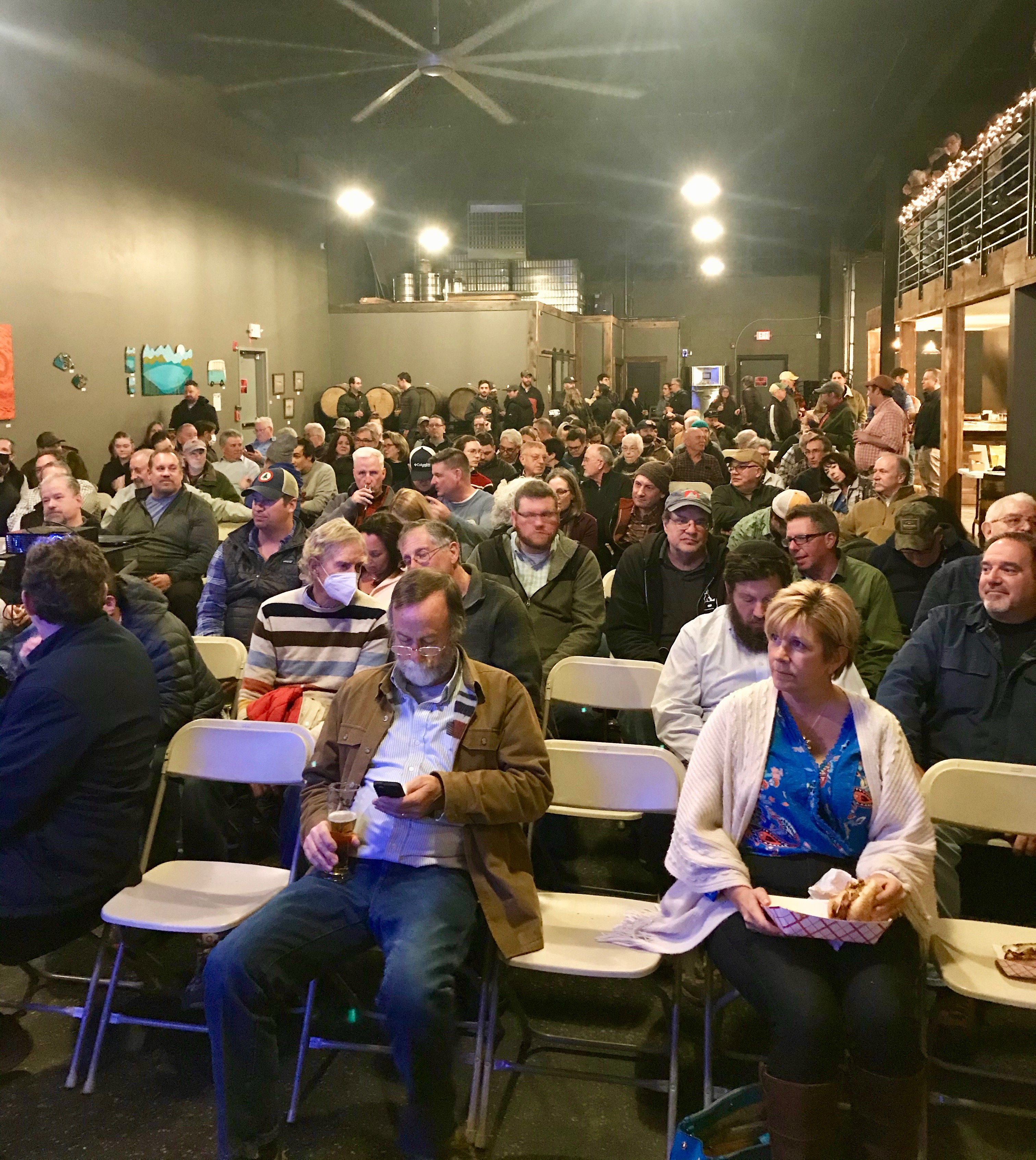
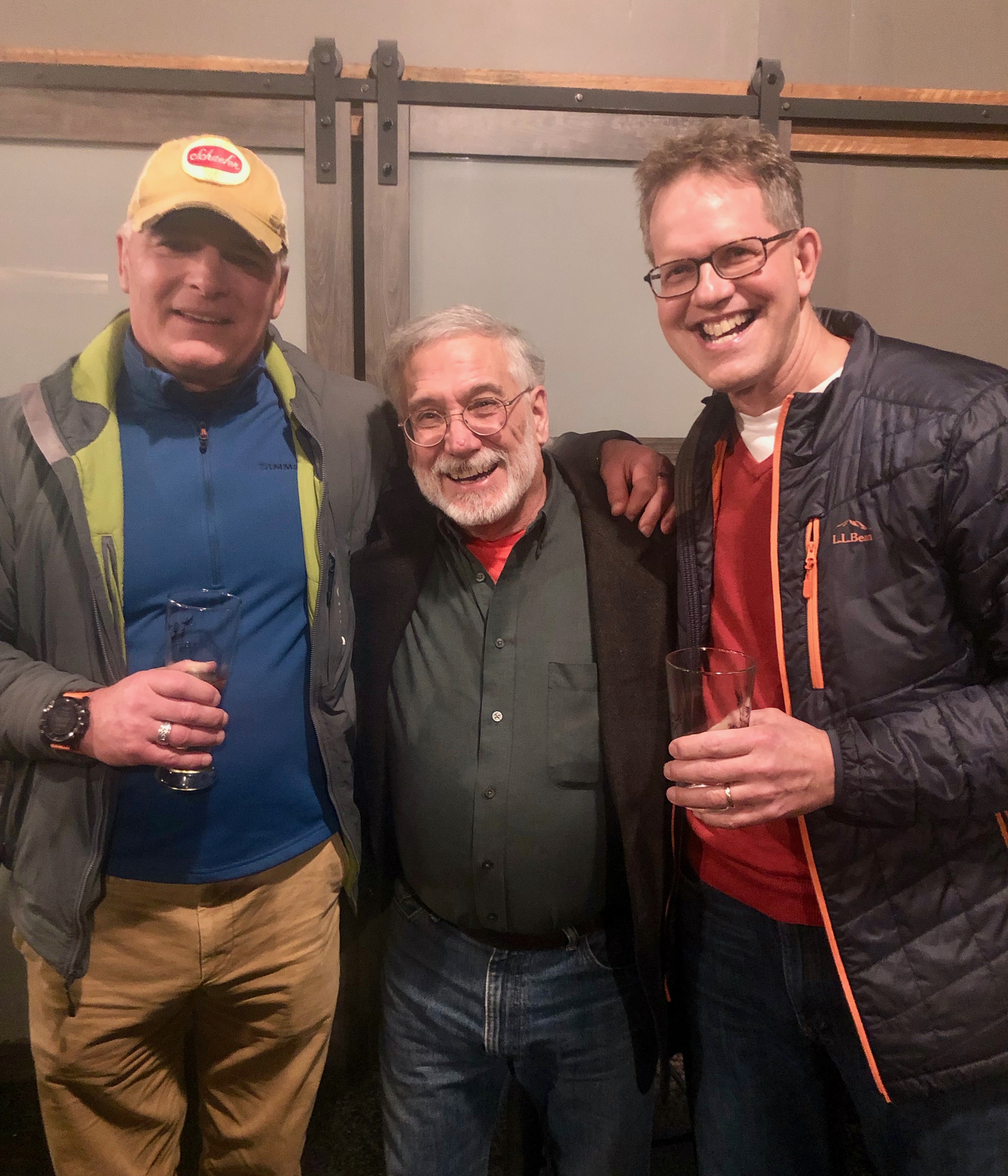
Thursday night was the world premier of director Matthew Vinick’s film, Summer on the Farmington. The venue was Brewery Legitimus in New Hartford. Good choice! They had a large private room reserved for the event, with a dedicated bar, plenty of seating, room to socialize, and a food truck outside for people like me who get cranky if they don’t eat. (I had two delicious chicken tacos for 12 bucks.) The beer was likewise yummy; I thoroughly enjoyed my Dr. Strangehaze NE Style IPA.
We (I was accompanied by my beautiful wife) arrived early so we could socialize. How wonderful to see so many old friends, and to be able to enjoy being out for an evening of entertainment. Thanks again to everyone who took the time to say hello — I often forget names, but I recognize the faces and it’s a pleasure to get reacquainted.
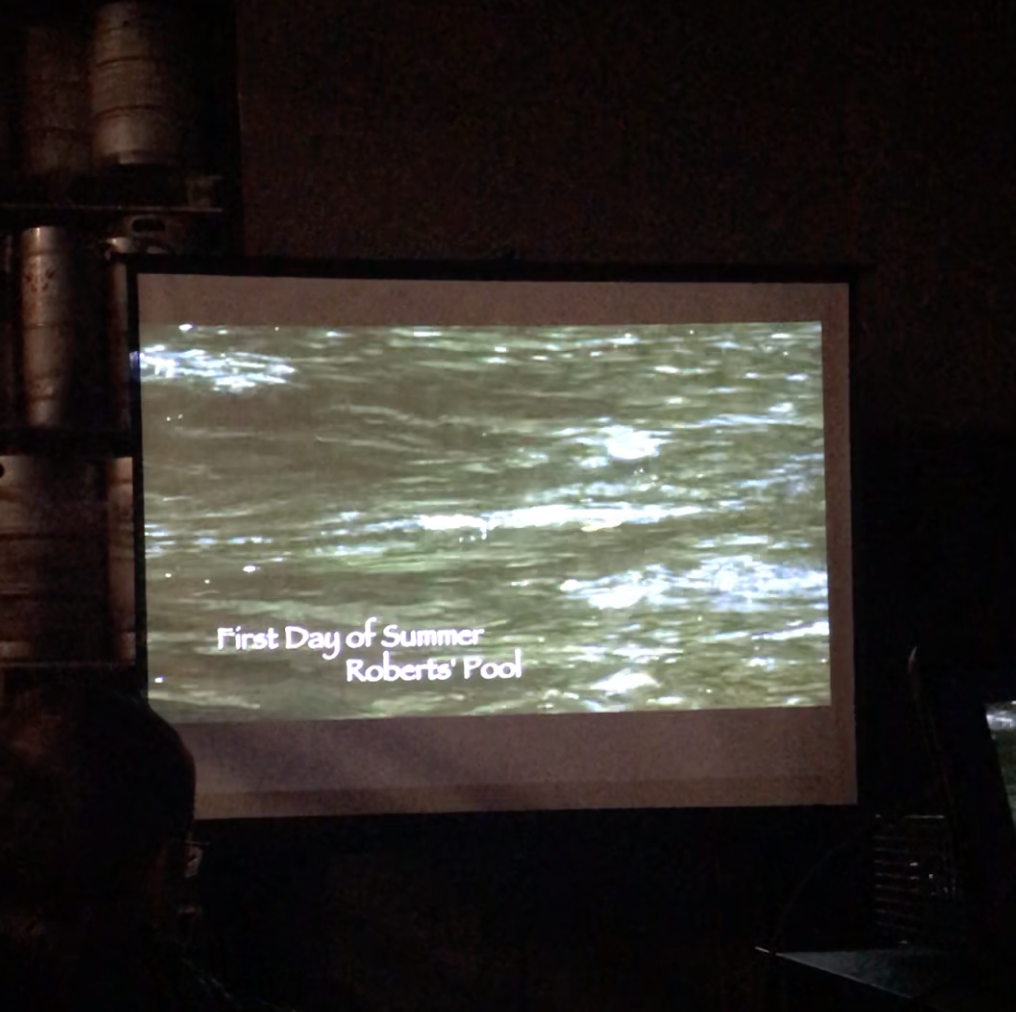
To the film. There’s a certain challenge to being unbiased when you’re judging a creative product that you were a part of. But, viewing a work of art is an inherently emotional experience, so I suppose I’m allowed to think and feel what I think and feel. And I thought and felt that Matthew’s film met — and exceeded — my expectations.
The film remains true to its title as it follows several Farmington River guides and anglers from the first day of summer through the last as they fish the river with dry flies. The footage is outstanding, from sweeping aerials to mayflies dancing on the surface to subsurface shots of trout feeding (worth the price of admission alone — props to Director of Photography John Kozmaczewski). But it’s not all just dry fly fishing. You get segments on the genesis of the tailwater, the creation of Trout Management Areas, the Survivor Strain Program, and more. Vinick has clearly done this homework, drawing on a rich assortment of knowledgeable sources, from DEEP staff to fly fishing store owners/managers. I heard more than one appreciative comment on the crisp pace and excellence of the editing.
While the juiciest bits of the film are the action sequences, Vinick does an exceptional job of showing the fishing experience in its entirety, warts-and-all. You see the refusals. You see the swings and misses. You see the LDRs. Best of all, you get to see the tragicomic reactions when things don’t go according to plan, which tends to happen a lot in fishing. (Overhead, whispered by a nearby audience member during the film: “See, those are professional guides, and they miss fish too!”) Yup. We all put our waders on one leg at a time. And of course, you get to see the triumphs. There are some beautiful fish in the Farmington. Thanks to them for playing.
Many of you will be wondering about future plans for Summer on the Farmington. Here’s what I can tell you. It will probably have another showing , time and place TBD. It may go to DVD or be streamed, but I have no further details. I wish I had better information to share, but when I find out more I’ll let you know.

I hadn’t yet gone fishing this year, and Tuesday was going to be the day. I’d already made the decision to make it a small stream. But as I was checking emails and other social media that morning, I was shocked to learn that Alan Petrucci had passed away.
You may have known Alan from his license plate, BRK TRT. Or perhaps you’ve enjoyed his blog, Small Stream Reflections, or have seen him elsewhere online (he was a currentseams follower and made frequent comments on my small stream posts). Perhaps you were lucky enough to have fished with him. For me, there was a certain sort of symmetry in fishing a small stream; it would be the perfect way to honor Alan and work through the sorrow. Especially since I’d planned to fish a stream that we’d discussed dozens of times over the years. Yes. Today, I would go fishing with BRK TRT.
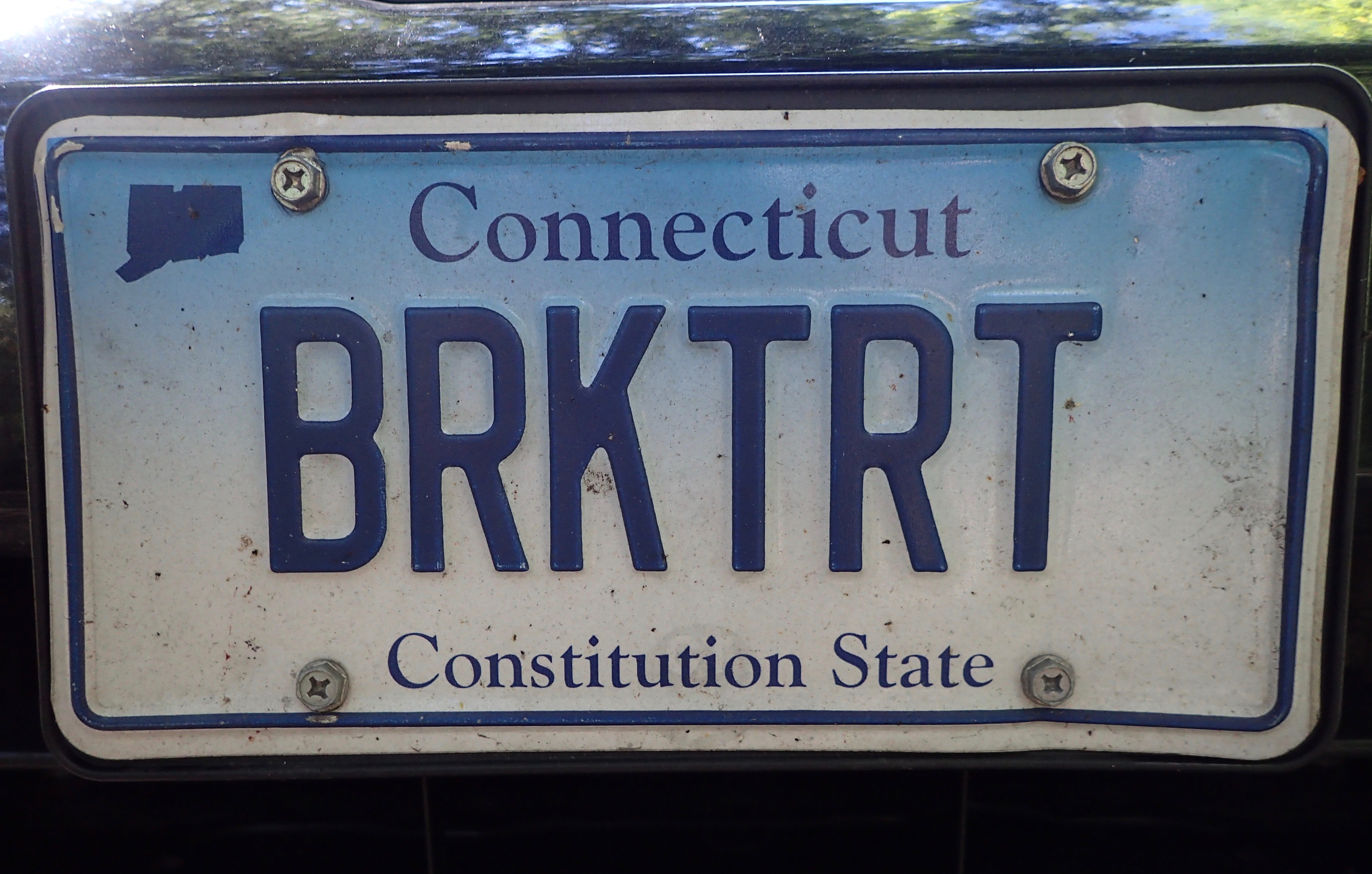
I should make it clear that Alan and I weren’t fishing buddies. We didn’t hang out. Our common ground was a passion for small streams and wild brook trout. I first met him — albeit digitally — when he was a member of the now defunct Flyaddict Forums. We quickly established a rapport, and corresponded via email and the phone over the years to discuss all things thin blue lines. We even traded flies at one point. I still have some of his in my small stream box.
The trip started poorly. I forgot my yellow polaroid glasses, and on my walk back to my Jeep to get my spare pair, I tripped in the woods and bashed my knee against a rock. (When stuff like this happens, I’m always tempted to ask, “What else can go wrong?” But I usually don’t, mostly because I don’t want to know the answer.) There was still snow on the ground in this neck of the woods, not to mention a decent amount of ice clinging to rocks and other obstructions. The sky was overcast, about 44 degrees, and I was happy I brought my fingerless gloves.

I’d already decided that the outing wouldn’t be about catching fish, and not just because February is a tough month on a small stream. I figured I’d selectively use the dry/dropper (in this case the dropper was a size 18 Frenchie variant), then try jigging and bottom bouncing a small ICU Sculpin in the deeper runs and plunges. I wasn’t happy about the depth I was getting, so I added a BB shot to the leader about 10 inches from the fly. That seemed to work; as soon as I made the adjustment, I felt a sharp tug as I was drifting through a boiling plunge. Given the demonstrative hit, I was surprised there was no hook set.
I also spent some time paying attention to the the little changes the stream had gone through over the winter. Brooks like this one are constantly evolving; channels shift, trees fall in, obstructions washed into the system create natural dams, and so on. I also took the time to remove deadfall that served no purpose other than to mess up my drifts. My general rule of thumb is: If it’s alive, it doesn’t get touched. If it’s dead and is small and provides no cover/creates no significant current break/is not being used by a living creature, it can go.
And of course, I was there to fish with Alan. I’m not embarrassed to tell you I had more than one discussion with him, aloud. It felt good to be out in the woods and fishing and talking to him.
I blanked the entire length of the stream until the last pool. I’d gone back to the dry/dropper, and while it was chugging through a spirited run, the dry disappeared. The char wasn’t big, nor was it noteworthy for its colors, but I felt like this was a gift from Alan. I accepted it fully and eagerly, a proper ending to this solemn day.
But it’s funny, sometimes, how these things turn out. Because I suddenly decided to fish a stretch of the brook that I hadn’t fished in at least a decade. It was less than a five minute drive, so I kept my waders on. Since I was running out of time, I made another decision to double-time it to a section with easier access. I’m really unfamiliar with this stretch, but I thought I’d give the dry/dropper a sail through some of the deeper runs. I chose a pool with a very sexy cut bank beneath a leaning tree. It’s the kind of mark that just screams “fish here,” and yet how many times do you find no one home? The first drift was a blank. Ditto the second. On the third, the dry disappeared.
Right away I could tell it was a good fish. If it were the Farmington River I’d consider it a smaller trout, but on this stream it was a giant. I desperately wanted to land it, because I felt like this was the fish I was supposed to get, and somehow Alan was involved, and I didn’t want to let him down. Just as I’m lifting the fish toward the net, my rod tip and line got tangled in some branches. Really? The fishing gods can be so cruel. But in the end, the char was netted. Funny thing! It was the biggest brookie, by far, that I’ve ever caught on this stream.
Thank you, Alan. And so long, old friend. Tight lines on thin blue lines forever.

I’m hoping you’ll join me at Brewery Legitimus in New Hartford for the premier of Director Matthew Vinick’s film, “Summer on the Farmington.” Doors open at 6pm, film rolls at 7pm (that’s this Thursday, February 24). You can’t get tickets at the door — it’s advance sales only online through the FRAA. I’m looking forward to sitting back, relaxing, and viewing while enjoying a tasty craft brew. If you’re there, please say hello.

Hello, all. I haven’t posted in a while, but here I am. Part of it was wanting to leave the contest post up to maximize exposure. I see we’re now a quarter of the way to the magic 1K followers mark — won’t that be exciting? In the meantime, you can still enter the 900 followers contest — but you’ve got to be a follower, and you need to leave a comment on the original post. Thanks to everyone who’s entered — I appreciate your feedback! I may do a Zoom around some of the questions and topics you’re interested in, kind of a currentseams potpourri. Stay tuned.
I’ve also been busy writing a piece for Surfcaster’s Journal where I’ll be the guest columnist for their fly fishing section. It’s about using floating lines and greased line swings and large flatwings to wreak havoc during the spring herring run. SJ is an online ‘zine, so subscribing or buying that issue will be the only way to read it.
And can you believe it? I still haven’t gone fishing this year. Ten lashes unless I find a remedy. In the meantime, I hope you’re getting out, having fun, or preferably both.
Happy Wednesday, fellow Currentseamsers. It’s almost Valentine’s Day, so let’s share the love as we celebrate currentseams.com reaching the 900 followers mark! Suffice to say I couldn’t have done it without you, so thank you for being part of the Fine Nine Hundred. As usual, we’re doing a flies-tied-by-Steve giveaway. Here are the rules:
1) No purchase necessary.
2) You must be a follower of currentseams to enter. (If you’re not one already, you become a follower by clicking on the Sign Me Up button below the “Follow Blog via Email” header, at the top right if you’re on a laptop, and at the bottom of the scroll on a mobile device.
3) To enter, leave a comment on this thread that responds to at least one of these questions: What would you like me to write about? What questions about fly fishing or tying can I answer? What flies that I tie would you like to see video of? One entry per person. Deadline for entering is 11:59pm February 28, 2022. Three winners will be chosen at random. The winners will be notified in the comments section of this thread or by email, and will be responsible for sending me their address so I can ship the flies out. Sorry, I can only ship to U.S. addresses.
4) All decisions by me are final.
Thanks again for reading and following currentseams.

I get lots of questions about tying wet flies, and Jim B. recently sent me this one: Do you use hen saddle or hen cape feathers for your wet fly ties? My answer: hen cape feathers, primarily Whiting or Hebert Miner.
Then it occurred to me that some of you may be wondering, what’s the difference? For starters, capes and saddles come from different areas of the bird. The saddle is located on the lower back just in front of the tail. You’ll find the cape on the back of the neck. Both produce useful soft hackles with varied degrees of webbing. For me, the difference maker in favor of capes is their shape, and most importantly, the range of sizes of the feathers. For the sake of simplicity, I’m going to limit this discussion to the Whiting and Hebert Miner (not “Herbert”, as I often see them mistakenly called) genetic lines of wet fly hackle.

Capes give you the widest choice in feather size and colors. The feathers tend to be longer and narrower than saddles. But where capes really shine is that they give you feathers to tie bigger soft hackles (8 and larger) as well as the smaller ones you’d need for patterns like tiny BWOs and midges. (For one of my favorite tiny soft hackles, Smut Number 1, I use a Whiting cape for hackle; likewise with Pat Torrey’s Tiny BWO Soft Hackle.) That’s a huge range of sizes, and those tyers who value both extremes will be in hackle heaven. Even if you’re never going to tie size 6 steelhead or bass soft hackles, you can use the larger feathers for tailing material.

I’m not going to get into the multitude of other hen soft hackle options that are available to you, like India Hen, Bantam Hen, Coq de Leon, and American Hen. I own several of these types of feather patches, both saddle and cape, and while they all have their uses, the vast majority of my wet fly tying with hen involves Whiting or Hebert Miner capes. It should also be mentioned that I primarily use genetic hen hackle for winged and wingless wets. (Most of the North Country Spiders I like to tie use game bird or starling hackle.)

If you’ve read James Leisenring’s book The Art of Tying The Wet Fly, you know that he was quite particular about hackle. (Cockerel, anyone? In case you didn’t know, cockerel is a young-of-year rooster.) He even suggests making friends with poultry farmers so you can pluck their birds, preferably in February or March. A fine pro tip, but certainly not as convenient as buying a patch of good genetic hackle. Fortunately for us, modern wet fly hackle is pretty darn good in terms of color options, feather size range, and availability.

 currentseams.com