The Greased Line, The Sparse Flatwing, and the Big Three-Oh.

This was a weird spring. It was cold. Rainy. I suffered from a debilitating case of tennis elbow. Without my switch rod, there’s no way I could have even fished for stripers. Things started late – I didn’t get my first bass till well into April. Most of what I was catching was in the sub-twenty-inch class. While that bodes well for the future, April and May of 2014 will go down as a complete vexation for courting the big girls. Two of my traditional big fish spots were depressingly unproductive. It was weeks into May before I even had a legal sized striped bass. But, oh, what a bass. Here’s how it went down.

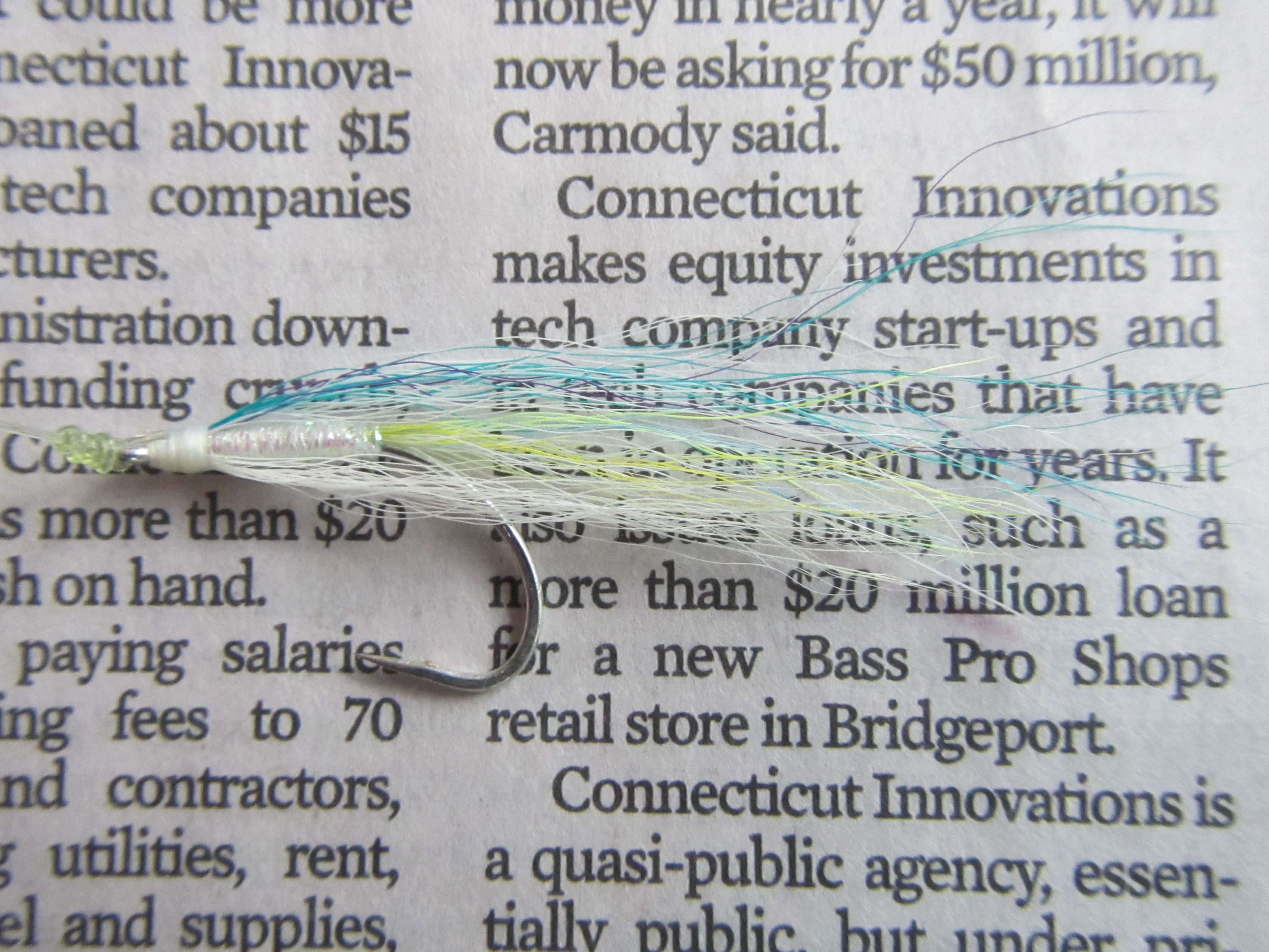
I was fishing a new location that had big bass written all over it: current, structure, and the presence of herring. Attached to my floating line was a seven-foot length of twenty-five pound test mono. The fly was one I’d tied several years ago: Ken Abrames’ Razzle Dazzle. This particular fly was a veteran many striper campaigns. Its top two saddles were long gone, and over the course of the seasons, some of the bucktail had likewise gone AWOL.

For two-and-a-half hours, I fought the good fight: cast. Upstream mend. Another mend. Another. Swing. Pulsing strip. Let the fly fall back. Retrieve. Repeat. If nothing else, greased line for striped bass is meditative, so absent any hits, the routine was comforting and pleasant.

But, it was time to leave. A walk down-current to a different section, then ten more minutes.

The takes on the greased line presentation are usually either a sensation of building pressure, or a sharp pull. Hers was neither. Suddenly, she was simply there, rolling on the fly, taking line downstream. I had dropped a substantial fish the week before when I couldn’t get a good hook set. With that wound still festering, I drove the point home. Hard. She felt strong. But I didn’t have a idea yet of what I was dealing with.

Every big bass fight presents a unique set of challenges. As expected, her first run was downstream. She peeled line off the drag, but I was surprised by how little it was – probably about thirty feet. I pointed the rod at her and set the hook again.

She turned abruptly, and headed upstream. I was simultaneously delighted and horrified; the former because in this heavy current she’d be burning a tremendous amount of oxygen in her flight, the later because of the memories of all those steelhead who shattered my heart with relentless upstream runs and hook-spitting leaps. The challenge was to re-gather line as fast as possible, staying tight to the fish. She was faster than my hands, though, and I was sure I was going to lose her. I raised the rod tip. Still there. I lowered the tip and re-set the hook.

Now, she sounded. I’ve heard that big bass will try to rub their cheeks against the bottom to rid themselves of a fly. I don’t know if that’s true, but I do know that the bottoms of rivers and oceans and estuaries are vast depositories for nature’s junk. Who knows what multiple opportunities for snag hell awaited below? I pulled on the line. It didn’t move an inch.

Unbelievable. Stuck on the bottom. Another good striper lost.

But wait. Did the bottom budge? Yes. A little. I moved the rod tip back and forth in a 180-degree arc over the water, trying to stir the fish. It worked. Instead of ripping down-current, she ran uptide. Paused. I re-set the hook. Again. I decided it was time to try and get her out of the abyss and onto the gravel bar. She would have none of that. “Down goes Frazier!” Or, as I imagined it in my head, Cosell shouting “Down goes Culton!” She sounded a second time.

Again, I couldn’t budge her with a straight pull. The rod wagging thing worked once before, so I tried it again. Now she came up a little faster. I could sense she was tiring. Once I coaxed her out of the depths, she took advantage of the shallows, ripping off a series of short runs. But all that sprinting was taking its toll. I still didn’t know what I had. I was hoping for twenty-five pounds. I decided to try to land her on the beach.

I put the rod over my shoulder and walked her in close, then pulled her to the water’s edge. Now I could see the fish. My mouth fell open, searching for words. My pulse rate skyrocketed. After lipping twenty-inchers all spring, her mouth felt like that of some alien creature. Its opening dwarfed my hand. The flesh between my thumb and forefinger was substantial. I could easily see a small dog disappearing down that gaping maw.

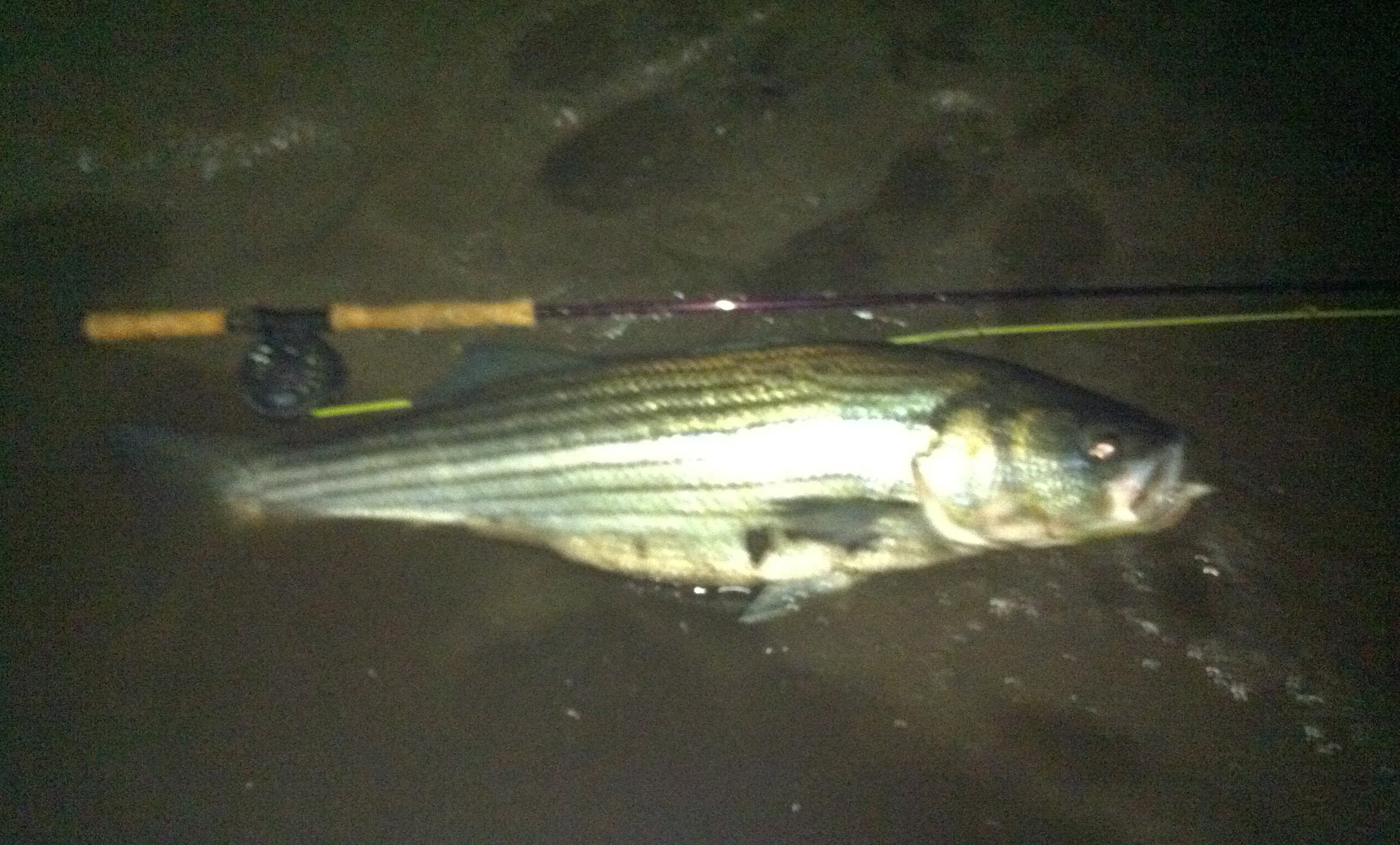
I held my rod against her length. Her gill plates came about to the first guide on my two-hander, thirty-four inches away from the butt. This was a striper over forty inches. The big three-oh in pounds. A new personal best on the fly from the shore. She certainly had been eating well, with a distended belly that gave her a perch-like shape.

Wouldn’t you know that this was the one night all spring I left my camera at home? Fortunately, I had my phone in my pack. I took a couple hurried shots, and felt guilty about it, because I really wanted this fish to live. I took hold of her – good Lord, what an impressive mass – and guided her into the shallows. I was expecting a lengthy revival. But no. Almost immediately she felt ready to go. Just to be sure, I held on a few more seconds. As I was re-adjusting my grip, she thrust from my hands.

She slipped away into the darkness, leaving a gentle wake.

Miss Piggy. A thousand apologies for the sub-par photography. This is what happens when you forget your good camera and are reduced to using an iPhone wrapped in a ziploc baggie. But, you can get a good sense of the sheer mass of the fish. The bottom guide is 34″ from the butt, and her tail extends farther than you can see. Look at that belly full of herring.

Image


A better shot in terms of detail, but you don’t get the full length effect.

Image


The winning fly. An old Razzle Dazzle, missing two saddles and a fair amount of bucktail. Here we make the case for sparse and impressionistic. This fly is now retired. I may put it out to stud.

Image


Farmington River Report 6/16/14: Business (almost) as usual

Since I didn’t get to go fishing on Father’s Day, Monday was my night. I was sure with the warmer weather the bugs would be thick. I was wrong. I arrived a popular dry fly pool on the upper TMA at 5pm. (Thanks to Ed and his friend, whose name I didn’t catch, for sharing the water.) Very little action for the first hour. Even when the hatch picked up (I’d rate the sulphur hatch a four on a scale of ten points) there were few fish rising, and most of them only sporadically. Every trout I hooked over the course of the evening was an active feeder. I fished the first hour with a size 18 cream Usual and landed three browns. Then I switched over to the Magic Fly, size 18. The fly was refused three times, but after I moved down to a 20, no more refusals (the naturals were probably a 16). Once darkness enveloped me, it was the classic Catskill Light Cahill, size 12. Two more on that. On the last one, I completely missed the take. I was picking up the line to recast, and I noticed the leader moving upstream. So, while the hatch wasn’t epic, I managed about a dozen fish. Which is a darn good way to spend the day after Father’s Day.

And still: what’s with everyone leaving once the game gets going? I had the whole pool to myself from 8:15-9:00pm.

Today’s lesson: that tiny rise ring that could only have been formed by a juvey Atlantic salmon that you cast to anyway because there were no other targets? It’s really a well-fed, 14″ wild brown. Happened to me twice.

River stats: 400cfs, 53 degrees, sulphurs, lots of midges (grey and cream), a few small size 18 tan caddis and a few size 16 black caddis.

You find irises like these everywhere on the Farmington River. They’re really quite lovely.

Image

Tying the Magic Fly (Pale Watery wingless wet variant)

The Magic Fly (Pale Watery wingless wet variant)
Hook: 1x fine, size 16-20
Thread: Pearsall’s Gossamer silk, primrose yellow
Hackle: Light ginger hen
Tail: Light ginger hen hackle fibers
Body: Rabbit fur, color to match the natural

I will be the first to tell you that I don’t believe in magic flies – you know, flies that you tie on and you automatically start bailing fish. This pattern is the closest I’ve found to being the exception. The Sulphur hatch is notorious for producing stillborn flies and frustrated anglers. The same could be said of the summer stenos, which have left me muttering to myself and spitting oaths on numerous occasions. The first time I fished this fly, it was a classic June Sulphur night on the Farmington. I had a whole pool of trout at my command. They rose to the fly with such confidence that I couldn’t believe what was happening. It must be magic! I treat this fly with silica floatant (my favorite is Frog’s Fanny) and fish it like a dry, on a long leader on a dead drift. The soft hackles and spikey body create a must-eat-me-now illusion that turns trout stupid. Alter the size and color and you’ve got a fine match for dorotheas and stenos.

The Magic Fly is based on the old English Pale Watery wingless wet pattern.

If there is a downside to this fly, it’s that it is a victim of the materials that make it such a success. The wet fly hackle quickly absorbs water, sinking the fly deeper into the film. Sometimes this is a good thing. Most nights, though, I find the trout want the fly a little higher on the surface. Even repeated shakes in a floatant canister and a re-dusting of silica won’t keep the fly where it needs to be. So make sure you tie up a half dozen in each size. Speaking of size, of the trout aren’t taking the fly, try going down one size. Sometimes that makes all the difference.

~

The Magic Fly Rogues’ Gallery:

Brown PWWwet


~


High-teens long, fat Farmington brown taken 7/21/14 on a size 20 Magic Fly

Big Brown on Magic Fly


Happy Father’s Day from currentseams

I hope you had a good one. I certainly did. A little work this morning in the rose garden, then an afternoon watching Number Two son play in a soccer tournament, and finally off to my dad’s house for dinner. Grilled vegetables, a Caesar salad, and some succulent rib eye steaks (rare for me, please) paired with a delicious California cab with a little age on it (Atticus John 2007). After dinner, the traditional Culton men’s cigar (Flor de las Antillas Belicoso for me — outstanding smoke) and a wee drap (18 year old Macallan).

While we were sipping, dad retold the story of how he took me and my friends trout fishing on the Salmon River in the mid 1970s. There were four of us teenagers, and when we got to the river, dad asked us which way we were planning on fishing. We pointed upstream. Dad’s intent was to get some separation from us, and what with all our hormones, adolescent angst, and noise, can you blame him? He headed downstream. Five minutes later, he turned to see us all in a line, closely shadowing him. Can you blame us? We wanted to follow the master angler.

Happy Father’s Day, dad. Thanks for taking me fishing. And thanks for teaching me where trout like to hang out in a river.

Both of these things are old, but in a good way. He who taught me how to fish, his cigar, and his whisky.Image


The Black Caddis Spider

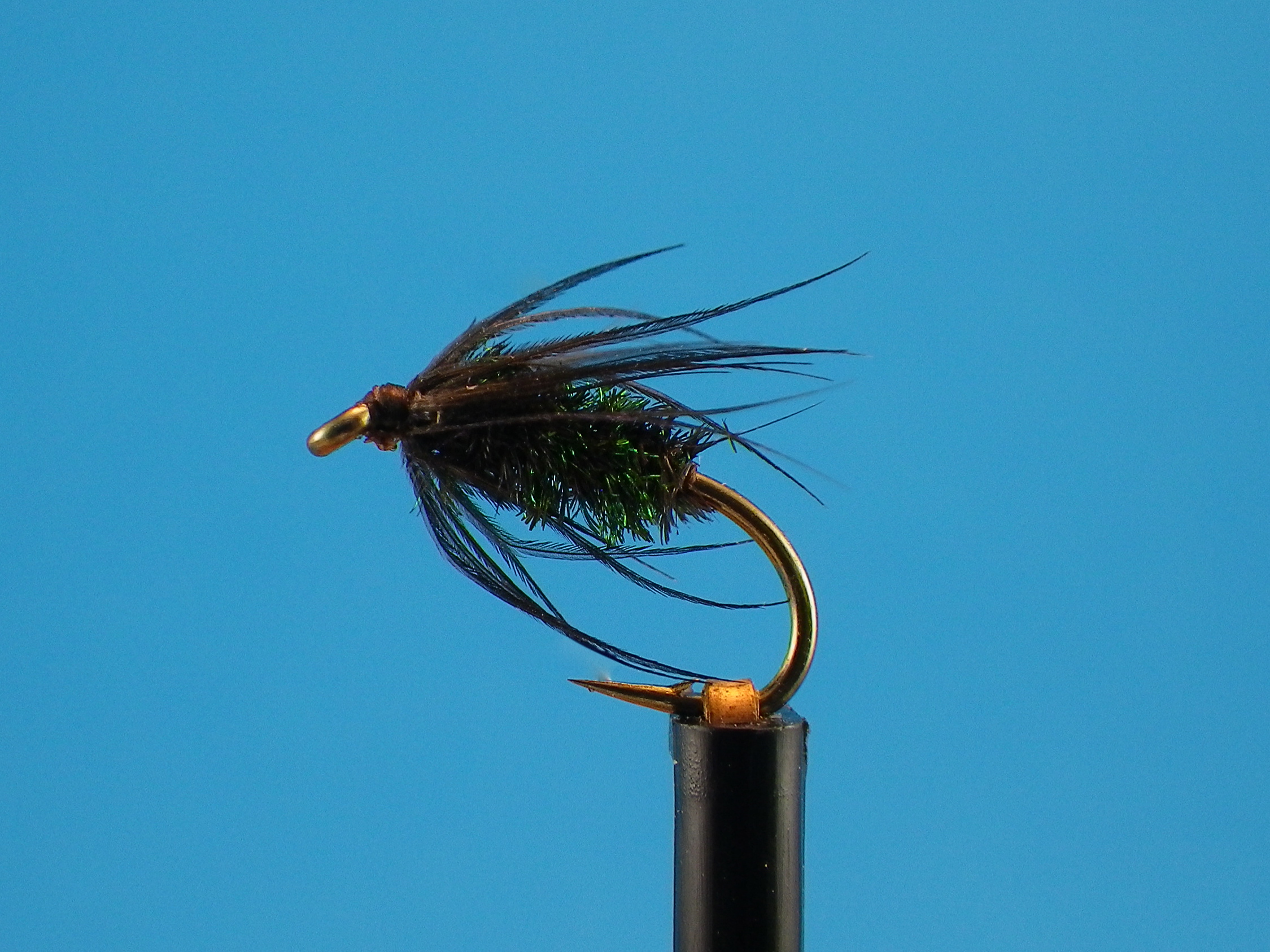
Last week on the Farmington I noted a substantial number of black caddis, about a size 16, hatching in the afternoon. I’d never seen them in that number before. While I had some patterns in my box (Stewart’s Black Spider, Starling and Herl) that matched the hatch, I wanted to tie up something that I could pretend was my own. This borrows from Leisenring’s Black Gnat and the S&H. On a stouter hook –and with a bead head — it would make a fine steelhead fly as well.

Black Caddis Spider

Image

Hook: Size 14-16 wet fly
Thread: Black
Body: Black pheasant tail
Rib: Extra fine copper
Hackle: Starling
Tying notes: A very simple tie. I used three pheasant tail fibers for the body. Counter-wrap the rib to reinforce the body, and play around with different color wires. I went for a longer-fibered starling hackle with this fly.

Farmington River Report 6/11/14: The evening rise is on

Speaking of seasons, ’tis the time to break out ye olde bamboo dry fly rod and cast to trout feeding on sulphurs.

I started out swinging wets on the lower river at 4:30pm. Several hatches were underway, including sulphurs and March Browns. Not a riser to be seen, which may explain why, to my astonishment, I blanked. I am always surprised when I don’t catch anything on wets during a hatch. This was mighty humbling.

Although I love the wet fly, and am an avid practitioner of the ancient art, I do have a soft spot for the dry. After giving the lower river a  half hour, I headed for dry fly water in the upper TMA. At 5:30pm, there were already two anglers in position. I moved to the head of the pool, not an ideal location due to several murderous current seams, eddies, and water that sped along in one place while languishing in another. This would require a series of complex tactical mends to get a good drift. That was fine with me. We like a challenge at Currentseams.

Dense fog blanketed the water (353cfs, and a chilly 52 degrees). A decent rise during the first emergence (sulphurs, March Browns) from 5:30pm-7pm. I was rusty. I dropped the first six trout I hooked. The action waned from 7pm-7:30pm, then picked up again (sulphurs, March Browns, grey caddis, BWOs). I finally got my mojo back, and landed every trout I hooked until 9pm when I called it.

Moonrise through the fog over the Farmington. When I took this shot a little after 9pm, I was the only one in the pool — besides a bazillion bugs and scores of hungry trout.

Image

I fished three patterns tonight, and caught trout on all of them: size 16 Pale Watery Wingless Wet (treated with Frog’s Fanny and fished on the surface), size 14-16 cream Usual, and a size 10 Light Cahill Catskill once it got dark. I am always amazed that people will leave a pool around 8pm. This time of year, the slot from 8pm-9pm is double-bonus action time. I lost count of the number of trout I landed in that hour. The last two I caught, I couldn’t even see the fly, and the last, not even the rise ring. I just lifted my rod tip and there he was.

My original leader length was 12 feet (6x tapered leader). Once I added three more feet of 6x, I found it a lot easier to get truer drifts.

You haven’t eaten in hours, and now you’re standing by the counter at Five Guys, desperately wanting your burger and fries. Whoever decided to put a big box o’ peanuts (note scoop, encouraging large portions) to  ease the torture of anticipation is brilliant. Absolutely brilliant.

Image


A shrimping I did go

It’s hard to improve on Ecclesiastes — let alone the Byrds — so I won’t even make the attempt. To every thing there is a season. And this is time of year I like to fish for stripers who are feeding on grass shrimp.

The grass shrimp swarm to the surface in brackish waters by the tens of thousands. Diminutive (about an inch, inch-and-a-half long) translucent creatures with eyes that reflect ambient light. From a distance, their mating dance looks like so many tiny raindrops. Then the surface boils from below, followed by a resounding pop! I get goose bumps just thinking about it.

Because there’s so much bait in the water, I like to up my odds by fishing a team of flies. Not only will I be presenting the bass with more targets, I will also be giving them a choice of patterns. Stripers never lie. They always tell you what they do — or don’t like. This weekend, I fished a three fly team consisting of Grease Liner variant on the top dropper, a pink Crazy Charlie on the middle dropper, and an Orange Ruthless clam worm on point. Of course, I am using a floating line should I need to throw a series of mends to fish the flies on a cross-stream dead drift.

Shrimp. It’s what’s for dinner. This fly is a variant of Harry Lemire’s classic steelhead fly, the Grease Liner. A little rabbit fur, a little deer hair, and you’re fooling fish.

Image

I made two trips this weekend under the cover of darkness. The tides were in that weak quarter moon netherworld, but what the place lacked in current, it made up for in splendid isolation. Not another soul in sight, both nights. It amazes me the things you notice when you’re sitting alone on a rock in the dark and the air is completely still. You see the reflections of an airplane’s lights in the water long before you hear the distant drone of its engine. The sound of the building tide seems to increase exponentially. And the reports of feeding bass travel quite well over water.

Friday night was the slower of the two; instead of bass, I hooked and landed several hickory shad. After an hour, I moved upstream to see if creatures were stirring at a bottleneck; they were, but out of casting range. Resigned to trespassing, I did so with the rationale that what goes unseen remains harmless. I can’t tell you exactly where  I was fishing, but let’s just say that between structure and trees, any form of traditional casting was out of the question. I could, however, dangle my flies in the current a rod’s length away. You can get really close to a fish that is holding on station, feeding as the current brings food to his waiting mouth, as long as you exercise caution and keep movement to a minimum. Twice, I hooked the striper that was chowing down ten feet away from me. Twice, I was unable to set the hook.

As I drove home in the wee hours, I was already plotting my return.

Saturday night, the tide hadn’t quite topped out when I reached the spot. I was pleasantly surprised to see the place was empty. The shrimp were already doing their dance, but otherwise it was quiet. Once the tide turned, the game was afoot. I saw a delicate swirl forty feet out. A few casts and a mended swing were ignored. Then, off in the distance, I began to hear the pops of feeding bass. Since the fish were in spinning rod range, I switched tactics and started dumping fly line into the current, all they way to the backing, and then some. Let the flies come tight, plane up, and swing around. Whap! Fish on. I could tell from the way it was fighting that it was another shad, until I brought it into the murky shallows and saw it was a foot-long striper. That made me happy.

I caught a bunch more in the 12 to 16-inch range, most on the dangle and swing, a few while stripping the whole smash back in. It wasn’t easy fishing; far more presentations were refused than taken, which is the way it should be when you’re fishing the grass shrimp hatch. But, now I had to return to the scene of Friday night’s robbery. By the time I got there, the current was just beginning to crawl toward the Sound. I lit a new cigar to keep the mosquitos at bay. I waited. Nothing. No micro swirls or dots painted on the surface by the bait. No earth-shattering pops. I decided to get my flies in the water anyway. You know, just in case.

Finally, a pop, though it was well out of casting range. To combat the boredom — and to create some wakes on the surface — I began manipulating the rod upstream and side-to-side. Still, nothing. And then, with the flies just sitting there, a building pressure on the line, then a series of sharp tugs. Seemingly out of nowhere, I was on. Bass for sure. Yes. Eighteen inches, the king of the weekend’s haul, taken on the clam worm.

By the time I got back to the truck, I still had enough cigar to keep me busy all the way home. But I decided to extinguish it. I kept the windows rolled down, and the air on this warm summer night tasted sweet as it coursed through my mouth and filled my lungs.

Droppers are the fastest way to find out what the fish want. I tied this one using 20 pound test World Wide Sportsman Camo mono.  I learned a few things on this trip. Top to bottom: 1) Harry Lemire’s Grease Liner is a darn good striper fly, even if it was created for steelhead. 2) Charlie Smith’s Crazy Charlie is a darn good northeast grass shrimp imitation, even if it was intended for bonefish in the Bahamas. 3) It is almost never a bad idea to include Ken Abrames’ Orange Ruthless clam worm fly on your team of flies, even if clam worms aren’t the predominant bait.

Image


Farmington River Report 6/9/14: Patience is a virtue

I guided John and his son Mike on the Farmington River for a full day of wet fly fishing. If you live in Connecticut, I don’t need to tell you that it was a dank, rather gloomy day. We had lots of fog and about two hours of a cold rain. Water in the upper end of the river was running at 360cfs and was 51 degrees. There was just a hint of stain to the water.

John materializes out of the mists. No, really. If you look closely you can see him in the center of the river.

Image

To the fishing: well, it was one of those days where you had to work hard for every trout. We drew a blank at the first spot. The second was a little kinder; we rigged for a deep, short line wet presentation and both father and son hooked up. Downstream a ways, Mike lost a nice fish that hit on the swing. Spot C was unresponsive to our offerings. By now it was early afternoon, and we started to see a few size 16 BWOs (for the most of the morning it was a caddis and midges, though not in any great numbers). Off to the last spot of the day, and that’s when things got interesting. John and Mike had been fighting the good fight for hours with little to show. A little help from Mother Nature, please? Yes. A few more caddis, a building olive hatch, and then some creamy mayflies, about a size 12-14. For the first time all day, we had consistent risers.

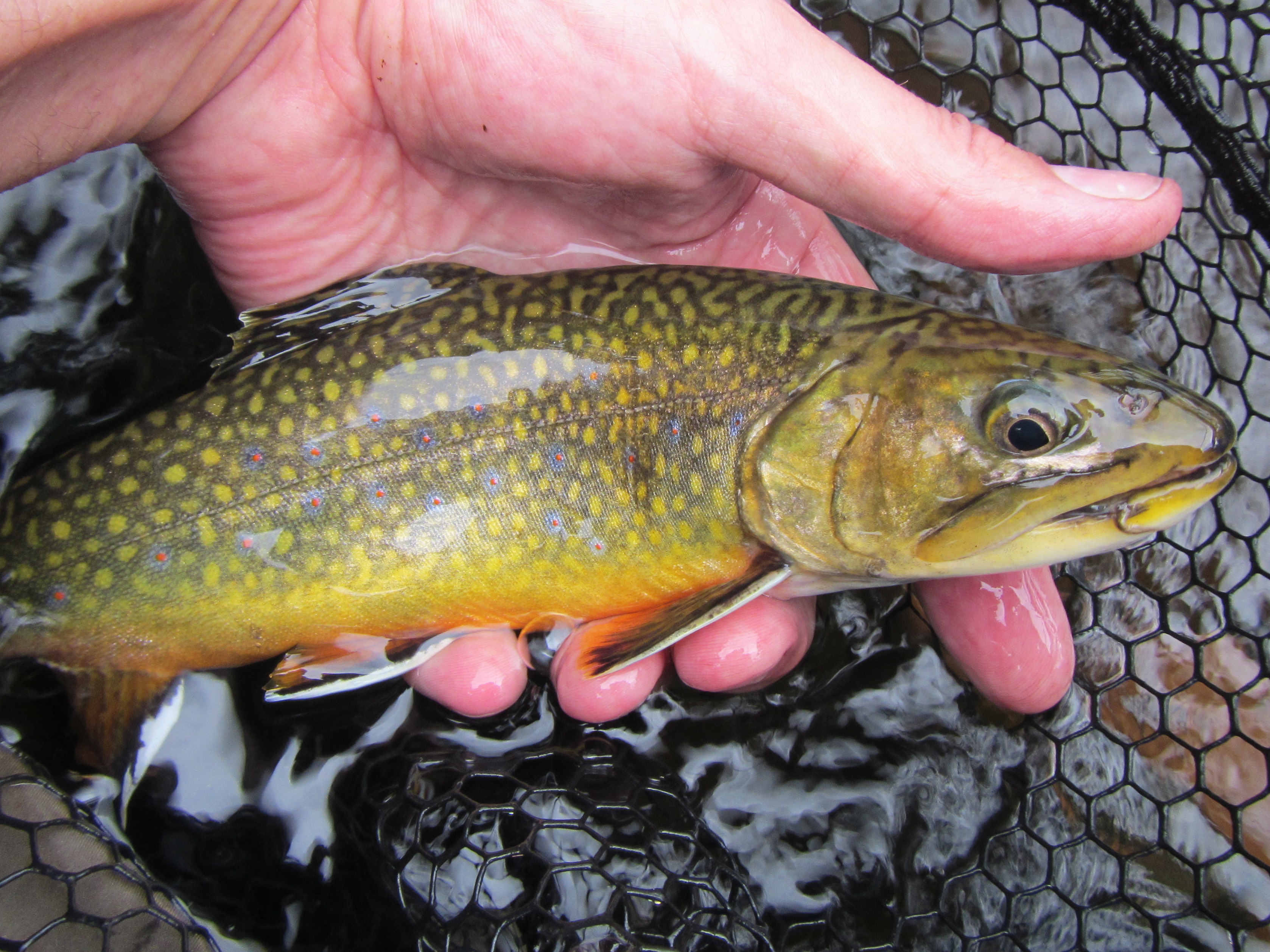
John netted this stunning brown on a size 16 Partridge and Olive. Well done, sir.

Image

Just when the going got good, I had to get going. So much for my brilliant plan to stay after the gig and fish. Not to worry, Father and son carried on quite nicely for a few more hours. Great job today, guys, in some very tough conditions.

Mike presenting up and across to a couple fish that were taking emergers along a seam. Sadly, they weren’t taking Mike’s flies. No worries. He knows where they live.

Image

Farmington River report 6/4/14: The return of the hat

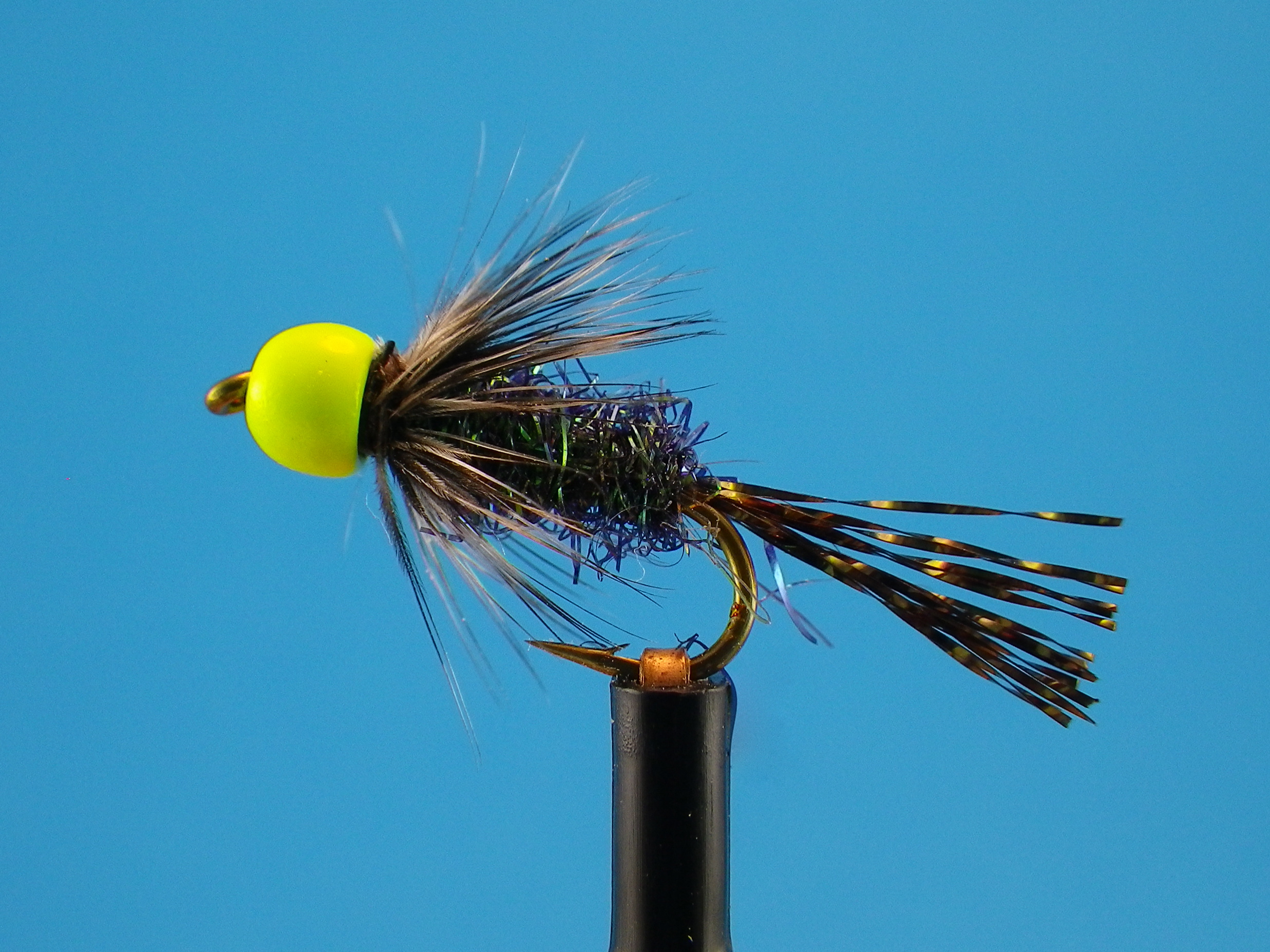
Since yesterday’s outing was cut short by cloudburstus interruptus, I returned to the river today to finish the job. A quick in-and-out session before I had to go pick up the kids. Oh. And I had the hat this time. Much better. Life is beautiful. All is as it should be. Spot A was a 100-yard snotty pocketed run that proved to be a treacherous wade (the river came up slightly from last night’s rain, but was running clear). I managed two rainbows and two browns as I swung wets along its length. The size 16 black caddis were massed again, but there were no risers that I could see. Plenty of midges in the air, and a few stray small tan caddis. If you’ve ever taken my classes, or heard my “Wet Flies 101” presentation, you know I preach that absent any hatch activity or actively feeding fish, move, cover water, and present your flies in the most likely holding water. If you want to catch more trout on wets, I cannot emphasize this enough. All four fish came in different sections; all came because I was willing to wade and cover water. Another commonality was that all four took the point fly, a tungsten bead head soft-hackle Pheasant Tail, on the mended swing.

I made one more stop. It’s 50-yard section of river that I haven’t fished in at least five years. Once I remembered where the cafeteria line is, I came tight to a rainbow who thought he was a steelhead. One sky-high aerial, a bit of deep sulking, then another aerial before he spit the hook.

Not a bad way to spend 90 minutes in the mid-day June sun.

Where were you yesterday when I needed you?

Image

Farmington River Mini Report 6/3/14: All for the lack of a hat

Fished the Farmington from 3pm to about 7:30pm. Today’s mission was to hit a bunch of spots I haven’t fished in a long time, swing some wets, anticipate a strong evening hatch, and hope the trout were looking up. Things started poorly when I forgot my fishing hat. I mean, I need my fishing hat. My head felt naked. Exposed. It just wasn’t right. Serves me right for wearing it to Sunday’s soccer games, then taking it into the house (the hat stays in the truck when not in use. Idiot.) Spot A was a run that dumps into a deep pool. Swarms of mating black caddis (size 16) everywhere. No hits. I was surprised. Moved down to a second run where I scored Rainbowzilla. He took a size 10 soft-hackled bead head Pheasant Tail on a dead drift. This guy went straight to the reel and peeled off twenty feet of line. Just as I was netting him, he popped off. My rig flew into a tree. Lost it trying to retrieve it. I blame the lack of a hat. Motored off to a tricky wade where I was sure I’d get into trout. Nope. Just juvenile salmon. Two of them. A hundred yards down, hard against a bank, is a deeper-than-you-think little run. Same drill: dead drift, second mend, and I’m on with Son of Rainbowzilla, another some-teen inch brute. Unlike the first rainbow, this one had been in the river for a year. Deep pink lateral band, fatter than Mama Cass, and flawless paddle fins. Netted him, then lost him when he leapt from the net as I readied the camera, snapping off the bottom two flies on my team of wets. This bad mojo is clearly what comes to those who are foolish enough to leave their hat at home. The next two runs involved a lot of walking for absolutely no catching (have I mentioned that I forgot my hat?). Ended up at a place where I was sure the late afternoon transition into evening would bring a substantial hatch of Light Cahills or Sulfurs. Instead, I got a picking-up-breeze and ominous clouds …but nonetheless, some trout willing to jump on. I took two more rainbows in a half hour. Then the heavens opened up. Just when I was saying, “OK, time to go” out loud, bam! A nice wild brown. All three fish again took the point fly, a simple bead head, plain rabbit fur fuzzy nymph — only every take was on the swing. I got totally soaked on the way back to the car.

I really wouldn’t have gotten so wet if I’d had my fishing hat on.

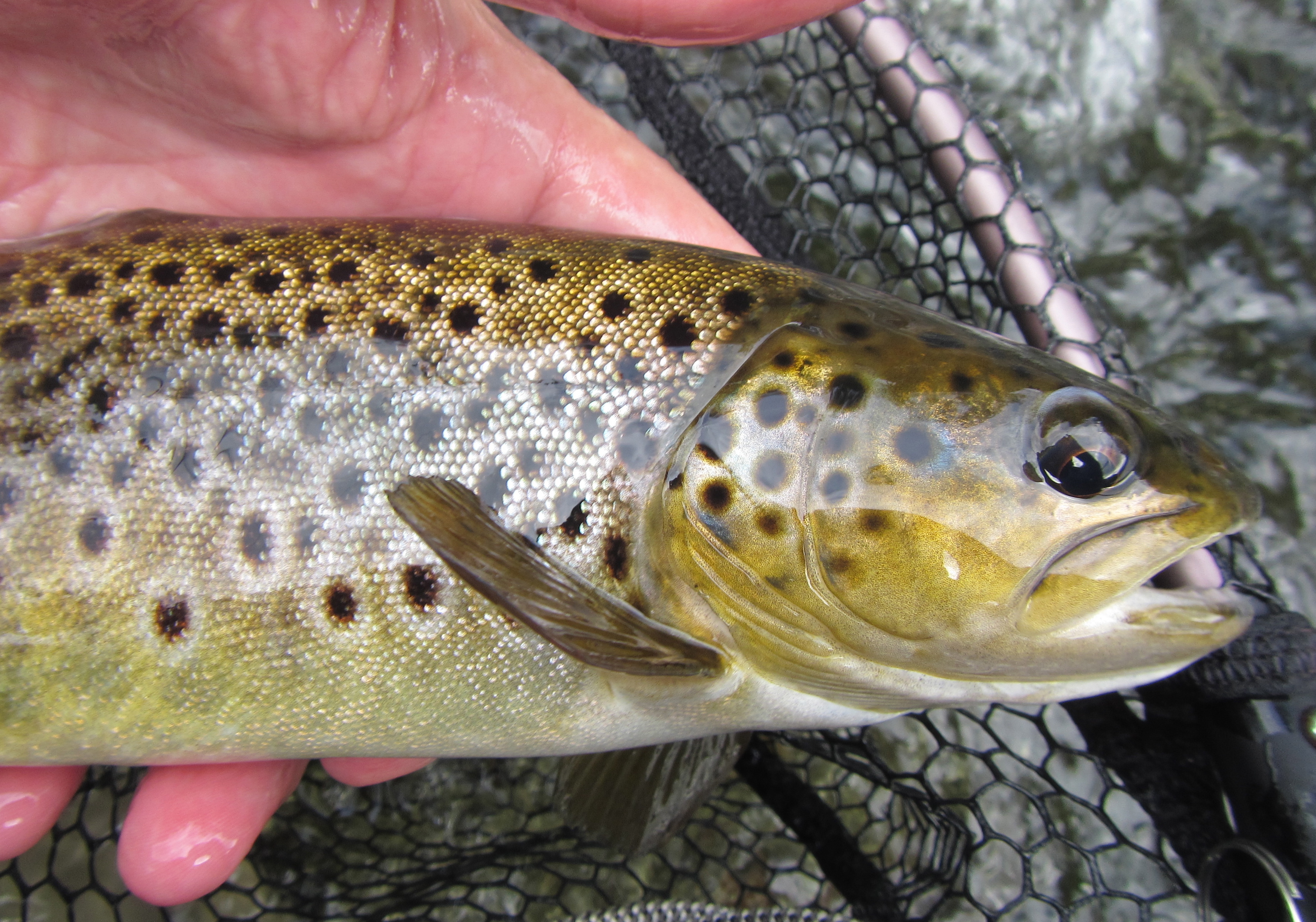
A bronze totem from the wild tribe. He’s the reason I took such a good soaking. Thanks, friend.

Image


These simple white flowers are all over the river. They have dark and light blue cousins, too.

Image