I almost forgot — I’m be contributing another chapter to Dennis Zambrotta’s followup to “Surfcasting Around The Block.” It will be a brief chapter on what you need gear-wise to fly fish the island. Of course I’ll have my own opinions, but my goal, as always, is to help you get the most out of your fishing experience. I believe Dennis is hoping for a late fall publish date.
You can be sure I’ll mention a good pack, a shooting basket, and a floating line. And a headlamp that has a red light!
Hello, all. My apologies for the lack of regular posts, but it’s summertime, and I’m working hard, playing hard. And so much to write about! Here’s what’s going on.
First, the fishing. I am in hard-core summer mode, which usually means long afternoons into nights. I know you won’t begrudge me the chance to get out and fish at the expense of writing here. I hope you’re getting out too. I’m also doing a bit of guiding. Then, there’s the yard and the garden. Speaking of which…
…we need rain! They’ve dropped the flow from the dam on the Farmington to 85cfs. The Still is currently a warm trickle. Ugh! The good news is that what’s coming out of the dam is plenty cold. I suppose we’ll have to rejoice in that.
Hot bronze, baby! Fortunately, smallmouth like warmer water.
I’m currently writing a piece for Surfcasters Journal on fishing the sand eel hatch with a floating line. It’s going to be loaded with tips on how to catch those stripers that not everyone can. Naturally, I’ll let you know when it comes out.
Last but not least, I am now officially a Scientific Anglers Pro. I’m a big fan of their Mastery Anadro line, and I’m waiting to give the Mastery Bass line a whirl. As always, I never hump products that I don’t use and love!
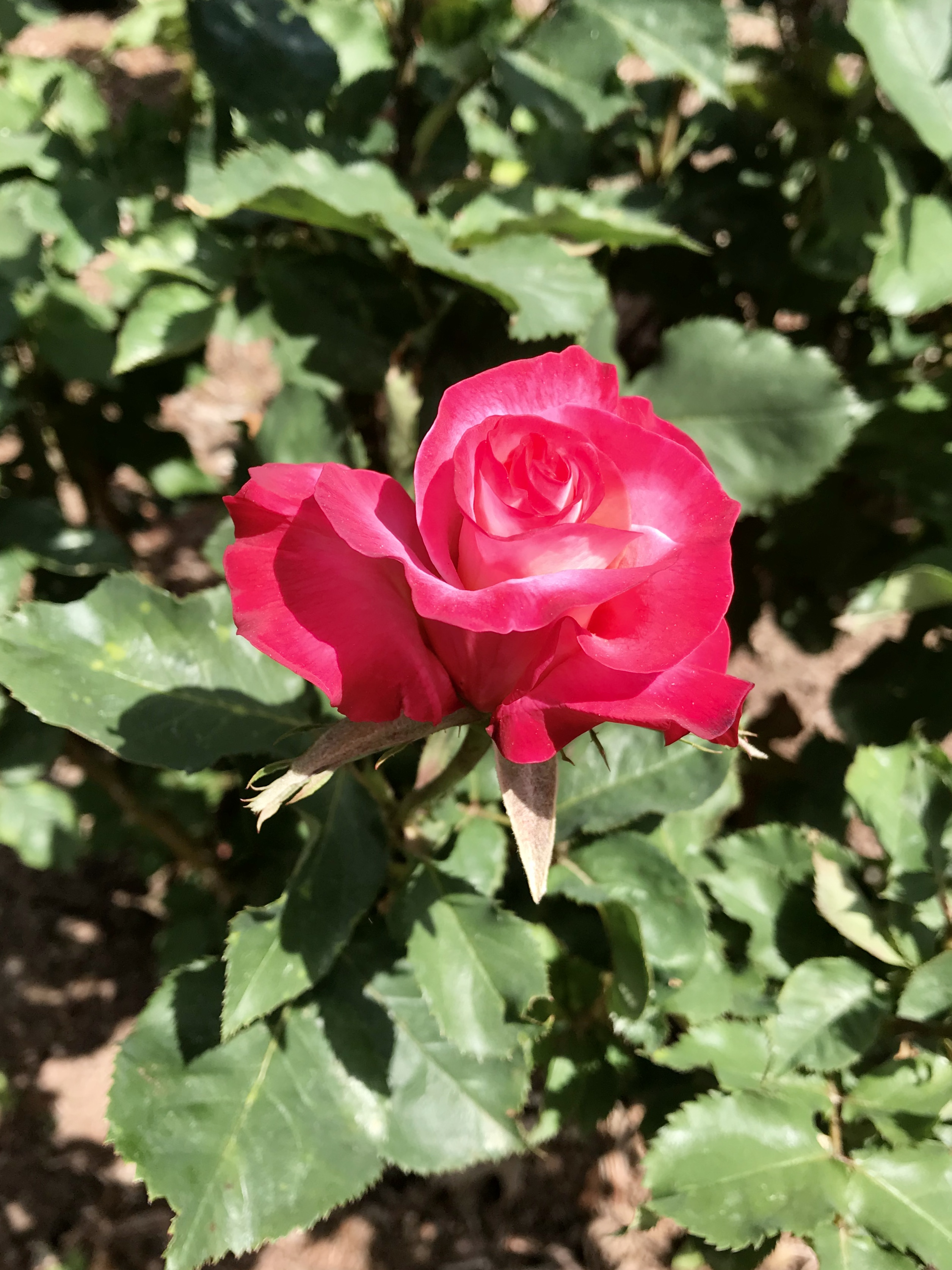
This happened Monday, so I’m a little late with the post, but my first rose blooms always mean there are Light Cahills on the lower end of the Farmington. The hatch is already progressing upstream. Call them what you want (Vitreus, sulphurs, etc.) — I see these first signs of summer as simple creamy mayflies, and I go with the generic term of Light Cahill, which suits me just fine.
Remember, you are matching size, color, and profile. These first invaders are usually a size 14-16 — sometimes you get a big 12. For dry flies I like the classic Catskills Light Cahill, the Pale Watery Wingless AKA The Magic Fly, and the Usual. For wets, the Light Cahill winged, the Pale Watery Wingless, and the Partridge and Light Cahill. Any of the creamy Leisenring or North Country patterns will also serve you well.
Old reliable “Grenada,” a hybrid tea rose, is always the first to pop. If I weren’t so busy with yard work, I’d be all over this hatch. Catch a few for me, will ya?
Some of you may know that I am avid gardener. Right now, I am planting by the moon. What’s that, you say? The basic idea is that just as the moon’s gravitational cycle causes tides to rise and fall, it also affects soil moisture. So you want to plant seeds and transplant during periods when more moisture is being drawn to the surface.
Okay, Steve. But what the heck has this got to do with fishing?
I’m a firm believer in paying attention to natural rhythms.Using stripers as an example, I also believe that the angler who wants to catch more bass, and especially bigger bass, will not be one who places a premium on leader construction or casting distance — but rather one who focuses on things like tides, moon phase, wind direction, bait patterns, water type, structure, location, water temperature, frontal systems, and barometric pressure. What’s more, that angler should pay attention to common natural markers, like hearing the first spring peepers or when flowering trees bloom.
It’s all part of one magnificent puzzle. Every year is different, but nature is always right on time. It doesn’t hurt to be able to cast a plug or a fly line very far. But if you really want to crack the big bass code, pay attention to Mother Earth’s natural rhythms.
Yesterday was herb day. Today it’s peppers. I have it on good authority that this weekend is a great time to plant cukes and squash.
It’s an FAQ I get from my clients: “Can you recommend a place to stay?” The answer is yes. Legends on the Farmington. Located in Barkhamsted, CT, Legends is a gorgeous lodge-style B&B on the banks of the Farmington River. You’ve literally got great water right out the back door (Greenwoods pool). I’ve never stayed, but I’ve held classes there and it’s a fantastic space. It’s run by my friend Sal and his wife, and they’re swell hosts. Tell them Steve sent ya.
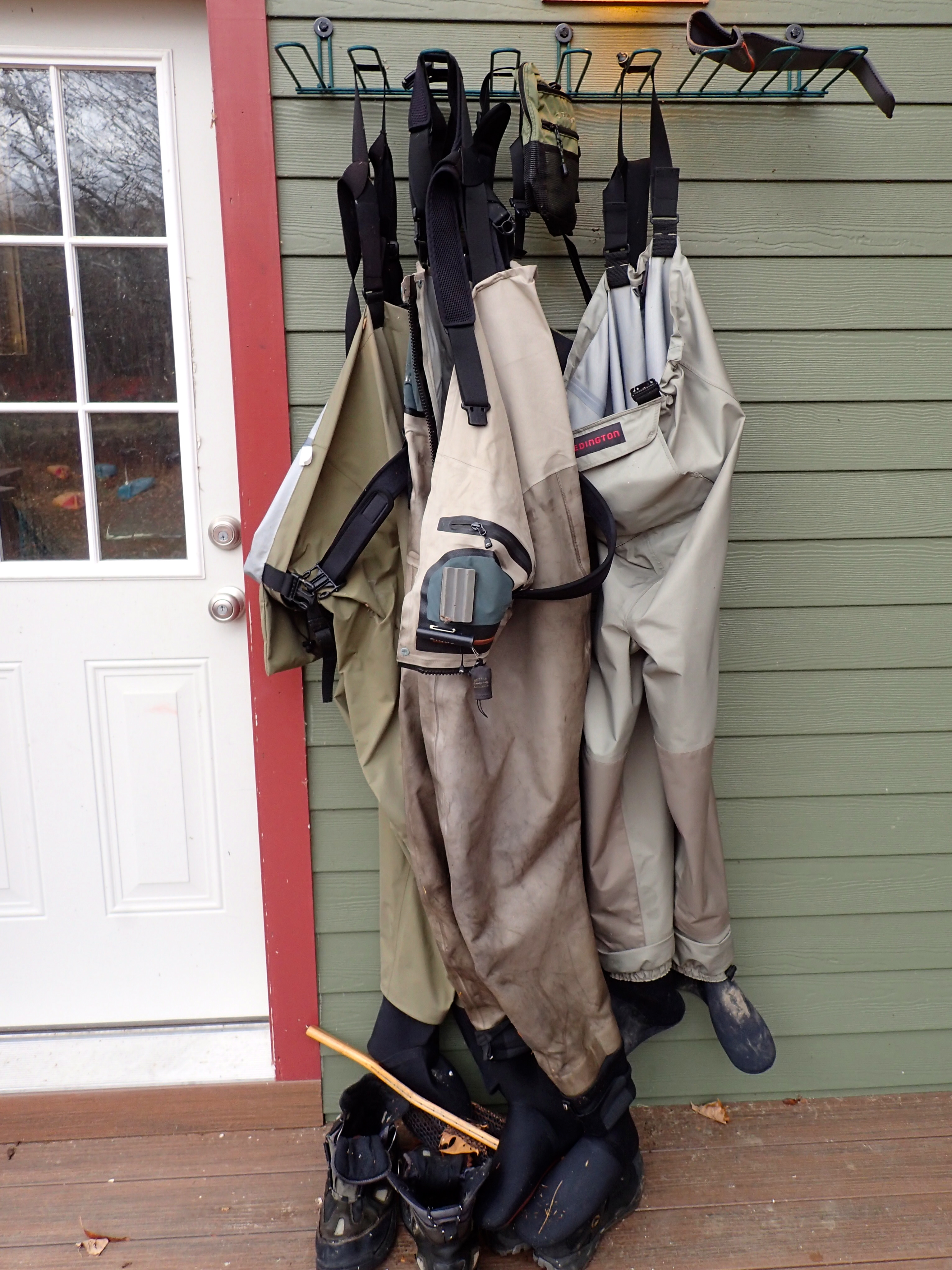
Hang your waders on the deck and come on inside. If you want to see the inside of the lodge, visit the Legends website.
Grady just bought someone’s collection of tying materials, and I’m happy to tell you that it includes Pearsall’s Gossamer Silk. Pearsall’s is no longer made, and nearly impossible to find, so this is a treat for those looking to tie classic North Country spiders with traditional materials. These spools are bargain priced, and as of Friday there were still plenty in stock. Naturally, I helped my self to a bunch, but I played nice and kept my silk gluttony down to a dull roar. Get ’em before they’re gone.
This photo was taken Friday afternoon. As you can see, there’s Pearsall’s Marabou silk as well.
You might also want to rummage through the bins — they’re in the room next to the parking lot — from this collection. Again, I can’t vouch for current inventory, but there were all kinds of game bird skins and other soft hackle delights at bargain prices. As always, please support your local fly shop!
A couple of years ago, I made the suggestion that given the current condition of striper stocks — stressed — and that their future depends greatly on smaller fish getting to be larger — breeder size — might it not benefit everyone if we didn’t try to catch a bajillion small stripers?
Once again, I’m revisiting that energy. Ask yourself this question: Do I really need to catch dozens and dozens of school bass at the mouth of the Hous (or wherever you go this time of year where striped bass congregate)?
I invite you to join me in observing this new, off-the-books reg: When it becomes apparent that it’s a small bass on just about every cast, reel up and stop fishing.
Catching another dozen dinks won’t make you a hero. But walking away will.
This session, from yesterday, went up to 11. Things were slow until the tide reached a certain window. Then a rip formed, and it was the Bass-O-Matic. I was tempted to go for 12, but I stopped after this fish. You can, too. Thank you for your consideration.
Director Lorri Shankar’s film about Ken Abrames, “Striper Moon: A Legacy” is now online. You can see the original film poster here. The link to the film, on Google Drive, is here. Enjoy!
A still from the opening of the film Striper Moon A Legacy.
Congratulations to Glenn, Zak, and Steve. As I write this, their flies are en route, and should be in their hot little hands by Monday. In case you’ve never won, I thought this would be a good time to tell you a little bit about the process of how you get your swag.
Wets, soft hackles, striper flies, and striper/steelhead flies adapted for sea-run cutthroat trout. Good stuff, all of it. Clockwise from far left: shrimpy fare, Ray’s Fly Featherwings, two sets of Soft-Hackled Flatwings, doubles of the Ruthless and the Eelie, and center, some of my favorite, most productive soft-hackles.
Once I notify the winners, I ask them what they’re most interested in receiving. Not all requests are doable, but I try my best. A good case in point would be Zak’s flies. He wanted flies for sea-run cutthroat trout. After rummaging through my hook stash, I reckoned I could make it work. So even though I’ve never tied up flies for sea-run cutthroat trout, I was happy with where I ended up. I hope Zak is, too.
Which brings us to volume. All winners do not necessarily receive the same number of flies. This is a function of time, labor, and materials cost. So, if you’re like Glenn, and asked for soft-hackles and wets for trout, you’re probably going to get a dozen flies. Steve wanted some early season striper patterns; those are more involved and the materials harder to source, so I sent him a half dozen. If someone wanted a complex pattern like the Countermeasure, it might be as little as three. As one of my kids’ teachers used to say, “You get what you get and you don’t get upset.”
As the demand for my guide services increases, I’m trying to figure out how to make things easier for everyone. So I created a “Preparing for Your Guide Trip” checklist/infographic and added it to the menu bar at the top of the homepage:
The checklist, shown below, is also available as a pdf under the “Guide Trips/Lessons” link. I’m hoping that you find it helpful!





 currentseams.com