December Dinks

The most difficult part of striper fishing in December isn’t the cold. It’s finding the fish. Once you do, you can pretty much get out the tally sheets.

So I headed south to see who might be out and about. Save for a multitude of sea birds and one other fly angler, I had the beach all to myself. This being a powerful moon tide, there was no shortage of sexy rips and seams to cast into. I was two-handing it with a floating line, a six-foot section of T-11, and a three-foot leader of 20-pound mono. A four-inch long September Night seemed like a fine choice of a fly, although I spent considerable time debating the merits of throwing a sparse bucktail like the Magog Smelt.

I fell into the meditative rhythm of cast, mend, mend, swing, slow retrieve. I was ready for the pull of a hungry fish.

The answer was no.  All I was catching was sea lettuce and marsh grass. The other angler across the way was likewise blanking. Then he got into a small striper. And another. I kept waiting for the hits that never came. Since I had a limited time slot — I was slagging off work — I reeled in and headed for another spot. The distance and brisk pace I kept made me sorry I had put on that extra layer of fleece.

New venue, same results. There comes a point in every skunking where you make peace with the fact that you’re not going to catch anything. So I reminded myself that while most of the world was working, I was fishing. The sun was out. I had the pleasure of a peppery, earthy Churchill. But, I asked, could I please get just one fish? I raised the question out loud, because I find that when you’re alone, that works a lot better than just thinking it. How else to explain the strident bap! at the end of the next swing?

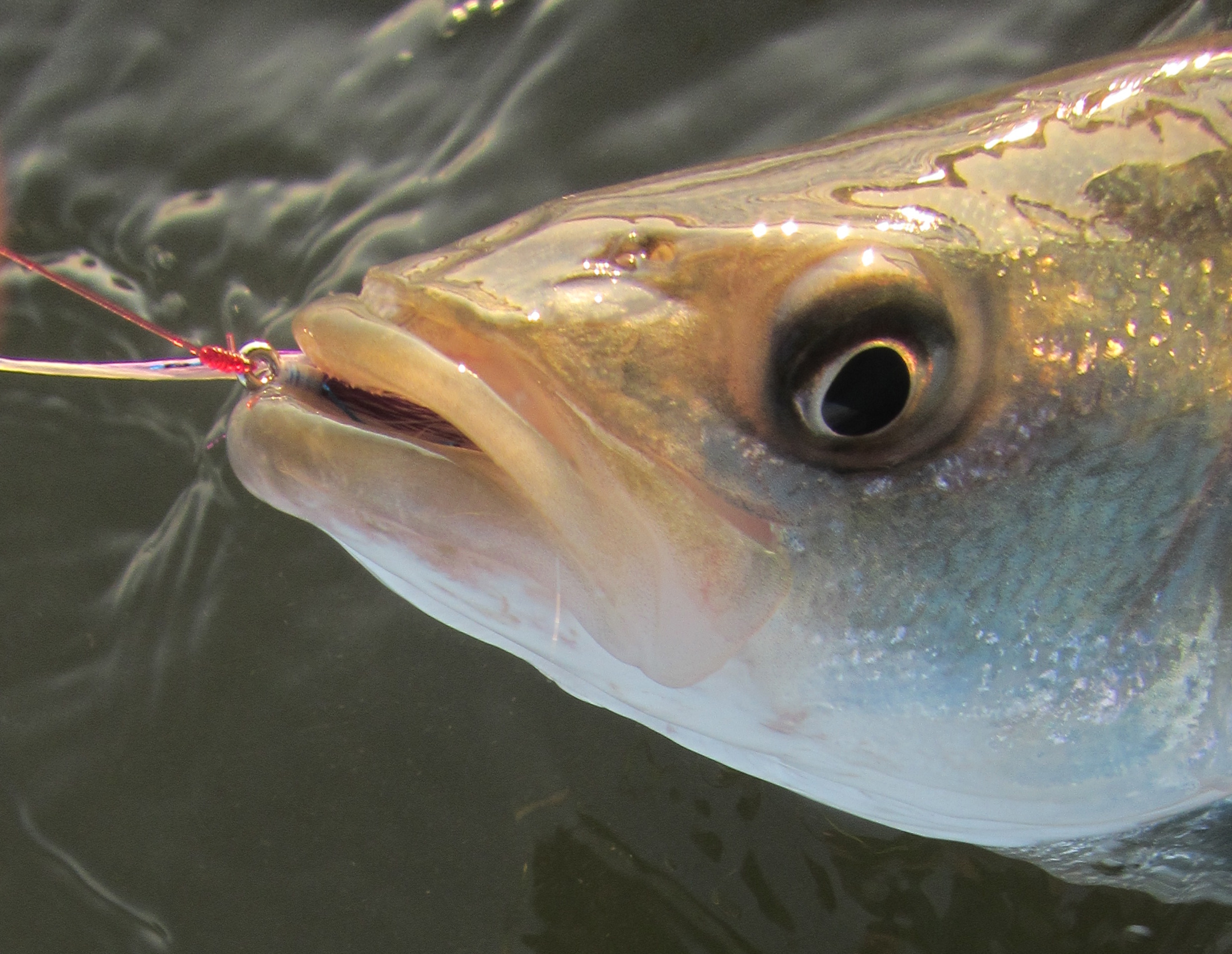
These stripers didn’t know there weren’t any mullet around. Not to worry, for the September Night worked quite nicely on this December afternoon.
Image

And that was the start of the Bass-o-Matic. All small fish, but each of them fresh from the ocean,  flawless and gleaming bright.

With great discipline, I peeled myself away from the frenzy five minutes before my hard stop. So much to do. So little time.

At least now I could cross “catch December stripers” off my list.

Salmon River Steelhead November 2013

Just got back from four days on the Salmon River in New York, and I’m here to tell you, friends, that the fishing was off the charts. After a painfully slow 2012-13 season, the steelhead gods saw fit to shine their benevolent light upon me. (The entire group — there were four of us — got into an embarrassment of steelhead riches.) Still basking in the glory of over 50 steelhead hooked, and nearly half of them landed. Here’s a short film that my friend and co-conspirator Todd Kuhrt put together. Eventually I’ll write up a proper story, but until then, enjoy this little gem.

Baby, I’m howling’ for you indeed.

Stripers-by-numbers

2: Number of cigars I smoked, a Gispert Churchill on the drive down to Rhode Island, and an H. Upmann 2000 Reserve corona gorda on the way back to Connecticut.

5 and 9: The weight rod and line I used. Perfect for the tight confines of the first spot we fished. I could load the rod with a minimum of line, and shoot the rest with a flick of the wrist.

7 and 9. The weight rod and line Jon used.

1: Number of stripers we caught in the first spot (Jon was the successful angler).

4,957: Number of weeds I hooked in the first spot. At least it seemed like that many. I was fishing a greased line swing, then a dangle, and I could feel the tick the moment the weed hit the fly.

1: Number of stripers we saw in the second spot. Jon noticed a wrinkle on the surface in the moonlight. As we worked our way along the bank, I felt a quick little bap! And then he was gone. Other than seeing a few silversides and a juvenile fluke, the place was as dead as Julius Caesar.

86: My heart rate when we got to our last stop and saw a couple fish feeding out in the current.

10: As we were already well past our cutoff of 11pm, our agreed-upon time limit, in minutes, to catch a striper.

1: Number of bass we caught. (My turn.)

2: Happy anglers who made the drive home to Connecticut.

Farmington River Report 9/29/13: Blue ribbons all around

First Place Winner: James. James is an experienced fly angler who wanted to learn the ancient and traditional ways of the wet fly. He aced Wet Flies 101, got into double digits of fish, and even had a double on a February Red and a Squirrel and Ginger. Good job wading, good job mending, good job presenting. If he keeps at it, James is going to be a dangerous machine. Trout, you’ve been warned.

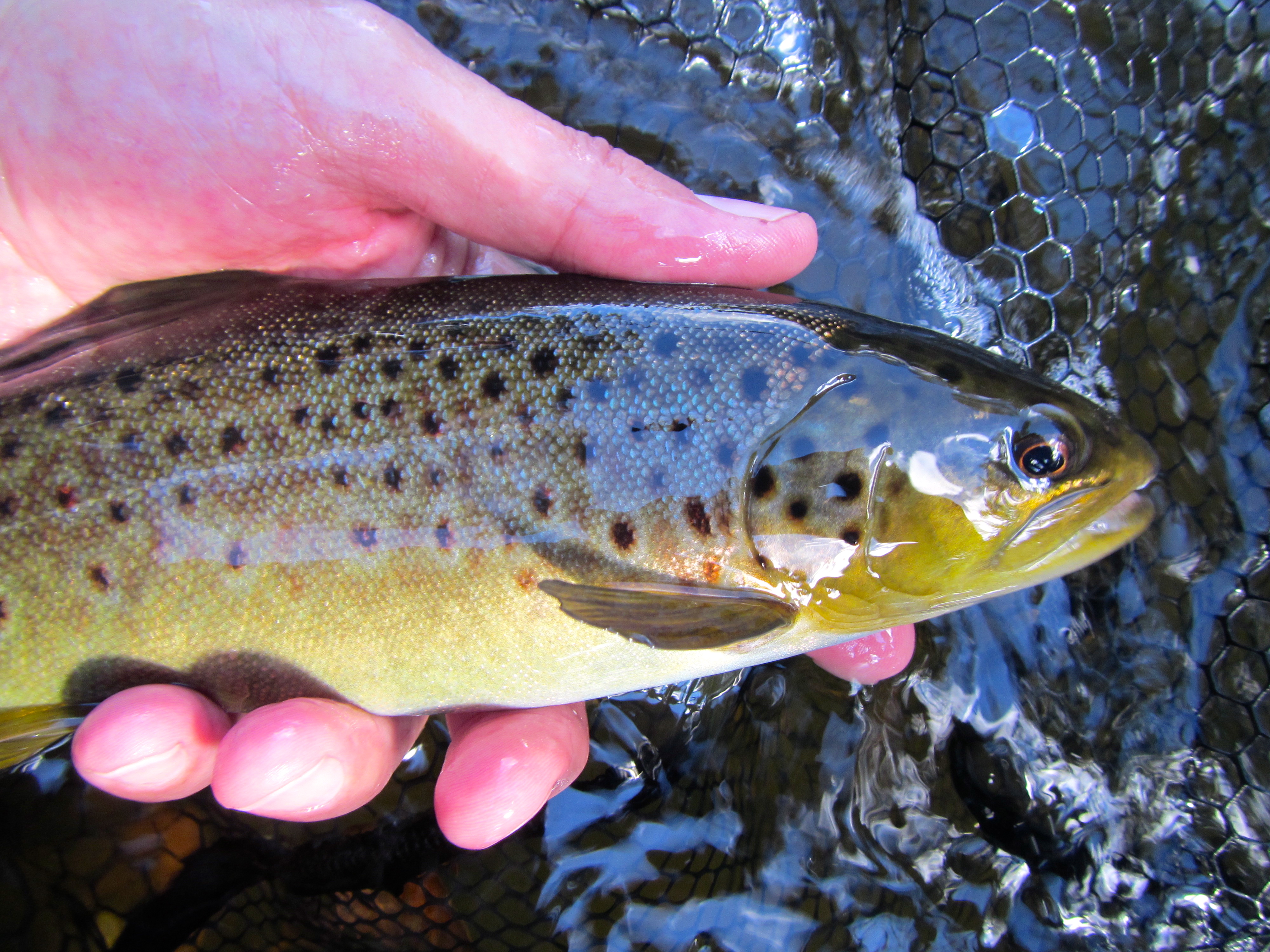
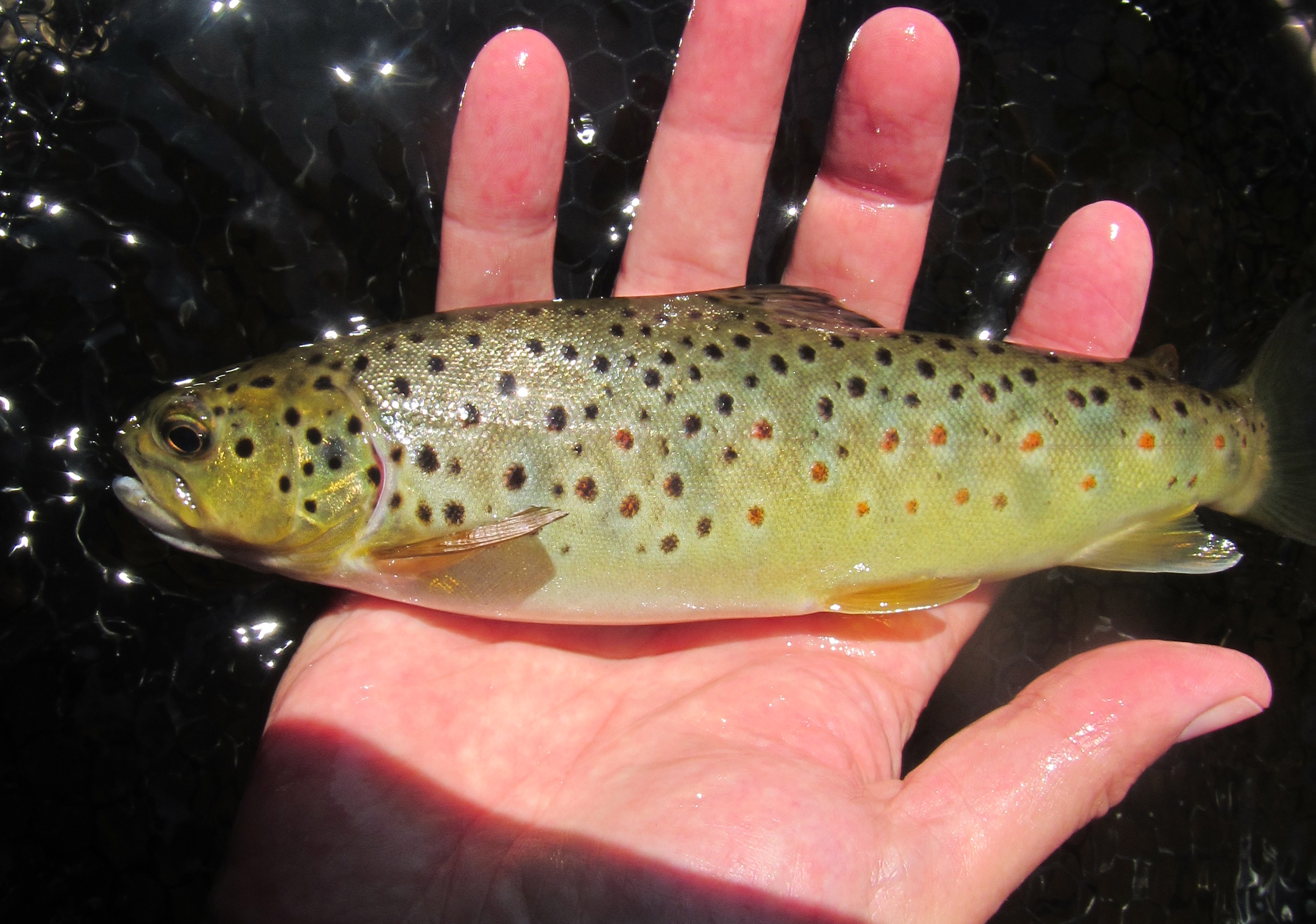
Almost a grownup. The signature ink of youth has just about faded away from his flanks. A spirited fish, this one. I’m amazed he held still long enough for a photo.

Image

First Place Winner: The weather. Cool air. Warm sun. Blazing, brilliant sunshine. All day long. Water temp 59. Whoever ordered this day, I’d like to buy you a drink. And a cigar.

First Place Winner: The bite. Thank you, trout, for making my job easy. Your recklessness creates the illusion of genius in the form of a fishing guide. I really appreciate it.

First Place Winner: The hatches. See “The bite.” Caddis (smaller creamy size 16 and big tan size 12s), midges, BWOs, and especially a bumper crop of Isonychia. All our trout came on the Squirrel and Ginger (caddis) size 14, size 12 February Red, and size 12 Hackled March Brown.

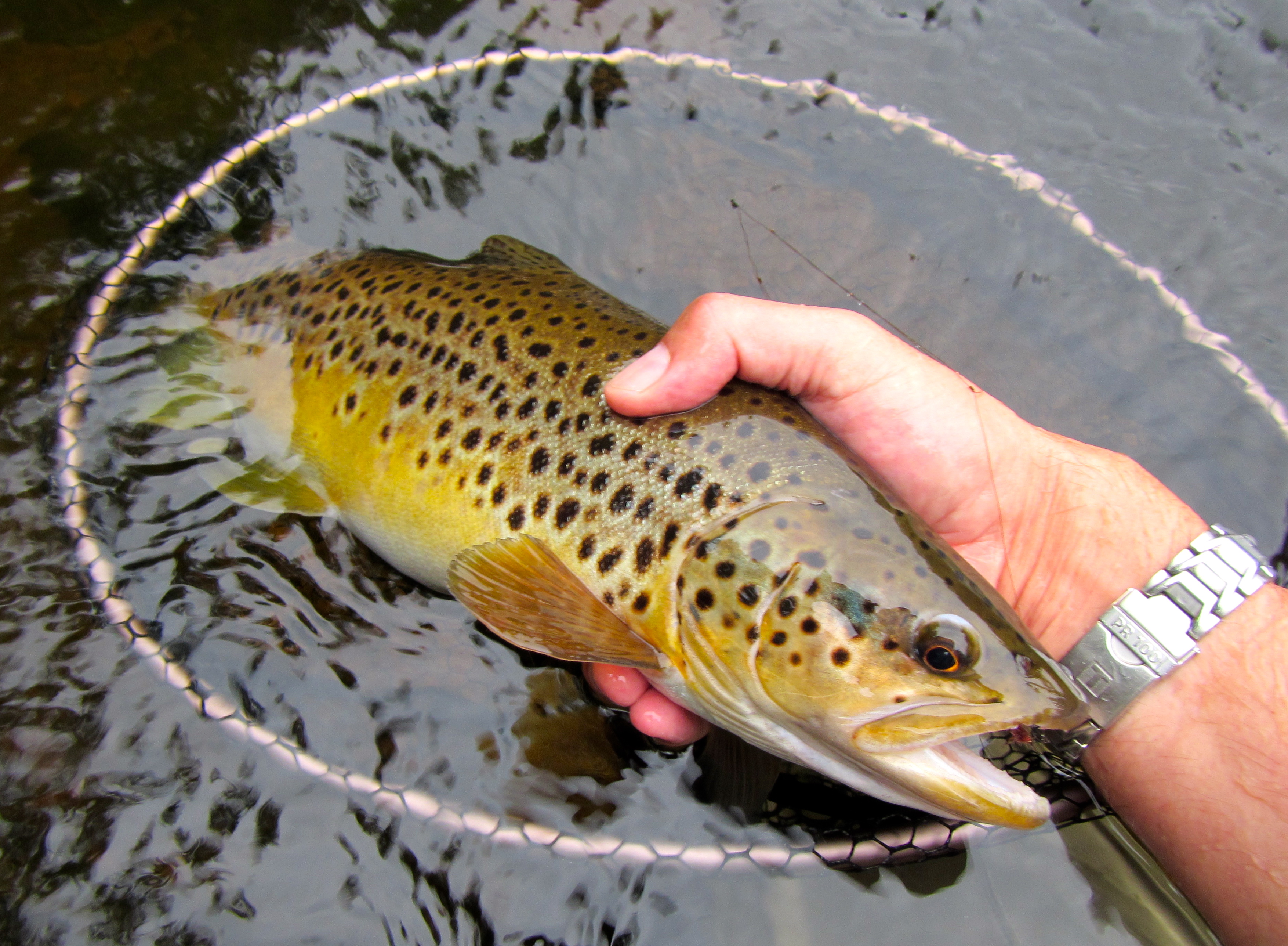
James’ brown. The hardest working trout in the Farmington River? Or simply one of the many fish James brought to net?

Image

Farmington River Mini Report 9/27/13: Like going into Wisconsin

I had just over two hours on Friday afternoon to scout some locations for Sunday’s gig. So I zipped in and zipped right out again. Speed fishing, if you like. Four different spots, all of which held fish that were eager to jump on the wet fly.

I’ve been seeing some creamy mayflies on the river the last couple weeks. A good size, about a 12, late afternoon. Apparently this fellow has been seeing them, too. 

Image

As usual, I was fishing a three-fly team of wets. Today’s selection consisted of a size 10 Catskill on top dropper; a size 12 Pale Watery wingless wet in the middle; and a size 12 Hackled March Brown on point. I took trout on every fly. With the most recent stocking just weeks old, I was expecting to find plenty of newly released wards of the state. But no. It was all wild and holdover browns along with a few juvenile salmon sprinkled in.

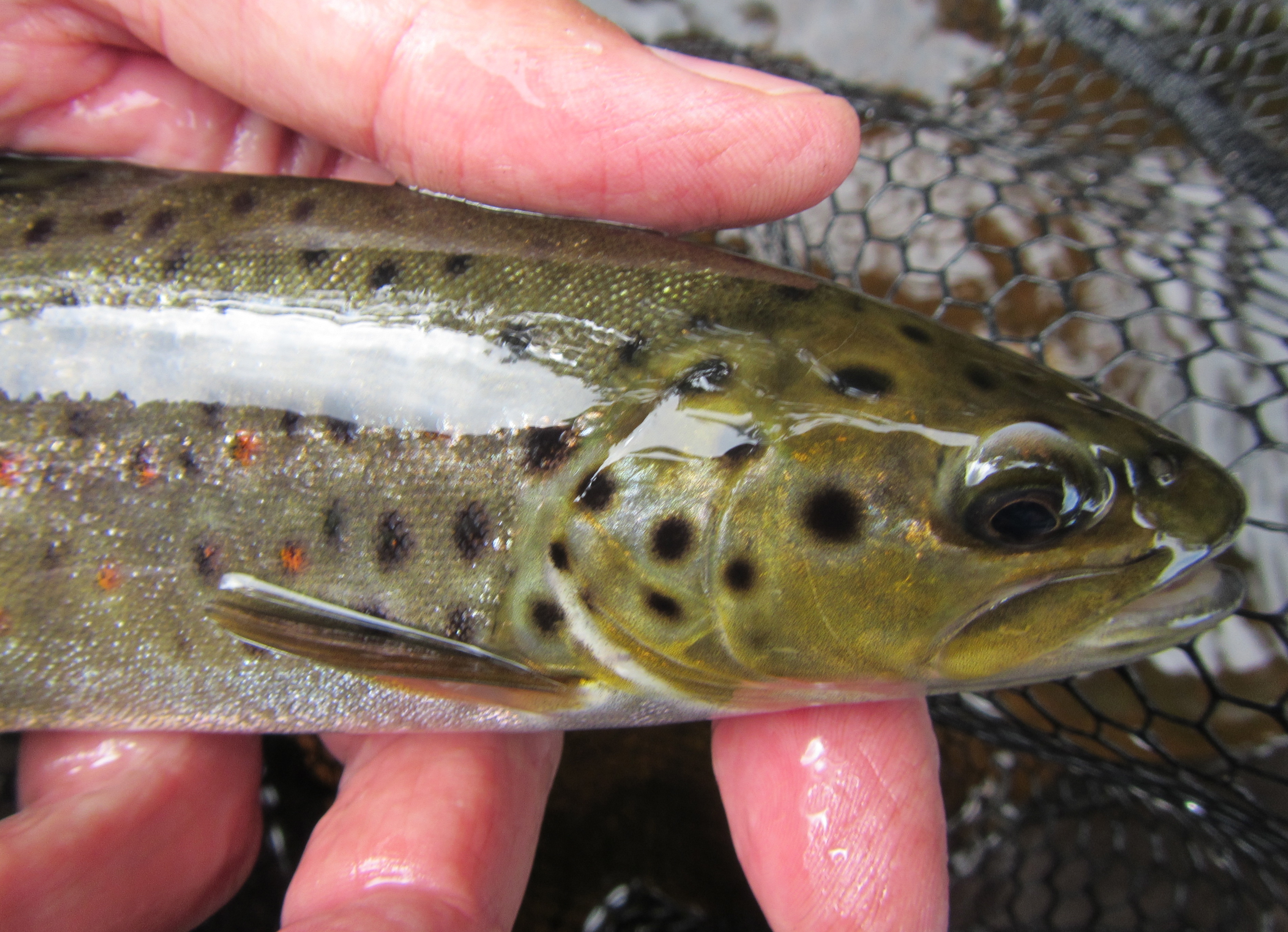
I did have a curious catch, a silvery brown that looked unlike anything I’ve ever caught in the Farmington. At first its color suggested a juvenile salmon, but when I got it to net I saw that it had a flat tail and the eye/jaw placement of a trout. Few spots, but large and haloed like a brown. Could this be a sea-run trout? The sensible side of my brain said probably not. But the side that likes to dream swirled the notion around and tasted the possibility that it could be.

Notes: cloudy skies, air temps near 70. Water temp 60. A strong Isonychia showing. A few caddis, a few of those creamy mayflies, lots of midges. Little to no surface activity. The water levels are lower than normal; they’re drawing down the dam to complete an every-decade inspection of the pipes.

It’s getting to be peak color time on the Farmington.

Image

And you can put your weeds in it

One of the more agreeable aspects of fishing salt pond outflows on a dropping tide is the conveyor belt effect: everything that was inside comes rushing past you on its way to the sea. Bait. Stripers. And sometimes, sadly, weeds. Lord, did I have my weeds Saturday night. Two of them were quite pleasant, a Cabaiguan Guapos on the drive down, then a Saint Luis Rey Corona Gorda for the trip back. The middle, not so much.

From an old, not-so-famous poem: “But all the outgoing tide decreed, was piles and piles of stringy weed.”

Image

Jon and I started out at dusk at Salt Pond A. We could see multitudes of bait in the water. But the only predators feeding on them were jellyfish, ranging in size from a salad plate to a more ominous-looking small platter. Off to Salt Pond B. Jammed with silversides, smaller unidentified baitfish, pods of worried mullet, needlefish, and — alas — precious few stripers. Jon managed a few small hickory shad, while I experienced a first: a mullet on a fly. I was fishing a team of three small bucktail baitfish patterns, ranging from two to three-and-a-half inches. Oh. I also caught weeds. Lots and lots of weeds. Dropper rigs excel at finding weeds. A 3/0 shot above the middle dropper provided a partial remedy, but I still got my limit of aquaflora.

On the way to Salt Pond C, disaster. Clumpthumplit! “What was that?” Jon asked, and immediately answered his question: he had left his rod on the roof of the car. A more fortuitous tumble might have kicked it into the breakdown lane, or even the grassy median. Positive waves were sent as Jon went off into the night to retrieve the fallen warrior. But no. DOA, including the reel. Last rites were given to both roadside, and Jon’s car, now playing the role of hearse, began the long, sorrowful journey back to Connecticut. But not without a detour. Salt Pond C still needed to be investigated. I made quick work of backing up the pool along a short channel. No fish. Several weeds. And lots of biolume.

So, it didn’t happen for us. Don’t bum out, man. Soon, those ponds will be holding.

Farmington River Report 8/18/13: Crash, Bang, Wallop

If you put in enough time, eventually you’re going to cross paths with a big fish. Yesterday was my turn.

I’m in the middle of working on a wet fly piece for American Angler, and I wanted to try to get some photos of trout-with-soft-hackle-in-mouth. Right off the the bat, I was into a good brown. Then things slowed a bit.

Conditions were perfect: 75 degrees, overcast, showers, water running at 400cfs and a cool 65 degrees. What the bugs lacked in numbers, they made up for in variety: small BWOs, light-colored caddis, midges, and a few stray Isonychia. The bird were working industriously overhead. I was fishing a team of a March Brown soft-hackle as the top dropper, a Drowned Ant soft-hackle in the middle, and a bead head Squirrel and Ginger on point.

Near the end of a mended swing, she hit the fly with untamed ferocity. I’ve encountered enough of these larger trout now that I can tell immediately there’s a big’un at the end of my wet fly leader. The surface erupts in swirling upheaval, and line is bulled from the reel. That’s the last glimpse I’ll have of the trout for a while. Bigger fish almost always go deep, and this one was no exception.

Now, I was faced with the predicament of where to land her. I was surrounded by treacherous pockets and swift currents. I had to manage both wade and battle — this was the kind of fish you really wouldn’t mind falling in for — but I finally  made it to a calmer section to claim my prize. And here she is.

What a gorgeous creature. It would have been nice to get a full-length shot, but I was flying solo, and I wanted her swimming freely in the water ASAP. A quick measurement against my rod placed her at just over 20″.  Clearly this trout could also be tallied in pounds.

Image

This was the kind of fish that, after you release it, compels you to sit on a rock mid-stream and contemplate your fine fortune in the scheme of the universe. So I did. And I smiled.

I took a few more fish, including one of the larger wild brookies I’ve caught on the Farmington this year, then headed to another spot. Juvenile salmon city, but at the end of the run I saw a splashy rise in the shallows. One cast, a partial swing, and whack! An eight-inch wild brown took the Squirrel and Ginger. I took a few more pictures, then headed home for dinner.

Nice work (if you can get it).

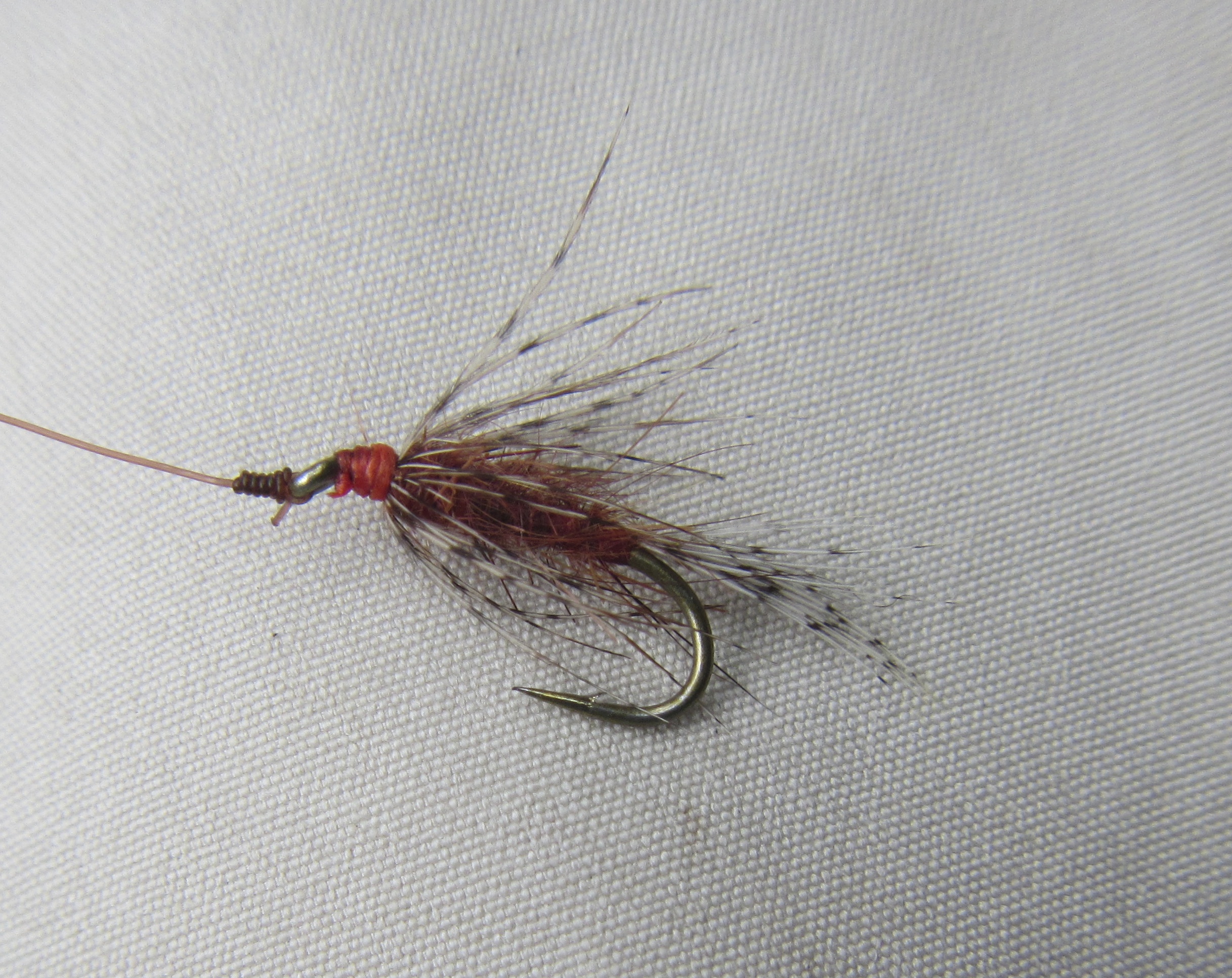
The winning fly, a Hackled March Brown. It comes from an English book published in the 1930s. Makes a fine Isonychia imitation.

Image

8/14/13 Farmington River Mini-Report

It was a slow day on the river for most of the anglers I spoke to. We were likely done in by the sudden shift in weather and the noon spike of the dam flow (the Upper TMA jumped from 370 to 480cfs; water was lightly stained and 65 degrees). Still, my friend Pete and his brother got into some very nice larger browns in the Upper TMA. As for your humble scribe, I had to be content with a mob of juvenile Atlantic salmon and one lonely rainbow trout. I was committed to the wet fly cause today — I just got an article assignment from American Angler on wets and was hoping to get some good fly-in-trout-mouth shots. Instead, you’ll have to settle for this simple flora-at-dusk portrait:

Image

Farmington River Report 8/7/13: Foul language and rank stupidity. Plus some trout.

“Hey, you gotta move your @#$%ing truck!”

Clearly, this fishing trip was not starting well.

I had just turned into one of the many dirt pulloffs that border the Farmington River. This particular one holds at least three vehicles. There already was a car in it, facing south. I had been heading north, so the fronts of our respective vehicles were pointing at each other. To leave, we’d each have to back out the way we came in. You know, like you’d do at any gas station.  Rudimentary Driver’s Ed stuff.

I got out and started gearing up. The occupant of the other car was on his cell phone, and from what I could overhear, he wasn’t having a happy conversation. He ended his call, and that’s when he shouted out his unpleasant greeting.

“Excuse me?” I said.

“Move your @#$%ing truck!”

“Really? Are you telling me you can’t back out of here?”

More wrathful profanity, and that’s when I realized: disengage. Now. What if he has a gun? What if he comes back with some friends? What if he vandalizes my truck? Sad to say, but that’s the world we live in. I could back out of the pulloff — and potentially, an even uglier scene — simply by acquiescing. Politely. And keep my dignity in the bargain. So I did.

Still, once I got in the water, I couldn’t enjoy it. I kept looking up at the road, waiting to see if my new friend was coming back to look for trouble. Every sound of an approaching car elevated my heart rate. Thankfully, he never returned.

So, what about the fishing? A slow day for swinging wets. Very little hatch activity, but the water was a perfect height at 321cfs and a delightful 64 degrees, ten out of ten for August. I was fishing a Squirrel and Ginger on point, a Drowned Ant in the middle, and a clumsy deer hair wing/head soft-hackle that suggested a drowned hopper or a big stone fly on top. I had several swirls at the big fly, but no takes.

Finally, on the dead drift, the line stalled, I came tight to the fly, and I had a good fish on. I was hoping for something approaching 20 inches, not only from the size of the fly, but from the fact that the fish immediately went deep and sulked on the bottom. A powerful surge up a whitewater channel, and he went on the reel. In the end, it was a mid-teens rainbow. It was the only trout I took in the 90 minutes I walked the run.

My best trout of the day took this monstrosity, still wet and fresh from the fish’s mouth.

Image

I decided on the spur of the moment to rig for indicator nymphing. The section I fished is a deep run below some riffles. I gave it 15 minutes, and the only trout I took came on the second cast.

A nice little brown who liked the look of Yerger’s Miracle Nymph, size 16.

Image

The day ended far downstream, where I took my largest juvenile Atlantic salmon of the year, about nine inches long. Bright silvery flanks, and fat. No wonder. When I was taking the hook out, I peered down his throat. It was loaded invertebrates to the point of overflowing. It reminded me of a bluefish spitting up bait. Off he went. Then off I went.

I had to get @#$%ing home.

Farmington River Report 8/6/13: Are you still there?

I guided Steven today and we had about the nicest August weather you could hope for: sunny, about 80 degrees, and low humidity. The fishing was pretty fair, too. The river was crystal clear, 324cfs in the Upper TMA, and 64 degrees. Not much in the way of hatch activity, but you take what you get and make soup.

Steven had missed my most recent “Wet Flies 101” class at UpCountry Sportfishing, so we spent the day covering the curriculum. He did an outstanding job. Funny thing: the first run we fished, there was a guy swinging wets. We watched him hook and land a nice trout. Turns out it was Ted, who took my class in May this year.

After Ted left, we waded in and took several fish, including this lovely wild brown that was rising on the edge of a shade line in less than two feet of water:

Image

Next, we headed off to the lower river. Slimmer pickings, with only one juvenile salmon to show. We finished the day in the upper TMA. We fished several very sexy seams and pockets with no love, but then things picked up in the last hour.

“Are you still there?” When my students are fishing wets on the dangle and they feel a strike, I tell them to ask that question before they set the hook. (When swinging flies for Atlantic salmon in the UK, you say, “God save the Queen.”) One of the biggest challenges for a new wet fly fisher is not setting the hook when they feel the tug. It’s a highly challenging reflex to overcome, and failing to do so usually means pulling the hook out of the fish’s mouth. Steven was struggling with it as much as anyone does early on, but by the end of the day, he was proudly announcing, “I waited that time!”

And every time he did, the trout was still there.