The dumpster fire that is the ASMFC continues to burn brightly. If you want evidence that their conservation model appears to be based on the theme, “Kill more fish,” look no further than this week’s meeting of the ASMFC’s Menhaden Board.
I’ll let the ASGA pick up narrative. “Disappointing news coming out of this morning’s meeting of the ASMFC Menhaden Board, which had a great opportunity to show the public its commitment to recognizing menhaden’s critical role as a forage species. Despite the Board’s August decision to adopt Ecological Reference Points (ERPs), today it adopted 2021 and 2022 catch limits that have greater than a 50% chance of exceeding the fishing mortality target, undermining the intent of ERPs and disregarding public comments urging a precautionary approach to menhaden management. ‘Decision: Move to set a TAC of 194,400 metric tons for 2021 and 2022. 13-5-0-0 Roll Call.’ More details to follow in our full debrief of the ASMFC meeting.”
Stupid is as stupid does, and when it comes to conservation and fisheries management, nobody does stupid better than the ASMFC.
I love fishing for stripers at night around docks, bridges, waterfront restaurants — anywhere there is light and shade. The reason is simple: the light attracts baitfish, and the baitfish attract stripers. I’m especially stoked about fishing areas where there is a stark demarcation of light and shadow. Those are magical places.
Late Sunday/early Monday found me at such a place. It’s a mark that offers what I call “the aquarium effect.” The overhead lights enable you to see clearly what’s in the water, whatever its place on the food chain. On this particular night, I could see bass cruising along the bottom, solo or in small hunting packs, rousting baitfish (spotted: silversides, peanut bunker, mullet), then smashing them on the surface. Some of this took place in the well-lit areas, but most of it was going down at or just past the shadow line.
Rigged with a three-fly dropper team, I had at it. No love. I tried dead drifts; greased line swings; short, pulsing strips; rapid, long strips; and what could hardly be called a strip at all, more like an almost imperceptible gathering of line. Frustrated, I vowed to come back after the tide turned, and headed to another mark a short drive away.
This was a flat in near total darkness. I could see worried bait in the faint ambient light. An hour and four bass later, I left with a smile on my face.
Funny thing about droppers: the fish will always tell you what they want. On this night, at the second mark, they wanted the top dropper, an Orange Ruthless clam worm (lower right), even though there were no clam worms to be found anywhere near I was fishing.
And then back to the original mark. The tide had shifted but the bass and bait were still there, and the former remained unimpressed by my offerings. As with any such puzzle, you’ve got to try different pieces until you find one that fits. In this case it was as simple as switching to a Gurgling Sand Eel on point to make it a suspension rig. A couple mended swings into the shadows, and whack! Then, on the dangle, ker-pow! That called for a celebration cigar. So I did.
~
Great news for Ken Abrames fans! Ken recently posted on Facebook that the Striper Moon — A Legacy film will be available soon on Amazon Prime. I don’t know if this means a DVD or if it’s something that’s in a streaming format. Either way, you now know as much as I do. I’ll post details as I get them.
To the Hous: I fished within the TMA yesterday, and my experience can best be summed up by one Mr. Robert Zimmerman, who said in his epic song “Highlands,” “you picked the wrong day to come.” Okay, the weather was magnificent. It was great to be out. But there were scores of anglers competing for the honey holes (more people yesterday than I’ve seen in the last 10 years in the fall combined — really) — the water was loaded with leaves and evergreen needles (beware the windy autumn day) — and the trout were most uncooperative (I hit five marks in two hours and saw one fish landed). The river height was an excellent 325cfs, but those looking for solitude and leaf-free waters should be advised to wait a bit. Rain’s coming as I write this, and that should spike the flow this weekend.
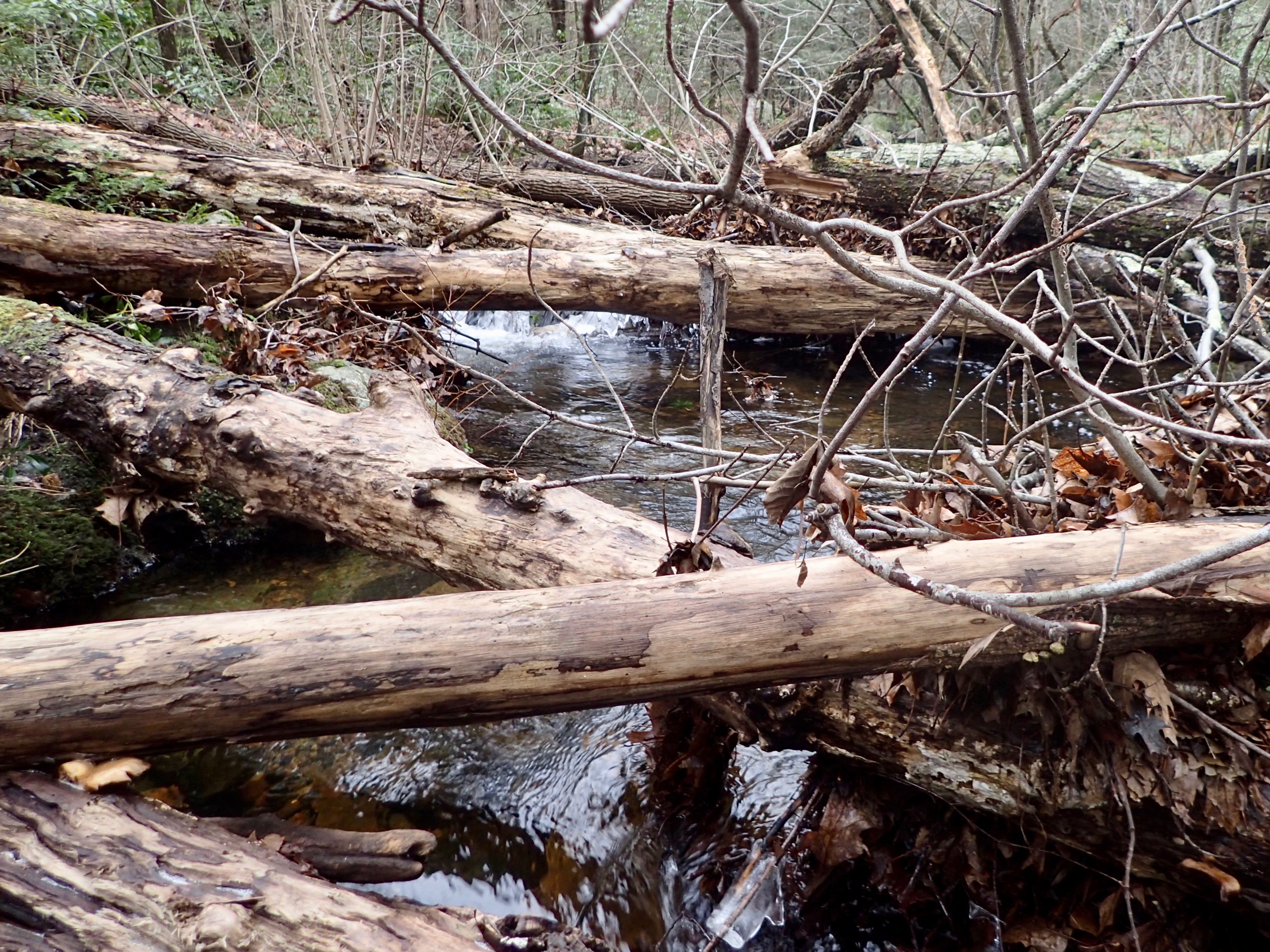
With all this flotsam, it was challenging to get an unmolested drift.
This is from the American Saltwater Guides Association:
“Striped bass young of the year just came out from MD Department of Natural Resources. The 2020 results are pretty much awful. The YOY index for 2020 was a dismal 2.5 with a running mean of 11.5. The 2015 year class is the last dominant class on record. With the ASMFC meeting coming up next week, now is the time to get involved. Striped bass need you now more than ever.”
You can find the Chesapeake YOY survey results here.
The ASGA continues to be a positive influencer for striped bass conservation. If you’d like to get involved, or make a donation, visit their website.
A lot of anglers leave the river after a nymphing session wondering why they dropped so many fish. It’s the hook set, baby! This is such a simple principle. Adhering to it will result in a noticeable increase in your catch rate. Check out this diagram:
A proper nymphing hook set goes downstream, into the mouth and the mass of the fish.
If you accept the proposition — and I feel strongly about this — that most fish are won and lost at hook set — a good set is critical to nymphing success. Picture your fly moving downstream, a few inches off the bottom. The trout is facing upstream, sees the nymph, and decides to eat. You detect the strike (look for a reason to set the hook on every drift) and set the hook. Don’t set upstream. Doing so essentially takes the fly away from a fish that has said “yes” to your offering. Instead, drive the hook point home into the fish’s mouth — downstream — using the mass of the fish against itself. What if you’re indicator nymphing and your drift has the fly 30 feet below you? On the take, sweep set off to one side.
Do this every time and you’ll be netting a lot more fish. And of course, you’re constantly checking your hook points to make sure they’re sticky sharp…right?
For those new to currentseams (or those who simply forgot or missed the original message) a reminder that I’ll be presenting “The Little Things 3.0” via Zoom on Wednesday, October 14, at 7:00pm. This Zoom is part of the Russell Library One Book series, and you need to pre-register through the library. The event is limited to 48 participants — at last count there were less than 20 spaces remaining — and you must pre-register here. You cannot register through me or this website, and this is not part of the Zoom series I conducted earlier this year. Hope to see you virtually there!
Rich rewards await those anglers who pay attention to the little things.
Don took a wet fly lesson with me in July, and while the bugs and trout weren’t very cooperative, we still had enough action to make things interesting. I always tell my students that if they keep on with this wet fly thing, good things will follow. Don has been in touch since then, asking questions, practicing and tying, and most importantly, spending time with a team of three on the water. That’s how you become a better wet fly angler.
In my report from that day, I stated that if Don learned wet flies, he would become a dangerous fish-catching machine. Although conditions have been challenging in the last couple months, Don has kept at it. Last week he scored this gorgeous brown on a Squirrel and Ginger. I think it’s a Survivor Strain broodstock — that looks like a left-eye elastomer and clipped adipose. Way to go, Don!
The hunt for big bass continues…slowly. I’ll make this brief. I fished last night with Toby Lapinski for about two hours at mark in southeast CT. Toby was on spin gear, I had the big two-hander. Not a touch for me, and Toby managed a single hello tap from a smaller fish. And that’s about all I have to say about that, other than this: the more you put in your time, and the more you learn the particulars of a potential big bass spot, the more big bass you’re going to catch. Looking forward to round three.
The water was a little milky due to surf/sand/wind, but plenty of visibility; certainly enough to see a fly like this. Mmmmmm. Squidcicle.
It’s fall on the Farmington, and that means it’s time for tiny Blue-Winged Olives. Depending on your point-of-view, this hatch can be a blast or a scourge. The flies are small (20-26), but when conditions are right (frequently overcast, damp days), the trout will line up and sip them for hours.
So, what do you do when you’ve got the hatch matched, the right leader/tippet (12-15 feet is a good length to start), your presentation is spot on a feeding lane, drift is drag-free, and you get…nothing? Or worse, a refusal? It might be that you’ve got the wrong fly. Experience has taught me that sometimes the same size fly in a different style makes all the difference. So carry a bunch of different style dries, and enjoy the tiny BWOs of fall.
My tiny BWO dry fly arsenal includes, from left, comparadun, comparadun with Z-lon shuck, parachute, Pat Torrey’s Tiny BWO soft hackle, and foam wing. The trout sometimes favor one of these over another, and the only way to figure it out is to cycle through patterns. By the way, this concept applies to other tiny hatches, like midges.
It’s said that for every problem, there is a solution. The problem: any nighttime session with my two-handed rod quickly produced a wet handle, wet line, and wet hands — not a good combination when you’re relying on a firm grip to operate. Compounding the situation was the thin running line (the one I’m currently using is .042″). You’re holding it against the rod handle when you cast, and with any hookup over 40 feet away, you’re stripping that running line during a fight.
Clearly, needed to get a grip. Enter Buff Eclipse gloves. Partially designed for UV protection (not an issue at 1am), these gloves also feature a combination silicone dot pattern and an abrasion-resistant film on the palm that “maximizes grip while minimizing wear.” I also liked that these have three-quarter length fingers, which leaves your fingertips free. Bonus: if you’re having one of those really good nights, the gloves also minimize the red badge of courage (AKA striper thumb). I used them extensively this summer and I’m happy to report that they performed as expected. I bought my pair from Orvis.
Buff Eclipse gloves keep you grippin’ so you can give stripers a whippin’ (with apologies to Timex watches).