A shrimping I did go

It’s hard to improve on Ecclesiastes — let alone the Byrds — so I won’t even make the attempt. To every thing there is a season. And this is time of year I like to fish for stripers who are feeding on grass shrimp.

The grass shrimp swarm to the surface in brackish waters by the tens of thousands. Diminutive (about an inch, inch-and-a-half long) translucent creatures with eyes that reflect ambient light. From a distance, their mating dance looks like so many tiny raindrops. Then the surface boils from below, followed by a resounding pop! I get goose bumps just thinking about it.

Because there’s so much bait in the water, I like to up my odds by fishing a team of flies. Not only will I be presenting the bass with more targets, I will also be giving them a choice of patterns. Stripers never lie. They always tell you what they do — or don’t like. This weekend, I fished a three fly team consisting of Grease Liner variant on the top dropper, a pink Crazy Charlie on the middle dropper, and an Orange Ruthless clam worm on point. Of course, I am using a floating line should I need to throw a series of mends to fish the flies on a cross-stream dead drift.

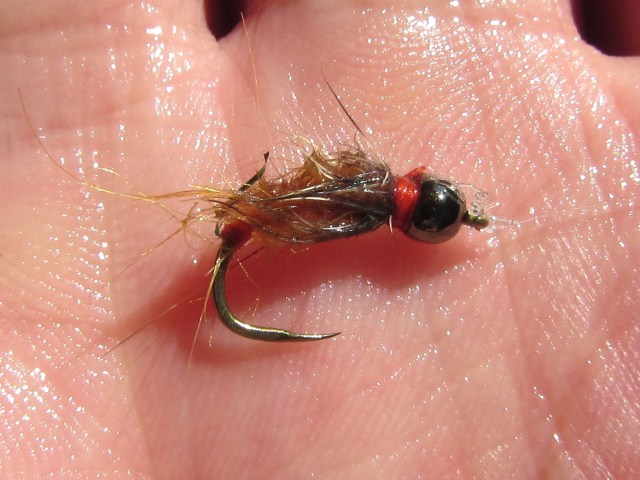
Shrimp. It’s what’s for dinner. This fly is a variant of Harry Lemire’s classic steelhead fly, the Grease Liner. A little rabbit fur, a little deer hair, and you’re fooling fish.

Image

I made two trips this weekend under the cover of darkness. The tides were in that weak quarter moon netherworld, but what the place lacked in current, it made up for in splendid isolation. Not another soul in sight, both nights. It amazes me the things you notice when you’re sitting alone on a rock in the dark and the air is completely still. You see the reflections of an airplane’s lights in the water long before you hear the distant drone of its engine. The sound of the building tide seems to increase exponentially. And the reports of feeding bass travel quite well over water.

Friday night was the slower of the two; instead of bass, I hooked and landed several hickory shad. After an hour, I moved upstream to see if creatures were stirring at a bottleneck; they were, but out of casting range. Resigned to trespassing, I did so with the rationale that what goes unseen remains harmless. I can’t tell you exactly where  I was fishing, but let’s just say that between structure and trees, any form of traditional casting was out of the question. I could, however, dangle my flies in the current a rod’s length away. You can get really close to a fish that is holding on station, feeding as the current brings food to his waiting mouth, as long as you exercise caution and keep movement to a minimum. Twice, I hooked the striper that was chowing down ten feet away from me. Twice, I was unable to set the hook.

As I drove home in the wee hours, I was already plotting my return.

Saturday night, the tide hadn’t quite topped out when I reached the spot. I was pleasantly surprised to see the place was empty. The shrimp were already doing their dance, but otherwise it was quiet. Once the tide turned, the game was afoot. I saw a delicate swirl forty feet out. A few casts and a mended swing were ignored. Then, off in the distance, I began to hear the pops of feeding bass. Since the fish were in spinning rod range, I switched tactics and started dumping fly line into the current, all they way to the backing, and then some. Let the flies come tight, plane up, and swing around. Whap! Fish on. I could tell from the way it was fighting that it was another shad, until I brought it into the murky shallows and saw it was a foot-long striper. That made me happy.

I caught a bunch more in the 12 to 16-inch range, most on the dangle and swing, a few while stripping the whole smash back in. It wasn’t easy fishing; far more presentations were refused than taken, which is the way it should be when you’re fishing the grass shrimp hatch. But, now I had to return to the scene of Friday night’s robbery. By the time I got there, the current was just beginning to crawl toward the Sound. I lit a new cigar to keep the mosquitos at bay. I waited. Nothing. No micro swirls or dots painted on the surface by the bait. No earth-shattering pops. I decided to get my flies in the water anyway. You know, just in case.

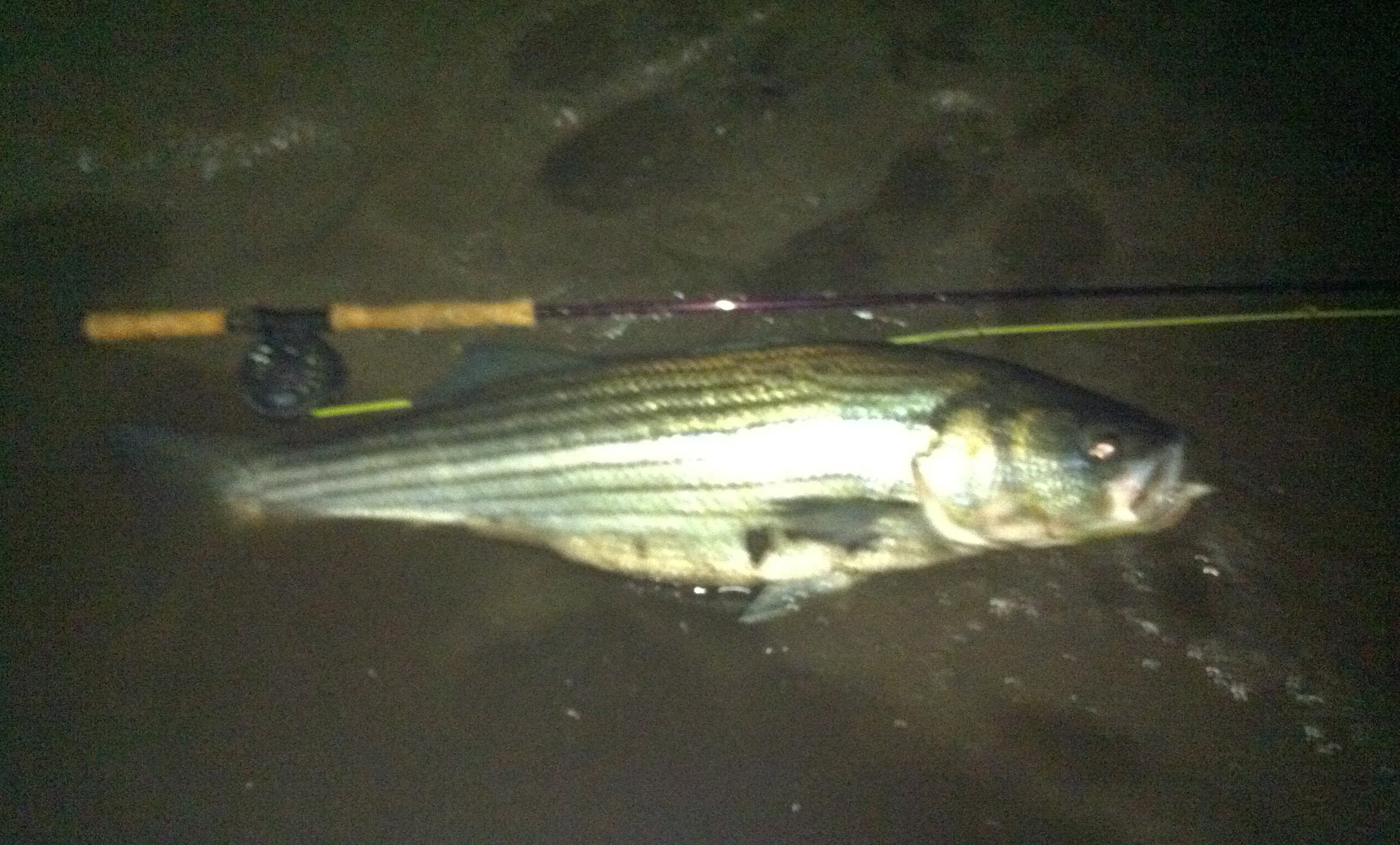
Finally, a pop, though it was well out of casting range. To combat the boredom — and to create some wakes on the surface — I began manipulating the rod upstream and side-to-side. Still, nothing. And then, with the flies just sitting there, a building pressure on the line, then a series of sharp tugs. Seemingly out of nowhere, I was on. Bass for sure. Yes. Eighteen inches, the king of the weekend’s haul, taken on the clam worm.

By the time I got back to the truck, I still had enough cigar to keep me busy all the way home. But I decided to extinguish it. I kept the windows rolled down, and the air on this warm summer night tasted sweet as it coursed through my mouth and filled my lungs.

Droppers are the fastest way to find out what the fish want. I tied this one using 20 pound test World Wide Sportsman Camo mono.  I learned a few things on this trip. Top to bottom: 1) Harry Lemire’s Grease Liner is a darn good striper fly, even if it was created for steelhead. 2) Charlie Smith’s Crazy Charlie is a darn good northeast grass shrimp imitation, even if it was intended for bonefish in the Bahamas. 3) It is almost never a bad idea to include Ken Abrames’ Orange Ruthless clam worm fly on your team of flies, even if clam worms aren’t the predominant bait.

Image


Farmington River Report 6/9/14: Patience is a virtue

I guided John and his son Mike on the Farmington River for a full day of wet fly fishing. If you live in Connecticut, I don’t need to tell you that it was a dank, rather gloomy day. We had lots of fog and about two hours of a cold rain. Water in the upper end of the river was running at 360cfs and was 51 degrees. There was just a hint of stain to the water.

John materializes out of the mists. No, really. If you look closely you can see him in the center of the river.

Image

To the fishing: well, it was one of those days where you had to work hard for every trout. We drew a blank at the first spot. The second was a little kinder; we rigged for a deep, short line wet presentation and both father and son hooked up. Downstream a ways, Mike lost a nice fish that hit on the swing. Spot C was unresponsive to our offerings. By now it was early afternoon, and we started to see a few size 16 BWOs (for the most of the morning it was a caddis and midges, though not in any great numbers). Off to the last spot of the day, and that’s when things got interesting. John and Mike had been fighting the good fight for hours with little to show. A little help from Mother Nature, please? Yes. A few more caddis, a building olive hatch, and then some creamy mayflies, about a size 12-14. For the first time all day, we had consistent risers.

John netted this stunning brown on a size 16 Partridge and Olive. Well done, sir.

Image

Just when the going got good, I had to get going. So much for my brilliant plan to stay after the gig and fish. Not to worry, Father and son carried on quite nicely for a few more hours. Great job today, guys, in some very tough conditions.

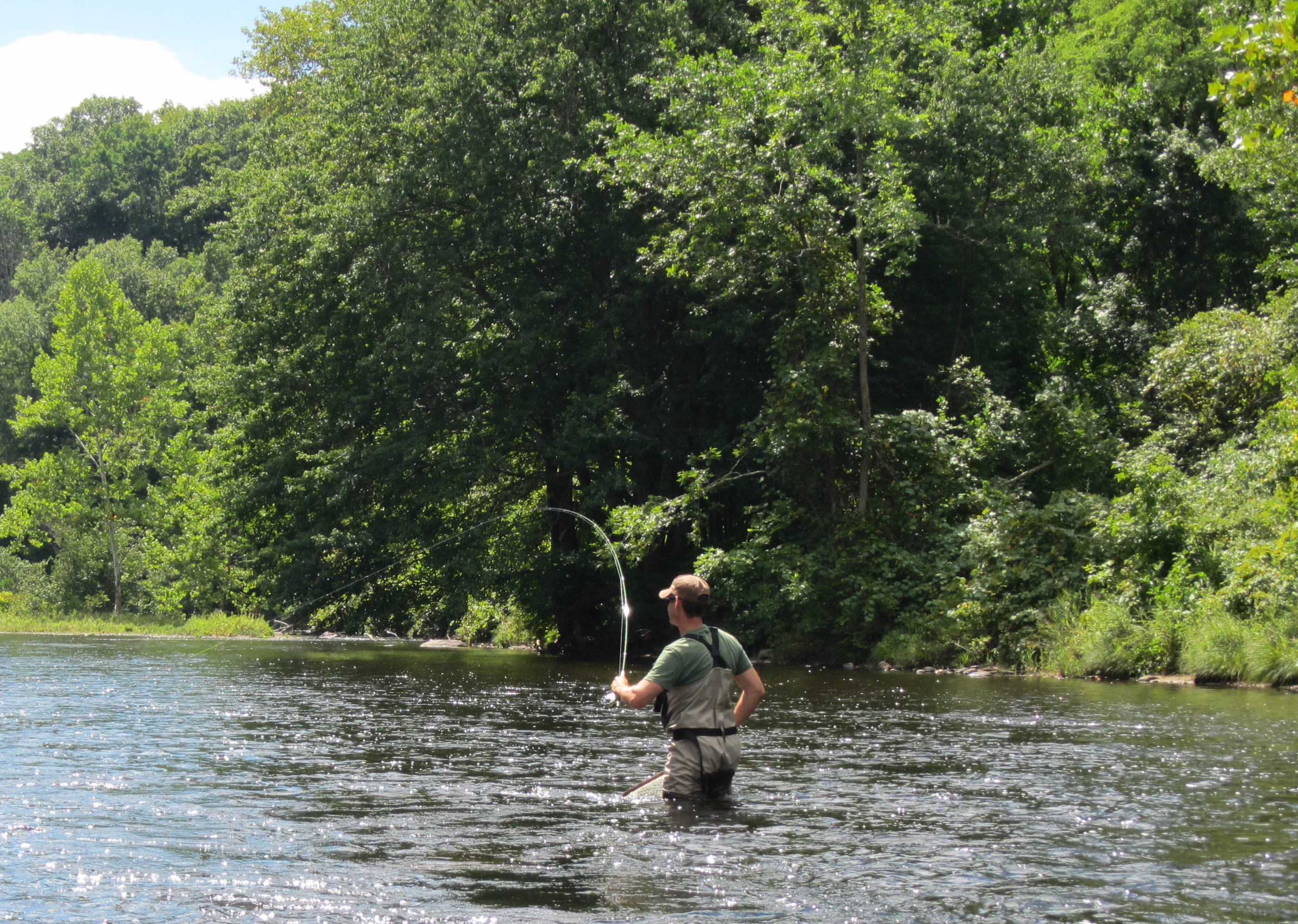
Mike presenting up and across to a couple fish that were taking emergers along a seam. Sadly, they weren’t taking Mike’s flies. No worries. He knows where they live.

Image

Farmington River report 6/4/14: The return of the hat

Since yesterday’s outing was cut short by cloudburstus interruptus, I returned to the river today to finish the job. A quick in-and-out session before I had to go pick up the kids. Oh. And I had the hat this time. Much better. Life is beautiful. All is as it should be. Spot A was a 100-yard snotty pocketed run that proved to be a treacherous wade (the river came up slightly from last night’s rain, but was running clear). I managed two rainbows and two browns as I swung wets along its length. The size 16 black caddis were massed again, but there were no risers that I could see. Plenty of midges in the air, and a few stray small tan caddis. If you’ve ever taken my classes, or heard my “Wet Flies 101” presentation, you know I preach that absent any hatch activity or actively feeding fish, move, cover water, and present your flies in the most likely holding water. If you want to catch more trout on wets, I cannot emphasize this enough. All four fish came in different sections; all came because I was willing to wade and cover water. Another commonality was that all four took the point fly, a tungsten bead head soft-hackle Pheasant Tail, on the mended swing.

I made one more stop. It’s 50-yard section of river that I haven’t fished in at least five years. Once I remembered where the cafeteria line is, I came tight to a rainbow who thought he was a steelhead. One sky-high aerial, a bit of deep sulking, then another aerial before he spit the hook.

Not a bad way to spend 90 minutes in the mid-day June sun.

Where were you yesterday when I needed you?

Image

Farmington River Mini Report 6/3/14: All for the lack of a hat

Fished the Farmington from 3pm to about 7:30pm. Today’s mission was to hit a bunch of spots I haven’t fished in a long time, swing some wets, anticipate a strong evening hatch, and hope the trout were looking up. Things started poorly when I forgot my fishing hat. I mean, I need my fishing hat. My head felt naked. Exposed. It just wasn’t right. Serves me right for wearing it to Sunday’s soccer games, then taking it into the house (the hat stays in the truck when not in use. Idiot.) Spot A was a run that dumps into a deep pool. Swarms of mating black caddis (size 16) everywhere. No hits. I was surprised. Moved down to a second run where I scored Rainbowzilla. He took a size 10 soft-hackled bead head Pheasant Tail on a dead drift. This guy went straight to the reel and peeled off twenty feet of line. Just as I was netting him, he popped off. My rig flew into a tree. Lost it trying to retrieve it. I blame the lack of a hat. Motored off to a tricky wade where I was sure I’d get into trout. Nope. Just juvenile salmon. Two of them. A hundred yards down, hard against a bank, is a deeper-than-you-think little run. Same drill: dead drift, second mend, and I’m on with Son of Rainbowzilla, another some-teen inch brute. Unlike the first rainbow, this one had been in the river for a year. Deep pink lateral band, fatter than Mama Cass, and flawless paddle fins. Netted him, then lost him when he leapt from the net as I readied the camera, snapping off the bottom two flies on my team of wets. This bad mojo is clearly what comes to those who are foolish enough to leave their hat at home. The next two runs involved a lot of walking for absolutely no catching (have I mentioned that I forgot my hat?). Ended up at a place where I was sure the late afternoon transition into evening would bring a substantial hatch of Light Cahills or Sulfurs. Instead, I got a picking-up-breeze and ominous clouds …but nonetheless, some trout willing to jump on. I took two more rainbows in a half hour. Then the heavens opened up. Just when I was saying, “OK, time to go” out loud, bam! A nice wild brown. All three fish again took the point fly, a simple bead head, plain rabbit fur fuzzy nymph — only every take was on the swing. I got totally soaked on the way back to the car.

I really wouldn’t have gotten so wet if I’d had my fishing hat on.

A bronze totem from the wild tribe. He’s the reason I took such a good soaking. Thanks, friend.

Image


These simple white flowers are all over the river. They have dark and light blue cousins, too.

Image


Hiking through the hills carrying a stick

I picked a cool, grey day last week to visit a stream in another state nearly three hours from my house. The water appeared to be on the low side of medium, and the brookies were looking up. While the subsurface downstream wet was effective — particularly in deeper pools and runs — the dry was eagerly and wantonly attacked by the local natives. I started off with a size 16 Improved Sofa Pillow, then switched over to a size 14 Ginger Elk Hair Caddis. On the way down, I used a black mini bugger and an ICU Sculpin. The cigar of the day was a Sancho Panza Belicoso. Delicious! Here are a few mementos from my adventure.

Contrary to popular belief, sometimes it is easy being green.

Image

This was a highly productive set of pools. I am always intrigued by the number of fish that can occupy any given area. Population density here was impressive.

Image

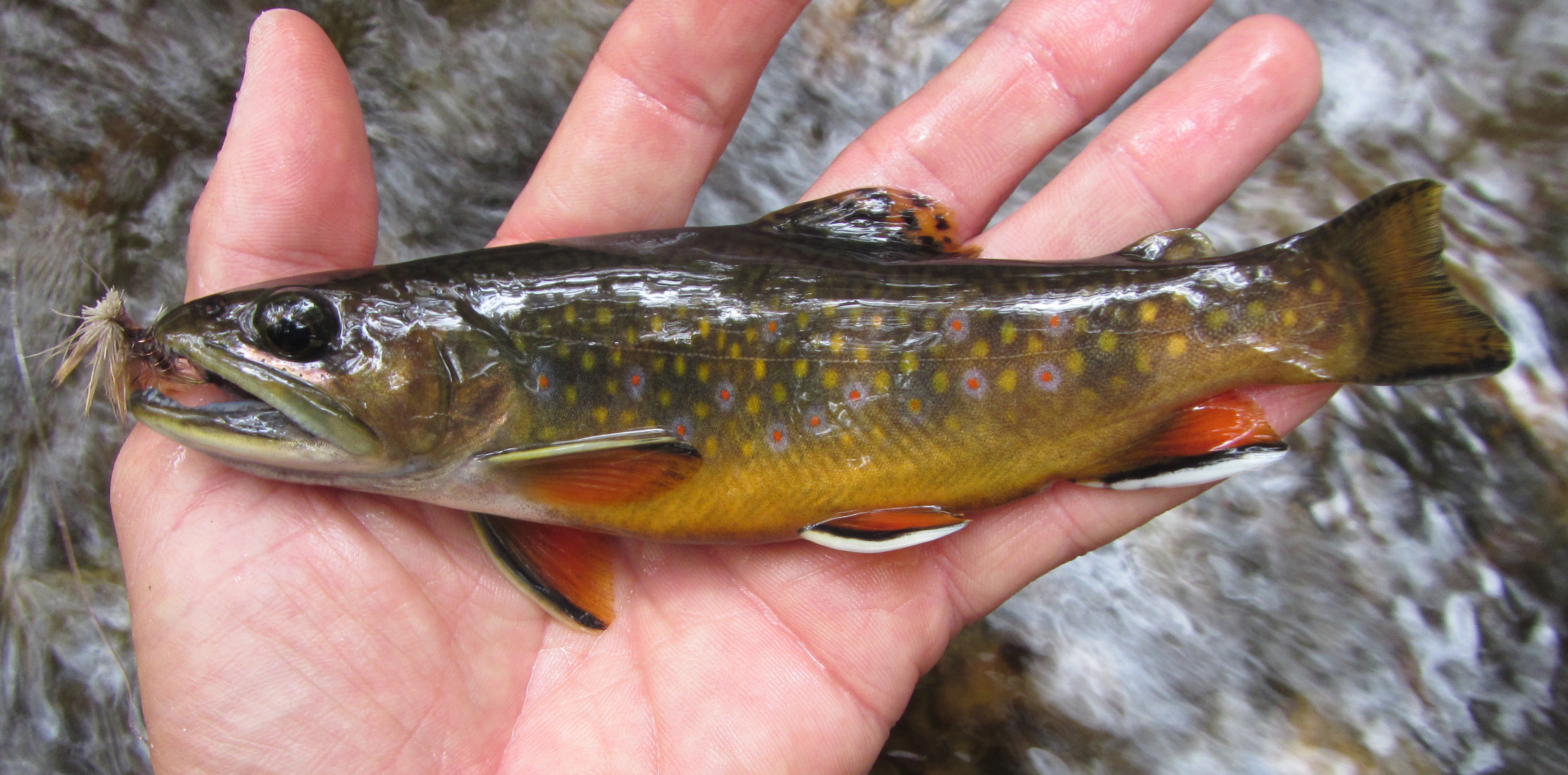
I often get to the point where I wonder,”how many photos of wild brook trout do I really need to take?” So I’ll try to ruthlessly edit my potential subject material. It needs to be a fish that stands out from the crowd in some way, whether its size, color, spirit, etc. What caught my eye on this particular fish was the clarity of its lateral line.

Image


More of those “nature finds a way” plants that insist on proving that a boulder is a fine place to work and live.

Image

The point of release. Playing around here with a slower shutter speed. I like the static distortion of the water near head and tail. Big pectoral fins for a char that size.

Image


Farmington River report 5/30/14: Persistence pays off

Despite two strong caddis hatches, yesterday was a slow day on the Farmington River for swinging wets. I guided Jerry and Steve, and both of them did a great job presenting their wares over likely holding water. We fished hard and long, but in the end, the trout just weren’t in the mood to play. On a positive note, both guys got into trout, and the weatherman totally kicked the forecast (“numerous rain showers/thunderstorms, heavy at times” — it was sunny most of the day, and we had only one five minute-long sprinkle). Water was running cold (about 50 degrees) and 482cfs in the upper TMA. In addition to the caddis, we saw some size 16 BWOs, charcoal and cream midges, and one big honkin’ stonefly.

Stream-side meadow wildflowers, 11:30am

Image


Late afternoon, we saw a trout rise in about two feet of water. Steve put some casts over him, and a few minutes later he was playing tug-of-war.

Image

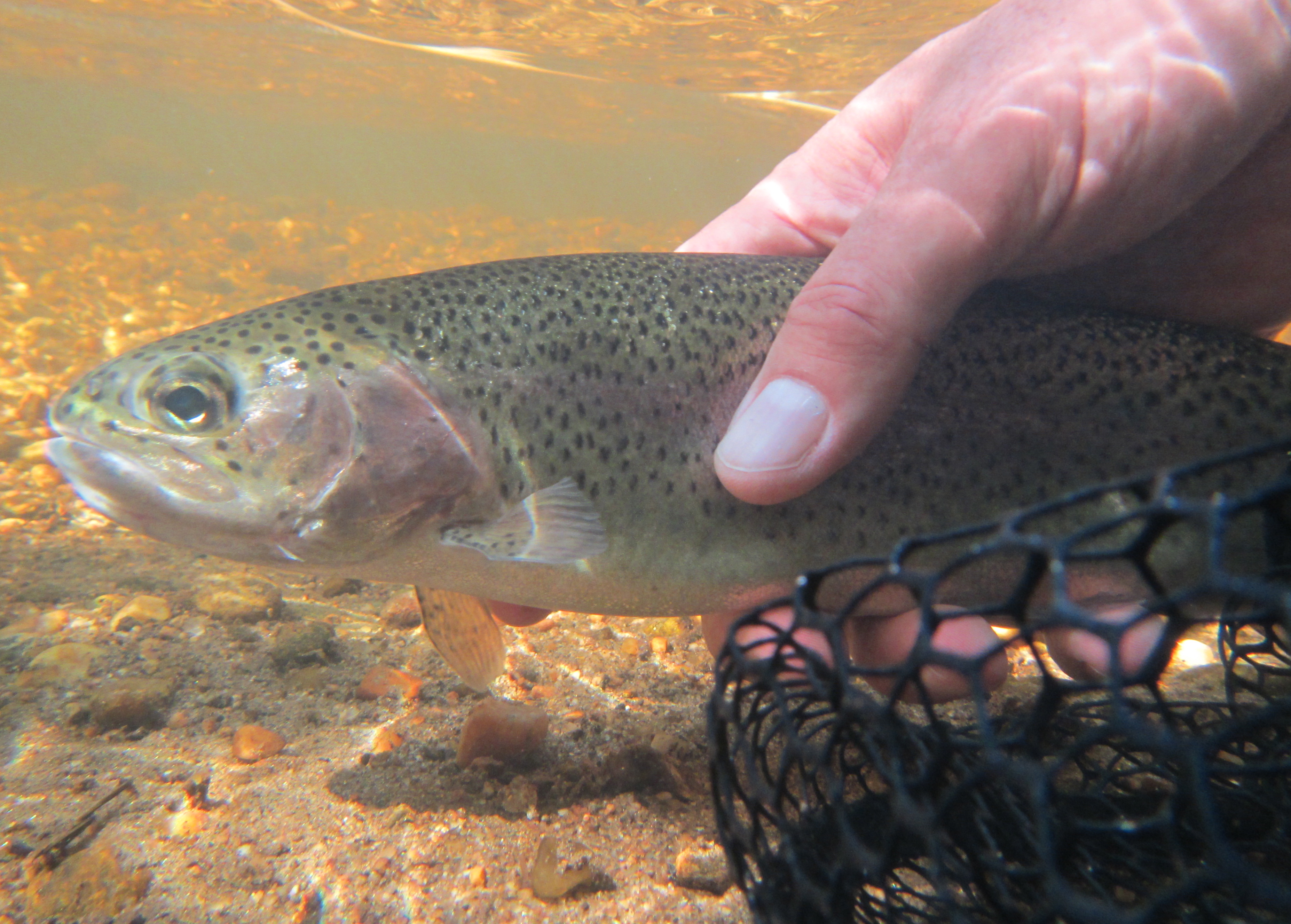
Steve’s co-conspirator, a halo-spotted wild brown. He took a size 10 soft-hackled bead head Pheasant Tail.

Image

Walking through the woods carrying a stick

A bit of a late start this morning. At 10:15am I was making haste into the woods through a phalanx of poison ivy. It was already sweltering, even below the canopy. Midges swarmed me. But I only had one cigar, a short robusto, and it would have to wait. The game plan was upstream dry, then downstream wet. In addition to the aforementioned midges, there were little black stones, some creamy mayflies, and (always) regrettably, mosquitos. Summer can’t be far off, for the sulphus had also made an appearance; I saw two spinners captured in spider webs. While the air was steamy, the brook was cool 61 degrees and running at an ideal height.

Never eat anything bigger than your head. This little guy made seven attempts at the fly before succeeding on the eighth.

Image

Today’s dry was a size 16 Improved Sofa Pillow, and after a slow start, the brookies began to show themselves in earnest. Pricked far more than I landed, but that was just fine with me. Mostly smaller fish in the mix, although I did land a titan of a wild brown. As usual, there were a few runs were I had no takes on the dry that left me scratching my head. I made note of those pools for the return trip. Halfway up the stream, I decided my patience with the nuisance gnats was at an end. Wonderful thing, a cigar. You introduce its tip to flame, and the entire universe of winged insects ignores you.

Why a small piece of fluorescent green chenille tied to a hook works so well on a small stream. Dozens of these dangling from trees everywhere.

Image

On the way back downstream, I didn’t do as well subsurface as I thought I would. But I still managed to get into plenty of char. Three hours was about all I had in my tank (today’s word should have been “hydration”) so I called it at 1:15pm. A shower beckoned. Besides, I needed to try out that poison ivy soap my wife put in my stocking last Christmas.

This breathtaking wild brown absolutely hammered the dry. She was so powerful she momentarily put herself on the reel, peeling off a foot of line into the bargain. 

Image

The sulphur hatch has started. This spinner was still squirming in the web when I walked by.

Image

I spent a good chunk of time yesterday planting hydrangeas, amending the soil, taking out all manner of rocks and pebbles so my shrubs would have a nice home. What a kick in the groin to find plants growing green and strong on top of boulders. This gives new meaning to the phrase “rock garden.” Once again, nature finds a way.

Image


The White Mini-Bugger

This time of year I redouble my efforts to visit small streams. The canopy is in full, providing cover and shade for bashful trout. Water temperatures remain moderate (especially after a cool, rainy spring like this year’s). Food sources are plentiful.

I don’t always manage to get out as much as I’d like, but small stream dreaming has me thinking about one of my favorite flies for wild trout, the White Mini-Bugger. Oh, it’s a Woolly Bugger alright. But I’ve made several strategic changes to the classic template. For starters, it’s just smaller, the easier to be eaten by trout measured in inches. The tail is shorter and sparser, which cuts down on nips away from the hook point. The hackle and collar is soft hen, which flows and breathes. With a tungsten head and wire underbody, this fly sinks like a stone, causing it to rise and fall like a jig when you strip it. If the light is right, you can clearly see this fly even in a deep plunge pool. Try not to laugh when you watch the shadowy marauders surround and pummel the fly as you work it through the depths.

Image

White Mini-Bugger
Hook: TMC 5262 10-12
Thread: White 6/0
Bead: Copper tungsten, seated with weighted wire
Tail: Short marabou wisps over pearl Krystal flash
Body: Small fluorescent white chenille, ribbed with pearl flash, palmered with soft white hen
~
Tying notes: Of course, you can tie the Mini Bugger in any color your heart desires. I tend to be boring, so I mostly stick to white and black/grizzly. Same deal with beads: I have a thang for copper. (Thinking of tying some of these up in black with a copper bead for Salmon River steelhead? You should. It works. And with a chartreuse bead. And orange. And…) The shorter, sparser tail has absolutely increased my hookup percentage. To form the tail, I use a single piece of Krystal Flash, and double it/cut it multiple times to get a 16-strand tail. The body hackle is Whiting hen neck, the same I use for standard-issue wet flies. Tie the feather in by the tip, and if you have enough hackle after winding the body, try to form a collar.
~
The White Mini-Bugger Rogues’ Gallery:
Image


Farmington River under attack — again. Save Satan’s Kingdom!

Last year it was the jolly old yo-ho-ho University of Connecticut that wanted to divert millions of gallons of water from the reservoir.

Now, it’s a planned industrial park on the banks of the Farmington in the Satan’s Kingdom area. Here’s what I know: the proposed property borders a 2000-foot stretch of the river in Satan’s Kingdom Gorge. Even though the area holds a Wild and Scenic designation, the required setback is only 100 feet.

Image

How can you help?

1) Go to the New Hartford Zoning Commission meeting at the New Hartford Town Hall on Wednesday, May 28, 7:00pm and tell them we don’t need no steenking industrial park.

2) Like this group on Facebook: https://www.facebook.com/savesatanskingdom

We kicked UConn’s butt last year. We can do the same with this threat. Grassroots activism works!

Sunrise on a misty summer morning in the gorge. Do I really need to see an industrial park peeking through the trees?

Image

A kilo of salmon, please

Last week, I was guiding two clients on the upper TMA of the Farmington River when the bucket brigade swooped in. Not meat farmers — at least not in the harvesting sense — but rather, sowers. Their crop: Atlantic salmon fry. Love them (food for big browns) or hate them (annoying beasts that nip at your fly ad nauseum), Atlantic Salmon have been a part of the Farmington River watershed for years.

 Never-ending ringed walls and two alien beings peering in from above. Soon you’ll be free! Each bucket holds one kilo of fry.

Image


A closer look at the biomass. Will they lead prosperous lives and make it out to the sound? Or will they become so many croquettes for Mr. Lunker Brown?

Image