Many thanks to the FRAA for hosting me last night. I’m beyond giddy with all the positive feedback I’m getting about the book — it’s truly gratifying to hear that people are digging not only the content, but also the writing. There will be no dull textbooks from this author! We had a strong turnout last night at Brewery Legitimus, and I helped myself to several slices of pizza, washed down with a delicious Dr. Strangehaze NEIPA before hitting the floor to speak. The book tour continues next week, October 27 at the Crossroads Anglers in Foxboro, MA.
We’ve reached peak foliage time on the Farmington, and that means two things. First, the leaves will soon be brown and tumbling down, which can muck up a fly presentation. You may want to avoid breezy days, which can produce whirlwinds of vegetal matter in the air and then on and in the water. Second, the browns are now firmly in pre-spawn, if not actual spawn mode. Be on the lookout for redds, the cleared out gravel beds where browns like to deposit their eggs. Think smaller gravel, and shallower, moving water. Redds are usually easy to spot; if you see a light oval patch surrounded by dark substrate, that could be a redd. The presence of trout holding on or nearby, doing some kind of canoodling dance, is another indicator of spawning activity.
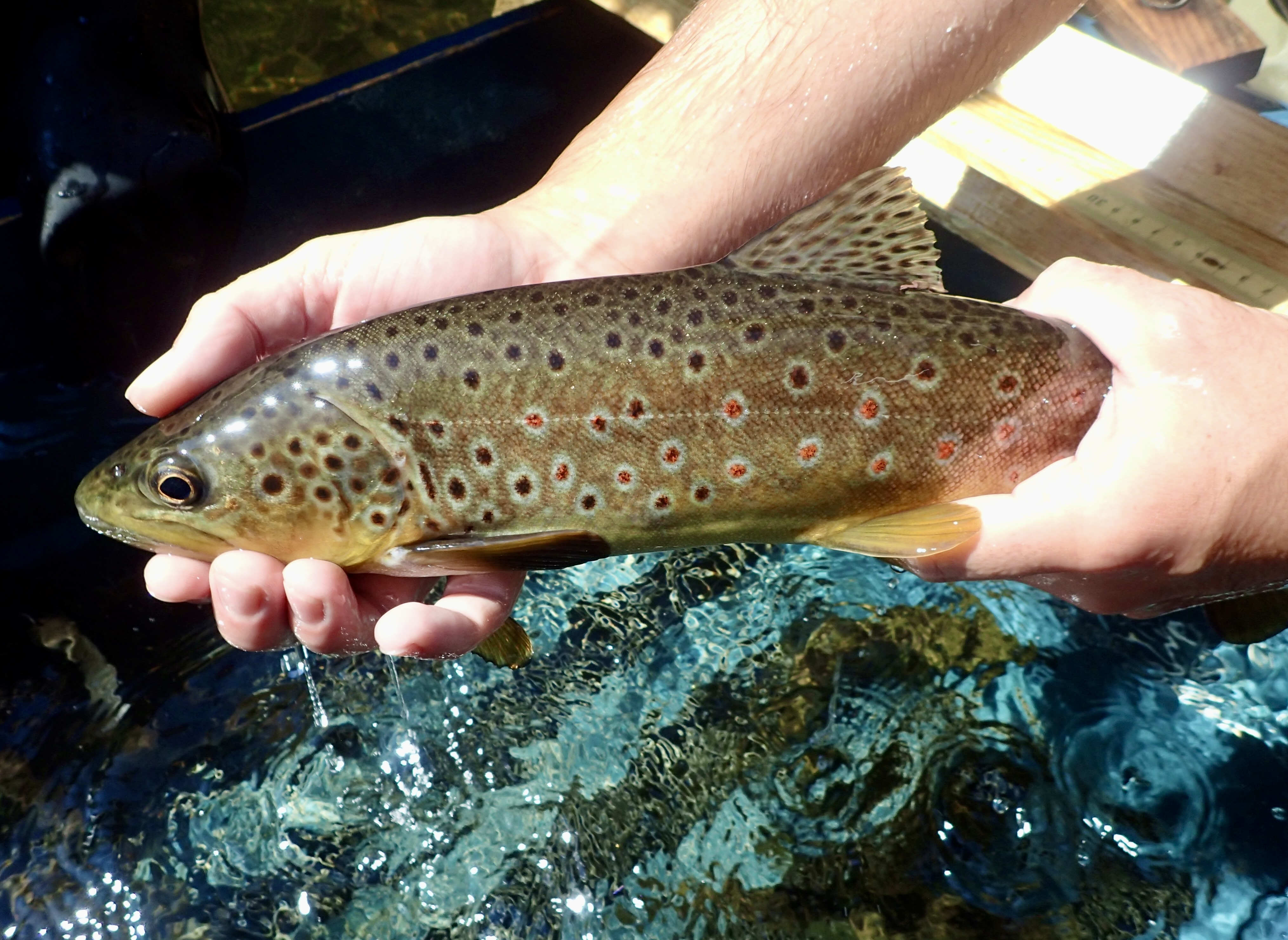
Note the locations of these redds for future reference. You don’t want to be walking over an egg bed in January. Crushing the next year class of wild fish is disastrous and avoidable. It goes without saying that you shouldn’t be targeting spawning fish. That’s unsporting and plain bad form. Sometimes non-spawning fish will set up a few dozen feet below a redd to pick off stray eggs. Targeting those fish with egg patterns can be productive, but please take care to watch where you plant your feet — and please leave those active spawners alone.

