For your enjoyment, I present a little Monday light reading. Here’s my story from the Marlborough Fly Fishing Show two weekends ago. Believe it or not, Edison is this weekend!
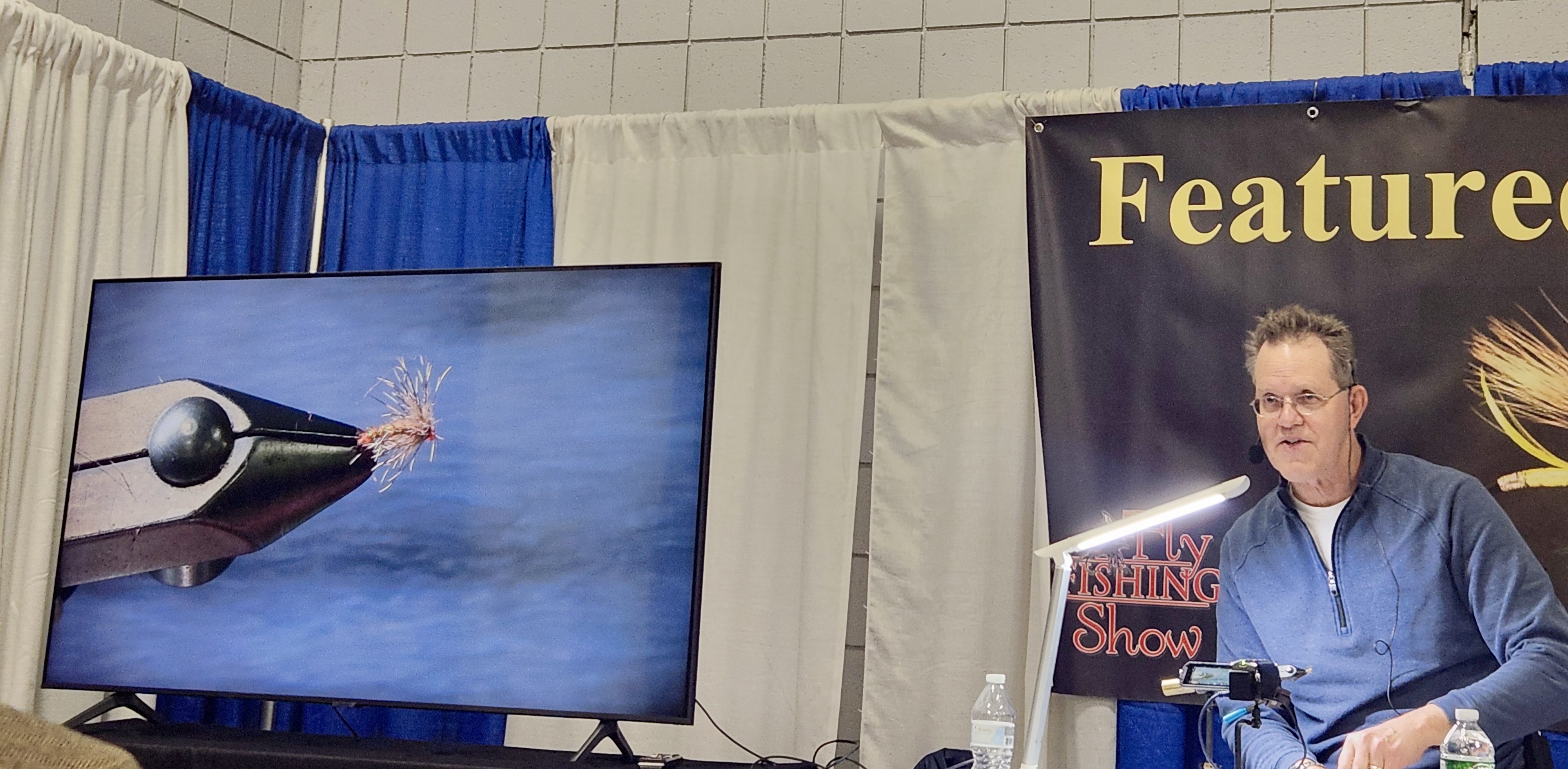
I hit the ground running Friday morning with a very well-attended Destination Theater presentation on the Farmington River. It’s always nice to start off with a packed house! As you’ll see, Friday was a very busy day for me…I had just enough time to pack up, zip over to the show floor, do a little meet and greet, and grab a bite before my 2:30 appearance as a Featured Fly Tyer. I really enjoy the FFT gig. The setup is excellent, and if I have a chance, I always make time to watch other tiers do their thing. Unfortunately, Friday was wall-to-wall for me, as I had to pack up and scoot back to the hotel for my 4:30 Seminar, Hot Bronze: Wade Fishing For Summer Smallmouth. Many thanks to everyone who took the time to see me, and I was particularly gratified by the SRO crowd during the Featured Fly Tyer. The subject was “Guide Wet Flies,” and I demoed a Hendrickson spider, a Pale Watery wingless wet, LaFontaine’s Diving Caddis winged wet, and a bonus track, my Squirrel and Ginger.Attention, flatwing fans: Joe Cordeiro has a new book out. It’s called — drum roll — “Colors In The Current,” and you can buy it directly from Joe on his website, here. Paperback $35, hardcover $65, and Joe will sign it for you if you like. The book is loaded with proven patterns for you to try on your favorite flat, estuary, or beach. A shout out to Joe and his son Greg for letting me park at their booth to eat my lunch all three days. Oh! Joe’s also got a ton of saddles and other flatwing must-haves….Yeah, we’re busy here…I taught two classes, the striper one pictured above, and on Sunday, “Tying and Fishing Wet Flies.” I can’t say enough about those who make the effort and investment in expanding their knowledge base. That’s how you get to be a better angler, folks. A more expensive rod won’t help you catch more fish. OK, enough pontificating. Back to the show.Speaking of learning, this is a guy you want to hang around with if you want to become a better fly angler or tier. Tim is always generous with his time, and you often have to wait in line to talk to him. Tim presented after me at one of my Destination Theater talks — I did three that weekend — and I took the liberty of introducing him as the guy, who, “whenever I want to tie a new pattern or brush up on a favorite, I type the name of the fly and “Tightline” (Tim’s production company) into the search bar.”Bad luck! Saturday night into Sunday was a major winter storm, and so the venue was rather uncrowded on Sunday. Still, the show must go on, so I took the opportunity during my down time to meet and greet, do a little shopping, and watch master caster Shiela Hassan do her thing.
And that’s a wrap! See you next year. And see you this weekend at the Edison show.
The road warrior is back home after a splendid weekend at the Marlborough Fly Fishing Show. No time today for an in-depth report, but that will come later this week. In the meantime: Thanks for coming to see me. Thanks for all your kind words. And I’ll see some of you in Edison in three weeks!
Tying up a Squirrel and Ginger soft hackle as a Featured Fly Tier Friday afternoon. Thanks to Steve M for the photo.
I’m excited to tell you that today I’m going to be recording a future episode of the Orvis Fly Fishing Podcast with Tom Rosenbauer. I’ve only recently met Tom, but I’m a little beyond thrilled to have this opportunity. We’re going to be talking about tying and fishing wet flies. Of course, I’ll let you know about the release date. Off I go to prep…
I get lots of questions about tying wet flies, and Jim B. recently sent me this one: Do you use hen saddle or hen cape feathers for your wet fly ties? My answer: hen cape feathers, primarily Whiting or Hebert Miner.
Then it occurred to me that some of you may be wondering, what’s the difference? For starters, capes and saddles come from different areas of the bird. The saddle is located on the lower back just in front of the tail. You’ll find the cape on the back of the neck. Both produce useful soft hackles with varied degrees of webbing. For me, the difference maker in favor of capes is their shape, and most importantly, the range of sizes of the feathers. For the sake of simplicity, I’m going to limit this discussion to the Whiting and Hebert Miner (not “Herbert”, as I often see them mistakenly called) genetic lines of wet fly hackle.
Whiting (left) and Hebert Miner genetic hen capes. The Hebert Miner cape is specifically marketed as “wet fly hackle,” and as you can see it’s a little longer than the standard Whiting cape. Like the Miner, the Whiting genetic packaging says “hen cape” at the bottom; that graphic is obscured by the feathers. Both capes come stapled to the thin cardboard sheet; if you remove the staple, do it carefully. Otherwise you’ll rip the skin patch if you try to pull the cape off the sheet. The Whiting cape is white dyed dark dun; this is the color I use for the Dark Hendrickson winged wet. The HM cape is a natural medium brown dun.
Capes give you the widest choice in feather size and colors. The feathers tend to be longer and narrower than saddles. But where capes really shine is that they give you feathers to tie bigger soft hackles (8 and larger) as well as the smaller ones you’d need for patterns like tiny BWOs and midges. (For one of my favorite tiny soft hackles, Smut Number 1, I use a Whiting cape for hackle; likewise with Pat Torrey’s Tiny BWO Soft Hackle.) That’s a huge range of sizes, and those tyers who value both extremes will be in hackle heaven. Even if you’re never going to tie size 6 steelhead or bass soft hackles, you can use the larger feathers for tailing material.
A tale of two feathers. Both of these hackles came from the same cape. Both have their uses. You can see that I’ve already begun taking some of the fibers from the larger feather for tailing material. Once removed from the patch, I keep these feathers in a ziplock baggie and store it in the back of the original packaging for easy access. Note that the larger feather has a generous amount of webbing; typically, the webbing becomes less prevalent as you work your way down the patch toward the smaller feathers. This is why I always recommend buying capes in person; you’ll want to rummage through the bags and find the capes with the webbiest feathers throughout. The smaller feather would make a fine hackle for a midge or a tiny BWO soft hackle.
I’m not going to get into the multitude of other hen soft hackle options that are available to you, like India Hen, Bantam Hen, Coq de Leon, and American Hen. I own several of these types of feather patches, both saddle and cape, and while they all have their uses, the vast majority of my wet fly tying with hen involves Whiting or Hebert Miner capes. It should also be mentioned that I primarily use genetic hen hackle for winged and wingless wets. (Most of the North Country Spiders I like to tie use game bird or starling hackle.)
It would be nice if money were no object, but the current going rate for these hen capes is about $30. Still, that represents a tremendous value since you’re getting hundreds of usable feathers. (I have some capes that are almost 20 years old and still have many flies left in them.) If I had to start with only three colors, I would choose, from left to right, light dun, brown, and light ginger. You can expand your collection as you get more into the wonderful world of soft-hackled flies.
If you’ve read James Leisenring’s book The Art of Tying The Wet Fly, you know that he was quite particular about hackle. (Cockerel, anyone? In case you didn’t know, cockerel is a young-of-year rooster.) He even suggests making friends with poultry farmers so you can pluck their birds, preferably in February or March. A fine pro tip, but certainly not as convenient as buying a patch of good genetic hackle. Fortunately for us, modern wet fly hackle is pretty darn good in terms of color options, feather size range, and availability.
One of Leisenring’s favorite wingless wets, the Brown or Red Hackle, tied with a furnace hen hackle. Interestingly, “furnace” isn’t what the package is labelled — it’s simply called “brown” — but this particular cape was a variant with many feathers that were close the classic furnace pattern, which Leisenring describes as a dark list near the stem and on the tips of the fibers, with a lighter color in between. Grab one if you see it, or I will!
Here’s the official announcement/FAQ: “It wasn’t an easy decision but, after reaching out to our exhibitors, celebrities and staff, we made the conscious decision to postpone the 2022 Marlborough show for a myriad of obvious reasons. The new dates are April 22-24, 2022 We hope you can make it!
Q. What if I already bought an Advanced Show Ticket? A. Your ticket will be good whether you purchased it before or after our date change. Be sure to bring along either a physical or digital copy.
Q. What if I already signed up for a Featured Class? A. If you know you can’t make the show in April, please contact us and we will issue a refund. If you plan to attend you do not need to do anything. You will automatically be transferred unless we have to move a time or instructor. In that case we will reach out once we confirm the class schedule.
I think this was a good decision, and my hope is that those of you who were on the fence about attending will be more comfortable with the new date. I don’t have my revised schedule yet, but I assume that I will still be doing a seminar, class, and tying demo. Note that the Edison Show for Jan 28-29-30 is still on! I’ll be appearing on Friday and Saturday, and I’m hoping for another great showing from my readers.
“What are the best soft hackles (or wet flies) for fishing the Hendrickson hatch?” is one of those questions I get a lot this time of year. As always, the best flies are the ones in which you have the most confidence. I should also make this clarification: technically, with Hendricksons you’re fishing wet flies under the hatch. On the Farmington River, prime time for swinging Hendrickson wets is generally in the 11 am-to-3 pm window. Every day is different. Once you see duns on the water, and trout snapping at them, the wet fly game is all but over. But if you want to catch more trout, you should be swinging wets in this pre-hatch time frame. (Of course, you’re fishing a team of three wets. Here’s how to build a wet fly leader.) And so, in no particular order, these are some of my favorite Hendrickson wet fly and soft-hackled patterns.
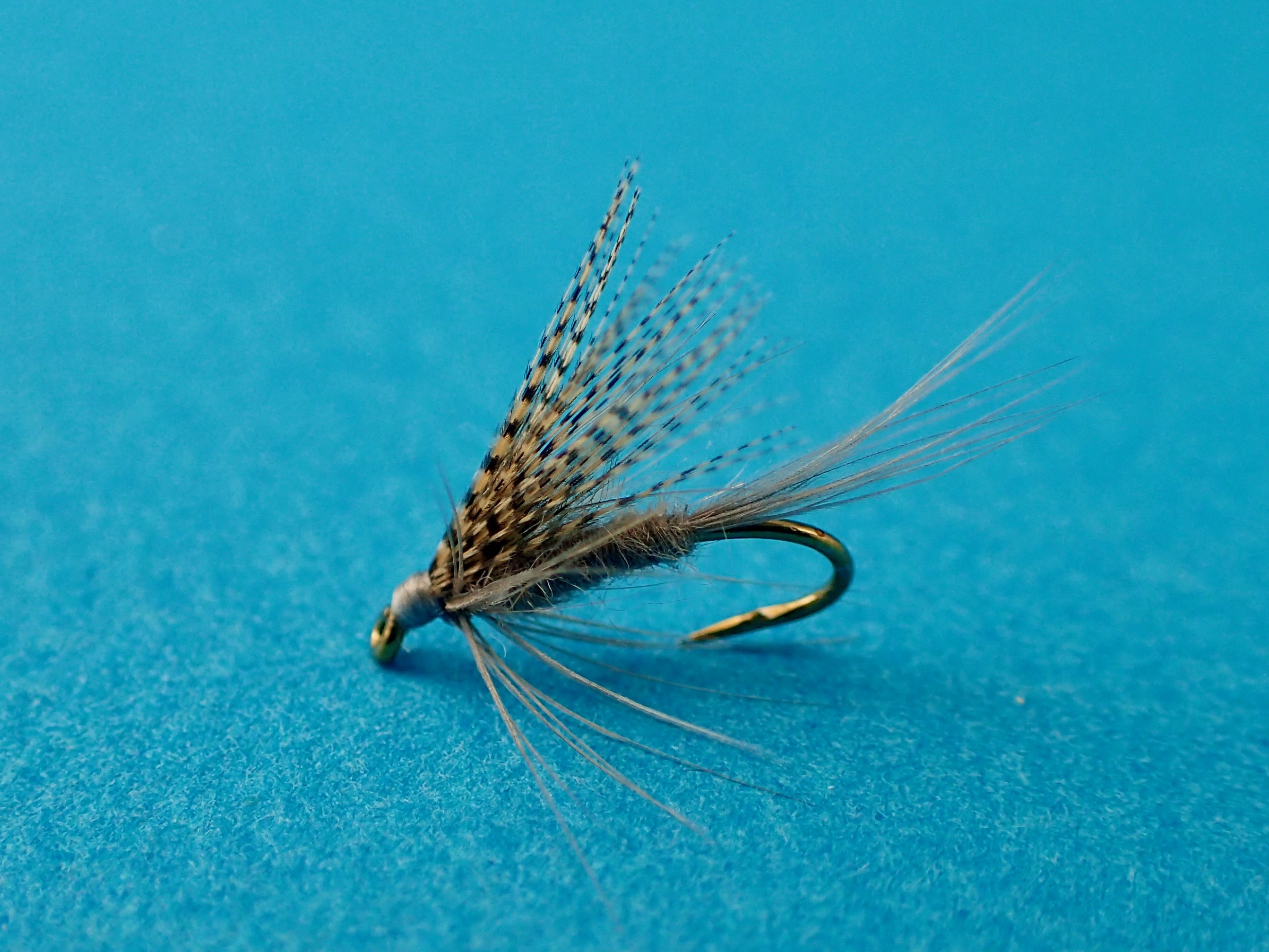
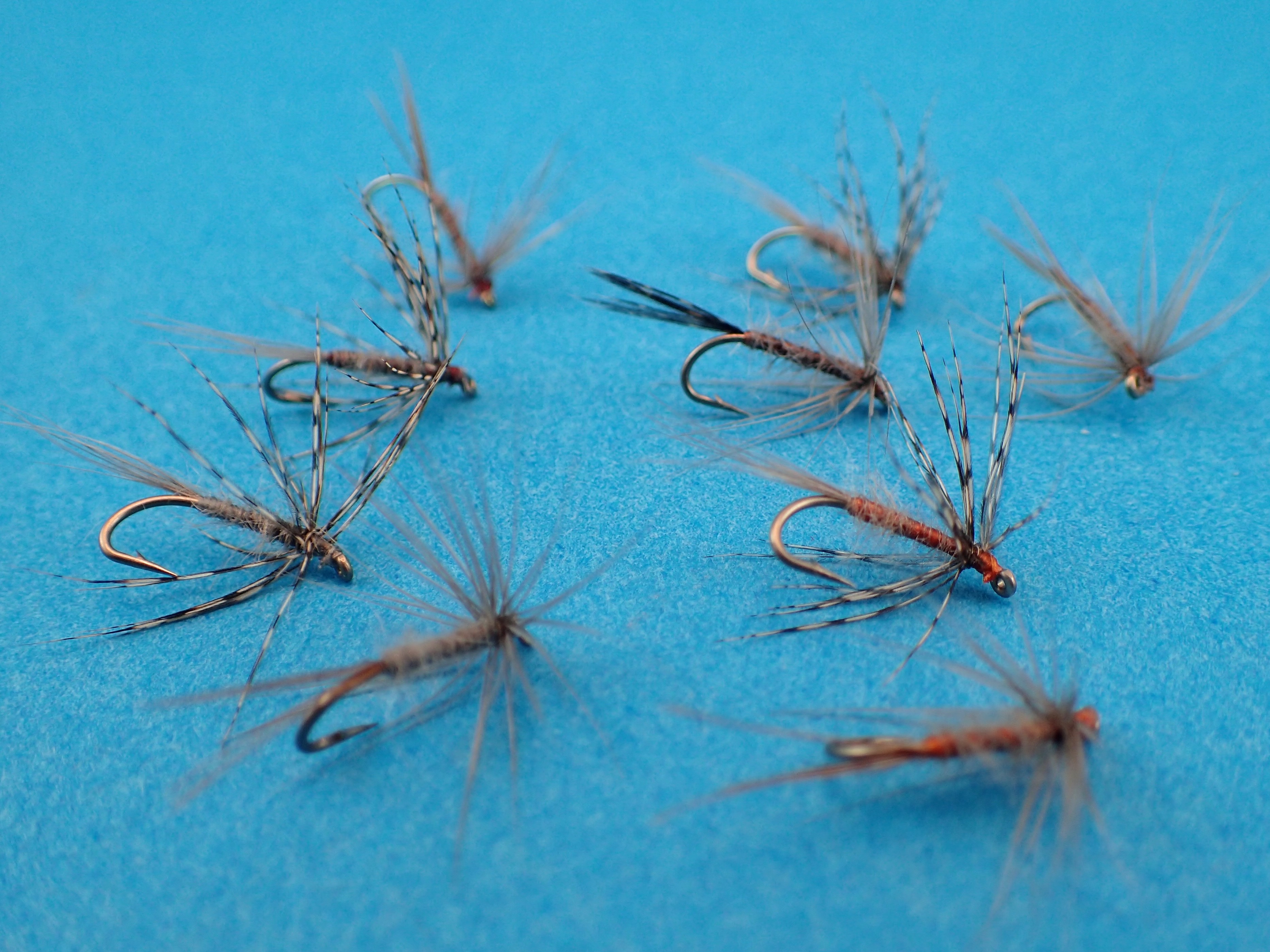
Bead Head Soft-Hackled Dark HendricksonDark Hendrickson winged wetHendrickson Spiders. Size 12, wet or dry fly hook, gray or rusty brown thread, tail material of your choice, a dusting of muskrat fur or dubbing, then brown partridge or dark dun hen hackle.Bead Head Soft-Hackled Pheasant TailOld Blue DunSquirrel and Ginger. Yeah, I know. Not a Hendrickson pattern. But on the Farmington, we often get a strong caddis hatch around Hendrickson time. If you place this as your top dropper, you’ll be covered if the trout are selectively feeding on the caddis.
It’s getting to be that time of year when we can think about not dredging the bottom and start fishing in the upper reaches of the water column. We’re talking wet flies for this Currentseams Tuesday Night Zoom, and I’ll be telling you about the materials and hooks I use to tie these simple, traditional, and devastatingly effective flies. Bonus: I’ll throw in a tying demo. If you haven’t been getting the Zoom links — I send them out Tuesday late afternoon — please check your spam box. If you’re sending a request to get on the list, please don’t wait until 7:45 p.m. Tuesday night…I won’t be checking my email that late. Thanks!
When I give a wet fly lesson, I always tell my clients this: “If you hit a hatch just right, you can have one of those days you’ll never forget.” And it so it was for me on a cool afternoon in April. Hendrickson season can be tough on the Farmington, especially if you’re looking for an unoccupied mark. But sometimes luck smiles upon you, and on this day it was so. The run I wanted to fish was on lockdown, but just as I arrived, an angler left, leaving a prime lie open. Armed with a three fly team of wets, I proceeded to wreak havoc upon the residents. This was one of those days where I quickly lost count of fish, but it was easily in the multiple dozens range. (Fresh fish + epic Hendrickson hatch + wet flies = stupid good.) I had doubles galore. I finally quit because it was so ridiculous for so long. Really. You can read about it here.
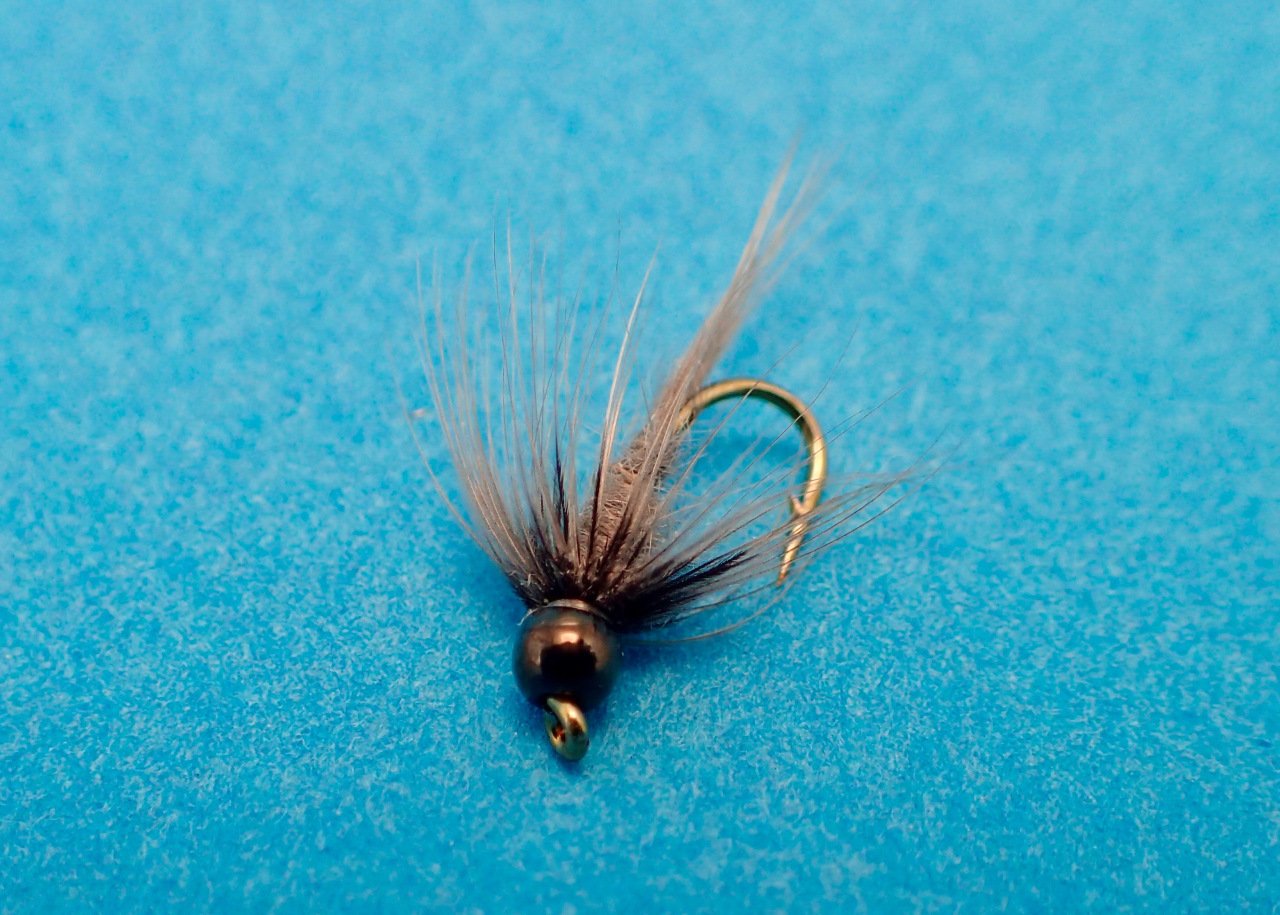
I had several evenings of spectacular wet fly action during the sulphur hatches of 2020, but nothing that equaled the craziness of this day of Hendrickson mania! If the water is 450cfs+, or if you want to sink your team a little more, try this tungsten bead head Dark Hendrickson soft hackle on point.
Much to do today, and in between projects and responsibilities I’m trying to make a dent in my 800 Followers contest winner swag. Here’s a Hackled March Brown in progress.
As you can see, my tying bench trends toward messy. There’s something mad scientist/struggling artist that I like about materials and tools scattered everywhere…
Many thanks to the HFFA for hosting me last night. The pre-game meal was both delicious and appreciated (see Culton’s Rule of Presentation, AKA “A fed presenter is a happy presenter.”) I hadn’t given the “Wet Flies 101” program in some time, so it was nice to return to an old friend. Speaking of old friends, there were many familiar faces in the audience, which is always gratifying. Thanks to everyone who took the time to come out, share their experiences, and ask so many good questions.
Winged wets like these have been fooling trout for hundreds of years, and the fish aren’t getting any smarter.
I have two more appearances in December — more on those soon.








 currentseams.com