From the Archives: The best soft hackles and wet flies for the Hendrickson hatch

Yeah, baby, it’s getting to be about that time. OK, maybe not for a couple more weeks. We’ll see what Ma Nature has in mind as far as warmth and rain are concerned. But indeed it is coming. And right now is the perfect time for you to stock the box with your favorite Hendrickson patterns.

If you’re not fishing under the Hendrickson hatch with wet flies, you’re missing out. In fact, you’re missing out on some of the best trout-on-the-fly action of the year. Tie these up, place them over a rise, and hold on. Oh. And be prepared to clip one or two flies off your three-fly team. Such are the travails of the angler getting doubles and triples!

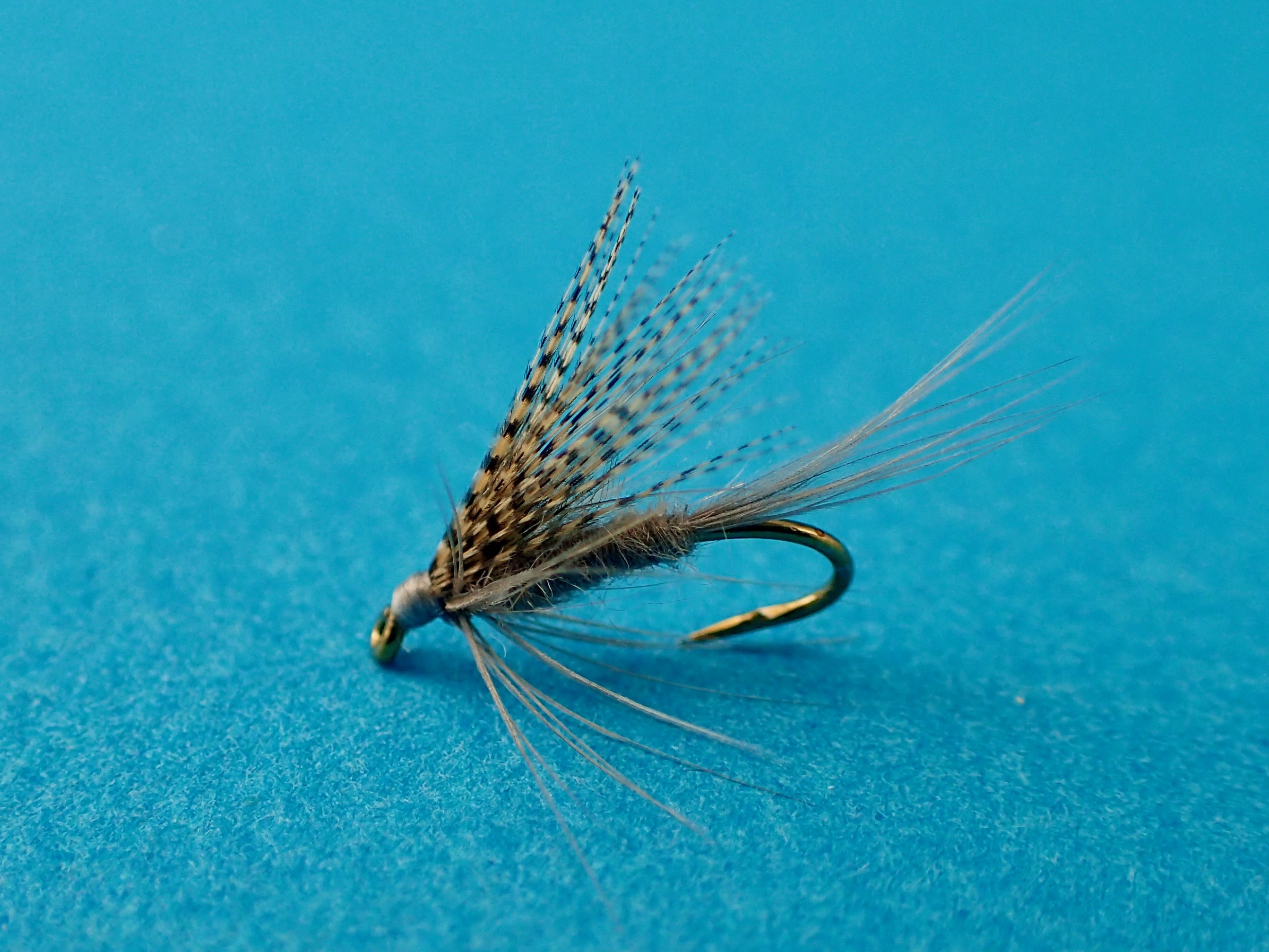
The Best Soft Hackles and Wet Flies for Fishing the Hendrickson Hatch.

Mssr. H awaits your pleasure…

From the Archives: A Wet Fly Hen Hackle Primer

On the surface, you may be unthrilled (rather than enthralled) by this topic. But I think it’s worth your time, especially if you tie soft hackles. I get a lot of questions about hen hackle types, and this article covers the subject nicely.

A Wet Fly Hen Hackle Primer.

There’s something very satisfying about finding a top-shelf hen cape. While the price of both has gone up, you still occasionally see these in deep discount fly shop and show bins..

From the Archives: Leisenring’s Favorite Twelve Wet Flies

Looking back at this post, I can happily say that I’ve given many of these patterns far more than a test drive. I find it highly satisfying that the flies that Leisenring fished with confidence on his beloved Pennsylvania streams work just as well on the Farmington River. The post is formatted so that if you click on a pattern title, you’ll be taken to the recipe, along with a little blurb about the fly.

You can find Leisenring’s Favorite Twelve Wet Flies here.

Hot tip: try Liesenring’s Old Blue Dun in a size 12 during the Hendrickson hatch. The original works, but if you want to make it a little truer to the natural, use dark dun for the tail and hackle.

From the Archives: Leisenring’s Favorite Nymphs

When I went back to this oldie-but-goodie article, I was struck by two things. First, I love how Leisenring incorporated the soft hackle into these nymph patters. And second, I have not fished these patterns nearly enough, whether on a dead drift near the bottom or as a swung wet fly. None of them have beads or UV dubbing or special sparkle flash, but they all look like they’re alive and something fish would like to eat. To the vise (again)!

Leisenring’s Favorite Soft-Hackled Nymphs In List Form With Photos.

The Dark Olive Nymph would do quite nicely as a dropper off a dry, or as the top dropper on a nymph rig, or even swung.

Many thanks to EJTU for hosting me, and the question of the day (with a better answer!)

On Wednesday night I spoke to the East Jersey Trout Unlimited group about wet flies — specifically, getting into wet fly fishing, with the program title being “Wet Flies 101.” What a great group, very involved audience, and a gratifying turnout. The passion this group has for fly fishing is very evident. I’m already looking forward to coming back, especially if I can start the evening off with a burger and an IPA at ReBar just a few minutes away.

During the post-presentation Q&A, I was asked a really good question. I didn’t like my answer, and it bothered me all the way home. I’d like to represent the question, and give what I think is a much better answer.

Q: You say when you’re swinging wets, you have to wait a few seconds before you set the hook or you’ll lose the fish. How come when you’re nymphing you need to set the hook right away? A: I don’t know if this is a definitive answer, but I can tell you my best calculated guess. When you’re swinging or dangling a wet fly downstream in current, you’re fishing a tight line. There’s tension present. And then, you have a moving fish applying force, and then quickly changing the direction of that force. My advice to clients is to feel the hit, ask the question, “Are you still there?” and then set the hook. Do that, and the fish essentially hooks itself. When you’re nymphing, the fish behaves differently. It doesn’t rise from the depths, then turn and swim a few feet back down to the bottom. It’s typically feeding on station, near the bottom, perhaps not moving much at all, or maybe just a few inches. It sees your nymph, opens its mouth, and eats the fly. It’s a far more passive transaction. Setting the hook forcefully downstream seals the deal before the trout can reject the fly (if it does that at all). When you’re nymphing, you can still catch fish without setting — we’ve all had instances when we’re not paying attention and we manage to hook and land the fish regardless — but setting the hook had and fast will certainly result in more trout to net.

Do this when nymphing — a downstream set with a low, hard sweep — and your catch rate will soar. Hooksets are free, so look for a reason to set the hook on every drift!

From the Archives: W.C. Stewart’s Spiders

I received a message last week from a fan of Stewart’s Spiders. He was delighted to find them so lovingly rendered on this site by yours truly, so I thought it might be a good time and place to revisit them. (Yup, I’m still encumbered with house stuff and other projects.) If you haven’t seen them, you’ll like. This is simplicity, elegance, and deadly rolled into a single pattern format. Here’s the article link.

Midge or stonefly or caddis, anyone?

Currentseams Q&A: Wet fly leaders and fly choices

Welcome to a snow day edition of Currentseams Q&A. Yesterday I received an email from Bill who’d heard me on the Orvis Podcast How to Swing Soft Hackle Wet Flies with Steve Culton. His questions — and my answers — may be of interest to you. And here they are.

Q: Do you ever use the Rio Versileaders with differing sink rates when fishing wets?  I have used the 1.5 inches per second w some success but wanted to get your thoughts. Am I better off just adjusting sink rate by the size of the point fly? A: I do not. I adjust my sink rate and depth by adding weight to the point fly in the form of a brass or, most frequently, a tungsten bead. (Of course, strategic mends with a floating line are an important part of the process.) Sometimes I add weight, usually a single split shot, to the leader. That’s simply how I do it, and it works for me. I don’t know if you’re better off using my system — if you’re fishing happy with your Versileader, and your flies are where you want them, and the fish are eating them, that’s what I’d recommend. Confidence catches fish.

This is nymphing, but as with wet flies, if you’re hooking up, you’re fishing at the right depth.

Q: If you are on an a new stream with no intel, what is your go-to 3 fly set up? (Do you look under rocks first and just match size of nymphs?) I know where he’s going with this. Is there a default wet fly setup that works everywhere? Maybe, but that’s not how I would approach the problem. My go-to wet fly setup would be three bugs that I think are most likely to be hatching or present in the current system. This would vary from season to season, time of day, and certainly by geographical region. For example, if it’s summer in southern New England at noon, I might go with a caddis, a terrestrial, and an Isonychia-type on point. If it were the same region in the evening, I might switch out the terrestrial for a creamy mayfly. And of course, I would be watching for any kind of hatch or rise activity for clues. Then I’d have intel, plus whatever the fish were telling me. Remember, droppers are the fastest way to find out what the fish want. The looking under the rocks solution is also a good one.

Q: I don’t tie.  Recommendations for high quality wets? I wish I could give you a name or a place, but sadly I don’t have one. A good wet fly selection is hard to find these days, which is why I always recommend that wet fly aficionados learn to tie. I sometimes do custom orders, but right now I am not taking any orders for a few months. Your best bet is to do an internet search and see what you can find. Good luck!

Chances are slim that you’ll find LaFontaine’s Diving Caddis in tan, size 14, at your local fly shop. If you learn to tie your own, you’ll have a constant supply.

FRAA Awarded the Order of Loaded Pizza (with NE-Style DIPA Clusters) and the Question of the Day

Many thanks to the Farmington River Anglers Association for hosting me Wednesday night. I presented to an enthusiastic crowd of two dozen anglers at Brewery Legitimus in New Hartford. I very much enjoyed the pre-talk pizza, and it’s pure genius to hold meetings at a craft brewery. The subject was tying and fishing wet flies and soft hackles, highly appropriate since the Farmington is a fantastic wet fly resource. We followed up with a lengthy Q&A session that was loaded with some outstanding questions. Here’s one that I think will resonate. Q: How and when to you add weight to your wet fly rig? A: (click here for my article, “Adding weight to a wet fly team.”

Take my class, “Tying & Fishing Wet Flies with Steve Culton” at the Edison Fly Fishing Show, Saturday, Jan 27, 2pm-4:30pm

If you’ve always wanted to take a wet fly lesson with me, this is the next best thing to being on the water! Class is in session next Saturday, Jan 27 at 2pm at the Edison Fly Fishing Show. Instead of sitting on a picnic table bench next to the Farmington River, we’ll gather in a cozy meeting room and learn all about tying and fishing wet flies. This is a a great opportunity to get some quality instruction at the fraction of the cost of a guide trip.

Don’t let the simplicity fool you. Learn to properly present a soft-hackled fly, and you’ll become a dangerous fish-catching machine.

My plan is to offer a combination of video and real-time demos. If the group wants, I’ll demo-tie some wet flies so you can see what goes into building an effective soft-hackle, wingless wet, or winged wet, from construction to materials; demonstrate how to build a traditional three fly team; show you how to prevent that rig from tangling; talk about essential wet fly gear and tackle; and more. Of course, you’re going to want to learn how to present wet flies and catch more fish. Yep, we’re going to cover that, too.

Another trout — you could measure this one in pounds rather than inches — that thought that wet fly was a real bug.

You must sign up for this class in advance. You can only do that on the Fly Fishing Show website, here.

Farmington River Update, Contest Closed, Small Stream Report Coming

I’ve been writing for years now about the new normal with flows, which is: rarely is there middle ground. Most of the time, it’s flood or trickle. We can’t catch a break with this rain (and more is on the way Saturday!) and as a result the Farmington is sky-high again. They’re currently bleeding the dam at 1.1k cfs, and the Still is pumping in an additional 250cfs. Who knows what the next week will look like? I have two lessons scheduled but we’ll have to see. The inflow to the reservoir is also high, and will need to (eventually) be bled. If you choose to go out, please exercise caution!

The 1,000 Followers Contest is officially closed! Thanks to all who entered. I’ll pick the winners soon. Keep your fingers crossed.

Finally, I owe you a small stream report. Look for it tomorrow. I also have some other fly fishing writing projects that desperately need my attention, so off I go…

Yes. I am also steelhead dreaming.